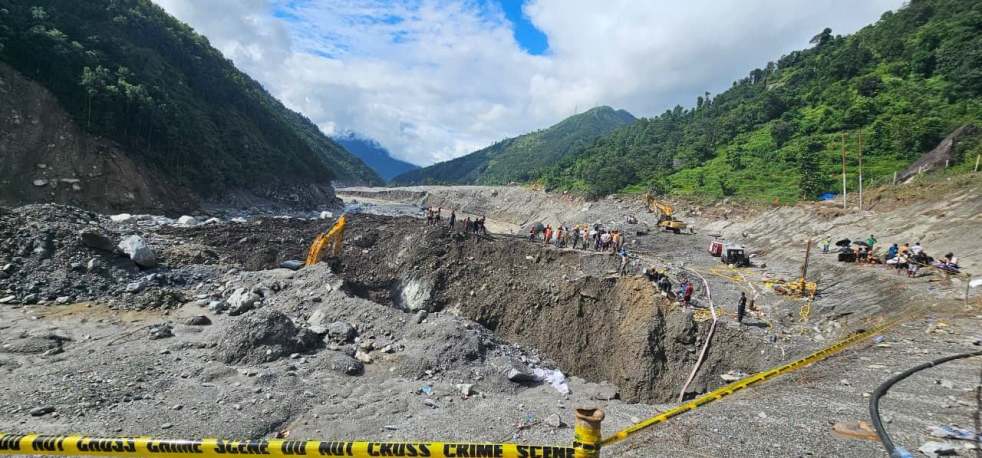
As I write this, over 1,200 people are dead across Nepal and China, and nearly 5500 more are missing. About 900 people are trapped in hydropower tunnels clogged by debris. Herculean national and international efforts are being made to bring them out, but the tunnel entrances are sealed by dense plugs of compressed sediment, and rescuers have no idea of the extent of that blockage. An Australian tunnel expert summed up, “we might only have to dig 10 meters, or we might have to dig 100 meters.” [1]
Continue reading “Himalayan Floods Are Not Just a Water Event, They Are a Debris Event”Author: SANDRP
DRP 310826: Nepal’s Rasuwa flood disaster: Is there a limit to Human Folly?
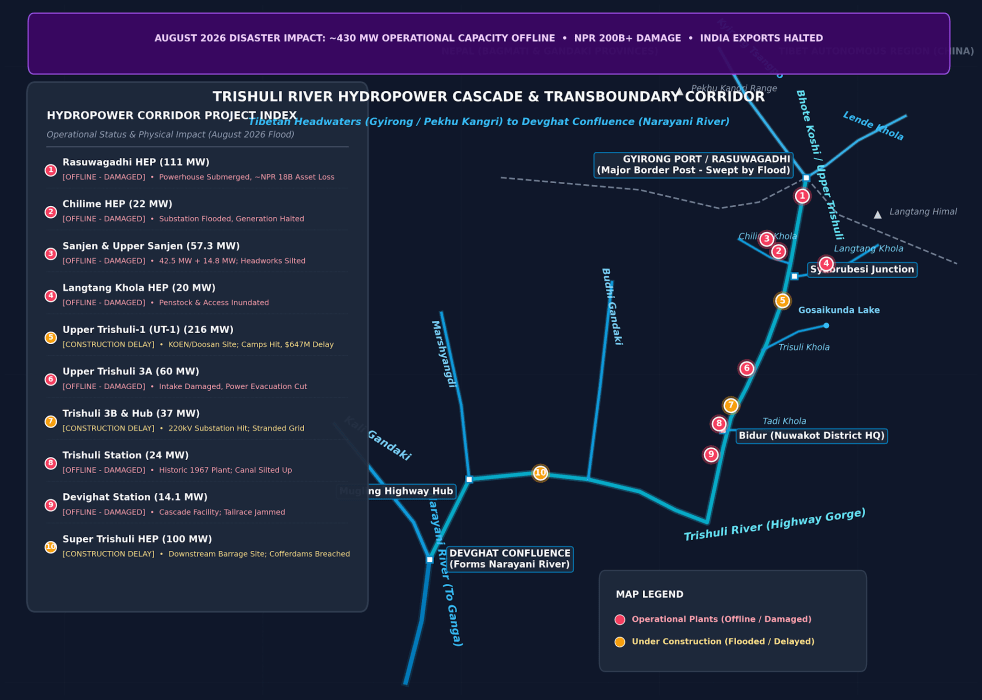
(Feature Image: Map of Hydropower Projects and condition in Trishuli- Bhote Koshi Basin Map by SANDRP made with Google LLM)
Even as Nepal, Tibet, India and other countries whose citizens are in missing list following the Aug 26 2026 Rasuwa flood disaster for Nepal, and even as the full dimensions of the disaster are still unfolding, a Bloomberg journalist asked SANDRP a pertinent question. Seeing the major role played by operating and under construction hydropower projects in the disaster and the missing list of hundreds of people from such projects, he noted that deaths at disaster hit hydropower projects in Himalayas is a recurring story. During and after every such disaster, there is talk of learning lessons such projects, but there is little change in decision making process. His question was, is there a limit to human folly, beyond which we will see some genuine change?
Continue reading “DRP 310826: Nepal’s Rasuwa flood disaster: Is there a limit to Human Folly?”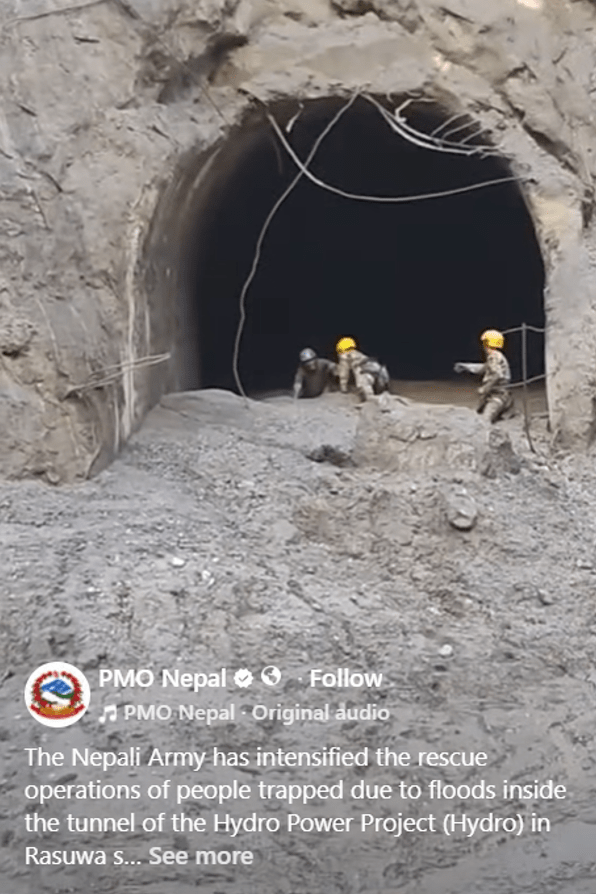
Nepal Disaster and Hydropower: How Global Banks Downplayed the Risks they Knew
On the 28th August 2026, Nepali officials roughly doubled their tally of missing people to over 1,900, saying hydropower producers had only recently shared a count of unaccounted-for workers at projects in the devastated river valleys. It is feared that over 900 people are missing from hydropower projects.
This might be a watershed moment for the disaster-torn hydropower boom in South Asia, funded many times by International Financial Corporations and Multilateral Banks like ADB and World Bank, and also Chinese Exim bank.
Hundreds of hydropower labourers, engineers and locals are currently trapped inside tunnels of projects like Upper Trishuli 1 and Trishuli 3A, the latter funded by a loan from China’s Exim bank in the flood ravaged Nepal. More than 350 have been rescued by the valiant efforts of Nepal Army, but many more are still trapped inside the tunnel, including Indians.
Continue reading “Nepal Disaster and Hydropower: How Global Banks Downplayed the Risks they Knew”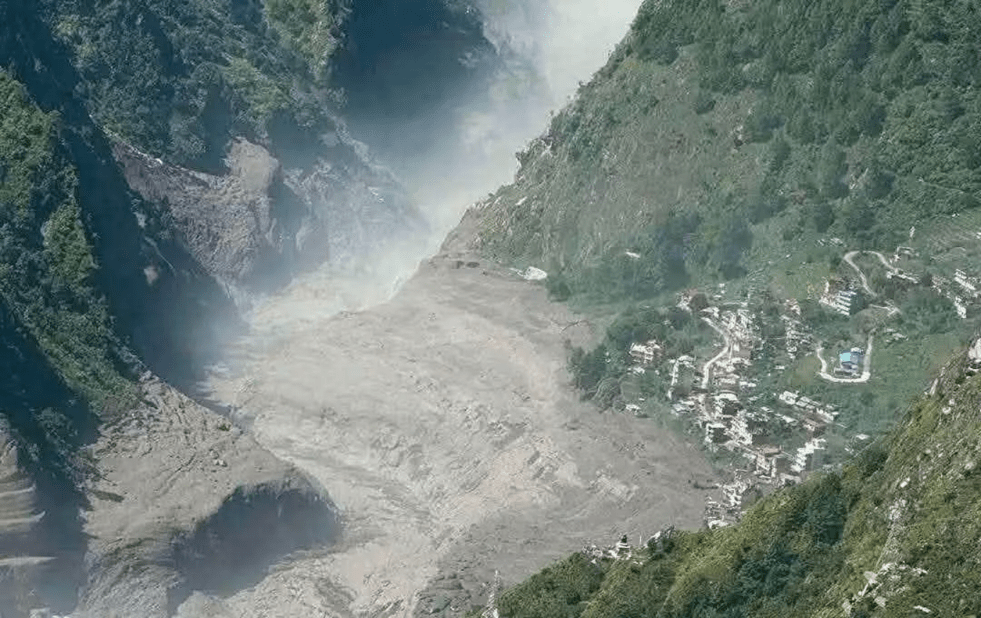
Himalayan Disaster: August 2026 Bhote Koshi Deluge
On the morning of Wednesday, August 26, 2026, one of the most severe high-mountain fluvial disasters struck the transboundary Tibet–Nepal frontier. By now we have seen the terrifying and incomprehensible footage of the disaster.
Continue reading “Himalayan Disaster: August 2026 Bhote Koshi Deluge”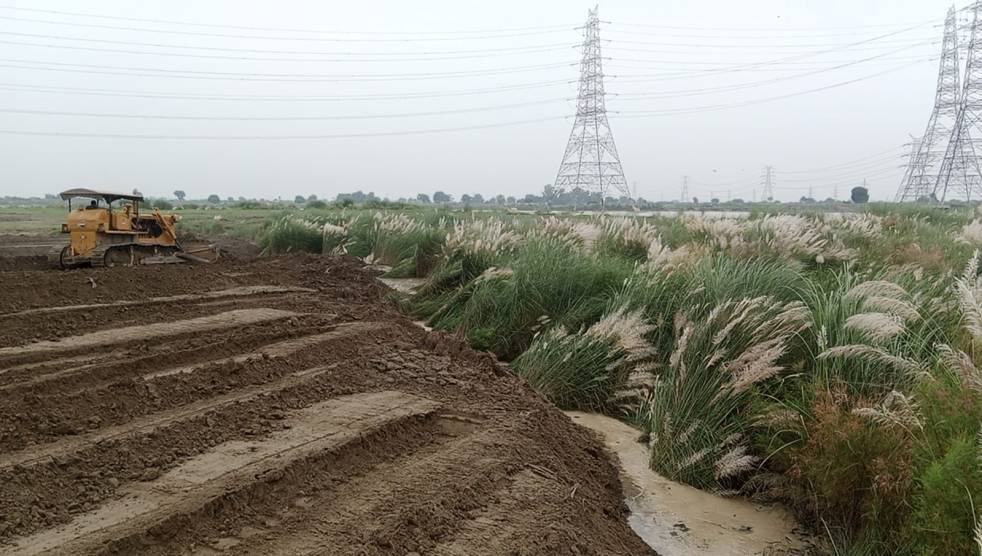
यमुना: दिल्ली में बाढ़ का बढ़ता खतरा और नदी बाढ़ क्षेत्र प्रबंधन
(Feature Image: Natural vegetation in the Yamuna floodplain is being damaged during the levelling of land at the Yamuna Reservoir Project, developed over 17 acres near Sungarpur village in Delhi’s Burari area in 2019. Bhim Singh Rawat, Aug. 23, 2026)
इसमें कोई संदेह नहीं है कि दिल्ली में यमुना के बाढ़ क्षेत्र (खादर) में बढ़ते अतिक्रमण ने प्राकृतिक बाढ़ को आपदा में बदलने का खतरा पैदा कर दिया है। खादर क्षेत्र का सीमांगन नहीं होने के कारण ओ-ज़ोन (यमुना खादर) का सही तरह से क्रियान्वयन नहीं हो रहा है।
लेकिन वर्तमान बहस समस्या के केवल एक हिस्से तक सीमित है, जबकि इसके मूल कारणों पर पर्याप्त ध्यान नहीं दिया जा रहा। सबसे पहले यह समझना जरूरी है कि यमुना के खादर पर किस प्रकार के अतिक्रमण हुए हैं और इसकी सुरक्षा के लिए कौन-सा कानूनी एवं संस्थागत ढांचा उपलब्ध है।
Continue reading “यमुना: दिल्ली में बाढ़ का बढ़ता खतरा और नदी बाढ़ क्षेत्र प्रबंधन”
June July 2026: District wise rainfall in India’s SW Monsoon
In July 2026, India received 290.3 mm (294.3 mm in July 2025, 306.6 mm in July 2024[i], 318.4 in July 2023[ii] and 327.7 mm in July 2022[iii]) rainfall, 3.5% above (4.9% above normal in July 2025, 9.3 % above in July 2024, 13.5% above normal in July 2023 and 16.8% above normal in July 2022) the normal July rainfall of 280.5 mm as per India Meteorological department. So this is the fifth consecutive year when rainfall in July is above normal, the quantum has gone down with each passing year during these last five years. In July 2021, the rainfall was 266.1 mm[iv], about 6.7% below normal and in July 2020, the rainfall was 257.1 mm[v], or about 9.9% below normal.
Continue reading “June July 2026: District wise rainfall in India’s SW Monsoon”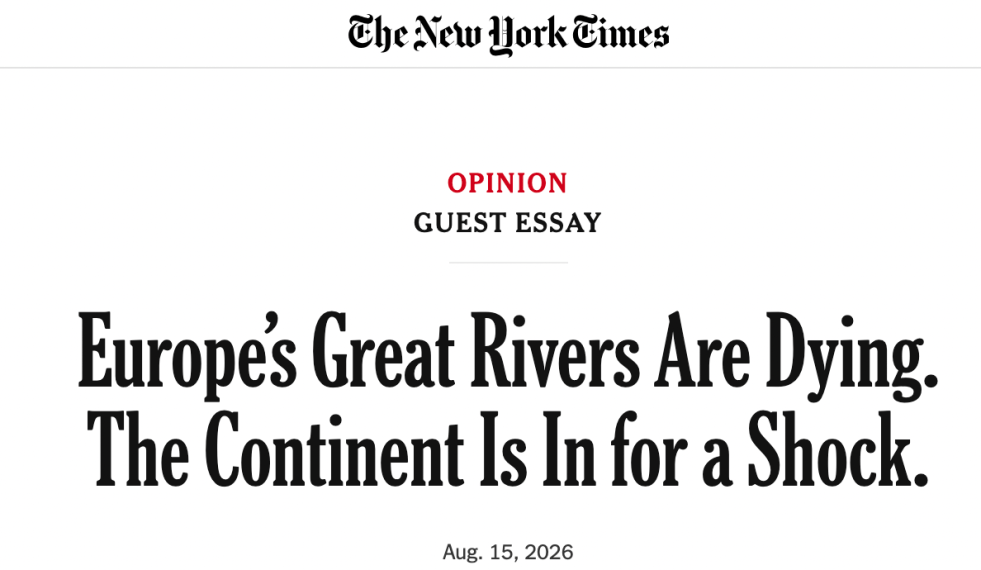
DRP 240826: Europe’s major Rivers are drying: Major Warning for South Asia
A number of Rivers of Europe, including Rhine, Danube, Loire, Po and Elbe are flowing at record low levels during the last couple of weeks. Europe, in fact has been a region that has the most elaborate policy and institutional structures, better than any other place, for ensuring its rivers flow perennially and healthily. This is partly also because of its economic, social dependance on the rivers. When the rivers of such a region are in such dire situation, it is a major wake-up call, also for the rest of the world.
Continue reading “DRP 240826: Europe’s major Rivers are drying: Major Warning for South Asia”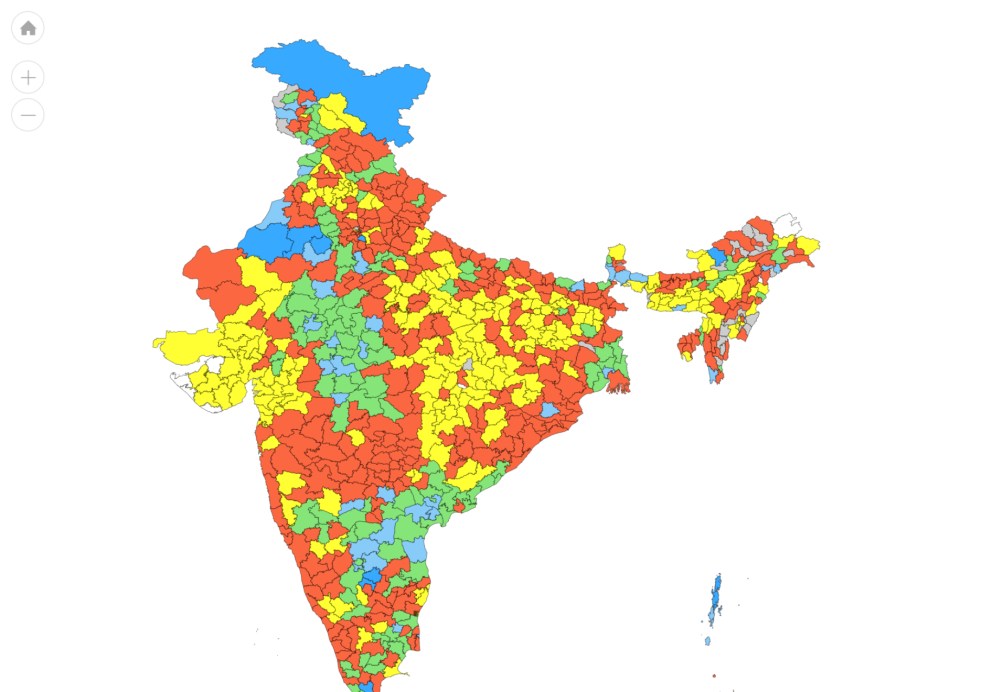
June 2026: High Rainfall district days in India’s SW Monsoon
An analysis of the daily district wise rainfall data from India Meteorological Department (IMD) for June 2026, the first month of India’s South West Monsoon 2026 shows that there were only 197 instances (415 in June 2025, 384 in June 2024[i], 451 in June 2023[ii], 462 in June 2022[iii] and 442 in June 2021) when district rainfall of a day was above 50 mm. The rainfall of India in June 2026 was 99.5 mm, the rainfall of India in June 2025 was 180 mm, the rainfall of India in June 2024 was 147.2 mm[iv], the rainfall in June 2023 was 148.6 mm, the rainfall of India in June 2022 was 152.3 mm[v]. The figures and analysis are based on IMD’s daily district wise rainfall bulletins for the 24 hours ending at 0830 am each day. The numbers are the lowest in 2026 compared to those in last six years. The next high number, 384 in June 2024, is almost double the number in 2026.
Continue reading “June 2026: High Rainfall district days in India’s SW Monsoon”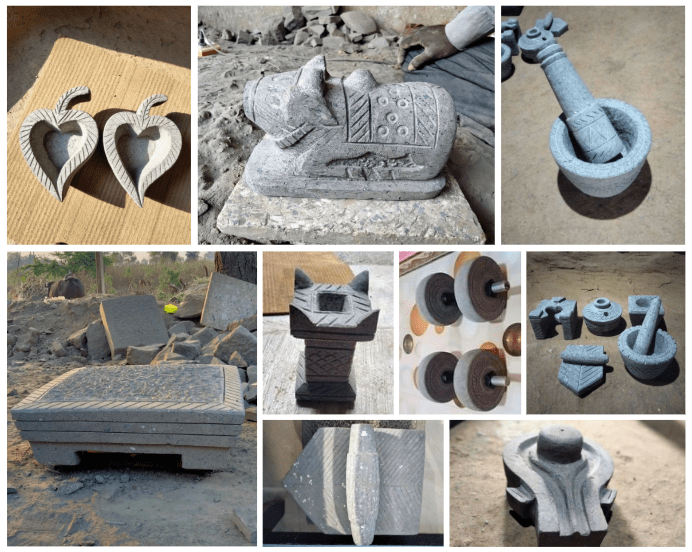
Riverbed stone a source of Life for Patharvat Stone Artisans in Anjani Basin in Mah
Guest Blog by Shreesai Kharat
The Anjani River in Maharashtra is a small, seasonal river. It originates near Achalgaon village in the Bhadgaon taluk of Jalgaon District and flows through more than thirty eight villages before it meets the Girna river, and soon after at very short distance, to the Tapi river, which make a tri-confluence (Triveni Sangam) of these three rivers near the Rameshwar temple. Though Anjani is not a perennial river, it carries water for close to eight months of the year because of the string of small check dams built in the river 7 to 8 years ago. There is no large industry sitting on its banks, which is why very little pollutants enter the river, but are increasing nowadays.
Continue reading “Riverbed stone a source of Life for Patharvat Stone Artisans in Anjani Basin in Mah”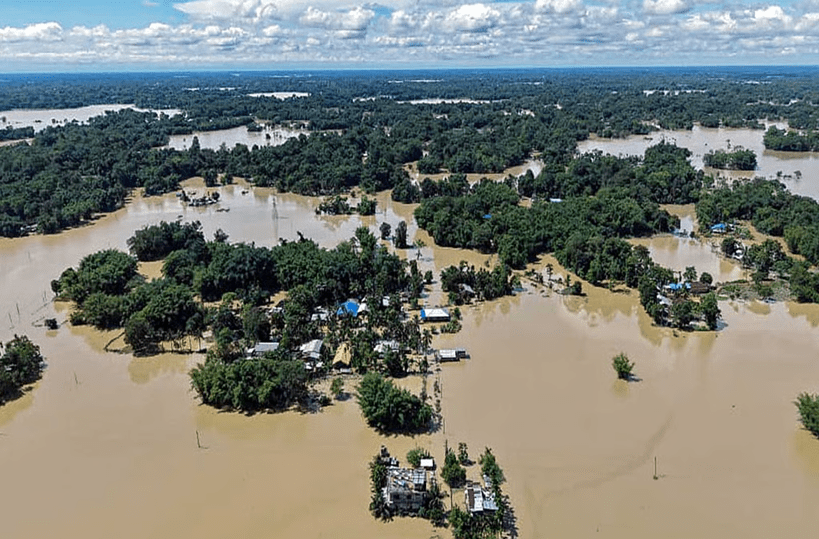
DRP 170826: Assam Floods: Engineering alone cannot help
(Feature Image: Drone image showing flood situation in Assam. Source: TNIE/ Credit ANI, July 26, 2026)
Among many analyses of the recent Assam Floods, three contrasting ones stand out to illustrate the limitation of supremely confident perspective that engineering alone will solve the problem. One of them is by Mitul Baruah and another one is on edit page of The Times of India on Aug 17 2026. The third one by Arupjyoti Saikia is published in Indian Express. The one in TOI does not look at cultural or historical aspects of floods in Assam, nor the uniqueness of unprecedented upper Assam floods & the reasons behind it. The analysis by Mitul Baruah, in contrast, takes into account all this and in fact comes from lived experience in Majuli. Arupjyoti Saikia, an environmental historian, takes historical perspective.
Continue reading “DRP 170826: Assam Floods: Engineering alone cannot help”
