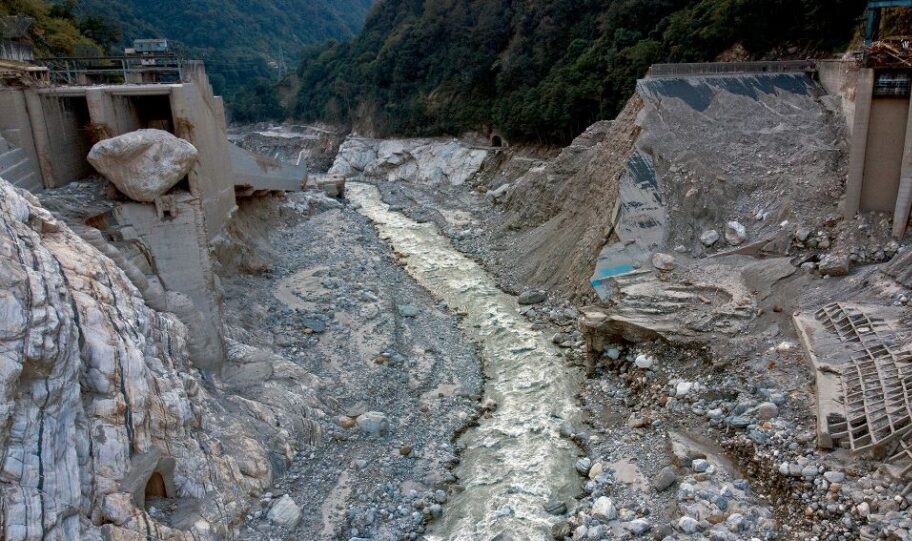
(Feature Image: Washed out Teesta III dam in Sikkim. Credit: Save the Hills)
The Himalayan disaster risks are increasing in several different ways, including through new types of disasters that are being added now as is evident from the recent Rasuwa floods in Nepal-Tibet, which originated in collapse of hanging glaciers due to melting of permafrost. The frequency, intensity and spread of the risks are also going up. Considering increasing pace of global warming that is inevitable in coming decades, the disaster risks are only going to go up.
From the pace at which we are interfering in the fragile Himalayan landscape it is clear that we do not seem to understand or seem bothered about the implications of those massive infrastructure projects that we are continuing to build, plan and propose. In this context the letter from NEHR to Arunachal Pradesh Chief Minister, as reported below, is very timely and pertinent. The letter points out the GLOF threat in Arunachal Pradesh to the proposed and under construction hydropower projects including 3097 MW Etalin, just 38 km downstream from category A Glacial Lake & the 1200 MW Kalia II HEP in Anjaw district, just 30 km away from similar category A lake. This reminds us how we ignored the similar GLOF threat to the 1200 MW Teesta III HEP in Sikkim, the dam & the project ultimately got washed away by GLOF on Aug 3-4 2023. There are similar GLOF threats in other Eastern Himalayan areas including in Bhutan & even in the rest of the Himalayas.
So short answer to the question in the title above is NO. This is true across the Himalayan region. There is a lot we can do to firstly understand the risks involved, see – what we can do to monitor and be prepared for the risks, what we can do, to not increase the disaster vulnerability of the areas, achieve transboundary research, monitoring and information exchange agreements and mostly importantly, involve local communities in disaster risk assessments and preparedness.
Arunachal Pradesh: NEHR urges CM to review Hydro projects below high risk glacial lakes The North East Human Rights (NEHR) has appealed to Chief Minister Pema Khandu for urgent review of hydropower projects located downstream of high-risk glacial lakes in light of the recent Nepal disaster caused by flash flood. In a letter to the CM, NEHR chairperson Ebo Mili, while reminding the CM of an earlier representation submitted in February 2024 regarding the growing threat of glacial lake outburst floods (GLOF) in Arunachal Pradesh, said “the recent glacial lake outburst disaster in Nepal, triggered by the collapse of glacier ice, is deeply saddening and serves as a stark warning. Yet India continues to ignore the same threat on our own soil.”
The NEHR chairperson stated that the 3,097 mw Etalin hydroelectric project is situated only about 38 km downstream of Category A glacial lakes and the 1,200 mw Kalai-II project in Anjaw district lies just below Hawai, with Category A lakes barely 30 km away. The NEHR further said that Tato-I and Tato-II projects in Shi-Yomi district stand in close proximity to high-risk glacial lakes.
“Most concerning is the proposed 11,000 mw Upper Siang Multipurpose Project near Tuting, where Category A lakes of very high risk lie only about 25 km from the road. Reports indicate that around 1,000 paramilitary personnel have been deployed to impose this project upon the local villagers. This situation creates a strong impression that neither the state nor the central government is adequately concerned about the lives and safety of villagers living in the shadow of these officially flagged high-risk glacial lakes. The continued silence on related security concerns only deepens this sense of neglect,” the letter said.
GLOF risks in Eastern Himalayas Arunachal Pradesh has 197 expanding glacial lakes, of which 32 are considered high-risk and require active mitigation. Arunachal Pradesh and Bhutan sit in the highly vulnerable Eastern Himalayas. Rapidly melting glaciers have created numerous unstable proglacial lakes threatening downstream areas. Prime river systems at risk from GLOF include Tawang Chu (Mago Chu) and Dibang in Arunachal Pradesh alongside Punatsang Chhu and Kuri Chu in Bhutan. Kameng Chu (Mago Chu) in Tawang district faces a GLOF threat from rapidly melting Khangri glacier. Scientists discovered unstable proglacial lakes at an altitude of 16,500 feet near the Khangri glacier. Reportedly, high-risk lakes in the Mago Chu basin expanded in the last decade, and NDMA classified these lakes as potentially dangerous. The Kameng Chu is known as the Jia Bharali River in Assam.
The glaciers in the northern mountains feed seven major river systems in Bhutan, namely Amo Chu (Torsa), Wang Chu, Punatsang Chhu (Sankosh in India), Mangde Chu, Chamkhar Chu, Kuri Chu and Drangme Chu. The Kuri Chu and Drangme Chu, coming from the Bhutan side along with Tawang Chu from Arunachal Pradesh, eventually join the Manas river in Assam.
Questions Over Closing Glacier Research Facilities Amid Himalayan Threat At a time when climate change is accelerating glacier retreat, glacial lakes are expanding, and mountain disasters are becoming more frequent, India has quietly shut down two institutions that were specifically focused on understanding these very risks. The Department of Science and Technology closed India’s only Centre for Glaciology in Dehradun in 2020, while the Defence Research and Development Organisation merged the country’s only dedicated Snow and Avalanche Study Establishment at Manali into a new entity focused on broader geospatial and terrain studies, diluting its mandate.
Why is disaster risk increasing in the Himalayas? Glacier retreat, expanding glacial lakes, thawing permafrost and unstable slopes are increasing the risk of disasters in the Himalayas. Hazards such as the risk of GLOFs, landslides and cascading disasters rapidly affect communities far downstream. Sparse monitoring and weak real-time data sharing can reduce warning time. India and neighbours have expanded monitoring, but on a regional scale, more high-altitude data sharing is needed.
HYDRO POWER PROJECTS
Interview: Every disaster also presents an opportunity to learn Two weeks after the August 26 floods in Nepal, the catastrophe only seems to be getting bigger in scale. The floodwaters crashed through Nepal’s Rasuwa, Nuwakot, Dhading, Gorkha, and Tanahun districts along the Nepal-Tibet border, obliterating homes, schools, roads, and bridges. More than 5,000 people are still missing, and the death toll in Nepal stands at 1,340. A glacial collapse on the Nepal side of the Himalaya is said to have caused the flash floods. Himanshu Thakkar offers his insights in this interview. An edited version of this interview of Himanshu Thakkar, SANDRP was published in Frontline.
Himanshu Thakkar, SANDRP has repeatedly warned that hydropower projects in mountainous regions act as force multipliers during disasters — a point he elaborated on in a separate written interview with the Hankyoreh newspaper published on September 3, 2026. In that interview, he noted that 11 hydropower projects across the Rasuwa and Nuwakot regions, including the Upper Trishuli-1 site, were damaged in the recent floods and landslides.
Concerns over China’s ‘Great Bend’ Dam In this episode of Eco N Energy Talk, host Hridayesh Joshi with Himanshu Thakkar, SANDRP breaks down how China’s mega-hydropower push at the Great Bend (Medog) on the Yarlung Tsangpo River could trigger an unprecedented ecological and geopolitical disaster for downstream India.
How MoTA’s one page memo washes its hands of gram sabha consent On 31 August, the Ministry of Tribal Affairs (MoTA) sent a terse office memorandum to the Ministry of Power, responding to a Parliamentary panel that wants the consent of tribal Gram Sabhas – village assemblies – diluted from a requirement of unanimous consent to a 70–75% majority among all affected villages for large hydropower projects. MoTA’s reply: there is “no provision” in the Forest Rights Act, 2006 (FRA) for Gram Sabha consent to forest clearance, so “such matters” are none of its business.
Behind it lies the stalled Teesta-IV hydel project in Sikkim, where seven Gram Sabhas have consented and three have not; the 2,000 MW Subansiri Lower project, whose cost has swelled by 344% partly over land and forest disputes; and a Lok Sabha Committee’s finding that forest clearances for under-construction NHPC projects now take an average of 106 months — nearly nine years.
Appeal to halt ecologically destructive PSPs in Western Ghats Even as the Karnataka High Court continues its stay on the Rs 10,240 crore Sharavati Valley Pumped Storage Project (PSP), the state government has initiated the tendering process for preparation of a DPR for another 2,500 MW PSP in the Varahi River Valley — located within the Mookambika and Someshwara Wildlife Sanctuaries.
This has prompted power and climate policy analyst Shankar Sharma to write a detailed representation to the Union Minister for Environment, Forest and Climate Change, the Vice Chair of the National Board for Wildlife (NBWL), the Prime Minister in his capacity as Chair of the NBWL, and all members of the Board, seeking urgent intervention. In another letter on Sept. 05 to three Union ministers and the Vice-Chairperson of NITI Aayog, Shankar Sharma has urged a comprehensive review of the country’s plans to expand dam-based hydropower and PSPs.
Baglihar HEP to take another 2 weeks to regain full capacity The 900-MW Baglihar Hydroelectric Power Project is likely to take another two weeks or more to return to full generation capacity, with engineers continuing a technically difficult operation to clear heavy silt that has accumulated around the gates of its 450-MW Stage-I. Stage-I has remained out of operation following the desilting and silt-flushing exercise that began on August 18, while Stage-II, also having a capacity of 450 MW, was restored on August 22. The prolonged outage has effectively reduced the project’s available generation capacity by half. Officials familiar with the restoration said complications developed during the silt-flushing exercise after a gate was opened, following which large quantities of silt accumulated around the gates and adjoining portions of the system.
Adani, L&T among five bidders for Sawalkot hydro project in J&K NHPC Limited on Sept. 09 has opened the technical bids for the Lot-1 Package of the Sawalkot Hydroelectric Project with five major infrastructure companies submitting bids for the works. The bidders are Adani Infra India Ltd, Hindustan Construction Co. Ltd, Larsen and Toubro Limited, Patel Engineering Limited, and Rithwik Projects Private Limited. All five bidders have been admitted for fee, pre-qualification, and technical evaluation.
The 1,856 MW Sawalkot HEP will be developed in Ramban district. The project includes a 192.5-metre-high Roller Compacted Concrete (RCC) gravity dam. The first stage will comprise six generating units of 225 MW each and one unit of 56 MW, followed by two additional 225 MW units in the second stage. The estimated project cost has increased from Rs 22,000 crore to Rs 31,380 crore due to delays and inflation. The project is expected to generate about 8,000 million units of electricity annually.
DAMS
People’s Commission exposes human toll of India’s most disputed dam A scathing independent citizens’ inquiry has concluded that the Sardar Sarovar Project on the Narmada river, one of India’s most ambitious multipurpose dams, has systematically violated the legal and human rights of tens of thousands of displaced families while overstating its economic benefits and understating its ecological costs.
The “Report of the People’s Commission on Sardar Sarovar–Narmada Project: Social, Environmental & Economic Reappraisal,” released in May 2026, was prepared by a three-member commission. The commission found that more than 15,946 families were excluded from rehabilitation rolls following a controversial 2008 revision of backwater levels by a technical sub-committee of the Narmada Control Authority, a revision that the expert Devendra Pandey Committee had declared unscientific and violative of the Narmada Water Disputes Tribunal Award.
6 states to ink MoU on Sept 15 as Kishau Dam deadlock ends Ending an eight-year deadlock, six states are set to sign a memorandum of understanding (MoU) on Sept. 15 for the construction of the 422 MW Kishau multipurpose hydro project, with Himachal Pradesh being assured that it will not have to bear the project’s financial burden, according to the people privy to the matter.
According to the agreed-upon terms, Delhi, Rajasthan and Haryana will bear the estimated cost of ₹2,000-crore on the power component on Himachal’s side, thus ending the deadlock. Himachal Pradesh had secured a right to 378 million cubic metres of water in the Yamuna basin,” the official said, pleading anonymity. Himachal government officials said the agreement would provide substantial long-term financial benefits to the state. “The state will receive around ₹600 crore annually from the power component of the project over the coming years without making any capital investment,” the official said.
The Kishau Dam will be among the tallest dams in India. The project, located in Sirmour district, involves construction of a 236-metre-high concrete dam to generate hydropower, create an irrigation potential of 97,000 hectares, and supply 517 million cubic metres (MCM) of drinking water annually. The project is estimated to cost ₹15,000 crore.
Following consensus among concerned states during a meeting on June 16, the states of Himachal Pradesh, Uttarakhand, Delhi, Uttar Pradesh, Haryana and Rajasthan agreed to sign a Memorandum of Understanding (MoU) for the implementation of the Kishau Multipurpose Project for the rejuvenation of the Yamuna River. After the signing of the MoU, the project will be placed before the Union Cabinet for approval.
The meeting decided that 90% of the cost of the water component of the Kishau Multipurpose Dam Project will be borne by the Central Government as Central Assistance, while the remaining 10% financial burden will be shared by the six participating states. The meeting also reached a consensus to allocate Himachal Pradesh’s share of water to Delhi and Rajasthan in return for sharing the cost of Himachal Pradesh’s portion of the power component. This decision will prove to be a significant milestone in the journey towards a cleaner and rejuvenated Yamuna, ensuring an increased flow of clean water in the river.
Ken Betwa: Patwari caught taking bribe from tribal for getting compensation for submerged land The Special Police Establishment (SPE), Lokayukta Sagar has trapped a patwari posted in Panna district for taking bribe of Rs 47,000 on Sept 10 2026. Patwari Santosh Kumar Chikwa demanded Rs 80,000 to prepare the certificate. SP DK Rathore said that the complainant, Ramgopal Adivasi, a resident of village Gahdera, owned a land which got submerged in Dodhan dam being constructed under the Ken-Betwa river link project.
BBMB proposes twin tunnels at Pandoh Dam to discharge flood waters Following a review by the Central Water Commission (CWC) over the design of the flood gates of Pandoh Dam in Mandi district of Himachal Pradesh, the Bhakra Beas Management Board (BBMB) has proposed construction of twin tunnels at the dam to provide an additional route for safe discharge of floodwater.
The review by the Central Water Commission pointed out that the volume of Probable Maximum Flood (PMF) had increased due to the changing monsoon patterns and increased incidence of cloudbursts and flash floods. The existing spillway capacity is no longer adequate. As per the preliminary proposal, the proposed tunnel system plans to discharge approximately 2,000 cumecs (cubic metres per second) of water and could be approximately 1,200 meters long, providing a bypass route from upstream of Pandoh Dam to downstream, avoiding Pandoh town and exiting beyond the market area.
Dry Tawa, Turbid Narmada At Bandrabhan in Narmadapuram, the Tawa River was seen almost dry while the Narmada was flowing in full spate after heavy rainfall in the catchment. The Tawa Dam is only 73% full, with its water level at 1,156.50 feet on September 6, 9.5 feet below its FTL of 1,166 feet. No Tawa Dam gates have been opened during the monsoon so far, reportedly the first such occurrence in five years. The Water Resources Department said the gates may be opened if the dam level rises above 1,163 feet by September 15.
Bihar CM: Dams, river links planned to tackle Nepal floods The CM on Sep 8 highlighted both the immediate emergency measures deployed to protect lower riparian districts and long-term infrastructural DPRs focused on river interlinking and dam construction. The Bagmati–Budhi Gandak interlinking project and the Koshi-Mechi intra-state link project are major state-central initiatives intended to divert excess floodwaters to irrigation-deprived belts in Eastern Bihar. The Bihar CM further stated that it is collaborating with the CWC & NABARD to draft DPRs for high dams upstream and comprehensive embankment fortification along the Kosi and Gandak basins.
Decisions of MoEF’s Expert Appraisal Committee meeting on River Valley Projects held on Aug 13 2026 1. Attunli Hydroelectric Project (680 MW) in District Dibang Valley, Arunachal Pradesh by Satluj Jal Vidyut Nigam Limited Ltd – Environment Clearance: Approved
2. Patalkot Pumped Storage Project (6 x 250MW) Off-stream Closed Loop Project near Patalkot village, Tamia taluka, Chhindwara dist, MP– Terms of References: Approved
3. Formation of reservoir across Vallimalai Odai near Therkku Veeravanallur Village of Cheranmahadevi Taluk in Tirunelveli District of Tamil Nadu – ToR: Approved
4. 93 MW New Ganderbal Hydro Electric Project to Gandervbal Dist Jammu Kashmir by J & K State Power Development Corp Ltd- Validity extension of EC: asked for fresh application for EC
Agenda of MoEF’s Expert Committee meeting on River Valley Projects to be held on Sept 11 2026 – Subansiri Upper Hydro Electric Project (1605 MW), District Upper Subansiri, Arunachal Pradesh-Environmental Clearance
CLIMATE CRISIS
Union Home Minister chairs 3rd meeting of NIDM Union Home Minister said that the relevance and significance of both NIDM and NDMA are going to increase further in the coming days. The number of disasters is likely to increase due to global warming and climate change. At the same time, new types of disasters may also emerge due to new applications of science and their expanding areas of use. Keeping all these aspects in mind, the two institutions share responsibilities ranging from policy-making to training and implementation. In some areas, both institutions are also working together.
Union Home Minister said that NIDM and NDMA should jointly issue guidelines for the entire country. These guidelines should clearly specify what should and should not be done in the event of each type of disaster and how it should be done. NIDM should undertake the training component while the NDRF, State Disaster Response Forces (SDRFs) and other concerned agencies should work together to implement these guidelines on the ground.
Union Home Minister said that Prime Minister Shri Narendra Modi has decided that the distribution of disaster funds should also be carried out through a scientific process. The allocation under the State Disaster Response Fund (SDRF) has increased nearly fourfold, while the allocation under the National Disaster Response Fund (NDRF) has increased nearly threefold.
Around ₹2.5 lakh crore has been spent in this sector over the last 11 years, which is a major achievement. The Disaster Management Act was amended after 20 years. The concept of Urban Disaster Management Authorities was introduced and such authorities have also been established. The process of creating digital disaster databases at the national and state levels has begun. The National Crisis Management Committee (NCMC) has been accorded statutory status. In addition, the 16th Finance Commission has provided for ₹2 lakh crore for this period.
INTERSTATE WATER DISPUTES
Karnataka’s appeal against Cauvery water release Minister for Water Resources N. Cheluvarayaswamy has said that the Karnataka government’s appeal against release of Cauvery water to Tamil Nadu will come up for hearing before the Supreme Court on September 14. Speaking to reporters in Mandya on September 11, Mr. Cheluvarayaswamy said there is a risk of the petition being dismissed if the State approached the court directly by violating the Cauvery Water Regulation Committee (CWRC) order. Hence, on the advice of legal experts, the government had no option but to continue releasing water to Tamil Nadu until September 14, he said.
URBAN RIVERS
Notice issued to Telangana govt over Musi RFD A group of retired engineers on Sept. 11, approached the Southern Bench of the NGT in Chennai to challenge the environmental clearances issued by the Congress-led Telangana government for the Musi Rejuvenation Project. After reviewing the appeal, the NGT issued notices to the Telangana government, making it a respondent in the case and directing it to submit its response regarding the clearances and project details.
The NGT adjourned the case to October 16, when the state government’s response to the environmental objections will take center stage. Previously, the government came under scrutiny over the project when the Telangana High Court passed an order restraining the authorities from dispossessing landowners in Gandipet whose properties are proposed for acquisition for the Musi Rejuvenation Project.
MJA has protested the project since its inception. The coalition wrote to the Telangana State Level Expert Appraisal Committee (SEAC) ahead of its meeting in July 2026, asking the panel to deny environmental clearance to Phase 1A and 1B of the Musi Riverfront Development Project, and sent a copy of its objections to the State Environment Impact Assessment Authority (SEIAA) for its records. MJA maintained that river rejuvenation can be achieved through sewage interception and ecological restoration alone, without large-scale concretisation or displacement. It urged the SEAC to reject the clearance outright.

Opposing the Musi RFD project proposed by the government, hundreds of residents and activists staged a protest at Dharna Chowk here on Sept. 10. Protesters lamented that the project threatens to displace local communities and claim their properties. MJA demanded the government publish the detailed project report in vernacular languages. It wanted consultations with stakeholders and revocation of the GO 291 on conducting a social impact assessment.
In Aug. 2026 too, the participating groups clarified that their concerns are not centred on whether Hyderabad needs a clean and rejuvenated Musi. The members of the MJA said that they were not opposed to the rejuvenation of the Musi but opposed to a model of ‘rejuvenation’ that risks turning a living river into a chain of engineered water bodies and concrete landscapes.
RIVERS
Ancient stone craft of Patharvat artisans faces extinction For generations, the seasonal Anjani River has been more than a waterway for the Patharvat community of Waghlud Khurd. It has been their classroom, their workplace, their temple, and their source of life. But today, the riverbed that once rang with the sound of hammers and chisels has fallen quiet. A centuries-old stone craft is dying—not because the river has changed, but because the world around it has, says a guest blog published in the website of the advocacy group SANDRP.
Meghalaya HC orders water testing of Umtrew River The directive was issued by a Division Bench on a PIL regarding industrial pollution in Byrnihat. During the proceedings, the state Health department submitted a status report revealing that approximately 19 individuals in the area are suffering from various types of cancer. The report also noted that several industries have been permitted to resume operations after complying with directives issued in response to show-cause notices.
Tree plantation drive in Noyyal river basin Taking forward its ‘Vanathukkul Tiruppur Project’, under which 25 lakh trees were raised in over a decade with about 85% survival rate, Vetry Trust, on Sept. 12, planted 15,000 saplings of drought-resistant native tree species on an 100-acre expanse cleared of prosopis juliflora in the Orathupalayam reservoir basin across the Noyyal river between Chennimalai and Kangayam.
YM 0926: River Cities Failing to Protect, Sustain Water Resources What is required is an integrated urban water policy that treats available water resources and the problems of drainage, sewage and water bodies pollution as part of one system. The policy must guide the cities to protect their natural water bodies, maximise rainwater recharge, optimize treated sewage usage and regulate groundwater extraction. At the same time, it must ensure complete sewage collection, treatment and prevent untreated effluents from reaching rivers and lakes. Unless river cities adopt such a holistic approach, urban water problems will continue to multiply and the condition of rivers, lakes and groundwater will deteriorate further in Yamuna basin.
Why Delhi’s Yamuna floodplain is more than an encroachment problem Delhi urgently needs a legally effective system of floodplain protection based on scientific mapping, physical demarcation and an independent floodplain management institution. Zone O must be implemented not merely on paper but on the ground. Until scientific demarcation is completed, effective enforcement of Zone O and the long-term protection of the floodplain will remain impossible. (Bhim Singh Rawat, SANDRP)
MPD 2047 redraws floodplain even as NGT awaits final demarcation NGT had given DDA time till this July 31 to demarcate the 1-in-100-year flood zone, but the agency on July 15 sought additional time to complete the exercise. The new master plan creates its own regulatory framework for the same vulnerable landscape, proposing recreational facilities, including a 52-km cycle track, in O-Zone II. The tribunal, hearing matters concerning the 22-km Yamuna stretch from Wazirabad to Palla, directed the authorities in Delhi to demarcate the floodplain using the 1-in-100-year flood level along with one-metre contours. The contradiction becomes sharper because the 2047 plan’s division follows the approach that had already attracted scientific criticism in the earlier draft. The researchers estimated that roughly one-third of Delhi’s floodplain has become disconnected over the past century because of embankments and urban development.
Green signal for Akshardham complex expansion State Environment Impact Assessment Authority (SEIAA) has recommended environmental clearance for the proposed expansion of Akshardham Cultural Complex with a few riders. Bhim Singh Rawat, SANDRP, however, said, “A key unresolved issue is whether the site falls within the Yamuna floodplain or zone ‘O’, for which SEIAA itself had sought documentary evidence. The site has a high groundwater table of just 4.05m below ground level, while the expansion will add 21,545.7 sqm (5.3 acres) to the existing built-up area.”
He added, “Given the poor record of environmental compliance and monitoring, ensuring credible implementation of the clearance conditions is a major concern.” The proposal is also contrary to the broader planning vision of MPD 2047, which envisages a green corridor along the floodplain rather than further concretisation, Rawat pointed out.
Shrinking floodplain Several studies have also highlighted the problem of encroachment on river land. BS Rawat, SANDRP, said that the Delhi Development Authority (DDA) has failed to protect Yamuna land. Encroachment along the riverbanks continued to increase because of its negligence. The problem has also been aggravated by the lack of stringent laws to protect the floodplain.
There is a need not only for stronger laws, but also for an independent, expert body to oversee the protection of the Yamuna floodplain and related matters. Around the world, increasing emphasis is being placed on preserving rivers in their natural state, and India too needs to pay immediate attention to this approach.
Delhi plans 500-cusec to improve e-flow The govts working jointly with Uttar Pradesh to divert 500 cusecs of water from the Hindon river to the Yamuna, a senior official said on Sept. 10. According to the plan, 1,300 cusecs of water will be released to the Hindon from Muradnagar instead of 1,800 cusecs, and the remaining 500 cusecs will be released into the Yamuna through a new pipeline.
A second DJB official said the board is also working to reduce transmission losses in the Delhi Sub Branch (DSB). “Three meetings were held between DJB and Haryana Irrigation Department for DSB repair. The savings from transmission loss will be added to the river flow. A consultant is being appointed to prepare a fresh project report. Delhi has already conveyed its consent through a formal letter to bear its share of the cost for the lining of the DSB,” the official said.
Under this proposal, as part of reducing water losses in the Munak canal system, pipelines are proposed to be laid from Khubru head of the canal system up to Kakroi head, followed by rehabilitation of the DSB of the Munak system. The pipeline system will be around 25km, with an estimated cost of ₹750 crore, while rehabilitation of 41.6km of the DSB canal will be undertaken. Currently, the DSB canal witnesses more than 30% of water transmission loss.
UPPCB set to shut 46 illegal jeans factories in Noida & Greater Noida UPPCB headquarters in Lucknow has issued show-cause notices after inspections found that 37 units operating in Noida and nine in Greater Noida were operating without the required clearances and pollution-control measures to prevent contamination of groundwater and land. The notices have been issued under relevant provisions of the Air and Water Pollution Acts for operating highly polluting industrial units in residential areas.
The action-taken report was placed before the tribunal on Sept. 10 during the hearing of a petition filed by environmental activist Varun Gulati, who had named 30 such units as respondents, comprising dyeing and washing units operating illegally in Asgarpur in Sector 128, Garhi Chaukhandi in Sector 68, and Old Haibatpur in Greater Noida. During subsequent inspections, UPPCB’s Noida unit found 13 additional units operating illegally.
Sewage tanker dumps waste along Yamuna in Vrindavan Sewage waste collected near Moksha Dham in Vrindavan was reportedly transported in a tanker and emptied near the Yamuna riverbank instead of being sent for treatment. Local residents and Yamuna devotees objected to the incident. The report noted that the NGT prohibits dumping polluted water and waste along the Yamuna banks. The incident raises questions about the effectiveness of ongoing Yamuna-cleaning and sewage-treatment measures. Despite claims that 28 of 32 drains flowing into the Yamuna have been tapped, untreated sewage is reportedly still being discharged along the river through tankers.
RIVERS BIODIVERSITY
Kaziranga ESZ row: Assam govt raises objection to PIL in Gauhati HC The Gauhati High Court on Friday took up a PIL concerning the proposed reduction of the eco-sensitive zone (ESZ) around Kaziranga National Park and Tiger Reserve, with the Assam government raising a preliminary objection regarding the maintainability of the petition. When the matter came up before the Division Bench, the Additional Advocate General, Assam, appearing for the State, submitted at the outset that the PIL was not maintainable as issues concerning the ESZ were currently under consideration before the Supreme Court of India. The Division Bench then directed the State to place its objection on record and fixed the matter for further consideration on September 16, 2026.
FISH, FISHERIES, FISHERFOLKS
112 fish species found in eastern Assam A joint field survey by the ICAR-Indian Agricultural Research Institute, Assam, Gogamukh, and the Office of the Sub-Divisional Fishery Development Officer, Sadiya, has recorded 112 fish species across the region’s rivers, landing centres and markets, highlighting the extraordinary indigenous fish diversity of eastern Assam. The recent week-long survey covered the Brahmaputra, Lohit, Dibang, Kundil, Jhiya and Koliya rivers, besides major fish landing centres and markets in Sadiya and Santipur.
The extraordinary fish diversity is closely linked to its interconnected riverine and hill-stream habitats. The Lohit, Dibang, Siang, Kundil and Jhiya systems connect hill-stream and foothill environments, creating a complex aquatic landscape capable of supporting a wide range of indigenous fishes. But such interconnected ecosystems can also make species vulnerable to pressures that spread across watersheds, including overfishing, habitat degradation and unregulated collection for the ornamental fish trade.
The survey has also exposed gaps in existing taxonomic knowledge. Some specimens remain under taxonomic identification because available records for certain fishes are limited. The researchers are therefore planning molecular and genetic studies to establish species identities, population structures and genetic diversity. A post-monsoon follow-up survey is also planned to determine how fish diversity and catch composition change seasonally.
SAND MINING
SC to hear plea on sand mining in Ken with Chambal case The Supreme Court on Aug. 18 has directed the listing of a plea flagging illegal sand mining in Madhya Pradesh’s Ken River, threatening the ecosystem around the Panna Tiger Reserve and Ken Gharial Sanctuary, with suo motu proceedings related to the National Chambal Gharial Sanctuary. Bharat Milan Pandey, a Panna resident, moved the Supreme Court, saying excavators and sand-pulling pumps have been installed for illegal mining brazenly without fear of the law in the Ken River. He pointed out that this was happening even though the government has not issued any contract for sand mining.
Pandey said false cases were registered against him and his family after he dared to complain to the local authorities in Panna and provided them with photographs of the illegal acts. He added that the Madhya Pradesh high court granted him bail. Pandey sought directions similar to the one passed in the Chambal Gharial Sanctuary case. Pandey’s plea said large-scale illegal sand mining is being carried out in the Ken River in Madhya Pradesh’s Panna and Chhatarpur districts. It underlined that the river serves as the lifeline to the flora and fauna of Panna Tiger Reserve and Ken Gharial Sanctuary.
Guards, check posts to combat illegal mining at Chambal sanctuary The Madhya Pradesh forest department will deploy more than 100 armed guards, permanent check posts and a surveillance system to protect the Chambal Wildlife Sanctuary from illegal sand mining, officials said on Aug. 12. By September, we will set up 16 permanent check posts, install 35 CCTV cameras, and an Artificial Intelligence (AI) monitoring system at 44 sensitive ghats, where rampant illegal mining has been reported. The decision follows the Supreme Court’s suo motu action against sand mining in the sanctuary,” said Shyam Singh, superintendent of Chambal Wildlife Sanctuary.
NGT ask Punjab to act against illegal mining Taking note of allegations of continuing illegal mining in Ropar district, the NGT has directed Punjab govt to take appropriate action and submit an action-taken report within four weeks. According to the status report, officials inspected all 171 crushers identified in the district. Compliance with the conditions stipulated in the consent granted by the PPCB was also examined. Of the 171 units, 25 were found closed, while 72 were found non-compliant, 60 partially compliant and 10 compliant. Environmental compensation was imposed on four stone crushers. The final hearing is on Nov 30.
Punjab orders mid-monsoon desilting of 99 river sites The Punjab Water Resources Department has extended desilting deadline from June 30 to Sept. 30 or completion of the work, whichever is earlier across 99 sites identified in 14 districts. As per the order issued by the Chief Engineer (Drainage) district administrations have been given more time to complete works that were originally required to be finished before the onset of the monsoon but were not carried out due to a stay on desilting by the NGT.
The highest number of critical sites is in Ludhiana, with 33, followed by Jalandhar with 19 and SBS Nagar with 16. Hoshiarpur has six sites, while Ropar has six locations in the departmental records. Mansa and Moga have five each, SAS Nagar four, Ferozepur three, Gurdaspur and Patiala two each, and Amritsar, Tarn Taran and Fazilka one each. The activists alleged that desilting was being carried out in revenue numbers where the process had been stayed by the NGT.
Tipper truck overturns, damages three cars; several injured As per March 02 report, a tipper truck loaded with sand lost control, mounted the divider, and overturned, resulting in three cars parked nearby or passing through coming under its impact and suffering extensive damage in Amritsar. Sources indicated that two people are critically injured and several others sustained serious injuries, though the police did not yet verify these claims. After the accident, the tipper driver fled the spot. A case was registered against him, and a search is underway. The vehicle’s documents, technical condition, and the exact cause of the accident are also being investigated.
Tehsildar narrowly escapes sand mafia attack in Baranga Baranga tehsildar Tushar Jyotiranjan narrowly escaped an alleged attack by a sand mafia member on Sept. 10 night after a Hyva truck attempted to run him over while he was conducting a raid against illegal sand transportation at Belagachhia.
Sand mafia arrested for attempting to attack addl tehsildar A sand mafia was arrested in Kendrapada district on June 26 for allegedly abusing and attempting to attack the additional tehsildar of Rajnagar while he was conducting a raid against illegal sand excavation and transportation from a riverbed.
Mining official, 2 cops injured in attack Mining officials and police personnel were allegedly attacked by members of a sand mining mafia during a raid on illegal sand transportation from Amalipali sand ghat in Sundargarh district on June 03. One mining official and two police officers sustained injuries in the attack.
Women allege attack for tipping off about sand smuggling A 15-member gang allegedly barged into the house of a local social activist at Vaipalayam near Ulundurpet in Kallakurichi district on Aug. 17, physically assaulted two women members of his family and issued death threats. While the victims maintained that the assault was an act of retaliation by the local sand mafia, police officials downplayed the allegations, claiming the clash was unrelated to sand smuggling.
Sand-laden lorry mows down commuters in Kerala Three people, including a 15-year-old boy, were killed and several others injured after a sand-laden tipper lorry crashed into a bus stop at Neelachantha, Neeleswaram, near Kottarakkara in Kollam district on June 23 morning. The accident occurred around 7.10 am during the busy morning hours when several people were waiting at the roadside bus shelter. Eyewitnesses said the speeding lorry suddenly veered off the road before crashing into the bus stop, leaving people with little time to escape.

Youth dies after falling into pit at illegal sand mining site A 35-year-old man died after falling into a deep pit allegedly created due to illegal sand excavation at Shekapur (Bai) sand ghat in Hinganghat taluka of Wardha district as per May 29 report. The incident triggered anger among local residents against the administration and sand mafia. Locals alleged that thousands of tipper vehicles are transporting sand from Shekapur (Bai) ghat without paying royalty. They also claimed that big roads have been constructed in the riverbed and excavation has created nearly 30 to 40 feet deep pits in the riverbed.
6 killed, 26 injured in triple vehicle collision in Dhule At least 6 people were killed and 26 others injured in a massive triple vehicle collision near Laling Ghat in Maharashtra’s Dhule district on the Mumbai-Agra Highway early May 25, police said. According to officials, the accident began when a sand-laden dumper rammed into a truck on the highway. Soon after the initial collision, toll plaza staff and a highway patrolling team rushed to the spot to rescue the injured and clear the damaged vehicles.
2 charred to death as bus rams truck on Agra e-way A 48-year-old driver and a 60-year-old passenger were charred to death, while 14 others were injured after a double-decker sleeper bus rammed into an overturned sand-laden truck on the Agra-Lucknow Expressway in Uttar Pradesh’s Firozabad district around 2 am on May 22. According to eyewitnesses, the sand-laden dumper truck first rammed into the divider and overturned on the expressway. Moments later, the bus coming from behind crashed into the vehicle. Police said the bus, carrying 36 passengers, caught fire soon after the collision, triggering panic. Several passengers broke open windows and jumped out to save themselves as flames engulfed the bus.
Sand truck crashes into house in Bengaluru A sand-laden tipper lorry overturned after crashing into a house near Madanahalli in Yelahanka around 4 am on Aug. 10, trapping its driver underneath the vehicle. Naveen was eventually rescued from beneath the lorry and shifted for medical attention. An ambulance had been stationed at the spot during the rescue operation. Three people who were inside the house sustained minor injuries in the incident.
Sand truck plunges into Krishna A tipper truck plunged into the Krishna River after colliding with a car on the Korthi-Kolhar bridge along a national highway on July 01 evening, leaving its driver missing while the cleaner was rescued by local fishermen. According to police, the tipper, which was transporting sand from Gaddanakeri Cross in Bagalkot district to Kolhar, attempted to overtake a car travelling ahead. During the manoeuvre, it collided with the car, causing the driver to lose control. The truck crashed through the bridge’s safety barrier and plunged into the Krishna River.
Speeding sand truck overturned Sept. 10 report mentions about a dumper truck swerved and fell next to a car, which was nearly buried under the sand the truck was carrying, on the Vanthali-Junagadh highway in Junagadh. Two men can be seen standing next to the car, apparently having just left or about to enter, who manage to scamper away.
Sand Scandals: Directive On Disusage Perhaps, the complete replacement of sand maybe idealistic in nature, but the ideas must be treated with urgency and importance rather than being subjected to cold storage until danger is right at the door, which is usually how environmental issues gain their cognizance. These development of alternatives to sand and a growth in the carbon market, will require labour and create numerous jobs, that are here to persevere and would not be subjected to the whims of mafia-like control and illegalisation. (Anirudh Rathi)
WETLANDS, LAKES, WATER BODIES
When farm ponds fail to hold water A strengthening El Niño has raised concerns over rainfall and agriculture, prompting the government to prioritise farm ponds and other water conservation measures. Bundelkhand’s experience shows farm ponds can support irrigation, but seepage, siltation, poor construction, unsuitable sites and inadequate maintenance limit their effectiveness. Experts recommend scientific site selection, crop-specific pond design, seepage control, regular desiltation, maintenance funding and stronger community involvement to improve outcomes.
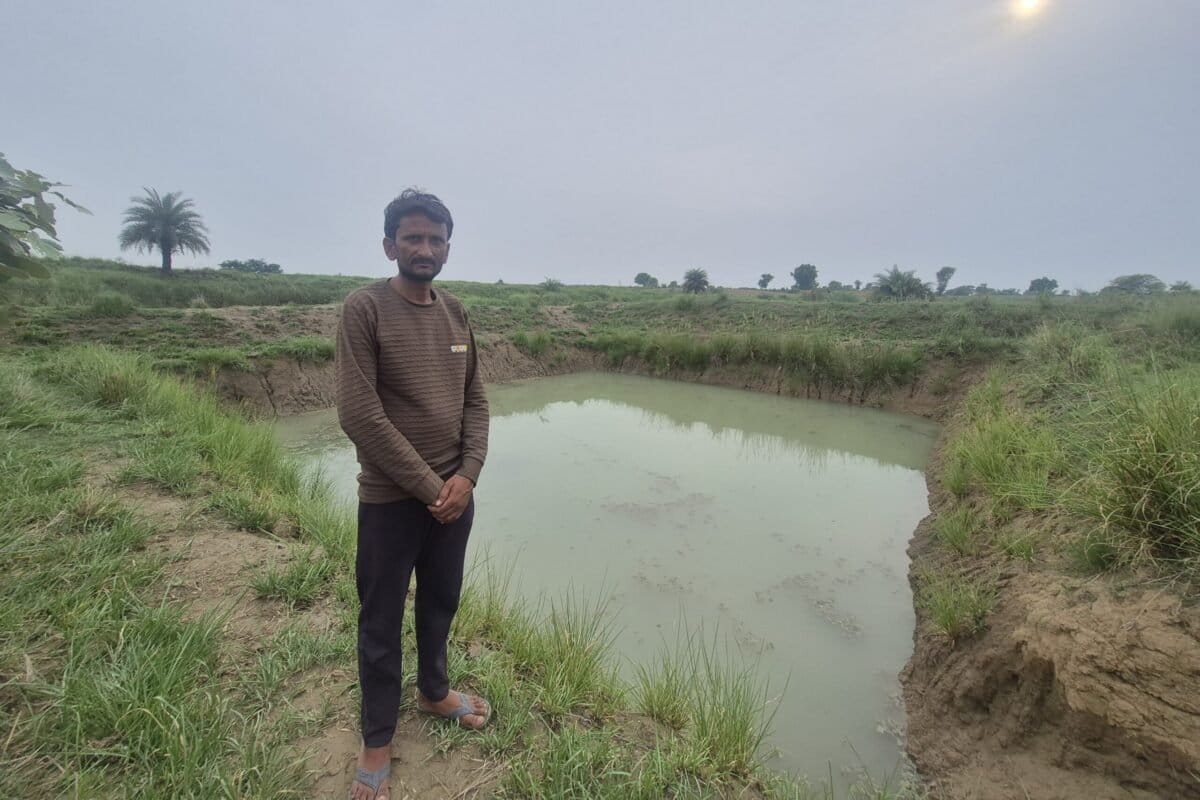
Remove encroachment from Bandham Kunta buffer zone: NGT Directions were issued by the NGT, southern bench, Sept. 3 to ensure that the prescribed buffer zone of the Bandham Kunta, a summer storage tank in Dornakal, Mahabubabad district, Telangana is restored and protected in accordance with law.
The application was filed by farmers of the Dornakal Bandham Cheruvu Ayakattu, alleging encroachment upon the Cheruvu Shikam land of Dornakal Bandham Cheruvu which belongs to Bandhan pond. It was alleged that certain private persons had occupied 1.1950 acres of Cheruvu Shikam land and were constructing a compound wall, thereby obstructing the access road used by the farmers, interfering with the natural flow of flood and rainwater, and creating a risk of flooding and submergence of the adjoining agricultural lands.
Hingonia dam in Jaipur now a wetland The central bench of NGT on Sept. 2 took up the matter of encroachments from Hingonia dam area of Jaipur. During the hearing, the court was informed that the status of the water body has been modified as a wetland. The total area of the waterbody / wetland, map, revenue records, catchment area and its FTL area are required to be placed clearly before the tribunal by the Water Resources Department, Rajasthan and the Jaipur Development Authority (JDA), the court directed. Directions were issued to the representatives of the Water Resources Department, Rajasthan and JDA who deal with the matter and possess sufficient knowledge and records to be personally present at the next hearing Sept. 29 to clarify the position.
Kayamsar lake pollution A joint committee report called for the immediate stoppage of untreated sewage discharge into Kayamsar lake in Haryana’s Hansi by identifying, intercepting and diverting all drains carrying sewage into the lake to the nearest operational STP. The supplementary report of the joint committee on March 19, 2026, mentioned some remedial measures. These included immediate discontinuation of fresh solid waste dumping in the vicinity of the lake and ensuring proper disposal in compliance with the Solid Waste Management Rules, 2016; installation of physical barriers or fencing around vulnerable sections of the lake to restrict the entry of solid waste, cattle, water and other pollutants into the waterbody.
The NGT, on Nov 28, 2025, directed the constitution of a joint committee to look into the matter. As per information provided to the joint committee, the HSPCB has imposed environment compensation of Rs 71 lakh for the period from April 1, 2020, to March 3, 2026. The Municipal Council, Hansi has not deposited the environmental compensation imposed upon it. Information is awaited.
Harvard students explore BioPods to tackle Goa water pollution Students from Harvard University in the US are exploring potential pilot sites in Goa to test modular wetland ecosystems that combine fungal mycelium with native wetland plants to remove contaminants from polluted water. Called BioPods, the nature-based system has already been tested in Rhode Island, USA, and can be customised to address the contaminants and ecological conditions of individual sites. The students are particularly interested in degraded urban waterways where pollution has already taken a toll on ecosystems, rather than Goa’s healthiest and most intact wetlands.
RAMSAR WETLANDS
Housing project in Sultanpur park buffer zone seeks fresh wildlife clearance Mega Infratech has submitted the proposal for its 3.67-hectare project — Zara Romain in Sector 95B — after the standing committee of National Board for Wildlife (NBWL) had ealier deferred proposals in the area over violations and directed Haryana to take effective action against them.
In its Sept 4 representation to the principal chief conservator of forests (PCCF), Mega Infratech has argued that its project at Garhi Harsaru, located 4.12km to 4.33km from the boundary of SNP, is a permitted activity under the zonal master plan for the Sultanpur ESZ, notified on June 18, 2021. This comes after a govt-appointed committee had identified at least 70 violations in the ESZ. Environmentalists have said the earlier findings should be taken into account before the fresh proposal is considered.
The 5km area around Sultanpur National Park was notified as an ESZ in 2021. The fact that the Mega Infratech site is beyond 3km from the park does not place it outside the ESZ. The fresh application therefore brings the focus back on the concerns already raised by the scientific committee and the standing committee’s direction that violations in the Sultanpur ESZ be addressed before proposals are cleared. The key question now is whether the earlier violations and conservation concerns have been adequately dealt with before the project is considered afresh.
WATER OPTIONS
How villagers protected Bondvol lake When vested interests threatened to gobble up the century-old Bondvol Lake, people’s power compelled the system to restore this water commons to its rightful keepers.
Biochar-modified concrete using faecal sludge–derived biochar Abstract: – This research explores the potentiality of biochar derived from faecal sludge collected at faecal sludge treatment plants (FSTP) by partially replacing cements used in concrete applications. These plants collect, treat, and manage human waste from septic tanks and sanitation systems. This study focuses on determining the optimal dose of biochar as application for concrete’s mechanical, durability properties, and microstructural changes. The biochar’s pozzolanic activity was evaluated through the strength activity index, while parameters such as shrinkage, compressive strength, flexural strength, water absorption, and porosity were also measured to gauge its impact on concrete performance.
In this study, treated sewage sludge was dried and heated at temperatures of between 350 and 450 degrees Celsius. It was then ground into a fine powder. The results were promising. Concrete containing 5% biochar showed a 20% increase in compressive strength and a 36% increase in flexural strength after 91 days of curing. With 10% replacement, flexural strength increased by as much as 42%, while compressive strength rose by 21%.
Scientists believe the porous biochar can absorb water and release it slowly as the concrete hardens. The researchers say further testing is needed before the material can be used in real buildings. Its performance under extreme temperatures, salt exposure and freezing conditions also needs to be studied. The possible release of heavy metals from sewage-based materials is another concern.
The study sets up a pointed contrast. Normally a city’s sewage sludge is a liability to be disposed of, and a builder’s cement is a material whose production loads the atmosphere. Both are problems flowing toward waste and emissions. The first is bigger than you might think: a single person produces up to around 400 grams of faeces a day, which across a city becomes a constant stream that has to go somewhere.
GROUNDWATER
Quantifying environmental co-benefits of nitrogen-based crop restructuring and its implications on India’s interstate trade network Abstract: -Addressing sustainability within food systems is challenging due to their multifaceted nature. Here, we evaluate crop-restructuring pathways for Indian agricultural system by integrating nutrient, water, greenhouse gas, economic, and interstate trade-network accounting. We show that the nitrogen-focused crop restructuring strategy reduces nitrogen surplus by 13.4% and water use by 18.6%. This approach maintains baseline calorie production, narrows the benchmarked cereal net-return deficit, and mitigates greenhouse gas emissions by 8.7%. Relative to water-focused restructuring, the nitrogen-focused strategy delivers larger reciprocal co-benefits by about 4.6-fold, resulting in a decrease in socio-environmental costs associated with nitrogen pollution of around $1.19 billion USD. The resulting agricultural restructuring substantially expands alternative-cereal trade in the interstate trade network. Overall, our analysis shows that integrating nutrient management into crop-restructuring strategies can support food-system sustainability in India and other resource-constrained agricultural systems.
The work tackles the long-standing concept in sustainable agriculture of measuring cropping success mainly by the water saved. Contrary to that, the central insight of the article, published in Nature Communications, is that nitrogen surplus should be at the center of that conversation instead. Nitrogen surplus is the portion of applied fertilizer that crops do not absorb. Unused nitrogen from fertilizers leaches into wells, washes into rivers and evaporates into greenhouse gases such as nitrous oxide, polluting the atmosphere. It is also cheap to produce, which is part of why it is overapplied, and it lingers in the soil and wider biological cycle far longer than water does. That persistence and reach are strong reasons to shift the planning focus from water toward nitrogen, making the latter a strong policy target.
URBAN LAKES, WETLANDS
Jhuggis, temple on waterbody, NGT orders removal, restoration The NGT has ordered removal of encroachments – seven jhuggis, a temple and a masonry platform – found on a nearly 2.5-acre water body in Fatehpur Jharsa, along with restoration and rejuvenation of the pond. A govt demarcation also found a road and footpath built by Haryana Shehri Vikas Pradhikaran (HSVP) over about 1,077 sq yards of the land. The order was passed on Aug 24 by a bench of Justice Arun Kumar Tyagi and expert member A Senthil Vel, disposing of the original application with directions for removal and restoration.
The water body is recorded as a johad in revenue records, and the 2018-19 Jamabandi cited by MCG confirmed this. The demarcation report found the seven jhuggis occupying about 275 sq yards on a govt-built bund meant to store water, along with a 39 sq yard temple and a five sq yard masonry platform, and named seven people in connection with the jhuggis.
HSVP told the tribunal that the land had been acquired through notifications issued in 2003 and 2004 for development of residential and commercial Sector 47, with possession handed to its estate officer in Dec 2005. It said the encroachments had come up after a May 25, 2015 status quo order of Punjab and Haryana high court, passed in a separate case challenging the land’s acquisition, and that it would remove them according to law once the status quo lifted.
Hebbal tunnel raises concerns about groundwater, flooding The proposed Hebbal tunnel is intended to ease one of north Bengaluru’s major traffic bottlenecks, but its long-term congestion benefits remain uncertain. Its alignment near Hebbal Lake has raised concerns over flooding, groundwater recharge and the loss of lake buffer space. While the project’s DPR proposes engineering measures to manage water, experts say their effectiveness will depend on the functioning of the wider lake and stormwater system.

Despite the legal challenge, concerns over about 893 trees to be affected and proposed use of 3.45 acres of Hebbal Lake land, work on the 2.2-km short tunnel project connecting Esteem Mall to Baptist Hospital has gathered pace, with construction activity under way.
Chandapura lake conservation The NGT on March 18, 2026, heard the matter of conservation of Chandapura lake in Anekal taluk, Bengaluru. The applicant raised grievances regarding the continued deterioration of Chandapura lake and its impact on downstream water bodies (Muttanallur lake and Bidaraguppe lake). They raised concerns over the proposed “Swift City” project planned across 11 villages in the catchment area of Muttanallur lake. The lakes of these 11 villages act as tributaries to Bidaraguppe lake, and the project could worsen pollution, water depletion, and ecological damage. The NGT’s principal bench directed that the matter be listed before the southern bench on March 30, 2026.
Sewage lorries turn Thangal lake into a cesspool What was once a freshwater source for farmers has turned into a cesspool, with untreated sewage discharged into the canal leading to Thangal Lake near Nedungundram by about 20 lorries every night. This has raised concerns over pollution, groundwater contamination and recurring flooding in nearby residential areas. The 35 acre lake in Puthur village, under Nedungundram village panchayat, is located about 5km from Tambaram Corporation limits. Residents said sewage lorries discharge waste from surrounding areas into the canal — which flows into the lake — instead of taking it to the STP in Tambaram. The most affected areas are Puthur, Sri Sai Avenue, Perumalpuram, Mappedu, Krishna Nagar, and Bharathidasan Nagar, where about 10,000 residents live. They say the dumping has worsened the pollution in the water body, and no effective action has been taken despite complaints to the district administration and panchayat officials.
How Salt Lake City was built The W Bengal govt began pumping material dredged from the Hooghly into the Salt Water Lakes east of Kolkata to create land for a new township. The area was then a low-lying expanse of saltwater lakes, marshes and fishing grounds, while the city was looking for more land to accommodate its growing population. The govt brought in a Yugoslav firm and used dredgers, barges and pipelines to pump sandy slurry into the wetlands. Over the next few years, the reclaimed land was developed into what is now Bidhannagar, better known as Salt Lake.
The project began on April 16, 1962. The idea was to reclaim the low-lying Salt Water Lakes and create a planned township on the eastern edge of Kolkata. The engineering challenge was considerable. The proposed township stood on land that was largely below the level considered suitable for urban development, so the area had to be filled and raised.
HMWSSB is preparing a roadmap to prevent sewage from entering Durgam Cheruvu, particularly through nalas during non-rainy periods. HMWSSB Managing Director Ashok Reddy on Sept. 11 inspected nalas entering the lake, sewage flows, STPs, stormwater drains and sewage diversion systems and directed officials to determine the quantities of sewage, treated water and rainwater entering the lake through each route and prepare a comprehensive flow map. According to a press release, a long-term plan will consider current requirements and the projected increase in sewage volumes by 2047.
Waterbody encroachment in Agra On March 18, 2026, the NGT directed the district magistrate of Agra to submit a report on the compliance status of the court’s orders regarding a waterbody’s encroachment in the city. The matter will be listed next before the court on July 1, 2026. The applicant sought compliance of the NGT order on January 17, 2025. The counsel for the applicant submitted that no action has been taken to comply with the order.
The tribunal on January 17, 2025, had disposed of the application by directing the district magistrate to take appropriate action and ensure that the pond land is maintained as it is in its size and nature, in accordance with the revenue records. If there is any encroachment, appropriate action must be taken to remove encroachment and restore the pond to its original status. The magistrate should take action within one month and must submit a compliance report to the Registrar General of the NGT. The magistrate has not submitted the compliance report as directed above, the court was informed.
URBAN WATER
Bengaluru to treat every drop of sewage by Dec 2029 After missing earlier deadlines by several miles, Karnataka govt has now set Dec 2029 as the final date to keep Bengaluru fully prepared to treat every drop of sewage it generates. While achieving 100% sewage treatment remains a tough challenge, only about 50% of Bengaluru’s 2,580 million litres of sewage generated daily is treated as of now. The task is now to build capacity expansion to double the treatment rate in the next three-plus years. Bangalore Water Supply and Sewerage Board has drawn up a phased plan to commission new sewage treatment plants and upgrade existing facilities in the coming years. The earlier targets were 2020, 2023 and 2025. The latest roadmap comes amid concerns over polluted water flowing into Cauvery river.
Nearly half of the 2825 mld of Cauvery water pumped to the city everyday goes untreated, contaminating the Cauvery and other water resources downstream, in Tamil Nadu, Forest, Ecology and Environment Minister Ramalinga Reddy said on Sept. 10. “Karnataka gets 2825 mld of water from Cauvery of which 2580 mld of sewage is generated. At present, the 37 STP of the BWSSB have the capacity to treat 1364.5 mld of sewage. There is a gap of 1215.5 mld in sewage treatment,” Reddy told reporters, stating that 47% of the sewage goes untreated.
Interestingly, this doesn’t take into account the water extracted from 4 lakh borewells in the city. It is estimated that about 80% of freshwater is turned into sewage. Officials are yet to estimate the groundwater extraction and sewage generation. The minister said work was ongoing to build 42 STPs of 1174 mld and the existing STPs would be upgraded to increase the capacity by an additional 60 mld. As per a note shared by the minister’s office, the BWSSB hopes to complete the construction of all the STPs by 2029.
The minister also stated that some of the 37 STPs run by the BWSSB were not treating the sewage as per the standard parameters set by the NGT. Similarly, the STPs in apartment complexes with more than 80 residential units were not functioning satisfactorily. “Poorly treated sewage is let in the drains which then contaminate the lakes. I have instructed the officials to check the STPs run by the apartments and submit a detailed report in 15 days,” he said.
With Tamil Nadu’s submission against Karnataka over dumping of sewage into Cauvery river expected to be heard by the NGT next week, Reddy held a review meeting with officials from the BWSSB to take stock of the situation.
Visakhapatnam groundwater levels dip by 3.8m in one year Groundwater levels in Visakhapatnam recorded a 3.86m drop in the last year, falling from 7.65m in Aug 2025 to 11.51m in Aug 2026. Presenting the overall groundwater scenario, district groundwater officer K Pushpalatha said the steep decline was directly linked to an acute rainfall deficit. She presented the findings during a training programme on ‘integrated and interdisciplinary strategies for sustainable groundwater development and management’, jointly organised by the Central Ground Water Board (CGWB) and GITAM School of Science.
She said that against the season’s normal of 177.3mm rainfall as of Aug 26, the district recorded only 92.39mm, marking a 47.89% deficit. She said key factors accelerating the depletion included excessive groundwater extraction from heavy borewell pumping for irrigation, domestic and industrial use, reduced natural recharge from urban concrete cover, a shortage of water-harvesting structures, and high surface runoff during brief, intense downpours.
Visakhapatnam can store about 32 tmc ft of water. Within a few years, with data centres and new industry, it will need more than 60 tmc ft of water. That gap is the subject of a proposal the Vizag Development Council has sent to Andhra Pradesh CM N. Chandrababu Naidu, seeking ₹15,000 crore to ₹23,000 crore for new reservoirs.
Why Delhi’s Drinking Water is Stuck in a Chemistry Loop Every year during peak winter and early summer (October to April, flow in the Yamuna river drops sharply and ammonia concentration increases. These ammonia spikes pose a direct threat to Delhi’s water supply, since the Yamuna is the city’s primary drinking water source. Each year, this indirectly affects 19.5 million people in Delhi, yet the issue goes unresolved.
Ammonia exists in water in two equilibrium forms: ammonia and ammonium ion. It harms the entire ecosystem, from fish and amphibians to land animals, and humans. Yet, we have not come up with an affordable and scalable ammonia-removal method. This points to a systemic failure, where every responsible authority acknowledges the crisis without addressing it effectively. (Arunima Singh)
NGT issues notice to J&K govt over STP construction The NGT has issued notice to the Jammu and Kashmir government over the construction of a STP at Khadi Mill Ground in Allochi Bagh, Srinagar, following objections raised by residents over its location and alleged violations of environmental norms. The petition has been filed by residents of the locality, led by Bhupender Singh and others, who have alleged that the proposed STP is being constructed in proximity to residential houses in Friends Colony and that the project violates prescribed environmental and siting requirements.
According to the proceedings, the J&K PCC had issued Consent to Establish (CTE) for the STP on March 20, 2026, which was subsequently rescinded on May 21, 2026. The applicants have also raised concerns over the location of the proposed plant, describing the Khadi Mill Ground as a low-lying and flood-prone area located adjacent to the Flood Spill Channel. The NGT further directed the applicant to serve the respondents and file an affidavit of service at least one week before the next hearing. The matter has been listed for hearing before the Principal Bench of the NGT on November 25, 2026.
MONSOON 2026
IMD’s district wise daily (Sept. 14, 2026) and cumulative (from June 01 to Sept. 14 2026) rainfall figures.
FLOOD 2026
Yamuna fails to breach warning mark in Delhi The Yamuna, which flows through the national capital, does not appear to have received much relief from the monsoon this year. The rise in the Yamuna’s water level this year has been the lowest in the past 12 years. This is considered a worrying sign for the health of the river and its wildlife. This year, however, the rise in the Yamuna’s water level has been very limited. According to the data, the river reached a maximum level of 204.09 metres at around 6 pm on August 8. This was the lowest maximum water level recorded since 2014.
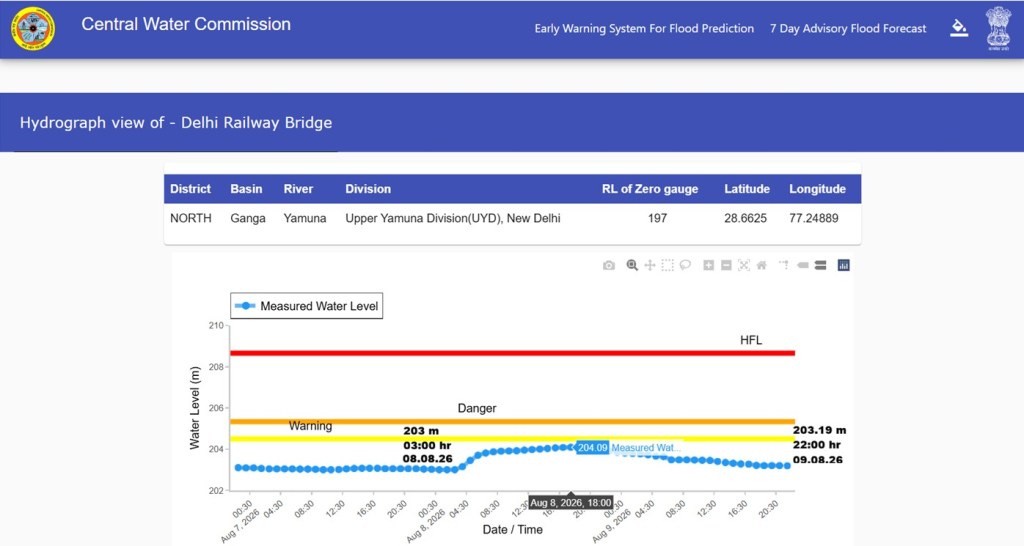
Bhim Singh Rawat, SANDRP says that this year there has been less rainfall in Himachal Pradesh and Uttarakhand compared to previous years. The catchment areas of the Yamuna basin upstream of Delhi have also not received much rainfall. As a result, the Yamuna has carried less water. There is also an assessment that more water may be getting diverted into canals than before, reducing the flow in the main channel of the Yamuna. Since the Yamuna has not experienced such a flood this year so far, it is feared that pollution levels in the river may remain higher than usual. The impact could be particularly visible during winter.
HFL BREACH
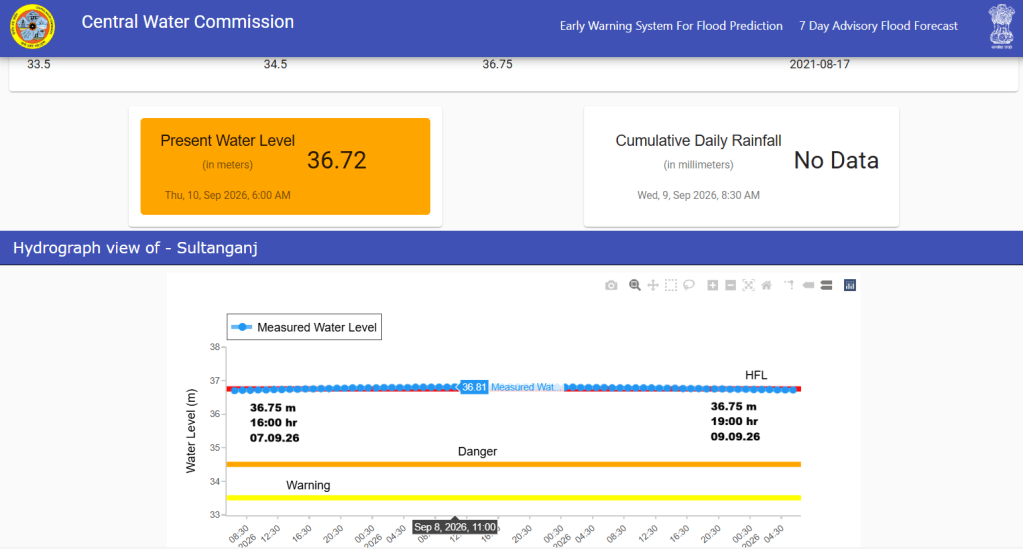
Rivers Crossing Highest Flood Levels in August 2026 In Aug 2026, we have been able to document rivers breaching their respective Highest Flood Levels (HFLs) at least at 10 Central Water Commission (CWC) flood monitoring sites spread across five river basins and four states mainly in central and east India. Half these sites are in the Ganga basin followed by two in the Brahmani & Baitarani basin and one each in the Mahanadi, Godavari and East Flowing Rivers between Mahanadi & Pennar basins. State-wise, Madhya Pradesh and Odisha account for eight of the 10 sites, with four each, followed by one site each in Uttar Pradesh and Chhattisgarh.
River Ganga at Sultanganj site in Bhagalpur Bihar has crossed its old HFL 36.75 meter dated 17.08.2021 at 16:00 hour on 07.09.2026 and continues to flow in extreme flood with rising trend.
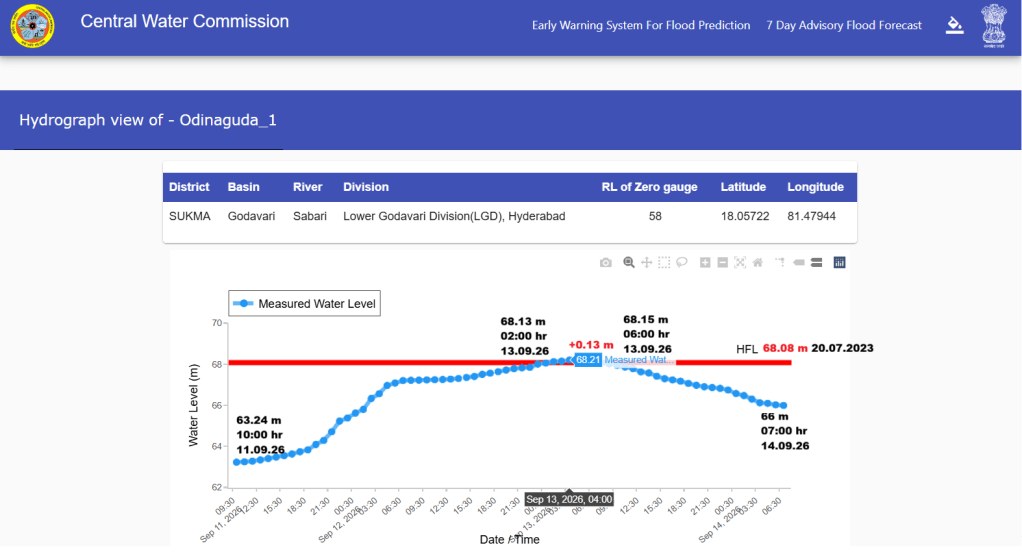
River Sabari in Godavari basin at Odinaguda site in Sukma district Chhattisgarh has crossed its HFL 68.08 meter dated 20.07.2023 and set 68.21 meter as new HFL at 04:00 hour on 13.09.2026 which is higher 0.13 meter than the old HFL.
CLOUD BURSTS
In the 2025 monsoon alone, Himachal recorded 46 cloudbursts, 98 flash floods and 145 major landslides. Some 1,500 houses were destroyed, and losses crossed Rs 4,500 crore. In 2023, it lost 441 lives and Rs 12,000 crore. In August 2025, a debris flow rushing down the Kheer Gad swept away the market at Dharali in minutes. None of this was unforeseen. The inventories are published; villagers can name the nallah that will come for them. What follows is a committee, a review meeting, a war room. The Himalaya is asking for a war footing. The Sendai Framework rests on four priorities: understanding risk, strengthening governance, investing in resilience, and carrying preparedness into recovery. Three deserve attention here — prevention, preparedness and rebuilding.
LANDSLIDES
Comparative assessment of landslide susceptibility using heuristic and statistical models in Chamoli This study presents a comparative landslide susceptibility assessment using three distinct models: Frequency Ratio (FR), Shannon Entropy (SE), and Analytical Hierarchy Process (AHP). Twenty-four geo-environmental and anthropogenic conditioning factors were integrated to develop landslide susceptibility maps (LSMs) tailored to the region’s complex terrain. Multicollinearity analysis was conducted to ensure statistical robustness, and model performance was validated using the Receiver Operating Characteristic (ROC) curve and the Area Under the Curve (AUC) metric. The FR model achieved the highest predictive accuracy (AUC = 0.819), followed by AHP (0.789) and SE (0.594).
While FR demonstrated superior data-driven reliability, AHP offered interpretability grounded in expert judgment. Thematic analysis revealed slope, geology, rainfall, proximity to roads, and land use changes as key landslide triggers. Susceptibility zonation showed significant spatial variability across models, with high-risk zones concentrated near road corridors, riverbanks, and deforested slopes. The study underscores the value of methodological triangulation in landslide prediction and recommends FR as a reliable framework for future hazard planning. These findings provide actionable insights for disaster mitigation, infrastructure planning, and sustainable land use management in Himalayan regions.
DROUGHT
Kutch, Saurashtra farmers demand release of Narmada water Kutch and Saurashtra face a looming drought, with some talukas receiving less than 10 per cent of normal rainfall and reservoirs nearly dry. Farmers’ kharif crops have wilted, prompting urgent demands for Narmada water via the Sauni Yojana. Despite high storage in Sardar Sarovar, the state is prioritising drinking water and delaying large-scale irrigation releases.
Experts have questioned the release of water through Sauni to the dry reservoirs of Saurashtra. Himanshu Thakkar, coordinator of the SANDRP, says the Sauni project was designed to ensure that when the Narmada overflows, the water released after the Sardar Sarovar dam is filled will be diverted to the dams of Saurashtra. However, this time the Sardar Sarovar Dam has not reached the point of overflow. “There are still at least two weeks of the monsoon season are still left. Let us see what the situation will be.”
According to Thakkar, such a situation hasn’t arisen in recent years. Almost every year, excess Narmada water was diverted to Saurashtra through the Sauni project. However, Saurashtra also received adequate rainfall in previous years, which reduced the need for Sauni water. The current situation though raises questions about the utility of large projects like Sauni.
Rain Deficit Raises Concerns Over Kharif Crops in Maharashtra This year, rainfall in Maharashtra does not appear to be supporting farmers. A prolonged break in rainfall has raised concerns over kharif crops, with the situation reportedly more serious in the Marathwada region. The impact of deficient rainfall is now being felt not only in the fields but also on water availability and fodder for livestock. By the beginning of September, the state had recorded around 17% less rainfall than normal, while the rainfall deficit in Marathwada had reached nearly 37%.
Among the districts, Solapur recorded the highest rainfall deficit at 53%, followed by Beed and Hingoli at 49% each, Jalna at 45%, Amravati and Parbhani at 42% each, Nandurbar and Dharashiv at 41% each, and Akola at 38%. Nanded, Washim, Nagpur and Sindhudurg each recorded a 34% rainfall deficit. The situation in Marathwada is particularly worrying because several areas have experienced a prolonged 35- to 45-day break in rainfall. This is directly affecting kharif crops such as soybean, cotton and maize. Reports indicate that nearly 3 lakh hectares of crops in Beed are under stress.
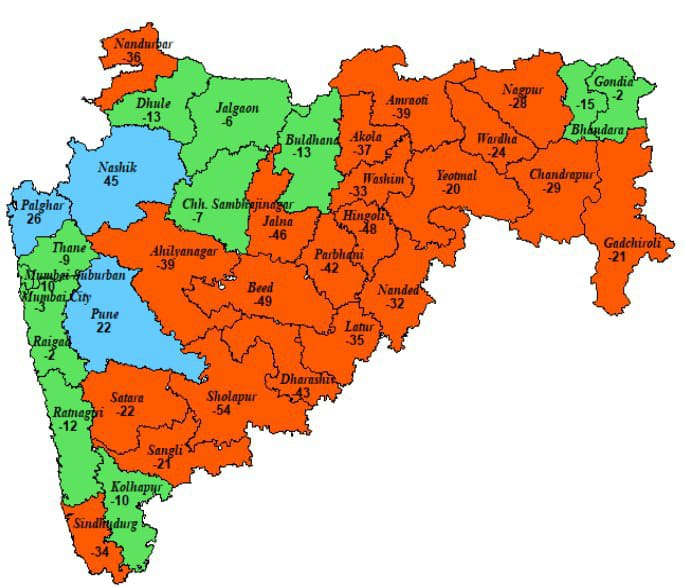
The situation is more serious at the taluka and mandal levels than the state’s overall rainfall figures suggest. Of the 76 talukas in Marathwada, 24 have received less than half of their normal rainfall for the June–September period. The rainfall deficit is also putting increasing pressure on wells, borewells, streams and other water sources. If the region does not receive good rainfall in the coming days, problems could worsen not only for kharif crops but also for rabi cultivation and drinking water supplies.
Meanwhile, Maharashtra Revenue Minister Chandrashekhar Bawankule has directed all district collectors, sub-divisional officers and tehsildars in Marathwada to visit farms and prepare reports on crop conditions. A review meeting reported that the Chhatrapati Sambhajinagar division has so far received only 57.78% of its normal rainfall. During the same period last year, the figure was 106.38%. District-wise, rainfall has reached 82.36% of normal in Chhatrapati Sambhajinagar, 80.04% in Jalna, 74.23% in Nanded, 70.08% in Hingoli, 64.05% in Beed, 62.73% in Dharashiv, 55.34% in Parbhani and 52.18% in Latur. Of the division’s 496 mandals, 218 have received only 50% to 75% of their normal rainfall.
The impact of the rainfall deficit is now also visible in dams and other water sources. The 11 major dams in the Chhatrapati Sambhajinagar division are 66.74% full, while the 76 medium dams have 21.34% water storage and the 780 small dams have only 20.48% water remaining. Meanwhile, sowing has been completed across around 93% of the division’s kharif area. Farmers are now waiting for further rainfall to save their crops.
Dipping Kabini dam water level sows seeds of crisis for region’s farmers The water level in the Kabini dam in H D Kote taluk of the district, which almost neared the maximum level in the first week of August, has depleted by over 15 feet in just one month, by September first week. This has created anxiety among farmers, who are already facing a drought situation after poor monsoon rains, affecting sowing activities.
With the IMD predicting very low rainfall in Mysuru district in the coming week, farmers stare at worse times. The district received 55 per cent deficit rain from June 1 to August 31. There was an inflow of 31,746 cusec, said to be the highest to the dam this year, and outflow of 27,000 cusec, as there was a good spell of rains in the Cauvery catchment areas. The authorities had given a flood alert also, warning about releasing excess water to maintain dam’s safety. But the water level started depleting gradually after a couple of days.
ENVIRONMENT GOVERNANCE
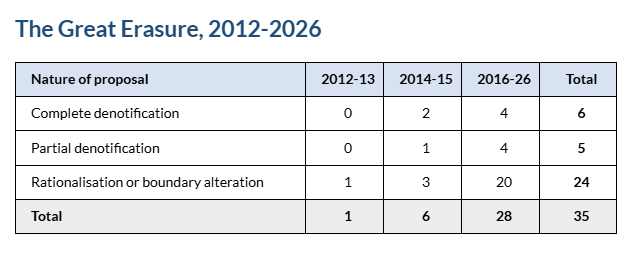
NWBL Has Helped Shrink or Erase 35 Protected Areas Our analysis of 64 meetings of the National Board for Wildlife’s Standing Committee finds 35 approvals since 2012 to alter or denotify protected areas for infrastructure, mining, tourism and urban expansion. At least six were denotified entirely without the Supreme Court approval required by its orders. None was referred to the Supreme Court despite orders requiring judicial scrutiny. (Prakriti Srivastava And Prerna Singh Bindra)
Citizens warn against Aravalli assessment deadline Aravalli Virasat Jan Abhiyaan has questioned the Supreme Court’s decision to deny a six-month extension to a committee examining the definition and extent of the Aravalli hills. The citizens’ group says the High Powered Committee needs more time for scientific review, field assessments and consultations with communities affected by mining and other pressures. The committee has been directed to submit its final report by November 30, 2026, with the next hearing scheduled for December 2. Activists say the proposed “Aravalli Ecosystem Landscape” framework must assess ecological, hydrological, cultural and socio-economic dimensions across the hill range.
NGT seeks HSPCB EC recovery report from stone crusher Environmental compensation amounting to ₹1.78 crore remains to be recovered from 22 stone-crusher units in Mahendragarh, with the NGT directing the HSPCB to submit a fresh status report on the recovery within four weeks. The tribunal was informed that environmental compensation totalling ₹5.39 crore had been imposed on 88 stone-crusher units for past violations. Of these, 67 units had deposited ₹3.61 crore, while ₹1.78 crore remained pending from 22 units when the HSPCB filed its action-taken report on May 15, 2026. The cases of the defaulting units had been sent to the revenue department for recovery through attachment of properties.
However, the recovery position has changed since the filing of the report. HSPCB counsel Rahul Khurana told the NGT that one more crusher unit had subsequently deposited the compensation and partial recovery had been made from another unit. The bench consequently allowed the pollution control board four weeks to place an updated recovery status on record. The matter has been listed for November 17, this year.
SOUTH ASIA
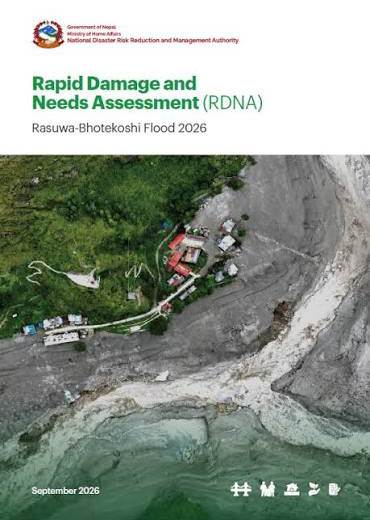
NEPAL DISASTER Nepal tallies the cost of its disaster Rebuilding after the Trisuli Valley flood will cost Nepal $4.7 billion, according to a Rapid Damage and Needs Assessment published by the National Disaster Risk Reduction and Management Authority (NDRRMA). As expected, hydropower suffered the most damage at approximately $1 billion – much greater than the loss from the 2015 earthquake.
The assessment consolidates damages into four sectors, with recommendations for how Nepal should build back in the next six months and in the longer-term. While many recommendations are open-ended and require further discourse, early recovery activities are focused on restoring access, maintaining essential services, and enabling livelihoods to resume.
Infrastructure will be the most costly to rebuild by far, accounting for about 65% of NDRRMA’s overall estimate at $.6 billion. Nepal’s energy and grid system suffered just under $1 billion in damage and losses. This figure includes damage to 13 hydropower projects and five solar plants with a cumulative capacity of about 783 megawatts — about 20% of Nepal’s current generation capacity.
Early recovery activities include restoring transmission lines, substations and undertaking micro-hydropower rehabilitation. In the longer term, the government will seek to restore damaged assets. As it is, the extent of the damage to the headworks, penstock and tailrace tunnels and powerhouses in all hydropower plants are yet to be minutely assessed, and will add to the final costs.
DRRMA in its report highlights that because the floods are made up of a series of compounding disasters, it is important to look at the Bhotekosi-Trisuli-Narayani corridor as a connected system —and one that will continue to be impacted by global warming. Accordingly, disaster and climate risk mitigation is another costly line item, accounting for about 13% of the overall estimate.
Workers blame Chinese Supervisor A worker who survived the catastrophic flash floods in Nepal has alleged that a Chinese supervisor fled from a Trishuli-3A hydropower tunnel after workers sought his help to be let out. The project is being built by China’s Power China Corporation, whose personnel supervise the engineering work. At least 40 people remain unaccounted for at Trishuli-3A. He claimed around 265 people were working in Tunnel No. 3 when the floods struck. He said bodies were lying inside the tunnel and that survivors could be heard crying for help.
Nepal communities are paying the price for hydropower dreams Nepal, water-rich and fossil-poor, is in the middle of one of Asia’s most aggressive hydropower expansions. For generations, hydropower has been presented as the engine that would transform Nepal’s economy. The transformation has been slower and more uneven than promised. Yet the government’s ambitions have only grown: an energy roadmap targeting 28,500 MW over the next decade, backed by $46.5 billion in investment, has unleashed a building frenzy. As of July 2026, more than 197 plants are operating, 262 have received construction licenses, and 244 hold survey licenses. Increasingly, Nepal’s rivers are being transformed into power corridors, carrying electricity across borders to India and, more recently, Bangladesh. (Fantastic, long piece by Tulsi Rauniyar, detailing the games the World Bank, ADB, IFC, companies, contractors, consultants and government agencies play to push unwanted hydropower projects, without consent from the communities.)
IWT A Warming Himalaya is Changing Indus Basin As mountain climates shift and river systems change, Dr Pratik Kad analyses why the Indus Waters Treaty’s 1960 engineering assumptions may no longer hold. He explores evolving climate risks, sediment hazards, and the need for smarter information sharing. Can this decades-old framework adapt to new threats from climate and geology?
EUROPE
Danube River Sediment Input and its Interaction with the North-western Black Sea Abstract: -The influence of the river Danube is determinant to the sedimentation of the north-western and western Black Sea area. After 1970, following the building of the Iron Gates dam, the Danube River sediment discharge diminished to 30–40% of its previous value. After a 12 000-year evolution, marked by active progradation, the Danube delta has become mainly inactive over the last few decades partly due to interventions of man-made origin. The deficit of sediment influx has led to the intense erosional processes of the deltaic littoral. On the Black Sea north-western shelf, two main areas (with contrasting sedimentary processes) have been identified: the internal, Danube sediment-fed shelf and the external, sediment-starved shelf. The modern highstand sedimentary history of the north-western Black Sea deep area is marked by the cessation of the Danube deep-sea fan active development. The main depositional units within the north-western Black Sea are described.
The construction of the Iron Gates dam system on the Danube was a major change for the river. After the dams were built, sediment discharge downstream dropped to around 30–40% of its earlier level, as reported in the study. The reduction was not simply a matter of less material moving through the river. Large reservoirs can trap sediment that would otherwise continue downstream. Material settles within the impounded sections rather than travelling towards the delta. For a landscape dependent on a river to keep delivering sediment, the change was significant. The Danube Delta had spent thousands of years gaining land through deposition. With a much smaller sediment supply arriving from upstream, parts of the system were left with less material available to offset the forces continually wearing the coastline away.
SANDRP
Also see: DRP 07 Sept. 2026 & DRP 31 Aug. 2026
Follow us on: www.facebook.com/sandrp.in; https://twitter.com/Indian_Rivers


