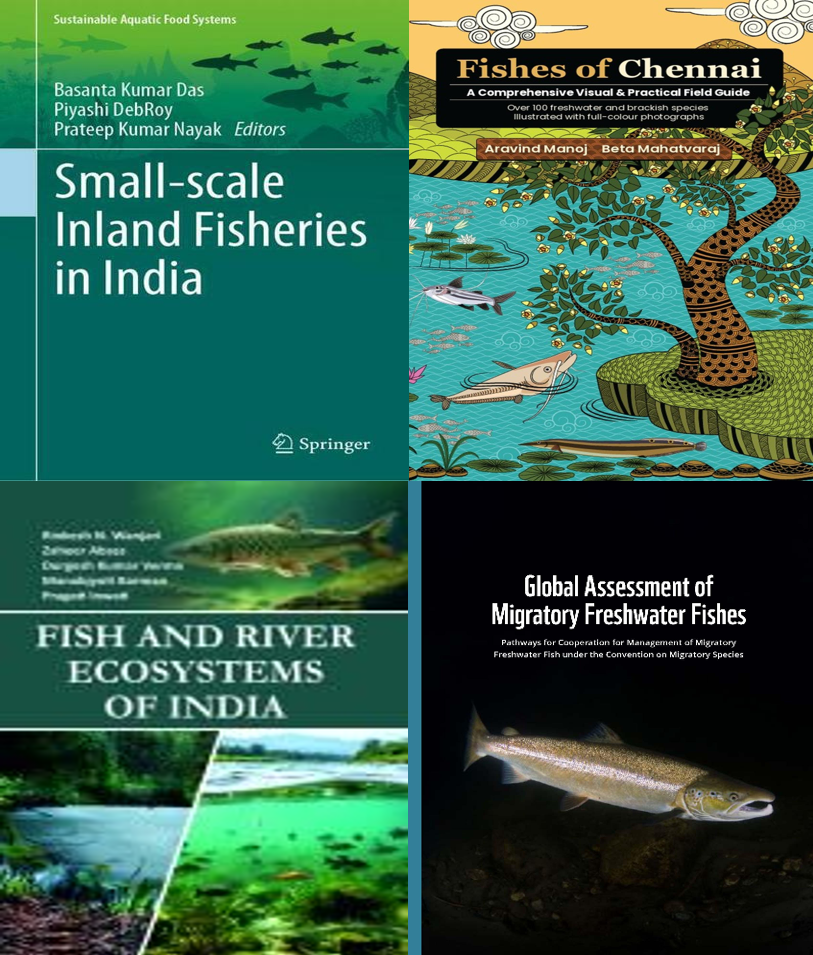
Marking World Fisheries Day (WFD) 2026, SANDRP has compiled top ten important studies, reports and books published in 2026 that have examined the status of freshwater fish, riverine fisheries and fishing communities in India. A common finding across many of these publications is the growing pressure on riverine fish and fisheries due to altered river flows, habitat fragmentation, climate change, pollution, invasive species & unsustainable fishing.
Continue reading “WFD 2026: Important Report, Studies & Books on Freshwater Fish in India”Tag: Ganga
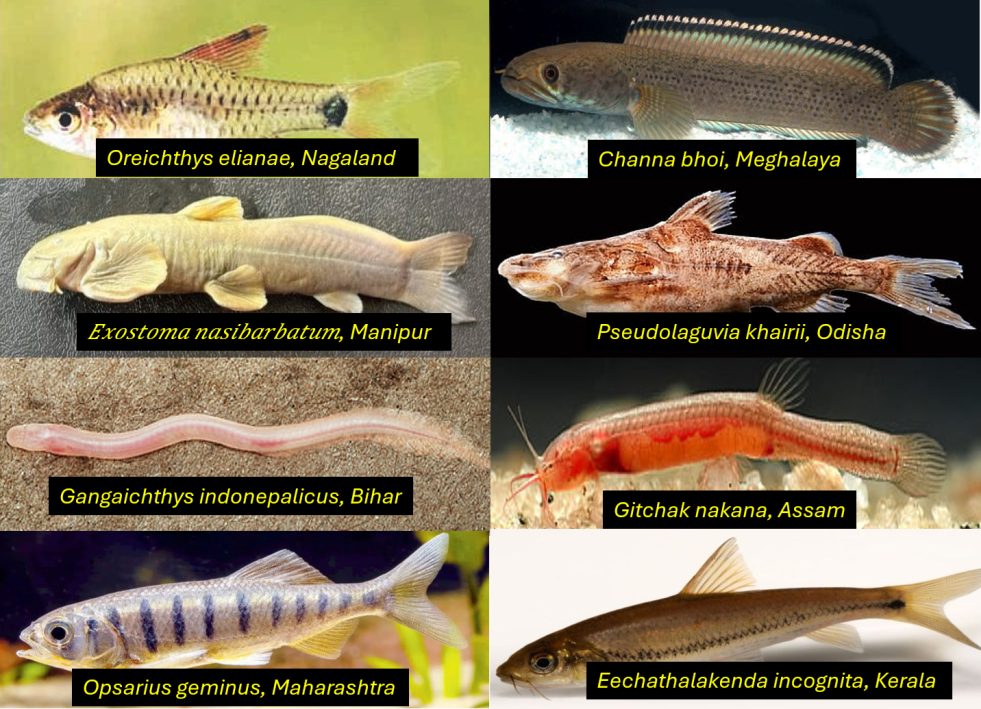
WFD 2026: Discovery of New Freshwater Fish Species in India
World Fisheries Day (WFD) has been celebrated annually on November 21 since 1997 to highlight the importance of sustainable fisheries management, aquatic ecosystem protection and the livelihoods of fishing communities. The theme of the 29th World Fisheries Day is “Empowering People for Change: Advancing Decent Work in Fisheries and Aquaculture, Particularly for Youth and Women.” To mark the occasion, we compile here top ten reports on new freshwater fish species discovered in India during past one year.
Continue reading “WFD 2026: Discovery of New Freshwater Fish Species in India”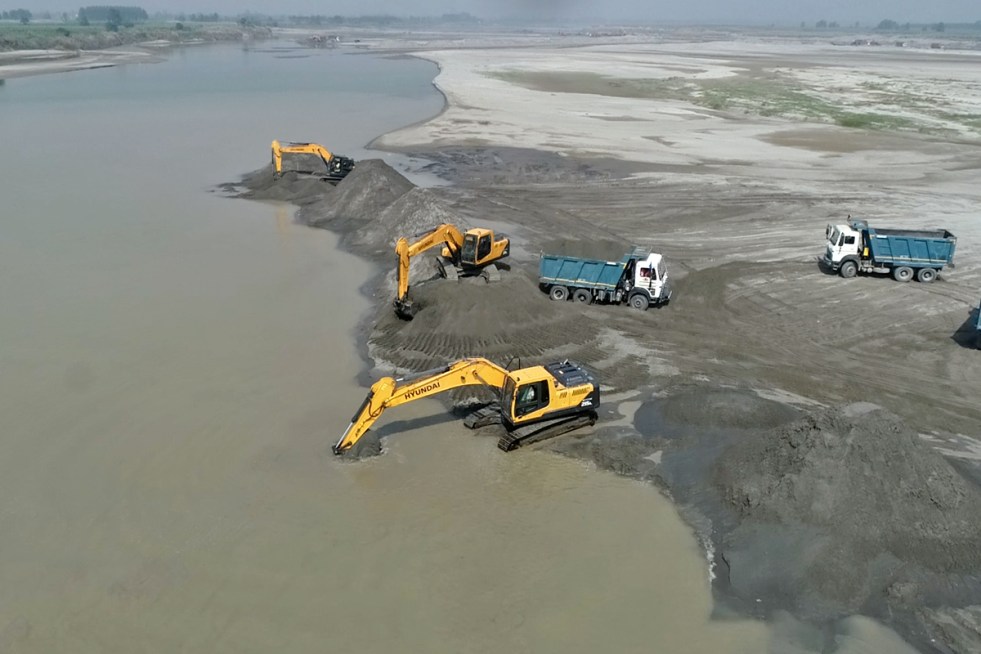
DRP 161126: CEC is right, but untested & so far unviable Reservoir Desilting alone cannot stop unsustainable River Sand mining
(Feature image:- Rampant sand mining damaging Yamuna’s ecology. Hridesh Joshi/Mongabay India)
In an important welcome development, the Supreme Court-appointed Central Empowered Committee (CEC) has proposed a three-year roadmap to phase out unsustainable river sand mining. It has recommended meeting part of the construction industry’s demand through reservoir desilting, manufactured sand (M-sand) and recycled construction and demolition (C&D) waste. It has also suggested assessing storage reservoirs over 15 years old and desilting those found suitable annually under a 10-year cycle.
Continue reading “DRP 161126: CEC is right, but untested & so far unviable Reservoir Desilting alone cannot stop unsustainable River Sand mining”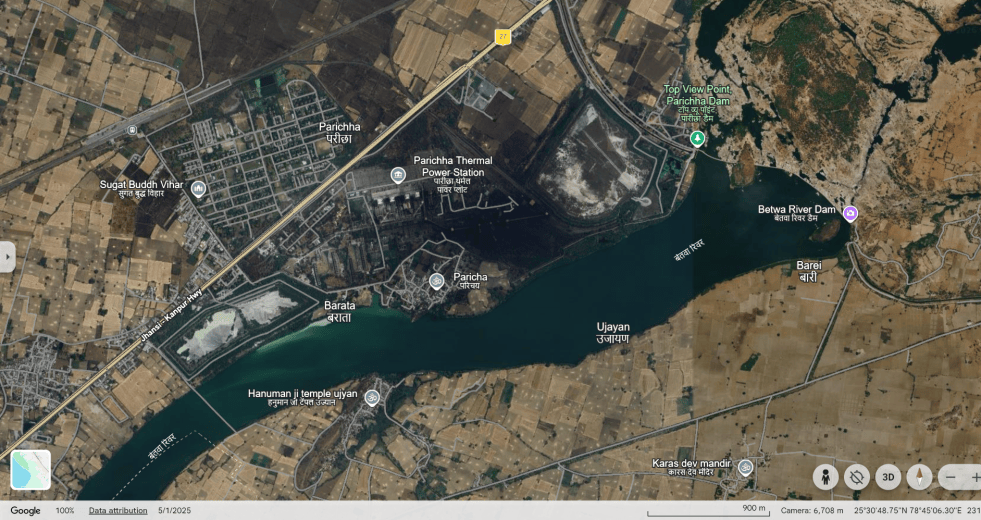
Yamuna Manthan 1126: Parichha Fly Ash Damaging Health of People & Betwa River
(Feature Image: Google Earth Jan 2025 imagery shows Parichha power plant, fly ash dumps in quite proximity to Betwa river near Parchha dam in Jhansi, UP)
The information in the NGT order and media reports on fly ash pollution from the Parichha Thermal Power Plant in Jhansi has raised serious concerns over the contamination of the Betwa river. The petition has revealed that the continuous discharge of fly ash has led to the formation of large ash islands in the riverbed, obstructing its natural flow. It has further claimed that the toxic heavy metals in the fly ash have been harming aquatic ecosystems in the river. The petition has also raised concerns over air pollution and adverse health impacts on nearby residents.
Continue reading “Yamuna Manthan 1126: Parichha Fly Ash Damaging Health of People & Betwa River”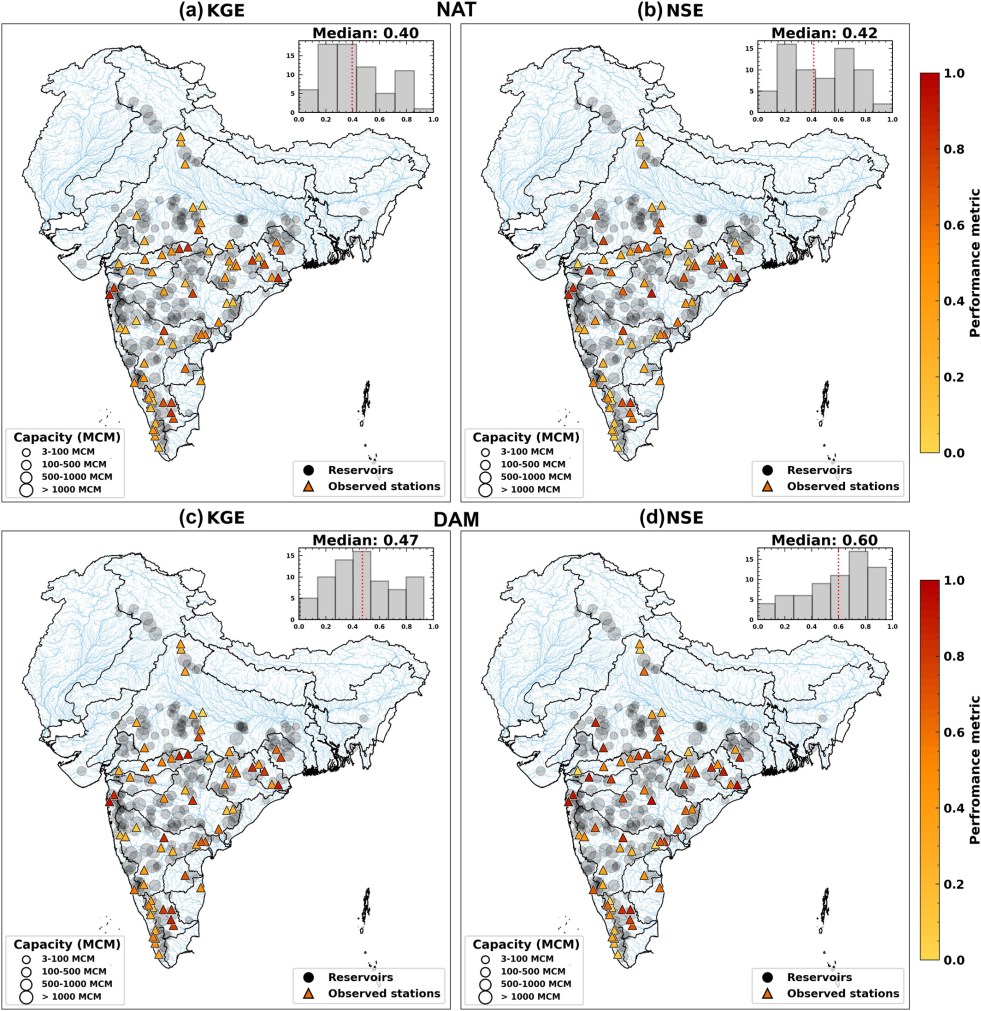
DRP 091126: Shift towards Weather Forecast based Dams’ Operation
(Feature Image: Model performance computed across 71 stations (a) NAT-KGE: median 0.4 (b) NAT-NSE: median 0.42 (c) DAM-KGE: median 0.47 (d) DAM-NSE: median 0.60. Source: AGU)
A new study has again emphasized on why dam operations in India need to move from routine schedules to weather forecast based management. The study analyzed 223 dams across the country over 23 years by comparing river flows with and without the dams. Most importantly, the study has highlighted the limitations of dams in controlling successive floods. It found that about 74% of the dams were more than 90% full on the day of a high-flood event. Thus, leaving very little space to hold the next heavy rainfall spell and control resultant floods.
Continue reading “DRP 091126: Shift towards Weather Forecast based Dams’ Operation”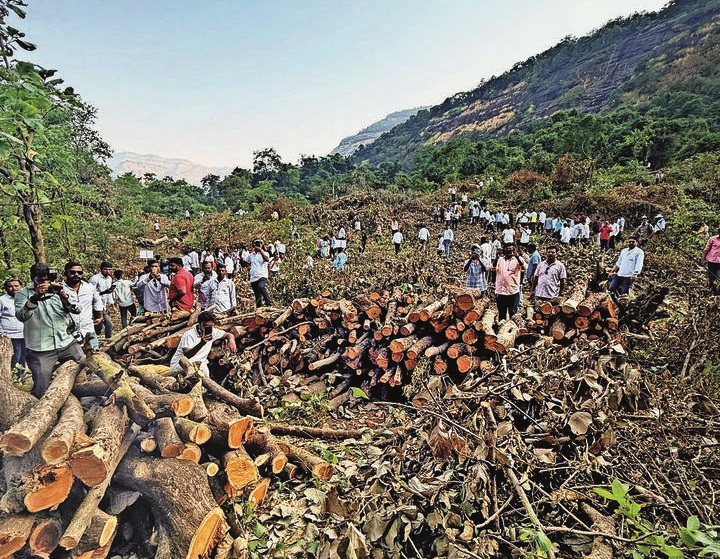
DRP 021126: Honestly assessing the impacts of Pump Storage Projects
(Feature Image: Felled trees lie piled up at the site of Torrent’s proposed pumped-storage project in Karjat. Source: Mumbai Mirror)
Amid growing opposition to the proposed 3,000 MW Saidongar-I pumped-storage hydropower project in Karjat, Maharashtra, the most important question that needs to be asked is whether we are doing honest assessment of impacts of such projects. It may be remembered that these are not even location specific projects. A pump storage project does not have to come in the middle of western ghats, needing destruction of thousands of trees. Can these be called renewable energy projects or ‘clean’ without adequately assessing their impacts on forests, water sources, wildlife and local communities.
Continue reading “DRP 021126: Honestly assessing the impacts of Pump Storage Projects”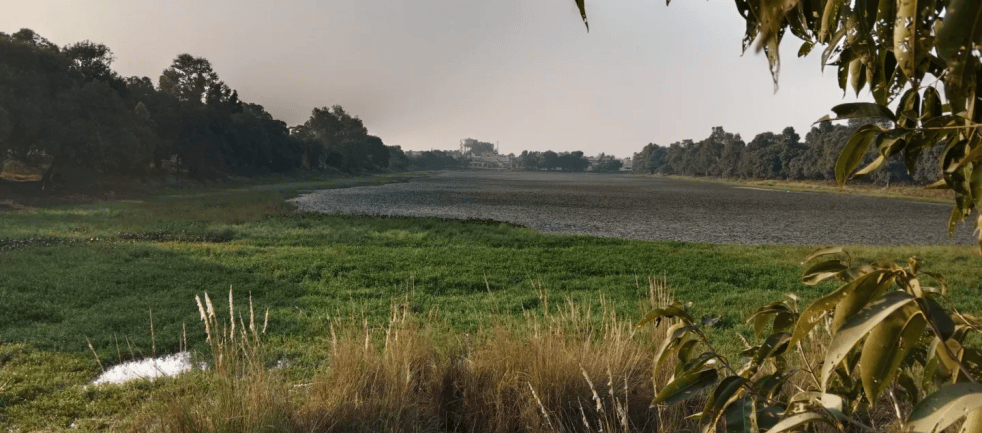
DRP 261026: Time to Prioritize Wetlands Conservation, Protection
(Feature Image: Giri taal in Kashipur lying in degraded condition. Bhim Singh Rawat, SANDRP)
The latest directions of the Supreme Court of India offer hope for wetland conservation but also raise serious concerns about the state of their protection. It is welcome that the apex court has recognized the water bodies as vital sources of drinking water and affirmed that their protection falls within the ambit of the fundamental right to life.
Continue reading “DRP 261026: Time to Prioritize Wetlands Conservation, Protection”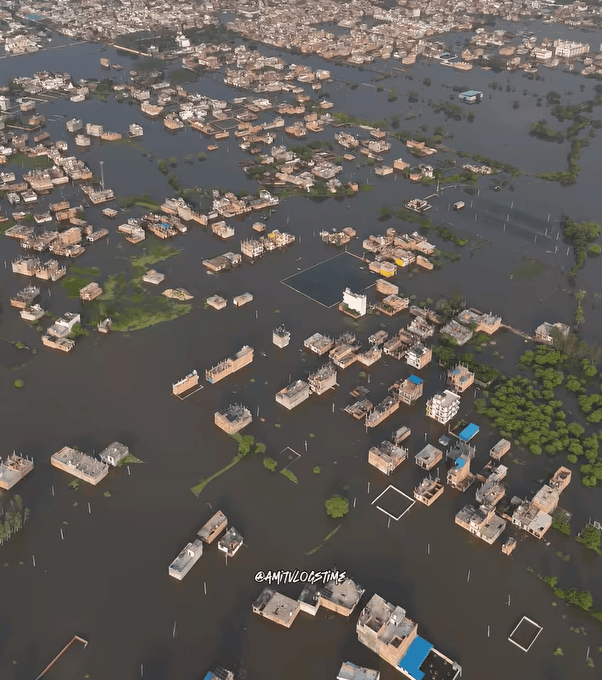
DRP 191026: India Disaster Management Must Shift from Response to Prevention
(Feature Image: A large part of residential areas witnessed severe flooding in first week of Oct. 2026 in Fazullaganj of Lucknow after heavy rains and flood in Gomti river. Source: Screenshot of FB post)
Two informative reports by Amal Chandra and Venkatesh Dutta in Down To Earth this week have once again highlighted serious gaps in India’s disaster management system. While our forecasting and response have improved in some cases, the number of disasters has also increased sharply. We often fail to understand the exact chain of events and remain reactive until the last moment. A key problem is that our system continues to focus more on response than prevention and lacks a holistic approach to disaster risk reduction.
Continue reading “DRP 191026: India Disaster Management Must Shift from Response to Prevention”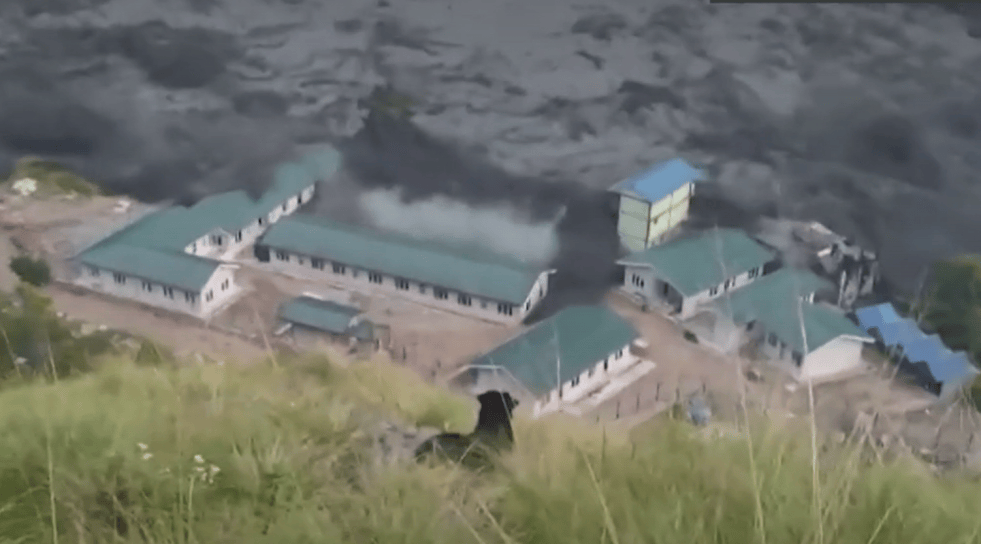
Oct. 2026: Budhi Gandaki Flashflood Affects Four Hydro Projects in Nepal
(Feature Image: Screengrab of BBC video report showing flood surge in Budhi Gandaki river damaging construction camp of 341 MW Budhigandaki HEP at Salleri in Gorkha district, Nepal in morning hours of Oct. 11, 2026)
The Budhi Gandaki river corridor in Nepal’s Gorkha district has witnessed a flash flood disaster causing extensive damage to public and private property. The flood reportedly began around 4:00 am on October 11, 2026, following the sudden breach of a landslide dam in a tributary of the Budhi Gandaki.
Continue reading “Oct. 2026: Budhi Gandaki Flashflood Affects Four Hydro Projects in Nepal”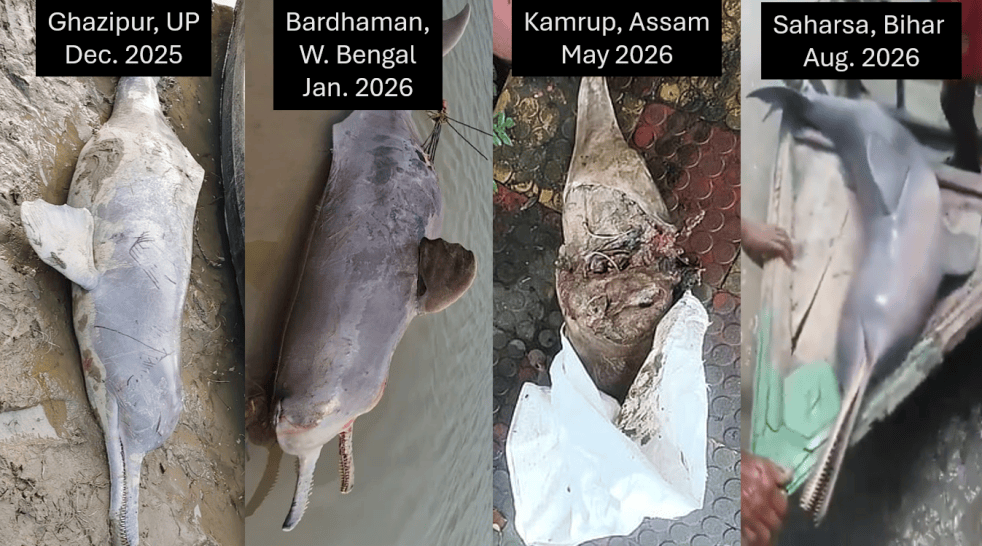
National Dolphin Day 2026: State of Gangetic Dolphins
(Feature Image: Collage of Gangetic dolphin corpses found in UP, Bihar, Assam & West Bengal between Dec. 2025 & Aug. 2026.)
Marking the National Dolphin Day-Oct. 5, 2026-, this report highlights the deaths, threats and relevant developments concerning the national aquatic animal. In last one year, we have found reports of at least ten Gangetic dolphin deaths, including six in Uttar Pradesh, two in West Bengal, and one each in Bihar and Assam. The reported death toll is higher than in the previous two years, indicating continuing concerns over their survival.
Continue reading “National Dolphin Day 2026: State of Gangetic Dolphins”
