One of the key objective of the Economic Survey is to provide an accurate account of ground realities on various aspects affecting the Economy of the country and also what has the govt been doing to address the issues that such an account throws up. From a look at the key issues that SANDRP focuses on, it seems that the Economic Survey for 2019-20 that was released on January 31, 2020 does not even attempt to provide an account of the ground realities. Continue reading “ECONOMIC SURVEY 2020: WHERE IS THE GROUND REALITY?”
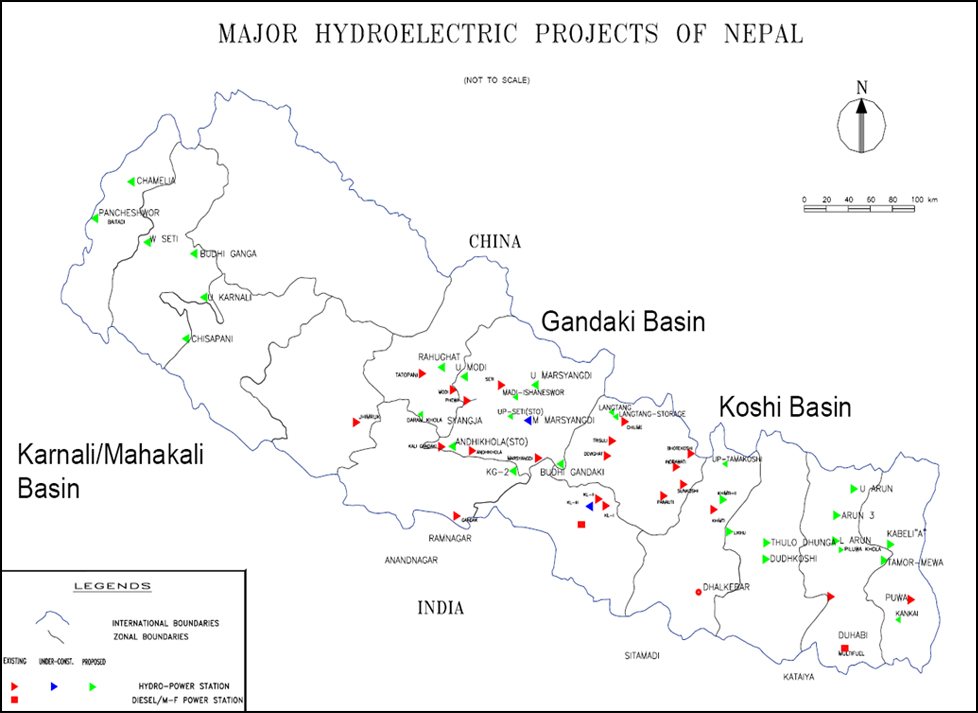
NEPAL DRP Overview 2019
RIVERS
China not to alter course of rivers flowing into Nepal China has agreed not to deliberately change or cause to change the course of any trans-boundary rivers flowing into Nepal. This comes under an Agreement on the Boundary Management System reached with Nepal during the visit of Chinese President Xi Jinping to Kathmandu in October 2019. All the major rivers including the Karnali, Kali Gandaki, Budhi Gandaki, Trishuli, Sunkoshi, Bhotekoshi, Tamakoshi and Arun originate in the Tibet Autonomous Region (TAR) of China. Nepal as well as the northern part of India could be seriously affected if any dams or diversion projects are built in upper riparian Tibet. “Both sides shall, as far as possible, prevent the boundary rivers from changing their courses. Neither side shall deliberately change or cause to change the course of any boundary river,” states Article 7 (1) of the Agreement. Continue reading “NEPAL DRP Overview 2019”

Punjab Wetlands Overview 2019: More Ramsar Tags no guarantee for Wetlands protection
Punjab government has been successful in getting three more wetlands declared as Ramsar sites of international importance. The state already has three wetlands with Ramsar tags namely Harike, Kanjli and Ropar wetlands. The government in October 2019 had proposed a total of five sites including Ranjit Sagar conservation reserve and Hussainiwala wetland for Ramsar tags. The new wetlands selected for the tag are Keshopur-Miani community reserve, the Beas conservation reserve and Nangal wildlife sanctuary. So now six wetlands in the state are covered under Ramsar convention.
The state forest department and WWF team were working in this direction over past couple of years. In the year 2019, the government has also taken some remarkable decisions regarding conservation of wetlands in the state. However, by the year end, there has not been any significant progress on the issue from the government.

Bhutan DRP Overview 2019
Plea to act to save the THIRD POLE In this TED talk in July 2019, former Prime Minister of Bhutan and President of the People’s Democratic Pary Tshering Tobgay makes impassioned plea to act on the melting glaciers of Hindu Kush due to climate change and among other things, form a Third Pole Alliance of eight countries of the region, including China, India, Pakistan, Nepal, Bhutan, Bangladesh, Myanmar to work collectively to avert the future catastrophe affecting 1.6 billion people. (https://www.ted.com/talks/tshering_tobgay_an_urgent_call_to_protect_the_world_s_third_pole#t-855110) Continue reading “Bhutan DRP Overview 2019”

DRP 2019 through the eyes of the Cartoons
They say a cartoon can say a lot more than what words can say. This is pretty evident from the selected cartoons of last one year to illustrate the state of India’s Rivers and People. Continue reading “DRP 2019 through the eyes of the Cartoons”
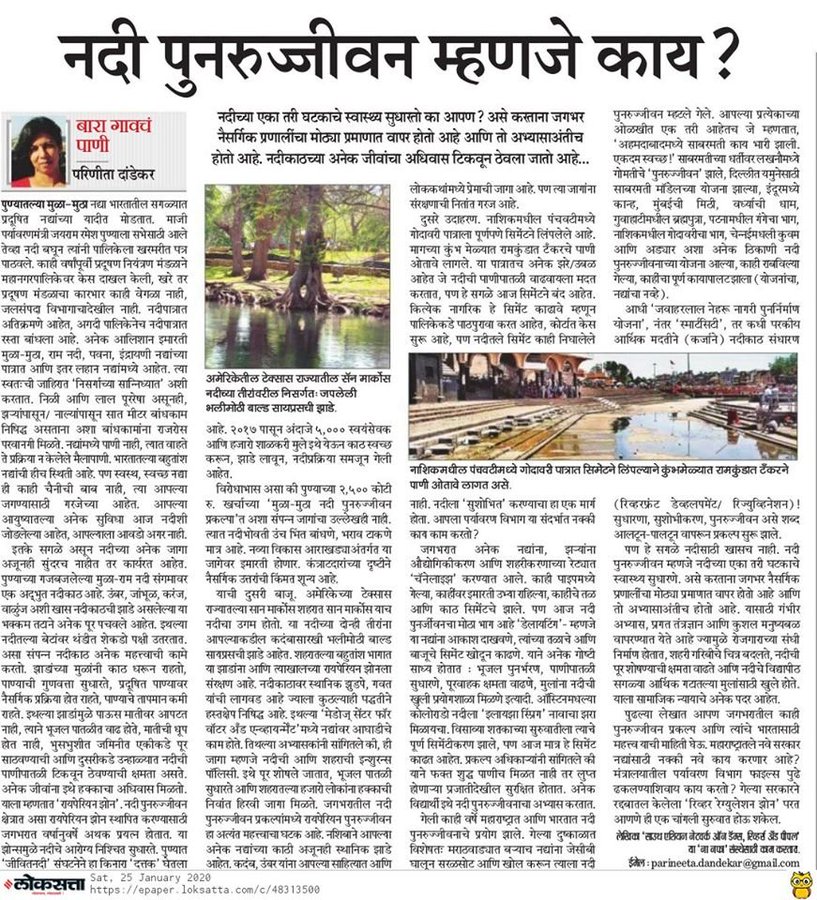
DRP: 27 Jan. 2020: Beginning of Corporatisation of Rivers?
The statement of Shri U P Singh, secretary, Union Water Resources Ministry, that “industry (private or public sector) could adopt small rivers” seems to suggest that the government is moving towards handing over the rivers to Corporate bodies. The example Mr Singh gave of Drayavati River of Jaipur is even more disturbing since that river has been completely destroyed by the project implemented by the Tatas. It should not surprise though, considering that no less than the Prime Minister has been giving the example of canalisation of Sabarmati as an example of rejuvenation of the river. If this is what the government means by rejuvenation, that even Ganga and Yamuna are facing major risks of destruction. Its not less shocking that while Nitish Kumar, the Chief Minister of Bihar has questioned Modi government’s attempt to achieve Nirmal Ganga without attempting Aviral Ganga, his own government is basically following the same Sabarmati model on Ganga in Patna. If this is the example of “rejuvenation” of river according to the top most bureaucrat of of the government in charge of Water resources, nothing can save India’s rivers except a people’s movement against such moves wherever such destruction of rivers is attempted.
Continue reading “DRP: 27 Jan. 2020: Beginning of Corporatisation of Rivers?”
Bangladesh DRP Overview 2019
HISTORIC COURT JUDGMENT: TREAT RIVES AS LIVING ENTITY
In a historic judgment, the High Court (HC) of Bangladesh has declared Rivers as living entities and the NRPC (National River Protection Commission) as the legal guardian of all rivers. The HC said that river encroachers cannot run in any elections or get bank loans. The HC delivered the judgment in response to a petition (WP No. 13989/2016) by Human Rights and Peace for Bangladesh. The writ petition was filed on Nov. 7, 2016. Continue reading “Bangladesh DRP Overview 2019”

J&K Wetlands Overview 2019: New Threats Looming, Old Remain Unresolved
Jammu and Kashmir has many wetlands of national importance and international recognition. These water bodies are critical source of livelihood and job opportunities for a large number of population in form of fishing, farming, tourism etc. Moreover, most of the wetlands in the region fall under Central Asian Flyway Zone (CAF) and visited by lakhs of migratory and endangered birds during their annual migration march. These wetlands areas also provide safe refuge to native vegetation and wild animals. Their protection is crucial to combat the dual impact of climate change, water scarcity and flooding.
Continue reading “J&K Wetlands Overview 2019: New Threats Looming, Old Remain Unresolved”
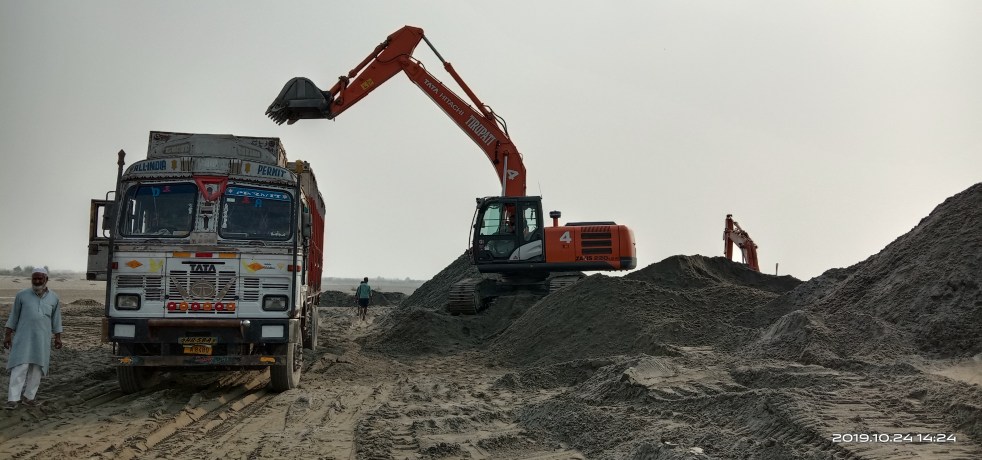
Haryana Riverbed Mining 2019: Yamuna Robbed of Minerals, Flows
For past two years, large scale mechanized and illegal mining is happening in Yamuna River in Haryana state. The miners have created deep pits across the riverbed in Yamuna Nagar, Karnal, Panipat and Sonipat districts. Year 2019 has been a deficit monsoon year in Yamuna basin and the river had started shrinking unusually during October month. The rampant riverbed excavation has further robbed it of lean season flows. This detailed overview of river sand mining in Haryana in 2019 shows the severe impact of unsustainable and illegal mining practices on the river and villagers due to insensitive government and inefficient administration.
Continue reading “Haryana Riverbed Mining 2019: Yamuna Robbed of Minerals, Flows”

DRP: 20 Jan 2020: India urgently needs national urban water policy
A large number of stories this week remind us that India urgently needs national urban water policy.
The water footprint of urban areas is gradually on the rise. The cities have several problems with management including destruction of water sources, groundwater exploitation, poor performance in treating and recycling the polluted water, pollution and encroachment on water bodies etc. To fulfil their growing demands new dams, barrages and check dams are being planned, proposed and built on the rivers in faraway places, which is in turn displacing and depriving the local people of equitable water share.
Even before onset of summer, the Army in Sagar district have started patrolling Chitora dam to prevent water thefts (denying farmers to take dam water for irrigation).
Continue reading “DRP: 20 Jan 2020: India urgently needs national urban water policy”
