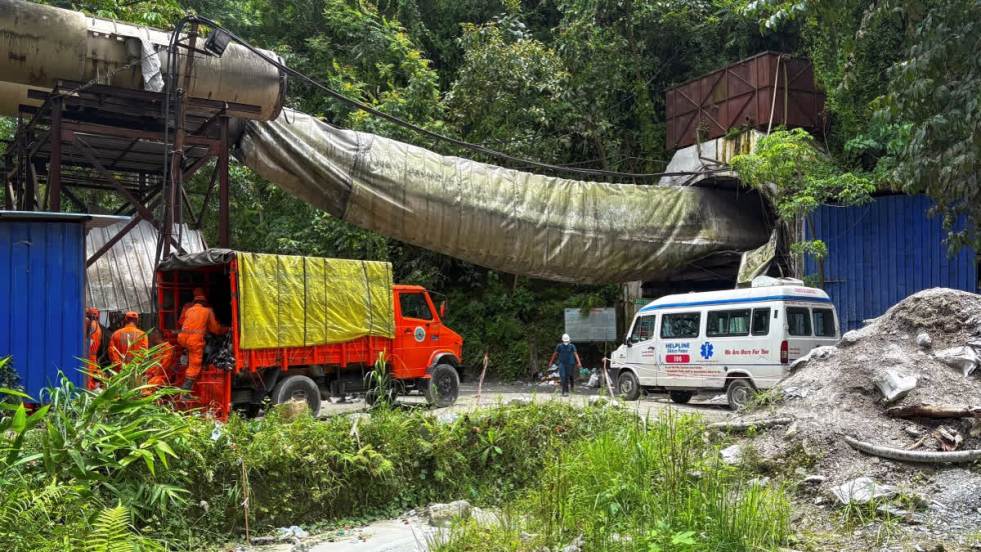
(Feature Image: Joint rescue and recovery operation at Teesta VI HEP tunnel site in Samardung, Sikkim: Image credit: PTI/Source: ETV Bharat)
The methane leak and explosion disaster on 20 July 2026 inside the under-construction ADIT-III tunnel of NHPC’s 500 MW Teesta Stage-VI Hydroelectric Project (HEP) at Samardung in South Sikkim claimed the lives of all 25 trapped workers, making it one of the worst tunnel accidents in India’s hydropower sector.
After nearly 72 hours of hazardous rescue operations under toxic, oxygen-deficient conditions, rescue teams recovered the last body on 23 July 2026. Initial reports suggesting a landslide later gave way to official confirmation that a sudden methane gas burst triggered an explosion inside the tunnel, along with rock collapse and accumulation of poisonous gases.
The tragedy has once again exposed the enormous risks associated with tunnelling through the fragile Himalayan geology and raised serious questions regarding geological investigations, tunnel safety systems, monitoring of accumulation of methane and other gases, emergency preparedness and regulatory oversight.
How the Disaster Unfolded
According to NHPC (National Hydroelectric Power Corporation), the accident occurred at about 1:04 pm on 20 July 2026, nearly 3 km inside the approximately 7-km-long ADIT-III tunnel. Possible accumulation of methane gas trapped within rock formations reportedly triggered an explosion that filled the tunnel with dense smoke and toxic gases.
The blast destabilised surrounding rock, causing debris to block escape routes and trapping workers, engineers, NHPC officials and contractor personnel inside the tunnel. Some workers managed to escape immediately, while several NHPC officials and engineers who entered the tunnel during initial rescue efforts also became stranded as oxygen levels rapidly declined and toxic gases accumulated.
Information about the accident reached the Namchi district administration later that afternoon, prompting immediate deployment of the National Disaster Response Force (NDRF), State Disaster Response Force (SDRF), Sikkim Police, Fire and Emergency Services and other state agencies.
Initial rescue efforts were repeatedly hampered by dangerously high methane concentrations, oxygen deficiency, accumulated water and unstable tunnel conditions. As the scale of the disaster became evident, specialised mine rescue experts from the Directorate General of Mines Safety (DGMS) and Eastern Coalfields Limited (ECL), Asansol, joined the operation with specialised breathing equipment and gas detection systems. Rescue teams could work only for short durations because of the hazardous underground environment.
The rescue operation continued for nearly three days under extremely challenging conditions. Bodies were gradually recovered as ventilation improved and accumulated water was pumped out from the tunnel. By 23 July, authorities confirmed that all 25 trapped personnel had lost their lives and their bodies had been recovered, bringing the rescue operation to a tragic conclusion.
The deceased included NHPC officials, engineers, supervisors, technical personnel and labourers employed by Patel Engineering Ltd. Most belonged to West Bengal, Assam, Uttarakhand, Punjab and Sikkim, highlighting once again the heavy dependence of Himalayan infrastructure projects on migrant workers who bear the greatest occupational risks.
Geological Factors Behind the Disaster
Although the precise cause of the disaster is still under investigation, official agencies now largely agree that the accident was triggered by accidental explosion in accumulated methane gas inside the under-construction underground Head Race Tunnel (HRT), rather than by an external landslide. According to NHPC, methane trapped within the surrounding rock strata burst during excavation, triggering an explosion that generated dense smoke and toxic gases inside the confined tunnel. The blast destabilised the surrounding rock mass, causing debris to collapse and block escape routes. While several workers managed to escape immediately after the explosion, others became trapped deep inside the tunnel. NHPC has stated that a detailed inquiry will establish the exact sequence of events.
Experts note that methane is not uncommon in certain Himalayan sedimentary formations containing organic-rich rocks and coal-bearing strata. Tunnel excavation can intersect such gas-bearing fractures, allowing methane to accumulate in confined underground spaces where it can become explosive in the presence of an ignition source. While methane itself is not poisonous, it displaces oxygen and after combustion, generates dangerous gases such as carbon monoxide while destabilising surrounding rock.
Knowing the possibility of this hazard, NHPC needed to have continuous monitoring, Standard Operating Procedures for any eventuality. There is no evidence of NHPC having any of it.
Workers’ Concerns & Safety Questions
Survivors described hearing a powerful explosion before the tunnel rapidly filled with smoke and dust. Worker Gandura Oraon recalled that several labourers escaped using a vehicle that had just delivered food, while their supervisor stayed behind to assess the situation and later became one of the victims.
Another worker, Mridul Mondal working in mechnical department alleged that labourers had repeatedly informed company officials about unsafe underground conditions and possible gas-related risks before the accident but that adequate preventive action had not been taken. These allegations have intensified demands for an independent inquiry into tunnel safety practices and occupational health standards in this project and only an independent assessment can bring out the truth.
The tragedy has also raised wider concerns about safety management during underground hydropower construction. Key questions include whether adequate geological investigations and methane hazard assessments were carried out before excavation, whether continuous gas monitoring systems and ventilation arrangements existed and were functioning effectively, whether workers received timely warnings and training for underground gas emergencies and whether emergency communication and evacuation systems met prescribed safety standards, what kind of SOPs were in existence and what kind of emergency management systems existed for any such eventuality.
The accident has also renewed attention on the risks of constructing long tunnels in the geologically young, tectonically active and landslide-prone Himalayan region.
Need for Independent Investigation
Following the tragedy, the Sikkim Government constituted a four-member High-Level Committee headed by Inspector General of Police Tashi Wangyal to investigate the incident. The Committee has been tasked with determining the exact cause and sequence of events leading to the explosion, examining compliance with safety regulations, evaluating the functioning of gas detection and ventilation systems, identifying the type and source of gas involved and recommending measures to prevent similar accidents. The Committee has been asked to submit its report within fifteen days. NHPC has also announced its own investigation.
However, given the scale of the tragedy, the inquiry should extend beyond identifying the immediate trigger of the explosion. Considering the loss of 25 lives and the hazardous conditions encountered during the rescue operation, there is a strong case for an independent multidisciplinary investigation involving geologists, mining safety experts, tunnel engineers and occupational health specialists to establish accountability and recommend systemic improvements for future Himalayan infrastructure projects.
Project Background & Past Disasters in the Teesta Basin
NHPC’s 500 MW Teesta VI HEP is being built on the Teesta river near Sirwani village in South Sikkim. Originally awarded to Lanco Teesta Hydro Power Ltd, the project remained stalled for years after the company entered insolvency proceedings. NHPC acquired the project in 2019 through the Corporate Insolvency Resolution Process (CIRP) and restarted construction.
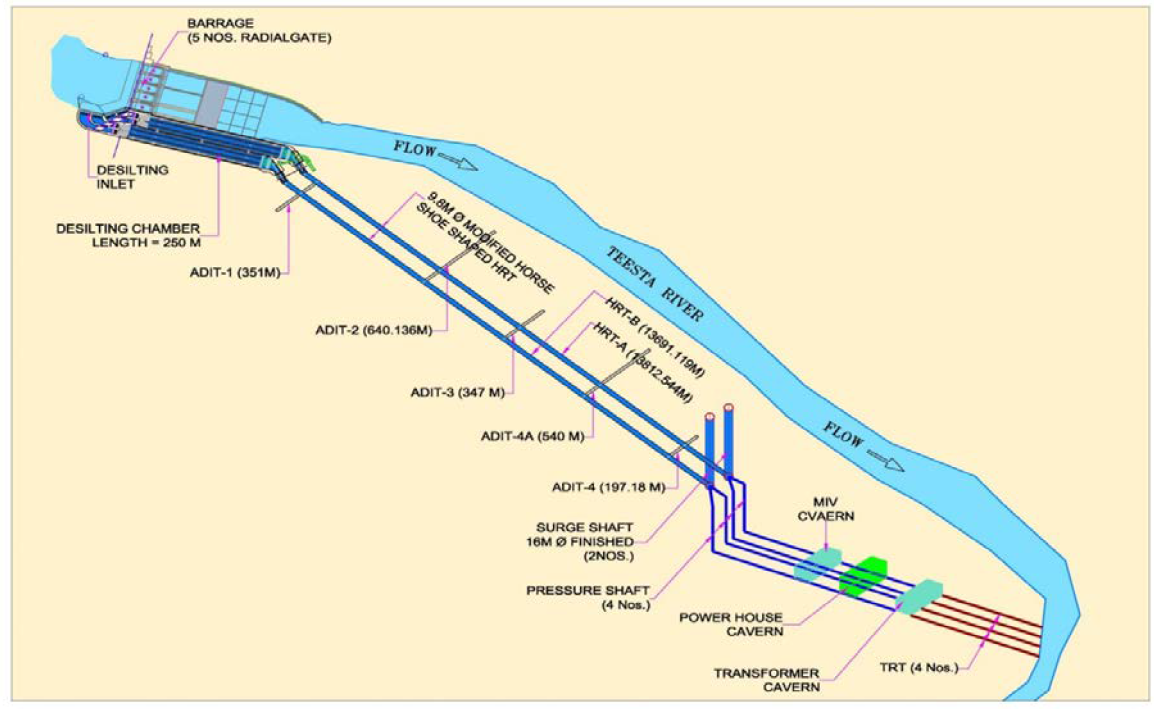
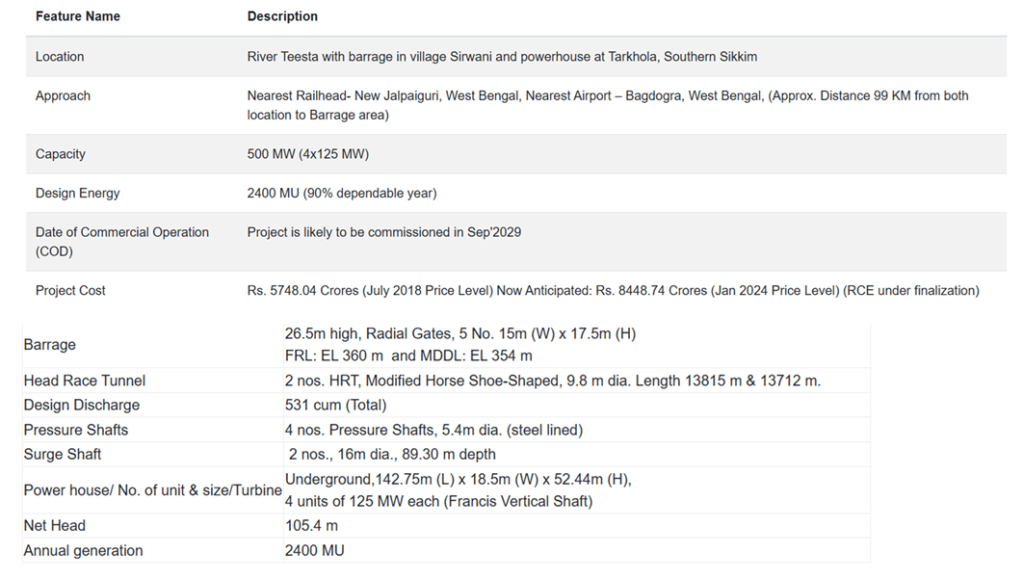
The project is presently being executed by Patel Engineering Ltd., with construction involving multiple long tunnels, including the HRT, through the geologically fragile Himalayan terrain. NHPC has revised the project cost upward from ₹5,748.04 crore (July 2018 price level) to ₹8,448.74 crore (Jan. 2024 price level), while extending the completion target to September 2029.
Since construction resumed under NHPC, the project has been marked by repeated delays, escalating costs and difficult geological conditions. Notably, the tunnel disaster occurred barely three months after NHPC announced the successful breakthrough of the HRT Phase-5A and Phase-6A on 27 March 2026, raising fresh concerns over the project’s geological challenges and construction safety.
The project had already suffered extensive damages during South Lhonak Glacial Lake Outburst Flood (GLOF) in Oct. 2023, highlighting the basin’s continuing geological instability and vulnerability of hydropower infrastructure. The Samardung tunnel disaster is likely to cause further delays, increase project costs and intensify scrutiny of geological investigations, construction practices and safety management at the project.
Moreover, the Teesta basin has witnessed a series of hydropower-related disasters in recent years. Besides the catastrophic Oct. 2023 GLOF washing away 1200 Mw Teesta III HEP dam, a massive landslide in Aug. 2024 struck NHPC’s 510 MW Teesta Stage-V HEP severely damaging the GIS building above the underground powerhouse and burying parts of the facility under debris.
Similarly, another major landslide affected the NHPC’s 510 MW Teesta Stage-V HEP at Dikchu in June 2020, when heavy rainfall triggered a massive slope failure that reportedly damaged the dam area, cut off access to the Dam Control Room and disrupted power supply.
The repeated disasters have raised serious concerns over landslide risks associated with hydropower infrastructure in the geologically fragile Teesta valley and prompted calls for an independent assessment of the dam’s safety and the cumulative impacts of such projects. Disappointingly, no independent investigation has been done about any of these disasters.

The latest Samardung tunnel disaster has also raised several important questions about emergency preparedness and safety protocols for methane-related incidents during Himalayan tunnel construction.
If an explosion happens, due to methane accumulation, standard entry into the affected area is impossible. Rescuers must wear heavy protective gear and self-contained breathing apparatuses due to toxic air and low visibility. It is not clear any such preparedness existed with availability of such rescue gear existed at the site. It is also not clear if any ventilation arrangements were envisaged and existed at the Teesta VI project for such an eventuality.
Highlighting the systemic nature of this threat, a technical paper presented by NHPC engineers at EuroEnGeo 2024 revealed that flammable gas pockets had repeatedly been hit and had caught fire inside the Teesta-VI tunnels during previous excavation years. It would be interesting to know what arrangements NHPC had done keeping this knowledge in mind.
Conclusion
NHPC’s Teesta Stage-VI tunnel disaster has become one of the deadliest accidents in India’s hydropower construction sector and another stark reminder of the multiple hazards associated with large infrastructure development in the fragile Himalayan region.
Coming less than three years after the devastating Oct. 2023 South Lhonak GLOF that destroyed the Teesta Stage-III dam and also damaged a number of downstream Teesta projects including Teesta VI project, the accident underscores that Himalayan projects face risks not only from landslides, earthquakes and floods but also from hidden subsurface hazards such as unstable geology, groundwater ingress and trapped gases, particularly when the projects are not accompanied by credible monitoring, SOPs and independent investigations of the disasters.
Beyond the tragic loss of 25 lives, the latest disaster highlights the urgent need for stronger geological investigations, continuous hazard monitoring, real-time gas detection, robust ventilation systems, independent safety audits and specialised underground rescue preparedness at major tunnelling projects.
Also, this disaster is not an isolated incident but the latest in a series of tunnel accidents and landslide-related damage affecting NHPC’s hydropower projects across the Himalayan region. In recent years, NHPC’s Dhauliganga HEP in Uttarakhand (Sept. 2025), Lower Subansiri HEP in Arunachal Pradesh (June 2024) and Parbati-II HEP in Himachal Pradesh (May 2021) have all experienced serious incidents linked to tunnelling or geological challenges. The recurring nature of these accidents raises important questions about geological risk assessment, construction safety and emergency preparedness in Himalayan hydropower development.
Thus, the tragedy warrants a truly independent and transparent investigation to establish accountability and draw lessons not only for the Teesta VI HEP but also for strengthening safety standards across existing and under-construction hydropower and tunnel projects throughout the Himalayan region.
SANDRP


