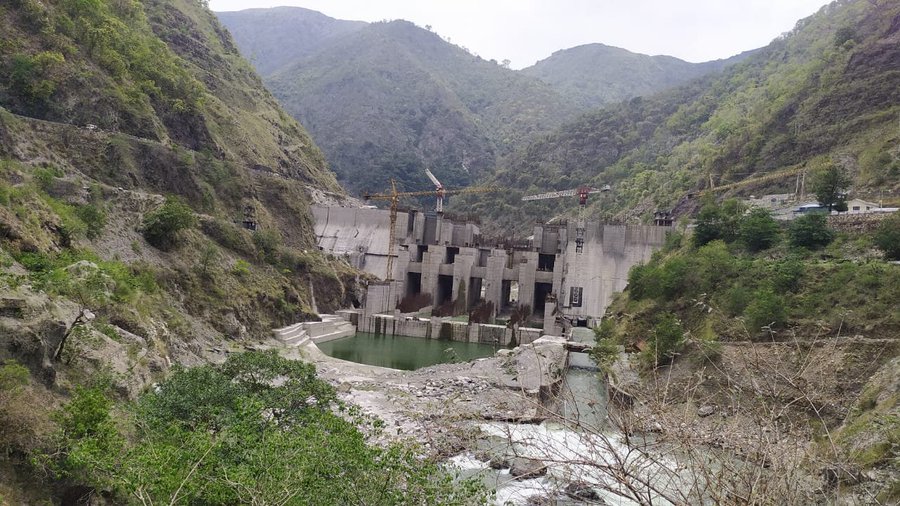
(Feature Image: Yamuna river in flowless condition downstream Juddo dam (Vyasi HEP) in Dehradun in June 2023. Bhim Singh Rawat/ SANDRP)
The decision of Government of India, conveyed to the Supreme Court through a joint affidavit from Union Ministry of Jal Shakti and Ministry of Environment and Forests, with concurrence of also the Union Power Ministry that no more hydro projects will be taken up in Upper Ganga basin after three under construction projects are completed (four of the seven listed are already commissioned, so only three under construction projects remain) is welcome. It has taken decades of struggle by many campaigns and movements, including the massive June 2013 disaster and the Supreme Court order led by Justice Radha Krishnan then among others.
The four main reasons given in the affidavit for the decision include: Seismicity, Geology, disaster proneness and biodiversity, in addition to cumulative impacts. These reasons apply for the whole of Himalayas from J&K to Arunachal Pradesh and also other vulnerable geographies like the western Ghats. One hopes that better sense will prevail and the science behind this decision will also be applied to these other vulnerable areas. If the issue was the sacredness of Ganga, then as the Hindustan Times editorial quoted below shows, all rivers are considered sacred in India by the local communities. Also, even in Ganga basin, the moratorium should apply across the basin, why only upstream of Devprayag?
In fact, as the Hindustan Times editorial has pointed out, the Tapovan Vishnugad HEP was badly damaged in Feb 2021 disaster and should not have been allowed to be reconstructed. The same is true also for the Phata Byung HEP getting completely washed away in June 2013 disaster. Similarly, if ecological and geological integrity and cumulative impacts are the issue than that applies to projects across Himalayas and western ghats, not just in Alaknanda-Bhagirathi basin. One hopes the Centre and the Supreme Court will apply these scientific issues to projects across vulnerable geographies.
Centre not in favour of more HEPs in Upper Ganga In a major development on the protection of the fragile upper Ganga River basin and the Himalayan ecosystem in Uttarakhand, the Centre through a joint affidavit of Union Ministries of Jal Shakti and Ministry of Environment & Forests, on May 20 submitted to the Supreme Court that it is not in favour of permitting any new hydroelectric projects in the Alaknanda and Bhagirathi River basins, apart from the seven which are either commissioned or are in advanced stages of construction. The seven projects are Tehri Stage–II (1000 MW: Commissioned), Tapovan Vishnugad (520 MW: U/construction), Vishnugad Pipalkoti (444 MW: U/construction), Signoli Bhatwari (99 MW: Commissioned), Phata Byung (76 MW: U/ construction after being severely damaged in June 2013 floods), Madhmaheshwar (15 MW: Commissioned) and Kaliganga–II (4.5 MW: Commissioned).
The Supreme Court has been examining the question of allowing new hydroelectric projects in the upper reaches of the Ganga River basin since 2013, after the Kedarnath floods. The Centre stated that there is a considerable difference in the Ganga river system as compared to other river systems, adding that, hence, special treatment is required for this region. The geological and ecological integrity needs to be maintained for the Alaknanda and Bhagirathi basins, which harbour headstreams of the river Ganga, it further stated. “Headstreams are critical for supplying food/ nutrients and critical biodiversity to the riverine ecosystem,” it added.
According to the submissions, the decision not to have any new hydroelectric projects in the upper Ganga basin was taken after inter-ministerial consultations and the concurrence of the power ministry. It held that the Expert Body-II “completely ignored” the cumulative impact of hydropower projects, adding that if all 28 projects it had recommended were implemented, the river’s free flow would be “greatly impacted”. “The report fails to capture the cumulative impact of anthropogenic pressures other than hydropower development. The aquatic/terrestrial impacts in the report are measured per megawatt, which fails to capture the full extent of forest/river damage from large,” the Centre stated in its affidavit.
The affidavit also pointed out the region’s geological fragility and recurrent disaster history. “The Ganga River basin wholly lies within the most vulnerable Seismic Zone IV and V of the young Himalayan Mountain system. It is inherently prone to landslides, flash floods, glacial lakes outburst floods, avalanches, cloud bursts. The biodiversity of the upper Ganga basin hosts critical riparian and aquatic biodiversity,” it was stated.
HT Edit: Beyond Ecology Vs Economy binary The restriction applies only to new projects; seven projects will be allowed to be completed and commissioned. These include the Tapovan Vishnugad project on Dhauliganga, a feeder of the Alaknanda system, which was badly damaged in the 2021 floods. It is unclear why the standards invoked in the case of new projects (geological and disaster-related parameters) should not be applied to under-construction dams in sites already identified as vulnerable. Why parameters applied in the Uttarakhand Himalayas should not be extended to similar projects in other Himalayan zones, for example, in Sikkim and Arunachal Pradesh, also isn’t clear.
Particular attention is given to Ganga basin because of the spiritual significance it holds for the Hindus. Most rivers in India are considered sacred by some community or other – for instance, the Dibang, is considered sacred by Indigenous Tribes (the Idu Mishmi tribe of the Arunachal Pradesh and is a factor that drives public protests.
The gold standard when a hydroelectric project is proposed on a river is whether it stands ecological and geological scrutiny. Most of the projects proposed on the Teesta, Siang or Dibang will not withstand rigorous scrutiny. Their presumed economic gains are allowed to override ecological concerns. The Oct 2023 floods in Sikkim, caused by a GLOF in the higher riches of Teesta, washed away the Teesta III project and resulted in major destruction downstream.
It is a fact that climate change is altering the hydrology of the Himalayan region. Retreating glaciers, cloudbursts, and landslides are causing siltation that threatens the long term viability of the dams in the Himalayan region. All these factors, hitherto ignored, have to be considered, along with issues such as the relocation and rehabilitation of the human settlements and the protection of animal-avian habitats, before hydel projects are cleared. A broader conversation on how and what to build in the Himalayas is called for.
Tribune EDIT: Limiting Dams: Ecology finally shapes Himalayan Policy Climate goals cannot be pursued through projects that intensify ecological vulnerability and disaster risks. Uttarakhand’s development model must move towards safer, decentralised and less intrusive alternatives rather than large-scale interventions that repeatedly test nature’s limits. The Centre’s shift offers an opportunity to redefine development in the Himalayas —as a commitment to balance energy needs with ecological survival. The mountains have issued enough warnings already.
HYDRO POWER PROJECTS
JKSPDC Floats DPR Tender for Baglihar Stage-III Hydropower Project The Jammu & Kashmir State Power Development Corporation (JKSPDC) has floated a tender to prepare the Detailed Project Report (DPR) for the proposed Baglihar Hydroelectric Project Stage-III on the Chenab River in Ramban. The existing Baglihar project already has two operational stages with a combined capacity of 900 MW (450 MW each). The DPR will study technical feasibility, design, environmental impact, and cost estimates for the new expansion, though the capacity and cost for Stage-III have not yet been announced.
DAMS
Polavaram displaced tribals running around for justice The Andhra Pradesh government has failed in addressing the problems of the Polavaram Project displaced families, mainly the Schedule Tribes. The tribal people of Koruturu village in Jeelugumilli mandal of Eluru district are roaming around the collector’s office and the pleading with government officials to do justice, but in vain. According to them, the state government acquired the lands of tribal people at Papikondalu area for the Polavaram Irrigation Project in 2009 and built rehabilitation colonies at Koruturu and other villages. The government also has given land-to-land compensation to the displaced families of tribal communities with an extent of 188 acres. However, when they go to cultivate their land, local people are opposing them and not allowing them to cultivate the land. They have been running from pillar to post for several years now, without any resolution of the issue.
Centre Puts Polavaram Project under watch The Centre has initiated a monitoring mechanism for the Polavaram Project by assigning two key central govt agencies to oversee the execution and quality control of the project. The Jal Shakti ministry has entrusted Water and Power Consultancy Services (Wapcos) to conduct regular reviews, assess progress of civil works and coordinate with the project authorities, including the Polavaram Project Authority (PPA), state water resources department, and contract agencies to ensure adherence to the schedules fixed by the Centre.
The ministry has also directed the Central Soil and Materials Research Station (CSMRS) to conduct technical evaluations and verify whether the construction activities are being carried out in accordance with the prescribed engineering standards and safety norms. These are aimed at avoiding any compromise in quality, particularly in the diaphragm wall, spillway, and rehabilitation-related structures.
India, Netherlands sign LoI for tech tie up for Kalpsar Project During Prime Minister Narendra Modi’s ongoing visit to the Netherlands, a Letter of Intent was signed between India’s Ministry of Jal Shakti and the Netherlands’ Ministry of Infrastructure and Water Management for technical cooperation on the Kalpasar Project of Gujarat government, an official release from the state government said on May 17.
“The Afsluitdijk is one of the world’s best-known examples of water management. Constructed nearly 80 years ago, this 32-kilometer-long barrier dam separates the North Sea from a freshwater lake. The dam also protects large low-lying regions of the Netherlands from severe flooding. It blocks salty seawater and creates a vast freshwater reservoir inside. The Afsluitdijk project also integrates shipping, transportation connectivity, and renewable energy generation,” the release stated.
Tribals Continue Resistance Against Chutka Nuclear Project in MP A Down To Earth report highlights the continuing opposition by tribal communities in Madhya Pradesh’s Mandla district against the proposed 1,400 MW Chutka Nuclear Power Project. Residents of around 54 tribal villages, many of whom were earlier displaced by the Bargi Dam project, say they are being forced to face displacement for a second time.
Villagers and activists argue that the project threatens their land, forests, livelihoods and the Narmada River ecosystem. They have also raised concerns over possible radiation risks, groundwater impacts and the project’s location in a seismically sensitive zone. Protest groups allege that consent of gram sabhas, required under the Panchayats (Extension to Scheduled Areas) Act (PESA), was not properly obtained.
Nagpur Region Dams May Lose 37% Water to Evaporation: WRD Study A Water Resources Department (WRD) study warns that around 37% of planned water use in Vidarbha’s Nagpur division could be lost to evaporation between May and August 2026 due to extreme heat and a possible “Super El Niño”–driven weak monsoon. The region is expected to utilise about 655.52 million cubic metres (Mcum) of water during this period, of which nearly 245.69 Mcum may evaporate, while the rest is allocated for irrigation, drinking water, and industry.
The study also notes that despite higher-than-last-year reservoir storage, levels are expected to drop significantly by September due to continued heat stress and water demand. Officials have also flagged additional losses in Nagpur city, where nearly 40% of treated water is wasted due to leakage and illegal connections, raising concerns over overall water management efficiency.
Decisions of MoEF’s Expert Appraisal Committee meeting on River Valley Projects held on May 8 2026
1. Panaura Close loop Pumped Storage Project (1500 MW) in 236.37 Ha at Sub Dist Robertsganj, Dist Sonbhadra, Uttar Pradesh by Adani Hydro Energy Five Ltd – Environmental Clearance: APPROVED
2. Badagaon Close Loop Pumped Storage Project (1000 MW) in 373.12 Ha at Sub Dist Teonthar, Distt Rewa, Madhya Pradesh by Renew Green (Tnj Two) Pvt Ltd – Terms of References: APPROVED
3. Nayagaon Close loop Pumped Storage Project (2000 MW) in 530.4 Ha at Sub-Dist Soegaon, Sillod, Kannad and Phulambri, Dist Aurangabad (Chhatrapati Sambhajinagar), Maharashtra by Greenko Mh01 Irep Pvt Ltd – Terms of Reference: APPROVED
4. Panari Pumped Storage Project (1800 MW) in 581.68 Ha at Sub Dist Majhgawan & Panna, Dist Satna and Panna, Madhya Pradesh by Panari Energy Pvt Ltd – Terms of Reference: APPROVED
1. Naying HEP (1000 MW) in 470.8 Ha at Sub-Dist Tato, Payum Circle, Dist Shi Yomi and Siang, Arunachal Pradesh by NEEPCO– Environmental Clearance
2. Duggeru Close Loop Pumped Storage Project (2500 MW) in 260 Ha at Sub Dist Makkuva and Salur, Dist Parvathipuram Manyam, Andhra Pradesh by Chinta Green Energy Pvt Ltd – Terms of References
3. Expansion of capacity of Pinnapuram Integrated RESP-Storage project (1200 MW to 1680 MW) in Sub Dist Gadivemula, Orvakal, Panyam, Dist Nandyal and Kurnool, Andhra Pradesh by Greenko AP01 IREP Pvt Ltd –Environmental Clearance
INTERLINKING OF RIVERS
Amit Bhatnagar interview The video discusses growing resistance to the Ken–Betwa Link Project in Bundelkhand, where local communities and activists argue that the project will lead to large-scale displacement, destruction of forests and ecological damage. Activist Amit Bhatnagar is shown leading protests and demanding transparency, fair rehabilitation and protection of forests and tribal rights. The video highlights tensions between development goals and environmental as well as social concerns surrounding the river-linking project.
RIVERS AS NATIONAL WATERWAYS
Patna Water Metro Project Delayed The proposed water metro service on the Ganga River in Patna continues to face delays due to pending environmental and administrative clearances along with incomplete supporting infrastructure. According to officials, key components such as terminals, jetties and navigational facilities are still unfinished, preventing the launch of the project. Regulatory approvals related to river navigation and environmental compliance are also yet to be finalised. The water metro project was envisioned to improve urban transport and reduce traffic congestion in Patna through ferry-based public transport on the Ganga. However, delays in clearances and infrastructure readiness have kept the service off the river so far.
URBAN RIVERS
Musi RFD project boundary works intensify amid protests The Musi River Development Corporation Limited has accelerated boundary demarcation and pillar installation works along key stretches of the Musi River despite ongoing protests by civil society groups opposing land acquisition linked to the ambitious Musi Riverfront Development project in Hyderabad.
RIVERS
Why India’s Sacred Rivers Remain Among Its Most Polluted C P Rajendran examines the contradiction between the spiritual reverence for rivers in India and their worsening ecological condition. Using the example of nearly 11,000 litres of milk reportedly poured into the Narmada during a religious ritual in Madhya Pradesh, he argues that blind faith, ritual offerings and weak enforcement of pollution laws continue to damage river ecosystems.
He notes that government river-cleaning programs have often failed to achieve pollution reduction targets despite large public spending. The author argues that invoking “spiritual purity” without addressing sewage treatment, industrial pollution and regulatory failures has turned environmental protection into symbolism rather than meaningful conservation.
Drying Naulas of Uttarakhand Once central to daily life, rituals and community water security, many naulas are now abandoned or seasonal. The article warns that their loss is not only a water crisis but also a loss of cultural heritage and indigenous ecological knowledge in the Himalayas.
It also explains that many naulas are drying up due to deforestation, climate change, reduced groundwater recharge, and unplanned construction that disrupts natural spring catchments. With forest cover shrinking—especially oak forests that help retain moisture—spring flows feeding naulas have weakened or disappeared in many areas. The report also points to rapid urbanisation and piped water systems as key reasons for neglect. As communities shift away from traditional water management, maintenance knowledge and local stewardship of naulas are fading, accelerating their decline.
UP govt to expand STP infrastructure The UP govt is implementing sewerage and river-cleaning projects worth thousands of crores to reduce pollution in rivers including the Ganga & Yamuna Rivers. According to officials, 83 STPs with a combined treatment capacity of 3,697 MLD are currently operational across the state, while several new projects are under construction.
The state government said projects worth around ₹7,000 crore are being implemented under schemes such as the Namami Gange Program to strengthen sewerage networks, intercept drains and expand wastewater treatment infrastructure. Officials claim the measures aim to stop untreated sewage from flowing into rivers and improve urban sanitation coverage.
The strategy also includes laying new sewer lines, rehabilitating old infrastructure and improving monitoring of industrial and domestic wastewater discharge. The government said the projects are part of a long-term effort to improve river water quality and support environmental restoration.
Faulty STPs continue to pollute Yamuna-linked drain in Noida: SC record A note submitted before the Supreme Court has revealed that untreated sewage from Noida continues to pollute the Kondli-Noida drain and eventually the Yamuna despite earlier court and NGT directions. The report blamed incomplete trapping of drains and malfunctioning or underutilised society-level STPs for the ongoing pollution.
According to the report, Noida has 8 STPs with a total capacity of 411 MLD against an estimated sewage generation of 240 MLD. However, a CPCB inspection found that only 3 STPs were complying with discharge norms, the remaining plants violated one or more pollution parameters.
The note said significant amounts of untreated or partially treated sewage are still entering the Kondli-Noida drain through 26 drains of Yamuna. The Supreme Court matter relates to appeals filed by the Noida Authority and Delhi Jal Board against a 2022 NGT order that a fine of ₹100 cr on Noida Authority and ₹50 cr on DJB for sewage pollution.
SC amicus proposes nodal agency, crossstate action plan to clean Yamuna A Supreme Court-appointed amicus curiae has proposed setting up a dedicated nodal agency and a coordinated inter-state action plan to clean the Yamuna River, observing that fragmented efforts by different states and agencies have failed to address the river’s pollution crisis effectively.
The proposal came during the hearing of appeals by the Noida Authority and the Delhi Jal Board against a 2022 NGT order imposing ₹150 crore environmental compensation for sewage pollution flowing into the Kondli drain and eventually the Yamuna. The Supreme Court had earlier asked the amicus to suggest a mechanism for better coordination among multiple agencies responsible for the river.
The amicus reportedly stressed that Yamuna pollution cannot be tackled through isolated state-level actions and called for a unified basin-level strategy involving Delhi, Uttar Pradesh, Haryana and other concerned authorities.
Delhi HC Refuses to Halt Yamuna Bazar Demolitions The Delhi High Court has refused to stay the demolition of homes in the Yamuna Bazar area, where eviction notices have been issued to over 310 families living along the Yamuna floodplain. The petition was filed by the Yamuna Bazar Residents Welfare Association, which argued that the demolitions ignored the area’s historical, cultural, and religious significance and violated residents’ rights. However, the court dismissed the plea, saying the association lacked proper authorisation from residents to file the case.
Authorities said the settlement lies in Delhi’s ecologically sensitive O-Zone floodplain area, where construction is prohibited. The Delhi Disaster Management Authority (DDMA) issued notices asking residents to vacate within 15 days, citing recurring flood risks and safety concerns. Many affected families said they have lived there for generations and depend on river-related work such as priest services, boating, cremation duties, and daily wage labour. Residents fear displacement, loss of livelihood, and disruption to children’s education if demolitions proceed.
Floodplain turned into parking lot This report highlights alleged large-scale violations of environmental norms along the Yamuna floodplain in Delhi’s Sonia Vihar area, where parts of the floodplain have reportedly been converted into parking lots. The report says heavy vehicles, private cars, and commercial activities are operating on the riverbank despite restrictions on construction and land use in floodplain zones. Environmentalists have raised concerns that such encroachments damage the river ecosystem, obstruct natural flood flow, and increase flood risks. The situation has also raised questions over enforcement of Yamuna floodplain protection rules.
Why Delhi’s sewage still ends up in Yamuna Delhi currently has an installed sewage treatment capacity of about 814 million gallons per day (MGD), while sewage generation has crossed 992 MGD, according to activists citing Economic Survey estimates. Even if the city achieves the planned expansion to 964.5 MGD by this Dec, experts say treatment alone will not solve the crisis.
The city’s sewage is supposed to move through underground sewer lines into sewage pumping stations (SPS), from where it is diverted to STPs. At these plants, the sewage undergoes screening, sedimentation, biological treatment and disinfection before the treated water is released into drains or reused. But the system leaks at nearly every stage in the city.
Delhi approves ₹860 for 12 STP The Delhi govt has approved projects worth around ₹860 crore for construction and upgradation of 12 STPs aimed at reducing pollution in the Yamuna River. The projects are part of ongoing efforts to improve sewage treatment capacity and prevent untreated wastewater from entering the river.
According to officials, the new and upgraded STPs will help intercept sewage flowing through drains and improve treatment efficiency in several parts of the capital. The works are expected to strengthen Delhi’s sewer infrastructure and support long-pending river-cleaning efforts. The move comes amid continuing concerns over poor water quality in the Yamuna, with untreated sewage remaining one of the biggest sources of pollution in the river stretch flowing through Delhi.
Govt plans Okhla barrage redesign to reduce froth The Delhi govt is planning to redesign the Kalindi Kunj Barrage to tackle the recurring toxic foam problem seen on the Yamuna river, especially during winter. The froth is mainly caused by untreated sewage, industrial waste, and high phosphate levels in the river.
Officials said the current structure of the barrage slows water flow, allowing pollutants and foam to accumulate near the surface. The proposed redesign aims to improve water movement and prevent froth build-up by modifying the barrage’s hydraulic system. The plan is being developed in coordination with technical agencies and irrigation experts as part of a larger Yamuna clean-up strategy. Authorities are also considering measures such as aeration systems, better sewage treatment, and stricter pollution control to improve river water quality.
The Yamuna stretch in Delhi has faced severe pollution for years, with visible toxic foam becoming a major environmental and public health concern during festive seasons and colder months.
Govt plans desilting near ITO barrage The Delhi govt has planned desilting of the Yamuna River near the ITO Barrage as part of its flood-control preparations ahead of the monsoon season. Officials said accumulated silt and debris around the barrage reduce the river’s carrying capacity and increase flood risk during high flows.
In 2023, due to unprecedented rainfall in the Yamuna catchment, there was a huge runoff in the river, due to which the highest flood level of 208.66 meters was observed on 13 July 2023 at the Old Railway Bridge, surpassing an earlier HFL of 207.49 meters recorded on 6 Sep 1978.
According to an IFC report, as the gates on the east end of the barrage could not be opened at the peak water level of the Yamuna, the pressure was so high that the water started spilling onto roads, and colonies situated along the river in the stretch between Wazirabad & ITO barrage.
Over 60 illegal bleach houses operating on Panipat farmland A report has alleged that more than 60 illegal bleaching units are operating on agricultural land in Haryana’s Panipat district, violating environmental regulations and causing pollution concerns. Environmental activist Varun Gulati submitted evidence, including drone footage and geo-tagged images, to the Haryana State Pollution Control Board (HSPCB), claiming that the units discharge untreated chemical effluents into drains, sewers and groundwater through illegal borewell systems.
The complaint says the units are functioning without mandatory environmental clearances under the Water Act, 1974 and Environment Protection Act, 1986. Pollution from these units is reportedly contaminating farmland, groundwater and nearby water bodies that eventually flow into the Yamuna. Following the complaint, the HSPCB said a joint survey with district authorities would be conducted and action taken.
Notices served to illegal dyeing units in Gurgaon The HSPCB has issued notices to several dyeing units in Gurgaon for allegedly violating pollution control norms after coloured industrial effluents were found flowing through drains in Bajghera and Sarai Alawardi areas. The contaminated drains eventually connect to the Najafgarh drain and flow into the Yamuna, raising concerns over industrial pollution entering the river system. The notices warned that prosecution proceedings and environmental compensation could be initiated if the violations were not rectified within 15 days. Under the cited provisions, violators can face imprisonment ranging from one-and-a-half years to six years along with fines.
How Gurgaon sewage ends up in Yamuna Gurgaon has 12 operational STPs with a combined capacity of 415 MLD. However, only around 388 MLD sewage is reaching these plants, even though the city is estimated to generate nearly 433 MLD sewage daily. This gap indicates that a significant quantity of wastewater is bypassing the formal sewer network and flowing directly into drains. Officials estimate that around 287 MLD untreated sewage from Gurgaon continues to enter open drains connected to the Najafgarh drainage system, which eventually feeds the Yamuna in Delhi.
There are major gaps in sewer connectivity, interception systems and drain management have prevented large sections of the city from being linked to treatment infrastructure. A senior HSPCB official said many STPs were originally designed based on projected populations, but rapid and unplanned urban growth created sewage loads outside the planned network. The problem has worsened over the past decade as areas along Dwarka Expressway, New Gurgaon, Sohna Road and Manesar expanded faster than sewer and drainage infrastructure.
The HSPCB has also conducted a detailed study of 11 drains from 34 towns of 10 districts that lead to the Yamuna. The study revealed that industrial units in the region have played a major role in polluting the river. In a move to intensify efforts to curb pollution, Vinay Pratap Singh, Chairman, HSPCB, recently visited Panipat and Sonepat district and reviewed the flow of Drains 1 and 2 of Panipat and Drain 6 of Sonepat before issued directions to the officials concerned.
RIVERS BIODIVERSITY
Dolphin found dead near sand mining site in Assam The carcass of an endangered river dolphin was found in the Mora Kolohi River near Boko in Assam on May23, raising concerns over the impact of sand mining and other human activities on river ecosystems. Forest officials recovered the decomposed dolphin and sent it for post-mortem to determine the cause of death.
Environmental activists and local residents alleged that ongoing sand mining near dolphin habitats may have contributed to the death. Some also raised concerns about illegal fishing and possible industrial pollution in the river. However, forest officials said no conclusion can be drawn until the post-mortem report is completed. The incident has renewed concern over the protection of endangered river dolphins in Assam, which is estimated to have around 635 dolphins remaining in its rivers. Environmental groups have demanded a thorough investigation and stricter safeguards for dolphin habitats.
Sandmining lays siege to a sanctuary The article describes how illegal sand mining is severely damaging the National Chambal Wildlife Sanctuary, a protected area spread across Madhya Pradesh, Rajasthan, and Uttar Pradesh that is home to endangered species such as the gharial, Gangetic river dolphin, Indian skimmer, and red-crowned roof turtle. This ground report found large craters and deep pits across the Chambal river floodplains where sand has been extensively extracted. Environmentalists and forest officials say mining has continued for decades and now mostly takes place at night, despite court orders and security deployments. Overloaded tractors carrying illegally mined sand were reportedly seen moving openly through the sanctuary region.
FISH, FISHERIES, FISHERFOLKS
Fly ash pollution continues to haunt Ennore residents A Times of India report highlights the continuing environmental and health crisis faced by residents of Ennore in north Chennai due to fly ash pollution from nearby thermal power plants. Nearly nine years after the 2017 fly ash leak from the North Chennai Thermal Power Station, large deposits of ash still remain along the Kosasthalaiyar river floodplains, Ennore Creek and nearby settlements.
Residents of fishing hamlets such as Nettukuppam and Seppakkam say they suffer from breathing problems, wheezing, eye irritation and constant exposure to black-grey dust settling on homes and water bodies. The report says around 2,000 tonnes of fly ash are generated daily by the thermal plant, while ash-contaminated river sand still covers long stretches of floodplains.
Environmentalists allege that incomplete desilting work, leaking pipelines and poor ash disposal practices continue to damage wetlands, fisheries and groundwater. Fisher communities say fish catch and aquatic biodiversity have sharply declined due to contamination. Authorities claim over 12.39 lakh tonnes of ash have been removed since the National Green Tribunal ordered cleanup measures, but residents say pollution remains widespread.
SAND MINING
Karnataka Lokayukta orders probe The Karnataka Lokayukta has ordered an investigation into alleged illegal sand mining in Bagalkote district after taking suo motu cognisance of media reports highlighting large-scale unauthorised extraction and transportation of sand.
The Lokayukta sought reports from district officials, including the deputy commissioner, police and mining department, over allegations that illegal mining was continuing openly despite regulations. Concerns were raised about environmental damage, loss of government revenue and possible administrative negligence. The case reflects continuing concerns over unchecked riverbed mining in Karnataka, with the Lokayukta stressing the need for strict monitoring and accountability from concerned authorities.
The Karnataka Lokayukta has registered a suo motu case against senior officials after raids in Bagalkot district exposed large-scale illegal sand mining and alleged administrative lapses. The action followed inspections that reportedly found unauthorised extraction, transport and storage of sand despite existing regulations.
The case names top district and mining department officials, with the Lokayukta seeking accountability for failure to curb illegal mining activities. Concerns were raised over environmental damage, revenue losses and possible collusion or negligence by authorities. The raids and subsequent action have once again highlighted the persistent issue of illegal riverbed sand mining in Karnataka and the challenges in enforcing mining regulations effectively.
Chhattisgarh Govt intensifies crackdown The Chhattisgarh govt has stepped up action against illegal sand mining, launching a major seizure and enforcement drive across several districts. Officials said raids, vehicle seizures and penalties have increased amid growing concerns over unregulated extraction from riverbeds.
According to the report, authorities have confiscated large quantities of illegally mined sand along with tractors, trucks and excavation machinery involved in unauthorised mining and transport. The government said district administrations, mining officials and police have been directed to intensify monitoring, particularly ahead of the monsoon season.
Alarm over illegal mining in Pavana river Serious allegations of illegal murum and soil excavation have surfaced near Pavana Dam in Pune district, where more than 50 dumpers are reportedly operating openly from the shrinking reservoir bed. Activists claim the illegal digging is taking place in areas including Gevhande, Thakursai, Brahmoli, Kothurne and Shilim, especially as the water level in the dam continues to fall during summer. Environmental groups have warned that the large-scale excavation could damage the dam’s structure, reduce groundwater levels, destroy fertile land and increase ecological risks. Social activist Yuyraj Dakhale has demanded immediate intervention from the Maharashtra government, deployment of special squads and strict action under MCOCA against those allegedly involved in the excavation racket.
IPS Officer Seeks 10-Year Mining Ban in Bundelkhand After Banda in Uttar Pradesh recorded a scorching 47.6°C, MP cadre IPS officer and ADG Rail Raja Babu Singh urged UP Chief Minister Yogi Adityanath to stop illegal sand and stone mining in Banda, Mahoba and Hamirpur. He said excessive mining in the Ken river and hill cutting have damaged the environment, altered river systems and turned the region into a “heat chamber.” Singh demanded a complete ban on minor mineral mining leases for the next 10 years to allow nature to recover.
Mining ravaging Yamuna in Kalpi Questions have once again been raised regarding illegal mining in the Yamuna River. Local residents and farmers have alleged that in BMS Sections 2 and 3, mining and soil extraction are being carried out with machines in the main river channel, beyond the designated lease boundaries. It is also alleged that overloaded trucks are passing day and night beneath the old Yamuna bridge, posing a threat to the bridge’s safety.
Villagers say that such mining activities are altering the river’s natural form. In several places, erosion has intensified, leading to complaints of landslides and collapsing farmland nearby. Farmers also claim that the operation of heavy machinery is causing the groundwater level to decline rapidly.
Illegal Sand Mining Continues Openly in Yamuna River A Hindi newspaper report alleges that illegal sand mining is continuing unchecked in the Yamuna river near the Redi Bhusouli mining area in Uttar Pradesh’s Chitrakoot district. According to the report, heavy Pokland machines are being used day and night to excavate sand from the middle of the river channel, violating mining rules and NGT norms.
The report claims overloaded trucks are transporting sand continuously, causing damage to roads and nearby agricultural fields. Villagers have accused local authorities of ignoring complaints despite repeated appeals for action. Residents also allege that mining activities are taking place beyond permitted hours and with official patronage. The article further warns that deep excavation in the riverbed is damaging the Yamuna’s natural flow, harming crops and causing major revenue losses to the government through illegal extraction and overloading.
WETLANDS, LAKES, WATER BODIES
Maharashtra completes documentation of 23415 wetlands National Centre for Sustainable Coastal Management (NCSCM) has completed the documentation and Ground-truthing of Maharashtra’s 23,415 wetlands, paving the way to formally notify and bring the water bodies under legal protection under the Wetlands (Conservation and Management) Rules. According to the Maharashtra wetlands dashboard maintained by the NCSCM data, Chattrapati Sambhaji Nagar and Nagpur division has the highest wetlands in Maharashtra, with 5,196 and 5,086 wetlands respectively. Mah had tasked NCSCM under Union MoEF 16 years ago.
The Ahmednagar district has the highest number of wetlands in the State at 1,596, followed by Nashik with 1,236 and Chandrapur which has 1,231. The wetlands documented also includes 247 in Thane, 1,093 in Raigad, 37 in Mumbai city and 210 in Mumbai suburban districts.
RAMSAR WETLANDS
EKW face growing ecological pressures An opinion piece highlights the crucial ecological and economic role of the East Kolkata Wetlands while warning that the Ramsar-recognised wetland system is under increasing threat from urban expansion, encroachment, pollution and weak enforcement. The wetlands naturally treat a large share of Kolkata’s wastewater, support fisheries and agriculture, and help control floods and maintain biodiversity.
The article notes that despite legal protection and global recognition, unplanned construction, land-use change and inadequate monitoring continue to degrade the wetlands. Experts argue that preserving the ecosystem is essential not only for environmental reasons but also for the livelihoods of thousands dependent on wastewater-fed fisheries and farming. The piece stresses that conservation efforts must go beyond policy declarations and involve stronger regulation, scientific management and active community participation to safeguard one of the world’s most unique urban wetland ecosystems.
WATER OPTIONS
Panzath Springs Festival: Kashmir’s Living Tradition of Water & Fish Conservation While the community-led initiatives under the Panzath Springs Festival are widely appreciated and offer an inspiring model for springs conservation in India, there is still a serious lack of systematic official efforts to scientifically study, document and protect the hydrological, ecological and cultural significance of the Panzath spring system. Despite growing recognition, concerns related to pollution, encroachment, declining water discharge, algal growth and ecological degradation continue to persist.
The Panzath springs represent not only a vital freshwater source for thousands of people but also an important part of Kashmir’s cultural and environmental heritage. Protecting this unique spring ecosystem therefore requires long-term conservation planning, scientific monitoring, restoration measures and meaningful involvement of local communities whose traditions have helped preserve these waters for generations.
Odisha farmers pool money to repair canal Farmers in an Odisha village repaired a damaged irrigation canal on their own after receiving no timely government support, helping save crops on more than 900 acres of agricultural land. Villagers collectively contributed money and labour to restore the canal so water could reach farmlands ahead of the cultivation season. The report highlights growing frustration among farmers over delays in official repair work despite repeated complaints to authorities. Farmers said the damaged canal had threatened irrigation supply and put their crops and livelihoods at risk. Their collective effort helped restart water flow and prevent large-scale agricultural losses.
Tripura village turns water crisis into conservation success A report highlights how Vanghmun village in Tripura’s Jampui Hills transformed itself from a water-scarce settlement into a model of community-led water conservation. Located about 3,000 feet above sea level, the village once faced severe summer water shortages, forcing residents to walk long distances to fetch water.
Villagers collectively adopted rooftop rainwater harvesting systems, and today nearly every household in the village has one installed. Prime Minister Narendra Modi praised the initiative during his Mann Ki Baat programme, calling it an example of community-driven sustainable development. The report says around 300 families participated in the conservation effort, helping Vanghmun become largely water self-sufficient. Officials said the village’s success demonstrates how local participation and rainwater harvesting can help address rural water crises in hilly and remote regions
Urban springs key to water security in Himalayan cities A commentary highlights that urban springs in Himalayan towns are rapidly degrading due to urbanisation, infrastructure expansion, encroachment and climate change, despite being crucial sources of drinking water and groundwater recharge. The article argues that these often-overlooked springs can play a major role in improving water security in Himalayan cities facing increasing shortages.
The report notes that many Himalayan towns historically developed around springs, but poor urban planning, concretisation, road construction and declining recharge zones have reduced spring discharge and water quality. Experts stress that protecting recharge areas, mapping springs and integrating them into urban planning is essential for long-term resilience.
The commentary calls for community-led conservation, scientific monitoring and policy recognition of urban springs as critical natural infrastructure, especially as climate variability and growing populations increase pressure on Himalayan water systems.
Delhi’s water future depends on action today Umang Bajaj argues that widespread adoption of rainwater harvesting, better groundwater recharge, and stronger enforcement of conservation rules are essential. The author also emphasizes that both government action and citizen participation are needed to ensure Delhi’s long-term water security.
GROUNDWATER
Groundwater levels fall below average in 70 Maharashtra Talukas A recent assessment by the Groundwater Surveys and Development Agency (GSDA) has found that groundwater levels in 70 talukas across Maharashtra fell below the long-term average in March 2026, with seven talukas entering the “groundwater stress” category.
The report attributes the decline to below-normal rainfall in some regions, rising summer demand and excessive groundwater extraction. Several areas in Marathwada, Vidarbha and parts of western Maharashtra were reported to be facing increasing pressure on groundwater resources.
Officials warned that continued depletion could worsen drinking water scarcity and affect agriculture during the coming months, highlighting the need for stricter groundwater management, recharge measures and monitoring of extraction.
Karnataka Pushes NCERT for Groundwater Education Reform The Karnataka government has urged NCERT to include a dedicated chapter on groundwater in school textbooks, arguing that existing curriculum focuses mainly on surface water despite groundwater being India’s most critical freshwater resource. Officials said groundwater supports nearly half of domestic water use and a significant share of agriculture, but is under increasing stress due to over-extraction, urbanisation, climate change, and pollution.
The state warned that many regions are now classified as overexploited or critical groundwater zones, and emphasized the need for “groundwater literacy” from an early stage in education. It also recommended that the proposed chapter include topics like rainwater harvesting, aquifer recharge, groundwater modelling, and modern monitoring systems such as IoT and remote sensing to better prepare students for future water challenges
URBAN LAKES, WETLANDS
Mass fish death in Sanjay Lake, Delhi The deaths came amid rapidly receding water levels at the lake, with officials attributing the situation partly to a critical pipeline supplying treated water from Kondli STP to the lake developing leakages and remaining under repair. Officials also said the prolonged heatwave may have reduced oxygen levels in already stagnant water.
Environmental experts said low water levels during a heatwave may result in pollutants becoming more concentrated. Higher temperatures also reduce the ability of the water to hold dissolved oxygen, while decomposing organic matter and waste consume more oxygen. Together, these conditions can trigger a sudden crash in dissolved oxygen, leading to fish deaths.
Bhim Singh Rawat, SANDRP, said several incidents of mass fish mortality had been seen over the past month in the Yamuna upstream of Delhi and in associated waterbodies, including Sahibi river channel and Sanjay Lake. According to wildlife enthusiast Yatin Verma, mass fish deaths were reported this April-May in Sahibi river or Najafgarh drain, which carries Yamuna water.
“There are several factors at play. In the Najafgarh case, the issue is due to the sudden release of untreated effluents from stormwater drains and Dhansa regulator. In Sanjay Lake, it looks like a case of sharp decline in water level due to high temperature. The lake’s water quality is further deteriorated by unabated pollution & dumping of solid waste in huge amounts,” Rawat said.
He said such incidents occur regularly in the Yamuna and its tributaries during summer, when contamination overtakes fresh water availability in water bodies, resulting in a sharp decline in oxygen levels. “The rising temperature alone should not be blamed. Govt agencies responsible for maintaining freshwater flow & controlling pollution have failed on both fronts… They have become mute spectators to the continued perishing of aquatic species in Yamuna,” he added.
Several days ago, however, the pipeline supplying water developed a leak, leaving the lake dry. The location of the leak, however, could not be identified for several days. On May 21, DJB said the source of the leak has finally been identified. “The work to repair the leakage was initiated, however, the exact leakage point could not be traced. The repair work will now be taken up on a war footing and is expected to be completed within two days,” a DJB official said. “Maintenance of the treated water pipeline system falls under the jurisdiction of the water supplying agency. The DDA has been continuously pursuing the matter with them,” a DDA official said.
Local visitors note that infrastructure work and slope modification along the lake banks started a few months ago. Since then, the authorities have not restored the original water levels. Without a steady inflow of fresh, treated water, the lake shrank significantly. The reduced volume has led to zero water circulation, creating a highly stagnant environment where toxins can easily accumulate. Cleaners working at the site report that they have already removed around 2 to 3 quintals of dead fish over a 72-hour period. They express deep concern that the remaining live fish trapped in the shallow pools will also perish if water levels are not immediately raised.
Bengaluru’s Kacharakanahalli Lake set for revival The Bruhat Bengaluru Mahanagara Palike (BBMP) has launched a restoration plan for Kacharakanahalli Lake aimed at improving biodiversity, water quality and public access. The project includes development of wetlands, walkways, cycling tracks, native plantations and bird-friendly habitats around the lake.
Officials said the rejuvenation plan focuses on ecological restoration rather than beautification alone, with wetlands expected to naturally filter pollutants and improve the lake ecosystem. The project also aims to create recreational and educational spaces for residents while protecting urban biodiversity. The initiative is part of broader efforts to revive Bengaluru’s degraded urban lakes, many of which face pollution, encroachment and shrinking water spread due to rapid urbanisation.
‘Sankey Tank is Dying’ Environmental groups and residents are concerned over the deteriorating condition of Sankey Tank in Bengaluru. Activists say the issue is no longer just about one lake, but reflects broader ecological damage caused by “unscientific” urban development around water bodies. Environmentalists allege that unchecked concretisation, sewage inflow, blocked stormwater drains, tree cutting, and poorly planned infrastructure projects are harming the lake’s ecosystem. Residents say the lake’s water levels have fallen sharply despite good rainfall in recent years, raising fears about long-term sustainability.
Greens seek fast-track protection for MMR Wetlands Environmental groups have urged the Maharashtra government to expedite protection measures for wetlands across the Mumbai Metropolitan Region (MMR), warning that rapid urbanisation, infrastructure projects and encroachments are threatening fragile ecosystems. Activists have called on CM Devendra Fadnavis to speed up notification and demarcation of wetlands, strengthen monitoring and prevent further destruction of marshes, mangroves and flood-buffer zones in the region. They warned that delays in protection could worsen urban flooding, biodiversity loss and ecological degradation. The demand comes amid growing concerns over shrinking wetlands in and around Mumbai due to real estate expansion, road projects and dumping activities despite existing environmental regulations.
BMC empties Bandra Talao to revive the heritage lake For the first time in recent memory, the popular 7.5-acre Bandra Talao, a Grade II heritage lake, has been dewatered as part of a major rejuvenation drive. The urban waterbody is now a vast stretch of exposed mudflats and heavy silt deposits, with excavation machinery and pumps working through the remaining patches of sludge. Officials said the exercise marks Phase I of the lake’s restoration, involving complete dewatering followed by systematic desilting. The project is being executed in phases, with the first phase covering dewatering and desilting, while Phase II will focus on aesthetic upgrades and public utility improvements around the lake perimeter.
URBAN WATER
Growing water wastage in big cities The article highlights massive water wastage in Indian cities such as Mumbai, Bhopal, and Indore due to leaking pipelines, poor infrastructure, and inefficient water management systems. Despite growing water scarcity and rising demand, a significant share of treated drinking water is reportedly lost before reaching households.
It states that nearly 60 crore urban residents face water stress, while around 33% of water is lost or wasted in 166 major Indian cities because of leakage, theft, and poor infrastructure. In some cities, leakage rates are extremely high — including Delhi (65%), Bengaluru (60%), Kolkata (55%), Bhopal (50%), and Ahmedabad (48%).
The report says India has spent around ₹1.5 lakh crore in 10 years on improving urban water supply systems under various schemes, yet large amounts of treated water never reach consumers. In Mumbai alone, the amount of water wasted daily is reportedly greater than the combined water needs of Bhopal and Indore.
The article argues that while many Indian cities face groundwater depletion and summer shortages, poor governance and infrastructure failures are worsening the crisis by wasting already limited water resources. Experts called for modern leak-detection systems, pipeline upgrades, rainwater harvesting, and stricter monitoring to reduce losses.
Surrounded by dams, still Pune is running dry Despite being surrounded by four major dams, Pune is facing a severe summer water shortage, forcing many residents to depend on private water tankers. Areas on the city’s outskirts and rapidly growing suburbs have been hit the hardest, with irregular municipal water supply becoming common. The report explains that Pune’s water crisis is mainly driven by rapid urban expansion, uneven distribution infrastructure, and rising demand that has outpaced planning. Large housing societies and newly developed areas often lack proper pipeline connectivity, increasing dependence on tanker operators.
Officials said water stored in dams is sufficient overall, but supply problems arise because of leakages, poor infrastructure, illegal extraction, and delays in expanding the city’s water network. Groundwater depletion has also worsened the situation. The article highlights how tanker businesses have expanded significantly during summer, with some residents paying high prices for basic water needs. Urban planners and activists warn that without better water management, stricter regulation, and infrastructure upgrades, Pune could face recurring shortages despite having substantial reservoir capacity nearby.
Dakshinpuri residents face water scarcity Around 5,000 residents of Dakshinpuri in South Delhi have been facing an acute water crisis for nearly a month, forcing many families to depend on a single public tap near a temple for their daily needs. Residents complained that water supply is either absent for days or the available water is dirty and black. The DJB said reduced raw water availability from upstream sources has worsened the situation, adding that around 6,500 tanker trips are being carried out daily across Delhi to supply water to affected areas.
Water crisis hits Dwarka residents Residents across several sectors of Dwarka in Delhi are facing a severe water crisis, with irregular or nearly absent piped supply in many areas. According to reports, some localities are receiving water only for a few minutes, while others have gone without supply for days, forcing families to rely heavily on private water tankers.
The shortage has affected sectors including 1, 2, 3, 6, 7, 10, and 11, as well as nearby areas like Mahavir Enclave and Rajapuri. Residents say the rising temperatures have worsened the situation, with early morning water schedules and low pressure making daily chores difficult.
Many households have reported increased financial burden due to repeated tanker purchases, especially in cooperative housing societies where storage tanks are quickly running dry. Officials attribute the issue to distribution pressure problems in tail-end areas of the network, though long-term solutions are still awaited.
Polluted water supply in Janakpuri Residents of several DDA blocks in West Delhi’s Janakpuri have alleged that black, foul-smelling water resembling sewage has been flowing from taps for months, forcing families to rely on bottled water and spend heavily on plumbing repairs. The worst-affected areas include B1C, B3A, B3B and BE blocks.
Residents said the contamination problem, which became regular since late 2025, has made even bathing and cooking difficult. Many suspect sewage is mixing with drinking water pipelines due to leaking or damaged sewer lines and overflowing drains. Some families also reported health problems such as stomach infections and skin ailments.
Despite repeated complaints to DJB & local authorities, residents alleged that no lasting solution has been provided. Earlier investigations by the CPCB had also found faecal contamination, including E. coli and coliform bacteria, in several tap water samples from Janakpuri.
Delhi farmers depend on wastewater for irrigation Farmers in rural parts of Delhi are increasingly using untreated wastewater for irrigation as rising input costs, groundwater depletion and unreliable freshwater supply make conventional farming difficult. Areas along drains and polluted stretches of the Yamuna have seen growing dependence on sewage water despite serious health and environmental risks.
The report says wastewater irrigation helps reduce expenditure on fertilisers and ensures year-round water availability, especially for vegetable cultivation. However, prolonged use has contaminated soil and crops with heavy metals and pathogens, posing risks to farmers and consumers alike. Many farmers acknowledged health concerns but said they had little alternative due to declining groundwater and high farming costs.
Illegal RO unit thrive in Gurgaon Experts cited in the report stressed the need for decentralised wastewater treatment, regular monitoring of contaminants, safer irrigation practices and policies to support farmers with affordable clean water sources.
The article exposes the rapid spread of illegal RO (reverse osmosis) water plants in Gurgaon amid worsening groundwater depletion. These unlicensed units reportedly operate in areas such as Basai, Dhankot, Sectors 9-10, 86, and 95, supplying hundreds of water jars daily using cheap containers and fake or lookalike labels that imitate established brands.
The report says authorities do not even have an accurate count of such illegal units, raising concerns over both public health and unchecked groundwater extraction. Gurgaon already faces a severe groundwater crisis, with extraction levels far exceeding sustainable recharge rates. Environmental experts and activists warned that these RO plants rely heavily on borewells, further worsening the city’s “dark zone” groundwater status. Recent data cited in related reports shows Gurgaon has been extracting nearly double — and in some years more than double — its permissible groundwater limit.
RURAL WATER SUPPLY/ JAL JIVAN MISSION
Reality of Har Ghar Jal in Gwalior (MP) villages
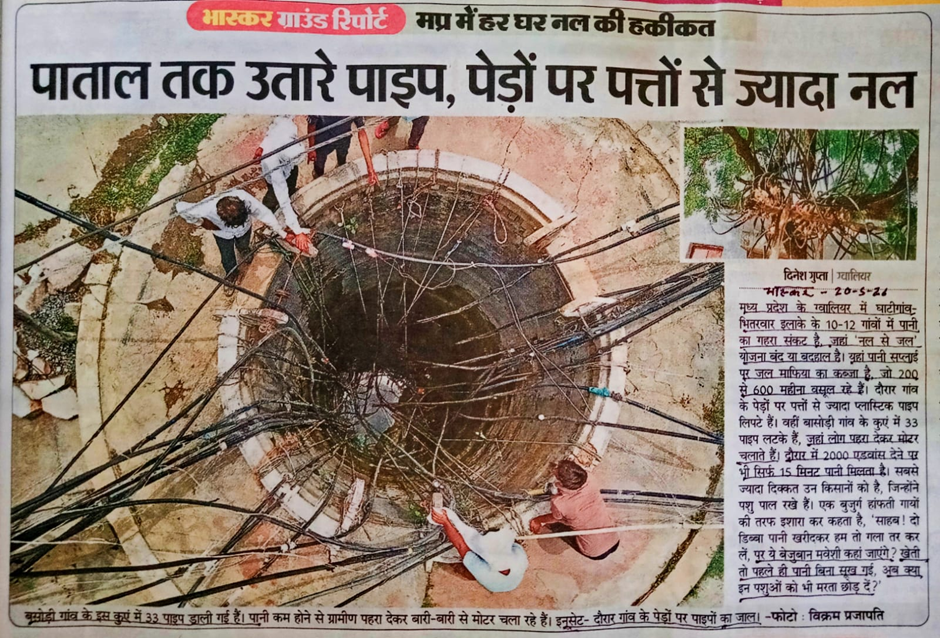
Water crisis in Gwalior village exposes infrastructure gaps A report from Madhya Pradesh’s Gwalior district highlights the severe drinking water crisis in Sojna village, where residents are forced to rely on a makeshift water supply system. Due to the absence of a proper underground pipeline network, water pipes have been tied to electric poles to supply water to homes. Villagers say they have been facing water shortages for years and that repeated complaints to authorities have brought little improvement. The temporary arrangement has raised safety concerns because water pipelines and electric infrastructure are running together. The report underlines the poor condition of rural water infrastructure despite government claims of expanding tap water connectivity under schemes like Jal Jeevan Mission.
Kota’s water crisis fuels parallel supply by water mafia This ground report found that severe water shortages in several Kota settlements have led to the rise of private “water mafia” networks supplying water through private and government borewells. Residents in areas like Shivnagar, Rozdi and Barda pay ₹500–₹1,000 per month for limited water supply, often receiving water for only 30 minutes a day.
The report says one borewell supplies 40–50 houses through privately laid pipelines, while local operators control water timing and quantity through valves. Residents also alleged illegal occupation of government borewells by influential locals. Government tanker supply reportedly reaches many areas only once every two to three days, forcing people to buy water or fetch it from distant sources. Authorities said new pipeline projects and AMRUT 2.0 works are underway to improve supply.
₹108 cr irregularities found in MP tap water scheme A report from Madhya Pradesh’s Mandsaur district has exposed major irregularities in the Jal Jeevan Mission and rural tap water schemes. Officials allegedly submitted false reports claiming incomplete projects were finished and approved payments worth ₹108 crore to contractors.
The issue came to light after the deaths of three girls in Raisen district, who had gone to fetch water from a well because taps in their village had run dry. Investigations by Dainik Bhaskar found that in many villages motor pumps were missing, pipelines were incomplete and essential equipment had not been installed despite projects being marked complete. Roads dug up during pipeline work were also left unrepaired.
Under 186 water supply schemes, around 68,870 household tap connections were supposed to be provided in Mandsaur. Of these, 164 gram panchayats were officially declared complete and handed over. However, district-level investigations reportedly found serious discrepancies. In several cases, officials could not even produce the Measurement Books (MBs) used to verify work completion before payments were released.
The report alleges that only 10–15% of required public stand posts were actually built, despite funds being fully claimed. Poor-quality materials were also reportedly used in tanks, valves and pipelines. In some villages, crores of rupees were spent on projects that still supply water only once every 2 to 5 days.
The report describes a severe water crisis in villages near the Madhya Pradesh–Rajasthan border, where residents are forced to walk long distances every day just to collect drinking water. According to villagers, groundwater levels have dropped sharply and local hand pumps and wells have dried up. In some areas, people travel around half a kilometre or more carrying pots and containers under extreme summer heat to fetch water for daily use. Women and children bear most of the burden, often spending hours each day searching for water.
Gujarat village facing severe water crisis A severe water crisis has hit Moti Palsan village in Valsad district, forcing villagers to climb nearly 45 feet deep into dry wells to collect small amounts of drinking water. Women, men and children are risking their lives daily as most wells in the village have dried up during the summer. The village, located in Kaprada taluka near the Gujarat-Maharashtra border, has around 1,000–1,200 residents and eight government wells, all of which have become nearly dry. Despite a ₹586-crore Astol Group Water Supply Scheme and household tap connections, villagers said water was not reaching their homes due to a damaged pipeline and technical issues in the supply system.
Deepening crisis in Maharashtra’s rain-shadow villages The report highlights the worsening water scarcity in Maharashtra’s rain-shadow villages, where dried-up wells, barren fields and falling groundwater levels are severely affecting rural communities. In villages such as Pangri in Kolhapur district’s drought-prone regions, residents are struggling to access drinking water as traditional water sources have dried up under extreme summer conditions.
The report describes how villagers, especially elderly residents and women, walk long distances in intense heat to collect water from hand pumps and borewells. Farmers are also facing crop losses as fields remain dry and irrigation sources fail. The crisis has exposed the vulnerability of semi-arid regions dependent on erratic rainfall and groundwater extraction. Experts cited in the report warn that recurring droughts, poor water management and climate variability are intensifying water stress across Maharashtra’s rain-shadow belt. The situation has renewed demands for sustainable groundwater management, local water conservation measures and improved rural drinking water infrastructure
Kavatha villagers dig riverbed for water The article reports a severe water crisis in Kavatha village in Maharashtra’s Akola district, where temperatures have crossed 47°C and around 2,500 residents have been struggling for drinking water for decades. With no reliable supply, villagers are forced to dig pits in the dry Man riverbed to collect seepage water, as handpumps and wells have failed and groundwater is highly saline and unsafe.
Despite the presence of a nearby Man river barrage (10 million cubic metres capacity) meant for irrigation and groundwater recharge, the village continues to suffer due to planning and infrastructure issues that prevented proper water storage and recharge for years. The article highlights that a design flaw in the project kept it non-functional until recent corrective work on a highway bridge allowed the barrage to potentially begin storing water again.
Residents say they rely on contaminated or saline water for survival, leading to health issues, loss of work time, school disruptions, and even social problems like declining marriage prospects. The report frames Kavatha as an example of long-term administrative neglect and failed water infrastructure despite heavy public investment.
Water crisis in Prayagraj The article reports a severe water crisis in Shankargarh block of Prayagraj, Uttar Pradesh, during the ongoing heatwave. With temperatures crossing 40°C, residents say they have neither proper water supply nor electricity and are forced to walk nearly 10 km every day to fetch water. Locals claim the problem has existed for years and affects around 150 people in the area. Villagers alleged that authorities have repeatedly ignored their complaints.
With borewells and hand pumps running dry, residents of Riwa village on the outskirts of Raipur depend on a handful of solar-powered pumps, standing in long queues each day for drinking water in the middle of a brutal heatwave.
The report highlights a severe drinking water crisis in a village in Mahasamund district, Chhattisgarh, where women are forced to dig through sand in a dried-up riverbed to collect water for daily use. According to villagers, hand pumps and other local water sources have either dried up or are no longer functioning properly because of extreme summer heat and declining groundwater levels. Women spend hours every day digging shallow pits in the sand and waiting for water to slowly seep in before filling their containers.
INDUSTRIAL WATER SUPPLY
Water, Women, AI This reveals one of the starkest contradictions of the contemporary world. On one side is a girl who walks several kilometres each morning to collect water before attending school, often at the cost of her education and health. On the other side is a data centre consuming massive quantities of water each day to sustain digital processes, including many that may be trivial or unnecessary. Both depend on the same finite freshwater reserves, yet the distribution of benefits, power, and decision-making remains profoundly unequal. The benefits of AI-driven technologies are largely concentrated among wealthier societies, corporations, and urban middle and upper classes. The burden of water scarcity, however, falls most heavily on communities that already struggle for access to basic resources.
AGRICULTURE
Tamil Nadu farmers quit millets despite rising demand Despite growing urban demand for millet-based foods, many farmers in Tamil Nadu are moving away from millet cultivation due to poor profits and weak market support. Farmers say rice benefits from assured government procurement and maize has stable industrial buyers, while millets often face uncertain prices and limited buyers.
Experts highlighted problems such as lack of processing units, limited procurement systems, and inadequate policy support. Minor millets like samai and thinai are not covered under the Minimum Support Price (MSP) scheme, making cultivation financially risky for farmers. Although millets are climate-resilient and require less water, cultivation now survives only in a few regions of the state. Agricultural scientists say better pricing support, crop insurance, processing infrastructure, and assured procurement are needed to encourage farmers to continue growing millets.
MONSOON
A Powerful El Nino is forming: Reminds of 1877 famine If history offers any lesson, it’s that strong El Niño events, like the one that started in 1877, play upon existing weaknesses. Few places were hit harder than southern India. Contemporaneous accounts describe stick-thin people trying to survive on roots and even selling off children they couldn’t afford to care for.
But for all the power of nature, man-made factors very likely raised the death toll, which ultimately rose to tens of millions of people. At the time, India was under British colonial rule, and the historian Mike Davis, in his 2001 book “Late Victorian Holocausts,” portrays Britain as prioritizing its imperial interests by maintaining huge grain exports from India even as Indians starved. “Londoners were in effect eating India’s bread,” Mr. Davis wrote. Of course, there was another factor complicating the response. People at the time had no idea why the monsoon rains had failed.
El Niño events are measured by looking at temperature levels in a vast rectangular zone in the central Pacific. In a moderate El Niño, temperatures might climb, say, 1 degree Celsius, or 1.8 degrees Fahrenheit, above a longer-term average. But in the biggest El Niños of the past 50 years — the ones that started in 1982, 1997, and 2015 — temperatures have soared 2 degrees Celsius or more beyond the norm. Each of those events levied a global economic toll.
Shifting Rainfall Map of Upper Bhima basin in Maharashtra Climate change is fundamentally altering the rainfall patterns of Upper Bhima River Basin, making vital pre- and post-monsoon seasons highly unpredictable while simultaneously increasing the intensity of the main summer monsoon. A new study by researchers from Savitribai Phule Pune University and the University of Tokyo analysed 31 years (1991-2021) of daily weather data to map these shifts. The team discovered a growing geographical divide. Regions near the river’s source and areas like Kalburgi are experiencing significantly more rain, while the Solapur district is facing a steady, alarming decline. This creates a complex challenge for a region that is home to millions of people, expansive sugarcane farms, and over 40% of the dams in the broader Krishna River basin. Seasonal analysis highlights rising variability during the pre- and post-monsoon periods, alongside a steady increase in monsoon rainfall.
Their data revealed that hotter, thermally driven pre-monsoon showers help to precondition the land and atmosphere, creating a low-pressure system that actually helps pull in stronger monsoon rains later in the summer. Conversely, the increasingly erratic nature of post-monsoon rainfall is tied to shifting cyclonic storms and the delayed, unpredictable withdrawal of the monsoon itself.
FLOODS
Marathwada farmers still reeling from impacts of Sept 2025 floods On the night of September 22, 2025, heavy rainfall and the subsequent flooding of the Bangaga river, which flows through the Dharashiv district of Maharashtra, caused havoc for farmers whose lands lie along the river. They not only lost their standing crops, but also a layer of fertile soil.
The 2025 monsoon was harsh in Marathwada. According to the Revenue Department, there was 722.2 mm of rainfall over the season in the region – that’s 128% more than annual average of 679.5 mm. This caused rivers and dams to overflow, washing away two-three inches of soil for at least a kilometre on both sides of water bodies, farmers and local activists said. All major rivers in Marathwada – the Sina, Bhima, Man, Terna, Manjra, Godavari and their tributaries – were flooded in the 2025 monsoon, government officials had said.
During the 2025 monsoon, soil washed away from 30,912 square km across the state, including 3,951 square km in the Marathwada region, officials in the Maharashtra agriculture department said. Subsequently, the state government has announced compensation of Rs 47,000 per hectare for soil loss and Rs 3 lakh per hectare to fix soil through works under the Mahatma Gandhi National Rural Employment Guarantee Scheme. This is highly inadequate, farmers are saying and they are also not getting the compensation of all their affected lands.
Centre Says Desilting Alone Cannot Prevent Kashmir Floods The Union government has told the Jammu & Kashmir administration that desilting rivers alone is not enough to solve Kashmir’s recurring flood crisis. The statement came during discussions on flood management measures in the Valley, where authorities reviewed the increasing risks from extreme rainfall, encroachments and changing river behaviour.
According to the report, the Centre stressed that floods in Kashmir are linked to multiple factors including shrinking wetlands, floodplain encroachment, poor urban drainage and unplanned development along rivers such as the Jhelum. Experts reportedly warned that excessive focus on dredging and desilting without restoring natural flood buffers would provide only temporary relief. The report highlights the need for integrated flood management, including wetland restoration, protection of floodplains, better drainage infrastructure and scientific river management to reduce future flood risks in Kashmir.
LANDSLIDES
Shimla Landslide: NHAI Calls It “Act of God”, Rejects Compensation Claim The National Highways Authority of India (NHAI) has told the National Green Tribunal (NGT) that it is not liable to pay compensation for a 2025 landslide in Shimla that allegedly damaged agricultural land and apple orchards during the four-laning of the Kaithlighat–Dhalli section of NH-5. It argued that the incident was caused by heavy rainfall and should be treated as an “Act of God”, not linked to construction work.
NHAI said widespread rains in Himachal Pradesh triggered multiple landslides, supported by India Meteorological Department data, and claimed there was no negligence or environmental violation on its part. It also disputed damage estimates and said compensation should not be based on inflated assessments. The agency further argued that highway construction is a regulated public infrastructure activity and does not attract absolute liability unless negligence is proven, and asked the tribunal to dismiss the compensation plea.
POWER OPTIONS
India lost 300 GWhr in transmission bottlenecks in Q1 India lost about 300 gigawatt-hours (GWh) of renewable electricity during January-March 2026 quarter due to transmission bottlenecks. Total renewable curtailment during the quarter was 470 GWhr, of which the curtailment due to transmission issues was 300 GWhr. Northern region accounted for 178 GWh and Western region 122 GWhr. None in Southern region.
ENVIRONMENT GOVERNANCE
Environmentalism Is a Warning System, Not an Obstacle to Development Mahesh Ganguly argues that environmental activism in India is being unfairly portrayed as anti-development, even though it often exposes ecological destruction, weak regulation and unsafe projects. The piece was triggered by recent remarks from the Chief Justice of India questioning whether environmentalists support any development projects.
The author says environmental groups do not oppose development itself, but resist projects that ignore scientific scrutiny, public consent and ecological safeguards. The article warns that weakening environmental activism through tighter regulations, funding restrictions under the Foreign Contribution Regulation Act (FCRA) and administrative pressure could reduce accountability in sectors such as mining, dams and industrial expansion.
He also highlights that India is already facing intensifying climate impacts — including heatwaves, falling groundwater levels, pollution and extreme weather — making strong environmental oversight more important than ever. The article argues that environmental safeguards are essential for public health, disaster prevention and long-term economic security, and warns that silencing civil society groups would weaken India’s ability to respond to ecological crises.
Your Lordships, environmental scrutiny is not anti-development We now inhabit a profoundly altered ecological reality in which environmental protection can no longer be treated as an obstacle to economic growth but as the foundation upon which economic progress and social stability depend. So, if India needs to progress, there is no way but for infrastructure projects to undergo rigorous scrutiny so that the few remaining natural habitats & resources are protected.
In light of this, we respectfully request that this honourable court reconsider oral remarks made in the Pipavav proceedings so that they are not understood as casting doubt on the legitimacy of bona fide environmental public interest litigation or on the role of affected communities and citizens in seeking enforcement of environmental laws.
We further urge the Supreme Court to continue to uphold and deepen its rich environmental jurisprudence and to reaffirm that in the world’s largest democracy, adherence to environmental law and the precautionary principle are essential parts of, and not an obstacle to, constitutionally sanctioned, legally established, environmentally sustainable, socially equitable, and democratically legitimate development. Article 51A(g) makes the protection and improvement of the natural environment a fundamental duty for every Indian citizen, and we should not forget or disregard it. (Nirmala Gowda, Ravi Chellam)
CLIMATE CRISIS
Microscopic Life in Ladakh’s Glacial Lake Signals Climate Change A new study on Ladakh’s high-altitude Tsoltak glacial lake has found that microscopic algae and other microorganisms are increasing due to warming temperatures and longer ice-free summers. Researchers analysed mud and sediment samples from the lake, located over 4,900 metres above sea level, and found signs that the once nutrient-poor lake is becoming more biologically productive.
The study identified growing populations of diatoms and desmids — microscopic algae that indicate changing water conditions and rising nutrient levels. Scientists say the lake is shifting from an oligotrophic (low nutrient) to a meso-oligotrophic state, reflecting ecological changes driven by climate change in the fragile Trans-Himalayan region. The findings provide important clues about how global warming is altering Himalayan glacial ecosystems and water systems that support millions of people downstream.
SOUTH ASIA
Will Padma Barrage be a disaster for Bangladesh? Eminent water expert Prof. Md. Khalequzzaman, Professor of Geology and Oceanography at Commonwealth University of Pennsylvania, speaks about why the proposed Padma Barrage may deepen Bangladesh’s sediment, water, and ecological crises rather than resolve them.
The Bengal Delta is one of the largest deltas in the world. Deltas are formed through the deposition of river-borne sediment. For a delta to survive, maintain its landmass, and continue advancing towards the sea, sediment deposition in coastal areas is essential. If sediment deposition declines, the delta becomes more vulnerable, especially as sea levels continue to rise. In that sense, there is no alternative to sedimentation. In the 1960s, Bangladesh received roughly 2 billion T of sediment annually through all its major rivers combined. Today, that figure has fallen to below 1 billion T; some studies suggest 600 to 700 million T due to upstream interventions.
Since the Farakka Barrage became operational in 1975, a large share of the sediment that would have entered Bangladesh through the Ganges has been trapped upstream. Studies suggest that between one-third and nearly half of this sediment is now retained behind the Farakka Barrage. If another barrage is built on the Padma at Pangsha in Rajbari, a significant portion of the sediment that still enters Bangladesh during the monsoon could also be trapped.
The next treaty should be more robust and, if possible, cover all 12 months rather than just the 5 dry-season months. It should include Nepal. It should also address sediment, not just water, and specify how sediment will be passed downstream into Bangladesh. The treaty should require India to notify Bangladesh about any new upstream diversionary structures beyond Farakka.
The Teesta experience is very important. Bangladesh has a barrage and an irrigation project on the Teesta. But because sufficient water does not reach the basin from India, vast stretches of the Teesta basin have turned into dry sandbars. A barrage or dam cannot create water. The water has to come from upstream.
The project documents also claim that fish production will increase. But before the Farakka Barrage, hilsa could migrate as far upstream as Allahabad. Farakka disrupted that movement. If another barrage is built at Pangsha, the migration of hilsa and many other fish species through the Padma and Ganges would be obstructed further. The more likely outcome is a decline in fish production. Bangladesh has no comparable research showing that hilsa, rohu, catla, or other native fish would use the fish ladders. I have serious doubts that two small fish ladders would work in our rivers.
So will erosion decrease or increase? Our experience does not support the claim that barrages reduce erosion. Bangladesh has never undertaken an experiment of this scale on one of its great rivers. Taking a river as large as the Padma and altering it through a barrage could push it towards collapse. Waterlogging may also increase upstream of the proposed barrage because water would no longer drain as freely. The same happened upstream of Farakka.
The project promises increased irrigation, improved navigability, reduced salinity, hydropower generation, reduced waterlogging, increased fish production, and reduced riverbank erosion. In my view, these promises are hollow and misleading.
The Padma Barrage proposal includes dredging components totalling about 381 kilometres—roughly 135 kilometres in the Gorai-Madhumati system and 246 kilometres in the Hisna-Mathabhanga system. This should in any case be pursued seriously, alongside dredging in coastal rivers to increase water-carrying and water-holding capacity.
Pakistan: Failure of Neelum Jhelum Hydropower project It represents the systematic, cold-blooded murder of a nation’s future, carried out not by enemies across any border, but by the very institutions entrusted to build it, the very officials paid to guard it, and the very consultants contracted to perfect it.
In Dec 1989, when ECNEC approved the Neelum Jhelum Hydropower Project at Rs15.012 billion, there was genuine hope embedded in those numbers. That dream now lies buried under collapsed rock, broken concrete, institutional cowardice, and the silence of 260 million people too exhausted, too hungry, and too powerless — in every sense of that broken word — to demand accountability. Through 4 ECNEC revisions, the project cost exploded to Rs 506.808 B — with Rs 423.446 B already consumed by Jun 2023. The first revision had placed the cost at Rs 84.502 B. By the 4th, it stood at Rs 419.454 B — a cost overrun of Rs 334.952 B on that revision alone.
Then came July 2022. The tailrace tunnel — that critical underground conduit through which water exits the turbines and returns to the river, the last vital passage of a system built over decades with hundreds of billions of rupees — cracked. Collapsed. Blocked.
Global Sand Mining Unsustainable, South Asia Among Worst Hit A new report has warned that the world is extracting sand at an unsustainable scale — equivalent to building around 19,000 Great Pyramids of Giza every year. Sand is now the second most exploited natural resource after water, mainly driven by demand from construction, infrastructure & land reclamation.
The report highlights South Asia, particularly India, as one of the global hotspots of excessive and poorly regulated sand mining. Rapid urbanisation, highway construction and real estate growth have intensified extraction from rivers, floodplains and coastal areas, often causing riverbank erosion, groundwater decline, habitat destruction and increased flood risks. Illegal mining networks and weak enforcement continue to worsen the crisis across the region.
The study warns that uncontrolled sand extraction is threatening biodiversity, fisheries, agriculture & water security in many river basins. It calls for stronger regulation, better monitoring, recycling of construction materials and reducing dependence on river sand to avoid ecological damage.
SANDRP
Also see: DRP 18 May 2026 & DRP 11 May 2026
Follow us on: www.facebook.com/sandrp.in; https://twitter.com/Indian_Rivers


