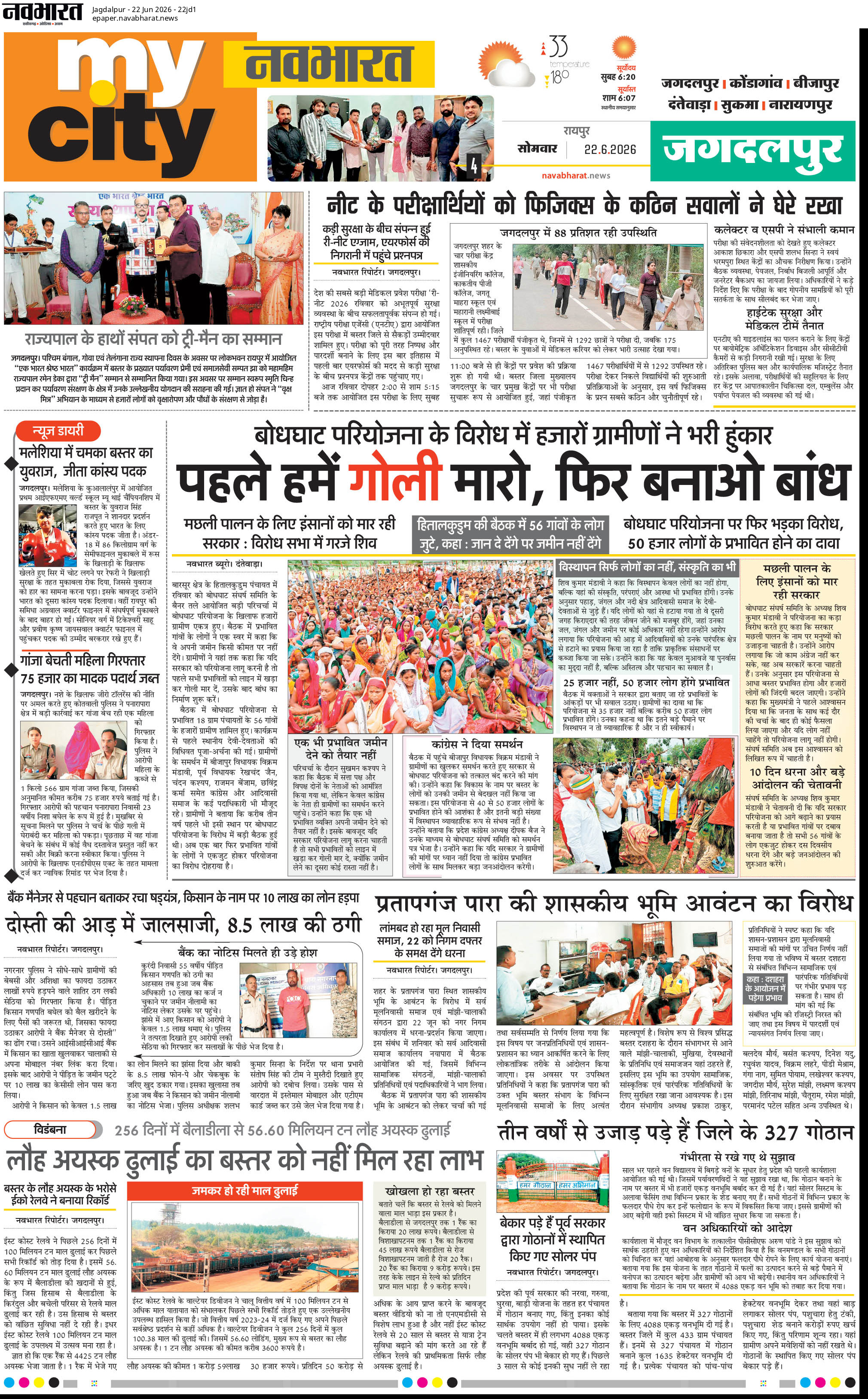
(Feature Image: Location of proposed Bodhghat and other dams on the Indravati River. Source: Research Gate)
The Bodhghat dam on the Indravati River in Bastar, Chhattisgarh has reportedly been revived after more than 45 years. The project was first planned in 1979 but remained stalled due to multiple concerns. Recently, govt has restarted the process of land survey for the project. It is now estimated to cost about ₹49,000 crore. The project aims to generate hydropower and irrigate 3.5 lakh hectares. It also promises drinking water and other benefits. However, it will submerge at least 13,783 hectares of forest and farmland including rich biodiversity areas.
For past couple of weeks, the tribal communities are opposing the project. Only today, people from over 50 villages under 18 panchayats have mobilised against it. They have stated that they will not part with their land, warning of intensified protests if the project proceeds. The tribals concerns include displacement of more than 50,000 people, loss of forests, livelihoods and cultural identity. Many villagers have also pointed out the lack of adequate consultation, transparency and informed consent in the survey process.
Broadly, the project has become symbolic of the larger conflicts surrounding big dam projects in India, where promises of development often clash with ground realities of better alternatives, displacement, ecological damage and social injustice and due process of decision making. Like many such projects, it raises unresolved questions about cost-benefit distribution, environmental sustainability and democratic decision-making. Forcing such projects in ecologically sensitive and socially vulnerable regions risks deepening conflict and undermining trust.
Given disappointing track record of large dam projects in delivering promised benefits, compensation and rehabilitation, or even environment management of impacts, the govt must not pursue a project of this scale without free, prior and informed consent of affected communities. There is an urgent need to reassess the project through an independent credible panel, ensure credible impact assessments and explore less destructive alternatives. Respecting tribal voices and facilitating a transparent, participatory decision-making process is not only a legal and ethical necessity but also essential for sustainable and just development.
Tribals Renew Protest Against Bodhghat Dam Tribals in Bastar have revived protests against the proposed Bodhghat dam as fresh surveys begin. Thousands from 56 villages gathered, saying the project will displace communities and submerge sacred forests, hills and cultural sites. They argue that no compensation can replace this loss and warned strong resistance if the project moves forward. While the government says the dam will boost irrigation and development, locals see it as a threat to their land, identity and survival.
Massive Protest Against Bodhghat Dam in Bastar Thousands of villagers in Bastar protested against the proposed Bodhghat project, declaring they would not give up their land. People from 56 villages across 18 panchayats gathered in Hitalkudum and warned that they would rather die than be displaced. They fear loss of livelihoods, forests, and cultural identity, and claim up to 50,000 people will be affected. Villagers announced plans for continued protests, including a 10-day protest, while opposition leaders extended support to their cause.
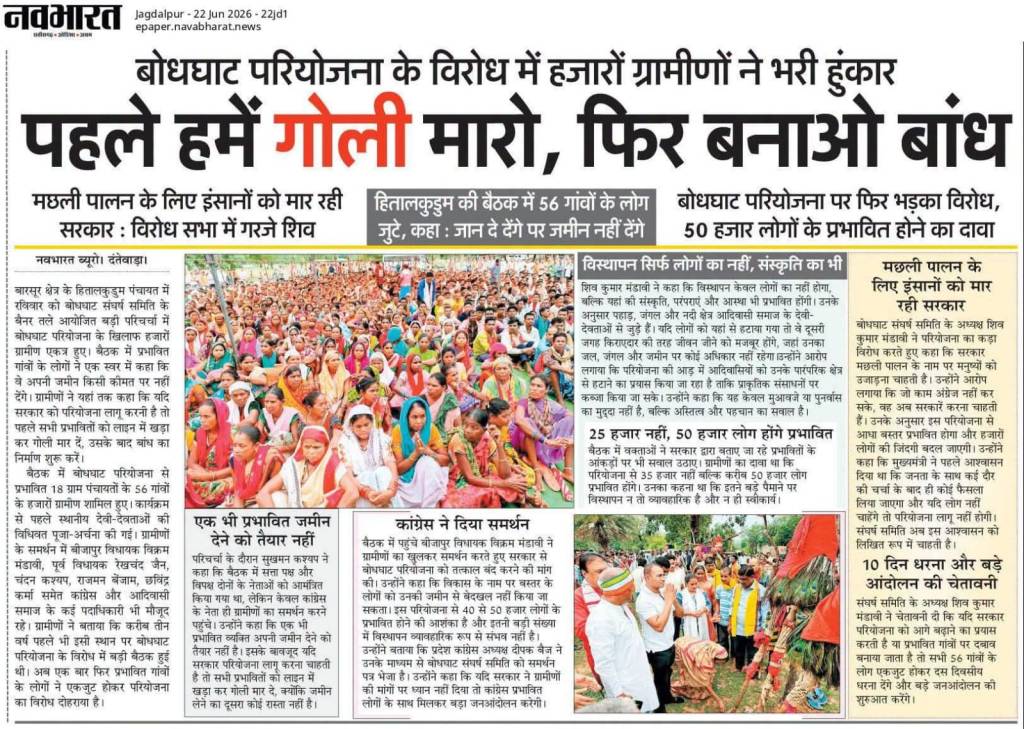
Bodhghat Project opposed by the affected villages: Residents of 56 villages in Bastar have renewed protests against the Bodhghat project, refusing to give their land. At a meeting in Hitalkudum, villagers said the project would harm their livelihoods, forests, and culture. They warned of stronger agitation and planned a large gathering on June 14 to decide further action.
Survey begins for Bodhghat dam The Chhattisgarh government has begun a survey for the long-pending Bodhghat dam project in Dantewada district after recent anti-Naxal operations improved state access to the region. The proposed multipurpose project on the Indravati River is expected to generate hydropower and support irrigation, but has revived fears of large-scale displacement among Adivasi communities.
Local residents and activists warned that the project could submerge dozens of villages, forests and agricultural lands in Bastar, threatening livelihoods, cultural identity and traditional forest-based economies. Many villagers said they had not been adequately informed about the survey.
Bodhghat Dam Faces Strong Tribal Opposition in Bastar Also in June 2025, the project triggered intense protests amid fears of large-scale displacement and environmental damage. Over 50,000 people across 57 villages in 18 panchayats are expected to be affected. Local tribal communities strongly opposed the project, refusing to give up their ancestral land and warning that it will destroy their culture, religious sites, and livelihoods.
The project, estimated at ₹49,000 crore, aims to irrigate 3.5 lakh hectares and generate around 5,000 MW of electricity, along with benefits like fish farming and drinking water supply. However, it is expected to submerge about 13,783 hectares of forest and farmland, including ecologically rich areas.
Protests intensified in villages like Hitalkudum, with thousands gathering and declaring they would resist displacement. Political responses remain mixed opposition leaders backed the protesters, while the government continued to promote the project as key to regional development. The project, pending for over 45 years, is also linked to broader plans to boost infrastructure in the Maoist-affected Bastar region. However, with growing resistance and unresolved concerns over displacement and ecology, its future remains uncertain.
HYDRO POWER PROJECTS
One river, two perspectives: HEPs in North Sikkim Hydropower projects on the Teesta have been accompanied by intense debate and conflict. While policymakers frame dams as symbols of clean energy and development, local communities have raised concerns about environmental degradation, cultural survival, and increased disaster risks. By examining intergenerational perspectives, the study reveals that community opposition to hydropower is both shared and diverse. Elders and youth articulate their concerns through different narratives, yet both groups remain deeply connected to the river and the landscape. The findings also highlight the importance of incorporating local knowledge and cultural values into development planning.
Policies that treat rivers purely as economic resources risk overlooking the complex social relationships that communities maintain with their environment. As climate change and infrastructure expansion continue to reshape Himalayan landscapes, understanding these relationships will become increasingly important. Development strategies that fail to engage with local perspectives may deepen existing conflicts and undermine long-term sustainability. Recognizing the diversity of voices within communities is therefore essential for creating more inclusive and just approaches to development in mountain regions. (Shakshi Rai)
Mini HEPs threaten Cauvery wildlife This opinion article argues that hydel infrastructure—including dams, weirs, roads, transmission lines, blasting and construction activity—can fragment habitats, obstruct wildlife movement corridors and further stress already vulnerable populations of elephants and tigers. It also raises concerns about altered river flows, impacts on aquatic ecosystems and cumulative ecological damage to the Cauvery river system.
Conservationists contend that the projects offer limited energy benefits while risking long-term harm to one of southern India’s most important wildlife and riverine landscapes. The article calls for prioritising ecological protection and reassessing hydropower development in sensitive forest and river habitats.
Integrating fish evolution into Ecohydraulics for conservation Summary Protection of river ecosystems usually focuses on management of river habitats, often within the environmental flow paradigm. This approach requires good understanding of the historical river environment, which is challenging because of climate change and human perturbation. This paper proposes a new & flexible strategy that overcomes this uncertainty by considering the resilience of a fish population based on its ability to adapt to different stresses. It found that changes in the river environment and river life mutually influence each other, but this interaction has been largely ignored. It explores the interplay between hydraulics, hydrology and evolution, and suggest how these interactions can be integrated to develop conservation plans in basin-wide water management.
The research shows that dams, hydropower and climate change are not only altering rivers but also driving rapid evolution in fish populations, with cascading impacts on ecosystems, sediment movement and even flood risk. The study’s central message is that fish evolution is not just a conservation issue—it is also a water management issue.
-The research also challenges conventional river restoration strategies. Returning rivers to a historical “natural” state may no longer be enough in a world shaped by climate change, infrastructure and ongoing human pressures.
-Instead, the authors argue for management approaches that account for how fish populations adapt—and how those adaptations feed back into river processes. This includes designing infrastructure such as fish passages with evolutionary change in mind and monitoring genetic diversity as part of routine river management.
DAMS
Governance, Accountability and the Collapse of Madhopur Barrage The flood wave from Madhopur travelled downstream the river destroying the Dhussi bunds or embankments in its wake. While a regulated flood also would have caused damage, the sudden flood wave possibly scoured the embankment bottom leading to failure. Of the 45 embankment failures in Punjab floods, 42 were on the Ravi. The flooded Ravi met the already flooded Ujh River at Makora Pattan, causing magnified harm to Gurdaspur, Amritsar and Tarn Taran District.
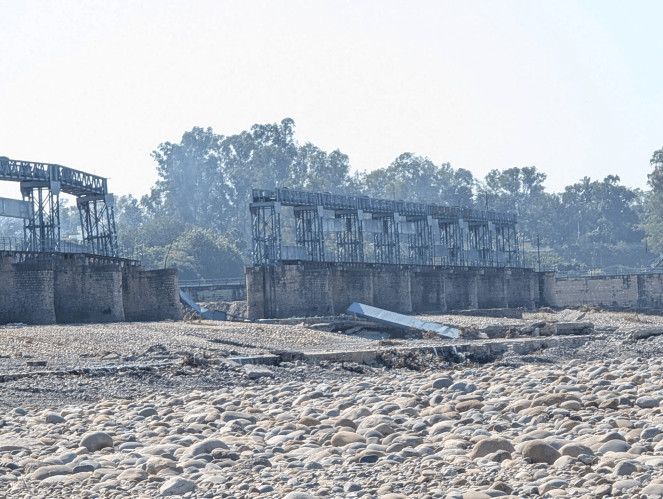
Bhakra desilting plans stalled as HP opposes over no NOC The Bhakra Beas Management Board’s plan to desilt the Gobind Sagar reservoir of Bhakra Dam has hit fresh trouble after Himachal Pradesh objected to tenders issued for the project. The state government contends that the board failed to obtain the mandatory No Objection Certificate before initiating the process. Himachal Pradesh has informed BBMB that since the entire reservoir area earmarked for desilting falls within its territorial jurisdiction, prior state approval was required before floating tenders.
While the dam’s designers had estimated annual silt inflows of about 33.61 MCM, actual inflows have averaged around 39.01 MCM per year — about 6 MCM more than anticipated. The cumulative impact of this excess sediment has substantially reduced the reservoir’s live storage capacity. If the desilting work actually happens, even then no more than 4-5 MCM can be removed in a year from each of the two designated places: Lunu in Bilaspur district and Seer Khad in Una district of Himachal Pradesh.
Punjab-Haryana dispute on Canal Project During the 22nd meeting of the Standing Committee of the Northern Zonal Council held in Shimla on June 19, Haryana officials sought access to the Detailed Project Report of the proposed canal project in Malwa-Punjab, they needed complete technical details before further discussions could take place. The project is to provide irrigation facilities to four districts of Punjab’s Malwa belt by drawing water from the Harike barrage.
Punjab questioned whether the BBMB possessed accurate measurements and reliable data regarding the quantity of water available in the reservoirs and for the Canal Project. BBMB officials informed the meeting that the matter had already been referred to the Indian Institute of Technology (IIT), Ropar, for a detailed scientific study and assessment.
TN Assembly unanimously adopts resolution opposing Mekedatu dam The Tamil Nadu Assembly on June 19 unanimously adopted a resolution moved by CM C Joseph Vijay, objecting to the Karnataka government’s unilateral attempt to build a dam across the Cauvery River at Mekedatu. The Assembly urged the union government not to grant technical or environmental clearances to the project and sought the Central Water Commission (CWC) not to consider Karnataka’s Detailed Project Report (DPR) for the construction of the dam. It also called for the constitution of a tribunal to adjudicate the Mekedatu dispute.
On May 29, 2026, the Tamil Nadu government approached the NGT seeking directions to restrain Karnataka from proceeding with any activity related to the proposed Mekedatu dam project on the Cauvery River, including the planned bhoomi puja (foundation-laying ceremony). Tamil Nadu argued that Karnataka should not undertake any work at the project site without the necessary environmental clearances, approvals and the consent of downstream basin states. The state expressed concerns that the proposed reservoir could adversely affect Cauvery water flows and impact Tamil Nadu’s water rights under existing water-sharing arrangements.
INTERLINKING OF RIVERS
Telangana seeks CG nod for Sammakka Sagar project Telangana irrigation Minister N Uttam Kumar Reddy met Chhattisgarh Chief Minister Vishnu Deo Sai on June 11 and sought his government’s cooperation in issuing a No-Objection Certificate (NoC) for the Sammakka Sagar Project, formerly known as the Tupakulagudem Barrage. The NoC is crucial for Telangana to obtain Detailed Project Report (DPR) approval from the interstate directorate of the Central Water Commission (CWC). All other CWC directorates have already cleared the project.
Vishnu Deo Sai reportedly responded positively. Telangana had made a similar request in September 2025. Irrigation engineers from both states have already conducted a joint survey of the likely submergence area. Chhattisgarh sought a more detailed assessment, including demarcation of the Full Reservoir Level (FRL) and backwater levels. Telangana agreed to bear the survey cost and released Rs 9.88 crore to the Chhattisgarh Water Resources department in April 2026. The survey is currently under way in Bijapur.
The project traces its origins to the undivided Andhra Pradesh government’s PV Narasimha Rao Kanthanapally Sujala Sravanthi Scheme. Following Telangana’s formation in 2014, the project was redesigned, with studies recommending shifting the barrage downstream to Tupakulagudem in Mulugu to reduce submergence. The project aims to divert 46.96 tmcft of Godavari water to stabilise 4.40 lakh acres under SRSP Stage-II, create a new ayacut of 30,000 acres, support the Devadula Lift Irrigation Scheme, and provide drinking water to villages.
Activist warns Ken-Betwa project could dry up Ken river In an interview, social activist Amit Bhatnagar criticized the Ken-Betwa Link Project, arguing that it is based on outdated data and threatens the ecological health of the Ken River. He contends that, despite being presented as a river-linking project, it primarily diverts water from the Ken to the Betwa, raising concerns that the Ken could lose much of its flow.
Bhatnagar also warned that the project would submerge forests and affect wildlife habitats, including parts of the Panna Tiger Reserve, while displacing local and tribal communities. Many affected residents, he said, remain dissatisfied with compensation and rehabilitation measures and fear the loss of their land, forests and livelihoods. He further alleged that authorities have failed to engage meaningfully with local communities, arguing that the benefits promised on paper differ significantly from the realities faced by people in the project area.
INTERSTATE WATER DISPUTES
India extends two oldest water tribunals by 1 year India’s two oldest river water dispute tribunals – the Ravi and Beas Water Tribunal (set up in 1986) and the Krishna Water Disputes Tribunal (set up in 2004) – have been given another one-year extension after failing to resolve disputes despite decades of deliberations. The Ravi–Beas Tribunal (Punjab, Haryana, Rajasthan) has been extended till August 5, 2027. The Krishna Tribunal (Maharashtra, Karnataka, Andhra Pradesh, Telangana) has been extended till July 31, 2027.
URBAN RIVERS
Maharashtra govt orders inquiry into Pune RFD project The Maharashtra environment and climate change department has ordered a multi-agency inquiry into the Pune Riverfront Development (RFD) project following complaints by MLA Aaditya Thackeray and activist Sarang Yadwadkar alleging serious environmental violations.
Authorities including PMC, WRD, MPCB, and MoEFCC have been directed to submit a fact-finding report. Key concerns include a flawed hydraulic study, alteration and narrowing of the riverbed, and violation of WRD norms that prohibit changes to a river’s cross-section. The complaint also alleges that flood risk assessments ignored runoff from a large free catchment area. The activist has sought a halt to the project, warning of increased flood risks, while noting earlier directions from NGT and MoEFCC for fresh clearances and site inspections.
However, the Pune Municipal Corporation has denied all allegations, stating that the project has necessary approvals, complies with regulations, and is designed to enhance river capacity and manage floods for the next 100 years.
Plea alleges concretisation of natural streams in Thane In a June 2026 affidavit before the NGT, applicant Prashant Vasant Mahadik alleged that the Thane Municipal Corporation (TMC) is misleading authorities by classifying a natural perennial stream originating in Sanjay Gandhi National Park as a stormwater drain and concreting it. He argued that natural streams and man-made drains serve different ecological and hydrological functions, and that the project was designed without adequately assessing the stream’s actual flow, catchment characteristics or monsoon hydraulics.
Defence ministry clears 83.814 acres of land for Gandhi Sarovar project The total value of the defence land involved has been estimated at ₹533.42 crore. The approval enables MRDC to proceed with the Gandhi Sarovar Project, which is part of the larger Musi Riverfront Development programme aimed at the rejuvenation and redevelopment of the Musi River corridor.
Musi RFD to rival major Riverfronts A. Revanth Reddy announced on June 18, 2026, that the Musi River riverfront in Hyderabad will be developed to international standards, aiming to surpass projects like the Sabarmati, Yamuna and Ganga Riverfronts.
26 drains choking Tawi river A report published on June 20, 2026 revealed that the Tawi River, the main source of drinking water for Jammu, Udhampur and adjoining areas, is facing severe pollution from 26 drains (nullahs) carrying untreated sewage, municipal waste and industrial pollutants directly into the river. Of these, 20 drains enter from the right bank and six from the left bank, effectively turning large stretches of the river into a sewage channel.
According to the Jammu and Kashmir Pollution Control Committee (J&K PCC), the major sources of pollution include untreated sewage from Jammu city, municipal solid waste, construction and demolition debris, and effluents from commercial establishments. Several STPs have been installed, but many are either poorly functioning or non-functional.
RIVERS
Teen’s plea sparks a mass movement to save a river in Jharkhand In April, 15-year-old Mehak Priya requested the Garhwa sub-divisional magistrate — save Saraswatiya river in her village from disappearing. Her school had given all children tasks to frame one or two questions for a govt officer and submit them. Weeks later, that appeal has swelled into a rare, ‘people’s movement’ that is now slowly bringing the dying river back to life. Instead of waiting for files to move, SDM Sanjay Kumar chose a different route — he turned to the people.
From May 25, when the first stretch was cleared, the campaign has gathered remarkable momentum. Across the 14-km river stretch — from its origin at Meral to Garhwa town — residents have stepped in with whatever they can offer: labour, machines, money, even food and logistics for workers. More than 5 km of the river has been reclaimed from years of encroachment, with work continuing at a war footing. “We are not just cleaning — we are reclaiming the river’s natural path so it can flow freely again,” said Kumar.
“Every day, at least five to six earthmover machines are in operation. People themselves are volunteering in their localities by pooling in money and resources,” he added. Kumar said he dipped into his own pocket to launch the initial work and then made a public appeal. What followed, he said, exceeded expectations. Schools, transporters, builders and local groups have begun “adopting” stretches of the river, pooling in resources to clean and restore them. “This sense of ownership is what is driving the campaign,” he said.
The administration has complemented the public efforts with strict enforcement. Drones are being deployed for daily aerial monitoring to ensure reclaimed stretches are not encroached upon again. 13 bulk waste generators have been issued showcause notices for discharging waste into the riverbed, while action has been taken against over 100 violators for blocking the river’s flow. The impact is evident beyond the cleanup. The campaign has seen zero protests or resistance — a rarity in drives involving removal of encroachments — when community members join hands.
NGT pulls up southern states over Cauvery green cover loss The NGT has warned the governments of Karnataka, Tamil Nadu and Kerala for failing to file timely responses in a case concerning the large-scale loss of green cover in the Cauvery River Basin. The tribunal noted that its earlier directions had not been complied with and sought responses from the concerned states. The case has been posted for Aug. 18, 2026.
The case originated from a scientific assessment showing that the Cauvery basin lost about 12,850 sq km of natural vegetation between 1965 and 2016, reducing green cover from around 28,154 sq km to 15,345 sq km. The losses were reported to be highest in Karnataka (about 9,664 sq km), followed by Tamil Nadu (2,905 sq km) and Kerala (279 sq km).
Study finds microplastics in Brahmani River A recent study on the Brahmani River in Odisha’s Bhitarkanika Wildlife Sanctuary has found that microplastics are acting as carriers of toxic heavy metals, raising concerns for the rivers & wildlife. Researchers found microplastics in river sediments at all sampling sites, with fibres, fragments and plastic films being the most common.
Researchers warned that mangrove areas within Bhitarkanika act as major sinks for microplastics. The combined presence of microplastics and toxic metals could harm fish, benthic organisms, mangroves, and wildlife including saltwater crocodiles, Olive Ridley turtles, migratory birds and elephants that depend on the rivers. Several sampling locations showed high ecological risks.
NGT challenge to bridge construction in Panzara floodplain An applicant has challenged the PWD Dhule’s bridge construction in the prohibited (blue flood line) zone of River Panzara, calling it a violation of floodplain regulations. The NGT had earlier stayed construction (April 30, 2026) and sought responses from authorities.
The applicant alleged that PWD misled the tribunal by denying additional constructions, while official records show plans for a 230-metre bridge with 51 Shaktipeeth replicas and temples within the riverbed. He argued that such permanent structures violate WRD rules, which allow only open uses like gardens or playgrounds in the prohibited zone.
The selective sanctity of the Ganga The Ganga, it appears, can absorb unlimited quantities of sewage, heavy metals, partially burned corpses, and chemical effluent without her sentiments being hurt writes Devdutt Pattanaik.
26-km Ganga corridor plan in Patna Development commissioner Mihir Kumar Singh has directed officials concerned that the JP Ganga Path integrated park corridor should go beyond mere beautification and be developed as a comprehensive model of tourism, culture, environmental conservation and public amenities. In the first phase, a nearly 6-km green corridor is being developed along JP Ganga Path.
In the second phase, it will be extended to around 26 km, connecting Patna City and creating a continuous green tourism stretch along the Ganga. Singh has asked departments to complete the DPR for the first phase by August 31. Multiple agencies, including tourism, water resources, urban development, Buidco, environment and forest, and BSRDCL, are involved. About 50 theme-based shops, inspired by the ‘Ganga and Pataliputra’ theme, will also be developed. A design competition with prizes of Rs 51,000, Rs 21,000 and Rs 11,000 will be held to select an icon.
Fresh proposal to divert Ganga water for Yamuna cleanup However, the proposal is likely to raise questions about: The availability of surplus water in the Ganga basin. Inter-state water-sharing arrangements. Whether augmenting flows alone can clean the river without first stopping sewage and industrial pollution at source.
16 more DSTPs in pipeline to curb pollution The Delhi government plans to award contracts for construction of 16 more decentralised sewage treatment plants (DSTPs) by July as part of its Yamuna-cleaning initiative and to ramp up the city’s sewage treatment capacity. Work for 13 DSTPs was awarded following a tender process in May. With the addition of the 16 new plants, the total treatment capacity of the DSTPs is expected to reach 170 million gallons per day (MGD).
What is the status of the Drain No. 6? The HSPCB has recently conducted a study of Drain No. 6, a major water channel flowing from Panipat through Sonepat before entering Delhi and ultimately joining the Yamuna. Drain No. 6 originates near Samalkha in Panipat and enters Sonepat at Bhora Rasulpur.
During the study, a total of 36 discharge points have been identified from where untreated domestic sewage is being discharged into the drain. A total of 11 untreated discharge points in Panipat account for 12.9 MLD of effluents, while 25 such points in Sonepat contribute 29.27 MLD. Besides this, around 90.5 MLD of treated wastewater is discharged into the drain through one STP in Samalkha and 4 CETPs located at Barhi, Rai, Kundli and Murthal.
36 industrial units face action for polluting drain No. 6 According to an HSPCB report, 36 untreated discharge points have been identified along the drain, including 11 in Panipat and 25 in Sonepat, releasing nearly 42.17 MLD of untreated domestic wastewater into the drain.
Drain No. 6 carries an average flow of 60–70 MLD at the Sonepat border. By the time the drain reaches the Delhi border near Narela-Singhu, the flow rises to about 220 MLD. The situation worsens further when Delhi’s Bakner drain adds another 90 MLD of wastewater.
132 illegal bleaching units sealed in Panipat An RTI reply has revealed that the HSPCB has sealed 132 illegal bleaching units in Panipat over the past decade, but environmental compensation has been imposed on only three units so far. The units were allegedly polluting groundwater, agricultural land and water bodies, including the Yamuna River, by discharging untreated chemical effluents.
The RTI, obtained by environmental activist Varun Gulati, showed that proposals to impose compensation on 26 additional units are still pending. The compensation imposed so far includes ₹35.2 lakh on a unit in Karhans village and ₹2.12 lakh and ₹1.75 lakh on two units in Jattal village.
Panipat’s global textile status marred by failing infra Despite being internationally recognized as India’s “handloom city” and a major hub for carpets, textiles and home furnishings exports, Panipat is struggling with crumbling infrastructure. Poor roads, inadequate drainage, traffic congestion and deteriorating civic amenities are affecting both residents and the city’s textile industry.
1,500 factories polluting air, water in Ghaziabad: UPPCB According to officials, many of these units either lack adequate pollution-control systems or are not complying with environmental norms. The UPPCB has raised concerns over discharge of untreated or inadequately treated effluents into drains and water bodies. Groundwater contamination in industrial clusters, particularly in areas such as Sahibabad. Continued operation of units without required pollution-control devices and monitoring systems.
RIVERS BIODIVERSITY
NBWL focuses on tech, habitat protection & policy issues On March 21, 2026, Union Environment Minister Bhupender Yadav chaired the 90th meeting of the Standing Committee of the National Board for Wildlife (SC-NBWL) in Dehradun, where key policy and conservation issues were discussed. The committee reviewed proposals related to infrastructure projects such as roads, transmission lines, irrigation and defence, assessing their impact on wildlife.
Key discussions included maintaining environmental flows in the Chambal River to protect species like dolphins and gharials, and improving conservation of grasslands and rangelands, which are often neglected despite their ecological and livelihood importance. The committee also addressed the role of pastoral and nomadic communities in protected areas, stressing the need for balanced conservation approaches.
Wild water buffalo to return to UP after a century The UP govt is planning to reintroduce the wild water buffalo (Bubalus arnee) to the state after an absence of nearly a century. The species, once found in the Terai region of Uttar Pradesh, disappeared from the state due to habitat loss, hunting and shrinking grasslands.
The proposed reintroduction will take place in the Pilibhit Tiger Reserve, which has extensive grasslands, wetlands and riverine habitats considered suitable for the species. The project is being undertaken in collaboration with the WII and other wildlife authorities, with buffaloes likely to be sourced from populations in Assam and Chhattisgarh, where the species still survives.
Fresh water turtle recorded in Rajouri In a significant boost to wildlife conservation efforts in Jammu & Kashmir, the Indian Roofed Turtle (Pangshura tecta) has been officially recorded for the first time from the ManwarTawi area of Rajouri district, indicating a possible expansion in the known distribution range of the species. The discovery came after local residents informed the Wildlife Protection Dept about the presence of a turtle-like species in the ManwarTawi river area.
FISH, FISHERIES, FISHERFOLKS
Padma Hilsa in Agartala: A story of rivers, borders & changing ecologies Researchers and local experts point out that climate change, river degradation, habitat loss and changing hydrology are affecting hilsa migration routes and availability. The fish, once a symbol of abundance and river connectivity, has increasingly become a reminder of stressed river ecosystems and disrupted ecological links between India and Bangladesh.
The report concludes that the future of Padma hilsa depends not only on trade and border policies but also on the health of the rivers and estuaries that support its migration. It argues that the story of hilsa is ultimately a story of rivers, ecology, memory and the shared water systems that connect communities across South Asia.
India’s first groundwater fish living in aquifers in NE India A remarkable new discovery shared by Ralf Britz and colleagues in their open access paper published in Nature Scientific Reports from Assam has brought this hidden world into focus. In the study, these scientists have identified North-east India’s first known groundwater-dwelling fish, a tiny blind species called ‘Gitchak nakana’. The finding expands our understanding of subterranean biodiversity in India and highlights the urgent need to protect groundwater ecosystems that are increasingly threatened by over-extraction, pollution, and urban expansion.
SAND MINING
June 2026: Mining Destabilizing Himalayan Rivers, Infrastructures in HP, UKD Recent studies sharing examples of Ganga and Gaula rivers reveal broader pattern of how excessive riverbed extraction have been changing the very shape and behaviour of Himalayan rivers. The studies find that such mining is resulting in deepening of riverbeds, narrowing down of water channel thus disturbing the natural balance of riverbed minerals. The hungry water effect created in the process has been triggering aggressive erosion of river beds and banks over long distances. Researchers warn that these changes are long-lasting and dangerous, often leading to irreversible instability.
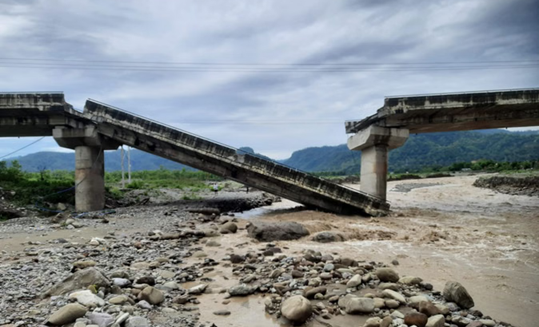
June 2026: Impact of Mining on River Infrastructures in Punjab, Haryana Based on the available reports, at least three bridges have been impacted by riverbed mining operations in Punjab during past three years. All three cases of Punjab show that the judiciary has increasingly been treating riverbed mining as a public safety and infrastructure risk and not just an environmental violation. However, these interventions have largely focused on investigation, monitoring and precautionary restrictions rather than resolving the underlying issue of unsustainable mining with a view to stop recurrence of such incidents.
HC allows limited desiltation near Aggampur bridge till June 30 The Punjab & Haryana High Court, in its order on June 17, 2026, modified its June 8, 2026 interim stay and allowed limited desiltation near the Aggampur–Anandpur Sahib bridge on the Satluj River in Rupnagar district until June 30, 2026, while imposing strict safeguards against illegal mining. The court directed the Ropar Deputy Commissioner to personally supervise the area around the bridge and neighbouring villages and made it clear that he would be personally answerable if any illegal mining was detected.
Amritsar: Illegal mining claims 23-yr-old’s life According to a report published in The Tribune on 15 June 2026, a 23-year-old youth, Harmanpreet Singh of Ajnala, drowned in the Ravi River while allegedly extracting mining material from the riverbed at Raji Beli near Chak Ram Sahai village in Dinanagar subdivision, Gurdaspur district, Punjab. The incident occurred near Makkoran Pattan, the confluence of the Ravi and Ujh rivers, an area known for intensive sand mining activities. Local sources alleged that riverbed extraction was continuing despite restrictions and concerns raised over mining in the area. While mining department officials denied any illegal mining activity, local residents maintained that the youth drowned while engaged in riverbed material extraction. Sources say people are openly extracting mining material from the riverbed of the Ravi despite the fact that the NGT has banned the exercise.
Three murders expose the continuing terror of mining mafias In a village near the Delhi–Karnal highway, three friends who had reportedly opposed illegal mining were killed in a particularly brutal manner on the night of June 10. Narendra, Vinod and Aneep of Diqadla village had allegedly incurred the hostility of powerful interests because they were believed to have complained about illegal mining activities. The brutal killing of three villagers near Samalkha is a tragic reminder that much more needs to be done to confront the terror of mining mafias and to protect both communities and ecosystems from their destructive influence.
According to a study by the South Asia Network on Dams, Rivers and People (SANDRP), during the 16-month period from December 2020 to March 2022, incidents related to river sand mining reported in the English-language media resulted in 418 deaths and 438 injuries. These figures include deaths and injuries arising from violence, accidents and conflicts linked to sand mining.
Even these alarming numbers are likely to be only a fraction of the real toll. Deaths and injuries associated with sand and stone mining, many of which go unreported, are almost certainly far higher. In several regions, mining mafias have become extraordinarily powerful. Urgent action is needed not only to curb their environmentally destructive practices but also to end the violence and fear they impose on local communities.
Chhattisgarh BJP leader burnt alive in car A BJP leader died after being trapped in a burning car that police suspect was deliberately set ablaze over a long-standing sand mining rivalry in Chhattisgarh’s Korea district June 16 evening. Two of his relatives also died in the alleged attack. The incident took place in Katgodi village under Sonhat tehsil when the deceased, Bharat Singh, around 60, was travelling with some of his relatives. The suspects allegedly arrived in a light tipper truck and rammed into their car. While police initially said the car had caught fire in the collision, they now suspect it was set ablaze using fuel. Police suspect the attack stemmed from an old business rivalry related to sand mining. A day before the killings, a verbal altercation had reportedly taken place between the two families.
The Chhattisgarh Police has made four arrests in the sensational case. The government has formed a special investigation team to probe the murder and arson case. The inter-gang violence took place on June 16 and involved long-standing rivalry between two groups about claiming dominance over illegal sand mining and supply chain in the black market. A mob had allegedly used a heavy dumper to hit an SUV before setting it ablaze. The incident has drawn statewide attention, highlighting the growing violence and criminal networks associated with illegal and disputed sand mining in parts of Chhattisgarh. Chief Minister Vishnu Deo Sai has assured strict action against those responsible.
Mahanadi mining nexus exposed after murder The report highlights how the killing of an 18-year-old in Karhi village of Chhattisgarh’s Sakti district has exposed the deeper realities of illegal sand mining along the Mahanadi river. The victim, son of a local Congress leader, was shot dead in April 2026, with his family alleging that the attack was linked to rivalries in the sand mining business, though police have not officially confirmed the motive.
The region has long been a hotspot for sand extraction, where both legal and illegal operations coexist, often blurring into one another due to weak enforcement. Despite multiple registered cases of illegal mining and penalties imposed, enforcement remains limited and largely ineffective.
The report also points to allegations of political patronage and local networks enabling the illegal trade, turning sand mining into a lucrative and often contested economy that has now become linked to violence and criminal activity in the region.
Illegal mining dries springs in Kashmir The report documents how extensive riverbed mining along the Sukhnag River has transformed Sail village in Budgam district, Jammu & Kashmir, once known for its abundant springs, streams and fertile agricultural land. The village of about 2,500 residents depended on the river for irrigation, paddy cultivation and trout farming, but many springs and irrigation channels have now dried up.
Illegal mining nexus threatens Kashmir’s rivers Recent seizures of vehicles involved in illegal mining in Anantnag and Shopian highlight a deep-rooted nexus behind riverbed extraction in Kashmir, raising concerns over long-standing administrative inaction. Despite periodic crackdowns, the scale and visibility of operations suggest collusion between contractors, transporters, and officials, with little evidence of sustained enforcement or accountability. The report warns that such actions often remain symbolic “show measures”, with unclear outcomes in terms of convictions or penalties.
Illegal mining row in Beed district On June 19, 2026, a controversy erupted in Beed district, Maharashtra, after an FIR was registered against 19 persons, including several revenue officials, in connection with an alleged illegal sand mining racket in the Godavari river basin.
Local MLA Vijaysinh Pandit questioned why the Georai tehsildar was not named in the case despite allegations that illegal excavation worth nearly ₹100 crore had been carried out under the guise of supplying sand for government housing schemes. He alleged collusion between sand miners and revenue and police officials and demanded accountability.
WETLANDS, LAKES, WATER BODIES
Shoolagiri wetland turns toxic dump A wetland at Shoolagiri in Krishnagiri district, Tamil Nadu, has reportedly been transformed into a toxic dumping ground, with industrial waste, granite slurry, plastic waste and other debris filling the wetland area. Local residents complain of foul odours, air pollution and health problems such as burning eyes due to fumes emanating from the site.
Environmentalists and local activists warn that the dumping poses a serious threat to the wetland ecosystem and nearby groundwater resources. They fear that with the arrival of the monsoon, toxic contaminants could leach into the soil and aquifers, causing long-term environmental damage.
The report highlights concerns over weak enforcement by authorities, as repeated requests from revenue officials to address the illegal dumping have allegedly not resulted in effective action. The case underscores the growing threat of industrial waste disposal on wetlands, which play a critical role in groundwater recharge, flood moderation and biodiversity conservation.
Locals’ protest forces quarry closure in TN’s Katchirayanpatti Officials from the Revenue Department and the Department of Geology and Mining held an inspection and ordered closure of a quarry at Katchirayanpatti, after the residents staged a protest on the Melur NH alleging that waterbodies in the area were polluted by the quarries. Over 500 residents of K Pudur and other villages coming under Katchirayanpatti Panchayat in Kottampatti block blocked the NH carrying empty pots. They demanded authorities to shut down the quarries operating in Katchirayanpatti, alleging natural springs and farm lands were affected by dust from the quarries.
Climate change may reduce nitrogen removal in lakes The study finds that lake denitrification (nitrogen removal) is most active during winter mixing periods, driven by specific microbial processes. However, climate warming is shortening these mixing periods, which could reduce denitrification by 8–13%. As a result, more nitrogen may flow downstream, potentially worsening water pollution and ecosystem health. Overall, climate change is likely to weaken natural nitrogen removal processes in lakes.
RAMSAR WETLANDS
NTPC solar project on Chhari Dhand Ramsar wetland in Kutch On June 16, 2025, India designated Chhari Dhand, a seasonal wetland in Gujarat’s Kachchh district, a Wetland of International Importance under the Ramsar Convention (Site No. 2588, 22,700 ha). Its Ramsar Information Sheet recorded an average annual waterbird count of 1,11,449 individuals between 2017 and 2024, including 30,000 Common Cranes, 10,000 Great White Pelicans, 20,000 Lesser Flamingos, and 32,000 Greater Flamingos. The same sheet listed renewable energy as an actual high-impact threat in the surrounding area.
Eight months after that designation, NTPC Renewable Energy Limited’s foundation-drilling machines are on the ground nearby, testing soil bearing capacity for a proposed solar park covering approximately 4,500 acres across 16 Banni villages, around 1,400 acres of them in the eco-sensitive zone adjacent to the Chhari Dhand Conservation Reserve and Kiro Hill.
Tata chemicals held liable for damage to Gulf of Kutch marine sanctuary The NGT has held Tata Chemicals Ltd. liable for environmental damage caused to the Gulf of Kutch Marine National Park and Sanctuary in Gujarat due to its salt works and associated activities. The tribunal accepted findings that industrial operations had adversely affected ecologically sensitive coastal and marine habitats.
The NGT directed the company to pay environmental compensation of ₹20 crore, observing that activities such as illegal bund construction, obstruction of tidal flow and alteration of the coastal ecosystem had damaged mangroves, mudflats and marine biodiversity within the protected area.
The case originated from allegations that the company’s salt manufacturing operations in and around the sanctuary had degraded the fragile ecosystem, which supports mangroves, coral reefs, fish and several marine species. The tribunal emphasized the need to restore the affected habitats and uphold stricter environmental safeguards in protected coastal areas.
EC for construction project in Pallikaranai Ramsar site revoked The State Environment Impact Assessment Authority (SEIAA) has withdrawn the Environmental Clearance (EC) granted to Brigade Enterprises Ltd for the residential project in Pallikarani marshland. The Pallikaranai Marsh is a crucial freshwater urban wetland designated as a Ramsar site of international importance. The EC was revoked after it became known that the company began the construction without properly obtaining the pre-requisite permission from the TN State Wetland Authority.
On May 8, 2026, the SEIAA took up this matter after a communication from the Principal Chief Conservator of Forests pointed out that Brigade Enterprises had ignored the condition that clearance from the State Wetland Authority was mandatory. The EC was issued on January 20, 2025 but required the company to secure a sign-off from the Wetland Authority before starting any work. The SEIAA viewed this as a breach and cancelled the clearance after the review.
The project, named Brigade Morgan Heights, is located in Perumbakkam, within the Ramsar-protected boundary of the Pallikaranai marshland. The plan is to develop around 1,250 residential units on close to 14.7 acres of land.
WATER OPTIONS
National consultation on watershed management guidelines The National Rainfed Area Authority (NRAA), in collaboration with the Department of Land Resources (DoLR), organised a Second National Level Consultation Meeting on June 17–18, 2026 at the NASC Complex, New Delhi, to finalise draft National Technical Guidelines (NTG) under the World Bank-supported REWARD program. Officials emphasised that watershed management should be science-based, community-driven and scalable, with focus on improving agricultural productivity, groundwater recharge, water security and climate resilience. The discussions highlighted the need for technology use (drones, GIS, decision support systems), private sector participation, and better monitoring systems. The consultation also focused on strengthening planning, implementation, and long-term sustainability of watershed projects, with around 100 experts contributing inputs to improve watershed governance across rainfed regions in India.
Patented permeable concrete offers new way to recharge GW A Pune-based innovation has received an Indian patent for a special permeable concrete technology designed to address two growing urban challenges: groundwater depletion and flooding. Unlike conventional concrete, which prevents water from soaking into the ground, the new material allows rainwater to percolate through its surface and recharge underground aquifers.
The technology can be used in roads, footpaths, parking areas and other paved surfaces. By allowing rainwater to seep into the soil instead of flowing into drains, it helps reduce urban flooding, improves groundwater recharge and lowers stormwater runoff. The porous structure also filters pollutants before the water enters the ground.
The innovation is being promoted as a nature-based solution for cities facing increasing water stress and extreme rainfall events due to climate change. Its developers argue that widespread use of such permeable surfaces could help restore natural groundwater recharge processes that have been disrupted by rapid urbanisation and large-scale concretisation.
PAU promotes spring groundnut as water-saving alternative to Maize The Punjab Agricultural University (PAU) is promoting spring groundnut cultivation as a water-efficient and profitable alternative to spring maize, particularly in southern Punjab where groundwater depletion is becoming a major concern. During a field day organised at the farms of progressive farmers in Mehlan village of Sangrur district, university scientists showcased the J-87 groundnut variety and highlighted its environmental and economic benefits.
GROUNDWATER
India’s unregulated GW economy faces growing crisis This report highlights how India’s largely unregulated groundwater economy is driving rapid depletion of aquifers, threatening water security, agriculture and rural livelihoods. Groundwater supplies nearly two-thirds of irrigation needs and a major share of domestic water demand, yet extraction continues to outpace recharge in many regions.
The report notes that the spread of private borewells, subsidised electricity for pumping and weak regulation have encouraged excessive groundwater extraction. Wealthier farmers with deeper borewells are often able to access water, while small and marginal farmers face increasing costs, crop losses and well failures as water tables decline.
Canal irrigation expansion reduces GW extraction in Punjab A new assessment of groundwater resources in Punjab shows a modest but significant decline in groundwater extraction, largely attributed to the expansion of canal irrigation across the state. According to the Ground Water Resources of Punjab State 2024–25 report, overall groundwater extraction fell from 164% of annual recharge in 2023 to 156% in 2025, while the number of overexploited blocks declined from 117 to 111.
The report found that groundwater levels improved in 81 of Punjab’s 153 blocks, with notable improvements in Pakhowal, Sirhind, Kahnuwan, Samrala, Tarsikka and Dera Bassi. Officials attributed the improvement mainly to increased use of canal water for irrigation. Over the past few years, the state has restored 102 defunct canals, revived non-functional canal networks, operationalised the long-defunct Kandi Canal, and launched new canal and lift-irrigation schemes in several districts.
Despite these gains, Punjab remains one of India’s most groundwater-stressed states. Groundwater extraction is still far above sustainable levels, and many areas continue to depend heavily on tube-well irrigation. Opposition leaders have questioned claims of widespread canal-water availability, particularly in tail-end regions where farmers report continued shortages.
Groundwater concerns in Punjab Punjab is facing growing concerns over groundwater depletion as the southwest monsoon is expected to arrive late and June rainfall remains below normal during the peak paddy transplantation season. As per the India Meteorological Dept (IMD), the state recorded a 30% rainfall deficit between June 1 and June 20, 2026, receiving only 21.1 mm rainfall against the normal 30.2 mm. Meteorologists do not expect the monsoon to reach Punjab before the first week of July, later than its usual arrival around June 23–24.
The delay is particularly worrying because paddy transplantation, which began on June 1, depends heavily on irrigation. Punjab cultivates paddy on nearly 32 lakh ha and relies on over 13.94 lakh tubewells, many located in overexploited groundwater zones. Experts from Punjab Agricultural University warned that deficient rainfall will force farmers to use more groundwater.
Assam: Fluoride in groundwater is bending bones Several districts of Assam report unsafe levels of fluoride in the groundwater. Prolonged consumption is leading to irreversible cases of dental and skeletal fluorosis. Fluoride enters groundwater through fluorite-rich rocks. Surface water resources such as rivers, ponds and springs are considered safe. The Jal Jeevan Mission has been working to provide piped surface water to fluoride-affected villages across the state.
URBAN LAKES, WETLANDS
Why many Bengaluru lake restoration projects fail Experts point out that many projects emphasize desilting and landscaping without addressing the interconnected network of lakes, rajakaluves (stormwater drains) and catchments that sustain them. Untreated sewage continues to enter several lakes, leading to eutrophication, algal blooms and periodic fish deaths despite restoration investments.
The report also notes that excessive concretisation of lake edges, loss of wetlands and poor catchment management reduce groundwater recharge, biodiversity and flood-buffering capacity. Environmentalists argue that successful restoration requires protecting lake catchments and wetlands, restoring natural inflows and outflows, treating sewage before it enters lakes and managing the entire watershed rather than individual water bodies.
Experts emphasize that Bengaluru’s lakes should be viewed as interconnected ecological systems rather than isolated urban amenities, especially as the city faces increasing water scarcity, flooding and climate-related risks.
Bengaluru to restore 32 most polluted lakes The Greater Bengaluru Authority (GBA) has announced plans to revive 32 lakes classified under the worst water-quality category (Class E) by the Karnataka State Pollution Control Board (KSPCB). Of the 182 lakes under GBA’s jurisdiction, water quality was tested in 93 lakes, with 61 classified as Class D and 32 as Class E. These are affected mainly by untreated sewage inflows and other pollutants.
Concern over tree felling near Kukkarahalli lake In Mysuru, environmentalists and citizens have urged the Indian Railways to take action over the alleged illegal felling of trees near Kukkarahalli Lake. Several trees were cut without proper permission during railway-related work, raising concerns about ecological damage to the lake area. They have demanded an inquiry, accountability, and strict measures to prevent further harm to the lake’s fragile environment.
Without UGD, sewage from Ambattur polluting Puzhal lake Puzhal, one of the five lakes that provides drinking water to Chennai, is 13 km away, but the distance does not prevent the sewage from Ambattur ending up in the waterbody. S Suresh, president of United Welfare Associations – Ambattur, said several areas in the zone do not have underground sewage network. “Due to this, sewage directly enters Puzhal lake. We were assured of underground drainage (UGD) network work commencing in October 2025. But, still no work has taken place,” he added.
BMC launches revival of Mumbai’s historic lakes As Mumbai faces increasing water stress, heatwaves and urban flooding, the Brihanmumbai Municipal Corporation (BMC) has begun rejuvenating two historic lakes—Bhujale Talao in Malad and Kamal Talao in Marve—as part of a larger plan to restore nine lakes in North Mumbai. The project aims to improve water quality, enhance biodiversity, create recreational spaces and strengthen the city’s climate resilience.
Study warns of ecological decline in Basai wetland A recent study has raised concerns over the deteriorating ecological health of Basai wetland in Gurugram, Haryana, that supports rich biodiversity, including numerous resident and migratory bird species. The study documented worsening water quality, recurring fish deaths and increasing ecological stress caused by untreated sewage, urban runoff and rapid urbanisation.
Researchers found that the wetland receives large volumes of untreated wastewater, leading to low dissolved oxygen levels, high nutrient loads and eutrophication. These conditions have contributed to repeated fish mortality incidents and degradation of aquatic habitats. The study warned that continued pollution could threaten the wetland’s biodiversity and its role as an important habitat for birds.
URBAN WATER
The contradictions of urban governance in Indian cities The case of drinking water contamination in Indore in early 2026 reveals the widening gap between performative urban governance and the realities of basic municipal service provisioning. As Indian cities compete through rankings and certifications, the reliability of essential infrastructures, such as drinking water systems, remains precarious, thereby increasing the vulnerabilities for the urban poor. This raises crucial questions about the institutional, financial, and governance constraints faced by urban local bodies in managing urban drinking water systems. (Ravi Bhushan, Purba Barua)
Five solutions Indian cities need to end recurring water crises The article by K.V. Santhosh Ragavan, Manish Dubey argues that Indian cities are trapped in a cycle of recurring water shortages because authorities focus on emergency responses rather than addressing structural problems. It proposes five key solutions:
1. Reduce water losses by repairing leaking distribution networks, improving operations and introducing effective metering systems. 2. Manage demand better instead of only increasing supply, encouraging efficient water use by households, industries and institutions. 3. Treat and reuse wastewater on a large scale to reduce dependence on freshwater sources. 4. Expand rainwater harvesting and groundwater recharge to improve local water security and reduce pressure on aquifers. 5. Adopt nature-based solutions, including protection and restoration of lakes, wetlands, urban watersheds and green spaces that help store water and reduce floods.
The article stresses that many Indian cities are living beyond their hydrological limits due to over-extraction of groundwater, poor urban planning and neglect of local water bodies. Long-term water security will require integrated urban water management rather than repeated crisis-driven interventions.
Rising heat and worsening water access in cities The water inequity in a city begins at the planning stage itself – people are supposed to receive less or more water for domestic use depending on whether they live in a slum or high-rise. The marginalised areas in Mumbai, Delhi and Kolkata get more tankers than other areas, making water expensive.
With AI data centres coming up rapidly in India, the problems of unequal access to water (and power) are set to intensify. If not properly addressed, AI’s water footprint can potentially become a major roadblock to sustainability and create social conflicts.
260 sqkm in Greater Chennai region affected by intrusion of seawater Seawater intrusion has affected the groundwater to an extent of 260 sqkm in Greater Chennai region, finds a study by the Central Ground Water Board (CGWB) under its National Aquifer Mapping and Management Programme (NAQUIM 2.0). The freshwater-seawater interface has extended inland up to 17.3 km at BN Kandigai in the north, and up to 1.5 km at Uthandi in the south, the highest inland penetration recorded in the southern part of the region.
The report flagged rapid urbanisation, loss of lakes and wetlands, and increased borewell dependence as factors reducing recharge. A comparison of groundwater assessment data from 2020, 2022, 2024 and 2025 shows a gradual rise in stress across the city, with population growth and urban expansion identified as key drivers of depletion. The report recommended rainwater harvesting, artificial recharge, wastewater reuse and regulation of groundwater extraction as essential measures for long-term water security.
Telangana HC flags contamination of Hyderabad’s water sources The Telangana High Court expressed serious concern over contamination of Himayatsagar and Osmansagar, Hyderabad’s key drinking water reservoirs, while hearing a PIL seeking protection of the lakes from pollution.
The bench noted that even if treated water supplied to residents is currently safe, the presence of heavy metals, harmful chemicals and bacterial contamination in the reservoirs is alarming. It warned that pollution could eventually overwhelm conventional water treatment systems.
The court questioned how untreated sewage and pollutants were entering the lakes despite claims that STPs were operational. It directed concerned agencies, including the GHMC & other depts, to file detailed responses & appointed an amicus curiae. Next on July 2, 2026.
Hyderabad near GW crisis, pollution rising The city’s groundwater extraction has reached 96% of its annual availability, according to the latest assessment by the Telangana Groundwater Department, leaving Hyderabad closer to exhausting its renewable groundwater reserves than any other district in the state. The crisis persists despite years of above-normal rainfall and groundwater recovery across much of Telangana.
The report notes that 26 mandals and tehsils across Hyderabad, Rangareddy and Medchal-Malkajgiri districts are already classified as critical or over-exploited. Experts warn that rapid urbanisation, inadequate rainwater harvesting and excessive groundwater extraction are preventing aquifers from recovering.
Hyderabad: RWH theme park shut Hyderabad’s rainwater harvesting theme park in Jubilee Hills has been closed, raising concerns among RWAs and students. The HMWSSB said declining footfall led to the shutdown of the awareness facility, which showcased water conservation techniques since its opening in 2018. The RWH theme park showcased close to 40 different measures focused on water conservation techniques.
An unregulated groundwater economy drills into trouble Mumbai depends significantly on groundwater, supplied by water tankers, to meet its municipal water supply shortfall. However, weak regulation and monitoring has made illegal groundwater extraction rampant across the city. Meanwhile, the municipal corporation is running an aquifer mapping pilot in the upper catchment of the Mithi river with the long-term goal of including groundwater into Mumbai’s water resilience and climate adaptation planning.
How Mumbai’s slums won the battle for access to water Around 1,000 of the 1,400 families in Ganpat Patil Nagar in Mumbai’s Borivali received piped water in 2021, some 23 years after struggling without it and paying exorbitantly to access water from non-municipal sources including cycling for kilometres at night.
The slum dwellers’ access to water came through sustained advocacy, filing applications and pursuing them with the support of Pani Haq Samiti, the water rights collective which filed a PIL in the Bombay High Court in 2014. The judgment forced the Brihanmumbai Municipal Corporation to roll out its ‘Water for All’ policy in 2022.
Navi Mumbai water sustainability measures Navi Mumbai is expanding its sustainability efforts by strengthening rainwater harvesting and water recycling systems to address growing water demand. The civic body plans to make rainwater harvesting more effective across residential and commercial buildings while increasing the reuse of treated wastewater for non-potable purposes like gardening and construction. Authorities are also focusing on improving sewage treatment capacity and promoting water conservation practices.
Pune residents allege dirty tanker water Residents of a housing society in Pune have complained of receiving muddy and contaminated tanker water despite spending nearly ₹70 lakh annually on water supply. A resident shared videos and images on social media. The society reportedly relies heavily on tanker water due to inadequate municipal supply.
Chandigarh: Sector 21-C residents continue to face water crisis despite the replacement of old water pipelines by the authorities, due to the supply of dirty water and low water pressure.
Affluent South Delhi colonies struggle with sewage-contaminated water Residents of several affluent South Delhi neighbourhoods, including Gulmohar Park and Hauz Khas, have been grappling with foul-smelling, black-coloured water and supply disruptions for weeks. Investigations by DJB pointed to possible contamination from damaged pipelines, ageing infrastructure, construction activity & leaks in the colony’s 60-yr-old internal water network.
Toxic leachate at Bandhwari raise fresh concerns A recent inspection at the Bandhwari landfill on the Gurugram–Faridabad road found several damaged, tilted and incomplete boundary walls, allowing waste and toxic leachate to spill beyond the landfill into the ecologically sensitive Aravalli region. The inspection also found a leachate pond within accumulated waste and nearby trees that had turned brown and lifeless, indicating possible long-term contamination. Environmentalists warned that leachate — the toxic liquid produced when rainwater percolates through decomposing waste — can contaminate soil & groundwater, damage vegetation & ecosystems.
JJM/ RURAL WATER SUPPLY
Paradox of Jal Jeevan Mission Analysis of NFHS-5 shows that piped-water coverage and reliable supply are not always the same thing. Several districts with high piped-water coverage also report frequent disruptions, pointing to the rise of “reliability poverty”. As climate variability, groundwater stress and demand increase, India’s next water challenge is to ensure that taps deliver water regularly, safely and dependably.
The disruptions were also far from randomly distributed. Instead, they showed clear geographical clustering. Significant hotspots emerged across western India, Rajasthan, parts of the Western Ghats, selected Himalayan districts and the Northeast. In contrast, large clusters of relatively low disruption were concentrated across parts of the Indo-Gangetic Plain and eastern India.
INDUSTRIAL WATER MANAGEMENT
TNPCB drops action against Tata plant Hours after Tata Electronics issued a press statement claiming Tamil Nadu Pollution Control Board (TNPCB) had confirmed that its operations are compliant with environmental norms and had dropped further action, Krishnagiri Collector C Dinesh Kumar said the farmlands near company’s iPhone manufacturing facility in Hosur have not been affected by contaminated water from the plant. The district collector also said the company has been asked to construct a canal to drain rainwater from its compound bypassing the farms around.
MONSOON 2026
Atlantic ‘cold blob’ is responsible for shifts in the Indian summer monsoon A giant blob of abnormally cold water in the North Atlantic Ocean is shifting the Indian summer monsoon, new research suggests. The link between these two systems highlights a previously unrecognized connection that could inform weather forecasts in South Asia and shed light on climatic events elsewhere, scientists say.
The Indian summer monsoon is driven by temperature differences between the warm northern Indian Ocean and cooler seawater below the equator. Historically, the monsoon triggered heavy rainfall along the west coast of India and the Indo-Gangetic Plain. But since 1999, this pattern has changed, the researchers reported in a new study. Northwest India now receives about 25% more rain during the monsoon season than it did before 1999, while the Indo-Gangetic Plain gets roughly 4% less, the team found.
Previous studies have linked shifts in the Indian summer monsoon to changes in the Atlantic Meridional Overturning Circulation (AMOC), a giant web of ocean currents in the Atlantic that regulates the global climate and carries heat to the Northern Hemisphere. Data suggests the AMOC is slowing due to climate change and releasing less heat in the North Atlantic Ocean than it did before. This may be causing a southward shift of the Intertropical Convergence Zone, a band of low-pressure atmospheric conditions around the equator that drives tropical monsoons, including the Indian summer monsoon.
But these studies didn’t specify how the Indian monsoon might shift or explain the underlying mechanism in detail, Lead author Nimmakanti said. “They generally explain that if there is a weakening of AMOC, that suppresses the Indian summer monsoon,” he said.
To pinpoint how and why the Indian monsoon has changed, the researchers fed precipitation data, sea surface temperature records and other real-life observations into dozens of climate models. This reproduced the shifts observed over the past 27 years. However, the results only implied a correlation between shifts in the North Atlantic and changes in the monsoon, not that the former directly caused the latter. To figure out if North Atlantic sea surface temperatures caused the Indian monsoon to behave strangely, the team added and removed the cold blob in a simulation. The results showed that the cold blob has shifted the Indian monsoon by creating a strong temperature gradient over the North Atlantic, which, in turn, affects jet stream winds and pressure systems in the atmosphere above Eurasia.
FLOOD 2026
Largest ever desilting exercise underway in Punjab The state govt has launched its largest-ever river desilting and flood mitigation program after the 2025 floods, marking a shift toward more scientific river management.
Between 2024 and June 2026, the state removed 40.38 crore cubic feet of sediment, compared to almost no recorded desilting before 2024. After assessing flood impacts, the government approved 182 desilting sites with an estimated 137 crore cubic feet of sediment, with work currently underway at 52 sites covering about 16 crore cubic feet.
To address legal challenges – especially concerns by the NGT – the state modified its policy by stopping commercial sharing of extracted material. Contractors are now required to deposit silt along embankments for flood protection use only. The government also involved National Highways Authority of India, offering over 100 sites, of which 47 were selected and 36 started for material use in infrastructure.
A key policy shift came in 2023 with adoption of the National Framework of Sediment Management (NFSM) and formation of a State Technical Advisory Committee (STAC) to ensure scientific evaluation of projects. Alongside desilting, Punjab invested ₹423 crore in flood control within a year. Since the 2025 floods: 316 flood protection works have been completed; 79 projects are ongoing (target: before July 1, 2026)
NEEPCO issues advisory on Pare dam water release The North Eastern Electric Power Corporation Limited (NEEPCO) has warned the public that excess water from the Pare reservoir may be released in a controlled manner through the dam’s radial gates during the monsoon and post-monsoon season for safety of the reservoir and uninterrupted power generation.
ENVIRONMENT GOVERNANCE
Experts question independence of SC appointed Aravalli panel A group of scientists, environmentalists, policy experts and retired forest officials have written to the Chief Justice of India, raising concerns over the independence and composition of the Supreme Court-appointed committee reviewing the definition and protection of the Aravalli Range. They have urged the court to reconstitute the panel with independent experts from diverse disciplines.
The experts argue that the committee is dominated by serving or retired government officials and institutions linked to the MoEFCC, raising concerns about potential conflicts of interest. They contend that the panel lacks specialists in fields such as hydrology, ecology, wildlife conservation, GIS mapping, public health and traditional livelihoods, which are essential for assessing the Aravallis as an ecological system rather than merely a geological formation. The committee has been asked to submit its report by August 31, 2026.
Experts have also called for wider stakeholder consultations, direct submission of the report to the Supreme Court. They argue that the future of one of India’s oldest mountain ranges should be decided through a transparent, scientifically robust and independent process.
Fresh survey ordered for Aravalli land amid data mismatch The Supreme Court-appointed Central Empowered Committee (CEC) has ordered a fresh, plot-by-plot survey of protected Aravalli land in Anangpur after major discrepancies were found between official maps and ground verification. The issue relates to enforcement of a Punjab Land Preservation Act, 1900 provision, under which large areas are treated as forest land, making thousands of existing structures potentially illegal. A previous Supreme Court of India order (July 21, 2022) had directed demolition of such structures built without approval.
PPCB collected crores but spent little An RTI investigation has revealed that the Punjab Pollution Control Board (PPCB) collected large amounts of environmental compensation from polluters, urban local bodies, farmers, industries, brick kilns and illegal mining operators, but spent only a small portion on ecological restoration and pollution control measures.
CLIMATE CRISIS
Study finds human activities intensifying India’s extreme weather A study by researchers at IIT Delhi has found that human-induced changes to land and the environment are playing a major role in intensifying India’s extreme weather events, including heavy rainfall, heatwaves and floods. The research shows that urbanisation, land-use changes, loss of vegetation and alterations to natural landscapes can amplify weather extremes beyond the influence of climate change alone.
The study highlights that cities and heavily modified landscapes experience stronger local heating, altered moisture conditions and changes in atmospheric circulation, which can increase the intensity and frequency of extreme events. Local land-atmosphere interactions were found to be particularly important in shaping heatwaves and extreme weather patterns.
Researchers warned that rapid urban expansion, loss of wetlands and green spaces, and changing land use are making many regions more vulnerable to floods, heat stress and erratic rainfall. The findings underscore the need to integrate climate considerations into urban planning, protect natural ecosystems and improve local-scale climate adaptation measures.
Study finds rapid expansion of high-risk glacial lakes in Arunachal A satellite-based study has found that four of the five potentially dangerous glacial lakes in Arunachal Pradesh expanded significantly between 1988 and 2020, increasing the risk of glacial lake outburst floods (GLOFs). The research used multi-decadal satellite imagery to assess changes in the size and stability of high-risk lakes in the eastern Himalayas.
The study identified South Lhonak-type moraine-dammed lakes as particularly vulnerable, with lake expansion linked to rising temperatures, glacier retreat and increased meltwater accumulation. One of the lakes grew by nearly 66% over the study period, while the combined area of the five lakes increased substantially.
Researchers warned that a sudden breach of these lakes could trigger devastating floods downstream, threatening settlements, infrastructure and hydropower projects in Arunachal Pradesh. The study highlights the need for continuous monitoring, early warning systems and risk assessment measures to reduce potential GLOF impacts in the region.
Climate-driven glacier melt could reshape water quality downstream Rising temperatures and faster glacier melt are intensifying chemical weathering and altering meltwater chemistry in the Ladakh region. In a recent study on Rulung Glacier in Ladakh, researchers conducted hydrochemical analysis to understand how glacier meltwater chemistry changed within a year. Faster glacier melt can influence the release and mobility of chemical elements in the water which could affect river ecosystems, agriculture and drinking water supply downstream.
SOUTH ASIA
Nepal starts export of 40 MW power to Bangladesh via Indian Transmission lines Nepal started exporting 40 megawatts of electricity to Bangladesh from June 15, 2026, and this will continue until November 15. This is the second year Nepal is exporting the hydropower to Bangladesh via the Indian transmission line. However, India declined the transmission of additional 20 MW that Nepal and Bangladesh agreed to, due to transmission constraints.
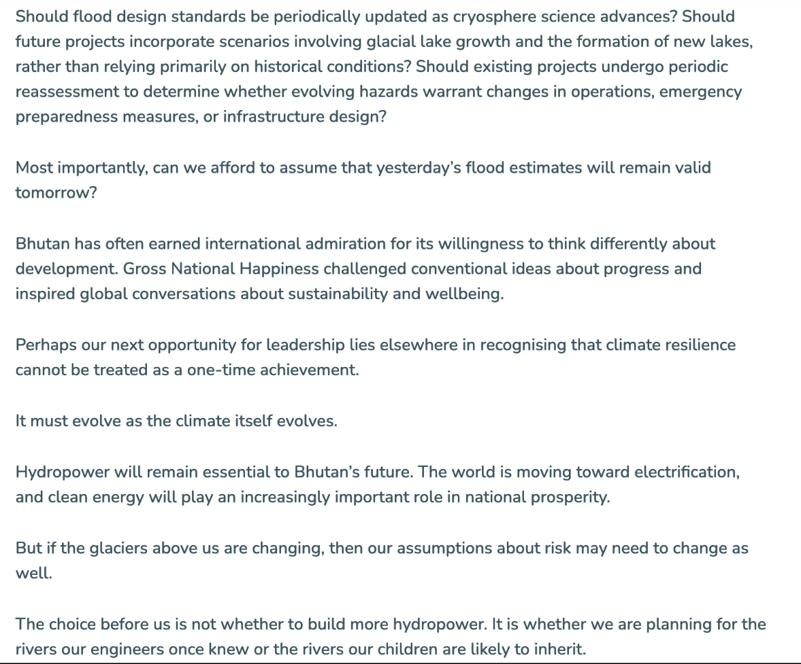
Bhutan: HEPs Designed for the Rivers of Y’day? Rethinking Hydropower in changing cryosphere This article raises a number of questions about Hydropower Dam Design, their safety, hazard potential in changing climate in Bhutan, a snapshot can be seen in this screenshot.
SANDRP
Also see: DRP 15 June 2026 & DRP 08 June 2026
Follow us on: www.facebook.com/sandrp.in; https://twitter.com/Indian_Rivers