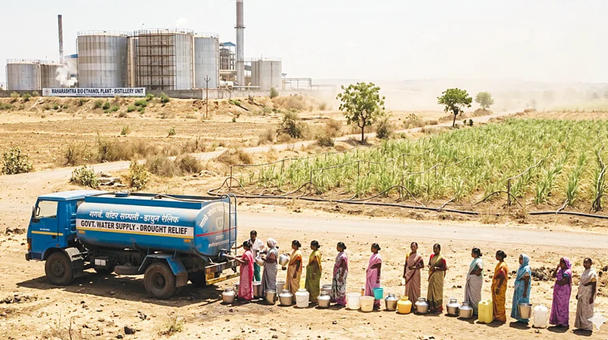
(Feature Image: AI generated image. Source: National Herald)
The proliferation of sugar mills and sugarcane cultivation in drought prone areas like Marathwada, North Karnataka, Cauvery basin areas in Tamil Nadu has always been a huge scandal, ongoing for decades. Now new dimensions are getting added to this, as the following article this week shows: Ethanol procurement for blending with petrol, now upto 20%, but there are moves afoot to increase it to upto 100%.
The Ethanol does not come just from molasses, a by-product of sugar manufacture, but now even from sugar. Yet another dimension that is getting added is the use of rice and maize also for manufacture of ethanol. Rice itself is hugely water intensive crop, its second stage high water consumption come from manufacture of ethanol from rice. This is being sold as a solution to high import bill in petroleum import, particularly in times of the ongoing Gulf War.
However, this is as short sighted and scandalous as the original ongoing sin of sugarcane cultivation and sugar factories in drought prone areas. This becomes even more problematic in the context of climate change impacts worsening the water availability, increasing water demands and depleting groundwater levels. The short-sighted policy is getting a big push this year, when super El Nino is likely, worsening the water situation in Marathwada and other drought prone areas. Giving a push to ethanol manufacture this way is clearly no solution for anything.
Sugarcane, Sugar and Ethanol production in Drought stricken Maharashtra In my successive trips to this Takwiki village (Dist Dharashiv) and tens of others in this rain-shadow, low-rainfall, arid Marathwada region of Maharashtra, one paradox stood out: villages that clamour for tankers to supply drinking water grow tonnes of water-guzzling sugarcane for the state’s sugar daddies. This, in a changing climate. Year after year, they dig deep borewells to extract groundwater to irrigate cane crops, feeding factories that produce millions of tonnes of sugar and now ethanol, while a large section of people, especially in summer, are crying themselves hoarse for drinking water during drought years.
In 2026, the water crisis has worsened, yet the Centre wants to push for vehicles to run on 100 per cent ethanol — produced by sugar factories — to tide over fuel shortages in the aftermath of the war in West Asia. It intends to amend the regulatory framework for mills, bringing ethanol into the framework in addition to sugar, molasses and other byproducts. This year, more of Maharashtra’s sugarcane will not become sugar, but ethanol — fuel for India’s vehicles.
From a tonne of sugarcane juice (about 1,000 litres), only 70 litres of ethanol is produced. The process is doubly water-intensive: first, to grow a crop that guzzles vast quantities of water, and then, to expend further energy and resources to extract ethanol from it. With govt policy incentives, India’s ethanol production capacity has increased dramatically — from about 518 crore litres a decade ago to nearly 2,000 crore litres today. However, current demand is only about 1,100 crore litres. In other words, capacity far exceeds demand.
Even when produced from grains like rice or maize, efficiency is limited — one tonne yields about 475 litres of ethanol. So how economic and ecological is the decision to harp on higher ethanol blends? Ethanol made from sugarcane is now being overshadowed by ‘new’ ethanol derived from grains like rice (also a water-guzzling crop) and maize. Government procurement policies appear to favour these newer producers, spelling uncertainty for traditional sugar-based ethanol producers — mainly sugar mills. (By Jaideep Hardikar)
HYDRO POWER PROJECTS
Adani Power enters Hydro sector: acquires GVK Power including 330 MW Alaknanda HEP The Competition Commission of India (CCI) has approved the acquisition of 100% share capital and control of GVK Energy Limited by Adani Power Limited under the corporate insolvency resolution process. The transaction involves the complete acquisition of GVK Energy Limited, a subsidiary of GVK Power and Infrastructure Limited. Through its subsidiary, Alaknanda Hydro Power Company Limited (AHPL), the company operates the 330 MW hydroelectric power project in Srinagar, Uttarakhand. The acquisition marks Adani Power’s entry into the hydropower segment. GVK Energy was admitted into corporate insolvency proceedings in May 2025.
DAMS
Call to halt to Polavaram Dam ECRF works Representatives of the Centre for Liberty on May 9 2026 urged the Polavaram Project Authority (PPA) to immediately halt ongoing Earth-Cum-Rockfill (ECRF) dam construction works until an independent scientific verification of the diaphragm wall integrity is completed. Centre for Liberty chairman A B Venkateswara Rao and representative Nalamotu Chakravarthy met PPA officials at the authority’s office in Rajamahendravaram and later addressed the media, outlining a series of concerns relating to the safety and execution of the Polavaram Project. The organisation submitted a detailed memorandum alleging “serious engineering failures, unauthorised design deviations & compromised safety verification processes” in the execution of the project.
Rao said the safety of millions of people depended on the structural integrity of the project. “Dam safety cannot be certified merely on verbal assurances or incomplete testing procedures,” he stated. The memorandum alleged that “bleeding” was observed during the construction of the Gap-II diaphragm wall, resulting in vertical channels that could compromise the wall’s impermeability. They claimed that despite these issues being recorded in expert reports, full-depth scientific testing had not been carried out.
Telangana urges Polavaram Authority to stop AP from taking FRL works The Telangana Government has requested the Polavaram Project Authority (PPA) to restrain Andhra Pradesh from taking up Phase II of the project to increase the height of the dam to 45.72 metres, keeping in view the submergence and backwater effect on the upper riparian State of Telangana and pending studies and mitigation works.
Questions over ₹12K cr Satpura Thermal Power Expansion This investigation has alleged serious environmental misrepresentation in the proposed 660 MW expansion of the Satpura Thermal Power Plant in Sarni, Madhya Pradesh. The report claims the project authorities submitted misleading information while seeking environmental clearance for the ₹12,000 crore project.
According to the report, around 6 acres of the Satpura Dam backwaters and adjoining wetlands may be filled for construction, despite official claims that no water body will be affected. The investigation also alleges that the area hosts rich biodiversity, including Schedule-I protected wildlife, migratory birds, and the rare Satpura Leopard Gecko, contrary to project documents claiming limited wildlife presence.
Environmental activists and forest officials cited in the report questioned why the new unit was not planned on vacant land left by closed older units, which they say could have reduced ecological damage and project costs. The Madhya Pradesh Forest Department also reportedly stated that no formal permission or consultation had been sought regarding the project.
Lakhwar dam delayed by three years As per this report the Lakhwar Dam project on the Yamuna, expected to supply around 134–135 MGD of water to Delhi, has been delayed by three years and is now likely to be completed only by 2034. Officials of the Delhi Jal Board said Delhi’s long-term water planning depends on three upstream dam projects — Lakhwar, Renukaji Dam, and Kishau Dam. However, only the Lakhwar project has reached an advanced stage, while the other two remain at an early phase.
Delhi currently faces a water demand-supply gap of about 250 MGD, and officials warned that delays in these projects could seriously affect future water security and infrastructure planning, including new treatment plants.
Maharashtra Cabinet clears pilot project to desilt 6 dams The state cabinet on May 14 approved a pilot project to desilt six major irrigation dams and provide the nutrient-rich silt to farmers free of cost, with farmers paying only transportation expenses. The move aims to increase reservoir storage capacity, improve irrigation efficiency, and enhance soil fertility. The project will cover the Ujani Dam, Girna Dam, Gosikhurd Dam, Mula Dam, Jayakwadi Dam, and Hatnur Dam.
The policy includes strict monitoring measures such as CCTV surveillance, geo-fencing, GPS tracking of vehicles, e-passes, and online records to prevent illegal sand extraction. Contractors will have to remove both silt and sand, while all environmental clearances and sustainable sand mining guidelines will remain mandatory.
Farmers seek permission to extract silt from Lower Bhavani Dam The Water Resources Department said around 4.8 million cubic metres of silt have accumulated in the Lower Bhavani Dam. S Jyothi Arunachalam of Tamilaga Vivasayigal Pathukappu Sangam said the dam, which supports irrigation for nearly 5 lakh acres, has not been properly desilted for years. Farmers were allowed to remove silt in 2024, but the short permission period meant less than 10% could be cleared. In 2025, good rainfall kept the dam full, preventing desilting work. A request has now been sent to the WRD to take action.
BBMB maintains high level in Bhakra dam amid fears of El Nino The reservoir currently holds 2.01 Billion Cubic Metres (BCM) of live storage, compared to 1.30 BCM during the corresponding period last year, and is around 36 per cent full. The dam deflection is being monitored.
DAM SAFETY
Dam Rehabilitation in India: Technology and Policy As a large number of dams age and climatic variability increases, the issue of their rehabilitation, operational safety and long-term resilience becomes important. Around 98.5% of 6628 specified large dams, which comes to 6,448, are owned by State Governments. Central Public Sector Undertakings have 49 dams or 0.7%; private entities own 0.6% or 36 dams, and the Central Government owns 0.2% or 12 dams. About 26% (1,681 dams) of these dams are more than 50 years old. This includes 291 that are more than 100 years old. About 42% fall within the 25–50 years age bracket.
Ageing infrastructure, sedimentation, changing hydrological patterns and increasing climate variability have highlighted the need for systematic rehabilitation and safety management. Analysis of 439 reservoirs in India (CWC data) shows an average 19% loss of gross storage capacity with an average reservoir age of 42 years. The average annual loss of storage is estimated at 0.74%, equivalent to about 1.81 MCM per reservoir per year.
Mullaperiyar dam remains structurally strong: NDSA A sub-monitoring committee under the National Dam Safety Authority inspected the Mullaperiyar Dam on May 15 and said the dam remains structurally strong, with seepage levels found proportional to the current water level. The team, led by R Giridharan, reviewed water inflow, shutters, seismic instruments, gallery areas, and maintenance works, including strengthening of the Baby Dam and pending road repairs. The inspection was conducted after a gap of five months.
Demand for urgent repairs to Shenbagavalli Dam MDMK general secretary and Rajya Sabha MP Vaiko announced a hunger strike (fasting protest) on June 5 at Vasudeva Nallur in Tenkasi district. The protest demands that the Tamil Nadu and Kerala governments immediately repair the damaged Shenbagavalli dam and its main canals to restore irrigation for local farmers.
INTERLINKING OF RIVERS
YM May 2026: Ken-Betwa Linking Needs Urgent Reassessment The issue is no longer only about linking two rivers. It is also about choosing between a large centralized project and local community-based water conservation systems suited to Bundelkhand’s ecology. Bundelkhand already has a long tradition of local water conservation practices that can provide more sustainable solutions with lower environmental and social costs.
In a time of climate uncertainty, such large projects with irreversible environmental impacts need much greater scrutiny. Before moving ahead, the government must conduct an independent ecological and social reassessment of the project with proper participation of local communities. Otherwise, the Ken-Betwa project risks becoming not a model of development but a costly symbol of ecological destruction and social injustice.
Ken-Betwa link ‘threatens’ forests, tigers, tribals -Himanshu Thakkar, coordinator of the South Asia Network on Dams, Rivers and People (SANDRP), who is one of India’s top environmentalists, has now argued in a comprehensive interview that the project rests on flawed hydrology, has been cleared through a compromised regulatory process, will devastate one of India’s most ecologically sensitive river corridors, and will ultimately harm the very communities it claims to serve.
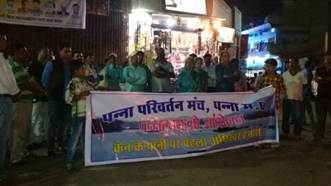
Protests against Ken Betwa Protests by tribal farmers over compensation and rehabilitation have once again raised questions about the human cost of the Ken-Betwa river-linking project, as well as its ecological impact, including on the Panna Tiger Reserve, a large part of which will be submerged.
Himanshu Thakkar, coordinator of SANDRP, said: “The process of environmental and forest clearances was badly manipulated. At every step—be it the clearance of the expert appraisal committee of the Environment Ministry, or the approval of the forest advisory committee, or the go-ahead given by the Madhya Pradesh State Wildlife Board—the process was flawed and was vitiated by manipulations. Experts at every stage voiced grave concerns, which were set aside… On the basis of available information on the hydrology of the project, the Ken river does not have surplus water. Also, Betwa became water-deficit because of the dams that were built on it. It is not able to cater to those dams.”
Amit Bhatnagar has emerged as the face of this movement and is now being called the “Gandhi of Bundelkhand” by many people. While the government says the project will bring water, irrigation, and electricity, thousands of people are living with fears of displacement, loss of land, and destruction of forests. Amit Bhatnagar has faced arrest several times while demanding transparency from the administration.
NAPM Calls for Dialogue, Accountability of the State, and Protection of People’s Constitutional Rights and a comprehensive review of the socio-ecological impacts of the Ken–Betwa River Linking Project in Madhya Pradesh.
River interlinking and biodiversity risks in Indian freshwater ecosystems Abstract: However, such large-scale hydrological alterations pose serious ecological risks. This study examines the potential role of river interlinking on the distribution and dynamics of freshwater invasive alien species (IAS) and their interactions with native biodiversity across Indian river basins. We modelled the distribution of 15 naturalised freshwater IAS using species distribution models based on bioclimatic variables. These maps were then overlaid with basin-level freshwater biodiversity and threatened-species data, as well as the proposed river-linking network. The results reveal strong positive correlations between IAS richness and overall as well as threatened freshwater biodiversity, with biodiversity hotspots such as the Krishna, Godavari, Mahanadi, Brahmaputra, and the Western Ghats basins being most at risk. The proposed interlinking routes are expected to act as ecological corridors, enabling biotic exchange among previously isolated basins. Such increased connectivity could accelerate biological invasions, disrupt migratory routes, alter hydrological regimes, and undermine ecosystem resilience. The findings emphasise the urgent need to incorporate invasion ecology and biodiversity safeguards into NRLP plans to prevent irreversible ecological damage.
INTERSTATE WATER DISPUTES
Punjab seeks Yamuna share, Delhi opposes quota cut Punjab argued that, as a successor state of undivided Punjab and part of the Yamuna basin, it should receive a share of Yamuna waters similar to Haryana’s share in Ravi-Beas waters. The state also cited earlier agreements and irrigation commission recommendations supporting its claim. Delhi, however, said it is already receiving less water than its allocated quota under the 1994 agreement and cannot afford any further reduction. Officials pointed to the capital’s growing population and persistent water shortage, noting that Delhi depends heavily on neighboring states for raw water supply.
IRRIGATION
Audit Flags Crores in IGNP Tender Irregularities As per this report, based on an Accountant General audit, has alleged major financial irregularities in Rajasthan’s Indira Gandhi Canal Project (IGNP). The report claims a low-cost contractor executing a ₹214.40 crore project was removed midway despite available funds, and the remaining work was later awarded to another company at higher rates, causing an estimated ₹33.95 crore loss to the government.
The audit also found that payment rules were allegedly altered during execution, reducing deductions on contractor bills and leading to an additional ₹8.32 crore payment to the company. Audit authorities later reportedly ordered recovery of the excess amount. Another irregularity involved ₹25.78 crore paid for electricity connections to irrigation reservoirs under the project, even though many sites reportedly remained without functional power supply. Ground verification by Bhaskar found incomplete infrastructure, damaged pumps, tilted electric poles, and missing wires despite official records showing the project as completed.
URBAN RIVERS
Dry Sabarmati helps expedite barrage-cum-bridge works A stretch of the Sabarmati River in Ahmedabad recently ran dry after the gates of the Vasna barrage were opened for maintenance work, exposing large portions of the riverbed near Subhash Bridge. The incident highlighted the extent to which the river within the city depends on regulated releases of Narmada water rather than natural flow.
The exposed riverbed revealed large accumulations of sludge, garbage, and debris, triggering fresh concerns about pollution and the ecological condition of the river. The drying of the river also comes amid work on Gujarat’s first rubber barrage-cum-bridge under the Sabarmati Riverfront Phase-2 project, aimed at retaining water levels and supporting further riverfront expansion.
Environmental experts and activists have raised concerns that continuous engineering interventions, including barrages and riverfront construction, are transforming the Sabarmati into an artificial urban waterbody with reduced ecological flow and degraded riverine characteristics.
Pune RFD gets 52,851 sqm of govt land Maharashtra Cabinet has approved the transfer of 52,851 square metres of government land free of cost to the civic body for the Mula-Mutha river improvement initiative. The decision was taken during a Cabinet meeting chaired by Maharashtra Chief Minister Devendra Fadnavis. The move is expected to help resolve long-pending land acquisition hurdles that had slowed down the ambitious riverfront development project between Sangamwadi and Bund Garden Bridge.
CM vows Musi project at any cost A Revanth Reddy on May 15 asserted that the River Musi rejuvenation project would be implemented at any cost and warned against any construction near water bodies. The Chief Minister stated that all structures built within river boundaries would be demolished and that encroachments on drains (nalas) would also be cleared without hesitation. Calling it a warning, Revanth Reddy said people should stay away from water bodies and cautioned that any structures built near them would face demolition.
Sewage pollution of Cooum raise alarm The mismatch between rapid urbanisation and lack of sufficient sewer infrastructure has threatened the relatively cleaner stretch of the Cooum river. Residents have raised concerns over persistent sewage pollution near the Putlur check dam, located 40 km from Chennai. Residents of Manavala Nagar, Tiruvallur, said groundwater levels in the neighbourhood had taken a hit after portions of the riverbed were dried up for bridge construction as part of the Chennai Peripheral Ring Road project, a six-lane expressway.
RIVERS
Scientists find that climate change is reducing oxygen in rivers worldwide Researchers in China used satellites and artificial intelligence to track and analyze oxygen levels in more than 21,000 rivers across the globe since 1985. They found oxygen levels have dropped an average of 2.1% since 1985, according to a study published May 15 in Science Advances. That doesn’t seem like much but it adds up and if it continues or accelerates, rivers in the Eastern United States, India and across the tropics could lose enough oxygen by the end of the century to suffocate some fish and create dead zones.
Basic science dictate that warmer water holds less oxygen. Warmer water, which happens with human-caused climate change, releases more oxygen into the atmosphere. If the oxygen loss rate continues at the current pace, the world’s rivers on average will lose an additional 4% of their oxygen by the end of the century, and in some cases close to 5%, the study found. That’s when oxygen loss — deoxygenation — becomes problematic for fish and people who rely on rivers.
“Deoxygenation is a very slow process. If we have a long period, the negative impact will attack the river ecosystems,” Guan said. “The low level of oxygen can cause a series of ecological crises such as biodiversity decline, water quality degradation and maybe some fish will die.” Guan’s study found several reasons for oxygen loss in the world’s rivers, including nutrient pollution from fertilizer and urban runoff, along with dam construction, flow and wind issues. But nearly 63% of the problem is from warmer water, the study found.
Earlier this century, India’s heavily polluted Ganges River was losing oxygen more than 20 times faster than the global average, the study said. Even with moderate-to-high increases in global carbon dioxide emission rates — not the implausible worst-case scenario — rivers in the Eastern United States, the Arctic, India and much of South America are projected to lose about 10% of their oxygen by the end of the century, the analysis showed.
Hydrology professor Marc Bierkens of Utrecht University in the Netherlands, said a study he and colleagues did last year showed oxygen stress in the world’s rivers increased by 13 days every decade and dead zone occurrences increased by nearly three days a decade since 1980. As the world continues to warm, those numbers should jump even higher, said Bierkens, who didn’t participate in the Chinese study. Duke University ecologist and biogeochemist Emily Bernhardt, who wasn’t part of the study, said “as rivers warm it becomes easier and easier for the same pollution problems as before to cause more severe, more long lasting or more widespread hypoxia and anoxia.” Anoxia is the total loss of oxygen.
Bihar’s Changing Riverscape The Wednesdays.for.Water session, “Bihar’s Changing Riverscape: Floods, Droughts, and the Fate of Small Rivers,” discussed how Bihar’s rivers are being transformed by floods, droughts, embankments, climate change & neglect of smaller rivers.
Chhattisgarh rivers turn toxic, HC slams ‘systematic failure’ The Chhattisgarh High Court sharply criticised the state government and pollution control authorities over severe pollution in the Shivnath River and Kharun River caused by untreated industrial and distillery waste. Hearing a suo motu PIL, the court said the rivers had been reduced to “carriers of toxic industrial waste” despite earlier directions to prevent pollution.
The court cited reports of blackened river water, fish deaths, toxic discharge, foul smell, and health problems among villagers near factories in Bilaspur and other areas. It observed that regulatory agencies had failed to enforce environmental norms, leading to continued ecological degradation.
Calling the situation “deeply disturbing and regressive,” the court directed the state government and the Chhattisgarh Environment Conservation Board to file personal affidavits detailing action taken against the polluting industries.
The court noted reports of mass fish deaths in Shivnath river near Mohbhatta-Dhuma village, about 27km from Bilaspur. Investigations linked the pollution to the alleged discharge of untreated, spirit-contaminated effluents from a liquor manufacturing unit. The contamination reportedly turned the river water black, killing lakhs of aquatic organisms and posing health risks to nearby residents, including respiratory issues and skin irritation. Environmental damage has also spread to surrounding land and vegetation, with trees reported to have blackened and withered.
Shams Parvez, chemistry professor at the Pandit Ravishankar Shukla University, said distilleries generate around 15 litres of highly acidic “spent wash” for every litre of alcohol produced. Although zero liquid discharge systems are mandatory, their high operational cost—Rs 15,000 to Rs 20,000 per day—often leads to non-compliance.
The situation in the Kharun river is equally concerning. The court referred to reports linking pollution to another distillery, where illegal murum (a mixture of rock particles, gravel, and organic soil) mining has created deep pits now functioning as “toxic reservoirs” for industrial waste. These pits have worsened ecological damage and reportedly claimed at least 15 lives.
The bench termed the situation a “systematic failure in enforcement” by state authorities and the Chhattisgarh environment conservation board. It noted continued inaction despite earlier judicial directions. “The rivers, once sustaining biodiversity and human life, are now reported to have become unfit even for basic use,” the court observed, criticizing the state for regulatory lapses and non-compliance.
Kedar sewage plant yet to start despite affidavit to NGT A 600 KLD STP at Kedarnath Dham has yet to begin operations this yatra season, despite the Rudraprayag district administration informing the NGT in February that the facility was ready. In its affidavit, the administration stated that construction was complete and dry testing had confirmed the plant’s readiness ahead of the yatra. However, the STP—designed to handle a pilgrim load of 20,000—faces capacity concerns, as daily footfall has crossed 30,000 on several days since the shrine opened on April 22.
Delhi HC restricts commercial, religious activities on floodplains The Delhi High Court has banned all commercial and religious activities, including vehicle parking, on the ecologically sensitive Yamuna Floodplains near Sur Ghat. Justice Jasmeet Singh said the area falls under Zone-O and must be protected from environmental damage.
The court directed the Delhi Development Authority to ensure no activities take place on the floodplains and asked it to arrange alternative parking spaces away from the river area if needed during religious events. The order came while hearing a petition related to cancellation of a parking site allotment at Yamuna Sur Ghat.
The court made the directions on April 30 while dismissing a plea filed against the cancellation of a tender to run a parking site at the Sur Ghat. The judge noted that the land in question “cannot be used for commercial purposes”. He said, “Hence, it is directed that the DDA shall ensure that no activity is allowed to take place on the said land, including parking of any vehicle for any kind or for any commercial purpose, even if it may be for the convenience of people coming to pay respect/homage to the river.”
Living Precariously by the Yamuna Residents of riverside settlements are staring at homelessness after calling the Yamuna home for generations. The increased consciousness in society for ecological restoration seems to have a dispensable human cost.
However, on the ground in Yamuna Bazar, the language of restoration increasingly overlaps with another reality: the lives of those who have lived along the river for decades and now have no idea about where to go. “What we are seeing on the ground right now is not ecological restoration of the river or floodplain. What is actually happening is a riverfront project,” says Bhim Singh Rawat, associate coordinator at the SANDRP. “Whatever is being done in the name of disaster management or rejuvenation has little to do with river ecology. The larger aim appears to be to reclaim land and eventually commercialise and privatise it,” he added.
Historically, rivers in India were not empty spaces. Floodplains supported communities—boatmen, fishermen, priests, divers, and farmers—who built their livelihoods around the river’s seasonal cycles. Temporary movement during floods was part of life near a river. Historically, riverbank communities have always existed in India – boatmen, fishermen, divers, priests and floodplain farmers. “These people have lived and worked around the river. During floods, communities move away temporarily, and when the water recedes, they return. Their livelihoods have always evolved around the rhythm of the river,” says Rawat from SANDRP.
This view of floodplains sharply contrasts with how many urban authorities now think of river spaces – as places to be restored, redesigned, and organised. Rawat also points out a larger change in Delhi’s relationship with the Yamuna. “DDA has historically been a land-developing agency. It views every piece of land as something to develop.
The floodplain is being viewed the same way as vacant land waiting to be redesigned,” he says. Projects like Asita and Baansera show what authorities call ecological restoration. Wide pathways, green spaces, and recreational areas are presented as examples of reclaiming the Yamuna.
However, critics argue these projects often confuse ecological restoration with beautification. “You can’t call it ecological restoration if you change the natural topography, lay concrete blocks, and plant ornamental species,” Rawat says. “Floodplains are naturally uneven landscapes. But they are being levelled, concretised, and turned into artificial parks.”
Delhi sanctions ₹28.8 cr to clean 3 major drains The in-situ treatment interventions will be undertaken in the ISBT drain, Sen Nursing Home drain and Jaitpur drain. The government will spend ₹8.2 crore on the ISBT drain, ₹11.23 crore on the Sen Nursing Home drain and ₹9.36 crore on the Jaitpur drain. The projects are likely to be completed within five months.
Bhim Singh Rawat, a Yamuna activist and member of the SANDRP, said in-situ treatment has also been attempted in the Varuna and Assi stretches in Varanasi, but has not yielded good results. “We have to stop taking a piecemeal and experimental approach. A large number of factors contribute to pollution in drains, ranging from sewage to illegal industries dumping chemicals. Things fall apart due to local conditions, which ultimately leads to a waste of taxpayers’ money. DJB should consult citizens, tap drains and make it a participative exercise,” he added.
Only 18.2% of penalties recovered from violators over 8 last years According to the Delhi govt’s action taken report (released in April) on floodplain protection, 4,241 challans regarding such violations have been issued with penalties totaling over ₹8.51 crore over the last eight years, while the recovered amount currently stands at ₹1.55 crore — less than 19% of the penalties imposed. The report adds that over eight years, 88,574 metric tons (MT) of C&D waste and 4,998MT of garbage lying in floodplains have been moved to municipal waste management sites.
Bhim Singh Rawat, SANDRP claimed: “When it comes to dumping construction waste in the floodplain and encroachment upon it, government agencies have themselves been among the biggest violators…There has also been little effective action to check the disposal of religious waste and offerings into the river during festival seasons across the city’s main river stretch.”
STP delays stall Haryana’s push to curb Yamuna pollution According to the proceedings of the last review meeting of Industrial Pollution and Yamuna Action Plan (YAP) held under the HSPCB then chairman, J Ganesan, on April 24, the officials said that Dhanaura escape drain, which pushes the effluents from the industrial towns of Yamunanagar and Jagadhri into the Yamuna River, a key source of water for national capital, Delhi, near Nabipur village of Karnal district is yet to be stopped because of delay in construction of two STPs.
The Haryana government had formulated a targeted YAP under HSPCB in 2022, to control pollution in 11 major drains discharging into the river. J Ganesan has been replaced by Vinay Pratap Singh as Chairman of HSPCB on May 6. “Stopping the untreated effluent of the twin towns remains a challenge until the completion of 77 megalitres per day (MLD) STP and an independent sewage treatment plant (ISTP) of 19.5 MLD,” the minutes of the meeting, accessed by HT, revealed. The officials added that it will take around 14 months to complete the STPs.
The drain 2 in Panipat, drain 6 in Sonepat, Mungeshpur, KCB drain in Bahadurgarh, Leg-1, 2, and 3 drains in Gurugram, Budiya drain and Guanchi drain of Faridabad district are other major sources of pollution in the Yamuna river. An official from Panipat MC said that the untreated effluent from the old industrial area of the city, flowing via drain number 2, is also a challenge. “Many industries have set up their individual effluent treatment plants (ETPs), but their operations need to be verified. Besides, the discharge from illegal tankers from Yamunanagar and Karnal is another challenge being faced by the officials.
Toxic effluents affecting health of river, people A report from Amar Ujala Haryana highlights growing pollution in the Yamuna river due to discharge of untreated industrial wastewater and sewage. According to local residents, chemical-laden water released from factories through drains is turning the river dirty and affecting both people and animals.
The report says the polluted water is entering the Yamuna through Drain No. 2 and other channels, especially near Panipat and surrounding villages. Locals claim authorities have failed to stop the discharge of untreated effluents despite repeated complaints. The issue has raised serious concerns about industrial pollution, weak enforcement of environmental norms, and the worsening condition of the Yamuna River.
Industries polluting Yamuna in Saharanpur The Yamuna River near Shahjahanpur on the Uttar Pradesh–Haryana border turned black and heavily polluted again on May 13, raising concern among villagers. Residents said the sewage-like polluted water poses health risks to local people, devotees, and livestock, while also causing deaths of juvenile fish in the river.
With a major Ganga Dussehra fair scheduled on May 25, villagers fear the polluted river could affect thousands of devotees who come to take a holy dip. Locals also claimed that serious illnesses, including cancer, have been reported in the area over the years. Villagers have demanded clean water flow in the Yamuna, while officials from the pollution control department said water samples have been collected for testing.
Rise in Yamuna pollution in Mathura Recent February 2026 data from the State Pollution Control Board has flagged alarming pollution levels at key sites such as Kesi Ghat, Vishram Ghat and Gokul Barrage. The findings further noted that the water quality has remained in Category ‘D’ – fit only for aquatic life – in December 2025, January 2026 and February 2026. The report attributed the decline to untreated sewage discharge, increased human activity along the ghats and inadequate wastewater management systems.
RIVER DEPENDENT COMMUNITIES
NGP riverfront facelift displaced the people who kept the Ganga alive The program measures success in infrastructure—STPs, dolphin counts, tourist ghats—but structurally ignores the displacement of Nishad, Mallah, Kewat, and Bind communities while benefiting politically connected sand mining operations. The central parable of Namami Gange program is vast in ambition, lavish in public relations, and structurally incapable of seeing the people it displaces as anything other than an obstacle to the river it claims to restore.
The primary occupations of these Other Backward Classes (OBC) communities—fishing, river-farming on kachhaar lands (marshy lowlands on riverbanks), sand transportation, and boating—have faced continuous contraction since the Ganga Action Plan of the 1980s, which imposed restrictions on riverbed cultivation and fishing without offering alternatives. Namami Gange did not reverse this dispossession. It accelerated it.
Riverfront development, which involves the construction of beautified ghats, promenades, and tourist infrastructure, physically displaces the informal settlements that have clustered along these banks for generations. The Uttar Pradesh Tourism Department’s introduction of luxury cruise vessels on the Ganga at Varanasi directly threatens an estimated 8,000 traditional boatmen and an ancillary community of approximately 50,000 Nishad dependants, according to community surveys cited by river rights organisations. The community calls it extinction by infrastructure.
Sand Mining The sand mining mafia, politically protected and mechanically equipped, operates at night, in violation of NGT orders, using JCBs on riverbeds in district after district, from Shamli to Kaushambi to the Yamuna tributaries adjoining Prayagraj. The NGT’s own joint committee documented this in 2024. The small-time Nishad operator working with a hand dredger and a country boat gets arrested. The mechanised contractor with the right political connections gets a lease. This is not an enforcement failure. It is enforcement functioning exactly as designed, protecting capital and criminalising subsistence.
Riverine fisher communities A 2020 joint study by the National Council of Applied Economic Research and the Tata Centre for Development at the University of Chicago found that riverine fisher communities on the Ganga remain socially and economically fragmented, and recommended that the government formally recognise these communities as part of the riverine ecosystem and synchronise their indigenous knowledge with scientific monitoring for better water management. The National Mission for Clean Ganga ignored it in practice.
The Mahakumbh The Jan 2025 Mahakumbh brought an estimated Rs.3 lakh crore in economic activity by official estimates. It did not bring about the rehabilitation of a single Nishad family displaced by the development corridor. It did not cause the creation of a single formal livelihood scheme for the boatmen whose ancestors have ferried pilgrims to the Sangam for centuries. It caused sewage to be pumped into the Yamuna upstream, but there were denials of reports that the Sangam was polluted. It offered the nation a spectacular image of a sacred river reborn, and it silenced, with the precision of a communications strategy, the people whose dispossession made that spectacle possible.
RIVER BASIN MANAGEMENT
Centre Adds Sikkim, W Bengal to Brahmaputra Review Board The Central Government has reconstituted the High-Powered Review Board of the Brahmaputra Board (HPRB) to include representatives from Sikkim and West Bengal. With the May 9 notification, the total number of members on the board has increased from 15 to 17, including the chairperson.
FISH, FISHERIES, FISHERFOLKS
New species of cyprinid fish from the Cauvery A study published in the Journal of Fish Biology identified a new freshwater fish species, Labeo kaage, from the Cauvery River basin in Karnataka. Named after the Kannada word for crow (“kaage”) due to its dark colour, the species belongs to the “dark labeo” group found in the Western Ghats. Researchers confirmed it as a distinct species through detailed morphological and genetic analysis. The study also highlights the rich but underexplored freshwater biodiversity of the Cauvery basin and warns that habitat destruction, dams, and pollution threaten many such species.
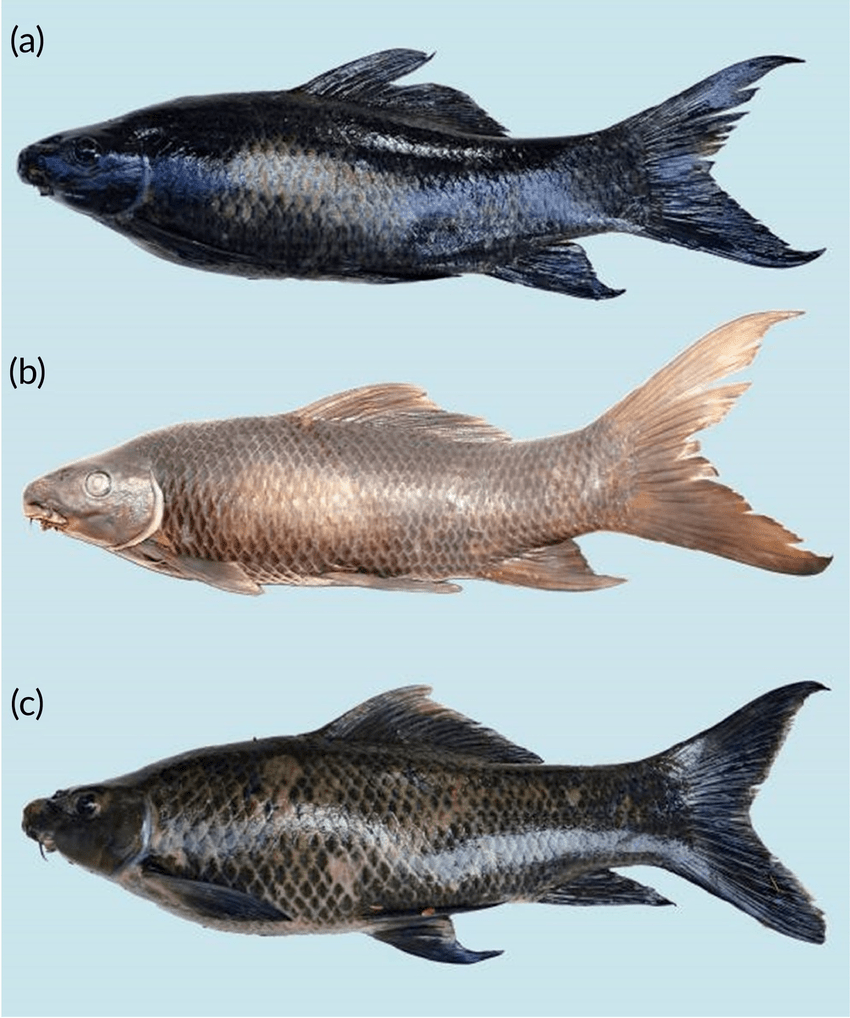
According to the researchers, these discoveries reveal that the rivers of the Western Ghats harbour several unique and previously undocumented freshwater fishes. They warned that increasing threats such as habitat destruction, dam construction, pollution and river modification could endanger many species before they are scientifically documented.
According to Charan Ravi, the initiative was undertaken as part of the Cauvery River exploration project launched in 2016. “The study covering the Karnataka stretch of the Cauvery began in 2018 and was completed in 2022. In the second phase, we will focus on studying fish species in the tributaries of the Cauvery,” he said.
Karnataka’s fisherfolk also played an important role in the discovery. Researchers showed photographs of the newly identified fish to local fishermen across several regions to check whether they recognised it. One fisherman in Kodagu district told the team that the fish builds small nests using gravel — a behaviour not seen in its related species. “Generally, fish of this genus are shoalers and not solitary. So there may be something different – for which further studies will be required,” Ravi said.
Destructive fishing practices threaten Arunachal’s Rivers Dr R Sangno an angling enthusiast warns that illegal and destructive fishing methods such as electrofishing and fish bombing are severely damaging rivers and aquatic biodiversity in Arunachal Pradesh. The report says these practices kill not only fish but also eggs, larvae, aquatic insects, amphibians, and other freshwater organisms that form the base of river ecosystems. Experts and local anglers have observed a sharp decline in indigenous fish species and biodiversity in many rivers across the state.
It also highlights the lack of scientific monitoring and institutional research on freshwater ecosystems in Arunachal despite its rich river network. Environmentalists warn that continued ecological destruction could also harm the state’s ecotourism potential and local livelihoods dependent on healthy rivers. The article calls for stronger awareness campaigns, promotion of sustainable fishing methods, community participation, and scientific conservation measures to protect fragile freshwater ecosystems.
Industrial pollution turns Yamuna black This ground report has highlighted severe pollution in the Yamuna river near Panipat, where untreated industrial effluents are reportedly turning the river water black and causing large-scale fish deaths. According to the report, nearly 390 industrial units discharge wastewater into Drain No. 2, which eventually flows into the Yamuna. The polluted water reportedly travels around 56 km before entering the river near Mandi village. Locals allege that toxic chemicals, foul smell, and black-coloured water have made the river highly polluted.
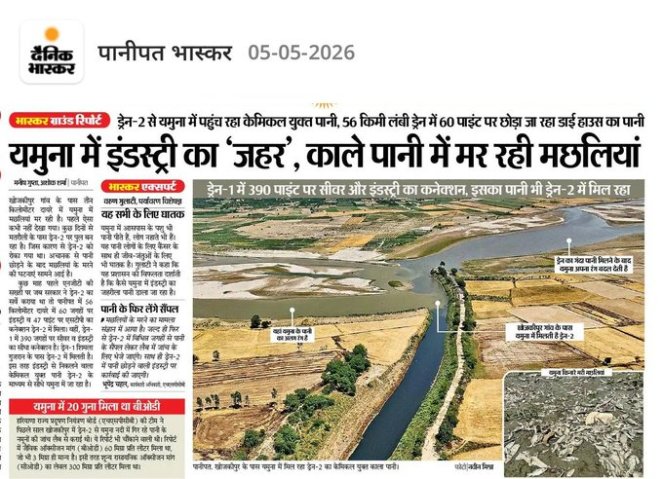
The report says dead fish are regularly seen floating in the contaminated water, raising concerns over ecological damage and risks to public health. Farmers and residents in nearby villages have also complained about worsening water quality and environmental degradation. The incident has once again raised questions over weak monitoring of industrial pollution and the failure to ensure treatment of wastewater before its discharge into rivers.
Maharashtra has launched a project to eliminate alien fish such as the African Catfish, Tilapia and Suckermouth Catfish from the Ujani dam reservoir and replace them with native freshwater species like the Deccan Mahseer. This is the government’s first attempt to rid an ecosystem of invasive species.
‘Himalaya ki Macchli’ returns to Naini Lake after 30 years Naini Lake is set to become a new hub for Himalayan biodiversity and fish conservation. After nearly 30 years, the famous Himalayan fish species Snow Trout has returned to Naini Lake. Popularly known as “Himalaya ki Macchli” (fish of the Himalayas), the species is now being reintroduced into the lake, generating excitement among scientists and environmental experts.
This ambitious initiative has been launched by the Department of Zoology at DSB Campus, Kumaun University. Under the leadership of department head and principal investigator Dr Harish Bisht, a team of scientists has begun efforts to re-establish Snow Trout in Naini Lake after years of research and conservation work, according to News18 Hindi.
SAND MINING
SC summons top Rajasthan officials over illegal sand mining inside Chambal Sanctuary In its order passed on May 14, the Court also directed Rajasthan Transport & Road Safety Department to explain how unregistered mining vehicles were operating in the region and whether any action has been taken against erring officials. The Court flagged concerns over unidentified tractors and vehicles allegedly operating freely in mining zones and sought details of preventive measures to stop illegal transport of mined materials.
-Pertinently, the Court also impleaded the National Highways Authority of India (NHAI) as a party to the case and asked it to file a detailed affidavit on protection of bridge structures near illegal mining zones and why CCTV surveillance cameras should not be installed for real-time monitoring of mining and transport activities.
Further, flagging the widespread use of tractors and trolleys without registration numbers in mining and transportation activities across Dholpur (Rajasthan) and Morena (Madhya Pradesh), terming it a blatant violation of the Motor Vehicles Act and Central Motor Vehicles Rules, the Court also directed the personal presence of the Principal Secretary, Transport Department, Madhya Pradesh, to address the issue of unregistered mining vehicles.
The SC in April 2 order had directed the governments of Rajasthan, Madhya Pradesh and Uttar Pradesh to respond to reports submitted by the Amicus Curiae and the Central Empowered Committee (CEC) regarding illegal mining inside the Chambal sanctuary. The court had also sought affidavits from the states and the Ministry of Environment and Forests on enforcement measures and conservation efforts being undertaken in the ecologically sensitive region.
Ropar villagers oppose Sutlej “Desilting” work A dispute has erupted in Punjab’s Ropar district over desilting work in the Sutlej River near Agampur village, with local residents alleging that illegal mining is being done in the name of river management. The controversy turned violent after villagers opposing the excavation clashed with workers at the site, leaving a person injured.
Residents of Harsa Bela village said that heavy machinery was being used to extract riverbed material for commercial sale to stone crushers, violating environmental norms & National Green Tribunal directions. Villagers warned that disturbing natural formations in the river could alter the Sutlej’s course, weaken flood protection & threaten nearby agricultural land during the monsoon.
However, the mining department defended the operation, saying the desilting work had official approval and was necessary to protect bridge pillars from excessive water pressure during floods. Officials said the work was being carried out scientifically under government policy.
Villagers bust illegal sand mining attempt along Kanhan River Villagers in Singardeep village of Parseoni taluka in Nagpur district foiled an alleged illegal sand mining operation along the Kanhan River after spotting excavators and trucks extracting sand from the riverbed at night. The protest erupted after locals complained of damaged village roads, environmental destruction, and even a power outage caused by sand transport vehicles.
According to the report, hundreds of villagers rushed to the site and found an excavator loading sand into two tipper trucks. The drivers reportedly fled after being confronted by villagers, who guarded the vehicles until police arrived. Authorities seized sand worth around ₹75,000 along with trucks and machinery valued at nearly ₹90 lakh. Four people were arrested under the Mines and Minerals Act, Environment Protection Act, and other legal provisions.
Residents alleged that illegal sand mining has been continuing for months, damaging the river ecosystem, roads, and groundwater conditions. The incident comes amid a broader crackdown by Nagpur Rural Police on organised sand mining gangs operating across Vidarbha.
Farmers protest illegal sand mining in Panipat Farmers from five villages in Haryana’s Panipat district protested against alleged illegal sand mining in the Yamuna River region, accusing authorities of failing to stop the activity. Residents said overloaded sand trucks move through villages day and night, causing safety risks and disturbance.
The protesters claimed illegal mining over the years has led to severe riverbank erosion, with hundreds of acres of farmland reportedly lost to the Yamuna River, causing major financial losses to farmers. They also alleged that despite repeated complaints, the mining mafia continues to operate openly due to administrative inaction. Villagers demanded immediate action to stop the mining, warning that continued excavation could worsen flooding and erosion in the area.
Sand wanted dead and alive UNEP’s third Sand and Sustainability report The Sand and Sustainability: An Essential Resource for Nature and Development calls on governments and industry to recognize sand’s essential value to development and nature, and to fully integrate biodiversity considerations in sand governance. A strategic approach is needed for this resource that underpins our built environment and economic development while sustaining biodiversity and ecosystem services.
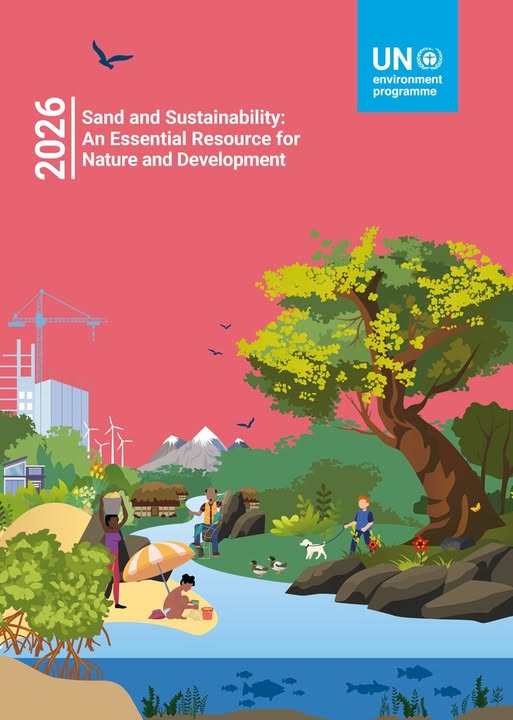
The report examines the growing environmental, social, and economic pressures linked to rising global sand demand and identifies key gaps in governance, biodiversity integration, monitoring, and long-term planning. It presents 24 strategic actions for governments, industry, financial institutions, and civil society to better govern sand resources and their multiple values, prioritise long-term planning, transform financial systems, reduce unnecessary demand, strengthen circularity, improve transparency and monitoring, and fully integrate biodiversity considerations into decision-making.
WETLANDS, LAKES, WATER BODIES
MoEF seeks probe into Coastal Road Mangrove impact The Ministry of Environment, Forest and Climate Change has asked the Maharashtra government to examine complaints related to the proposed Versova-Bhayander Coastal Road Project and take necessary action over alleged violations of environmental clearance conditions.
Citizen groups have opposed the project, warning that it could damage large mangrove ecosystems and lead to the felling of trees at Nana-Nani Park in Versova. According to civic estimates, the project may permanently affect over 8 hectares of mangroves and impact around 45,000 mangrove trees, many falling within the project’s shadow zone.
The project, stretching nearly 60 km from Versova to Bhayander, is expected to significantly reduce travel time in Mumbai’s western suburbs. The Brihanmumbai Municipal Corporation said all environmental and CRZ conditions have been followed and that compensatory mangrove plantation and afforestation measures are planned.
Speedup wetland protection measures: Telangana Minister Konda Surekha, Telangana’s Minister for Forests and Environment, on May 12 directed officials to accelerate wetland conservation efforts and fast-track the official notification process for identified wetlands across the state. The directions were issued during a meeting of the State Wetland Authority held at the Secretariat. Officials informed the minister that boundary demarcation has been completed for 4,023 wetlands out of the 12,249 wetlands identified statewide. According to officials, draft notification proposals have been prepared for 28 wetlands, including major wetland areas located in Khammam, Jagtial, and Nizamabad districts.
The meeting also discussed the proposal to secure Manjeera Wildlife Sanctuary recognition as a Ramsar Convention site of international importance. Officials informed the minister that the proposal is currently awaiting final remarks from the Irrigation Department and would subsequently be forwarded to the Union Ministry of Environment, Forest and Climate Change.
GROUNDWATER
Groundwater crisis deepens farmers’ sistress in Rajasthan This report highlights the worsening groundwater crisis in Nawalgarh area of Rajasthan’s Jhunjhunu district, where falling water tables are drying up farms and pushing farmers deeper into debt. The report says farmers are forced to dig deeper borewells repeatedly as older wells run dry, increasing cultivation costs and loan burdens. Many families have spent lakhs of rupees on failed borewells, while crop losses due to water scarcity and erratic rainfall have further worsened their financial condition.
Water-intensive farming, over-extraction of groundwater, rising temperatures, and changing rainfall patterns have severely affected agriculture in the region. Even traditional drought-resistant crops are struggling due to declining groundwater availability. The report also notes that many farmers are reducing cultivation, migrating for work, or abandoning farming altogether as the groundwater crisis deepens across Rajasthan. Experts warn that without urgent action on groundwater management, crop diversification, and local water conservation, the crisis could become irreversible.
Telangana govt urges stricter controls in overexploited areas Chairing a review meeting with the Groundwater department officials at the State Secretariat on May 15, Irrigation Minister N Uttam Kumar Reddy said groundwater utilisation in Telangana increased from 45.93% in 2024 to 46.86% in 2025, while groundwater extraction also rose during the same period. Sixteen districts, including several mandals in Hyderabad, are currently under groundwater stress.
The minister called for stricter regulation of borewells in overexploited areas, expansion of rainwater harvesting, better coordination between departments, and mandatory consultation with the groundwater department before granting sand mining permits. He also stressed the use of AI and modern technology for groundwater management and prioritised action on fluoride and nitrate contamination in drinking water.
URBAN LAKES, WETLANDS
Rare bird sighting revives call to protect Nemmeli-Illalur wetland The sighting of a globally endangered Indian Skimmer at Illalur Lake near Chengalpattu has sparked fresh calls from conservationists to protect the ecologically fragile Nemmeli-Illalur wetland complex. Illalur lake, located adjacent to the Nemmeli coastal wetland, has long served as a seasonal habitat for several waterbirds. Birders say the lake’s exposed mudflats and shallow waters create ideal stopover conditions for migratory birds along the Central Asian Flyway.
The latest sighting comes amid growing concerns over the proposed Mamallan Reservoir project, which conservationists fear could alter the hydrology of the wetland complex. Illalur and Nemmeli are hydrologically connected and lie barely 4 km apart. “Destroying or altering one wetland will affect the entire connected ecosystem,” said Deepak Venkatachalam, founder of Suzhal Arivom, a grassroots nature conservation group.
Conservationists also pointed to the degradation of the nearby Sirudavoor wetland as a warning. Once known for grasslands and mudflats used by migratory raptors and pratincoles, the site reportedly lost its ecological value following sand mining and habitat modification. The Suzhal Arivom recommends declaring the Illalur-Nemmeli wetland complex an Important Bird Area and initiating long-term monitoring to document migratory bird usage.
NRI, T S Chanakya flamingo lakes aren’t wetlands: Thane district panel A decision by the Thane district-level Wetland Committee declaring that flamingo habitats at NRI–Flamingo Point and T S Chanakya do not qualify as wetlands under the Wetlands (Conservation and Management) Rules, 2017, has sparked sharp protests from environmental groups. The panel assessed eight sites across Thane and Navi Mumbai and concluded that none met the criteria for wetland classification, citing reasons such as artificial origin, past land use patterns and existing development zoning.
Environmental groups strongly opposed the decision, saying the lakes are ecologically important parts of the larger Thane Creek Flamingo Sanctuary ecosystem and important habitats for migratory flamingos. Activists accused the committee of ignoring scientific studies, forest department reports, and earlier observations of the Bombay High Court that recognised the ecological sensitivity of these wetlands. Environmentalists warn that denying wetland status could weaken legal protection and increase the risk of urban development in these fragile ecosystems.
Upa Lokayukta Probes Construction Near Yelahanka Lake The Karnataka Upa Lokayukta has taken suo motu cognisance of alleged apartment construction near Yelahanka Lake and issued summons to officials of the Bengaluru North City Corporation over possible violations of the lake’s buffer zone.
Justice KN Phaneendra noted that Yelahanka Lake is a notified Bird Conservation Reserve and an important groundwater recharge and ecological site for north Bengaluru. The order questioned alleged inaction by authorities despite complaints about the construction activity. The Upa Lokayukta directed civic officials to examine whether the project falls within the protected buffer zone, take corrective action if required, and submit a report within four weeks.
Hebbal Lake wetland to be ready in a month: Krishna Byre Gowda Revenue Minister and Byatarayanapura MLA Krishna Byre Gowda inspected Hebbal Lake on Monday to review the rejuvenation work taken up by the Greater Bengaluru Authority (GBA), urging officials to complete the first phase by June-end. The lake redevelopment is being carried out at a cost of Rs 20 crore, funded under the National Disaster Mitigation Fund (NDMF). There is also a plan to plant thousands of trees in the lake’s buffer areas, he said. The GBA has also sanctioned Rs 20 crore for the rejuvenation of Nagawara Lake, which is part of the same valley system.
Achan Dumping Site The Achan dumping site in Srinagar has today emerged as one of the gravest environmental and public health concerns confronting the city. The dumping site has severely affected air quality and reportedly contaminated groundwater in surrounding localities. Equally concerning is the location of the dumping site itself. Situated on ecologically sensitive wetlands, the site has reportedly caused leachate seepage into nearby agricultural lands, threatening crops and affecting the livelihoods of local farmers. Its proximity to Anchar Lake, an already stressed water body, raises additional ecological concerns and risks long-term environmental damage.
URBAN WATER
Water table plunges across Hyderabad city Groundwater levels in Hyderabad have fallen sharply this summer, with Quthbullapur recording a water table depth of 104 feet — the city’s lowest in recent years, according to the groundwater department. Several areas, including Kukatpally, Malkajgiri, and SR Nagar, have also seen major declines, with many borewells running dry. Experts blamed excessive groundwater extraction, rapid urbanisation, and rising summer demand for the depletion. Residents are currently booking around 11,000 water tankers daily to meet water needs.
Officials bank on recharge, reuse With parts of Hyderabad facing worsening drinking water shortages, the Hyderabad Metropolitan Water Supply & Sewerage Board has launched a GW recharge & water reuse plan ahead of new Godavari water projects expected by 2028.
The city currently faces a water shortfall of about 150 MGD, which could rise further next summer. To tackle this, officials plan to build 50,000 groundwater recharge pits within the Outer Ring Road area and promote rainwater harvesting, injection wells, and community recharge systems in apartments, schools, and commercial buildings.
The board is also encouraging the use of treated wastewater for non-drinking purposes at low cost to reduce pressure on freshwater supplies and groundwater extraction. Officials say better rainwater conservation could significantly improve Hyderabad’s long-term water security.
Kochi residents allege ongoing sewage pollution from apartment complex Residents near the Kent Mahal Apartments in Brahmapuram have alleged that untreated sewage discharge and waste dumping from the complex continue despite official intervention dating back to 2018. According to residents of Vadavucode-Puthencruz panchayat, inspections earlier found that the apartment’s sewage treatment plant was not functioning properly, leading to overflow of wastewater into nearby land and water channels. Reports also flagged improper dumping of plastic and solid waste. Locals say the pollution has continued for years, affecting nearby villages and water bodies despite repeated complaints and recommendations for better sewage treatment and scientific waste management.
Act against builders on groundwater misuse: CGWA to UP Central Groundwater Authority has asked UP groundwater department to act against alleged over-extraction and wastage of groundwater by real estate developers in Noida, following a complaint by an environmental activist. In a letter to the state department, CGWA administrator VK Dhaundiyal said groundwater development and management in UP was being regulated by the state and requested its intervention, asking it to report back on action taken. The letter was accompanied by the complaints received by the authority.
Environmental activist Vikrant Tongad had filed a complaint with the CGWA, the UP govt, and Noida Authority, flagging rampant groundwater extraction at construction sites in sectors 145 and 153. He said water being pumped out during basement excavation was being discharged into sewage pipelines and drains, accelerating the decline of the local water table. Earlier this week, the state groundwater department had separately directed the Gautam Buddh Nagar district magistrate to act against groundwater wastage in Greater Noida.
MCG cuts water supply to 4 Gurugram societies over missing meters The Municipal Corporation of Gurugram (MCG) disconnected water supply connections to four residential societies for allegedly failing to install approved water meters or replace defective ones despite repeated notices, officials said on May 16. The action was part of an ongoing drive to enforce water metering norms and streamline water supply management across the city. The norms states that all residential, commercial and institutional properties must have a MCG approved and functional water meter.
INDUSTRIAL WATER SUPPLY
No Data Centre Policy in India While the industry is working on technologies that make data centres more energy and water efficient, India still does not have a national data centre policy with uniform benchmarks. Activists and lawyers have raised environmental concerns and questions about the lack of clarity on water and energy consumption for the operation of the approved data centres. They also assert that data centres should be classified as separate infrastructure projects with massive resource needs, for obtaining environment clearance. Experts call for a clear, defined national data centre policy. After a draft policy was launched by the Ministry of Electronics and Information Technology of India (MeitY) in 2020, there have been no updates or a final policy yet.
The AP government, in its state data centre policy, also proposes to leverage seawater cooling systems as a cooling solution, but it is unclear what percentage of freshwater and seawater would be used in the Google’s 480 acres Tarluvada project in Vizag district. The environmental clearance (EC) issued to M/s. Vizag Mega Data Centre Park Limited for the 1000 megawatt (1 GW) data centre park in Tarluvada does not disclose information about the water usage during the operation phase.
JJM/ RURAL WATER SUPPLY
Jharkhand govt to spend ₹100 cr on tap water to every urban house Officials stated that while pipelines have already been laid in most urban regions, several newly developed localities and areas situated near municipal corporation boundaries are still outside the water supply network. The new plan aims to bridge these gaps and extend pipeline coverage to all remaining urban households.
The initiative is expected to provide tap water connections to nearly 300,000 additional households. Authorities also indicated that there is further scope for expanding the network in the coming years depending on urban growth and demand. Upon completion of all three schemes, nearly 800,000 new households across Jharkhand are expected to receive tap water connectivity. The Central Government has also sought a preliminary report for the next phase of expansion, indicating that the projects may be extended further in the future.
AGRICULTURE
Monsoon forecast 2026 highlights need for smarter agriculture and water planning India’s changing monsoon patterns are becoming a warning sign for agriculture and water systems, calling for the need for policymakers, farmers, and citizens to rethink resilience strategies before the rains arrive.
How climate change delays India’s monsoon reshaping water & food security Scientists warn that changing monsoon timing and uneven rainfall distribution are creating new risks for farmers, reservoirs, cities, and ecosystems, demanding urgent adaptation in climate planning and water governance.
Kharif output dips by over 10% across states in El Niño years: Study With the shadow of El Niño looming large over India due to its potentially negative impact on monsoon, a study by a group of farm scientists from an ICAR institution shows that El Niño years in the past have reduced output of key kharif crops, such as paddy and maize, by more than 10% in 77 and 65 districts, respectively, in different states.
Marathwada floods: Relief out of reach Nearly a year after the Marathwada floods in Maharashtra, many farmers affected by the destruction that followed say they are still waiting for parts of the compensation the government promised. Snehal Mutha finds that some have taken additional loans for the next crop, while some have given farming a break for the year.
MONSOON
Changing shape of India’s Monsoon A recent paper, “Variability in Indian monsoon onset: Delays, advances, and regional disruptions” by Hemalatha Kapa, Kandula Bharghavi and Thotli Lokeswara Reddy, argues that India is entering an era where delayed monsoon onset, erratic progression, false starts, and regional disruptions are becoming increasingly common. The paper synthesises decades of research on monsoon variability and concludes that climate change is altering not just how much rain India receives, but when and how it arrives.
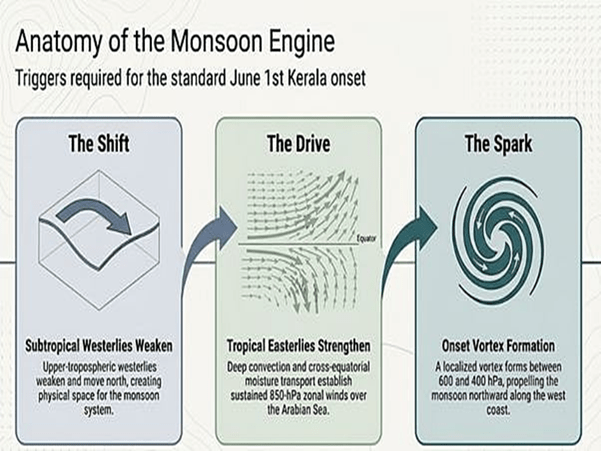
This growing disconnect between onset timing and seasonal rainfall distribution is perhaps one of the most dangerous emerging aspects of monsoon behaviour. One of the most striking phenomena discussed in the paper is the “bogus onset intraseasonal oscillation”, where early rainfall in May creates the appearance of monsoon arrival before atmospheric circulation weakens again temporarily. The paper strongly advocates improvements in monsoon forecasting systems, actionable information at local level is required. District-level onset forecasts, block-level dry spell advisories, and dynamic crop contingency plans remain uneven in implementation across India.
Climate-smart agriculture, often discussed in abstract policy language, is presented here in practical terms. The authors stress the importance of shifting towards drought-resilient and short-duration crop varieties, improving soil moisture conservation through mulching and conservation agriculture, expanding agroforestry systems, and strengthening integrated soil fertility management. Greater investments in micro-irrigation, groundwater recharge, treated wastewater reuse, and decentralised water storage will be essential under increasingly variable monsoon conditions.
Are we headed for a Super El Nino? This year, sea surface temperatures in the central and eastern tropical Pacific have been warmer than normal, rising by as much as 1 ºC above average in recent weeks off the western coast of South America. On that basis, computer models from various government agencies and research groups suggest that the coming El Niño could peak more strongly than the previous one.
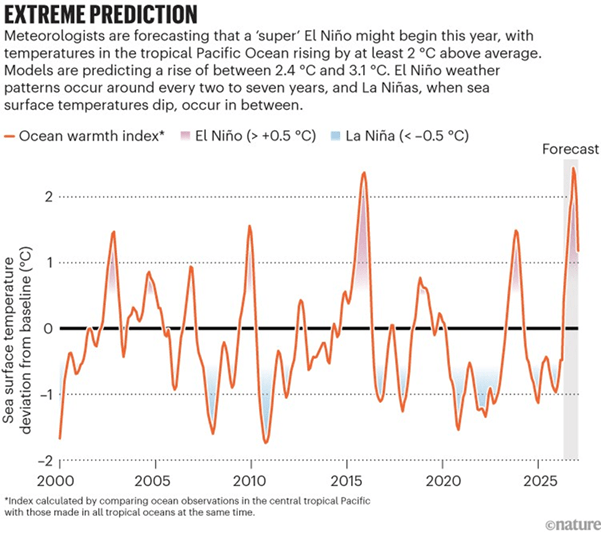
Models are predicting a rise between 2.4 & 3.1 ºC from baseline temperatures, which will be almost equal to or higher than the 2015 peak since at least year 2000. NOAA said in its 14 May report that there is an 82% chance of an El Niño arriving between May and July, and a 96% chance of it developing by Dec. But on the basis of current observations, the agency predicted only a 37% chance of it being in the topmost categorization, the ‘very strong’ category, in which ocean temperatures in the central and eastern tropical Pacific Ocean are more than 2 ºC above average. The European Centre for Medium-Range Weather Forecasts estimated in a report on 1 May that those ocean waters could reach 3 ºC above average by November. Some researchers use the term Super El Nino when the ocean temperatures rise more than 2 ºC above the baseline.
El Niño development during May-June likely to last till 2026-end The India Meteorological Department (IMD) in April forecast a below-average seasonal rainfall for India and expects 92 per cent of the seasonal average to occur during June to September.The India Meteorological Department in April forecast a below-average seasonal rainfall for India and expects 92 per cent of the seasonal average to occur during June to September.
The emergence of El Niño conditions is likely to commence during the May-June period and persist till the end of the year, the US-based National Oceanic and Atmospheric Administration (NOAA) has said in its monthly ENSO update issued on May 11. Under this evolving scenario, the India Meteorological Department (IMD) in April forecast a below-average seasonal rainfall for India and expects 92 per cent of the seasonal average to occur during June to September.
Climate Change Making Rainfall More Intense, Land Drier: Study A new study published in Nature finds that climate change-driven shifts toward fewer but heavier rainfall events are reducing water stored on land globally. The researchers show that when rain becomes more concentrated into intense downpours separated by longer dry spells, less water infiltrates soil and recharges groundwater. Instead, more water evaporates quickly from the surface. This “drying effect” is nearly as strong as the positive effect of increased total rainfall itself.
Using satellite observations, climate datasets, and land-surface models, the study found that this pattern is already affecting major river basins including the Amazon, Ganges, Nile, Mississippi, and Yangtze. Intensively irrigated regions such as the Gangetic Plains may face even stronger impacts. The study projects that with around 2°C global warming, rainfall concentration alone could push 27% of the world’s population into abnormally dry conditions, even without changes in total rainfall.
CLIMATE CRISIS
Submission to Karnataka Govt: Climate Change Adaptation & Mitigation Strategies for Water Sector Under the National Water Mission, the Government of Karnataka conducted a consultation workshop on 24 March 2026 on “Climate Change Adaptation and Mitigation Strategies for the Water Sector in Karnataka.” Mapping Malnad attended the session and subsequently, along with SAPACC (South Asian People’s Action on Climate Crisis), submitted written comments on the presentation. This is a summary of our submission.
Scientists warn Kheer Ganga diversion could increase disaster risk Scientists have warned that diverting the Kheer Ganga river in Uttarakhand’s Dharali could increase the risk of future disasters. The glacier-fed river changed course after the 5 Aug 2025 Dharali disaster and has since been flowing westward into the Bhagirathi. But the govt is now building an artificial channel to redirect it back to its old path. Previously, in 2013, it was flowing eastward through an artificial channel. Geologist Naveen Juyal and environmental researcher Hemant Dhyani say forcing the river back into an artificial channel could disturb the geomorphological balance of the area.
Experts say high Himalayan rivers carry large amounts of debris and boulders, making rigid channelisation risky in a region already vulnerable to landslides, flash floods and glacial melt. The case has revived concerns over construction on active floodplains and the wider policy of trying to control Himalayan rivers in an era of climate change. “Nature appreciates flexible, sustainable river management that can accommodate high sediment load,” they said in their letter to NDMA.
Scientists warn of GLOF risk at Arunachal Pradesh’s Khangri glacier The proglacial lake was detected during the Khangri glacial expedition to Mago Chi basin, a critical headwaters region of the larger Brahmaputra basin system. A team of scientists have issued a warning about potential threat of a Glacial Lake Outburst Flood (GLOF) in the downstream ecosystems & communities after they detected a “potentially dangerous” proglacial lake at an elevation of nearly 16,500 ft in the Mago Chu basin of Tawang dist in Arunachal Pradesh.
The team noted that such geomorphological instability could substantially increase downstream vulnerability and landscape hazards in the Mago Chu Basin. This, he said, could lead to potential adverse impact in the downstream areas in Arunachal Pradesh, North (Tezpur)1 and Western Assam (Bodoland region) and in parts of Bhutan via Jang waterfalls. The expedition team successfully installed 5 new scientific monitoring stakes at elevations reaching nearly 17,000 ft.
Oct 2023 Sikkim GLOF was not due to cloud-burst: Study The catastrophic South Lhonak Glacial Lake Outburst Flood (GLOF) in October 2023 was triggered by a dangerous chain reaction involving glacier collapse, landslides and moraine failure that unfolded over several months, according to a new scientific study published in “Scientific Reports”. Contrary to early speculation, the study ruled out both cloudburst and earthquake activity as the primary triggers of the disaster.
Satellite analysis showed that the South Lhonak Glacier had retreated by more than 100 metres between February and September 2023 alone, weakening the surrounding moraine structure and leaving behind “dead ice” beneath the slopes. The researchers also detected long-term land subsidence around the lake. Using Sentinel-1 satellite data, they found that sections of the lateral moraine had been sinking by an average of around 22 mm per year between 2017 and 2021, indicating deep structural instability beneath the surface.
Weather simulations and satellite precipitation data showed no evidence of an extreme cloudburst directly over the lake. Similarly, seismic activity was deemed too weak to have caused the breach. The researchers identified what they described as a “compound hazard” scenario: glacier retreat weakened the moraine, moderate rainfall increased liquefaction and seepage, meltwater streams eroded unstable slopes, and finally a landslide triggered further glacier collapse into the lake.
Four HKH countries recorded more than 10 major disasters in 2025 Researchers link the increasing impact of disasters in the HKH to the growing prevalence of multi-hazard events. Multi-hazards occur when more than one type of hazard, such as floods, landslides, or droughts, happen at the same time or when one hazard triggers another. Past examples in the region include the Kedarnath floods in Uttarakhand in 2013, and the South Lhonak glacial lake outburst flood in Sikkim in 2023, India, as well as the Melamchi flood in Nepal in 2021.
ICIMOD also warned that unless infrastructure planning and development projects incorporate multi-hazard risk assessments, vulnerable mountain communities could face even greater losses in the coming years as extreme weather events become more frequent and severe.
Disasters affect over 32,000 people in Arunachal from January to May A series of weather-related disasters, including storms, landslides, floods, forest fires and heavy rainfall incidents, have affected more than 32,800 people across Arunachal Pradesh during the period between January and May 13 this year, according to the State Emergency Operation Centre.
Altogether, 114 circles and 128 villages across the state were affected by different forms of natural disasters. The total affected population was estimated at around 32,856 people. The report highlighted extensive damage to houses and other structures. The agriculture and horticulture sectors also suffered losses, with 133.3 hectares of crop area affected, including 123.1 hectares under horticulture cultivation and 10.2 hectares under agriculture.
The SEOC report further noted major infrastructure damage across the state, including destruction of 14 roads, 16 power lines, 39 electric poles, eight bridges, two culverts and 31 water supply facilities. Damage was also reported to government buildings, retaining walls, hydel projects, hospitals and schools.
ENVIRONMENT GOVERNANCE
Environment concerns are not anti-development Article responding to the recent remarks on environmentalists and development. Using Bengaluru’s waste segregation journey as an example, it argues that many environmental protections we take for granted today exist because citizens, waste workers, local communities, and environmentalists approached courts and demanded accountability.
“They Make a Desert and Call It Development” This article criticises the model of large-scale development projects that damage forests, rivers, biodiversity, and local livelihoods in the name of economic growth. The piece argues that many infrastructure and extraction-based projects are leading to ecological destruction, displacement of indigenous and local communities, and long-term environmental crises. It questions whether such projects truly represent development when they destroy natural ecosystems and weaken people’s traditional relationship with land and water. The article calls for more sustainable and community-centred approaches that prioritise ecological balance, local livelihoods, and long-term environmental security over short-term economic gains.
Gauhati HC seeks affidavits from Centre and NHAI The Gauhati High Court has directed the National Highways Authority of India (NHAI) and the Centre to file affidavits clarifying whether mandatory environmental and wildlife clearances were obtained before work on the Guwahati ring road, amid concerns about elephant corridors near the Amchang Wildlife Sanctuary. The court asked NHAI to place on record a comprehensive study by the Wildlife Institute of India (WII) or another specialised agency to assess impacts on elephant movement and other wildlife, and directed the Ministry of Environment, Forest and Climate Change to file an affidavit on whether preconditions for commencement had been met with a compliance timeline. The Additional Advocate General of Assam said no trees would be felled in the meantime, and the matter is listed for May 19.
SOUTH ASIA
Bangladesh plans Tk 335 B Padma Barrage Project The Tk 334.74 billion Padma Barrage project has mainly been prepared to provide some relief from the water crisis during the dry season caused by the Farakka Barrage. After decades of study and examination, the Padma Barrage project is now awaiting approval. The Padma Barrage (First Phase) construction project may be placed for approval at the meeting of the Executive Committee of the National Economic Council (ECNEC) on May 13 2026 (reported approved). 37% of Bangladesh land depends on Padma River.
A 2.1-kilometre main dam will be constructed on the Padma River in Pangsha upazila of Rajbari. It will include 78 spillways, 18 undersluices, and two fish passes. The barrage will be capable of storing 2.9 billion cubic metres of water. Three offtake infrastructures will also be built to distribute the stored water. In addition, it will have a 113 MW hydropower plant.
The stored water will be used to revive the flow of five rivers: the Hisna-Mathabhanga River, Gorai-Madhumati River, Chandana-Barashia River, Baral River and Ichamati River. Around 800 cusec (cubic metres per second) of water will be supplied to these rivers during the dry season. Irrigation will be supplied to around 2.9 million hectares of cultivable agricultural land in the greater Kushtia, Faridpur, Jashore, Khulna, Barishal, Pabna and Rajshahi regions. It is expected to increase rice production by around 2.4 million tonnes and fish production by 234,000 tonnes.
Padma Barrage is not just an ambitious $2.8 billion megaproject — it is Dhaka’s admission that upstream diplomacy has run dry. Water experts have warned that without predictable upstream flow after 2026, the barrage could struggle to meet its lofty promises. Analysts have pointed to a basic engineering dilemma: retaining water in the Padma, one of the world’s most sediment-heavy rivers, will be extraordinarily difficult. If Dhaka and New Delhi fail to negotiate a credible successor framework, the Padma Barrage risks becoming a monument to strategic anxiety rather than hydrological success.
Bangladesh Pushes for New Ganges Water Treaty As the 30-year Ganges Water Sharing Treaty approaches expiry in December 2026, leaders in Bangladesh have said future relations with India will depend on signing a new water-sharing agreement. BNP leader Mirza Fakhrul Islam Alamgir said Bangladesh wants immediate discussions on a new treaty that reflects the country’s water needs and public expectations. He expressed concern over uncertainty surrounding future Ganges water sharing and said the existing agreement should continue until a new pact is finalised.
THE WORLD
Global Water Governance The Unlike climate change, which is anchored in the UN Framework Convention on Climate Change and its associated mechanisms, water is governed through a patchwork of regional agreements, sector-specific initiatives, and loosely coordinated international bodies. There is no single platform capable of integrating water policy across its multiple dimensions. That structural gap is growing more consequential by the year.
This is beginning to change. At the Regional Ecological Summit in Astana in April, Kazakhstan’s President Kassym-Jomart Tokayev advanced a proposal to establish an International Water Organization under United Nations auspices. The initiative reflects a broader recognition that existing structures are no longer adequate to the scale and complexity of water-related challenges. It is a signal that the countries living closest to the consequences of water governance failure are no longer willing to wait for the problem to be taken seriously elsewhere.
The International Energy Agency, established in 1974 to coordinate responses to oil supply disruptions, and the World Meteorological Organization, which underpins global climate data collection, show what sector-specific multilateral institutions can achieve when mandates are clear and membership is broad. Water has neither. An IWO could start by doing what no existing body does: aligning initiatives, improving data sharing, and linking water policy coherently to energy, agriculture, and climate adaptation.
The upcoming UN Water Conference in Abu Dhabi in December is the natural next moment, and the consultations launched in Astana could directly shape what emerges. The architecture is not yet defined. But the case for a dedicated UN-level platform is no longer easy to argue against.
SANDRP
Also see: DRP 11 May 2026 & DRP 04 May 2026
Follow us on: www.facebook.com/sandrp.in; https://twitter.com/Indian_Rivers


