
(Feature Image: Binnu river a tributary of Ramganga in Deghat, Almora. SANDRP)
Interestingly, there are a number of developments this week related to climate crisis from at least four states/ Union Territories of Maharashtra, Uttarakhand, Himachal Pradesh and Ladakh, even if we do not include in these other directly or indirectly related developments. These show how fast the impacts of climate crisis across the country are spreading and the number of different sectors are increasingly getting involved in the climate crisis. All these are related to water related issues.
The news from Ladakh is that a study has shown how Ladakh is suffering adverse impact of climate change on access to water and how it is coping with it. From Uttarakhand comes the scary news that the flood maps in the state may be grossly underestimating the flood risks as they are based on long term rainfall figures rather than the more intense rainfall events, particularly of more recent decades. In Himachal Pradesh, we see an opposite movement where the Chief Minister has asked for a study of cloud-burst triggers, which can help estimate and forecast such events and help deal with it.
Maharashtra has set up a committee for climate resilient water resources development, but it may not be particularly helpful the way the committee has been set up. So it is a mixed bag, and hopefully the unfolding events will lead to course corrections where necessary, earlier rather than later. But the fact that climate change impacts are spreading fast should lead to more serious approach to dealing with the impacts and most importantly, it should lead to changing the developmental path. That, unfortunately do not seem to sink in.
CLIMATE CRISIS
How Ladakh is fighting Climate Change impact on water access According to the study, Climate Change-Induced Impact on Water Resource of Ladakh Cold Arid Region, Ladakh’s agricultural heartbeat depends on a very specific synchronisation: glaciers must melt just as the spring snowing season begins. However, climate change has decoupled this relationship. Ladakh is now seeing “early runoff”, where snow melts prematurely in February or March, flowing away long before the seeds are in the ground in May. Beyond the timing issue, the quality of the snow itself is changing. According to the study published in ResearchGate, in the high-altitude “cold-arid” environment, increased thermal stress is accelerating sublimation, a process where snow turns directly into vapour without ever becoming liquid water. This means that even a heavy winter snowfall can “vanish” into the atmosphere rather than recharging local water.
According to Ladakh’s administration, 72% deficit in recent winter snowfall in Leh, the traditional reliance on natural cycles has become a developmental bottleneck. This volatility is the driving force behind the urgent need for Project Him Sarovar, as the region can no longer afford to let its “blue gold” run to waste.
The most harrowing aspect of Ladakh’s water crisis is the june gap, a period of acute physiological drought that occurs precisely when the agrarian economy needs moisture most. As per the report, this is a “scheduling disaster” caused by climate change. In the past, glacial melt was a reliable clock; today, the clock is broken. The snow melts too early, and the deeper glaciers don’t retreat enough to release liquid water until late July. This left the month of June as a “dead zone” where the ground is ready for barley and peas, but the traditional khuls (irrigation channels) remain dry.
Project Him Sarovar introduces a way to pause the water cycle. By constructing a network of 100 strategic reservoirs, the Ladakh administration is effectively building a massive savings account for “runaway meltwater”. They are “blue and green assets” designed to trap early spring runoff that would otherwise flow away uselessly.
Mah sets up panel for climate resilient water management The Maharashtra Water Resources department has set up the State Water Resources Development and Management Committee (SWRDMC) which will advise the State Water Resources Council headed by the Chief Minister on aligning the Integrated State Water Plan with the objectives of “Viksit Maharashtra 2047.” It will plan, develop, monitor and assess all irrigation, drinking and multi-purpose water projects in all river basins of the state. The panel will also be empowered to recommend and monitor plans for management of water resources with climate resilience, ranging from water re-cycle to river rejuvenation and from desalination to wetland restoration.
The 13-member committee will be headed by the Chief Minister’s adviser on Water Policy and Management resources, Sriram Vedire. The members include administrative heads of Water resources, water supply and sanitation, Revenue and Forest, Industry, Water conservation, Transport, Urban development, tourism and environment departments along with director of Maharashtra Remote Sensing application center. Secretary (Command Area Development) will be the member secretary of the committee. Is this even workable?
NGT takes Suo Motu cognizance of risks from hanging glaciers The Tribunal has impleaded multiple authorities as respondents, including: MoEF&CC, CPCB, Uttarakhand Tourism Development Board, NMCG, Department of Urban Development Uttarakhand, NIH, Roorkee. The Tribunal has issued notices to all respondents directing them to file their responses by way of affidavits before the next hearing. The matter has been listed for further hearing on August 6, 2026, along with a connected case.
Uttarakhand flood maps may be underestimating risk, study warns Flood hazard assessments for Uttarakhand have routinely underestimated the danger to its towns and villages because they have leaned on long-term average rainfall figures rather than the extreme downpours that actually trigger disasters, according to a study in Current Science. The findings arrive at a moment when the Himalayan state is grappling with what climate scientists describe as a sharpening pattern of cloudbursts, glacial lake outbursts, and flash floods.
The study, led by researchers at the Malaviya National Institute of Technology, Jaipur, tracked how flood hazard zones have intensified in 2017-2021. Areas classified as ‘high’ or ‘severe hazard’ zones rose noticeably over that period, with 2021 showing the largest extent of ‘high-hazard’ land. Across all the years examined, more than 90% of Uttarakhand fell within moderate or high-hazard categories.
Why forests across Uttarakhand are burning The report highlights a sharp rise in forest fires across Uttarakhand and Himachal Pradesh, driven by extreme heat, dry conditions, and lack of rainfall/snowfall. It links the crisis to climate change, which is causing warmer temperatures and drier forests, making them more prone to fires. Overall, the report warns that the Himalayan region is becoming more vulnerable to frequent and intense forest fires, threatening biodiversity, local livelihoods, and fragile mountain ecosystems.
HP CM orders scientific study on rising cloudburst incidents Chairing a high-level meeting on disaster risk reduction and resilience planning May 08, CM Sukhvinder Singh Sukhu has directed the Himalayan Centre for Disaster Risk Reduction and Resilience at Himachal Pradesh University to undertake a detailed scientific study on recurring cloudburst incidents in the state. The study will examine factors such as the impact of dams, temperature variations, terrain conditions and aerial-distance-based assessments linked to frequent cloudburst events in the Himalayan region.
He emphasised the urgent need for scientific analysis to understand the patterns and causes behind such disasters. The CM announced major financial support for strengthening the centre’s research and technical capabilities. He directed the state disaster management authority to allocate Rs 6 crore for specialised training programs and capacity building. An additional Rs 10 crore was approved for institutional strengthening and expansion of research infrastructure.
Sukhu also sanctioned Rs 1 crore to initiate scientific studies on glacial lake outburst floods (GLOF) in the state and instructed the authorities to provide further assistance for related research. He stressed the need to recruit additional professionals and domain experts to improve the centre’s scientific and technical expertise.
HYDRO POWER PROJECTS
Kalai II survey, land acquisition process opposed The Nukung Welfare Society (NWS) has strongly objected to continuation of land survey, land acquisition, environmental clearance process and all activities relating to the proposed 1,200 MW Kalai-II Hydro Electric Project (HEP) and called for suspending the proposed survey process initiated vide a circular dated 24.04 2026. In a representation to the Anjaw deputy commissioner on May 06, the NWS claimed that “the proposed project and the ongoing survey process raise extremely serious environmental, legal, constitutional and humanitarian concerns which cannot be ignored.”
The society stated that the proposed project involves large-scale intervention through river diversion, blasting, reservoir creation, muck dumping and heavy construction activities that would irreversibly damage the ecological integrity of the Lohit river basin, which has an ecologically fragile biodiversity, and is a rich Himalayan ecosystem. It also claimed that the proposed project poses a serious threat to the Kamlang landscape and adjoining wildlife habitats.
Further, the NWS pointed out various procedural defects and public consultation issues on the part of the authorities. It stated that affected communities have not been provided with certified and accessible copies of the detailed project report, environmental impact assessment, environment management plan, geological studies, seismic assessments, forest diversion proposals, rehabilitation and resettlement plans, catchment area treatment plans, and biodiversity management plans.
Kalai-II HEP proposal skips mentioning ‘endangered bird habitat’ A THDC India Ltd proposal seeking clearance for diversion of 869.35 hectares of semi-evergreen forest for the 1,200 MW Kalai-II hydroelectric project in Arunachal Pradesh has been placed before the Environment Ministry’s forest advisory committee (FAC) in the habitat of the critically endangered White-Bellied Heron, as per proposal documents submitted to FAC for its meeting on May 8 2026. However, the proposal to the Centre does not make any mention of the species.
Planned in Anjaw district, the Rs 14,176.26 crore project is proposed on the Lohit river, a tributary of the Brahmaputra and will involve construction of a 128.5 m concrete gravity dam and an underground powerhouse. Lohit river is a habitat for the critically endangered White-Bellied Heron which has been accorded Scheduled-I status, the highest protection, under the Wildlife Protection Act, 1972.
The state’s forest department has itself recorded the bird’s presence in the past, and more recently, independent researchers have recorded its presence in the riverine habitat. The compensatory afforestation for the proposal is planned in far away Madhya Pradesh.
DAMS
Work on installation of crest gates at Tungabhadra Dam concludes Major work having been concluded, miscellaneous things such as welding and painting needed to be completed, said Tungabhadra Board secretary B R K Reddy.
1. Jethala Balancing Reservoir Lift Irrigation Project (CCA of 29000 Ha) in 1242.13 Ha at Sub dist Narsinghgarh, Berasia, Huzur and Shyampur, Dist Sehore and Bhopal, Madhya Pradesh – Terms of References: Deferred: the feeder pump house located on the Parbati river lies at a distance of 1.27Km from Narsinghgarh Wildlife Sanctuary. The feeder Pump House and the Northen portion of the command area falls in the Narsinghgarh Wildlife Sanctuary Eco-Sensitive Zone. River/water body Parbati River is flowing at distance of 0km from the feeder pump house: PP asked to get recommendation of the Monitoring committee of the Eco Sensitive Zone.
2. Bodwad Parisar Sinchan Yojana (CCA of 53,025 Ha) in 1315.13 Ha at Sub Dist Jamner, Motala, Muktainagar (Edlabad), Malkapur and Bodvad, Dist Jalgaon and Buldana, Maharashtra by Tapi Irrigation Development Corp, Jalgaon – Terms of Reference: APPROVED
3. Amba Open Loop Pumped Storage Project (1500 MW) in 272.21 Ha at Sub Dist Mawal & Sudhagad, Dist Pune & Raigad-Mah, NTPC Ltd – Terms of Reference: APPROVED
4. Greenko BR-01 Closed Loop Pumped Storage Project (1200 MW) in 310.88 Ha at Sub Dist Gobindpur, Akbarpur and Rajauli, Dist Nawada, Bihar – Terms of Reference: APPROVED
5. Aruna Open Loop Pumped Storage Project (1500 MW) in 334.45 Ha Sub Dist Bavda and Vaibhavvadi, Dist Kolhapur and Sindhudurg, Mah by THDC – Terms of Reference: APPROVED
6. Barnar Reservoir Project (CCA of 22,226 Ha) in 1052.43 Ha at Subdistt Sono, Khaira, and Gidhaur etc., Dist Jamui, Bihar – Terms of Reference: APPROVED
7. Niare Hydro Electric Project (909 MW) in 175.05 Ha at Sub-dist Limeking Circle, Dist Upper Subansiri, Arunachal Pradesh by Andra Power Pvt Ltd – Terms of Reference: APPROVED
WATER POLICY
Rajasthan Water Policy fails to recognise women as key water managers Women manage water daily in Rajasthan, yet policies treat them as users, not decision-makers. Bridging this gap needs gender-responsive governance that values local knowledge, equity, and real participation. This stark disconnect between lived reality and public policy lies at the heart of a recent scholarly review by Ruchika Sharma, Sailaja Nandigama, and Tamali Bhattacharyya, published in Social Sciences & Humanities Open (2025). The paper, titled “Mapping the disconnect in water policy and practice within water governance: An integrative literature review of women and water in Rajasthan’s water governance“, examines the paradox: women are central to water management in practice but marginal in policy design and decision-making.
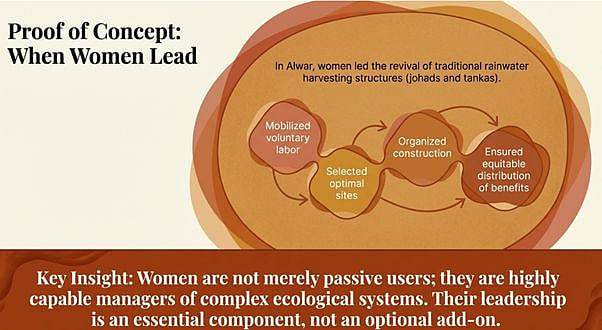
A similar pattern is seen at the national level. India’s National Water Policy refers to women mainly during project implementation. They are again described as beneficiaries rather than decision makers, which limits their role in shaping water governance.
RURAL WATER SUPPLY
Invisible (for water supply) agarias of Rann of Kutch in Gujarat In Gujarat, the past two decades have seen water governance entirely restructured and handed over to the private sector. “The water department in Gujarat does not provide water. It provides contracts to private players,” says Pankti Jog, a local activist who’s been tracking governance of that resource in the state for decades. “A few years ago, during a severe water crisis in Surendranagar, I filed Right to Information (RTI) queries about the number of tankers plying water in the area. The department did not respond, and private players owe us no answers. People become invisible when they enter the rann, so government gives them nothing: not even water.”
Water governance in Gujarat is chaotic, and has such a huge range of actors involved that seeking accountability is near impossible. Most simply give up. “At the start of the season, I drew up the number of people who’ll live in the rann, to ensure adequate water supply for families,” said Ghanshyam Bhai from the Agariya Hit Rakshak Manch, a collective for the community’s welfare. “It took months to get the paperwork moving from block to district level. By the time the paperwork reached Bhuj [where the Kachchh collectorate is located], the season ended. Through that period, families bought water from private tankers at exorbitant rates.” Extreme commodification of water has led to imposition of scarcity on parched groups like the agariyas, while a few other actors profit from the crisis.
LOCAL WATER SYSTEMS
How communities in Meghalaya protect sacred groves The Mawphlang sacred grove reveals how water, forests and community remain deeply connected, as Khasi traditions protect fragile ecosystems now under pressure from climate change and expanding tourism. About 25 kilometres from Shillong, the Mawphlang sacred grove lies in a shallow valley. For over 800 years, the Khasi community has protected this forest not through fences or formal enforcement but through a system of belief that binds water, land and people together.
Across India, more than 13,000 sacred groves still survive. Known as Devrais in Maharashtra, Sarna sites in Jharkhand, Devarakaadu in Karnataka and Law Kyntang in Meghalaya, these forests are sustained by shared responsibility rather than laws. They stabilise soil, support biodiversity and, most critically, safeguard water. Yet many are slowly disappearing or are now under increasing pressure from climate change, development and shifting social values. Among them, Mawphlang stands as both a refuge and a warning.
Woman cleans well to solve village’s water crisis In the peak of summer, when water sources across Kerala ran dry, a decades old well in Idukki’s Upputhara panchayat became a growing concern. The water had turned black, the structure itself was ageing, and despite being the primary source of drinking water for nearly a hundred families, no one was willing to step in and clean it. The hesitation was not without reason. The task was risky, physically demanding, and long overdue. The well is over 15-ft deep. What followed, however, has now drawn attention across the region. Mareena Saneesh, a panchayat member, chose to take matters into her own hands, quite literally, climbing down into the well and cleaning it herself when no one else would.
Mah CM orders completion of 34k water conservation works by June 15 The CM on May 08 directed officials to complete 34,000 ongoing water conservation jobs on war footing by June 15 and focus on approved and additional works in drought-prone areas. The officials informed the CM that desilting had been carried out in 1,435 water bodies and around 477.73 lakh cubic metres of silt had been removed, restoring 30,835 TCM of water storage capacity. About 73,417 acres of land had become more fertile due to nutrient-rich silt application, while district-wise desilting activities are slated to continue until June 15.
Funds worth ₹390 crore are available with the department to complete ongoing works, officials told the chief minister, who ordered the administration to provide the funds as per need to complete these works. During the meeting, water conservation secretary Jitendra Papalkar said that under Jalyukt Shivar Abhiyan 2.0, a total of 144,697 works had been approved so far through special funding and convergence mechanisms, while 110,120 works had already been completed.
IRRIGATION
Align food system with Hydrology “Nourish and Flourish: Water Solutions to Feed 10 Billion People on a Livable Planet,” a report from the World Bank, delivers a stark warning: the global food system is fundamentally misaligned with hydrological realities. This is of course old message talking about an issue that the Bank had a major role in creating, expanding and sustaining in India. What makes this moment more urgent is a parallel warning from the International Energy Agency (IEA), whose 2026 “Sheltering from Oil Shocks” plan highlights how energy disruptions can rapidly cascade into food and water crises.
At the heart of this crisis lies not absolute scarcity, but mismanagement of water within food systems. India exemplifies this paradox. It is effectively a water-stressed food exporter, producing water-intensive crops such as rice and sugar in regions already experiencing groundwater depletion. In doing so, India exports vast volumes of “virtual water,” deepening domestic stress.
INTERLINKING OF RIVERS
Ken-Betwa Project: Why Govt Needs To Reassess Its Plans The residents demand that newer water and environmental feasibility tests be done to evaluate the project before proceeding further or cancelling the entire project.
If the agitating local people, in light of a fast-changing climate, demand an ecological survey be redone with presentation from the community, it’s only a reasonable ask. The Modi government needs to get a reassessment done, especially since the Supreme Court committee also warns of extensive damage to the environment and water availability for the regions.
The government needs to have a law-bound, transparent system for approval and compensation, without which the public will lose faith in the project and also in the government.
In case the ecological and social costs run too high, the government needs to keep the same goal of bringing irrigation to Bundelkhand but change the method of it. The government needs to look at decentralised community-driven models of water rejuvenation and conservation, which are based in constructions of a dense network of smaller ponds and reservoirs situated in the villages and forest areas. These structures are based on the indigenous wisdom of the land and can act as a cost-efficient way to safeguard water, and also help activate the subterranean hydrological channels. This approach can help increase the level of water in the rivers and also improve rainwater harvesting in the region.
Hence, in times like these, the government should hold another round of all stakeholder discussions, backed by an eco-social assessment for the project, and then only think of linking the rivers of Ken and Betwa, because if the project fails, not only will it be a fiscal disaster, but also destroy the region’s ecosystem, creating eco-refugees and dead tigers.
SANDRP: An Interview on Inter Linking of Rivers in general with focus on Ken Betwa Riverlink Project.
The irreversible course of damage The Ken Betwa project is being pushed through with no apparent concern for the environment or the people it will displace.
River interlinking and biodiversity risks in Indian freshwater ecosystems This study examines the potential role of river interlinking on the distribution and dynamics of freshwater invasive alien species and their interactions with native biodiversity across Indian river basins.
INTERSTATE WATER DISPUTES
Krishna basin to face dry spell as Maharashtra yet to release water A huge quantity of water was lost after the 22nd gate of the Hipparagi barrage was damaged. During the corresponding period last year, Hipparagi had 1.76 tmcft of live storage. This year, on May 10, only 0.31 tmcft of live storage remains. This is expected to suffice only for two weeks. If water is not released into the Krishna River from Maharashtra, more than 130 villages in Belagavi district are likely to face drinking water shortage. Villages in Bagalkot and Vijayapura districts will also suffer from water scarcity.
URBAN RIVERS
Musi riverfront project for real estate Only the first phase of the Musi riverfront development project in Hyderabad will be around Rs 7,000 crore; the total cost is estimated from Rs 56,000 crore to allegedly Rs 1.5 lakh crore—the most expensive riverfront work in India. An official survey identified 10,600-10,770 homes for demolition, mostly slums but also housing complexes. Demolitions have started and activists reckon that the large-scale land acquisition may displace nearly 1.30 lakh people. There is growing pushback over displacement, and ecological risks, with communities demanding transparency and zero displacements.
Copy-paste riverfront model discounts Godavari’s ecology and heritage Real estate over ecological restoration, multiplicity of agencies, and Kumbh Mela-driven deadlines are three faultlines of Nashik’s Godavari riverfront development, based on the Sabarmati model. The Namami Goda project worth Rs 2,800 crore has two phases—Phase I covers sewage treatment, drainage interception, solid waste management, and riverbank stabilisation; Phase II has walkways, LED lighting, new ghats, a rose garden, water screen laser show, and boat rides.
Fragmented governance structure, multiple institutions with different mandates, and the lack of a unified ecological vision or accountability make it worse. Locals are not consulted, ancient kunds not de-concretised, and Kumbh-related interventions impact the Godavari even as its future hangs between two approaches: hardscape engineering versus ecological restoration.
Mumbai’s new ‘trash catchers’ stop tonnes of garbage The report highlights Mumbai’s efforts to tackle marine plastic pollution by installing floating “trash booms” across major drains and rivers flowing into the Arabian Sea. The Brihanmumbai Municipal Corp (BMC) has deployed these floating barriers at key pollution hotspots, including the Mithi River and major stormwater drains, to trap plastic waste before it reaches the sea. According to officials, Mumbai generates around 7000 T of waste daily, with plastic waste and floating debris intensifying during the monsoon.
However, environmental experts cited in the report warn that trash booms only address the symptom, not the source of pollution. They argue that weak waste segregation, poor plastic management, drain encroachments, and untreated sewage continue to drive pollution into Mumbai’s waterways and eventually the Arabian Sea.
RIVERS
Rising Global Riverine Deoxygenation Rates and GHG Emissions… A new study published in Global Change Biology finds that rivers around the world are becoming warmer, losing oxygen, and releasing more greenhouse gases because of climate change, pollution, urbanisation and agricultural runoff.
Using data from over 1,000 river monitoring sites between 2002 and 2022, researchers found rising levels of carbon dioxide (CO₂), methane (CH₄) and nitrous oxide (N₂O) in rivers especially near cities and intensive farming areas. Oxygen levels in rivers are also declining, harming aquatic ecosystems.
The study warns that polluted and warming rivers are becoming important contributors to climate change, adding nearly 1.5 billion tonnes of extra CO₂-equivalent emissions over two decades. It calls for better river protection, pollution control, and wastewater management to reduce emissions and restore river health.
WII study warns of Ecological Stress in Cauvery Basin The WII–NRCD Cauvery Basin report finds that the river is facing increasing ecological degradation due to pollution, altered river flows, dams, sand mining, sewage discharge and intensive agriculture. The study detected heavy metals, pesticides, endocrine-disrupting chemicals, and microplastics in the river system, with evidence of pollutant accumulation in aquatic organisms. It warns that declining environmental flows and rising chemical contamination are threatening aquatic biodiversity and the long-term ecological health of the Cauvery basin.

The study, involving 19 researchers, looked into the ecological status of the 805 km-long river that feeds crores of people in Karnataka, Tamil Nadu and Kerala. They studied an 85-km stretch by dividing the river into upper, middle and lower zones. Segments of 5 km were picked from each zone in 17 stretches, covering about 10% of the river’s total length.
MSPCB fines PWD ₹31.25 lakh for Environmental Violations The Meghalaya State Pollution Control Board (MSPCB) imposed a penalty of ₹31.25 lakh on the PWD for environmental violations linked to the Jowai Bypass road project in West Jaintia Hills. The action followed inspections by a joint committee under NGT directions, which found illegal dumping of debris and pollution affecting the Myntdu river and nearby areas. The violations breached key environmental laws, including the Water Act, Air Act & Environment Protection Act. The NGT has directed remedial measures such as clearing debris, stabilising slopes, proper disposal of construction waste & ecological restoration, while asking authorities to ensure strict compliance going forward.
Fly ash dumping in Perubhadi stone quarry The application on fly ash dumping in the Perubhadi stone quarry situated in Perubhadi reserve forest, Sundargarh district, Odisha came up for hearing before the NGT on April 23, 2026.
In spite of these mandatory safeguards, the Perubhadi stone quarry has been identified as a site for disposal of fly ash. The quarry is not an ordinary abandoned pit. Over the years, it has naturally filled with water and has become a perennial water reservoir. It is regularly used by nearby villagers for drinking, irrigation, bathing, cattle use and other daily needs.
The quarry is located inside a reserve forest and also acts as a groundwater recharge source for the surrounding villages. It was stated that dumping fly ash and slurry into the water-filled quarry would in likelihood, contaminate the water, soil and air, and may result in serious health hazards, damage to crops, loss of drinking water and long-term environmental degradation.
Any leakage or seepage may further pollute the Didga-Teljora nala and ultimately River Ib, which is the main river of the area. Despite objections from the applicant and villagers, no preventive steps have been taken and the dumping of fly ash continues, the application said.
RSSB Kangra felled trees & cut hillsides by bypassing regulations In a report submitted to the NGT on April 25, 2026, the Himachal Pradesh State Pollution Control Board (HPSPCB) revealed that the Radha Swami Satsang Beas (RSSB), Paror, neither obtained any permission for hill-cutting nor applied for planning approval.
When officials from the Himachal Pradesh Pollution Control Board, accompanied by a joint committee, visited the site for an inspection on November 4, 2025, the findings were alarming. In its report dated November 14, 2025, the joint committee stated that hills had been cut into, and the resulting debris was being dumped directly into water bodies. The channels of streams and their banks were also found to be choked with this debris.
Subsequently, a second inspection was conducted on April 7, 2026. This inspection revealed that the retaining walls constructed by the Radha Swami Satsang Beas along the banks of the Tahal Khadd and the Shee nala were so flimsy that they would be unable to withstand and contain the debris during the monsoon season. In light of this, it is necessary to increase the height of the protective structures along the khadd (stream) and nala (drainage channel) to safeguard them from pollution.
Furthermore, no arrangements have been made to address the debris that has already accumulated. Consequently, with the onset of the monsoon season, this material could be washed away by the rainwater, polluting the drainage channels and downstream water bodies.
Earlier, the NGT impleaded the Kangra DFO as a respondent in the case and directed him to file a reply on alleged hill cutting and illegal muck dumping by RSSB, as verified by a joint committee of the Tribunal. Justice Tyagi also ordered the DFO to submit his reply on the fresh demarcation of land owned by Radha Soami Satsang Beas.
Expressing surprise at the penalty imposed for illegal tree felling, Justice Tyagi observed in his order that “35 trees are stated to have been illegally cut but a meagre amount of Rs 5,000 has been levied against the defaulters, whereas the cost of the timber would be much higher than the value compensated”.
Microplastics: A Missing Piece in Ganga Pollution Control The compliance report by the CPCB in M.C. Mehta vs Union of India highlights that microplastics are emerging pollutants in rivers like the Ganga, but India currently has no clear standards or regular monitoring system to track them. Existing water quality checks focus mainly on traditional pollutants, leaving microplastics largely unaddressed. The government has initiated some steps, such as banning certain single-use plastics and working on guidelines through agencies like BIS and CPCB, but a comprehensive system for testing and regulation is still evolving. The report shows that while visible pollution is being tackled, microplastics remain a major regulatory gap.
The CPCB said its laboratory currently lacks the analytical and infrastructural capacity to test microplastics in water samples, and had explored outsourcing the work to specialised agencies. However, in the absence of standardised sampling and analysis methods, results generated using existing research methodologies may not be reliable for regulatory or legal purposes, it noted.
Earlier this month, the CPCB wrote to the Bureau of Indian Standards (BIS) seeking standards for microplastics in river and drinking water, along with protocols for sampling and analysis. In response, BIS said no such Indian standards currently exist, but added that it is considering developing standards for microplastics in drinking water and wastewater, with two standards — on sampling and analysis — under review.
Yamuna pollution indicator slightly better in April Meanwhile, experts said the river’s water quality will continue to suffer until the monsoon arrives. “In the lean season, low river flow traps sewage and effluents, leading to elevated pollution levels. Monsoon rains only offer an artificial cleanup, as the slightly cleaner water is merely the result of heavy water discharges from the Hathnikund barrage,” said Bhim Singh Rawat, a Yamuna activist and member of the South Asia Network on Dams Rivers and People (SANDRP). Rawat added that data from drains clearly shows until they start meeting the standards, the river will continue to suffer.
Delhi readies four-point plan to tackle toxic Yamuna froth To check froth formation in the Yamuna, under a broader Yamuna rejuvenation plan, the Delhi government has planned a four-pronged approach of relocating dhobi ghats, closing illegal dyeing units, undertaking engineering interventions near the Okhla barrage and developing a riverfront visitor hub at Kalindi Kunj, officials familiar with the matter said.
Over 300 families face eviction at Yamuna Bazar Ghat The Delhi Disaster Management Authority (DDMA) on May 07 issued eviction notices to 310 families of the centuries-old Yamuna Bazar Ghat area, near Kashmere Gate, giving them 15 days to vacate the area. The notice described the settlement as a “illegal encroachment” of the Yamuna floodplain in the O-Zone area and cited recurring flood risk as grounds for eviction. Residents, however, claimed that no formal survey of the area, where they have been living for generations, has been carried out and the move could impact their lives and livelihoods.
Yamuna floodplain actions hurting the poor Delhi requires an approach that joins the dots between ecology, economy and human dignity. Inclusive floodplain conservation would begin by recognising that people living along the Yamuna are not “encroachers”, but workers who sustain the city’s functioning. In several parts of India, successful wildlife conservation has depended on the participation of communities dependent on forests. The recognition that local populations are not antagonistic to ecology, but can often become its most effective custodians, has shaped conservation thinking. The same principle can guide the restoration of the Yamuna.
There is, of course, no one-size-fits-all approach for conservation. But planners should not lose sight of a central lesson from India’s best environmental traditions: Ecology and equity were never opposing goals. They fed into each other. (Kaushik Das Gupta)
Toxic cost of textile recycling in Panipat This report highlights the environmental and health crisis unfolding in Panipat, one of the world’s largest textile recycling hubs, where discarded clothing from Europe, North America, and Asia is processed into recycled yarn and home furnishings. The city reportedly handles nearly 1 million tonnes of textile waste annually through around 20,000 industrial units, employing nearly 3 lakh workers.
The investigation also highlights severe pollution from dyeing and bleaching units. According to official findings referenced in the report, nearly 80% of wastewater from many units is discharged untreated into drains connected to the Yamuna River. Water samples reportedly showed dissolved solids levels nearly four times above permissible limits and critically low oxygen levels, making stretches unsuitable for aquatic life.
RIVERS BIODIVERSITY
Indian conservationists win Whitley Awards Indian conservationists Barkha Subba and Parveen Shaikh have won the prestigious 2026 Whitley Awards for their work in protecting the habitat of the Himalayan salamander and conserving nesting sites of the endangered Indian skimmer along the Chambal river through community-led efforts.
India is home to more than 90% of the global population of about 3,000 Indian skimmers, known for their bright orange bills and for skimming the surface of rivers to catch fish. The birds nest on sandbars—mid-river islands that appear seasonally—and even small changes in river flow patterns can result in complete nesting failure.
Interview of Parveen Shaikh: Nearly a decade ago, conservationist Parveen Shaikh began working on protecting the flame-billed Indian skimmer, an endangered species of riverine bird found in the Chambal region which had dwindled to just 400. With the help of a community of ‘nest guardians’, Shaikh worked to increase the bird count, which has won her the Whitley Award or ‘Green Oscars’. She speaks to Shruti Sonal about the efforts and the changing fate of rivers in the age of extreme heat.
Endangered Gharial spotted in Kaziranga The critically endangered gharial has been spotted in Kaziranga National Park after the reptile was long believed to have disappeared from Assam’s river systems for decades, officials said on May 09.
FISH, FISHERIES, FISHERFOLKS
Mumbai’s Kolis vs Mumbai’s ‘development’ The 26-km Versova–Bhayandar coastal road will fell 45,000 mangroves. For Charkop’s Koli fishers, it ends a livelihood and the city’s flood barrier at once.
Fish, Pollution & Polarisation The report shows how the 2026 Bengal election in the delta region is shaped by collapsing fisheries, pollution (especially from tannery waste), and migration-driven distress. Alongside economic hardship, local politics is deeply influenced by identity, fear, and shifting party loyalties, making the contest highly volatile.
SAND MINING
Strict action required: NGT to UP officials Underlining that strict action is required to be taken against people involved in illegal sand mining, the NGT in Jan. 16, 2026 order has directed the Uttar Pradesh authorities to take stringent measures for preventing such unauthorised mining and transportation of minor minerals. The green body was hearing a plea regarding illegal sand mining in the Kanpur and Unnao areas in Uttar Pradesh causing pollution in River Ganga.
The tribunal noted that the applicant had named a private person or project proponent who was carrying out illegal sand mining in Bilhaur near Kanpur and built an unauthorised bridge in the Ganga river, dividing it into two streams which had become hazardous to the nearby villages and could be catastrophic for the entire region.
Officials attacked while trying to stop illegal sand mining Two officials of the mines and minerals department were beaten up when they tried to stop illegal sand mining in Panchmahal district. They had to be rushed to the Godhra civil hospital for treatment. The alleged assault took place at Ghusar village near Godhra. The two officials went to the Goma river near the village with a security guard on May 07 morning, after learning about illegal sand mining there.
NGT sends notice over illegal sand mining in Budhabalanga The NGT has admitted an appeal challenging the environmental clearance (EC) granted for a sand mining project in Budhabalanga river bed over 12.35 acres in Belpal village under Mayurbhanj’s Badasahi tehsil. The NGT’s East Zone Bench passed the order on an appeal filed by Bibekananda Pattnaik, a resident of Baripada. The appeal has sought quashing of the EC granted by the SEIAA in favour of a private lessee on February 23. The matter is scheduled for further hearing on May 13, 2026.
Raj auctions 12 new sand mining plots despite HC order Rajasthan’s mining department has started the process to auction 12 new sand mining plots in Jodhpur, Kota, Pali and Nagaur, despite the Rajasthan high court recently quashing the state’s 2024 auction of 93 gravel mining leases in four districts. The division bench of the high court also directed the state govt to submit a report explaining how natural replenishment of gravel would occur after extraction. The court flagged the absence of a scientific assessment of natural recharge of mined material.
Experts and industry representatives alleged the new sand mining auctions violate norms and Supreme Court-approved guidelines. Pradeep Singh, an expert on the issue, said, “As per the applicable mining rules, once a mining lease period concludes, no mining activity can be permitted in the same area for the next five years to allow for natural replenishment. A comprehensive scientific study on the process of replenishment of sand at the affected sites is mandatory. However, no such exercise has been undertaken.”
Rajasthan admits prima facie inaction on illegal mining complaints in Dausa The Rajasthan govt has told the Supreme Court that it has constituted a high-level committee to identify officials responsible for alleged inaction over illegal mining and stone crushing activities in Dausa district, after the Court warned that the Chief Secretary would have to personally appear if substantive action was not shown. The State has further admitted that, prima facie, no effective or substantive action appeared to have been taken by field-level authorities on complaints made by villagers regarding illegal mining and stone crushing.
Jharkhand HC orders stringent enforcement to curb illegal mining in Hazaribagh The High Court of Jharkhand has disposed of a decade-long PIL by issuing a comprehensive set of directions to combat rampant illegal stone mining and unauthorized crusher units in the Hazaribagh district. The Court observed a significant “failure of the enforcement machinery” in translating regulations into field-level accountability, noting that “the soul of this region has undergone a profound and painful transformation.”
The writ petition, filed by Hemant Kumar Shikarwar in 2013, highlighted the ecological crisis in Hazaribagh, historically known as the “City of a Thousand Gardens.” The petitioner alleged that illegal stone mining, particularly in the Ichak region and around the Siwane River, was being conducted by local mafias in active collusion with the local administration. The petition stated that these unmonitored operations emitted massive quantities of fugitive dust, damaging approximately 100 hectares of cultivable land and endangering the lives of residents through unregulated explosive use and abandoned, water-filled mining pits.
WETLANDS, LAKES, WATER BODIES
Kashmir’s vanishing lakes Kashmir Valley is drained by only one river, the Jhelum. All the streams coming from all sides between Khanbal and Kahdanyar are its tributaries. Yet it has too many agencies to manage. The tourist hub of Dal Lake has LAWDA, now renamed, Jammu and Kashmir Lake Conservation and Management Authority (LCMA) as the main manager, with Srinagar Municipal Corporation (SMC) having some sort of control over the banks and the urbanisation taking place there.
The Wular Lake, Kashmir’s oldest Ramsar site and Asia’s major freshwater lake, should ideally have the LCMA control over it, but the Forest Department’s insistence created another body, the Wular Conservation and Management Authority (WUCMA). The river itself is managed by the Irrigation and Flood Control as the Mining Department has rights over the riverbed. Miners damage it, and the IFC department seeks funds for repairs. The consequences of this neglect and mismanagement are not ecological abstractions. They are written into the region’s history in the most devastating terms.
NGT seeks detailed info on environmental remediation plan for Nainital lake A bench of Justice Arun Kumar Tyagi and expert member A Senthil Vel, while hearing an application filed by Hemant Singh Gonia, said the additional affidavit filed by State Wetland Authority (SWA), Dehradun, on Jan 28 did not provide complete information with all requisite details of the projects meant for remediation of the grievances raised in the application and that it found the response inadequate on the core issue of remedial measures. Counsel for Uttarakhand pollution control board (UKPCB), state govt and SWA sought time to respond, following which, the tribunal granted it two months to file an additional response and listed the matter for hearing on July 14.
In its reply dated June 3, 2025, the SWA had submitted that Nainital lake does not fall within the definition of “wetland” for the purposes of the Wetland (Conservation & Management) Rules, 2017, as those rules do not apply to wetlands located in areas covered under the Indian Forest Act, 1927 and the Forest Conservation Act, 1980, now referred to as the Van (Sanrakshan Evam Samvardhan) Adhiniyam, 1980.
Save wetlands or build artificial lakes? The demand to convert Almora’s Tadagtal into an artificial lake has triggered a conflict between development aspirations and scientific arguments for wetland conservation, raising larger questions about impacts on agriculture, tourism, birdlife, biodiversity, and fragile Himalayan ecology.
RAMSAR WETLANDS
Deepor Beel elevated corridor sparks concern Environmentalists warn that this could fragment habitats in an already degraded wetland ecosystem that supports thousands of migratory birds, reptiles, and other fauna.
GROUNDWATER
Nitrate pollution in at 7-year high: CPCB to NGT In a report filed on 28 April and uploaded on 2 May, the CPCB has told the NGT that groundwater nitrate contamination has reached a seven-year high, with several districts across states exceeding the safe limit of 45 mg/l. In its Action Taken Report filed in OA No. 10 of 2025, the CPCB noted that multiple districts across states such as Rajasthan, Maharashtra, Karnataka, Tamil Nadu, and Uttar Pradesh have recorded nitrate levels exceeding the permissible limit of 45 mg/l. The trend indicates a steady deterioration in groundwater quality, particularly in agriculturally intensive regions.
The report attributes the contamination primarily to excessive use of nitrogen-based fertilizers, along with poor sewage management, leakage from septic systems, and improper disposal of animal and solid waste. Highlighting systemic gaps, the CPCB pointed to inconsistent monitoring, data gaps, and weak enforcement of pollution norms. The CPCB has recommended district-specific action plans, improved sewage infrastructure, and stricter regulation of fertilizer use. The NGT is expected to review compliance and may issue further directions to states to curb the growing crisis.
URBAN LAKES, WETLANDS
Concerns over underpass plan near Kukkarahalli lake Environmentalists in Mysuru have opposed the proposed underpass at the Kukkarahalli Lake junction (LC-1), arguing that the project could damage the lake’s fragile ecosystem and require large-scale tree felling. They have urged authorities to drop the underpass plan and instead close the railway level crossing, suggesting alternative traffic solutions. Activists stress that the project threatens heritage structures, biodiversity, and the lake’s catchment area, and have called for a proper environmental assessment before any decision is taken.
URBAN WATER
Cauvery Stage V project: Pipes go underground, but connections still to surface The report highlights that Bengaluru’s Cauvery Stage V water supply project has largely completed laying underground pipelines but household connections are still pending delaying actual water supply. The project aims to supply 775 MLD of water and benefit around 50 lakh people across 110 villages and peripheral areas.
In terms of timeline, the project was conceptualised and initiated in 2014, with implementation work starting later and facing delays. Works began in March 2018, and many residents who paid for sewage connections in 2019 are still waiting. Having missed multiple deadlines, they had hoped the sewerage network would be operational by the end of 2025. It was finally inaugurated on 16 October 2024 by the Karnataka government.
Hyderabad staring at ‘now or never’ moment Experts warn the coming monsoon could determine whether Hyderabad stabilises its declining groundwater reserves – or slips deeper into a cycle of tanker dependence, borewell failures and recurring summer water emergencies that may become harder to reverse with every passing year.
RWH movement in Jharkhand amid urban water crisis An urban water emergency warrants that the Jharkhand Rain Water Harvesting Regulation, 2017 must now become a civic movement. (Eklavya Prasad)
Tourist rush at Doon, Mussoorie waterfalls threatens drinking water supply Rising tourist footfall at waterfalls in Dehradun and Mussoorie, driven by heat and social media promotion, is contaminating key drinking water sources for dozens of villages. Locals report garbage dumping, alcohol consumption, and bathing in streams that supply water to Kimadi, Bhitarli, Maldevta, Rajpur, and Rispana.
Local residents warn of declining water quality, E. coli contamination, and rising diarrhoea and dysentery cases. Despite accidental deaths and past warnings, authorities have yet to enforce stricter controls. Commercialisation, shops, and unchecked crowds have worsened the situation, with calls for fencing, police monitoring, and coordinated civic action.
URBAN SEWAGE MANAGEMENT
Delhi govt working on treated sewage policy The DJB is actively promoting use of treated effluent and around 89 MGD is supplied for non-potable purposes to various agencies such as CPWD, DDA, NDMC and MCD. However, for greater use of treated wastewater, specially in Government construction works and irrigation of parks, the Delhi Government is now mulling a policy. Other applications, such as its use in firefighting will also be explored, officials said.
Officials said currently, Delhi’s STPs generate about 530 million gallons per day (MGD) of treated water, of which, only around 105 MGD is used, mainly for roadside gardening, green areas, and lake restoration. The DJB has approved a `90-crore project to transport treated water from STPs for horticultural purposes across the Capital.
WATER POLLUTION
J&K among 6 worst-performing states, UTs in water quality index J&K figures among the six worst-performing states and UTs in India on a widely circulated water quality index, ranking 31st out of 36. With a score of 62 percent, J&K’s water quality appears to be dipping, signaling an ecological crisis for a region located in water-rich Himalayan landscape.
According to official assessments, 163 MLD of sewage is generated in Srinagar, while treatment capacity stood at just 60 MLD. This leaves roughly 63 percent untreated, with waste flowing into the Jhelum and Dal Lake. A shocking 103 MLD of sewage enters water bodies without treatment as per the figures furnished to NGT in 2025. J&K government has acknowledged untreated wastewater from drains in parts of south Kashmir enters streams feeding the Jhelum.
Trident entitled to 30-day opportunity before coercive action: HC The Punjab and Haryana High Court on May 08 held that the Punjab Pollution Control Board (PPCB) had failed, at this stage, to demonstrate any emergent situation involving pollution of stream water, land or environment by poisonous effluents from Trident Limited’s unit, while directing that coercive steps could be taken only after affording the company a reasonable opportunity of 30 days to rectify “minor defects/deficiencies”.
Among other things, the company had alleged that the action was guided by political vendetta following a change in affiliation by its founder Rajinder Gupta — a claim strongly contested by the PPCB. Disposing of the petition, the Bench of Chief Justice Sheel Nagu and Justice Sanjiv Berry also granted liberty to the company to approach the NGT in case any coercive action was initiated by the Board.
Mathura: Over dozen residents fall ill after consuming contaminated water More than a dozen residents of a housing society in Mathura fell ill with diarrhoea after allegedly consuming contaminated water supplied from an overhead tank, officials said on May 07. The incident was reported from Krishna Lok Housing Society, located along the Delhi-Agra highway opposite the Jait Police Station. Residents, including children and elderly people, complained of stomach pain, vomiting and diarrhoea on May 06, prompting authorities to rush medical teams to the area.
A preliminary investigation pointed to poor maintenance and irregular cleaning of the overhead water tank by the housing society management as the likely cause of contamination. During the inspection, health officials reportedly found bird droppings, monkey waste and insects inside the tank, raising concerns over serious hygiene lapses that triggered the spread of infection among residents.
Orissa HC directs petitioners to approach NGT over fly ash pollution The Orissa High Court declined to entertain a writ petition alleging environmental damage caused by unregulated dumping of fly ash during the construction of NH 49 in Jharsuguda district and directed the petitioners to seek remedy before the NGT.
The petition raised serious concerns over alleged pollution of air and water due to indiscriminate dumping of fly ash, which, according to the petitioners, damaged crops, contaminated ponds and groundwater, caused fish deaths and affected irrigation and pisciculture in nearby villages.
The bench at the outset questioned why the petitioners should not be directed to exhaust the statutory remedy available under the NGT Act, 2010. While acknowledging the gravity of the allegations, the court emphasised judicial discipline in matters where specialised forums exist.
JJM/ RURAL WATER SUPPLY
ACB arrests ex-Rajasthan minister in JJM ‘scam’ The Anti-Corruption Bureau (ACB) has arrested former Rajasthan Public Health Engineering Department (PHED) Minister Mahesh Joshi in the alleged ₹960-crore Jal Jeevan Mission Scam linked to the Centre’s flagship scheme aimed at providing tap water to every household. ACB officials took Joshi into custody from his residence in Jaipur early morning on May 07. The arrest of the cabinet minister in the former Ashok Gehlot government comes just days after the detention of former PHED Additional Chief Secretary Dr. Subodh Agarwal.
According to ACB officials, Mahesh Joshi is accused of accepting bribes in exchange for issuing tenders during his tenure as PHED Minister in the previous Congress Government in Rajasthan led by former CM Ashok Gehlot. The ACB had registered an FIR against Joshi in 2024 in connection with the alleged scam. Parallel to the ACB probe, the ED is also investigating the matter under the provisions of the Prevention of Money Laundering Act (PMLA). The ED had arrested Joshi in 2025, after which he remained in jail for nearly seven months before being granted bail by the Supreme Court.
INDUSTRIAL WATER USE
Debate on water guzzling Ethanol India’s ethanol blending programme pitched as a way to cut crude oil imports and support farmers is now at the centre of a sharp debate on water use. The trigger is a widely cited claim that producing one litre of ethanol can require up to 10,000 litres of water. The figure is largely linked to ethanol made from rice and reflects the total water used during cultivation, including irrigation and rainfall. This “water footprint” has raised concerns in a water-stressed country like India, with policy discussions, including those linked to NITI Aayog, flagging risks around groundwater depletion.
The worry is straightforward: if water-intensive crops are increasingly diverted for fuel, the environmental cost could rise significantly. The All India Distilleries Association argued that the industry converts “surplus and damaged grain nutritionally unfit for consumption into clean fuel, rural employment, and measurable energy security… Every kilogram of rice India exports carries 4,000 litres of embedded water silently”.
Of sugar highs and water lows This report by Jaideep Hardikar highlights how Maharashtra’s ethanol boom, driven by sugarcane cultivation, is intensifying the state’s water crisis. While ethanol blending is promoted as a green energy solution, the article argues that expanding a highly water-intensive crop in drought-prone regions is ecologically unsustainable and risks worsening groundwater depletion and drinking water shortages.
AGRICULTURE
Centre plans 3.25 mln ha shift to chemical free farming by 2031 The centre is considering bringing 3.25 M Ha under natural farming by 2031. Finance Ministry is preparing a proposal, in collaboration with Agriculture Ministry to bring 65000 clusters of 50 ha each under natural farming.
MONSOON
Rising risks of changing monsoon in India In absence of strong system to support climate resilient farming, even slight changes in monsoon rainfall pattern can have severe impact, particularly rainfed areas. IMD has already forecast about 8% below normal rainfall in SW Monsoon 2026. Super El Nino can worsen this situation.
Addressing this challenge requires a shift from reactive to proactive policy design. This includes promoting climate-smart agriculture practices that use water efficiently, strengthening crop insurance systems and improving local weather information services. It is equally important to ensure these solutions reach small farmers and are tailored to local conditions.
For example, the Government of India recently launched Bharat-VISTAAR (Virtually Integrated System to Access Agricultural Resources), an AI-powered digital public infrastructure that offers timely, accurate and localised climate and agricultural information to farmers. However, the impact of such interventions will depend on widespread adoption and institutional support.
El Nino Impact Areas Forecasters say a powerful El Niño weather pattern could form later in 2026, with a chance of becoming one of the strongest in three decades. A cascade of effects on rain, droughts and wildfires could be on its way. With new climate baseline, past El Nino no longer provide how the future El Nino will look like. Human induced warming amplifies the impacts of El Nino. The last El Nino was in 2023-24, but was not one of the strongest. The 1997-98 episode was one of the strongest, quickly followed by one of the strongest La Nina in 1998.

One reason in 2023-24, scientists found, was a pattern of unusual warmth in the tropical Indian and Atlantic Oceans that offset El Niño’s effects. This pattern was likely to have been driven both by warming from greenhouse-gas emissions and by natural, long-term climate variations that scientists are still trying to decipher.

DISASTERS
HM reviews country’s preparedness to deal with potential floods and heat waves The Ministry of Home Affairs announced that Union Home Minister Amit Shah chaired a high-level meeting in New Delhi on May 10, 2026 to review India’s preparedness for floods and heat waves. The meeting focused on improving disaster management, climate resilience, and early warning systems. Key decisions and recommendations include:
The government plans to expand early warning systems for at least 60 high-risk glacial lakes in Jammu & Kashmir, Ladakh, Uttarakhand, Himachal Pradesh, Arunachal Pradesh and Sikkim with the support of the National Disaster Management Authority (NDMA).
NDMA should conduct a study to assess how many states are following the Ministry of Home Affairs’ directives and the NDMA guidelines for dealing with forest fires, heat waves, and floods. NDMA guidelines on floods, forest fires, and heat waves will be reviewed at state, district, and municipal levels for better compliance.
States should constitute Flood Crisis Management Teams (FCMTs) to improve flood response coordination. An integrated system for flood forecasting at both the Centre and State levels.
Water conservation through check dams and storage projects was emphasized to tackle both groundwater depletion and heat-wave impacts. The CAMPA fund should be used more effectively for environmental balance and climate adaptation. Weather forecasts and warnings need wider dissemination at the grassroots level.
LANDSLIDES
Study shares reasons behind Wayanad landslide The study explains that the extreme rainfall and resulting landslides in Wayanad in July 2024 were caused by the formation of a powerful storm system known as a Mesoscale Convective Complex (MCC). This system developed because of an unusually warm “warm pool” in the Arabian Sea, which supplied excess heat and moisture to the atmosphere. At the same time, favourable atmospheric conditions—such as high moisture levels, unstable air, and supportive wind patterns—allowed the storm to intensify and persist over the region, leading to very heavy rainfall in a short duration. The study highlights that such events are closely linked to ocean–atmosphere interactions and may become more frequent as sea surface temperatures continue to rise due to climate change.
The study highlights that the event was not driven by a single factor. Instead, a combination of high moisture in the air, strong near-surface winds, and upper-level divergence helped storms to develop and persist. At the same time, conditions favoured rapid cloud growth, leading to prolonged and intense rainfall over the steep terrain of the Western Ghats, ultimately triggering the landslides.
ENVIRONMENT GOVERNANCE
Solar expansion and limits of environmental law in Rajasthan The article argues that renewable energy is not automatically sustainable—without strong environmental safeguards, solar expansion can replicate the same ecological conflicts as conventional development.
Rules for forest conservation may facilitate diversions The Indian government recently amended the forest conservation rules. The rules compromise public and expert scrutiny of proposals seeking forest diversions, but allow project proponents to meet relaxed compliance protocols before receiving final approval for forest diversion. They also allow more projects to carry out compensatory afforestation in degraded forests, which are important ecosystems in themselves and are highly dependent on wildlife and livelihoods, resulting in no real forest gain in effect.
SOUTH ASIA
Bangladesh seeks China’s backing for Teesta river project Bangladesh’s government led by Tarique Rahman has formally sought China’s support for the Teesta River Comprehensive Management and Restoration Project (TRCMRP), a move that could add fresh strain to relations between Dhaka and New Delhi amid growing Chinese influence in the region. The issue was discussed during a meeting between Bangladesh Foreign Minister Khalilur Rahman and Chinese Foreign Minister Wang Yi in Beijing on May 06, according to state-run Bangladesh Sangbad Sangstha (BSS).
BHUTAN Flood Damaged Dagachhu HEP to start operations on May 16 The Dept of Energy in Bhutan announced that the repair work at the flood damaged Dagachhu HEP is nearly completion and the machines spinning is scheduled for May 16. The project is shut down since Oct 5, 2025, generation loss being Nu 655 million equivalent to 192.5 MU of electricity. The flood discharge exceeded 1300 cumecs, compared to project’s capacity of 859 cumecs, it was estimated to be one in 10 000 yr flood. The flood caused severe toe erosion below the head race channel alignment, resulting in slope displacement, this affected head race channel, its failure and washout of access roads and damage to downstream structures. The flood damaged gantry crane, stop logs, fish ladder, wing walls and log boom.
Tata Power, DGPC expand partnership Tata Power and Bhutan’s Druk Green Power Corporation have expanded their clean energy partnership by adding the 404 MW Nyera Amari I & II Integrated Hydropower Project. The move raises the total identified hydropower capacity under the alliance to 5,033 MW from 4,500 MW earlier. The collaboration already includes projects such as 600 MW Khorlochhu, 1125 MW Dorjilung (both already under construction), Gongri Reservoir with Jeri Pumped Storage, 126 Dagachhu (commissioned in 2008) and Chamkharchhu IV.
World Bank provides $515 M loan for Tata’s Dorjilung HEP Bhutan and the World Bank on May 5 2026 signed financing agreements worth USD 515 million for the 1125 MW Dorjilung Hydropower Project Ltd (DHPL) being developed by Tata Power and Druk Green Power Corporation in 40:60 ratio. It is located on the Kurichhu River in eastern Bhutan.
NEPAL Bagmati: A lifeline becomes liability Bagmati river that once shaped the Kathmandu Valley Civilisation is now a polluted and biologically dead water body constricted by urban sprawl, choked by construction debris, chemical waste and untreated sewage. The loss of a sacred river is tragic enough, but its hazards related to health, life and livelihoods are not limited to the Valley, nor is its enormity fully gauged by the metrics of fatality, income loss, flood return periods, runoffs, embankment failure.
THE REST OF THE WORLD
New Zealand debates future of braided rivers The report highlights growing concern in New Zealand over the degradation of its globally rare braided rivers, especially in the Canterbury region, which contains about 60% of the country’s 150 braided rivers.
For decades, rivers such as the Waimakariri River and Rakaia River have been heavily modified through stopbanks, gravel extraction, tree planting, and river engineering to control floods and support agriculture. Scientists warn these interventions have narrowed some river sections by up to 90%, damaging river ecology and increasing long-term flood risks. The report also notes severe ecological decline, including collapsing fish populations.
Indigenous Māori groups, especially Ngāi Tahu, are demanding stronger recognition of river rights and community-based governance, arguing that braided rivers are central to cultural identity and ecological survival. The debate now centres on whether rivers should continue to be tightly controlled or be given more space to flow naturally.
SANDRP
Also see: DRP 04 May 2026 & DRP 27 April 2026
Follow us on: www.facebook.com/sandrp.in; https://twitter.com/Indian_Rivers


