“Ye paani samne aa gaya. Gate khul nahi rahe to grenade dalo, blast kardo. Ye pura beh jaayega.”
“The water is right in front of us. If the gates are not opening, blast them with a grenade. Everything will be washed off.”
– Ex-Minister Lal Singh Chaudhary (Basholi, J&K) at Madhopur Barrage, on the eve of Madhopur gate collapse.[1]
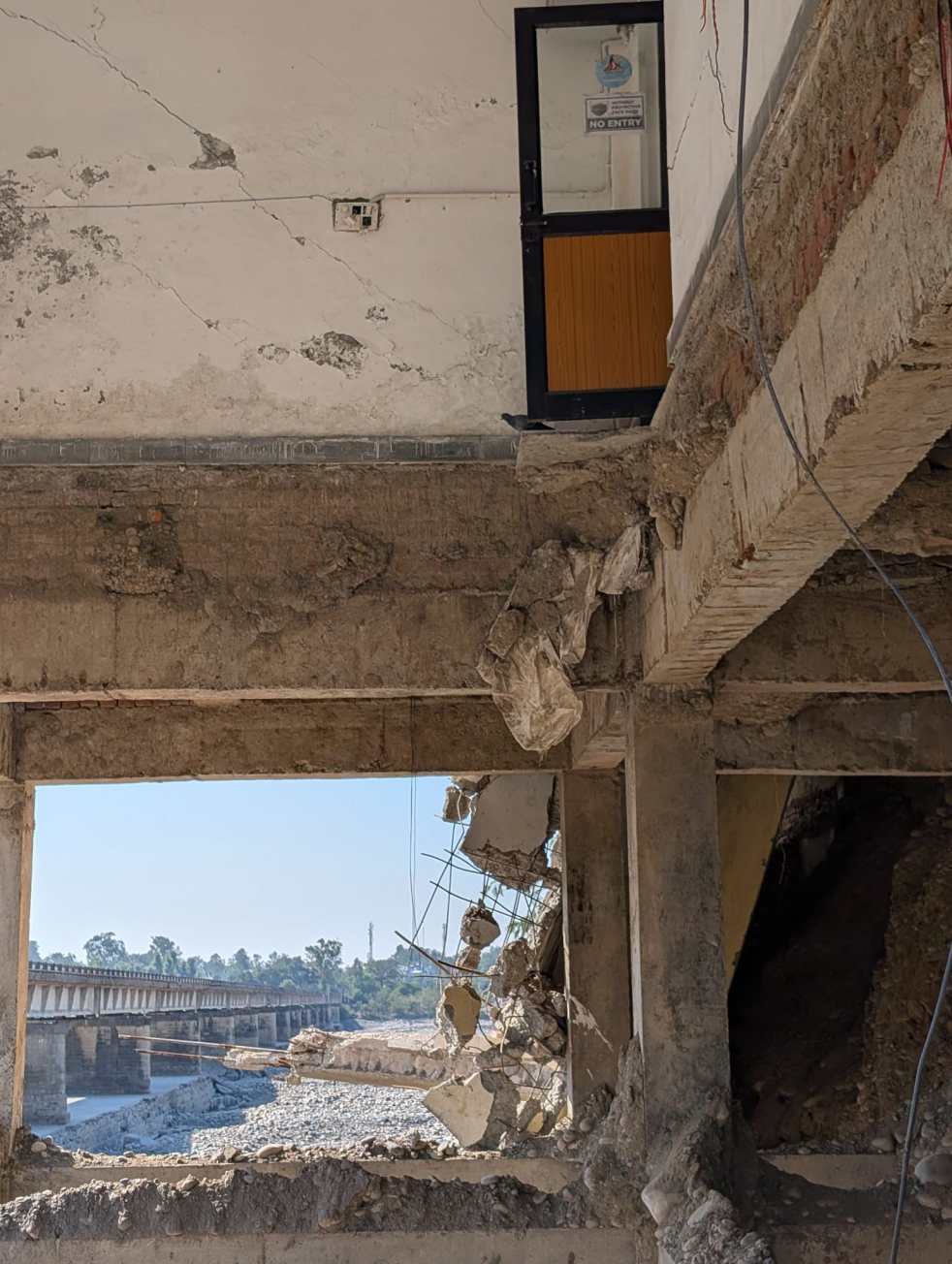
On the 27th of August 2025, after facing several days of floods from a swollen, angry Ravi River, three gates of Madhopur Barrage at Pathankot crashed into the brown, swirling waters. Around this time, a team of engineers and helpers were on the barrage, making dangerous but futile attempts at opening the jammed gates. Three people fell in the flood, two were rescued but one body was later recovered underwater, from the wrecked gates they were trying to open. Earlier that morning, 22 CRPF jawans were airlifted from a building next to the barrage, moments before it collapsed into the raging river. The flood unleashed a wave of destruction in the downstream.
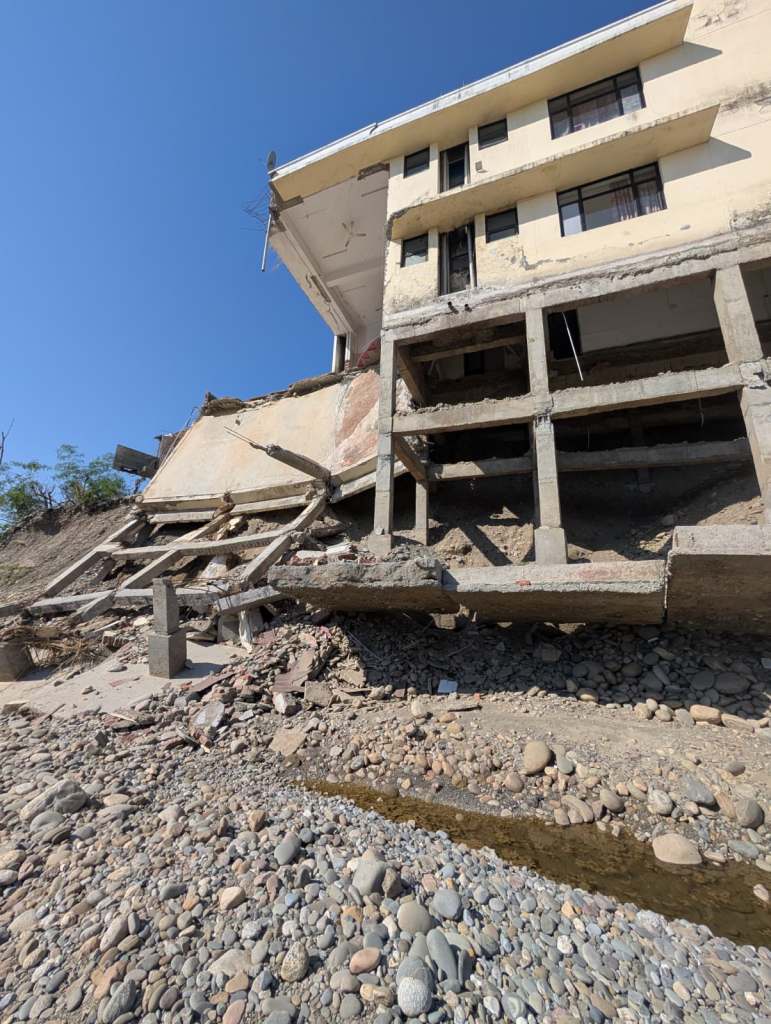
Failure of Madhopur Barrage turned a major high-rainfall episode into a tragic human-made disaster spreading over two states. Hundreds of kilometers downstream, in a remote village in Punjab a Sarpanch told us, “A wall of water came down, breaking our embankments and flooding our villages in doom.”
As we stand at the cusp of one more, the 2026 monsoon, the damaged gates at Madhopur are not operational fully yet. No report about the role of dams in Punjab floods or the steps to avoid future disasters has been made public by the government. It is pertinent to understand what exactly happened at Madhopur barrage, why it happened, where did the accountability lie and what can be done about it.
We traveled along the Ravi in October 2025 from its origin in Himachal Pradesh to the plains in Punjab where it leaves India to enter Pakistan. We talked with people at the close cascade of Madhopur Barrage, Shahpur Kandi Barrage and Ranjit Sagar Dam; people who saw the tragedy unfold before their eyes. We tried to talk with the officials but were not successful. What follows is a story based on what people saw, what little data there is in the open domain, what all that means to infrastructure, rivers and people in a changing climate and a new monsoon.
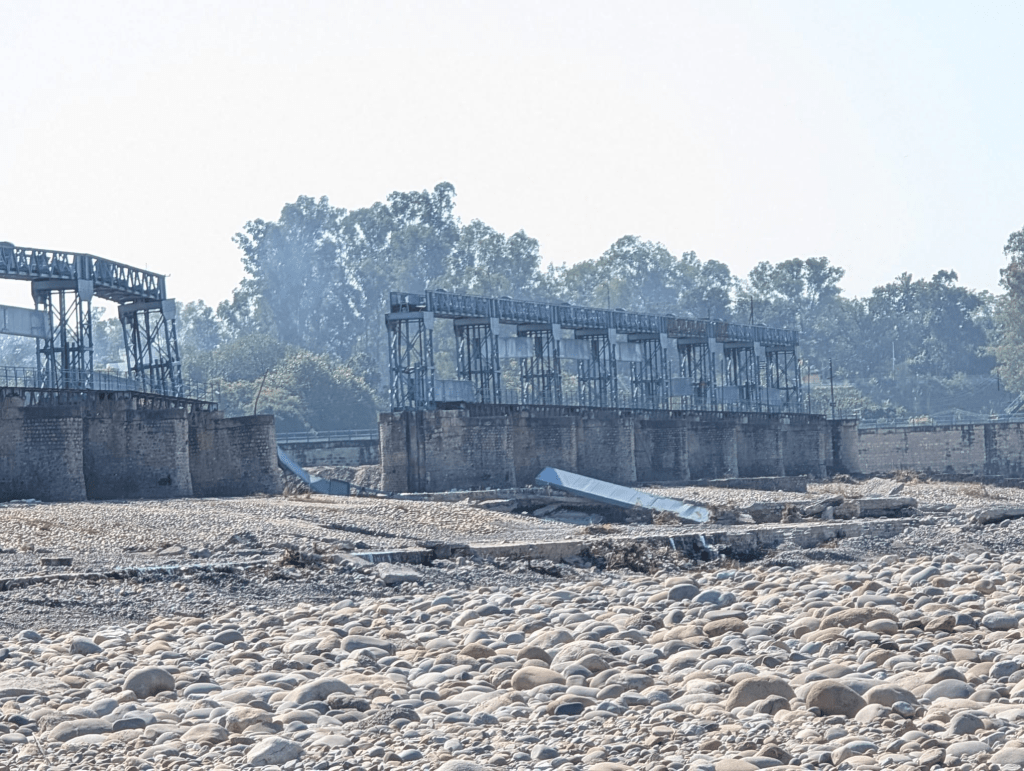
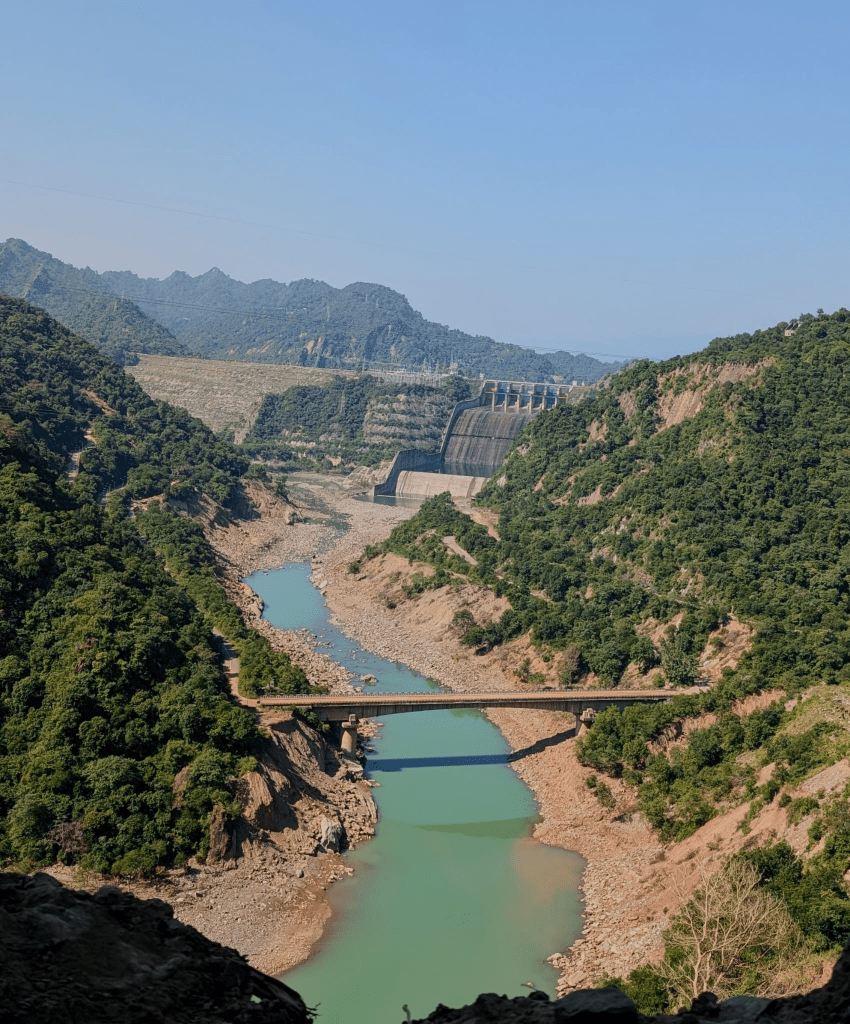
Madhopur Barrage is the terminal Barrage across Ravi in Pathankot, Punjab with 28 gates and 26 under sluices [2](a total of 54 gates). There are no structures downstream across the Ravi till the border. As one travels upstream from Madhopur, there is a bumper-to-bumper series of dams, terminating in the massive multipurpose Ranjit Sagar Dam (RSD), straddling the borders of Punjab and J&K. RSD is one of the tallest earth fill dams in the country with an installed capacity of 600 MW and a gross storage of 3.2 Billion Cubic Meters. Downstream RSD is the newly constructed 55.5 mts tall Shahpur Kandi Dam with a live storage capacity of 9.74 Million cubic meters[3]. Madhopur Barrage, a massive wall across the Ravi of about a kilometer width, is the oldest and the last in the sequence, has no storage component and can only divert water into its multiple canal systems or release it into the river.
Due to the massive storage of RSD and proximity of these projects, what happens at Madhopur is majorly impacted by the two projects upstream. All three are owned, managed and operated by the Government of Punjab, through the Department of Water Resources and the Punjab State Power Corporation Ltd (PSPCL).
Indus Waters Treaty and Ravi
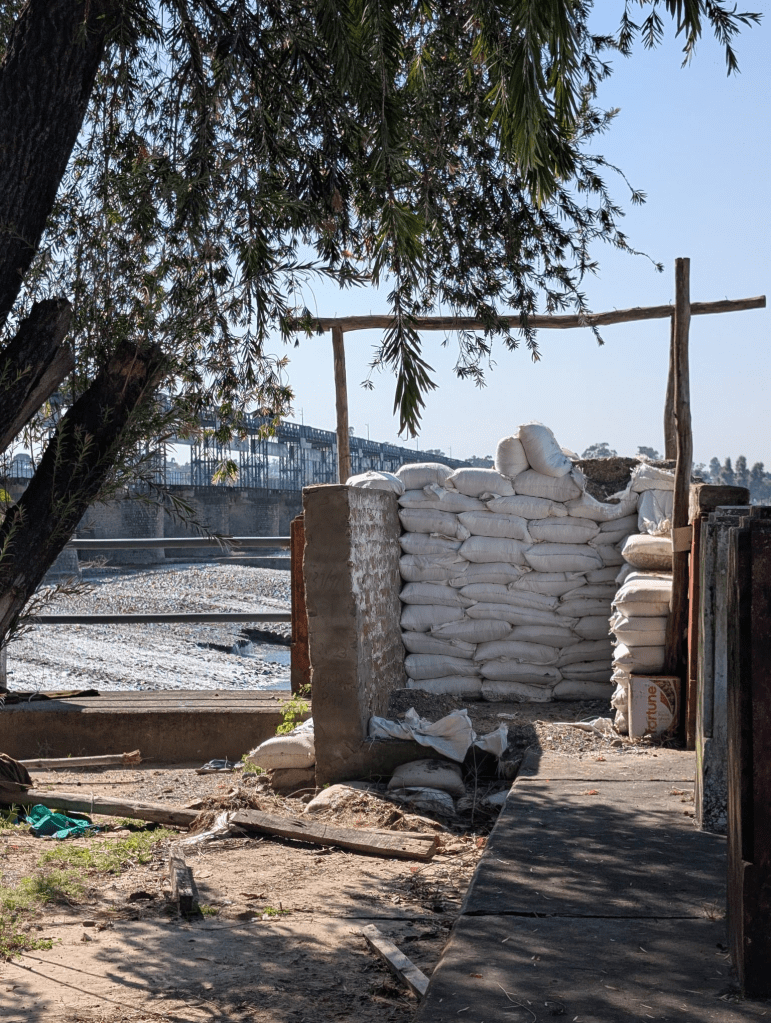
According to the Indus Waters Treaty, India is free to fully utilize waters of Ravi. The Shahpur Kandi dam has been added recently with an objective of utilizing the flows entirely within the border. Impacts of decisions around the treaty can be seen not only through the new infrastructure, but also on how the infrastructure is operated. Several people we met said that the gates of Madhopur Barrage were “sealed by sacks” so that “no drop of water flows downstream” following the abeyance of the Treaty. This has been reported.[4]
Closed gates amidst increasing water levels and floods
While media reports suggest that some gates of the barrage were opened following a sudden release of water from the RSD, people we met said that most gates of the barrage could not be opened. In fact, they maintain that they have seen the gates closed almost all the time. Following is the People’s testimony from Madhopur. (Names have been withheld for privacy, we have the recordings)
“We could see the river flooding dangerously from 24th August. It was forming a breach on the right bank and was threatening to break the barrage. We could clearly see the need to open the gates. But no gates were opened.”
“We slept on the road with the rescued animals from our Gaushala for three nights. We could see water rising and a disaster waiting to happen.”
“None of the gates of the barrage opened. Before the gates broke, the river breached from the right bank. All this area was under water. Even then, we did not see the gates open. I do not remember this barrage opening its gates.”
“The gates of the barrage are heavy, sealed with sacks and rusted. You rotate the shaft twenty times and the gate rises by just an inch. They just talked about automating the gates for years.”
“They seal the gates of Madhopur Barrage with sandbags because they don’t want water to flow to the downstream.”
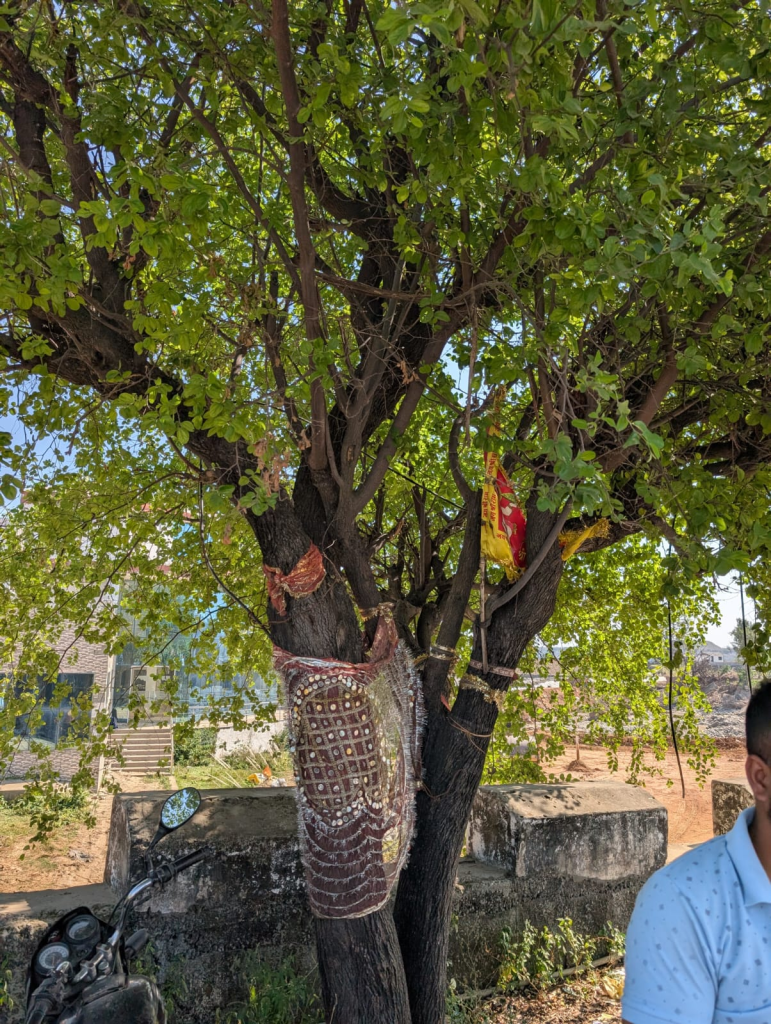
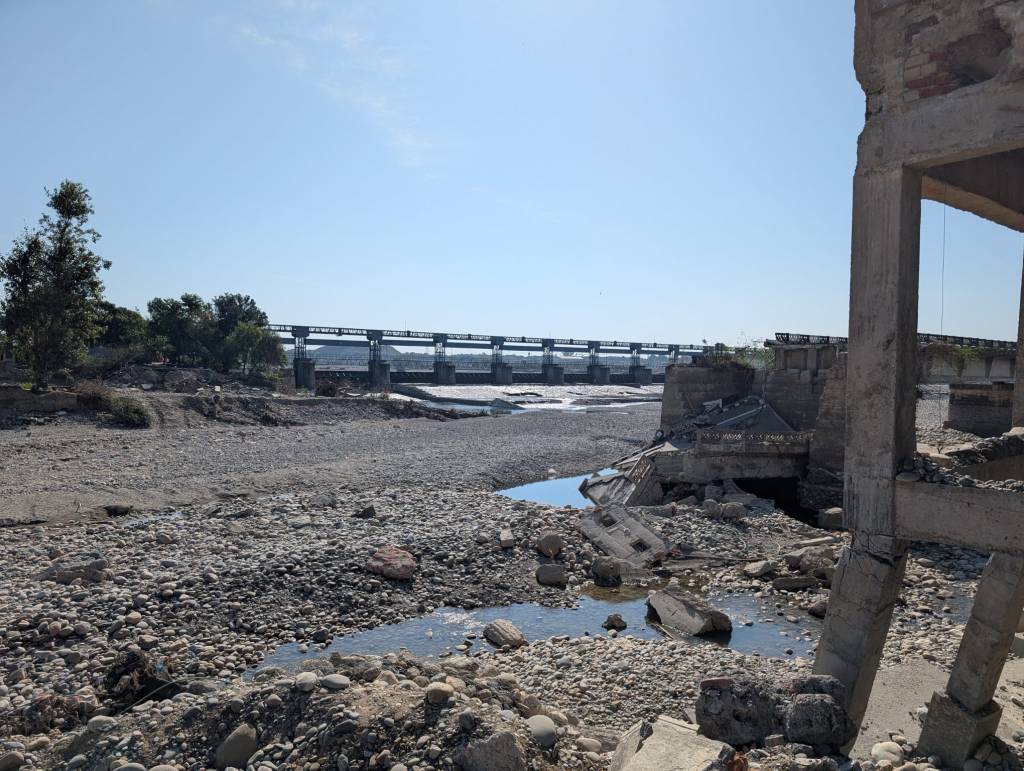
The flood wave from Madhopur travelled downstream the river destroying the Dhussi bunds or embankments in its wake. While a regulated flood also would have caused damage, the sudden flood wave possibly scoured the embankment bottom leading to failure. Of the 45 embankment failures in Punjab floods, 42 were on the Ravi. The flooded Ravi met the already flooded Ujh River at Makora Pattan, causing magnified harm to Gurdaspur, Amritsar and Tarn Taran District.
A senior National Dam Safety Authority official asks plainly: “The barrage has hardly seen any maintenance over the years. When was the last time a major maintenance activity was carried out?” A senior BBMB official called it “an example of poor upkeep.” Virender Prasad Sharma, a CWC-empanelled dam expert, said: “The gates are not maintained regularly, and probably the Madhopur collapse was due to the lack of maintenance as its base structure is centuries old.”[5] But that is only one part of the puzzle.
Testimony of people at Shahpur Kandi Dam
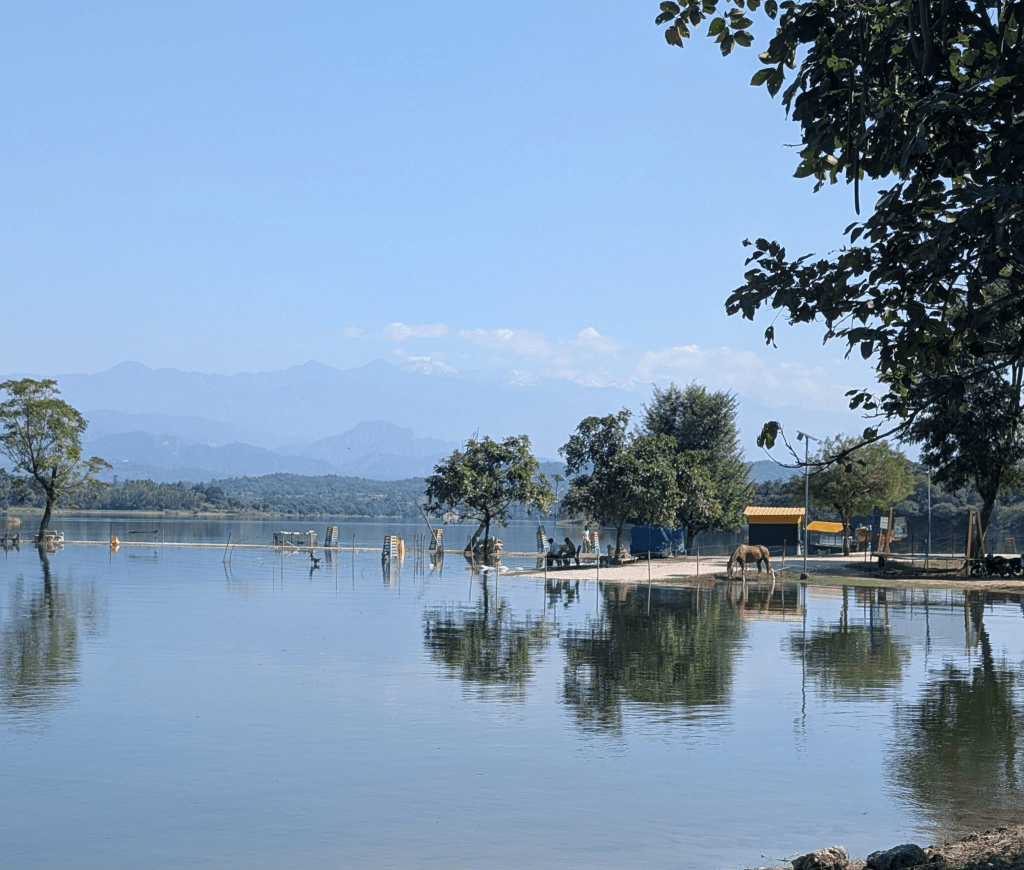
Shahpur Kandi Dam, 8 kilometers upstream of Madhopur, was the second link in the dam cascade and the people around it maintain that the reservoir was never emptied. At the office of under construction Shahpur Kandi Dam, we met a group sitting in protest for several days, demanding fair compensation for their homes and fields submerged by the dam. Some of their testimonies:
“If Shahpur Kandi Dam was empty, it would have given at least small respite to the people downstream. But the reservoir was kept full. It is still full. They flooded our homes and did not help the flood situation either.”
“Engineers here cannot lift the gates of projects even an inch unless they have orders from the top. The suspended Engineer at Madhopur was also about to drown, but he tried to save the worker. They should not be suspended; they risked their lives for decisions which came from the top.”
“The person who died was a charge man. He was not even related to the whole thing. He should not have died.”
“The engineers and workers who climbed up the barrage put their lives at risk. This was because of orders from high up. They should be held accountable too.”
“Even we knew there was flood in Himachal Pradesh. All that water had to come to RSD and then Madhopur Barrage. There is no other place for it to go. Why were the gates not opened before? This is done because the government does not want a single drop to flow downstream. But who will face the consequences of such actions? There are Indians living in the downstream of the barrage, not foreigners.”
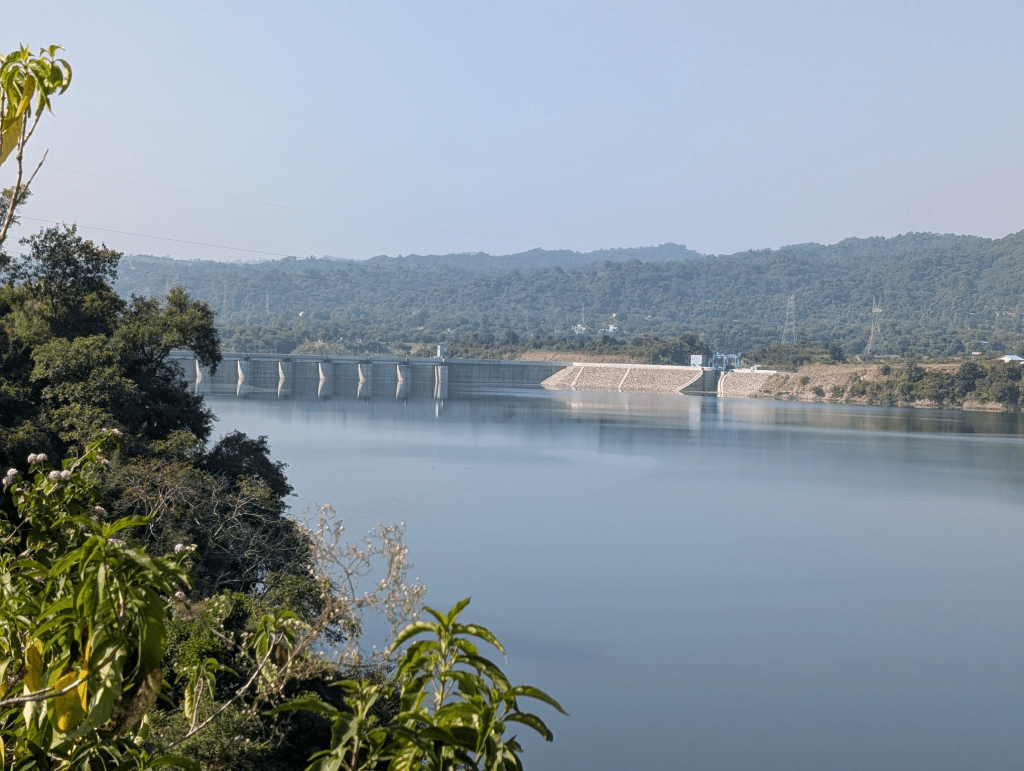
“The officials at RSD were obeying orders not to release water downstream. They held the water back as long as they could. When it was released, the Shahpur Kandi Reservoir was full. I went there with my camera but I was not allowed to shoot.”
What happened at Ranjit Sagar Dam
Ranjit Sagar Dam wall is just 12.5 kilometers from Shahpur Kandi Dam Wall.
The massive Ranjit Sagar Dam played a key role in opening its spillways and releasing immense amount of water on the 26th August evening. The inflow and outflow data of Ranjit Sagar Dam is not in open domain. Nor is its Rule Curve available. All this is important to understand how the reservoir was managed for flood control. We have pieced together the scenario based on media statements, some official information and IMD rainfall data. It is clear that Ranjit Sagar did not release water downstream even when Chamba district upstream was drowning in floods and it then released water in a gush when storage exceeded the FRL (Full Reservoir Level) of the dam.
RSD released 9,000 cusecs on August 24, 24,000 on August 25, 215,000 on August 26, 173,000 by August 27, as the reservoir crossed its Full Reservoir Level of 527.9 meters. [6]
When faced with a situation where the dam FRL was exceeded, the dam released a huge wave of water in the downstream at 2.15 lakh cusecs which raced down from Ranjit Sagar, met the already full Shahpur Kandi Dam and reached the flooded Ravi at Madhopur, broke its gates and raged downstream, wreaking havoc in its wake. From August 27, for five consecutive days, outflow from RSD exceeded its inflow, which by the Central Water Commission’s own definition means the dam was generating floods, not moderating them. [7]
One can understand the frustration of Lal Singh Chaudhary when he said, on the 26th August,
“The water is right in front of us. This is the result of lack of coordination between Chamera I (NHPC), Ranjit Sagar (Punjab Water Resources Dept) and Madhopur Barrage. Blast the gates, but open them before it’s too late.” [8]
Table: Ranjit Sagar Inflows, Outflows and IMD Warnings between August 1- 31 2025
| Date (2025) | Reservoir Level | Outflow | Rainfall and inflows | Impact |
| Aug 1–18 | 519.54 m | Low power generation (~40% of power capacity) | Sustained rains; IMD Orange Alert for very heavy rains in Chamba on 11, 12,13,14 August[9] | No flood cushion built |
| Aug 19–23 | Above 523.65 m | Moderate generation (avg 11.34 MU/day) | IMD warns of heavy rain Aug 22–28 in Chamba[10] | Reservoir level rising, gates not opened |
| Aug 24 | Approaching FRL | 9,000 cusecs | Chamba infrastructure already collapsing | Outflow kept low despite saturated catchment, Reservoir level close to FRL |
| Aug 25 | 527.15 m | 24,000 cusecs | IMD Red Alert for Chamba[11] | outflow still low |
| Aug 26 | 528.04 m (breaches FRL[12]) | 2.15 Lakh cusecs water released at 7 pm[13] | Inflow peaks at 2.62 lakh cusecs[14] | Outflow jumps manyfold in 24 hours |
| Aug 27 | 527.13 m | 173,000 Cusecs | Entire Ravi basin flooding | Spillway gates fully opened; Madhopur’s gates shear off |
| Aug 27–Sept 1 | Receding | Outflow > inflow | Downstream Punjab submerged | Five straight days of dam-induced flooding |
In the End Notes, find IMD, SDMA and NDMA alerts for Chamba during this time. All the water incoming from Chamba had to reach Ranjit Sagar. [i]
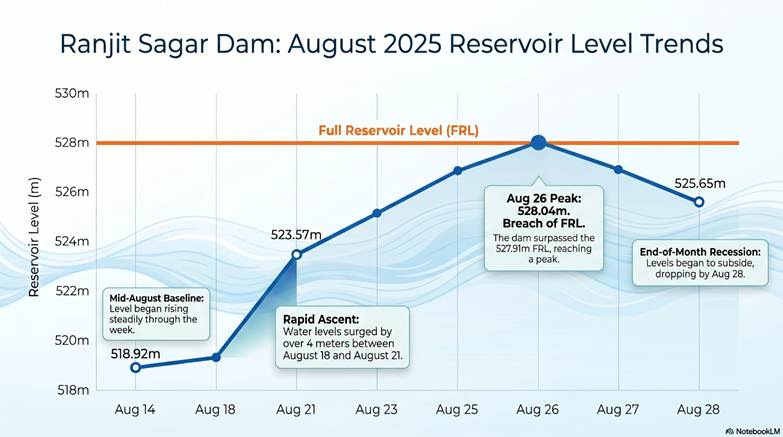
Graphic made with the help of Notebook LLM[15]
The Accountability Vacuum
In a situation where a dam of National Importance played a major role in abetting floods downstream, Punjab’s Water Resources Minister Barender Goyal blamed the IMD for faulty forecast.[16] While some of the IMD Forecasts may have been faulty, the dam operators had the actual rainfall data with them, which clearly showed a massive excess. On the 17th August, the Minister himself claims that the RSD catchment received a whopping 185 mm of rainfall[17], why were the spillways not opened then? Water levels in Ranjit Sagar rose by a staggering 25 feet between August 15 to August 25. Rainfall in Chamba, as reported in IMD’s daily district-wise data, was 80.2% above normal during 15-18 Aug (4 days ending at 830 am on Aug 18 2025). This too could have led to decision to release more water from RSD as all that water and heavy silt load would reach RSD fast. But no action was taken.
RSD not releasing water when the dam operators knew about the massive rainfall in its catchment and then suddenly releasing a flood wave of water is an important reason behind the flood damage at Madhopur and in Punjab.
But there is no report about accountability measures around the functioning of RSD. Not even any investigation as to how the floods were managed in the Ravi Basin starting from catchment in the Himachal Pradesh.
Present Situation at Madhopur
At Madhopur too, no accountability measures have been reported apart from suspending the three engineers. New gates installed at the Barrage in place of the damaged gates are reportedly not fully operational even now, as we stand at the cusp of a new monsoon. Water is still flowing downstream, which was so desperately meant to be stopped.
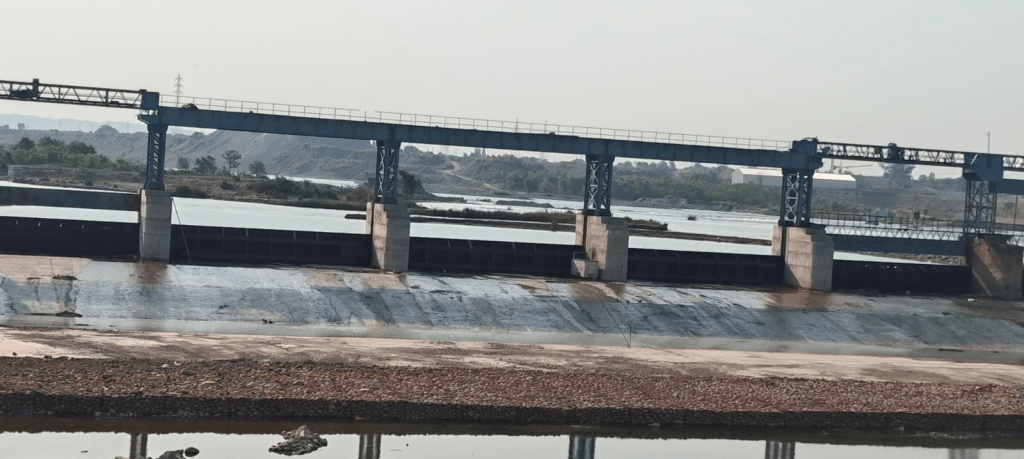
Punjab Minister tried to blame a private consultancy that had certified Madhopur gates as robust: a claim the agency said was never within its scope of work.[18] The Department also blamed the flooded tributaries and unprecedented rainfall for the flood damage, none of which was sudden, but was gradually intensifying in front of everyone.
In other countries, such governance failures have been met with legal consequences. Recently, in April 2026, a federal judge in the United States upheld downstream homeowners’ claim that upstream dam release from Addicks and Barker Reservoir constituted a “taking” of their private property by the government and deserves compensation.[19] At Wivenhoe Dam in Queensland, Australia, engineers held water back through days of upstream saturation before forcing a catastrophic release that flooded Brisbane in January 2011. A class action suit was filed by the downstream community, and the Australian court accepted the release as negligence. Similar was the court’s finding about an upstream hydropower release in Ireland.[20] In Punjab, the officials who managed RSD & Shahpur Kandi Dam through weeks of rising water and mounting alerts reportedly face no accountability at all. Nor do their higher ups, who may have influenced the decisions.
The disaster that happened at Madhopur was a synchronization indeed, but not of natural elements, as the Punjab Government likes us to believe. It was a synchronization of profound governance failures with an extreme weather event, which have become so painfully common across and around the Indian Himalayas.
It is a synchronization of faulty and non-transparent dam management, aging infrastructure, lack of adequate flood forecasting or even monitoring by the premier Central Water Commission or the dam operators, non-reliable rain forecasts colliding with extreme rainfall, heavy silt loads, crumbling mountains and destabilized slopes.
The incident also highlights the shortsightedness and inherent danger of declarations like “not a drop will flow downstream”. Downstream the terminal dams of the Indus basin is kilometers and kilometers of Indian territory. Our failure in respecting the dynamic and fierce nature of Himalayan rivers which do not adhere to man-made borders or man-made treaties harms Indians living along these rivers first.
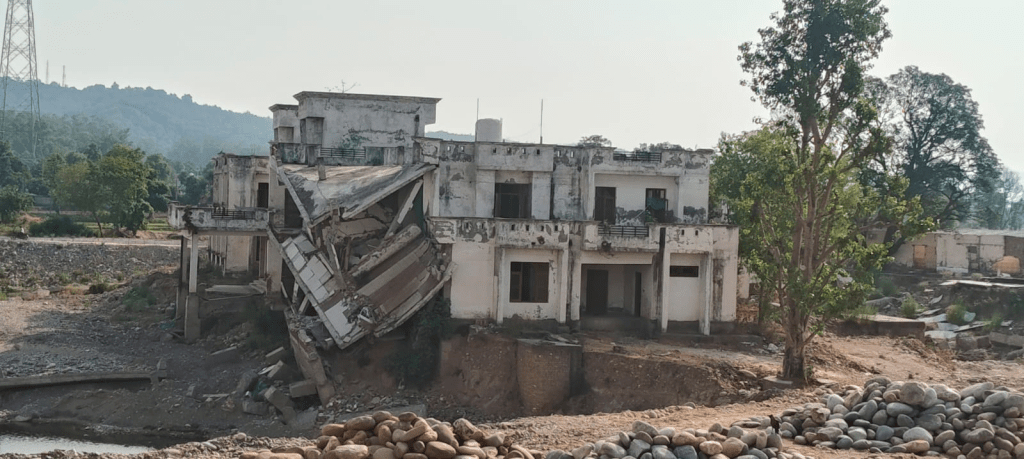
A 17th Century Bund near a Banyan tree
In a strange parallel, Madhopur’s history itself may hold cues on managing this site, where a massive, silt-laden river from the Himalayas meets the plains.
While the current Madhopur barrage was built in 1959, diversions have been happening from here for centuries. In the 17th Century, Shah Jahan’s engineers built the famed Shah Nehr canal from here to carry water over 150 kilometers to Lahore, irrigating the Shalimar Gardens. In the early 19th century, it was refurbished by Maharaja Ranjit Singh, and the waters of Ravi reached the shimmering lake (Sarovar) of the Golden Temple[21]. But when the British took over this canal to convert it into the Upper Bari Doab Canal, they were surprised to find no permanent masonry bund near Madhopur. In its place, the Mughals had built temporary low bunds of wood and boulders and “maintained them amidst great engineering difficulty.”[22] Same was done by the Sikh rulers to avoid, “throwing the flood down the canal and doing a great injury to the country.[23]
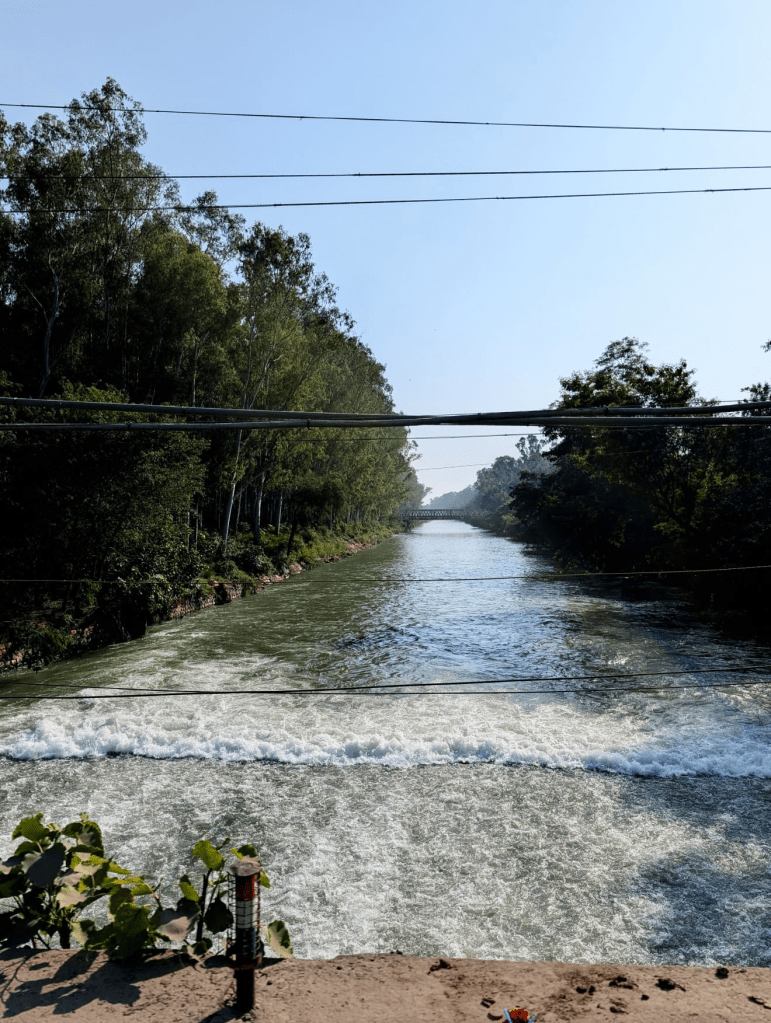
Centuries later, as we build cascades of large dams all over the Himalayas, the foothills and the plains, are we maintaining them “amidst difficulty”? Are we operating them “to avoid great injury to the country”?
Are we ensuring transparent and accountability around their governance so that lakhs of Indians downstream can sleep peacefully this monsoon?
Parineeta Dandekar (parineeta.dandekar@gmail.com); with inputs from Himanshu Thakkar
End Notes
[1] https://www.facebook.com/reel/2250749958722542
[2] 28 gates and 26 under sluices = a total of 54 gates. WRIS, India
[3] https://pspcl.in/Otherlinks/shahpurkandi-dam-project.aspx
[4] https://timesofindia.indiatimes.com/city/chandigarh/punjab-govt-suspends-officials-after-madhopur-headworks-gates-collapse/articleshow/124013678.cms, https://www.tribuneindia.com/news/punjab/3-suspended-for-aug-27-floodgate-collapse/, https://www.tribuneindia.com/news/punjab/ravi-floods-punjab-government-suspends-3-officers-at-madhopur-headworks-for-floodgate-failure-on-august-26-27-night/
[5] https://theprint.in/india/negligence-meets-nature-why-punjabs-madhopur-barrage-gates-collapsed-in-the-face-of-a-raging-ravi/2739056/
[6] https://environmentclearance.nic.in/writereaddata/Online/TOR/0_0_25_Feb_2015_115403247CYDQ2ExecutiveSummary.pdf
[7] Refer to SANDRP Report on Madhopur Barrage: https://sandrp.in/2025/08/29/aug-2025-ravi-flood-damages-madhopur-barrage-gates-in-punjab/
[8] https://www.facebook.com/reel/2250749958722542
[9] https://mausam.imd.gov.in/Forecast/mcmarq/mcmarq_data/Press_release_10.08.2025%20.pdf
[10] https://internal.imd.gov.in/press_release/20250824_pr_4243.pdf
[11] https://mausam.imd.gov.in/Forecast/mcmarq/mcmarq_data/Press_release_25.08.2025.pdf
[12] “2.15 lakh cusecs of water was released in an emergency from RSD at 7pm on Aug 26 to ensure dam safety, as inflows at the dam had peaked at 2,62,890 cusecs an hour earlier, causing the reservoir to exceed the Full Reservoir Level of 1732.41 feet” From the report: https://timesofindia.indiatimes.com/city/chandigarh/ravi-recorded-a-flow-of-14-11-lakh-cusecs-with-unregulated-tributaries-making-up-85-of-it-causing-a-flood/articleshow/123816182.cms#:~:text=With%20incessant%20rainfall%20in%20its,this%20period%20was%20649.2%20mm.&text=According%20to%20senior%20dam%20officials,water%20level%20is%201731.55%20feet.
[13] https://timesofindia.indiatimes.com/city/chandigarh/ravi-recorded-a-flow-of-14-11-lakh-cusecs-with-unregulated-tributaries-making-up-85-of-it-causing-a-flood/articleshow/123816182.cms#:~:text=With%20incessant%20rainfall%20in%20its,this%20period%20was%20649.2%20mm.&text=According%20to%20senior%20dam%20officials,water%20level%20is%201731.55%20feet.
[14] https://timesofindia.indiatimes.com/city/chandigarh/ravi-recorded-a-flow-of-14-11-lakh-cusecs-with-unregulated-tributaries-making-up-85-of-it-causing-a-flood/articleshow/123816182.cms#:~:text=With%20incessant%20rainfall%20in%20its,this%20period%20was%20649.2%20mm.&text=According%20to%20senior%20dam%20officials,water%20level%20is%201731.55%20feet.
[15] Data used: Central Water Commission (CWC) Weekly Reservoir Bulletins: The official weekly snapshots of the reservoir levels and the Full Reservoir Level (FRL) of 527.91m are drawn from the following CWC reports:
- bulletin-14-08-2025-48.pdf (August 14 level: 518.92 m)
- bulletin-21-08-2025-50.pdf (August 21 level: 523.57 m)
- bulletin-28-08-2025-51.pdf (August 28 level: 525.65 m)
FRL Breach data has been taken from this report: https://timesofindia.indiatimes.com/city/chandigarh/ravi-recorded-a-flow-of-14-11-lakh-cusecs-with-unregulated-tributaries-making-up-85-of-it-causing-a-flood/articleshow/123816182.cms#:~:text=With%20incessant%20rainfall%20in%20its,this%20period%20was%20649.2%20mm.&text=According%20to%20senior%20dam%20officials,water%20level%20is%201731.55%20feet.
[16] https://timesofindia.indiatimes.com/city/chandigarh/ravi-recorded-a-flow-of-14-11-lakh-cusecs-with-unregulated-tributaries-making-up-85-of-it-causing-a-flood/articleshow/123816182.cms#:~:text=With%20incessant%20rainfall%20in%20its,this%20period%20was%20649.2%20mm.&text=According%20to%20senior%20dam%20officials,water%20level%20is%201731.55%20feet.
[17] Ibid
[18] https://indianexpress.com/article/cities/chandigarh/punjab-govt-flooding-madhopur-barrage-10253153/
[19] tonchronicle.com/news/houston-texas/environment/article/addicks-barker-downstream-decision-22222155.php
[20] https://sandrp.in/2020/07/14/ireland-supreme-court-holds-dam-operator-responsible-for-2009-floods/
[21] Maharaja Ranjit Singh, First Death Centenary Memorial, Khalsa College, 1939
[22] Tripta Wahi, SHAH NAHR: ITS HISTORY, TECHNOLOGY AND SOCIO-POLITICAL IMPLICATIONS, Indian History Congress, 2013
[23] “The Sikh managers of the canal make the Bunds so that they may be carried away by the smallest floods. If they were made stronger there would be a danger of throwing the flood down the canal and doing a great injury to the country” From Tripta Wahi, SHAH NAHR: ITS HISTORY, TECHNOLOGY AND SOCIO-POLITICAL IMPLICATIONS, Indian History Congress, 2013
Chronology of Warnings and Alerts: Chamba District (July 1 – August 25, 2025)
| Date (2025) | Issuing Agency / Source | Alert Level / Event Type | Description of Warning & Local Impact |
| July 6 | Local News / SDMA | Cloudburst / Flash Flood | Severe cloudburst strikes the Bagheigarh stream in the Churah sub-division of Chamba. Triggers localized flash floods that destroy bridges and sever road connectivity. |
| July 15 | SDMA (Himachal Pradesh) | High Vulnerability Status | SDMA officially classifies Chamba as one of the top five most severely affected districts in the state due to relentless monsoon flash floods and landslides. |
| August 10 – 14 | IMD Shimla | Orange Alert | Repeated daily bulletins place Chamba under an Orange Alert, warning of heavy to very heavy rainfall and urging local authorities to remain prepared. |
| August 15 | IMD National | Heavy Rainfall Forecast | National press release forecasts sustained heavy rainfall over Himachal Pradesh spanning August 15 to August 20, keeping the upper catchments saturated. |
| August 22 | IMD Shimla | Orange Alert (Early Warning) | Official early warning issued for an incoming wave of enhanced rainfall activity across the state from August 22–28. The bulletin explicitly flags peak intensity approaching on August 23 and 26. |
| August 24 | IMD National / SDMA | Severe Infrastructure Alert | IMD national release highlights Western Himalayas for isolated very heavy rain. SDMA reports widespread infrastructure collapse in Chamba: 26 power transformers blown, 182 water supply schemes disrupted, and 24 major roads blocked by landslides. |
| August 25 | SEOC (State Emergency Operation Centre) | Critical Infrastructure Alert | The situation in the upper catchment deteriorates rapidly. The SEOC reports that the number of closed roads in Chamba district alone has skyrocketed to 214. |
| August 25 | IMD Shimla | Red Alert | The highest level of warning issued specifically for Chamba, Kangra, and Mandi. Bulletin explicitly warns of “riverine flooding in some river catchment areas” and the high probability of “inundation/flash floods in vulnerable areas.” |
| August 25 | IMD National | Red Alert Confirmation | National summary bulletin confirms the isolated very heavy rainfall for Himachal Pradesh, echoing the severe hydrological impacts expected over the next 24 to 48 hours. |

 SANDRP