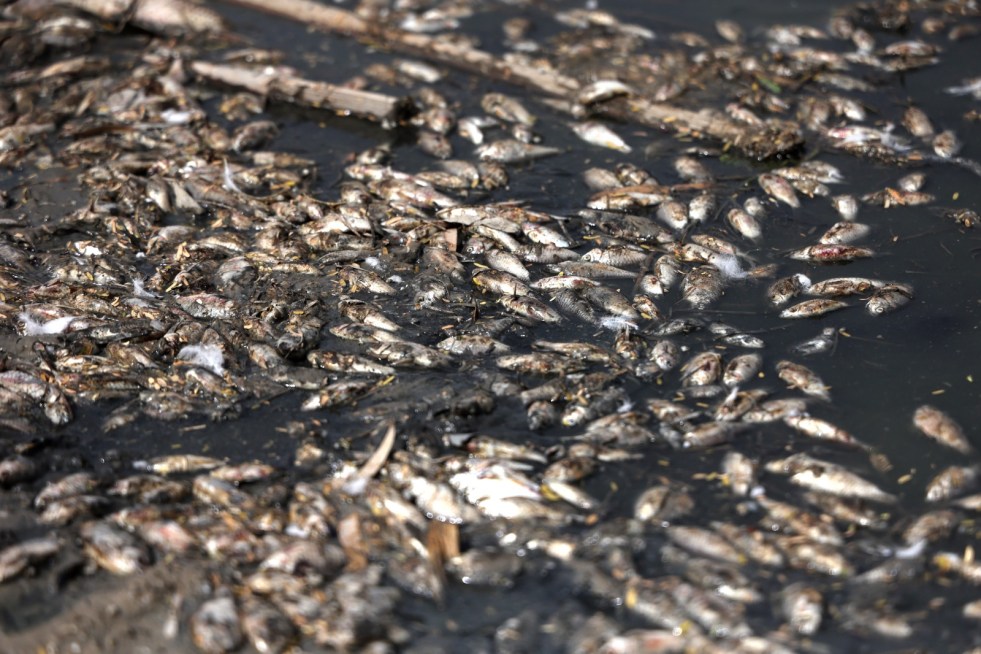
(Feature Image: Mass fish death in Sanjay lake. Source: TIE)
Several reports in past few days have attributed the mass fish death incident in Sanjay Lake of Mayur Vihar phase II in East Delhi to the ongoing intense heat spell also linking it to adverse impacts of climate change.
However, following updates and a ground visit by concerned citizens reveal the primary reason to be a sharp decline in lake’s water levels for past few weeks. This raises serious questions about the sorry state of affairs concerning management of lakes in the national capital.
About the Lake: Sanjay lake covering an area of 17 ha is Delhi’s largest ‘artificial’ water body. Historically, the lake was part of a relict channel of Yamuna formed in vast floodplain of the Yamuna and Hindon rivers. Gradually, the geomorphological changes, infrastructure developments and urbanization totally disconnected the lake from the riverine floodplain system.
During 1970s-80s, Sanjay lake was developed by Delhi Development Authority (DDA). The lake was initially fed with groundwater and over the years sewage also started entering the lake from nearby localities subjecting the water body to pollution and periodic eutrophication.
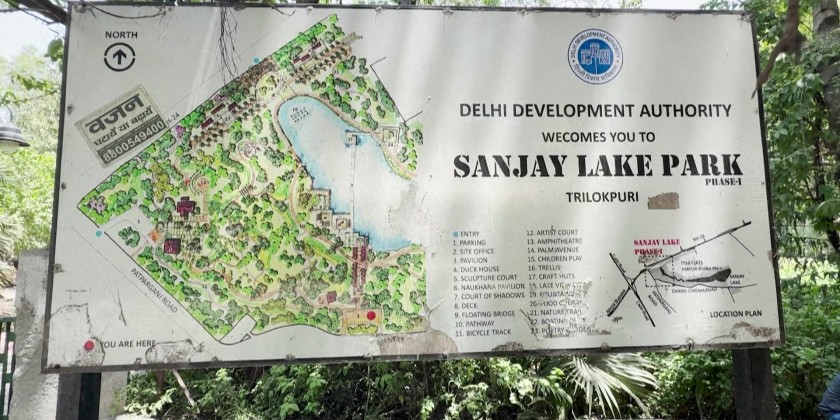
As per DDA, Sanjay Lake is a man-made waterbody with no catchment area. In an effort to address the pollution and rejuvenate the lake, the DDA, in 2019 planned to set up a Sewage Treatment Plant (STP) in lake area to channelize and treat rainwater into the lake. It also revealed that the lake was getting 80000 liters per day (KLD) treated sewage water from Kondli STP and planned to augment treated sewage supply to 10 million gallons per day (MGD).
Delhi Forest Department also plays a key role in maintaining Sanjay Lake as 170-acre green area surround the lake is a notified protected forest. While Forest Department protects the lake’s ecology, native plants, wildlife and overall environmental character, DD manages the park infrastructure, landscaping and maintenance.
In 2021, the lake became part of Delhi Government’s ambitious City of Lake project proposing to fill the lake with treated sewage and recharge groundwater. The plan included extraction of (recharged) groundwater by tubewells and supply it to nearby localities.
The lake renovation work was completed by March 2024 and around the same time the Delhi Jal Board (DJB) started supplying 10 MGD treated sewage to the lake from upgraded Kondli STP situated about 1.5 km eastward from the Sanjay Lake.
Mass Fish Death: Information about mass fish death started surfacing since May 21, 2026. Multiple images and videos show hundreds of dead fish floating all across the waterbody amid large part of the lake bed in parched conditions and others supporting shallow puddles of water. Majority of the dead fish including gambusia, tilapia and common crap were seen in stagnant and blackish water pools.
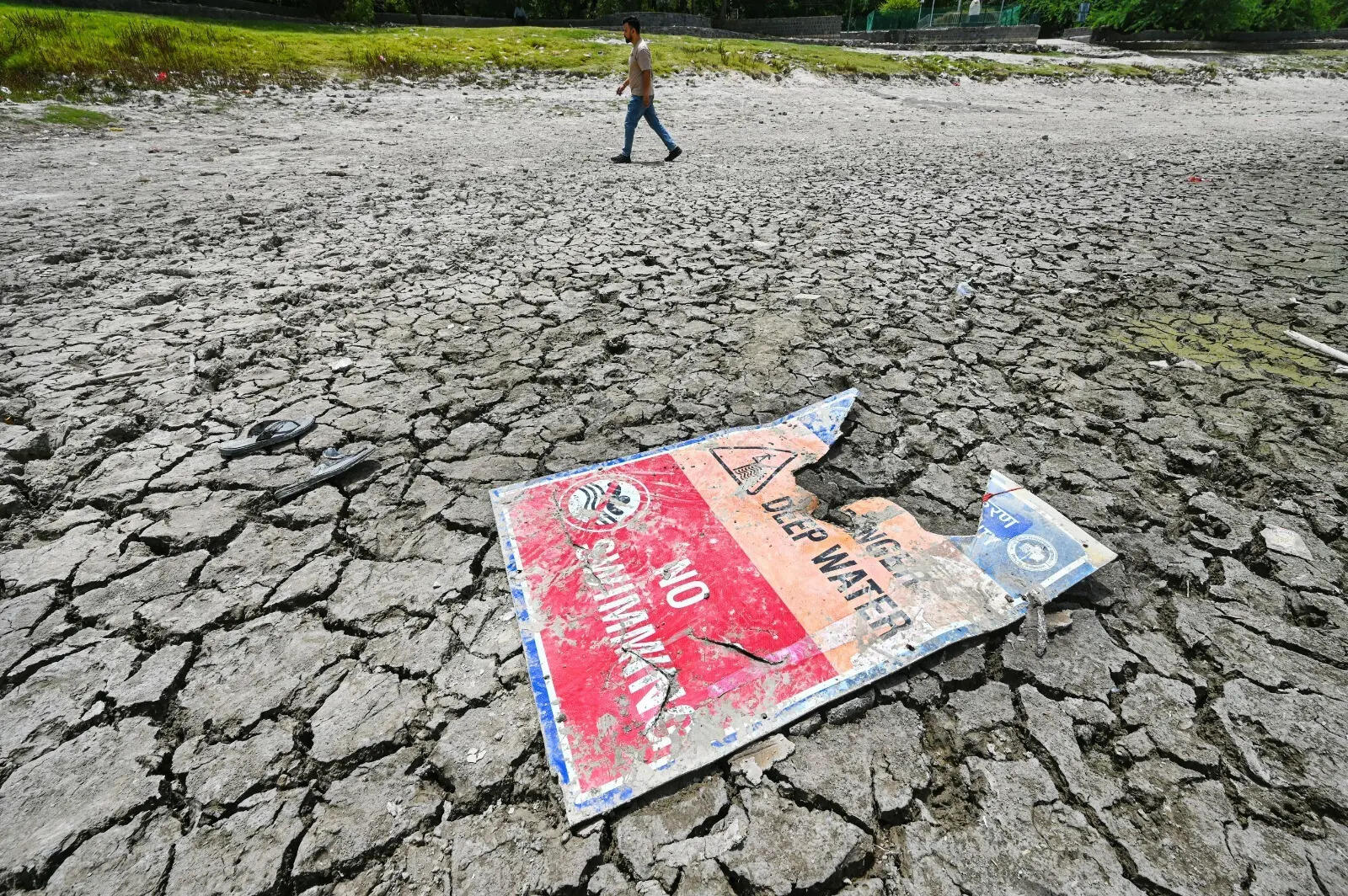
Most reports promptly linked the incident to intense heatwave spell as briefed by some unnamed officials. Only few briefly mentioned the leakage in treated water supply pipeline causing reduction in water level in the lake. However, there was no information on exact time and spot the water supply was disrupted. As the news went viral the officially hired workers who had removed around 2-3 T of dead fish by May 22.
Heatwave or Mismanagement: Visiting the lake on May 22, well-known Yamuna activist Pankaj Kumar who is part of Earth Warrior Group talked to some locals and found out that the water levels in the lake had been on the decline for about a month.
In this ground video report, Pankaj Kumar stated that heatwave could be a partial reason for fish death. “But how can fish survive without water in the lake”, said Pankaj. Questioning official negligence to find and fix the leakage for such a long time, he warned that failure to restore the supply at the earliest might pose serious threat to the water bird species dependent on the lake. “And the blame will be attributed to heatwaves”, for such bird deaths, says Pankaj sarcastically.
This video statement on the incident by Rammbaran, the Supervisor of the lake from Horticulture Department DDA has further underlined the disappointing state of affairs concerning the overall management of water bodies in Delhi. He claims that the treated water supply to the lake has suffered disruption for about past six months.
On the question of prolonged delays in restoring the supplies, he responded that DJB is responsible for maintenance of pipeline and the Park Manager had made several visits to the concerned officials and every time he was assured of fixing the problem in few days. He believed the situation to improve the moment water supply is restored. Pankaj Kumar suspects avoiding financial costs could be the main reason behind delay in repairing the pipeline.
So far neither DDA, DJB nor Forest Department has made any official public statement regarding the matter. They must explain when and how the pipeline got damaged and why it was not repaired for such a long time. Surprisingly, though the Delhi Pollution Control Committee (DPCC) is mandated to monitor the quality of groundwater, river, drains and lakes in Delhi and releases monthly analysis reports, the Sanjay Lake is still out of its monitoring radar and no water quality report of the lake is in public domain.
Moreover, Delhi Wetland Authority (DWA) constitutionally mandated to protect, conserve and sustainably manage the city’s wetlands have so far maintained a studied silene over the incident. Notably, the mass fish death has occurred just two years after the lake was renovated by the DDA and DJB had laid pipeline for treated water supply costing a huge amount.
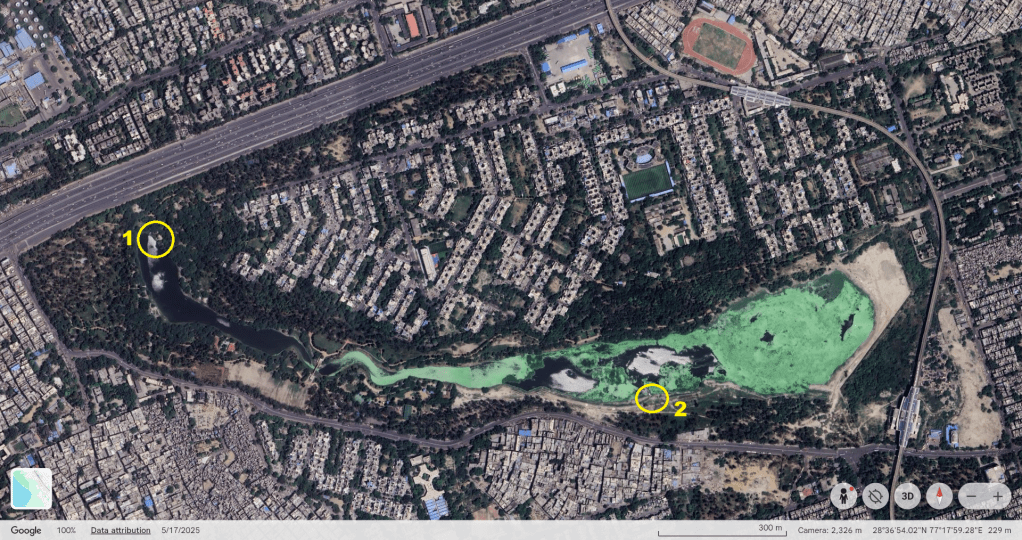
There are also question marks on the quality of treated water supply from the 45 MLD Kondli STP which is jointly managed by DJB and a private company. Last year around same time, the lake surface was completely covered by algae bloom caused by eutrophication as seen in May 17, 2025 Google Earth imagery. In Dec. 2024 the STP was found flouting the norms and the DJB was fined for the same by the National Green Tribunal (NGT).
Further, DPCC’s latest April 2026 analysis report shows Kondli STP meeting the prescribed norms. However, Pankaj Kumar who keeps a track on functioning of the STPs, doubts the Kondli STP operator manipulating the performance result under online effluents monitoring system. Demanding accountability and suspension of responsible officials, Pankaj has filed complaint letter to higher officials of DDA, DJB, DPCC.
Meanwhile, this updated report sharing restoration of water supply by May 24, has underlined the sharp contradictions and a blame game between the DJB and DDA. DJB said the high-density polyethylene pipeline was damaged due to waste burning near the Kondli STP and alleged that DDA failed to use alternative measures such as tankers or borewells to maintain the lake’s water level during repairs.
In response, DDA said it had carried out desilting work and created stormwater channels and inlet points to bring rainwater into the lake. While DJB claimed the repair was done swiftly, officials involved on the ground said the water supply disruption had actually continued for nearly six months.
In addition to negligent approach between DJB and DDA, the differing claims only expose the prevailing confusion over the severity of the crisis and responsibility for maintaining the lake. This also suggests that the polyethylene pipeline by DJB may have been laid in a hurried manner without adequately assessing its quality or accounting for potential risks and challenges.
In fact, the incident has happened despite crores of rupees having already been spent on the restoration work of Sanjay Lake by various agencies under different schemes. Sadly, a detailed break-up of the expenditure is not publicly available. Similarly, there is no official information on the quantity, timing, or species of fish released into the lake.
This mass fish death episode amply demonstrates the level of inefficiency prevailing among the multiple agencies managing the lakes in Delhi. It also exposes the deep institutional failures affecting the water governance system in the national capital. Blaming the heat spell will only act as a cover up, allowing the real culprits go scot-free. The incident indeed warrants a thorough independent probe and strict action against all involved. Is that too much to ask?
SANDRP


