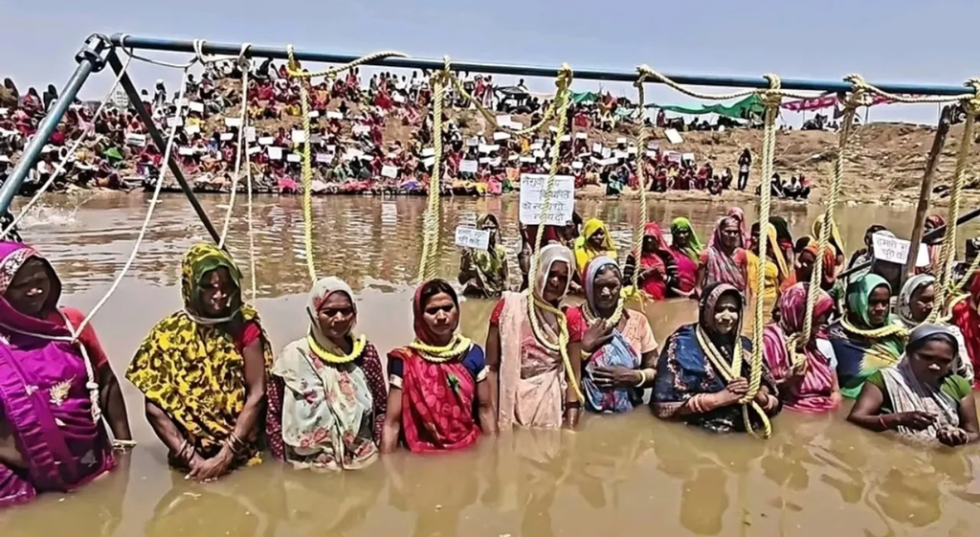
(Featue Image: Protesters express anger by staging symbolic hangings during the protest during April 5 to 16, 2026. Photo: Amit Bhatnagar/DTE)
Fresh protests over the past month by tribal communities affected by the Ken-Betwa River Linking Project have again raised serious concerns about its environmental impact and social costs. The project is going ahead despite questions over its hydrological assessment and environmental, forest and wildlife clearances. Moreover, the govt has not even explored the available cost effective and better alternatives.
The project will submerge large parts of the Panna Tiger Reserve and damage forests and wildlife habitats. Thousands of trees have already been cut. At the same time, villagers in Dodhan, Imalha and nearby areas continue to protest over compensation disputes, rehabilitation problems, alleged corruption and forced demolitions.
The issue is no longer only about linking two rivers. It is also about choosing between a large centralized project and local community-based water conservation systems suited to Bundelkhand’s ecology. Bundelkhand already has a long tradition of local water conservation practices that can provide more sustainable solutions with lower environmental and social costs.
In a time of climate uncertainty, such large projects with irreversible environmental impacts need much greater scrutiny. Before moving ahead, the government must conduct an independent ecological and social reassessment of the project with proper participation of local communities. Otherwise, the Ken-Betwa project risks becoming not a model of development but a costly symbol of ecological destruction and social injustice.
Ken-Betwa Project: Why Govt Needs to Reassess Its Plans The residents demand that newer water and environmental feasibility tests be done to evaluate the project before proceeding further or cancelling the entire project.
If the agitating local people, in light of a fast-changing climate, demand an ecological survey be redone with presentation from the community, it’s only a reasonable ask. The government needs to get a reassessment done, especially since the Supreme Court committee also warns of extensive damage to the environment and water availability for the regions.
The government needs to have a law-bound, transparent system for approval and compensation, without which the public will lose faith in the project and also in the government.
In case the ecological and social costs run too high, the government needs to keep the same goal of bringing irrigation to Bundelkhand but change the method of it. The government needs to look at decentralised community-driven models of water rejuvenation and conservation, which are based in constructions of a dense network of smaller ponds and reservoirs situated in the villages and forest areas. These structures are based on the indigenous wisdom of the land and can act as a cost-efficient way to safeguard water, and also help activate the subterranean hydrological channels. This approach can help increase the level of water in the rivers and also improve rainwater harvesting in the region.
Hence, in times like these, the government should hold another round of all stakeholder discussions, backed by an eco-social assessment for the project, and then only think of linking the rivers of Ken and Betwa, because if the project fails, not only will it be a fiscal disaster, but also destroy the region’s ecosystem, creating eco-refugees and dead tigers.
SANDRP: An Interview on Inter Linking of Rivers in general with focus on Ken Betwa Riverlink Project. Some excerpts of the interview are also published here. -Himanshu Thakkar, of SANDRP has now argued in a comprehensive interview that the project rests on flawed hydrology, has been cleared through a compromised regulatory process, will devastate one of India’s most ecologically sensitive river corridors, and will ultimately harm the very communities it claims to serve.
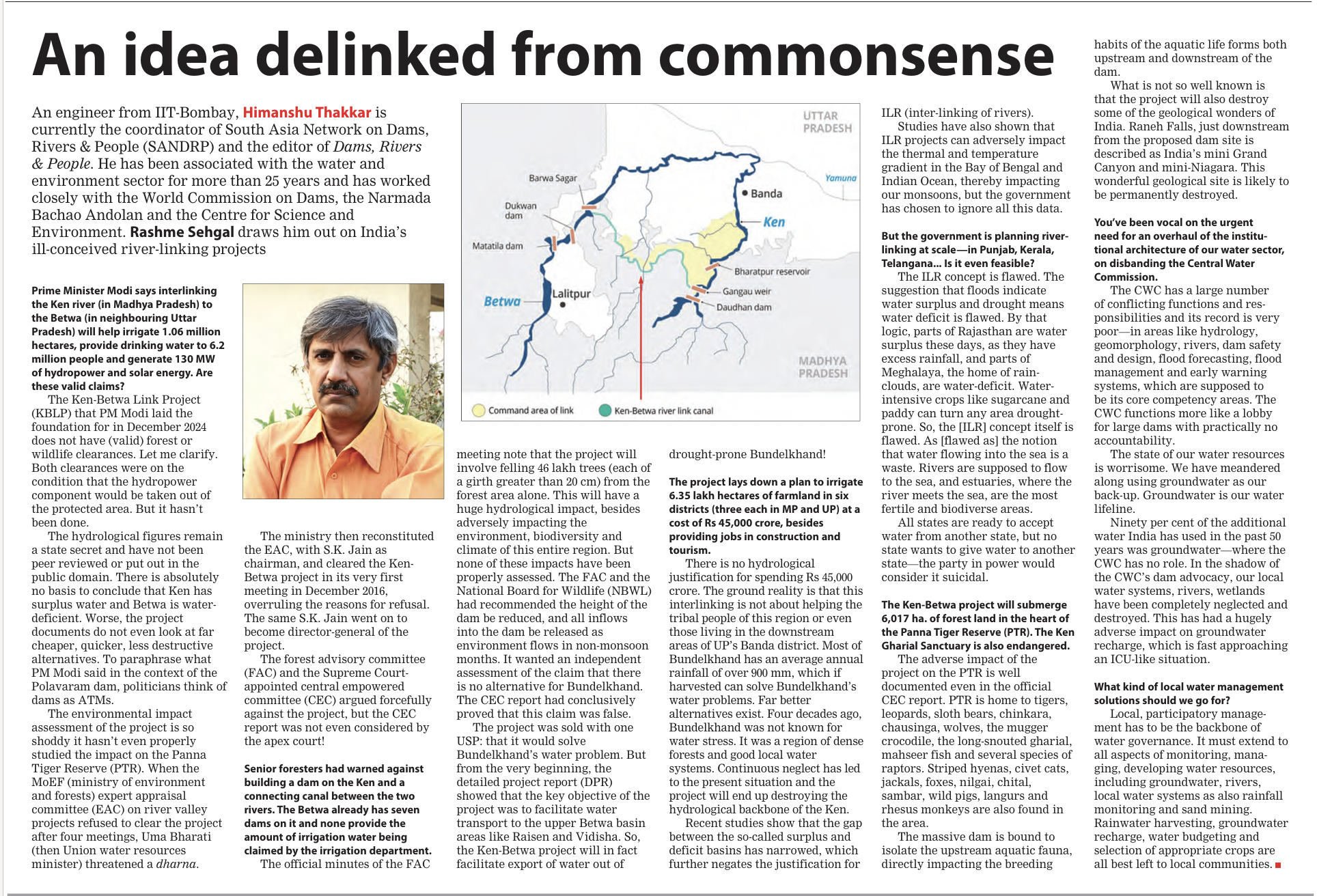
Behind all of this lies what Thakkar sees as a deeper institutional failure. The Central Water Commission, India’s apex water body, has functioned more as a lobby for large dams than as an independent technical institution, systematically crowding out investment in local water systems and groundwater recharge.
India’s groundwater — which accounts for over 90 per cent of all additional water the country has used in the past four and a half decades — is fast approaching crisis, a trajectory the CWC has done nothing to arrest. Thakkar calls for independent agencies to monitor rivers, forecast floods, and regulate dam safety, insulated from the conflicts of interest that have historically allowed projects like Ken-Betwa to proceed.
“In the era of climate change,” he concludes, “high-impact projects like large dams are going to be greater liabilities as they destroy society’s remaining capacity to adapt. Will better sense prevail? It’s still not too late.”
Ken-Betwa’s first flood may arrive before the dam fills Protests by tribal farmers over compensation and rehabilitation have once again raised questions about the human cost of the Ken-Betwa river-linking project, as well as its ecological impact, including on the Panna Tiger Reserve, a large part of which will be submerged.
Besides the human cost, the project has been critiqued by experts for its projected environmental impact, including the submergence of the Panna Tiger Reserve and the large-scale felling of trees. According to the government’s own estimates, around 17,101 trees were identified for felling to facilitate the construction of the dam. Of these, 12,404 trees have been felled within the reserve.
Himanshu Thakkar, coordinator of SANDRP, said: “The process of environmental and forest clearances was badly manipulated. At every step—be it the clearance of the expert appraisal committee of the Environment Ministry, or the approval of the forest advisory committee, or the go-ahead given by the Madhya Pradesh State Wildlife Board—the process was flawed and was vitiated by manipulations. Experts at every stage voiced grave concerns, which were set aside.” Thakkar said: “On the basis of available information on the hydrology of the project, the Ken river does not have surplus water. Also, Betwa became water-deficit because of the dams that were built on it. It is not able to cater to those dams.”
Ken Betwa shows how NBWL became a rubber stamp for projects in protected areas Over the last 12 years, the Standing Committee of the National Board for Wildlife (SC‑NBWL) approved about 97% of projects—mines, dams, highways and other infrastructure—inside or near Protected Areas, most in ways that are unconstitutional, illegal and ecologically destructive. Our analysis of 58 Standing Committee meetings between 2014 and 2026 shows that of 2,186 proposals placed before it, 2,121 were approved, while just 52 were formally rejected. The near‑total approval rate after 2014 is especially stark because Protected Areas make up barely 5.4% of India’s land, compared to the 17.6% of global land that is formally protected.
The Ken‑Betwa river‑linking project in Panna Tiger Reserve, cleared in 2016, is emblematic of this pattern. The dam will submerge roughly a third of the reserve, including critical tiger breeding zones and habitat for the critically endangered white‑rumped and long‑billed vultures. The SC‑NBWL’s approval relied on unspecified “mitigation” measures, even though Panna’s tiger population had been painstakingly rebuilt after local extinction in 2009. The committee later cleared additional diversions in the very landscapes meant to ‘offset’ Ken‑Betwa’s damage. In 2023, the Veerangana Durgavati Wildlife Sanctuary in Madhya Pradesh was notified as a tiger reserve, yet in its 88th meeting, in January 2026, the SC‑NBWL approved the use of about 272 hectares of forest land inside this new reserve for an irrigation dam, with similar boilerplate conditions on “minimum disturbance” and night‑work bans.
Ken Betwa Project a legal Hot potato? For the Ken-Betwa region and other conflict zones, this is a crucial insight. The struggle is not only against individual instances of illegality, but against a model of development that prioritises extraction over ecological balance and community rights. Judicial precedents that emphasise environmental protection, regulatory compliance and accountability can strengthen these struggles by providing them with legal legitimacy. (By Sujit Bhar)
The irreversible course of damage The Ken Betwa project is being pushed through with no apparent concern for the environment or the people it will displace.
Certainly, very good alternatives are available, and the government should give up the KBRLP while agreeing to spend this budget on other proven ways of water conservation and on various aspects of welfare and livelihood support for people. An excellent, ecologically protective source of minor irrigation is the Mangal Turbine, invented by farmer-scientist Mangal Singh from a village of Bundelkhand. It is this kind of promising initiative by local people which should be promoted, instead of taking up such highly wasteful and non-viable projects as KBRLP. (Bharat Dogra)
Towards A Sustainable Hydrology: Choosing People Over Mega-Engineering Although Bundelkhand has extensive water infrastructure, the region lacks political commitment to maintain and improve these systems. Chandela tanks, check dams, farm ponds and watershed systems built over centuries have deteriorated due to neglect. Restoring these structures would cost much less than Rs 44,605 crore and would avoid displacing communities and deforestation.
As the current standoff in villages like Imalha shows, the choice in Bundelkhand is no longer just about access to water—it is about the choice between a large-scale intervention and a solution that respects local lives.
In contrast, the Ken-Betwa Link Project would result in the destruction of a tiger reserve and the flooding of ancestral lands of communities previously displaced. The project may also fail to provide enough water if the Ken River does not produce the expected surplus. Evidence from Madumar, Jhansi and the Kol farmlands show the greater effectiveness of locally tailored approaches.
The Ken-Betwa river linking project, with all its pending anomalies, has now reached a stage where, as with many large projects, voices of dissent and the legitimate demands of affected local people are being suppressed through repression. (Satyam Shrivastav)
Villagers resume protest The latest ground report by Khabar Lahariya reveals that villagers in Dodhan resumed their protest after a fresh demolition drive by the administration on May 13. Reports suggest a violent clash between villagers and police, resulting in injuries to some villagers. Uncertainty over compensation claims, questions surrounding the validity of Gram Sabha approvals, and allegations of corruption lie at the heart of the protests. Sit-ins, demolition of homes, and arrests have pushed the movement to a boiling point. The government’s lack of transparency and suppression of dissenting voices raise serious doubts about its claims of promoting development. The key question now is whether the project truly serves the public interest or merely facilitates large-scale redistribution of land and resources while undermining the livelihoods of local communities.
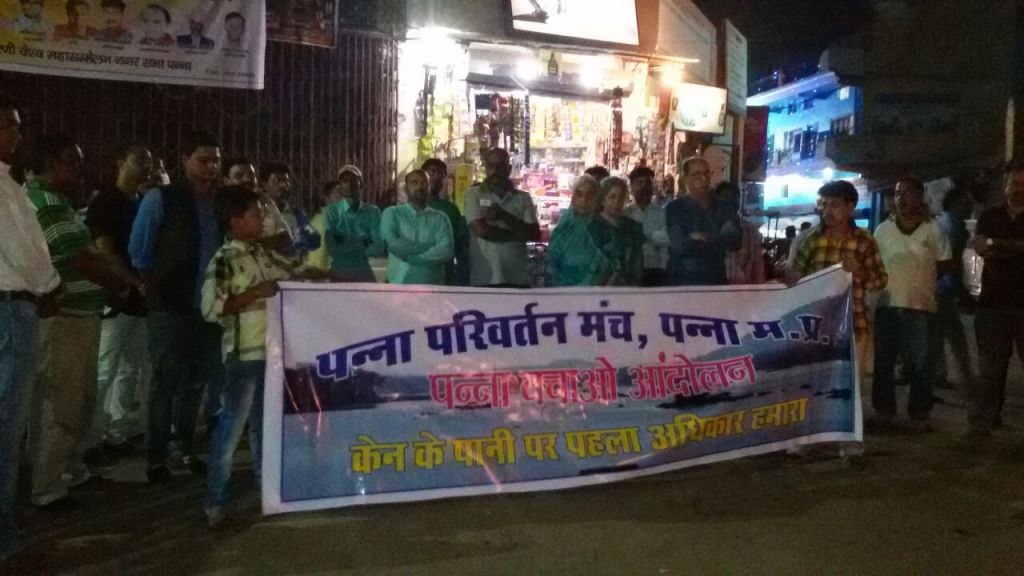
Over 200 tribals protest Ken Betwa Project Madhya Pradesh Forest department seems to be in a baffled position over initiating action against the first-ever mass trespass into the core area of Panna Tiger Reserve (PTR) by over 200 tribals agitating and demanding compensation at par with the package of the Ken-Betwa river linking project. The tribals, led by Bhatnagar, have been staging protests for the past 10 days and are holding their position inside the core area of PTR throughout this period.
On Apr 14, the agitation went further, with protesters threatening a hunger strike and a ‘symbolic hanging’ if their demands were not met. The agitation, centred around Dhodan village, intensified inside the core area of PTR, where forest authorities have so far been unable to enforce prohibitory measures.
The agitation was suspended on Apr 16, 2026 for ten days after administration promised a 7-day survey by an SDM about the issues of rehabilitation raised by the people. According to Bhatnagar, the people had previously submitted memorandums to the administration several times. But the administration ignored them. Ultimately, they were forced to protest. He said if the administration doesn’t resolve the affected people’s problems within 10 days, they will resume the protest.
Numerous questions have long been raised regarding this project to interlink the Ken and Betwa rivers. Since the very inception of the project, villagers have questioned the methods and parameters used for collecting data related to displacement. The villagers allege that various officials are demanding bribes from them in exchange for disbursing the compensation amounts.
The women of the Ken-Betwa protest are following a longer legacy. In 1973, the Chipko movement began in the forests of Uttarakhand. Villagers, especially women, organised themselves into small groups, standing up against commercial logging that threatened their livelihoods. They resorted to tree-hugging as a means of non-violent protest. Today, the women of Madhya Pradesh are lying on pyres. The weapon has changed. The enemy has not.
DAMS & HEPs IN YAMUNA BASIN
Govt asked to halt hydro, irrigation projects on Chambal The Standing Committee of the National Board for Wildlife, during the 90th meeting has directed that no hydro or irrigation projects, except related to drinking water if no alternatives available, will be considered until the environmental flows of the Chambal River improve.
The committee was informed by the WII that dolphin populations were observed to have shifted downstream compared to their past distribution in 2024. Moreover, during lean season, iconic species are only found in deep pools. The depth preferences of the species are at least above 3 metres, whereas sub-adult gharials prefer more than 4 metres, and muggers avoid shallow water.
After analysing the data of the Central Water Commission, the WII found that average flow at Dholpur during lean season (May–June) is around 25–50 m³/s. The minimum required environmental flow during the lean season for dolphins and associated fauna should be 369 m³/s to maintain 3 metre depth and an optimum of 849 m³/s for 5 metre depth.
The report, titled “Ecological Assessment of the Chambal River: Status of Major Aquatic Fauna and Flow Requirements,” was submitted to the meeting of the standing committee on Mar 21.
Flow cut in Chambal, dolphins shift to Yamuna The report underlined a drastic reduction in the river’s flow, attributing this decline to increased water usage from the river’s tributaries. The report indicated that the river is under high stress, posing a serious risk to its ecological biodiversity. It noted that upstream flow has been restricted by the Gandhi Sagar Dam, Rana Pratap Sagar Dam, Jawahar Sagar Dam, and the Kota Barrage, warning that any further extraction could lead to complete drying of downstream areas.
The study analysed water flow data from the past three decades, showing a consistent decline. In 1990, the water flow was approximately 75 cubic meters per second (cumecs), which drastically reduced to 25 cumecs in 2022 during the lean season. Furthermore, the report also pointed out another consequence of reducing water flow. Low water levels during the lean season expose islands and sandbars, which are essential nesting grounds for island-nesting birds, including threatened species like Indian skimmers and black-bellied terns.
Ecological Assessment of the Chambal River The study cautions that projects like the Parbati–Kalisindh–Chambal (PKC) interlinking could further reduce already stressed lean-season flows and disrupt ecological integrity. It recommends prioritising environmental flow releases from existing dams, avoiding further hydrological diversion and undertaking rigorous cumulative impact assessments before proceeding with interlinking to safeguard critical habitats and river continuity.
Rajasthan to take Repair, upgrade of Chambal Dams The Rajasthan government has initiated Rs 225 Cr upgrades at dams on the Chambal River, under the Dam Rehabilitation and Improvement Project Phase II, focusing on Rana Pratap Sagar, Jawahar Sagar and Kota Barrage. At Kota barrage, the condition of its 19 radial gates and two sluice gates has deteriorated, with the sluice gates remaining non-functional for years. Under the plan, all 19 radial gates, 2 sluice gates, stop log gates, a gantry crane & electrical systems will be replaced.
At Rana Pratap Sagar, the works include replacement of 17 vertical crest gates, sluice gates, stop log gates, and gantry cranes, along with repairs to the ski-jump bucket.
Lakhwar dam delayed by three years A senior government official, who did not wish to be named, said that Delhi’s long-term strategy for meeting growing water demand relies on three dams upstream of the Capital. These are the Lakhwar dam, Renukaji dam on Giri River in Himachal Pradesh and Kishau on Tons River near the Uttarakhand-Himachal Pradesh border.
“Of these three dam projects, only Lakhwar dam is in advanced development state, while the other two projects are still at very preliminary stage. We had anticipated receiving 135mgd of water from the Lakhwar dam in the next five years. This supply was intended to meet the demand supply gap of 250mgd in Delhi, but in the recent interstate meetings with the Upper Yamuna River Board, we have been informed that the Lakhwar project will only be able to deliver water by 2034,” the official said.
A DJB official said that the water utility has already provided its share of ₹7.7 crore to UJVN Limited towards the Lakhwar dam, ₹8.1 crore to the Kishau Corporation Limited, and ₹214 crore to HPPCL, which is developing the Renukaji dam.
Delhi’s future water infrastructure and planning initiatives, including the construction of new water treatment plants, the scaling up of water supply systems to match population growth, and other related projects, are being formulated based entirely on the anticipated water supply from these sources in the future, the official said.
YAMUNA WATER SHARING DISPUTES
Punjab Seeks Yamuna Share, Delhi Opposes Quota Cut Ahead of the review of the 1994 interstate agreement regarding the sharing of Yamuna River waters, Punjab has staked a claim for a share for itself as well. This issue was raised during a high-level meeting of officials from the states comprising the Northern Zonal Council, held at Kartavya Bhawan in New Delhi.
Punjab argued that just as Haryana receives a share of the Ravi-Beas waters on the grounds of being a successor state to the undivided Punjab, Punjab, too, should be granted rights in the sharing of Yamuna waters. According to sources, the Punjab government stated during the meeting that it was excluded from the 1994 agreement, despite being a state connected to the Yamuna basin. Punjab asserts that, under the 1954 agreement between the undivided Punjab and Uttar Pradesh, it was entitled to receive two-thirds of the Yamuna’s water. The Irrigation Commission of 1972 also recognized Punjab as part of the Yamuna basin.
Meanwhile, the Delhi govt has clarified that if a new framework for Yamuna water sharing is formulated, there should be no reduction whatsoever in the National Capital’s existing share. A senior official stated that Delhi is already receiving less water than its allocated quota.
According to the 1994 agreement, Delhi is supposed to receive 1,149 cusecs of water via the Munak Canal; however, currently, only 924 cusecs are reaching Bawana. The official attributed this shortfall to seepage and leakage.
The current agreement on Yamuna water sharing was signed on May 12, 1994, among Uttar Pradesh, Uttarakhand, Himachal Pradesh, Haryana, Delhi, and Rajasthan. The agreement had a tenure of 30 years, and the process for its review is now commencing. Consequently, various states are putting forward their respective claims.
Rajasthan pushing Yamuna water project in mission mode: CM Bhajan Lal Sharma on May 13 said that he held a high-level meeting in New Delhi with Union Jal Shakti minister CR Patil and Haryana CM Nayab Singh Saini to discuss the Yamuna water agreement and several inter-state development issues concerning Rajasthan and Haryana. “We held detailed discussions on finalising timelines and operational guidelines for the Yamuna water pipeline project. Both states agreed to move ahead with greater coordination and cooperation so that the project can be completed at the earliest,” Sharma said after the meeting.
Officials informed that a joint detailed project report for the Yamuna water pipeline was already prepared and shared with the Haryana govt. The updated DPR will soon be uploaded on the CWC’s online portal for technical approval, after which ground-level work is expected to begin.
The project operationalises provisions of the 1994 Yamuna Agreement under which Rajasthan was allocated 10.4% of Yamuna water. Rajasthan’s share includes 1,917 cusecs — nearly 577 MCM annually during the July-Oct monsoon period — from the Hathnikund Barrage.
Officials said the agreement signed between Rajasthan and Haryana on Feb 17, 2024, resolved a deadlock of nearly three decades. Under the first phase, a nearly 265-km underground pipeline network is proposed to transport surplus monsoon water to Rajasthan’s drought-prone Shekhawati region, including Churu, Sikar and Jhunjhunu districts. The Rajasthan-side infrastructure is estimated to cost around ₹32,000 crore.
YAMUNA AS WATERWAYS
‘Yamuna cruise service set to begin in May’ The cruise service on the Yamuna is set to start next month, Union Minister for Ports, Shipping, and Waterways Sarbananda Sonowal said on April 24 at the Idea Exchange program of The Indian Express. The cruise will operate upstream on the river between Wazirabad & Sonia Vihar. Last Nov, Delhi Water Minister Parvesh Sahib Singh had reviewed the project with Sonowal and then LG V K Saxena.
YAMUNA RIVERS
Slow death of Sahibi River in Delhi Delhi’s largest drain Najafgarh, which was once known as Sahibi river, brings in pollution from Haryana to the city’s stretch of Yamuna, apart from carrying waste from Delhi’s colonies and industries. Can reviving Sahibi revive Yamuna? Najafgarh, a part of the Sahibi River, was one of the many natural waterways that drained into the Yamuna. This is why the Delhi government wants to rename the drain as the Sahibi River. But at its origin point in Rajasthan, the river is completely dry. About 220 km away from Delhi, in Rajasthan’s Shahpura, lies Triveni Dham. The place gets its name as three streams from the Saiwad Hills join here to form the Sahibi River.
Some water gets collected at the Triveni Dham during the monsoon for a day or two, but there is no flow. About 10 km downstream, a dam built across the Sahibi is also dry. “There has been no outflow since its construction in 2003,” a local official says. Further downstream, the Masani Barrage in Haryana was constructed to control floods on the Sahibi. “Water from Sahibi has not reached the barrage in almost 30 years since the 1996 flood,” says an official at the barrage. Dhansa Barrage at the Delhi-Haryana border is the point at which the river enters Delhi.
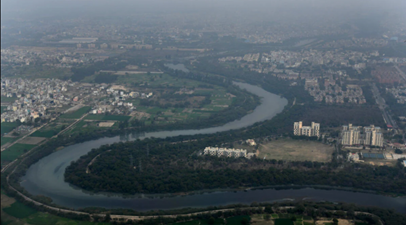
Farming near toxic water flags concerns Cauliflower farming has flourished in Dichaon Kalan, however, concern persists as some farmers are forced to use polluted drain water for irrigation. Experts said agriculture along the Najafgarh drain is being watered with untreated mix of industrial and domestic wastewater. Farmers have demanded an alternative clean sources of water, either through canals or other outlets.
Experts point to a structural gap driving this dependence. “There are several farmers that are using water from the drain, as unlike Haryana or Uttar Pradesh, we do not have proper irrigation canals. If the farmer cannot use groundwater, he will end up using this highly polluted water,” said Paras Tyagi, an activist with NGO CYCLE India. Bhim Singh Rawat, of SANDRP said if only sewage was used to irrigate fields, it does act as manure to an extent, however, Delhi’s drains, including the Najafgarh drain are carrying a mix of sewage and effluents.
Death of Hindon river The Hindon River, a vital tributary of the Yamuna, is turning into a toxic drain. I traveled from its source in the Shivalik hills to its confluence in Gautam Buddh Nagar to document its slow death. What I found was heartbreaking: industrial waste, domestic sewage, and a trail of disease.
After SC push, work on 66-MLD Khoda STP starts Construction of the long-delayed 66-MLD STP at Khoda-Makanpur in Ghaziabad has begun, the UP govt informed the Supreme Court. It added that key hurdles, including encroachments and access-related disputes, were resolved. In a compliance affidavit filed on April 28, the government said the project has moved to the execution stage after the site was cleared and handed over. The latest affidavit, however, indicates a significant revision in timelines. While work has commenced, the project is now slated for completion by June 30, 2028, as against an earlier target of October 2024.
The project, estimated to cost ₹140.92 crore, involves not just the STP but also supporting infrastructure such as intercepting sewers and effluent pipelines. A project layout submitted to the court indicates that treated effluent will be discharged into the Hindon Cut canal after intercepting sewage currently flowing through drains on both the Noida and Delhi sides.
888 illegal colonies drain sewage into Hindon UP govt has told NGT that 888 unauthorised colonies spread across six districts discharge around 40 MLD sewage into the Hindon, while 51 open storm drains in the basin carry an estimated 1,067 MLD of water, sludge, industrial discharge and sewage into the river and its tributaries. The data was part of an affidavit filed by state chief secretary Shashi Prakash Goyal on April 28, which was submitted in compliance with an NGT order from Dec 9 last year. The matter is next listed for hearing on Aug 17.
GNIDA asked to remove floodplain encroachment The NGT, in its July 2024 order, flagged large-scale pollution in the Hindon river due to dumping of solid waste, discharge of untreated sewage and encroachments along the floodplain, and directed multiple agencies to undertake remedial measures. During a hearing on Feb 16, the tribunal expressed dissatisfaction with the delay in demarcating the Hindon floodplain and sought a reply and progress report from the Uttar Pradesh govt by May 25. In a letter dated April 9, the DFO, Gautam Budh Nagar, asked GNIDA to ensure compliance with the tribunal’s July 2024 order.
Stop untreated wastewater inflow into Laharpur dam: NGT The NGT April 21, 2026 directed the Bhopal Municipal Corporation to identify the drains discharging untreated water or sewage water into Laharpur dam and to prevent direct inflow of untreated waste water. The corporation was also asked to take necessary steps for treatment facilities by constructing the STP or decentralising the treatment system near the location.
Inaugurated in 1979 & completed in 1994 at a cost of Rs 278 crore, the dam’s water has now become black, toxic and unfit for any use, according to the application. Currently, untreated sewage from four major drains and dozens of smaller sewers discharges directly into the dam.
The tribunal directed the constitution of a committee to visit the site and submit its report. The Joint committee conducted a site visit of Laharpur dam situated in village Bagmugaliya, tehsil Kolar, district Bhopal and surrounding areas on April 13, 2026.
Chambal Riverfront: ₹1,200 cr project stares at losses When it was first inaugurated in 2023, the Chambal River Front in Kota was meant to be picture perfect – a Rs 1,200 crore project with 26 ghats, ornate pillars, miniatures of Lal Qila and Taj Mahal, a 25-tonne gunmetal face mask of India’s first prime minister Jawaharlal Nehru, and, above all, a serene walkway for leisurely evening strolls. But low footfall and mounting costs have since triggered a political debate: is the former Congress government’s showpiece project turning into a costly drain on public funds? According to officials at the Kota Development Authority (KDA), which manages the project, the Chambal River Front has been incurring losses of around 50%.
YAMUNA RIVER FRONT
Over 300 families face eviction at Yamuna Bazar Ghat The Delhi Disaster Management Authority on May 7 issued eviction notices to 310 families of the centuries-old Yamuna Bazar Ghat area, near Kashmere Gate, giving them 15 days to vacate the area. The notice described the settlement as a “illegal encroachment” of the Yamuna floodplain in the O-Zone area and cited recurring flood risk as grounds for eviction. Residents, however, claimed that no formal survey of the area, where they have been living for generations, has been carried out.
DDA to start work on cycling track along floodplains in Delhi The first phase of construction of a 52-95-kilometre cycling corridor along the Yamuna floodplains is set to begin in the next few weeks, after the NGT’s principal committee gave its final approval, officials of the DDA said on April 22. The proposal had been under consideration for several months and underwent minor alignment changes before receiving clearance from the NGT’s principal committee. Officials said these changes were made to address environmental concerns and ensure compliance with regulatory norms governing floodplain development.
Entire floodplain will be rejuvenated: LG Lt. Governor Taranjit Singh Sandhu on Apr 8 said that the entire Yamuna floodplain in Delhi will be rejuvenated by the DDA on the lines of Vasudev Ghat, Asita Biodiversity Park and Baansera Park. “These restored ghats, can serve as models to be replicated at other locations,” he said.
Yamuna floodplain actions hurting the poor Delhi requires an approach that joins the dots between ecology, economy and human dignity. Inclusive floodplain conservation would begin by recognising that people living along the Yamuna are not “encroachers”, but workers who sustain the city’s functioning. In several parts of India, successful wildlife conservation has depended on the participation of communities dependent on forests. The recognition that local populations are not antagonistic to ecology, but can often become its most effective custodians, has shaped conservation thinking. The same principle can guide the restoration of the Yamuna.
There is, of course, no one-size-fits-all approach for conservation. But planners should not lose sight of a central lesson from India’s best environmental traditions: Ecology and equity were never opposing goals. They fed into each other. (Kaushik Das Gupta)
YAMUNA FLOODPLAIN
Delhi HC restricts commercial, religious activities on Floodplains The Delhi High Court has restricted all types of commercial/religious activities on the Yamuna Flood Plains in the interest of environmental protection of the ecologically sensitive area. The High Court further clarified that the Delhi Development Authority (DDA) can make alternative arrangements away from the plains if parking space is required for people coming to worship at the river on any auspicious occasion.
The High Court was considering a writ petition filed under Article 226 of the Constitution seeking issuance of a direction to the DDA to restore the possession of the parking site situated at Yamuna Sur Ghat, in accordance with the NIT 907 dated September 27, 2022, issued by the MCD. The court on April 30 noted that the land in question “cannot be used for commercial purposes”. He said, “Hence, it is directed that the DDA shall ensure that no activity is allowed to take place on the said land, including parking of any vehicle for any kind or for any commercial purpose, even if it may be for the convenience of people coming to pay respect/homage to the river.”
Delhi govt sets July 31 deadline to demarcate floodplain after NGT rap In a report dated March 23, Delhi govt said a review meeting chaired by the environment secretary was held on March 10 and 11. “DDA informed that the drawing has been received from the irrigation and flood control (I&FC) department. Based on this, ground truthing is to be carried out jointly with the revenue department. Feasible points will be fixed with bollards, and any issues encountered during ground truthing will be resolved in coordination with the department concerned. The work is likely to be completed by July 31,” the report said.
On Feb 23, the NGT had directed Delhi govt to submit a fresh status report within two weeks with a shorter and more reasonable schedule. The tribunal said ground truthing, installation of pillars and floodplain demarcation had been completed expeditiously in other states soon after details were received from the Survey of India. “Therefore, we find that the timeline of Aug 2026 given in the reply is not a reasonable timeline,” the bench observed.
Expedite demarcation of floodplain The order came during the hearings of original applications No 537/2023 & 572/2024, which were filed following media reports highlighting flooding & the absence of clear floodplain boundaries in Delhi. Next hearing on Mar 25, 2026.
Only 18.2% of penalties recovered from violators over 8 last years While the dumping of construction and demolition (C&D) waste, garbage, and illegal parking continue to threaten the eco-sensitive Yamuna floodplains, government data reveals that agencies have recovered a mere 18.2% of penalties from violators over the last eight years. According to the Delhi government’s action taken report (released in April) on floodplain protection, 4,241 challans regarding such violations have been issued with penalties totaling over ₹8.51 crore over the last eight years, while the recovered amount currently stands at ₹1.55 crore — less than 19% of the penalties imposed. The report adds that over eight years, 88,574 tons of C&D waste & 4,998 Tons of garbage in floodplains have been moved to municipal waste management sites.
Bhim Singh Rawat, of SANDRP: “When it comes to dumping construction waste in the floodplain and encroachment upon it, government agencies have themselves been among the biggest violators…There has also been little effective action to check the disposal of religious waste and offerings into the river during festival seasons across the city’s main river stretch.”
YAMUNA POLLUTION
SC issues notices to multiple agencies on Yamuna pollution A Supreme Court division bench has issued notices to Nagar Palika Parishad Khoda Makanpur, Municipal Corporation of Delhi, Delhi Public Works Department, Delhi govt, the River Rejuvenation Committee for Delhi and Uttar Pradesh, and Delhi’s Irrigation and Flood Control Department after obtaining from Central Pollution Control Board (CPCB) a list of authorities responsible for checking pollution in the Yamuna.
The apex court was hearing civil applications filed by Noida and the Delhi Jal Board, which have challenged the environmental compensation imposed on them by National Green Tribunal in 2022. The hearing took place on April 29. The bench also directed amicus curiae K Parameshwar to suggest a nodal authority to coordinate different departments and agencies by the next date of hearing on May 13.
ISP fails to curb untreated sewage flow After two decades and more than ₹2,454 crore poured into the Delhi Jal Board’s (DJB) flagship Interceptor Sewage Project (ISP), a significant chunk of that investment appears to have effectively gone down the drain. An inspection ordered by the Centre has found that the project stopped only 60% of the sewage volume DJB claimed to have halted from entering the Yamuna.
According to the DPCC’s report, while DJB claimed to have tapped and diverted 238 MGD of sewage, only around 142 MGD had been halted by measures introduced under the ISP. The report added that more than 117 MGD of untreated waste is still flowing into the river from drains the board had declared “completed.” Further, the updated flow of sewage in smaller drains had risen to a total of 260 MGD.
The inspection also found serious lapses in monitoring. DJB had installed flow meters at just 12 points, of which four were already defunct. CCTV cameras were reportedly installed at 23 locations, but only eight were found operational. The board’s claimed sewage pumping capacity of 310.26 MGD was also found to be overstated, with actual capacity at 259.72 MGD.
Bhim Singh Rawat, of the SANDRP, said the ISP has been delayed by over a decade and has failed to deliver results on the ground. “It was expected to be completed by 2016, but sewage generation has since increased with the expansion of unauthorised colonies. This points to a planning failure,” he said.
Delhi sanctions ₹28.8 cr to clean 3 major drains The in-situ treatment interventions will be undertaken in the ISBT drain, Sen Nursing Home drain and Jaitpur drain. The government will spend ₹8.2 crore on the ISBT drain, ₹11.23 crore on the Sen Nursing Home drain and ₹9.36 crore on the Jaitpur drain. The projects are likely to be completed within five months.
Bhim Singh Rawat, of the SANDRP, said in-situ treatment has also been attempted in the Varuna and Assi stretches in Varanasi, but has not yielded good results. “We have to stop taking a piecemeal and experimental approach. A large number of factors contribute to pollution in drains, ranging from sewage to illegal industries dumping chemicals. Things fall apart due to local conditions, which ultimately leads to a waste of taxpayers’ money. DJB should consult citizens, tap drains and make it a participative exercise,” he added.
Delhi readies 4-point plan to tackle toxic Yamuna froth To check froth formation in the Yamuna, under Yamuna rejuvenation plan, the Delhi govt has planned a 4-pronged approach of relocating dhobi ghats, closing illegal dyeing units, undertaking engineering interventions near the Okhla barrage & developing a riverfront visitor hub at Kalindi Kunj, officials said.
Yamuna pollution indicator slightly better in April Meanwhile, experts said the river’s water quality will continue to suffer until the monsoon arrives. “In the lean season, low river flow traps sewage and effluents, leading to elevated pollution levels. Monsoon rains only offer an artificial cleanup, as the slightly cleaner water is merely the result of heavy water discharges from the Hathnikund barrage,” said Bhim Singh Rawat, of SANDRP. Rawat added that data from drains clearly shows until they start meeting the standards, the river will continue to suffer.
Yamuna’s dirtier in March “DPCC’s latest monthly Yamuna water quality test report only reconfirms that a great river continues to be ecologically dead and is functioning like a toxic sewage canal,” said Bhim Singh Rawat from SANDRP. “It is totally unfit for any kind of use and this has grave health implications,” he said. “That fecal coliform levels are six times higher even at Palla shows that untreated effluents are entering from Haryana and contaminating potable water supply in Delhi,” he added. “Overall, it underlines the abysmal failure of pollution prevention, control mechanisms.” He added that the river’s flow is almost similar to last year, ruling out improvement due to dilution.
To be sure, experts said the pollution in the river tends to rise at this time of the year, attributing it being lean season when there is significantly less rainfall along the river’s catchment. This also results in lesser water being released downstream of the Hathnikund barrage and a reduced environmental-flow (e-flow) — required to flush away pollutants naturally. However, they flagged sharp peaks in the pollution downstream of Wazirabad as a concern.
52 vacancies in DPCC to be filled within 3 months: NGT told Out of the 344 sanctioned posts in the Delhi Pollution Control Committee (DPCC), 52 are currently vacant and will be filled within the next three months, the Central Pollution Control Board (CPCB) said in April 9 status report submitted to the NGT. The tribunal has been monitoring the vacancies in the DPCC since October 2023, when nearly two-thirds of its posts were found vacant. Of the total 344 posts, 292 have been filled, as per April 1, 2026.
STP delays stall Haryana’s push to curb Yamuna pollution According to the proceedings of the last review meeting of Industrial Pollution and Yamuna Action Plan (YAP) held under the HSPCB then chairman, J Ganesan, on April 24, the officials said that Dhanaura escape drain, which pushes the effluents from the industrial towns of Yamunanagar and Jagadhri into the Yamuna near Nabipur village of Karnal district is yet to be stopped because of delay in construction of two STPs.
The Haryana government had formulated a targeted YAP under HSPCB in 2022, to control pollution in 11 major drains discharging into the river. J Ganesan has been replaced by Vinay Pratap Singh as Chairman of HSPCB on May 6. “Stopping the untreated effluent of the twin towns remains a challenge until the completion of 77 MLD STP and an independent STP of 19.5 MLD,” the minutes of the meeting revealed. It will take 14 months to complete the STPs.
The drain 2 in Panipat, drain 6 in Sonepat, Mungeshpur, KCB drain in Bahadurgarh, Leg-1, 2, and 3 drains in Gurugram, Budiya drain and Guanchi drain of Faridabad district are other major sources of pollution in the Yamuna River. An official from Panipat MC said that the untreated effluent from the old industrial area of the city, flowing via drain number 2, is also a challenge. “Many industries have set up their individual ETPs, but their operations need to be verified. The discharge from illegal tankers from Yamunanagar & Karnal is another challenge.
91 STPs operational in Haryana: CM Nayab Singh Saini on Apr 24 said that the govt’s target is to ensure that not a single drop of untreated water flows into the Yamuna river by the end of 2027. In an official statement, Saini said that at present, 91 STPs with a total capacity of 1,543 MLD are operational in the Yamuna catchment area to treat water flowing into the river. Out of these, 41 STPs with a capacity of 593 MLD have been established in the last five years. Additionally, 11 new STPs are under construction.
The CM further directed that CETPs should be installed on all 11 major drains leading to the Yamuna so that every drop of industrial waste water is treated before entering the river. Saini said that 8 new CETPs with a capacity of 147.5 MLD will be set up in the Yamuna catchment area. According to the statement, officials of the HSPCB also informed that 211 MLD of untreated water flows into Haryana from Delhi through certain drains, which is then treated by Haryana and sent back to Delhi. Saini said that a meeting will be held with the Delhi CM to resolve this issue and ensure that only treated water is discharged into the Yamuna from Delhi.
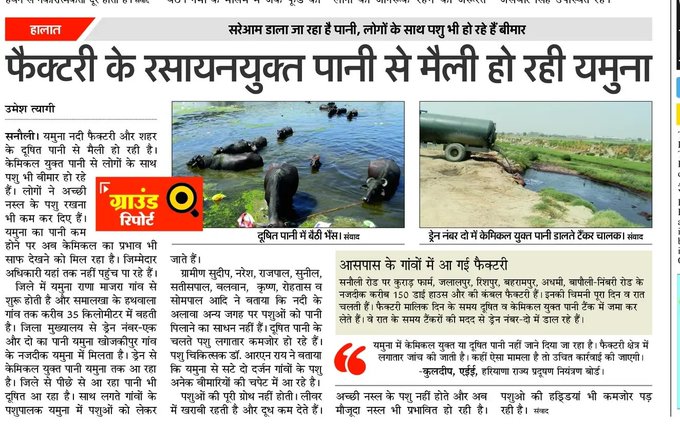
Yamuna pollution affecting health of Panipat villagers Residents of several villages along drain number 02 in are suffering from growing pollution in the Yamuna river due to discharge of untreated industrial wastewater and sewage. Villagers allege that polluted water from industrial units and urban drains is continuously flowing into the river. The livestock bathing in the contaminated water is reportedly developing skin problems and illnesses. Residents also complain of foul smell, deteriorating water quality and increasing health concerns. Locals claim authorities have failed to stop the discharge of untreated effluents despite repeated complaints. The issue has raised serious concerns about industrial pollution, weak enforcement of environmental norms, and the worsening condition of the Yamuna river.
Toxic cost of textile recycling in Panipat This report highlights the environmental and health crisis unfolding in Panipat, one of the world’s largest textile recycling hubs, where discarded clothing from Europe, North America, and Asia is processed into recycled yarn and home furnishings. The city reportedly handles nearly 1 MT of textile waste annually through around 20,000 industrial units, employing nearly 3 lakh workers.
The investigation also highlights severe pollution from dyeing and bleaching units. According to official findings referenced in the report, nearly 80% of wastewater from many units is discharged untreated into drains connected to the Yamuna River. Water samples reportedly showed dissolved solids levels nearly four times above permissible limits and critically low oxygen levels, making stretches unsuitable for aquatic life.
Untreated effluents discharged in Yamuna in Saharanpur Yamuna river flowing through the Shahjahanpur area turned black and highly polluted again on May 13, creating fear among villagers. Residents said the polluted river water poses serious health risks to local people, devotees, and livestock. Some villagers claimed that many people in the area have earlier suffered from serious diseases, including cancer.
A traditional fair will be held here on May 25 on the occasion of Ganga Dussehra. The site attracts large numbers of devotees from Uttar Pradesh and Haryana who come to take a holy dip in the Yamuna. The polluted condition of the river has increased concerns among visitors and local communities. Villagers also said juvenile fish are dying due to the contaminated water, worsening the crisis for aquatic life in the river. They have urged the administration to ensure the flow of clean and fresh water in the Yamuna.
NGT seeks report on polluting industries in Mathura On April 9, 2026, the NGT directed the district magistrate of Mathura to submit a reply regarding allegations of illegally operating units in the district. Additionally, the Municipal Corporation Mathura–Vrindavan, the UPPCB, and other concerned authorities were directed to respond. The matter has been listed for hearing on July 24, 2026.
The applicant alleged that several units lack consent to establish (CTE) and consent to operate (CTO), and are discharging untreated effluent onto open land and into the public sewerage system, thereby causing serious environmental hazards. It was further alleged that these establishments operate without pollution control mechanisms, such as oil and grease traps, and lack effluent treatment plants. Consequently, they contaminate soil and groundwater and contribute to pollution of the Yamuna River.
Rising Yamuna pollution in Mathura Recent February 2026 data from the State Pollution Control Board has flagged alarming pollution levels at key sites such as Kesi Ghat, Vishram Ghat and Gokul Barrage. The findings further noted that the water quality has remained in Category ‘D’ – fit only for aquatic life – in December 2025, January 2026 and February 2026. The report attributed the decline to untreated sewage discharge, increased human activity along the ghats and inadequate wastewater management systems.
YAMUNA RIVERS BIODIVERSITY
Will Govts Ensure Survival of Chambal River Sanctuary? Two critical developments over the past month have once again highlighted the scale of threats undermining the ecological integrity of the Chambal, the largest tributary of the Yamuna. The rich aquatic life in the Chambal Sanctuary has already been adversely affected by the gradual decline in river flows and unabated illegal sand mining.
Indian conservationists win Whitley Awards Indian conservationist Parveen Shaikh have won the prestigious 2026 Whitley Awards for conserving nesting sites of the endangered Indian skimmer along the Chambal river through community-led efforts.
India is home to more than 90% of the global population of about 3,000 Indian skimmers, known for their bright orange bills and for skimming the surface of rivers to catch fish. The birds nest on sandbars—mid-river islands that appear seasonally—and even small changes in river flow patterns can result in complete nesting failure.
Interview of Parveen Shaikh: Nearly a decade ago, conservationist Parveen Shaikh began working on protecting the flame-billed Indian skimmer, an endangered species of riverine bird found in the Chambal region which had dwindled to just 400. With the help of a community of ‘nest guardians’, Shaikh worked to increase the bird count.
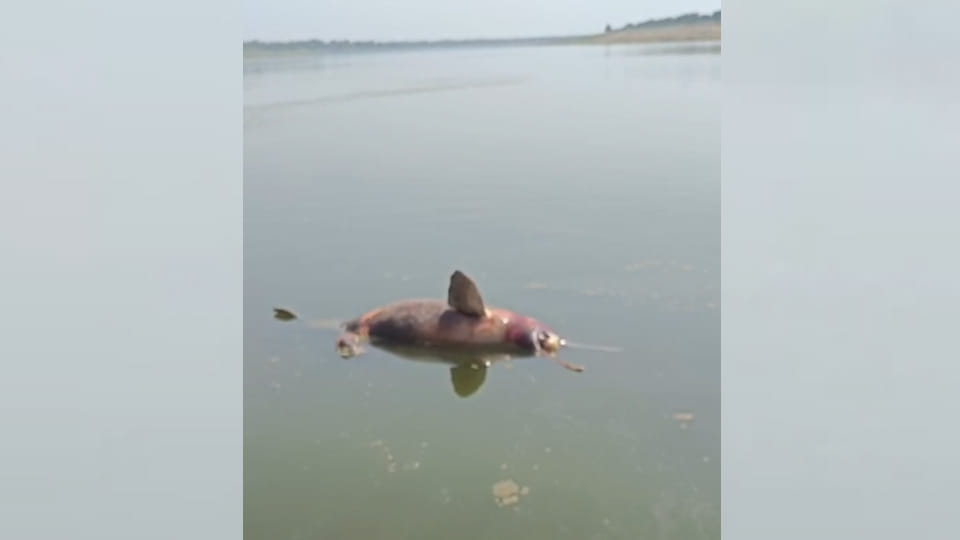
A dead dolphin was discovered in the Yamuna River between Kishanpur and Ekadla Ghat on April 11. According to a local fisherman, he had taken his boat out onto the river in the morning when, upon detecting a strong foul odor, he steered his boat in that direction. Upon approaching the spot, he found a dolphin—approximately 3 meters in length—lying dead, with visible injury marks on its mouth.
YAMUNA FISH, FISHERFOLKS
Dead fish on Yamuna raises effluent concern again Thousands of dead fish have been floating along the Najafgarh drain, Delhi’s most-polluted stormwater drain that empties into the Yamuna, near southwest Delhi’s Rawta village over at least the past five days, with villagers alleging the water colour—usually, a dark shade of grey—has been darker and murkier. The incident has been logged near the Dhansa regulator, locals said. The issue is also not limited to the Najafgarh drain. In May 2025 and in July 2024, hundreds of dead fish were recorded along the Yamuna banks near Burari in north Delhi.
Experts, while attributing the deaths to a sharp dip in dissolved oxygen, said the reason for the dip needs to be assessed. Bhim Singh Rawat, of the SANDRP, said that the river in this portion is receiving untreated effluents from Haryana and the rise in temperature, coupled with industrial effluents, may have led to mass fish mortality. “Such events are usually seen in summer as the flow of water in rivers and drains usually goes down and the concentration of effluents increases, depriving organisms of dissolved oxygen. Most fish cannot survive abrupt dips in dissolved oxygen,” he said.
Fish dying in toxic Yamuna in Panipat Severe pollution in the Yamuna river near Panipat, where untreated industrial effluents are reportedly turning the river water black and causing large-scale fish deaths. According to the report, nearly 390 industrial units discharge wastewater into Drain No. 2, which eventually flows into the Yamuna. The polluted water reportedly travels around 56 km before entering the river near Mandi village. Locals allege that toxic chemicals, foul smell and black-coloured water have made the river highly polluted. The report says dead fish are regularly seen floating in the contaminated water, raising concerns over ecological damage and risks to public health.
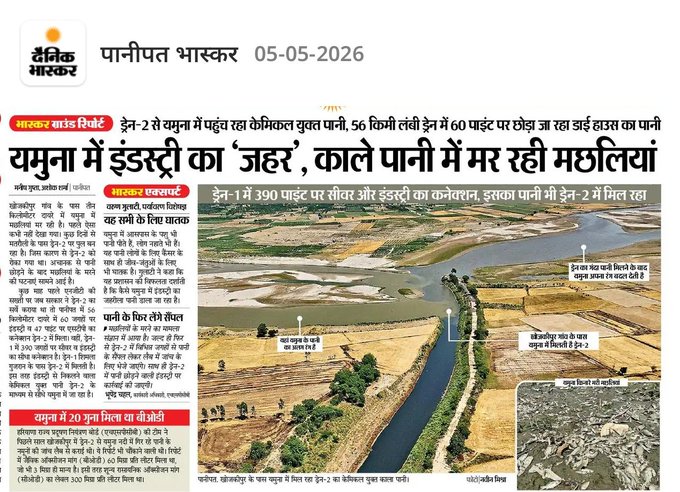
Despite strict directions from the NGT, authorities have allegedly failed to stop the flow of untreated effluents into the river. Environmentalists and local residents say the black, foul-smelling water reflects the alarming state of pollution in the Yamuna and raises serious concerns over weak enforcement of pollution control measures.
MINING IN YAMUNA RIVERS
SC summons top Rajasthan officials over illegal sand mining inside Chambal Sanctuary The Supreme Court on May 14 directed the Additional Chief Secretary (Home), Principal Secretaries of Mining, Finance, Forest, Environment, Transport & Road Safety departments to remain personally present before the Court on May 19. The Bench of Justice Vikram Nath and Justice Sandeep Mehta also sought individual compliance affidavits detailing steps taken to implement earlier directions and timelines for tackling rampant illegal mining threatening endangered species including gharials.
The order was passed in a suo motu case on illegal sand mining across Rajasthan, Madhya Pradesh & Uttar Pradesh. The Court had earlier pulled up various State authorities for “lying with their eyes closed” even as large-scale sand mining continued in the region.
The Court also directed Rajasthan Transport & Road Safety Department to explain how unregistered mining vehicles were operating in the region and whether any action has been taken against erring officials. The Court flagged concerns over unidentified tractors and vehicles allegedly operating freely in mining zones and sought details of preventive measures to stop illegal transport of mined materials.
Pertinently, the Court also impleaded the National Highways Authority of India (NHAI) as a party to the case and asked it to file a detailed affidavit on protection of bridge structures near illegal mining zones and why CCTV surveillance cameras should not be installed for real-time monitoring of mining and transport activities.
The SC on April 17 laid down a rigorous legal and operational framework to tackle organized illegal mining in National Chambal Sanctuary. The Court directed State Pollution Control Boards to recover environmental compensation from violators for ecological restoration. To ensure enforcement, the bench ordered the immediate implementation of real-time monitoring through Wi-Fi-enabled CCTV and mandatory GPS tracking for all mining equipment in high-risk districts like Morena and Dhaulpur.
Furthermore, the Court established a standard of personal accountability for officials, warning that any negligence would be met with contempt proceedings, while reserving the right to deploy the Central Reserve Police Force (CRPF) should the administrative authorities continue to “drag their feet” against the mining mafia. Next hearing on 11th May.
Flagging not just environmental destruction but also rising violence linked to mining mafias, including the killing of forest personnel, the Supreme Court called the situation a “systemic and institutional failure. The court also warned of stringent action, including a possible ban on mining and deployment of paramilitary forces if states fail to act.
Expressing strong displeasure, the Court questioned the failure of State authorities to curb the activities of the sand mining mafia. “It is happening under your nose… why at all is the State government existing?” the Bench remarked, adding that the situation reflected either total failure or possible connivance of authorities. The Court’s observations came in the backdrop of a recent incident in which a forest guard was allegedly run over by a tractor transporting illegally mined sand. The Bench referred to the incident to underline the growing risks faced by enforcement officials.
Senior Advocate Nikhil Goel, appearing as amicus curiae, apprised the Court that illegal mining had affected 8 out of the 34 pillars of the Ater–Fatehpur bridge connecting Madhya Pradesh and Rajasthan. He stated that sand had been excavated up to a depth of 25 to 50 feet beneath the pillars, posing a serious risk to the structure. Highlighting the gravity of the situation, Goel informed the Court that approximately 5,000 people use the bridge, raising concerns of a potential disaster if urgent steps are not taken.
“The photographs are self-explanatory… it is extremely sad,” the Court observed. Taking a broader view, the Court emphasised the need for immediate preventive measures. The matter has been reserved for orders, with the Court expected to pronounce its decision on Apr 17.
The apex court in April 2 order had directed the govts of Rajasthan, Madhya Pradesh & Uttar Pradesh to respond to reports submitted by the Amicus Curiae and the Central Empowered Committee (CEC) regarding illegal mining inside the Chambal sanctuary. The court had also sought affidavits from the states and the Ministry of Environment and Forests.
Mining, road construction across Dhasan, Ken rivers The NGT principle bench directed a two-member joint committee April 21, 2026 to look into the allegations of a mineral-based company engaged in illegal in-stream mining and temporary access road construction across Dhasan and Ken rivers. It was alleged that the company was been building the roads to transport sand minerals, thereby obstructing the natural flow and aggravating environmental harm. The committee was directed to visit the site & submit the factual report within six weeks.
Farmers Protest Illegal Sand Mining in Panipat Farmers from five villages in Haryana’s Panipat district protested against alleged illegal sand mining in the Yamuna River region, accusing authorities of failing to stop the activity. Residents said overloaded sand trucks move through villages day and night, causing safety risks and disturbance.
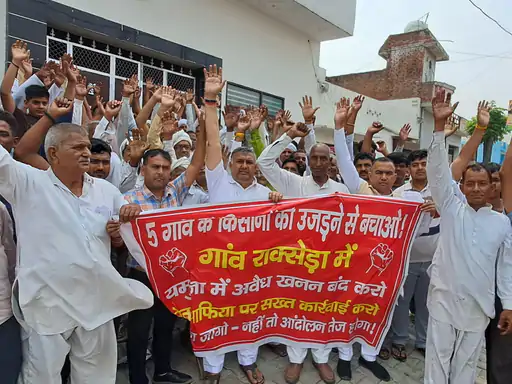
The protesters claimed illegal mining over the years has led to severe riverbank erosion, with hundreds of acres of farmland reportedly lost to the Yamuna River, causing major financial losses to farmers. They also alleged that despite repeated complaints, the mining mafia continues to operate openly due to administrative inaction. Villagers demanded immediate action to stop the mining, continued excavation could worsen flooding and erosion in the area.
Excessive Yamuna mining causing threat to Ranney well Mining operations being conducted by a licensed contractor on the Bagpat side—in blatant disregard of regulations—have altered the course of the Yamuna River. By constructing a makeshift earthen path, the river’s flow has been diverted toward Sonipat; consequently, the water is now eroding agricultural fields as it advances toward the Ranney Well. This sudden and drastic shift in the river’s behavior has sparked widespread panic throughout the entire region.
The Jajal Ranney Well Project, constructed at a cost of ₹100 crore, now faces a direct and imminent threat. Should the Yamuna’s waters breach the facility, the entire drinking water supply for Sonipat city could stop. This would not only force millions of residents to struggle for access to water but would also inflict severe financial losses upon the administration.
When a committee of officials from the Irrigation Department inspected the company’s mining site, grave irregularities came to light. The company was extracting sand from within the Yamuna River using heavy machinery.
YAMUNA WETLANDS, LAKES, WATER BODIES
Why Ramsar tag eludes Dhanauri State forest officials have time and again come up with replies, explanations and promises before NGT, but the position seems to not have shifted in any direction. Appearing for the state before the principal bench of the tribunal during the first hearing, following a petition by environmentalist Anand Arya in Oct 2023, the counsel said the proposal for notification was submitted to the Wetland Authority on Aug 4, 2022.
UP’s counsel, appearing in the same case on Sept 2025, sought an adjournment again to obtain instruction on whether the state was ready to send a proposal to declare Dhanauri a Ramsar site to the ministry, and whether Yamuna Expressway Industrial Development Authority (YEIDA) had any objections. NGT had already asked YEIDA about its position. In May 2025, the counsel appearing for the authority submitted that all possible action would be taken and the report would be filed within three weeks.
14 ponds filled up for Noida airport, 8 new excavated, YEIDA tells NGT YEIDA informed National Green Tribunal about the status of ponds under its jurisdiction that have been restored and rejuvenated. It also defended the acquisition of 14 ponds for Noida International Airport and challenged the scope of judicial review once environmental clearance was already granted, adding that eight new ponds have been excavated to replace them.
In a separate affidavit, Greater Noida Industrial Development Authority (GNIDA) also provided a status update for 281 ponds under its jurisdiction. YEIDA, in its April 10 affidavit, replied to concerns raised by the National Green Tribunal in its Jan 19 order, stating that it was granted environmental clearance (EC) on Mar 9, 2020. The EC expressly takes into account the impact on existing ponds and incorporates mitigation measures, including the creation of alternative water bodies. Therefore, the decision is a fully informed and reasoned one, taken in accordance with the statutory framework, the affidavit said.
The GNIDA affidavit states that there has not been much change in the status of ponds under its jurisdiction. Of the 281 ponds, 50 continue to remain encroached, rejuvenation work was accomplished on only 3 ponds under phase 2 of the pond development work under GNIDA.
Shekha Jheel Bird Sanctuary of Aligarh gets Ramsar tag Shekha Jheel Bird Sanctuary of Aligarh, Uttar Pradesh has got an international tag of Ramsar site, taking India’s total of such protected wetlands to 99 and the state’s tally to 12. “This partially human-made wetland complex, comprising Shekha Jheel Lake and surrounding deciduous forest, was formed following the construction in the 1850s of the Upper Ganges Canal, which flows adjacent to the site,” said the Convention secretariat on its website.
Haryana govt shifts wetland authority to wildlife department The move follows a Mar 11 notification reconstituting the Wetland Authority and a subsequent Mar 24 departmental communication directing the Directorate of Environment & Climate Change to transfer all records, files and budgetary provisions to the PCCF (wildlife), shifting control from the environment directorate to the wildlife wing. For years, the state has struggled with incomplete wetland identification, hampering efforts at conservation of wildlife around the water bodies.
Earlier, wetland-related functions were handled through the directorate of environment and climate change. With this shift, wetlands are now administratively and financially aligned with the department that already manages forests and wildlife habitats. With the PCCF (wildlife) designated as member secretary, the forest department will anchor implementation, monitoring and enforcement of wetland conservation across the state.
Despite the shift, the Wetland Authority continues to be chaired by the chief minister (or minister-in-charge), with the environment minister as senior vice-chairman and the chief secretary as vice-chairman. It includes administrative secretaries from key departments and technical members from pollution control, the biodiversity board and remote sensing agencies. Environmentalists have hailed the move but say the real change will be reflected in execution.
MCD launches new bid to revive Naini lake In a fresh attempt to revive Naini Lake in Model Town, the Municipal Corp of Delhi (MCD) is set to invite new tender applications at an estimated cost of Rs 10 cr. According to the tender document, the project is to be completed within 12 months and includes civil, electrical, horticulture and operation & maintenance.
WATER MANAGEMENT IN YAMUNA BASIN
Delhi’s water master plan to fix structural legacy issues Delhi govt is preparing a water master plan that will include long-term and structural measures aimed at modernising the city’s ageing drinking water distribution network and addressing long-standing issues of leakage, contamination and uneven water supply. Under the plan, govt is planning to organise the water distribution system into nine operational zones, each centred around a major water treatment plant (WTP).
Delhi makes RWH mandatory The Delhi govt has made rainwater harvesting (RWH) mandatory across the city, with water minister Parvesh Verma chairing a meeting on April 20 to outline enforcement measures, timelines and financial incentives.
Under an existing scheme, consumers with plots of 100 square metres and above are eligible for subsidies for installing rooftop RWH systems. For plots between 100 and 499.99 sqm, assistance is capped at 50% of the cost or ₹25,000, whichever is lower, while for plots of 500 sqm and above, the cap increases to ₹50,000.
To further incentivise adoption, the Delhi Jal Board (DJB) is offering a 10% rebate on water bills for functional systems, which increases to 15% if both rainwater harvesting and wastewater recycling systems are installed. Non-compliance may attract penalties, including a 1.5-times increase in water bills and disconnection of supply in persistent cases.
Data shared by DJB show that ₹204.46 crore in rebates was disbursed between 2017 and 2024. Officials said RWH systems have been installed in 4,343 out of 4,861 schools and colleges, with a deadline of June 30, 2026, for the remaining institutions. In other government departments, 2,564 installations have been completed out of 3,598 identified sites.
Delhi govt working on treated sewage policy The DJB is actively promoting use of treated effluent and around 89 MGD is supplied for non-potable purposes to various agencies such as CPWD, DDA, NDMC and MCD. However, for greater use of treated wastewater, specially in Government construction works and irrigation of parks, the Delhi Government is now mulling a policy. Other applications, such as its use in firefighting will also be explored, officials said.
Currently, Delhi’s STPs generate about 530 MGD, of which, only around 105 MGD is used, mainly for roadside gardening, green areas, and lake restoration. The DJB has approved a Rs 90-cr project to transport treated water from STPs for horticultural purposes across the Capital.
DDA plan for using treated water The Delhi Development Authority (DDA) has initiated a city-wide plan to irrigate parks and green spaces using treated wastewater instead of fresh groundwater, inviting bids to appoint a consultant for the project. According to the request for proposal (RFP) issued on Mar 18, the consultant will be tasked with preparing a comprehensive management plan and a feasible network design to supply treated water to parks and green spaces under DDA’s jurisdiction across the Capital. The consultancy assignment has a timeline of 210 days for preparation of the plan and DPR.
Delhi GW higher recharge than use in 2025 Delhi recharged more water than it extracted from the ground in 2025, with an extraction rate of 92.1%, according to the latest annual Central Groundwater Board (CGWB) report. The Nov 2025 report, shows Delhi extracted 0.32 billion cubic metres (bcm) of groundwater in 2024-25 but was able to recharge 0.38 bcm back.
NGT warns 6 cricket stadiums of shutdown over missing water source details The NGT on April 16 issued notices to six cricket stadiums across the country, including Arun Jaitley Stadium in Delhi, asking them to explain why their activities should not be stopped for failing to disclose the source of water used to maintain the pitch and grounds. The matter has been posted for further proceedings on July 2.
Act against builders on groundwater misuse: CGWA Central Groundwater Authority (CGWA) has asked UP groundwater department to act against alleged over-extraction and wastage of groundwater by real estate developers in Noida, following a complaint by an environmental activist. In a letter to the state department, CGWA administrator VK Dhaundiyal said groundwater development and management in UP was being regulated by the state and requested its intervention, asking it to report back on action taken. The letter was accompanied by the complaints received by the authority.
Environmental activist Vikrant Tongad had filed a complaint with the CGWA, the UP govt, and Noida Authority, flagging rampant groundwater extraction at construction sites in sectors 145 and 153. He said water being pumped out during basement excavation was being discharged into sewage pipelines and drains, accelerating the decline of the local water table. Earlier this week, the state groundwater department had separately directed the Gautam Buddh Nagar district magistrate to act against groundwater wastage in Greater Noida.
YAMUNA FLOOD MANAGEMENT
Govt approves 4.7km flood protection wall To prevent low-lying areas from flooding during the Yamuna overflow, the Delhi government has approved the construction of a 4.72-km-long wall along the river from Majnu Ka Tila to the Old Railway Bridge (ORB), chief minister Rekha Gupta announced on April 14. The target to complete the project pre-2027 monsoon, she said, adding the decision, formally cleared as part of the budget, is rooted in the city’s repeated experience with severe flooding. The project draws on recommendations made in the August 2024 report of the Joint Flood Committee (JFC), which was based on detailed hydraulic modelling and data analysis by experts from the Central Water and Power Research Station (CWPRS), Pune. The study had identified the construction of a flood protection wall along this stretch of the Ring Road as the most viable long-term solution.

Experts, however, expressed reservations over the move, saying it could prove counter-productive by affecting the river’s health and natural floodplains and by risking a flood downstream. Bhim Singh Rawat of the SANDRP said, “Multiple linear and cross-sectional structures have already severely altered Yamuna’s natural pattern and restricted its meandering functions. Building a flood protection wall will further fragment the floodplain. Such barriers can push floodwaters downstream with greater intensity, increasing the risk of flooding in east Delhi. The government should look to expand natural buffers, which are more sustainable and climate-resilient in the long run. The ITO barrage aggravated the 2023 flood impact due to the malfunctioning of gates and is serving no purpose. The government should plan its decommissioning as it will reduce the flooding risks”.
The Great Wall of Delhi? Areas such as Civil Lines, Kashmere Gate and Yamuna Bazaar have historically borne the brunt of floods, including major events in 1978 and more recently in 2023 and 2025, when water levels crossed danger marks and disrupted normal life. Experts, however, cautioned that preventing water from reaching floodplains can impact groundwater recharge and harm the ecology.
Bhim Singh Rawat, associate coordinator at SANDRP, said the Yamuna floodplains in Delhi are already heavily encroached and built upon, with areas such as Majnu ka Tila and the Tibetan colony located within the active floodplain. He said govt should ideally plan the removal of permanent encroachments in a phase-wise manner. “Creation of a concrete wall will further cut off a piece of floodplain from the river and has potential to aggravate flood threat and damages especially in downstream and eastern Delhi areas across the river,” Rawat said.
He added that the core problem was the non-transparent and unscientific operation of existing barrages. “The construction of barrages and bridges has already altered the natural flooding and meandering pattern of the Yamuna. Further disconnecting the river from its floodplain will only worsen the situation,” he said.
“Attention must be given to managing sedimentation and undertaking measures such as dredging based on scientific assessment, rather than pursuing permanent construction on the floodplain,” he said.
Delhi govt plans floodwater diversion to Bhatti Mines Bhim Singh Rawat, a Yamuna activist and member of the SANDRP, said that the proposal to divert water to the Bhatti mines has many pitfalls, and that Delhi should focus on the basics to improve its flood preparedness. “It has the risk of contamination of the groundwater” the activist said.
Delhi govt. to create 2,500 acres of reservoirs along Yamuna The govt is deliberating on an ‘Urban Flood Mitigation Program Delhi’ ahead of the monsoon, with a budget of ₹21,068 cr, officials said. The plan includes creating three ‘off channel’ reservoirs — two 1,000-acre facilities in Palla and Mayur Vihar, and a 500-acre reservoir in Okhla along the Yamuna floodplains — at a total cost of ₹90 cr.
RELEVANT REPORTS
Uttarakhand SMCG lacks river basin management plan Nearly a third of sewage treatment plants (STP) in Uttarakhand are discharging untreated sewage into the Ganga and its tributaries, according to a recent audit by the Comptroller and Auditor General of India (CAG), raising concerns about pollution along the river stretch from Devprayag to Haridwar despite significant public spending.
The CAG report found that 12 out of 44 STPs or around 32 per cent were releasing untreated wastewater due to inadequate capacity, faulty connections and poor maintenance. The CAG report, which reviewed projects implemented between 2018 and 2023, was recently tabled in the state assembly. It highlights gaps between investment and outcomes, with nearly Rs 1,000 crore spent in the state during the period but limited improvement in sewage management.
The report points to a fundamental gap in planning. The audit found that the State Mission for Clean Ganga (SMCG) had not prepared a state-level river basin management plan even after 13 years of its establishment. At the district level, no such plans were prepared either. The District Ganga Committees also did not prepare a district-level river basin management plan in any district, the report noted. This suggests that large-scale projects were implemented without a comprehensive, river-based planning framework.
The audit also highlights a lack of community involvement in planning and implementation. The State Ganga Committee, SMCG and implementing agencies did not involve local people in planning the Namami Gange infrastructure. A social audit cited in the report found that residents were dissatisfied with the infrastructure created, describing it as poorly aligned with local needs. This, the audit suggested, reflects a top-down approach to implementation.
The report also raised questions about the role of the state government. It noted that the state had not constructed any STPs or sanitation infrastructure in 16 Ganga-front towns using its own resources, leaving projects largely dependent on central funding and planning.
NGP’s riverfront facelift displaced the people who kept the Ganga alive The program measures success in infrastructure—STPs, dolphin counts, tourist ghats—but structurally ignores the displacement of Nishad, Mallah, Kewat, and Bind communities. (By Ankit Mishra)
Microplastics: A Missing Piece in Ganga Pollution Control The compliance report by the CPCB in M.C. Mehta vs Union of India highlights that microplastics are emerging pollutants in rivers like the Ganga, but India currently has no clear standards or regular monitoring system to track them. Existing water quality checks focus mainly on traditional pollutants, leaving microplastics largely unaddressed. The government has initiated some steps, such as banning certain single-use plastics and working on guidelines through agencies like BIS and CPCB, but a comprehensive system for testing and regulation is still evolving. The report shows that while visible pollution is being tackled, microplastics remain a major regulatory gap.
Climate Change Making Rainfall More Intense, Land Drier: Study A new study published in Nature finds that climate change-driven shifts toward fewer but heavier rainfall events are reducing water stored on land globally. Using satellite observations, climate datasets, and land-surface models, the study found that this pattern is already affecting major river basins including the Amazon, Ganges, Nile, Mississippi, and Yangtze. Intensively irrigated regions such as the Gangetic Plains may face even stronger impacts.
SANDRP
Also see: Yamuna Manthan April 2026 & July 2025
Follow us on: www.facebook.com/sandrp.in; https://twitter.com/Indian_Rivers


