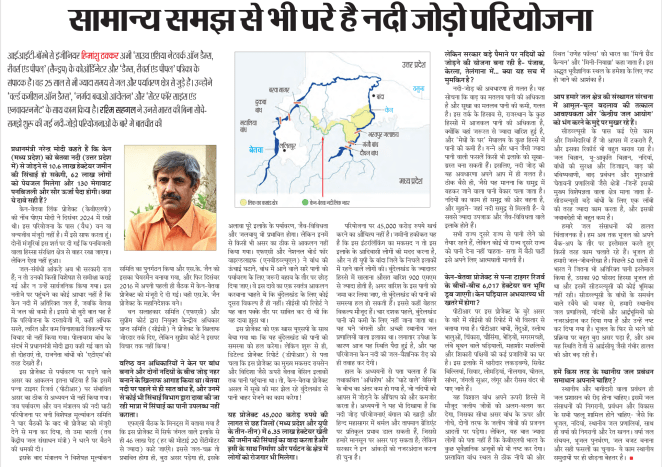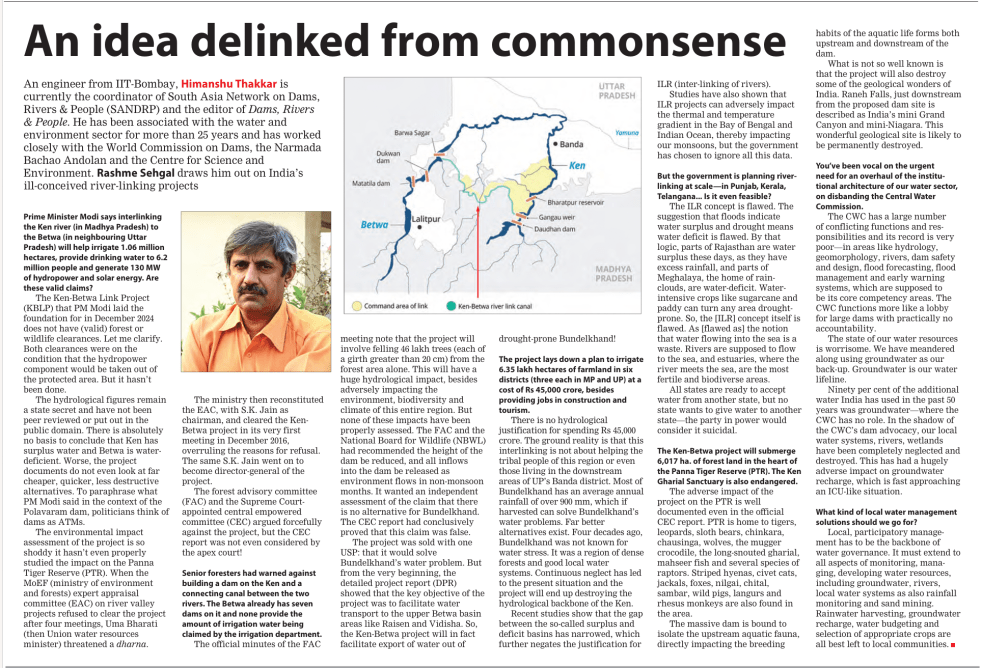
Q. The government has chalked out an ambitious National Perspective Plan(NPP) for Water Resource De elopement which will interlink 37 rivers whose cost will run into over Rs10 lakh crores. This scheme has been vehemently opposed by scientists and yet we see the government pushing it through. Whose brain wave is this? Your comments.
ANS: Yes, the NPP was formed way back in 1980, though there have been other versions of river linking ideas earlier since mid-19th century. The National Water Development Agency (NWDA) was formed in 1982 for taking up the work related to Inter Linking of Rivers (ILR). However, the ILR really got a push in 2002 when Shri Atal Behari Vajpayee was the Prime Minister and Prof APJ Abdul Kalam was the President. In his speech to the nation on Aug 14 2002, Prof Kalam gave a push to it saying it will solve India’s drought and flood problem. A bench headed by Justice B N Kirpal, the then Chief Justice of India in his order on Oct 30 2002, a day before his retirement, directed that ILR be implemented in ten years! A 3 judge bench headed by Chief Justice S H Kapadia, including Justice Swatantra Kumar on Feb 27 2012 directed implementation of ILR expeditiously! Since 1980, it has always been part of the agenda of the Ministry of Water Resources in its various incarnations.
So there are many who will seek credit for this. But ILR is more like a concept rather than a single project. And it is not a new concept. Some small inter basin transfer of water has been going on for many decades. There is no case for any wholesale interlinking of rivers, since it does not have the scientific basis to come to a conclusion that any given river basin is water surplus or deficit.
Q. This massive NPP scheme has been kickstarted with the interlinking of the Ken river in Madhya Pradesh to the Betwa river in the neighbouring Uttar Pradesh. PM Modi laid the foundation stone for its construction in December 2024 with the claim that once completed in 2030, it will help irrigate 1.06 million hectares of land, provide drinking water to 6.2 million people and generate 130MW of hydropower and solar energy. But facts on the ground speak otherwise. Your comments.
ANS: Yes, PM Modi laid foundation stone for the Ken Betwa Riverlink Proposal (KBRLP) on Dec 25 2024. But the project that he laid foundation for is not the project that received the forest clearance or wildlife clearance. One of the conditions of forest & wildlife clearances, for example was that the hydropower component of the project will be taken out of the protected area, but the project PM laid foundation for still had the hydropower component within the protected area!
More worryingly, the project has no hydrological basis. The hydrological figures are a state secret & has never been put in public domain or peer reviewed, but available information shows that there is no basis to conclude that Ken has surplus river and Betwa as deficit. It is an exercise in manipulation to show that Ken is surplus and Betwa is deficit. The project documents do not even look at much cheaper, quicker and less impact full alternatives. But the politicians love dams as ATMs, to paraphrase what Prime Minister Modi said in the context of Polavaram dam.
The environmental impact assessment of the project is so shoddy that it does not even properly study the impact of the project on Panna Tiger Reserve! It in fact suggests that fish from Ken river will get a short cut to Yamuna once the project is implemented! Even the Union Ministry of Environment and Forests’ (MoEF) Expert Appraisal Committee (EAC) on River Valley Projects refused to clear the project and the then Union Water Resources Minister Ms Uma Bharati threatened to sit in dharna if the EAC did not clear it.
Finally the MoEF reconstituted the EAC and made SK Jain as chairman of the reconstituted EAC! The reconstituted EAC cleared the Ken Betwa Project in their very first meeting in December 2016, side-lining the reasons why the earlier EAC in its four meetings refused to clear the project. The same SK Jain went on to become Director General of NWDA (Ken Betwa Project was of NWDA that SK Jain headed EAC cleared) in three months!
The Forest Advisory Committee (FAC) also the CEC actually wrote in their respective official minutes/ report that ideally the project should not be cleared! The report of the Central Empowered Committee (CEC) of the Supreme Court forcefully argued against the project, but that report has not even been considered by the apex court! The whole clearance process has been totally compromised at each step of the way.
Q. Senior foresters when asked their views on this Ken-Betwa interlinking had warned that the plan to build a dam on the Ken and a connecting canal between the rivers is highly misplaced. The Betwa already has seven dams on it and none provide the amount of water for irrigation being claimed by the irrigation department. Your views on this.
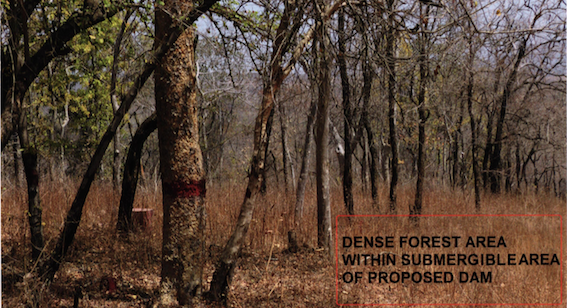
ANS: The official minutes of the Forest Advisory Committee meeting notes that the project will involve felling of 46 lakh trees (each of girth greater than 20 cm) from the forest area alone, by the time project is completed. This will have huge hydrological impact, besides environmental, biodiversity and climate change related impacts. But none of these impacts have been properly assessed. The FAC & also NBWL (National Board of Wild Life) in fact recommended reduction in height of the dam and said that all the inflows into the dam should be released as environment flows in non-monsoon months. It wanted an independent assessment of the claim that there is no alternative to the project for Bundelkhand. The CEC report in fact conclusively showed that there being no alternative is a wrong claim. None of these key recommendations of the FAC & NBWL have been implemented.
The project is sold in the name of solving Bundelkhand’s water problem, but the very beginning of the Detailed Project Report (DPR) shows that key objective of the project is to facilitate water transport to the upper Betwa basin areas like Raisen & Vidisha. So the Ken Betwa Project actually facilitates export of water from drought prone Bundelkhand to outside Bundelkhand!
As the CEC report showed, the Ken Betwa Project is a blunder being committed to solve the impact of earlier blunder of building over designed dams in Lower Betwa basin. In fact as early as in 2007, the then Panna Collector wrote to the Madhya Pradesh Water Resources Department and Planning Commission that KBLP will keep the tribal areas of Ken basin permanently backward.
Q. The project sounds very impressive on paper, for it lays down a plan to irrigate 6,35,000 hectares of farmland at the cost of Rs. 45,000 crore in six districts, Chhatarpur, Tikamgarh, and Panna in Madhya Pradesh and Mahoba, Banda, and Jhansi in Uttar Pradesh as also provide jobs in the construction and tourism sectors. But the reality is different on the ground. Critics point out that water calculations for this project are 30 to 40 years old and the water situation has changed since. The government has refused to put the water flow data in the public domain insisting this international flow data because the Ken and Betwa flow into the Ganges which goes to Bangladesh and by doing so, it will become a security risk. Your comments
ANS Absolutely, there is no hydrological justification for the Rs 45000 Cr project. Facts show that the project is not being constructed for Bundelkhand or Ken Basin tribal people including Panna district in MP or the downstream Banda district in UP. Most of Bundelkhand has average annual rainfall of over 900 mm, which if harvested where it falls, can quickly solve Bundelkhand’s water problems without major adverse impacts or major economic costs. So better alternative exist. In fact till about 4-5 decades ago, Bundelkhand was not known as water stress region, since it was full of very good forests and local water systems. That has undergone consistent neglect and destruction, leading to the situation today. The KBLP, in the name of solving Bundelkhand’s water problem, will be destroying the hydrological backbone of Ken River.
Indeed the hydrology of the Ken & Betwa rivers have changed significantly and that has not even been part of the hydrological assessment of the project. IIT studies have recently shown that the gap between so called surplus and so called deficit basins is narrowing, thus negating the claimed justification of the ILR projects. Interestingly, planning commission studies have shown that ILR projects can also adversely impact the thermal and temperature gradient in the Bay of Bengal and Indian Ocean, adversely impacting our monsoons, but the governments does not do even primary, honest impact assessment of these projects, leave aside doing such studies.
Q. The fact is that although the Ken is a perennial river, its water flow has gone down drastically and has even begun drying up in the summer months. These bureaucrats claim the Ken has plenty of water but the truth on the ground is that farmers in the Panna area are growing crops like wheat and chickpeas that use less water while the Betwa farmers are growing sugarcane that need more water. Ninety per cent of MP is water scarce. Take water away from Panna and this region too will become water scarce. Your comments.
ANS Indeed, the then Panna Collector in 2007 in her letters to the Planning Commission and Madhya Pradesh Water Resources Department fought hard to stop the Ken Betwa project. She showed that if the Madhya Pradesh’s own water resources master plan of 1983 were to be implemented in Ken Basin, there would be no water left for export to Betwa basin. She wrote: “The irrigated area of Panna is only 5% of the total area of the district (from government sources) … In light of this, it is irony that the State Government is still going ahead with the implementation of the Ken Betwa project in contravention of the best interests of the farmers…”
She added: “The basin is supposedly water surplus only because there has been scant utilization of upstream/ midstream water- there are very few small dams and no medium/ large dams enroute… As per the indicative master plan of the Ken Basin prepared by the State Irrigation Department, the total cultivable area of the Ken river basin is 14381 sq kms… The plan, made way back in the year 1983, has outlined detailed small, medium and major projects for the districts in the Ken river basin which, if actually constructed, will need more water than is actually available in the basin… But in independent India, where all citizens are equal, taking water away to another place without first benefitting those in the immediate vicinity is unarguably illogical…”
An exasperated IAS officer ultimately had to conclude that “Ken Betwa Project is Disaster for Ken Basin People, there is NO surplus water in Ken Basin”, if the basic water needs of Ken basin people were to be fulfilled and the Ken Betwa project “holds disastrous implications for the residents of Panna district as also other districts of the Ken river basin.” This correspondence from the then collector of Panna illustrates that the notion that Ken is surplus is based on fallacy and that the Ken Betwa project is being pushed on the foundation of injustice to the people of Panna and the people of larger Ken river basin.

In fact, SANDRP had shown earlier in 2005, through an analysis of the Feasibility Report of the Ken Betwa Link Project prepared by NWDA, that the whole exercise of showing that Ken has surplus water and Betwa has deficit, is an exercise in manipulation and that both basins were in similar situation. Even the CEC report concludes: “Therefore the projection of availability of surplus water in Ken Basin for transfer to Betwa Basin without first exhausting possibilities for development of irrigation facilities in Upper Ken basin appears to be premature… ln such a scenario inclusion of the KBLP Phase I as a river linking project is self-defeating.”
Q. The government wants to start water linking in several states including Punjab, Kerala and Telangana but these states have expressed their reservations about it. Several leading scientists have also questioned the efficacy of this scheme. Your comments.
ANS. The ILR concept is based on flawed concept that some river basins are surplus and others are deficit and by transferring water from so called surplus to so called deficit basin, the flood problems of the surplus basin and the drought problems of the deficit basin will be solved. The suggestion that floods means water surplus and drought means water deficit is flawed from several perspectives. As Anupam Mishra ji famously said, “Flood (of Bad deeds) and Drought (of good deeds) do not come alone.” If we go by that token, parts of Rajasthan these days are water surplus as it repeatedly faces excess rainfall and parts of highest rainfall areas of Meghalaya, literally the home of rain-clouds, is water deficits as water in some summers get sold by buckets. If we were to grow highly water intensive crops like sugarcane and paddy, any area will become drought prone. The whole concept is as flawed as the notion of some politicians that any water flowing to sea is a waste. Rivers are supposed to flow to sea and the estuaries where rivers meet sea are the most fertile, biodiversity rich areas across the world.
The concept of surplus water also faces opposition from politicians as no state wants to give water to another state. All states are ready to accept water from another state, but the party in power in state governments would consider it suicidal to give water to another state.
Q. Environmental activists warn that linking the Ken and Betwa rivers will submerge 6,017 hectares of forest land right in the heart of the Panna Tiger Reserve. The reserve will be bifurcated in two and will end being destroyed. This interlinking will further endanger the Ken Gharial Sanctuary. Your views.
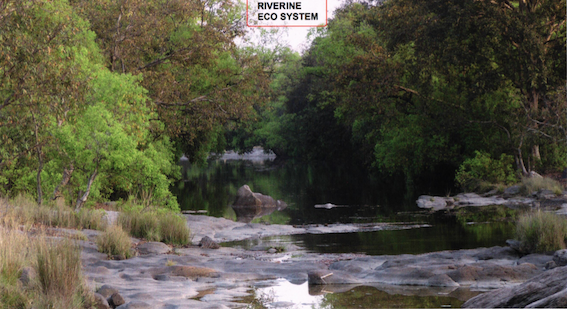
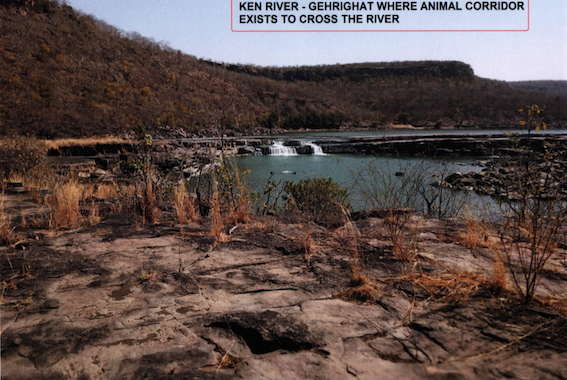
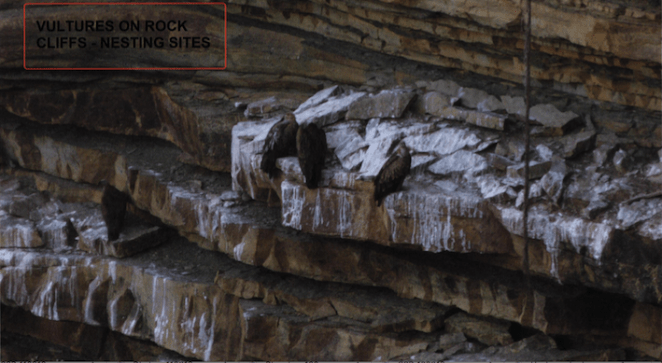
ANS: Indeed these facts about impact of KBLP on Panna Tiger Reserve (PTR) and biodiversity are well documented even in the official CEC report: “As per the IUCN category of threatened species tiger and several species of vultures are endangered species in the area. Apart from these, PTR is also home to other threatened species listed in Schedule I of the Wildlife (Protection) Act, 1972. The key species include Leopard, Rusty Spotted Cat, Sloth Bear, Wild Dog, Wolf, Chinkara, Chausinga (Four-horned antelope), Mugger Crocodile, Gharial (long snouted), Mahasheer fish (Tor tor) and several species of Raptors. Among many other wildlife Striped Hyena, Jungle cat, Civets, Jackal, Fox, Nilgai, Chital, Sambar, Wild Pig and two primate species (Common langur and Rhesus monkey) are also found in the area.”
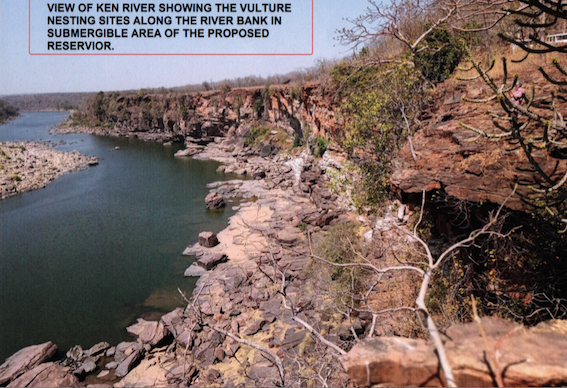
In fact the applicants before the Supreme Court and CEC had stated: Section 35 (6) of the Wildlife (Protection) Act, 1972 states that the destruction or removal of any wildlife, the destruction, damaging or diversion of the habitat of any wild animal and the diversion, stopping or enhancement of the flow of water into or outside a National Park or Sanctuary, can only be permitted if it is found to be necessary for the improvement and better management of wildlife. The CEC concluded that the NBWL approval of the project is in violation of this clause of the Wildlife (Protection) Act-1972 since the approval “has not been proved to be necessary for improvement and better management of the wildlife therein as provided in Section 35 (6) of the Wildlife (Protection) Acl, 1972”.

Specifically on Ken Gharial Sanctuary, the CEC report analyses: “During the monsoon flow of water with silt is essential for survival of the Ghariyal Sanctuary located downstream of proposed Daudhan Dam. The ecological flow of water from the dam will not be carrying any silt because the water which is being released downstream is only after sedimentation of the silt within the reservoir. The massive engineering structure of the dam is bound to isolate the upstream aquatic fauna of the Panna National Park and this may have direct impact on the breeding habits of aquatic life forms both upstream and downstream of the dam.” There is also no certainty that adequate water flow from the dam for the Gharials and other biodiversity will be released downstream as this has neither been assessed nor included in the project hydrology.
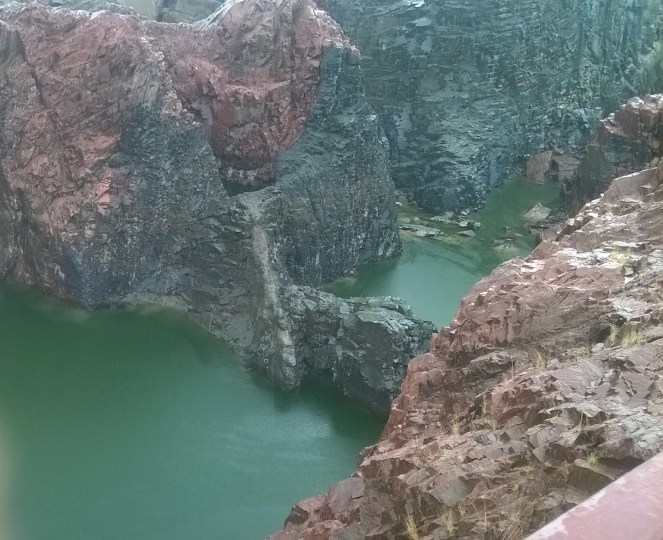
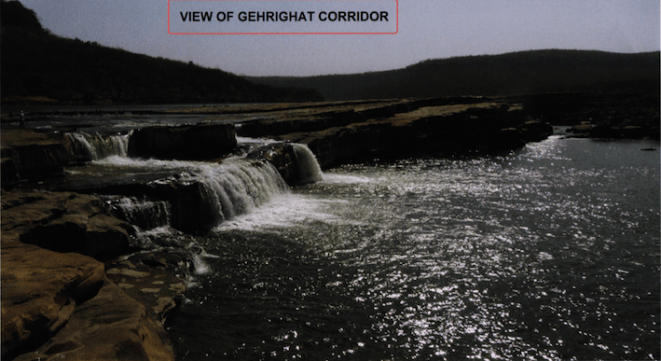
What is less known is that KBLP will also destroy some of the geological wonders of India. Raneh Falls, just downstream from the proposed dam site, is like mini Grand Canyon and mini Niagra falls of India. With water flow to the site severely curtailed by the proposed KBLP, this wonderful geological site is likely to be permanently destroyed. The CEC report acknowledges this in a way when it says: “The cliffs and gorges on both sides of the River Ken not only offer some spectacular scenery but also have a unique habitat for a variety of wildlife species.” It added that the project “will result in disruption and disappearance of the millions of years of evolution progressing in the unique ecosystem along River Ken specially in gorges, caves and cliffs.”
The thousands of affected people are today so disappointed and angry that they are on agitation sleeping on their own funeral pyres.
Q. The global anti-dam movement is speaking out against large hydropower projects to protect ecosystems, land rights and river restoration warning that large dams are not as efficacious as the dam lobby is making them out to be. Your views?
ANS. Here it would be relevant to look at the conclusions of the World Commission on Dams (WCD), which was set up by a collective including the World Bank, IUCN, governments and civil society groups. Seven of the twelve WCD commissioners, including Chairman Prof Kader Asmal, Water Resources Minister of South Africa, were all their lives supporters of large dams. Governments across the world, including Indian Government fully participated in the functioning of the WCD. The WCD report that was released in Nov 2000 by Nelson Mandela did not say large dams were all bad or that large provided no benefits or that no large dams should be build. In fact it provided a framework for decision making to arrive at right decisions about water and energy development options. Among the many conclusions of the WCD were indeed that large dams deliver far fewer benefits compared to promises and have much higher costs and impacts compared to prior assessments.
The WCD report recommended evaluating all alternatives, recognizing stakeholder rights, assessing risks transparently, and ensuring that affected populations share in project benefits. The WCD recommendations are built upon five core values: equity, efficiency, participatory decision-making, sustainability, and accountability. The WCD framework for decision making starts not from projects, but from needs assessment and prioritising needs and options. The KBLP violates everyone of these key values and recommendations of WCD.
Pandit Jawaharlal Nehru is credited with calling big dams temples of modern India. Not many people know about his 1958 speech before CBIP (Central Board of Irrigation and Power) annual meeting, where is talked about the disease of megalomania, building big projects for the sake of showing we can do it. He said that smaller projects can provide much faster and more benefits, at much lower costs and impacts. Ultimately, prayers can also be offered in small temples?
In the era of climate change, high impact projects like the large dams including KBLP are going to be greater liabilities as they destroy the remaining adaptation capacity of the society. Earlier we recognise these realities and include them in our decision making processes, better will it be for our future.
Q. You have been quoted as stating that we urgently need a complete overhaul in the institutional architecture of our water sector. The Central Water Commission needs to be disbanded and the entire architecture of water, dam construction and flood forecasting and monitoring should be done by an independent body. Your views on this.
ANS. This was indeed also the conclusion of the Mihir Shah committee set up for review of functioning of CWC, boldly set up by Shri Shashi Shekhar, then secretary, Union Ministry of Water Resources. CWC has large number of functions and responsibilities, many of them are in conflict with each other. CWC’s track record is also very poor in most aspects including areas like Hydrology, Geology, Geomorphology, Rivers, Dam Safety, Dam Design, Rule Curves, Flood Forecasting, Flood Management, Early Warning Systems etc, which are supposed to be its core competency areas. CWC has a mindset that considers itself beyond any questions about its performance or accountability. Many times it works more like a lobby for large dams.
State of our water resources in India is pretty worrisome. So far we have meandered along largely using the back up of groundwater. Groundwater is our water lifeline, whether we like or not, want it or not. Over 90% of additional water that India has used in over 4.5 decades has come from groundwater, a source in which CWC has no role. In fact the complete neglect of local water systems, rivers, wetlands and such ecosystems under the shadow of CWC’s large dam centric advocacy has led to their systematic destruction, which is having huge adverse impact on the groundwater recharge quantum. Similarly due to the legacy of CWC kind of institutions, we are doing pretty little for groundwater regulation. The impact of all this is that our ground-water lifeline is fast approaching ICU worthy situation.
The state of our rivers is one of the worst in the world. There is no agency who is monitoring or reporting the state of our rivers. We need an independent agency monitoring and reporting to the people of India about the state of our rivers, putting out information promptly, on daily basis. We need such independent agencies for flood forecasting, environmental regulation and also dam safety, among other aspects.
Q. How has dam mismanagement added to the water woes of this country. What role has the CWC played in accelerating this situation?
ANS. The dam mismanagement can be seen in several different ways. In monsoon, wrong operation of dams have frequently brought avoidable floods in downstream areas. Dams not following the rule curve and having non-transparent, non-participatory, unaccountable governance means that the reasons and persons responsible are never addressed or held accountable. The rule curve needs to be in public domain and need to be reviewed every 3 to 5 years. Dam operation needs to be mandatorily informed by information about catchment rains, catchment flows, upstream dam situations, downstream river carrying capacity, among other aspects. But this is hardly happening. All information related to dam operation should also be promptly in public domain and must remain in public domain as long as necessary.
Proper dam management should include catchment area monitoring and treatment, but that is clearly not happening even in intent, leave aside on ground. This leads to accelerated siltation of dams, reducing its storage capacity and thus benefits. It also means more frequent and higher intensity flood flows in downstream areas.
Inadequate maintenance of the dams, including its spillway gates also creates operational and structural safety issues for the dams. Similarly, the spillway capacities of most dams is now out dated and needs review and updating in the changing climate situations leading to more intense rainfall more frequently. Not addressing this also increases the possibility of unsafe dams.
We are also very poor in assessment of social, environmental and disaster potential of dams, which means our decision making process remains uninformed and flawed. We are frequently confronted with what dam developers love to call “geological surprises”. These are nothing but consequences of inadequate appraisals. We may soon start hearing about hydrological surprises! Dam Decommissioning is not even part of our policy, practice and legal situation!
In all this, Central Water Commission has a very important role. Unfortunately, neither CWC is performing the role expected of it, nor is it doing anything to improve these key governance issues. Similarly, on the key issue of Dam Safety, CWC has ensured that there is no role for any independent individuals and the governance is also non transparent.
Q. What kind of local management solutions should we go in for- how should we restore local water harvesting structures like jihad . Please give your suggestions.
ANS. Local and participatory management has to be the backbone of governance of almost all aspects related to water resources development, monitoring, management including groundwater, dams, rivers, local water systems, pollution, sand mining, rainfall monitoring, pollution, and so on. Rainwater harvesting, groundwater recharge, water budgeting, and selection of appropriate cropping pattern are all that local communities can most eminently do, provided there are checks and balances to ensure that this does not lead to perpetuation of inequalities based on castes, religions and other aspects.
Specifically in case of KBLP, CEC report observes: “Construction of check dams along the course of the rivers and other soil and water conservation measures can rejuvenate the aquifer” and “the alternative to the main objectives of the (KBLP) project proposal of irrigation and alleviation of poverty have not been examined by the project proponents”. CEC also concludes that the recommendation that is particularly relevant here is: “ldeally a team of independent experts on surface water hydrology drawn from leading scientific institutions should be requested to examine the hydrological aspects of the Ken-Betwa River Link”. This was also the recommendation of the NBWL Sub-Committee and also FAC Sub-Committee that was ignored by NBWL. It was unfortunately brushed aside by NWDA, CWC and others.
Will better sense prevail? It’s still not too late to push this.
Himanshu Thakkar (ht.sandrp@gmail.com)
NOTE: An edited version of this published in National Herald (English) and Sunday Navjivan (Hindi) on May 3, 2026: