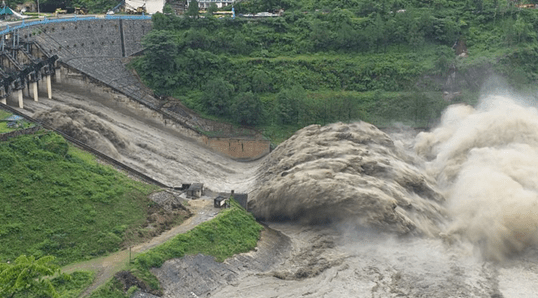
(Feature Image: Pandoh dam discharging silt laden flood waters in Beas river in Aug. 2025. Source: Amar Ujala)
In a remarkable development, the Himachal High Court has taken cognizance of the impact of silt flushing from the Shanan Hydropower project in Mandi district of Himachal Pradesh on the downstream fish, has fined the project Rs 12 lakhs and has ordered scientific monitoring of the future sediment discharge, only to be done after March 1 each year. The order is largely due to the fact that under the Himachal Pradesh Fisheries Act, Nov to Feb is trout breeding season. The order thus is not likely to be applicable for silt flushing by other hydropower projects. It is also good to see that the court has formed a monitoring committee and asked for compliance reports.
The order also makes it clear by implication that the Himachal Pradesh Pollution Control Board, Fisheries Department and also Hydropower Department are all guilty of not acting earlier to stop the illegal silt flushing by the Shanan HEP and the High Court should have also held them accountable for the violations. The court may also have directed the state government to ensure that the silt flushing by all the hydro projects in the state does not affect the breathing and breeding of downstream river fish and the same is scientifically monitored. It should also direct installation of sensors in all rivers downstream of all hydro projects to monitor the Total Suspended Solids, as it has directed for the Shanan HEP. It may also have asked for ensuring release of environment flows from all dams and hydropower projects and its regular monitoring.
Ultimately, the strict liability for abnormally dangerous activities as per the celebrated “Rylands versus Fletcher” case of (1868) — a landmark English tort law case quoted by the HP HC should be applicable to all dams and hydro projects?
Himachal HC halts Barot de-silting before March, orders compensation for restoring trout The Himachal Pradesh High Court has barred Shanan Hydroelectric Project from carrying out de-silting operations at the Barot project before March 1 every year — effectively covering the crucial breeding season. The Bench also ordered scientific monitoring of sediment discharge, and directed Rs 12 lakh compensation for restoring trout populations, while cautioning that “economic consideration will not prevail over the environmental rights. It is on the basis of the admissions, we found that in spite of the recommendations made during the lean season, de-silting was being carried out (in 2024-25). Respondent-Shanan Hydroelectric Project has, thus, carried out the de-silting solely for the economic gain,” the Bench of Chief Justice GS Sandhawalia & Justice Bipin Chander Negi observed. This was done notwithstanding earlier directions in a related matter, complaints to the Pollution Control Board and other authorities by locals, and newspaper reports.
The matter was placed before the Bench after the high court took suo motu cognizance of a letter addressed to the Chief Justice stating that silt discharge from Barot Dam in Mandi district of Himachal Pradesh had affected water purity level, leading to casualty of the marine life in the water. “The present case is about the rainbow trout and brown trout fish being caught in the sandstorm of silt and not being allowed to breath and breed,” the Bench asserted. The direction assumes significance as trout breeding is a notified closed season from November to February under the Himachal Pradesh Fisheries Act.
“The undertaking given as such by the respondent that it would be done in a scientific manner in the Uhl river apparently has been blatantly violated,” the Bench observed. Referring to expert findings, the court further noted that silt caused turbid aquatic environment, which was like living in a perpetual sandstorm. “The fish obtain oxygen by filtering water through their gills, a task made harder in turbid waters,” it was added.
During the de-silting process, efforts would be made to install sensors below the scour outlet and at least at two to three downstream locations to record data on Total Suspended Solids (TSS) discharge and maintain proper monitoring. The Department of Fisheries would inspect the release of at least 15 % of the minimum discharge, as directed by the National Green Tribunal (NGT), during the lean period and the project would not hoard water. The state would make efforts to constitute a River Monitoring Committee, to be chaired by the Deputy Commissioner, with senior officers from the Fisheries and Electricity Departments and a representative of the project proponent. The committee would advise on the manner and timing of de-silting, including whether it should be carried out during the day, and recommend restrictions for other projects in areas where trout fish abound and breed.
The Department of Fisheries would stock the river with brown trout and rainbow trout in a graded manner over the coming years using the funds. The department would also be at liberty to utilise the amount for further enhancement of aquatic life in the river, subject to furnishing details of utilization. Eventually, the utilisation certificate would be submitted at the level of the Assistant Director (Fisheries).
The Bench asserted it was of the considered opinion that necessary directions were required to be issued to the project proponent to ensure survival of trout fish in the Barot dam and the two rivers—Uhl and Lambhadagh. Admonishing the project authorities, the court observed it was for them to have consistently de-silted the reservoir over a period of time. It was on account of their own negligence that they led the silt as such to accumulate over the period of years and not made any attempt as such to de-silt earlier. In a “knee-jerk reaction” over a period of one month as such to desilt has affected the marine life downstream apart from the fact that the TSS levels have gone up out of control from the permissible limits…”
The Bench quoted the celebrated “Rylands versus Fletcher” case of (1868) — a landmark English tort law case establishing the doctrine of strict liability for abnormally dangerous activities. The matter has been listed for further monitoring on July 31, 2026, with directions for filing of a compliance affidavit — signaling continued judicial oversight over the ecological restoration.
HYDRO POWER PROJECTS
Meghalaya pushes for power sector reforms at NERPC meet Meghalaya Power Minister Metbah Lyngdoh has called for urgent policy reforms and greater central support to address rising costs and structural challenges in the Northeast’s power sector. The minister also pushed for enhanced support for pumped storage projects (PSPs), describing them as critical for integrating renewable energy and stabilising the grid amid rising solar and wind capacity. However, he noted that high costs—estimated at around ₹20 crore per MW – remain a major barrier.
DAMS
Govt asked to halt hydro, irrigation projects on Chambal The Standing Committee of the National Board for Wildlife, during the 90th meeting has directed that no hydro or irrigation projects, except related to drinking water if no alternatives available, will be considered until the environmental flows of the Chambal River improve.
The committee was informed by the WII that dolphin populations were observed to have shifted downstream compared to their past distribution in 2024. Moreover, during lean season, iconic species are only found in deep pools. The depth preferences of the species are at least above 3 metres, whereas sub-adult gharials prefer more than 4 metres, and muggers avoid shallow water.
After analysing the data of the Central Water Commission, the WII found that average flow at Dholpur during lean season (May–June) is around 25–50 m³/s. The minimum required environmental flow during the lean season for dolphins and associated fauna should be 369 m³/s to maintain 3 metre depth and an optimum of 849 m³/s for 5 metre depth.
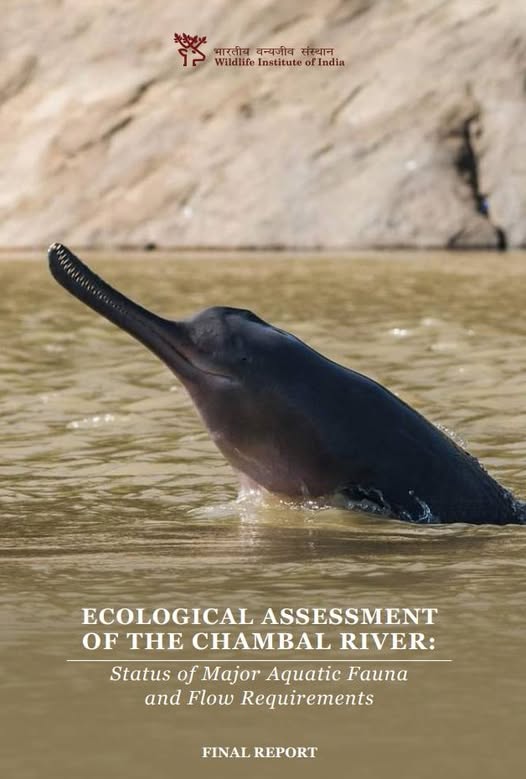
The report, titled “Ecological Assessment of the Chambal River: Status of Major Aquatic Fauna and Flow Requirements,” was submitted to the meeting of the standing committee on March 21.
Flow cut in Chambal, dolphins shift to Yamuna The report underlined a drastic reduction in the river’s flow, attributing this decline to increased water usage from the river’s tributaries. The report indicated that the river is under high stress, posing a serious risk to its ecological biodiversity. It noted that upstream flow has been restricted by the Gandhi Sagar Dam, Rana Pratap Sagar Dam, Jawahar Sagar Dam, and the Kota Barrage, warning that any further extraction could lead to complete drying of downstream areas.
The study analysed water flow data from the past three decades, showing a consistent decline. In 1990, the water flow was approximately 75 cubic meters per second (cumsec), which drastically reduced to 25 cumsec in 2022 during the lean season. Furthermore, the report also pointed out another consequence of reducing water flow. Low water levels during the lean season expose islands and sandbars, which are essential nesting grounds for island-nesting birds, including threatened species like Indian skimmers and black-bellied terns.
Ecological Assessment of the Chambal River The study cautions that projects like the Parbati–Kalisindh–Chambal (PKC) interlinking could further reduce already stressed lean-season flows and disrupt ecological integrity. It recommends prioritising environmental flow releases from existing dams, avoiding further hydrological diversion and undertaking rigorous cumulative impact assessments before proceeding with interlinking to safeguard critical habitats and river continuity.
Ken Betwa shows how NBWL became a rubber stamp for projects in protected areas Over the last 12 years, the Standing Committee of the National Board for Wildlife (SC‑NBWL) approved about 97% of projects—mines, dams, highways and other infrastructure—inside or near Protected Areas, most in ways that are unconstitutional, illegal and ecologically destructive. Our analysis of 58 Standing Committee meetings between 2014 and 2026 shows that of 2,186 proposals placed before it, 2,121 were approved, while just 52 were formally rejected. The near‑total approval rate after 2014 is especially stark because Protected Areas make up barely 5.4% of India’s land, compared to the 17.6% of global land that is formally protected.
The Ken‑Betwa river‑linking project in Panna Tiger Reserve, cleared in 2016, is emblematic of this pattern. The dam will submerge roughly a third of the reserve, including critical tiger breeding zones and habitat for the critically endangered white‑rumped and long‑billed vultures. The SC‑NBWL’s approval relied on unspecified “mitigation” measures, even though Panna’s tiger population had been painstakingly rebuilt after local extinction in 2009. The committee later cleared additional diversions in the very landscapes meant to ‘offset’ Ken‑Betwa’s damage. In 2023, the Veerangana Durgavati Wildlife Sanctuary in Madhya Pradesh was notified as a tiger reserve, yet in its 88th meeting, in January 2026, the SC‑NBWL approved the use of about 272 hectares of forest land inside this new reserve for an irrigation dam, with similar boilerplate conditions on “minimum disturbance” and night‑work bans.
PART 2: Defying The Law It Must Uphold—Wildlife Board’s Decisions Violate Wildlife Act & Supreme Court Orders Based on right-to-information replies and official records, this investigation finds that key decisions on India’s Protected Areas—including denotifications and clearances—were taken without documented adherence to the Wildlife (Protection) Act and Supreme Court orders. The records also show the absence of statutory reports and no available information on compliance with the compensatory afforestation requirements under the law.
Over 200 tribals protest Ken Betwa Project Madhya Pradesh Forest department seems to be in a baffled position over initiating action against the first-ever mass trespass into the core area of Panna Tiger Reserve (PTR) by over 200 tribals agitating and demanding compensation at par with the package of the Ken-Betwa river linking project. The tribals, led by Bhatnagar, have been staging protests for the past 10 days and are holding their position inside the core area of PTR throughout this period.
On Apr 14, the agitation went further, with protesters threatening a hunger strike and a ‘symbolic hanging’ if their demands were not met. The agitation, centred around Dhodan village, intensified inside the core area of PTR, where forest authorities have so far been unable to enforce prohibitory measures.
The agitation was suspended on Apr 16, 2026 for ten days after administration promised a 7-day survey by an SDM about the issues of rehabilitation raised by the people. According to Bhatnagar, the people had previously submitted memorandums to the administration several times. But the administration ignored them. Ultimately, they were forced to protest. He said if the administration doesn’t resolve the affected people’s problems within 10 days, they will resume the protest. Numerous questions have long been raised regarding this project to interlink the Ken and Betwa rivers. Since the very inception of the project, villagers have questioned the methods and parameters used for collecting data related to displacement. The villagers allege that various officials are demanding bribes from them in exchange for disbursing the compensation amounts.
Medigadda repairs The average annual yield from Pranahita at Tummidihatti is around 165 tmc ft, while at Medigadda it hovers around 280 tmc ft. Irrespective of the contested claims, Medigadda has more water available and this fact alone means Medigadda barrage needs to be repaired and brought back into use, a source said.
The barrage at Tummidihatti – for which survey work is going on – once completed, can store 1.84 tmc ft of water which would be pumped in a two-stage lift scheme and then flow by gravity into Sundilla barrage. Medigadda on the other hand, can store up to 16 tmc ft of water if required, and for short durations, without compromising the structural integrity of the barrage, something that was ignored during the BRS government which allowed full storage at the location. This realisation resulted in the setting up a committee of officials (with Col. Parikshit Mehra, a retired Army officer with expertise in irrigation matters, as its convenor) to oversee the work ahead, and next week, the team is expected to visit Delhi to brief NDSA on the plans to speed up the work.
Representatives of the Central Water and Power Research Station (CWPRS), Pune, agencies tasked with rehabilitation designs, including IIT Mumbai and AFRY India, a European agency having expertise in engineering, design and advisory of irrigation and hydro-power project, and implementation agencies, including L&T, will be part of it.
Work that awaits at Medigadda The ultimate salvation of the Medigadda barrage, the most damaged of the three Kaleshwaram lift irrigation scheme (KLIS) barrages, could lie in the option of constructing diaphragm walls – huge cement concrete walls going deep into the river bed and protect the foundations – being considered as the only possible option to ensure long term safety of the structure. The barrage was built on a design that rests on contiguous secant piles which form a cut-off wall. This was supposed to protect the barrage from possible under-the-foundation erosion but failed to do that, something that the National Dam Safety Authority (NDSA) had pointed out.
Now, amidst hectic consultations with experts, design consultants, and irrigation engineers, it has emerged that Medigadda, if it is to be saved, will need diaphragm walls along its length, and this option is learnt to have come up for discussion at a high-level meeting chaired by irrigation minister N. Uttam Kumar Reddy on Sunday. AFRY India, the design consultant for rehabilitation designs for Medigadda, was of the opinion that ultimately, only a diaphragm wall would save the barrage. Such a wall could go fairly deep, some 40 metres or so, once the geophysical and geotechnical test results are available. This could mean a long and fairly expensive undertaking, but once done, the barrage could be put back to work, but only after the other component of design deficiency – that of short stilling basin – is addressed.
The stilling basin, a structure designed to slow down the speed of water flowing downstream, was practically non-existent at Medigadda with only a downstream apron structure followed by a series of cement concrete blocks that were meant to dissipate the energy from the flow, one of the fatal flaws that was also pointed out by the NDSA. A proper stilling basin with baffles in between and extending up to some 60 metres will be designed to ensure that flowing water will not damage the river bed which otherwise could contribute to seepage from under the barrage foundations, as had been the case with Medigadda.
The irrigation department, determined to begin works at the barrage, is learnt to have set itself a October/November deadline this year to start works on the stilling basin, and has also drawn up a schedule for not just Medigadda, but also for Sundilla and Annaram barrages to start this work, with the major repairs to follow. Meanwhile, a major exercise is being mounted to start drilling around 1,000 boreholes at the three barrages for geological studies of the riverbed, the results of which could help in preparing barrage repair designs.
Nangal Dam 24% silted up The storage capacity of the Nangal Dam lake, a critical component of the Bhakra canal system, has reduced by nearly 24 per cent due to accumulation of silt. According to data presented in Parliament by Union Jal Shakti Minister in response to a query by Congress MP Manish Tewari, the lake’s storage capacity has declined from its designed level of 25.22 MCM to 19 MCM.
The Nangal Dam lake feeds the Nangal hydel channel, which further becomes the Bhakra main line, supplying water to Punjab, Haryana and Delhi. The reduced capacity may affect discharge levels into the canal system, particularly during peak demand in the summer. The lake also supports hydropower generation. The Anandpur Sahib hydel channel, which also originates from the reservoir, feeds two powerhouses at Ganguwal and Nakkian.
The Nangal Dam lake has been notified as a wildlife sanctuary and a wetland. The surrounding area within a 100m radius has been designated as an eco-sensitive zone. As a result, any desilting activity would require prior clearance from the Union Ministry of Environment.
Progress in Tungabhadra dam gate installation Work on installing 26 of the 33 crest gates had been fully completed and testing work was on for 15 of them. O R K Reddy, secretary of the Tungabhadra Board, gave a break-up of the expenses so far for replacing the 33 gates. The new gates would cost Rs 44 crore, he said, while the chain links would cost Rs 5.1 crore. Consultation charges would come to around Rs 1.34 crore, he said. The whole exercise would cost a total of Rs 51 crore, Reddy said, adding that Rs 29.5 crore had been paid to contractors so far.
1. Seshachalam Pumped Storage Project (600 MW) in 137.44 Ha at Village Adaram, Anjuru, Anjuru Reserved Forest And Kondaturu, Sub Dist K. V. B. Puram, Dist Tirupati, Andhra Pradesh by Venika Jal Vidyuth LLP – Terms of References: APPROVED
2. Chitawad Barrage Major Irrigation Project (CCA: 65000 Ha) in 4120.67 Ha at Village Thikriya, Alot, Amri, etc, Sub Dist Mahidpur, Nagda, Ghatiya and Tarana, Dist Ujjain, Madhya Pradesh – Terms of References: APPROVED
3. Integrated Anandapur Barrage Project (CCA: 60,000 Ha) in Keonjhar dist, Odisha by Dept of irrigation, Govt. of Odisha – Amendment in Environmental Clearance: APPROVED
4. Niare Hydroelectric Project (from 870 MW to 909 MW) in (from 429.585 ha to 175.05 Ha) at Village Niare, Upper Subansiri Dist, Arunachal Pradesh by Andra Power Pvt Ltd – Amendment in Terms of Reference: PP wrote that a revised PP will be submitted.
5. Dikchu HEP (from 96 MW to 110 MW) in 55.5329 Ha (existing) at Village Nampong, Rongong, Samdong and Sangtok etc., Sub Dist Gangtok and Mangan, Dist: E Dist & N Dist, Sikkim by Sneha Kinetic Power Projects Pvt Ltd – Terms of Reference: APPROVED
6. Aruna Kolamb Open Loop Pumped Storage Project (1200 MW) in 383.09 Ha at Village Gothane, Kolamb, Kolik and Varchiwadi (N.V.), Subdist Panhala & Rajapur, Dist Kolhapur and Ratnagiri, Mah by THDC India Ltd – Terms of Reference: APPROVED
7. Sukhnai Closed Loop Pumped Storage Project (1000 MW) in 277 Ha at Village Nadi Kathari, Babura Raghunath Singh, Chandragarh, Devhat, etc Sub Dist Lalganj, Dist Mirzapur, Uttar Pradesh by Hinduja Renewables Energy Pvt Ltd – Terms of Reference: APPROVED
8. Chhadgada Closed Loop Pumped Storage project (900 MW) in 292.4Ha at Village Chhargarh, Deoghat, Devhat & Katra, Sub-dist Koraon & Lalganj, Dist Prayagraj & Mirzapur, Uttar Pradesh by GSC PSP Uttar Pvt Ltd – Terms of References: APPROVED
CLIMATE CRISIS
Hanging glaciers in Uttarakhand can create disasters The rapidly changing climate has weakened swathes of the Himalayan glaciers and formed unstable chunks of ice that hang off steep slopes and can snap, setting off a slew of environmental disasters in Uttarakhand, a new paper has found. The paper – led by the Indian Institute of Science, Indian Institute of Technology Bhubaneswar, and the Defence Geoinformatics Research Establishment – mapped 219 of these chunks, known as ‘hanging glaciers’ in Alaknanda basin. These can create disasters like the Dharali disaster last year and Chamoli rock-ice avalanche disaster in Feb 2021.
How Uttarakhand’s weather changed from 1951 to 2025 The Western Himalayan region is experiencing critical climate shifts: declining, erratic winter rainfall and rising minimum temperatures. This long-term trend, confirmed by IMD data, severely impacts agriculture, especially crop yields and apple production, and affects tourism. Farmers face reduced food security and economic hardship, leading to increased out-migration. Urgent adaptation and localized support are needed.
In Uttarakhand, October rainfall has varied sharply over the last five years: It fell from 232.8 mm in 2021 to 6.4 mm in 2024, before rising again to 46.1 mm in 2025, pointing to large year-to-year swings. Over this period, the total monthly average rainfall in the state was around 87 mm, showing the degree of variability. In Himachal Pradesh, December rainfall showed the widest variation, ranging from 0.17 mm in 2022 to 50.2 mm in 2023. In Jammu and Kashmir, November rainfall fluctuated significantly, from 65.7 mm in 2021 to 3.6 mm in 2024, before increasing again in subsequent years. While precipitation has become increasingly uneven, minimum temperatures show a steady rise rather than fluctuations.
Bhim Singh Rawat, SANDRP, recalls that knee-high snow was once a common occurrence in his village in Uttarakhand during winters. “I haven’t seen anything close to those levels, particularly in the last few years,” he said. “The decline has forced many households to depend more on markets and government rations for food, as local production becomes less reliable.” According to Rawat, this has contributed to out-migration from Uttarakhand, with younger people leaving villages in search of work as farming becomes less viable.
INTER BASIN WATER TRANSFER
Tapi Water Reaches Karjan in Narmada basin The water from the ₹927-crore Tapi–Karjan Link Lift Irrigation Scheme has reached the Karjan River, a tributary of Narmada. The project is proving to be a vital lifeline for farmers in Umarpada taluka of Surat district, Chikda and Dediapada talukas of Narmada district, and Netrang taluka of Bharuch district.
URBAN RIVERS
Slow death of Sahibi River in Delhi Delhi’s largest drain Najafgarh, which was once known as Sahibi river, brings in pollution from Haryana to the city’s stretch of Yamuna, apart from carrying waste from Delhi’s colonies and industries. Can reviving Sahibi revive Yamuna? Najafgarh, a part of the Sahibi River, was one of the many natural waterways that drained into the Yamuna. This is why the Delhi government wants to rename the drain as the Sahibi River. But at its origin point in Rajasthan, the river is completely dry. About 220 km away from Delhi, in Rajasthan’s Shahpura, lies Triveni Dham. The place gets its name as three streams from the Saiwad Hills join here to form the Sahibi River.
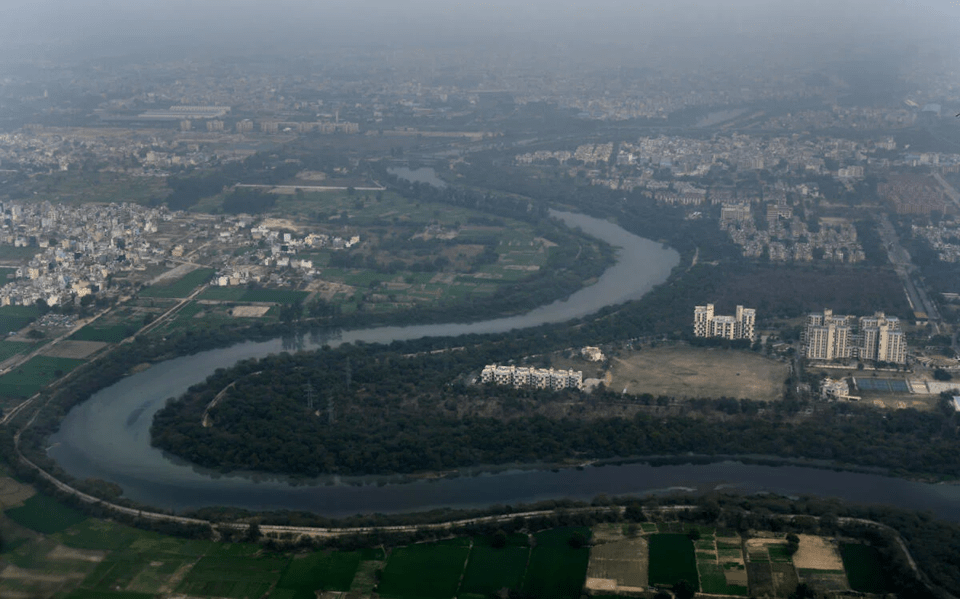
Some water gets collected at the Triveni Dham during the monsoon for a day or two, but there is no flow. About 10 km downstream, a dam built across the Sahibi is also dry. “There has been no outflow since its construction in 2003,” a local official says. Further downstream, the Masani Barrage in Haryana was constructed to control floods on the Sahibi. “Water from Sahibi has not reached the barrage in almost 30 years since the 1996 flood,” says an official at the barrage. Dhansa Barrage at the Delhi-Haryana border is the point at which the river enters Delhi.
Farming near toxic water flags concerns Cauliflower farming has flourished in Dichaon Kalan, however, concern persists as some farmers are forced to use polluted drain water for irrigation. Experts said agriculture along the Najafgarh drain is being watered with untreated mix of industrial and domestic wastewater. Farmers have demanded an alternative clean sources of water, either through canals or other outlets.
Experts point to a structural gap driving this dependence. “There are several farmers that are using water from the drain, as unlike Haryana or Uttar Pradesh, we do not have proper irrigation channels or canals. If the farmer cannot use groundwater, he will end up using this highly polluted water,” said Paras Tyagi, an activist with NGO CYCLE India. Bhim Singh Rawat, of SANDRP said if only sewage was used to irrigate fields, it does act as manure to an extent, however, Delhi’s drains, including the Najafgarh drain are carrying a mix of sewage and effluents.
Sabarmati River: 15000 truckloads of muck raise the river bed level Over 15000 truck load of muck dumped in the Sabarmati river in Ahmedabad has raised the river bed level by 5-7 ft, reducing the flood carrying capacity of the river, raising concerns about the increased flood vulnerability.
Concerns over debris blocks Mula flow Hinjewadi residents, who depend on the Mula River for drinking water, have raised concerns over the large-scale dumping of construction debris and obstructions near the Hinjewadi–Wakad bridge. They claimed the situation has affected water quality and triggered serious pollution concerns. Residents explained that water from the Mula River is treated before being supplied and serves as a key drinking water source for multiple housing societies in the area, making any contamination a significant public health risk. Anirudha Karandikar, a resident of Blue Ridge township in Hinjewadi, said debris generated during bridge construction on NH-48 has significantly obstructed the river’s flow.
Pune riverfront work narrows the Mula-Mutha, slashes green to grey The network of rivers in Pune have created and sustained life; their banks, riparian zones, and channels (not canals) have been functional spaces for humans and flora-fauna, nurturing an eternal ecological truth. The riverfront development will turn it from a flowing—though filthy—water body into a canal to transport partially-treated sewage and solid waste downstream, disturb its biodiversity, and kill most of its 44.4 kilometres.
Pune braces for more floods as the rivers are narrowed, concrete embankments constructed, and hundreds of trees felled. Importantly, there are questionable gaps between the project’s hydraulic studies and the Water Resources Department’s figures. People have been resisting the ‘Sabarmati model’ with Chipko movements and litigations to save the river ecosystem that enriched Pune’s socio-religious-cultural life, urging authorities to adopt an eco-anthropocentric lens instead of the consultant’s model.
Torsa River affected by Solid Waste of Jaigaon city In Jaigaon, a town in West Bengal on the border of India and Bhutan, poor waste disposal and the lack of waste management is becoming a critical environmental issue. Jaigaon is a key tourist and trade entry point to Bhutan. Content creators from the town are using social media to raise the problem and are participating in clean up drives while they wait for action from the authorities.
RIVERS
RBM scheme extended The River Basin Management (RBM) scheme is proposed to be continued during the 16th Finance Commission period from 2026–27 to 2030–31 with a fully funded estimated financial outlay of ₹2183 crore. In the previous phase, covering 2021–22 to 2025–26, the total budget allocation for the scheme was ₹1276 crore. The scheme prioritizes major basins such as the Brahmaputra, Barak, Teesta, and Indus.
Mangalore meeting celebrates cancellsation of Kumardhara HEP, demands steps to river conservation A major biodiversity conservation conference held on the banks of the Kumaradhara River at Urumbi in Kadaba taluk of Dakshina Kannada district recently has put forth a series of strong demands aimed at protecting river ecosystems. Organised jointly by the Kumaradhara Environment Protection Committee, Save Western Ghats Movement and Vruksha Laksha Movement, the event brought together environmentalists, scientists, activists and local communities. The programme turned into a celebratory gathering following the state govt’s decision to drop proposed private hydropower projects on the Kumaradhara after sustained opposition for over 14 years.
The conference strongly opposed ongoing preparations to construct dams across the Gundya and Addahole streams to divert water to the Yettinahole project, warning that such moves would threaten the livelihoods of lakhs of people dependent on the Gundya, Kumaradhara and Nethravati river systems. Elected representatives from Dakshina Kannada were urged to take a firm stand against further river diversion projects. Calling the Yettinahole river diversion scheme a failed project, the meet demanded an independent scientific study of the region, followed by a high-level consultation involving experts and environmental activists at Subrahmanya.
Highlighting local ecological concerns, the meeting called for consultations on sustainable management of fish habitats in Todikana, Shishila and Dharmasthala regions, and demanded strict action against illegal sand mining along the Kumaradhara riverbanks. At a broader level, the conference urged the state govt to undertake a comprehensive study on the ecological carrying capacity of river basins in the Western Ghats. It also demanded that a high-level meeting of legislators, MPs and environmental experts be convened in Mangaluru under the assembly speaker to deliberate on critical river conservation issues. Prominent participants included former chairman of the Karnataka Biodiversity Board Ananth Hegde Ashisara, scientist TV Ramahchandra, seers, scientists, biodiversity officials, environmentalists and representatives from various districts.
Cancer courses through the Ghaggar Villages along Haryana’s Ghaggar river, especially Sirsa & Fatehabad, claim a surge in cancer cases, allegedly linked to contaminated water. This issue has sparked concern in Parliament and the State Assembly, with Sirsa’s political representatives demanding urgent action. Tackling this crisis is proving tough, due to the absence of reliable data on cancer patients in the State and inadequate treatment facilities, particularly in Sirsa.
Uttarakhand SMCG lacks river basin management plan Nearly a third of sewage treatment plants (STP) in Uttarakhand are discharging untreated sewage into the Ganga and its tributaries, according to a recent audit by the Comptroller and Auditor General of India (CAG), raising concerns about pollution along the river stretch from Devprayag to Haridwar despite significant public spending.
The CAG report found that 12 out of 44 STPs or around 32 per cent were releasing untreated wastewater due to inadequate capacity, faulty connections and poor maintenance. The CAG report, which reviewed projects implemented between 2018 and 2023, was recently tabled in the state assembly. It highlights gaps between investment and outcomes, with nearly Rs 1,000 crore spent in the state during the period but limited improvement in sewage management.
The report points to a fundamental gap in planning. The audit found that the State Mission for Clean Ganga (SMCG) had not prepared a state-level river basin management plan even after 13 years of its establishment. At the district level, no such plans were prepared either. The District Ganga Committees also did not prepare a district-level river basin management plan in any district, the report noted. This suggests that large-scale projects were implemented without a comprehensive, river-based planning framework.
The audit also highlights a lack of community involvement in planning and implementation. The State Ganga Committee, SMCG and implementing agencies did not involve local people in planning the Namami Gange infrastructure, the report said. A social audit cited in the report found that residents were dissatisfied with the infrastructure created, describing it as poorly aligned with local needs. This, the audit suggested, reflects a top-down approach to implementation.
The report also raised questions about the role of the state government. It noted that the state had not constructed any STPs or sanitation infrastructure in 16 Ganga-front towns using its own resources, leaving projects largely dependent on central funding and planning.
UP govt affidavit raises concerns The UP govt filed a detailed affidavit with the NGT on April 9, 2026. This document provides information regarding the ongoing works and progress achieved across the 37 districts associated with the River Ganga and its tributaries. This affidavit was submitted in compliance with the NGT’s directive issued on November 27, 2025.
The report indicates that progress has been made in flood plain zoning, enhancing STP capacity, and expanding the sewer network; however, incomplete sewerage systems and deficiencies in industrial waste management continue to pose significant challenges, thereby impacting the pace of the Ganga cleaning campaign.
In Meerut, where sewer coverage remains limited to just 30 percent and thousands of households lack connections, a large segment of the population in Bagpat also remains outside the sewer network. In Kanpur, five out of the seven STPs were found to be compliant with prescribed standards; however, elevated levels of chromium—attributed to the tannery industries—were detected in the two plants located in Jajmau, signaling a serious pollution concern.
Encroachments, silting, land reclamation on River Tel Due to encroachment and obstruction, the very existence of River Tel in Bihar is endangered, and the free flow of water has been obliterated according to an application before the NGT Mar 6, 2026. Obstruction of the free flow of water in the Tel river has caused severe waterlogging over 40 percent of the fertile land, noted the application filed by the Veterans Forum for Transparency in Public Life.
The application has been filed with the prayer that the river, which travels through Jalalpur, Revelganj and Chapra Sagar blocks of Saran district, should be made functional and free from obstruction / encroachment. Tel originates from three wetlands: Bhatkesari, Gamarhia and Mangolapur. During its course, it crosses villages in Jalalpur, Revelganj, and Chapra blocks and drains into River Ghagra (Saryu) near Enai village.
Bihar govt fines contractor over Saidpur STP lapses The govt has terminated services of the project director of the Saidpur STP over lapses and has sought clarification from the contractor, Toshiba Water Solutions. This was stated in a reply filed by the National Mission for Clean Ganga (NMCG) on April 11, 2026. The NGT had taken suo motu cognisance of a news report published in the Hindustan Times on February 26, 2024, titled Ganga water unsafe even for bathing, says Bihar govt report on river pollution.
The report stated that almost all major rivers passing through Bihar are unsafe even for bathing. It also highlighted that only a limited number of STPs had been constructed and were operational, and that river water quality in the state met bathing criteria only for some parameters, while failing to meet the standards for faecal coliform.
Delhi govt sets July 31 deadline to demarcate floodplain after NGT rap In a report dated March 23, Delhi govt said a review meeting chaired by the environment secretary was held on March 10 and 11. “DDA informed that the drawing has been received from the irrigation and flood control (I&FC) department. Based on this, ground truthing is to be carried out jointly with the revenue department. Feasible points will be fixed with bollards, and any issues encountered during ground truthing will be resolved in coordination with the department concerned. The work is likely to be completed by July 31,” the report said.
On Feb 23, the NGT had directed Delhi govt to submit a fresh status report within two weeks with a shorter and more reasonable schedule. The tribunal said ground truthing, installation of pillars and floodplain demarcation had been completed expeditiously in other states soon after details were received from the Survey of India. “Therefore, we find that the timeline of Aug 2026 given in the reply is not a reasonable timeline,” the bench observed.
NGT slams govt for delaying floodplain demarcation Pulling up authorities over delays in identifying the Yamuna floodplain in Delhi, the NGT has directed the Delhi government to expedite the demarcation of the river’s floodplain across a 22-km stretch from Wazirabad to Palla, observing that the timeline proposed by officials to complete the exercise by August 2026 was unreasonable. “We require the GNCTD to re-examine the steps which are to be taken for demarcation of the flood plain of river Yamuna and do an expeditious exercise for such demarcation at the ground level as the details have been received from the Survey of India,” said the NGT on Feb 27.
Expedite demarcation of Yamuna floodplain: NGT The order came during the hearings of original applications No 537/2023 and 572/2024, which were filed following media reports highlighting flooding and the absence of clear floodplain boundaries in Delhi. The GNCTD has been asked to submit a fresh report within two weeks with a shorter, practical timeline for completing the exercise. The matter is now listed for further hearing on March 25, 2026.
Delhi govt. to create 2,500 acres of reservoirs along Yamuna The govt is deliberating on an ‘Urban Flood Mitigation Program Delhi’ ahead of the monsoon, with a budget of ₹21,068 crore, multiple officials told The Hindu. The plan includes creating three ‘off channel’ reservoirs — two 1,000-acre facilities in Palla and Mayur Vihar, and a 500-acre reservoir in Okhla along the Yamuna floodplains — at a total cost of ₹90 crore.
Govt approves 4.7km flood protection wall To prevent low-lying areas from flooding during the Yamuna overflow, the Delhi government has approved the construction of a 4.72-kilometre-long wall along the river from Majnu Ka Tila to the Old Railway Bridge (ORB), chief minister Rekha Gupta announced on April 14. The target to complete the project pre-2027 monsoon season, she said, adding the decision, formally cleared as part of the budget, is rooted in the city’s repeated experience with severe flooding. The project draws on recommendations made in the August 2024 report of the Joint Flood Committee (JFC), which was based on detailed hydraulic modelling and data analysis by experts from the Central Water and Power Research Station (CWPRS), Pune. The study had identified the construction of a flood protection wall along this stretch of the Ring Road as the most viable long-term solution.
Experts, however, expressed reservations over the move, saying it could prove counter-productive by affecting the river’s health and natural floodplains and by risking a flood downstream. Bhim Singh Rawat of the SANDRP said, “Multiple linear and cross-sectional structures have already severely altered Yamuna’s natural pattern and restricted its meandering functions. Building a flood protection wall will further fragment the floodplain. Such barriers can push floodwaters downstream with greater intensity, increasing the risk of flooding in east Delhi. The government should look to expand natural buffers, which are more sustainable and climate-resilient in the long run.” “The ITO barrage aggravated the 2023 flood impact due to the malfunctioning of gates and is serving no purpose. The government should plan its decommissioning as it will reduce the flooding risks,” he added.
The Great Wall of Delhi? Areas such as Civil Lines, Kashmere Gate and Yamuna Bazaar have historically borne the brunt of floods, including major events in 1978 and more recently in 2023 and 2025, when water levels crossed danger marks and disrupted normal life. Experts, however, cautioned that preventing water from reaching floodplains can impact groundwater recharge and harm the ecology.
Bhim Singh Rawat, associate coordinator at SANDRP, said the Yamuna floodplains in Delhi are already heavily encroached and built upon, with areas such as Majnu ka Tila and the Tibetan colony located within the active floodplain. He said govt should ideally plan the removal of permanent encroachments in a phase-wise manner. “Creation of a concrete wall will further cut off a piece of floodplain from the river and has potential to aggravate flood threat and damages especially in downstream and eastern Delhi areas across the river,” Rawat said.
He added that the core problem was the non-transparent and unscientific operation of existing barrages. “The construction of barrages and bridges has already altered the natural flooding and meandering pattern of the Yamuna. Further disconnecting the river from its floodplain will only worsen the situation,” he said.
Instead, Rawat suggested that govt focus on ensuring accountable operation of barrages and addressing the rising riverbed levels in Delhi. “Attention must be given to managing sedimentation and undertaking measures such as dredging based on scientific assessment, rather than pursuing permanent construction on the floodplain,” he said As ITO barrage is currently serving no purpose and was among key reasons for aggravating 2023 flood damages, it is time govt starts planning its decommissioning which will benefit the river ecosystem in multiple ways apart from greatly reducing the floodingrisks and threats in Delhi, he said.
ISP fails to curb untreated sewage flow After two decades and more than ₹2,454 crore poured into the Delhi Jal Board’s (DJB) flagship Interceptor Sewage Project (ISP), a significant chunk of that investment appears to have effectively gone down the drain. An inspection ordered by the Centre has found that the project stopped only 60% of the sewage volume DJB claimed to have halted from entering the Yamuna.
According to the DPCC’s report, while DJB claimed to have tapped and diverted 238 MGD of sewage, only around 142 MGD had been halted by measures introduced under the ISP. The report added that more than 117 MGD of untreated waste is still flowing into the river from drains the board had declared “completed.” Further, the updated flow of sewage in smaller drains had risen to a total of 260 MGD.
The inspection also found serious lapses in monitoring. DJB had installed flow meters at just 12 points, of which four were already defunct. CCTV cameras were reportedly installed at 23 locations, but only eight were found operational. The board’s claimed sewage pumping capacity of 310.26 MGD was also found to be overstated, with actual capacity pegged at 259.72 MGD.
Bhim Singh Rawat, of the SANDRP, said the ISP has been delayed by over a decade and has failed to deliver results on the ground. “It was expected to be completed by 2016, but sewage generation has since increased with the expansion of unauthorised colonies. This points to a planning failure,” he said.
RIVERS BIODIVERSITY
Invasive species and waste are redrawing an estuary’s food web With broken links and a loosened food web, the Veli-Akkulam estuary now has few top predators. Invasive fish are pushing out native species and reshaping the ecosystem into a simpler, more fragile one, with impacts on biodiversity and fishing. Scientists call for urgent, ecosystem-based management focused on invasive species control, habitat restoration, and catchment-scale interventions.
Project Caracal kicks off in Greater Ranthambhore In a bid to strengthen conservation of one of India’s least understood wild cats, “Project Caracal” was launched April 15 in the Greater Ranthambhore landscape, marking the start of a structured 18-month effort to generate scientific data on the elusive predator across Rajasthan’s arid and semi-arid regions. Experts at the workshop noted that despite its historical range across India, the caracal now survives in fragmented pockets and faces multiple pressures. Its secretive nature has further complicated monitoring efforts, making systematic research both essential and challenging.
A caracal captured on a camera trap In March 2025, a caracal was recorded by a camera trap for the first time in Mukundra Hills Tiger Reserve, Rajasthan. The forest department plans to increase the number of camera traps in the location, to better understand the nocturnal wildcat’s presence and range. For crafting effective conservation strategies, experts call for more in-depth studies of the caracal, with a focus beyond protected areas too.
A dead dolphin was discovered in the Yamuna River between Kishanpur and Ekadla Ghat on April 11. According to a local fisherman, he had taken his boat out onto the river in the morning when, upon detecting a strong foul odor, he steered his boat in that direction. Upon approaching the spot, he found a dolphin—approximately 3 meters in length—lying dead, with visible injury marks on its mouth.
FISH, FISHERIES, FISHERFOLKS
Fish deaths in Satluj linked to pollution, bacterial infection: Report High pollution levels and bacterial infection are linked to large-scale fish deaths reported along the Satluj earlier this month in Ferozepur, according to a lab analysis of water and fish samples. The report, released by pro-environment group Water Warriors Punjab, found elevated biochemical oxygen demand (BOD) and high ammonia levels in river water, indicators of severe pollution, where the fish were found dead. Examination of dead fish revealed the presence of pathogenic bacteria Aeromonas hydrophila and Aeromonas veronii, known to thrive in oxygen-depleted conditions.
The fish were found dead on April 2 along the banks of the Satluj near Gatta Badshah village, close to Harike headworks at the confluence of the Beas and Satluj rivers, in Ferozepur. The incident adds to recurring fish deaths reported in the Harike region, with activists repeatedly blaming polluted discharges, including from tributaries such as Buddha Dariya in Ludhiana.
RTI link NHAI to Pashan lake fish deaths According to official records from the Pune Municipal Corporation (PMC), a major drainage line was damaged during excavation work carried out by NHAI along the Bavdhan service road. The drainage infrastructure had been installed by the civic body following earlier directions from the NGT to protect the lake’s ecosystem.
Civic documents indicate that the damaged line was not repaired promptly, leading to the discharge of more than 200,000 litres of untreated sewage per day into stormwater lines. These lines eventually connect to the water system feeding Pashan Lake, potentially contributing to the deterioration of water quality. Advocate Krunnal Gharre, who accessed and shared the RTI documents, alleged that the incident reflects multiple administrative lapses. He claimed that the continuous flow of untreated sewage near the lake contributed significantly to water toxicity. Gharre also alleged that repeated warnings issued by PMC officials to NHAI regarding the damage and associated public health risks were not acted upon.
SAND MINING
Chambal mining: SC mandates extreme legal measures The Supreme Court on April 17 laid down a rigorous legal and operational framework to tackle organized illegal mining in National Chambal Sanctuary. The Court directed State Pollution Control Boards to recover environmental compensation from violators for ecological restoration. To ensure enforcement, the bench ordered the immediate implementation of real-time monitoring through Wi-Fi-enabled CCTV and mandatory GPS tracking for all mining equipment in high-risk districts like Morena and Dhaulpur.
Furthermore, the Court established a standard of personal accountability for officials, warning that any negligence would be met with contempt proceedings, while reserving the right to deploy the Central Reserve Police Force (CRPF) should the administrative authorities continue to “drag their feet” against the mining mafia. the matter is now on 11th May for further consideration.
Flagging not just environmental destruction but also rising violence linked to mining mafias, including the killing of forest personnel, the Supreme Court called the situation a “systemic and institutional failure. The court also warned of stringent action, including a possible ban on mining and deployment of paramilitary forces if states fail to act.
Chambal mining: SC flags threats to bridge and wildlife Expressing strong displeasure, the Court questioned the failure of State authorities to curb the activities of the sand mining mafia. “It is happening under your nose… why at all is the State government existing?” the Bench remarked, adding that the situation reflected either total failure or possible connivance of authorities. The Court’s observations came in the backdrop of a recent incident in which a forest guard was allegedly run over by a tractor transporting illegally mined sand. The Bench referred to the incident to underline the growing risks faced by enforcement officials.
Senior Advocate Nikhil Goel, appearing as amicus curiae, apprised the Court that illegal mining had affected 8 out of the 34 pillars of the Ater–Fatehpur bridge connecting Madhya Pradesh and Rajasthan. He stated that sand had been excavated up to a depth of 25 to 50 feet beneath the pillars, posing a serious risk to the structure. Highlighting the gravity of the situation, Goel informed the Court that approximately 5,000 people use the bridge, raising concerns of a potential disaster if urgent steps are not taken.
“The photographs are self-explanatory… it is extremely sad,” the Court observed. Taking a broader view, the Court emphasised the need for immediate preventive measures. The matter has been reserved for orders, with the Court expected to pronounce its decision on Apr 17.
HC: Act against officials who failed to prevent sand mining Madras high court has directed the Sivaganga district administration to initiate action against officials who failed to prevent illegal sand mining in Thoothai village in the district. The court was hearing a public interest litigation filed by Chinnamari. The petitioner stated that certain private individuals were involved in sand mining activities in Thoothai village. The illegal activities resulted in destruction of agricultural lands and depletion of groundwater resources. Despite submitting several representations, the authorities failed to take steps to prevent the illegal mining activities. Hence, the petitioner moved court seeking a direction to the authorities to prevent illegal sand mining in the village.
Mining threat to EdappalamMoorkkanad bridge Rampant mining of sand from Edappalam Kadavu in the Thootha River is posing a danger to the Edappalam-Moorkanad Bridge, which connects Palakkad and Malappuram districts. The sand is being extracted from a 1.5 km-long stretch of the river to increase its depth in connection with the construction of the Moothikkayam regulatorcum-bridge. The work, extending 1.5 km from below the Moothikkayam regulator to the Edappalam bridge, involves mining sand worth around Rs 65 crore. The sand is being extracted for a private company based in Gujarat.
The sand mining, which was continuing unabated for several months, was stopped following local protests and a stay order issued by the Kerala High Court based on a petition filed by some residents of the area. However, the mining has now resumed after the authorities vaccated the stay. Consequently, four of the piling pillars of the Edappalam bridge are now exposed and are under threat of collapse, said local people. The residents noticed the damage caused to the piling pillars after the water level of the river dipped following a decrease in flow.
Excessive Yamuna mining causing threat to Ranney well Mining operations being conducted by a licensed contractor on the Bagpat side—in blatant disregard of regulations—have altered the course of the Yamuna River. By constructing a makeshift earthen path, the river’s flow has been diverted toward Sonipat; consequently, the water is now eroding agricultural fields as it advances toward the Ranney Well. This sudden and drastic shift in the river’s behavior has sparked widespread panic throughout the entire region.
The Jajal Ranney Well Project, constructed at a cost of ₹100 crore, now faces a direct and imminent threat. Should the Yamuna’s waters breach the facility, the entire drinking water supply for Sonipat city could come to a complete standstill. This would not only force millions of residents to struggle for access to water but would also inflict severe financial losses upon the administration.
A licensed company engaged in mining in the Yamuna River near Asadpur village flouted mining regulations and diverted the very course of the river. When a committee of officials from the Irrigation Department inspected the company’s mining site, grave irregularities came to light. The company was extracting sand from within the Yamuna River using heavy machinery.
WETLANDS, LAKES, WATER BODIES
Survey reveals 8,940 water bodies missing in Bihar The Second Census of Water Bodies for Assam, Bihar, Delhi, Ladakh, and Sikkim, conducted by the Ministry of Jal Shakti last year, shows that of the state’s 45,793 water bodies recorded in 2018-19, 36,856 still exist — meaning close to 9,000 have vanished. According to the census, 45 percent of these water bodies are owned by the Bihar government, although the state’s revenue and land reforms department has no information on how many are encroached — either partially or wholly.
The census shows that of the 35,027 ponds in Bihar in 2018-19, only 33,618 remain — meaning 1,409 have entirely vanished. The number of tanks has come down from 4,221 to 859, lakes from 2,693 to 258, and reservoirs from 2,156 to 315. Of the state’s water bodies, most (40.4 percent) belong to panchayats, followed by the State WRD/State Irrigation (22.3 percent). Threats to the state’s water bodies from encroachments — especially by the land mafia — have been a subject of concern. In a 2023 order, the Patna High Court said 1,045 ponds had been encroached upon.
Meghalaya group seeks Ramsar protection plan A Shillong-based group on April 17 wrote to CM Conrad K. Sangma, seeking the implementation of the Ramsar Convention on Wetland Protection in the state. In a representation to Sangma, the Hynniewtrep Integrated Territorial Organisation (Hito) pushed for the implementation of the Ramsar Convention after “conducting extensive research and analysis”. The trigger for the demand is the “ongoing agitation led by the Green Tech Foundation to preserve Lumpongdeng”, which highlights the “urgent need for governmental intervention in wetland preservation”.
GROUNDWATER
7 cricket stadiums yet to share GW compliance data, NGT told In Jan, 12 cricket stadiums across the country did not share details of the same, with NGT subsequently imposing a fine of Rs 5,000 each. In its latest report, CGWA said while five stadiums had shared data, seven had not yet responded. “It is submitted that in compliance with directions of NGT, responses have only been received from five stadiums or cricket associations – namely Saurashtra Cricket Association, Himachal Pradesh Cricket Association, Green Park Stadium, Madhya Pradesh Cricket Association and Maharashtra Cricket Association,” stated the report. It added the details included data on monthly and yearly usage of the water for irrigating the ground, and the proportion of sewage treatment plant-treated water and fresh water.
Punjab: Experts call for study on trans-border aquifers Even as the Punjab government is patting its back and claiming to provide water to the tail-end users by giving a nod to the 14-point action plan to preserve and replenish groundwater, it has turned out that tubewells in Pakistan may be pumping out the subsurface water, thereby failing the efforts intended at stopping the decline in water table.
The concern was raised during an international symposium on “Advances in Ecologically Sustainable Rice Cultivation and National Food Security: Unlocking the Potential of Direct Seeded Rice (DSR) in Punjab”. Experts have called for a comprehensive study on trans-border aquifers to assess groundwater extraction & evolve strategies to curb its overuse in agriculture & industry.
Meanwhile, Punjab Agricultural University (PAU) Vice-Chancellor Dr Satbir Singh Gosal has said diversification cannot be possible till the time guaranteed MSP is not offered for other crops.
URBAN LAKES, WETLANDS
Why Ramsar tag eludes Dhanauri State forest officials have time and again come up with replies, explanations and promises before NGT, but the position seems to not have shifted in any direction. Appearing for the state before the principal bench of the tribunal during the first hearing, following a petition by environmentalist Anand Arya in Oct 2023, the counsel said the proposal for notification was submitted to the Wetland Authority on Aug 4, 2022.
UP’s counsel, appearing in the same case on Sept 2025, sought an adjournment again to obtain instruction on whether the state was ready to send a proposal to declare Dhanauri a Ramsar site to the ministry, and whether Yamuna Expressway Industrial Development Authority (YEIDA) had any objections. NGT had already asked YEIDA about its position. In May 2025, the counsel appearing for the authority submitted that all possible action would be taken and the report would be filed within three weeks.
14 ponds filled up for Noida airport, 8 new excavated, YEIDA tells NGT YEIDA informed National Green Tribunal about the status of ponds under its jurisdiction that have been restored and rejuvenated. It also defended the acquisition of 14 ponds for Noida International Airport and challenged the scope of judicial review once environmental clearance was already granted, adding that eight new ponds have been excavated to replace them.
In a separate affidavit, Greater Noida Industrial Development Authority (GNIDA) also provided a status update for 281 ponds under its jurisdiction. YEIDA, in its April 10 affidavit, replied to concerns raised by the National Green Tribunal in its Jan 19 order, stating that it was granted environmental clearance (EC) on March 9, 2020, under the EIA Notification, 2006. The EC grant expressly takes into account the impact on existing ponds and incorporates mitigation measures, including the creation of alternative water bodies. Therefore, the decision is a fully informed and reasoned one, taken in accordance with the statutory framework, the affidavit said.
Meanwhile, the GNIDA affidavit states that there has not been much change in the status of ponds under its jurisdiction. Of the 281 ponds, 50 continue to remain encroached, and rejuvenation work was accomplished on only three ponds under phase 2 of the pond development work under GNIDA.
URBAN WATER ISSUES
India’s water crisis is not a resource scarcity problem According to experts, India’s water crisis stems less from infrastructural scarcity and more from the failure of governance. The absence of water-sensitive design has allowed cities to expand unchecked, almost erasing existing local water bodies such as lakes and ponds. This has led to significant depletion of groundwater, which is supposed to act as a reserve water source.
The Atal Mission for Rejuvenation and Urban Transformation finances water supply, sewerage, and green infrastructure projects. According to the Ministry of Housing and Urban Affairs, the govt has allocated Rs. 1,93,104 cr across nearly 3,500 projects over the past decade. Yet, water supply dominates spending priorities, accounting for 62 % of expenditure, compared with 34 per cent directed towards sewerage. Efforts to rejuvenate water bodies, which would enable groundwater recharge and augment long-term water availability, received a negligible 3 % of the total funding.
Until governance shifts from a linear, engineer-only, supply-obsessed model to a circular, community-engaged, water-sensitive design, people will keep dying from preventable contamination.
BWSSB’s push for Treated Water Stalled by lack of norms BWSSB and BAF are planning to ask data centres and the construction industry to use treated water. “We will hold a meeting next week with apartment associations and data centres to chart a course of action on using treated water. Apartments are ready for this, and we will soon take this forward,” BWSSB chairman Ram Prasath Manohar said. Usually, apartment complexes are allowed to sell surplus treated water at Rs 8 per kilolitre, with BWSSB buying it at Rs 10 but retaining Rs 2 as service charge. However, neither a functional supply network nor a dedicated fleet of tankers has been created to move this treated water from apartment STPs to industries, parks, or construction sites that could use it. From the time the mandatory STP rule came into force, surplus treated water in apartment complexes continues to go to waste.
According to BAF’s estimates, decentralised STPs in city’s apartment complexes produce about 300 MLD of treated used water, and another 400 MLD is available from BWSSB STPs. The estimated citywide demand for treated water is substantial—150 MLD for flushing and landscaping, 100 MLD for industrial operations, 300 MLD for construction industry, and 100 MLD for cooling systems in data centres and tech parks.
K Arun Kumar, BAF’s general secretary, said, “Nearly 50% of supplied water (to apartment complexes) is treated, and we are exploring its uses in parks and beyond. However, we need a clear, govt-approved framework as not a litre has been lifted so far (by govt). They (govt) made the rules on mandatory STPs. There is buyer interest but due to lack of guidelines and infrastructure, we are unable to proceed.” There needs to be clarity from the govt on cost, quality, and supply chain. There is need for standards such as BIS norms to ensure quality.
In Bengaluru’s water-stressed areas sit most of its data centres Bengaluru’s AI rush has turned the city into a hotspot for new data-centre projects. But as these always-on, water-hungry facilities multiply, they’re colliding with a familiar problem. The city’s aquifers are running low. Karnataka now has to figure out how to chase digital growth without deepening its water crisis.
Parched again The ideal long-term solution remains unchanged: Bengaluru needs to become a ‘sponge city’. This includes restoring the connections between lakes and wells to capture monsoon runoff, thus aligning land-use planning with the recharge capacity of each taluka, and overall sealing the ground less and increasing absorption on the surface.
Hyderabad HC slams officials about water hyacinth spread in lakes In a sharp rebuke over inaction, Telangana high court has flagged the unchecked spread of water hyacinth in city lakes as a serious public health risk, expressing shock over authorities’ failure to respond despite repeated warnings. Justice NV Shravan Kumar directed GHMC, HYDRAA and other departments concerned to act immediately to clear water hyacinth in Saroornagar lake.
The court ordered officials to tackle the water hyacinth menace across all lakes within GHMC limits. It directed immediate measures, including intensive fogging operations, anti-larval drives, deployment of dedicated inspection and monitoring teams, and regular removal of water hyacinth. The court instructed authorities to periodically apprise it of the steps taken and file status reports. The case has been posted to April 16 for further hearing. The directions came while hearing a petition filed by D Keerthi Kiran, a businessman from Saidabad.
Tanker economy – Pune’s parallel water market is no longer seasonal Somewhere along the way, the water tanker stopped being a stopgap and became part of the system. If there was any doubt about how central this system has become, last week offered a reminder. A brief strike by tanker operators was enough to throw routine into disarray.
Govt starts work on Delhi’s 1st integrated water master plan The Delhi govt has officially started preparing a 30-year integrated water master plan for Delhi, the first for the city, along with an overhaul of water supply infrastructure across six of its nine zones – east, south, north east, north west, south west and west Delhi, senior govt officials said. Expert agencies are being roped in to study these areas and guide upgrades, officials added.
The project will be implemented in six years and four months, during which the consultant will assist in infrastructure overhaul. Bidding process has started and will be completed by May 25. A key focus is reducing water losses and non-revenue water (NRW) currently estimated at 45%, the letter added.
Bhim Singh Rawat of the SANDRP said it is a long-term planning failure that Delhi does not have a water policy. “DJB has failed at every step from meeting demand, supplying clean water to not releasing untreated sewage. There is no guiding policy or master plan. Delhi has become extremely vulnerable and dependent on other states.”
WATER POLLUTION
NGT orders urgent steps against water pollution Citing national data which revealed that India recorded over 20.98 crore cases of waterborne diseases during 2005-2022, with diarrhoea accounting for nearly 86 per cent of the cases, the NGT has said that drinking water contamination amounts to water pollution and violates the constitutional guarantee of the right to life. The tribunal directed state authorities and municipal bodies to take urgent corrective measures in this regard, including developing a 24×7 water grievance monitoring app and relying on GIS technology. The observations came on April 13 in an order passed by an NGT bench in Bhopal while hearing a suo motu case based on a newspaper report highlighting groundwater contamination in Madhya Pradesh.
MONSOON 2026
On rainfall deficit forecast In the April of 2015, IMD issued a “below normal monsoon” forecast for the 2015 southwest monsoon season, predicting seasonal rainfall at 93% of the long-term average, again, ‘below normal.’ India ended up much worse at 86% Long Period Average (LPA). IMD expects a depressed monsoon this time in the second crucial half of the monsoon (August and September) on the back of weather models indicating an El Nino, the cyclical phenomenon where a heating of the central equatorial Pacific Ocean beyond 1 degree Celsius has corresponded nine out 16 times since 1950 to a deficient monsoon.
ENVIRONMENT GOVERNANCE
Why India’s renewable energy program has become one of green grabbing’s most prominent examples. A transition that runs on dispossession is not a just transition. It is the same old extractive logic wearing a solar panel. (Ankit Misra)
SOUTH ASIA
Indo Bangladesh Water Sharing The renewal of the Ganges Treaty represents a golden opportunity for India to rebuild its relationship with the 170 million people of Bangladesh. It is a chance to move from a “regime-to-regime” alliance to a “people-to-people” partnership. A fair treaty – one that respects the sovereignty of the downstream neighbour and provides clear, transparent guarantees of water flow – would do more for regional security than any amount of security transit or trade deals. Bangladesh should seek nothing more than its equitable share of the water that nature has provided and advocate for a treaty that is climate-resilient, ecologically sound, and diplomatically fair.
Faced with this perpetual stalemate, Bangladesh has moved toward a strategic alternative: the Teesta River Master Plan (TRMP). This is not just a technical project; it is a declaration of sovereignty. By dredging the river, building reservoirs, and managing the basin internally, Bangladesh can reclaim control over its water resources. If India will not sign a treaty, Bangladesh has to ensure its own survival. Implementing the Master Plan is the most practical solution to enhance agricultural productivity and reduce the risks of the flash floods that have become an annual nightmare for farmers in Bangladesh.
Bhutan: Punatsangchhu I HEP work restarted The work on 1200 MW Punatsangchhu I has been restarted on April 10, 2026 after remaining stalled since 2019. The work was started in 2008 with completion deadline of 2015. However, due to multiple and continuous landslides since 2013, destabilising the right bank slope, the work had to be stopped. So far 88% of the work is claimed to have been completed and 93.7% (Rs 8785 Cr) of allocated funds have been spent. The project is now expected to be completed in five years.
SANDRP
Also see: DRP 13 April 2026 & DRP 06 April 2026
Follow us on: www.facebook.com/sandrp.in; https://twitter.com/Indian_Rivers


