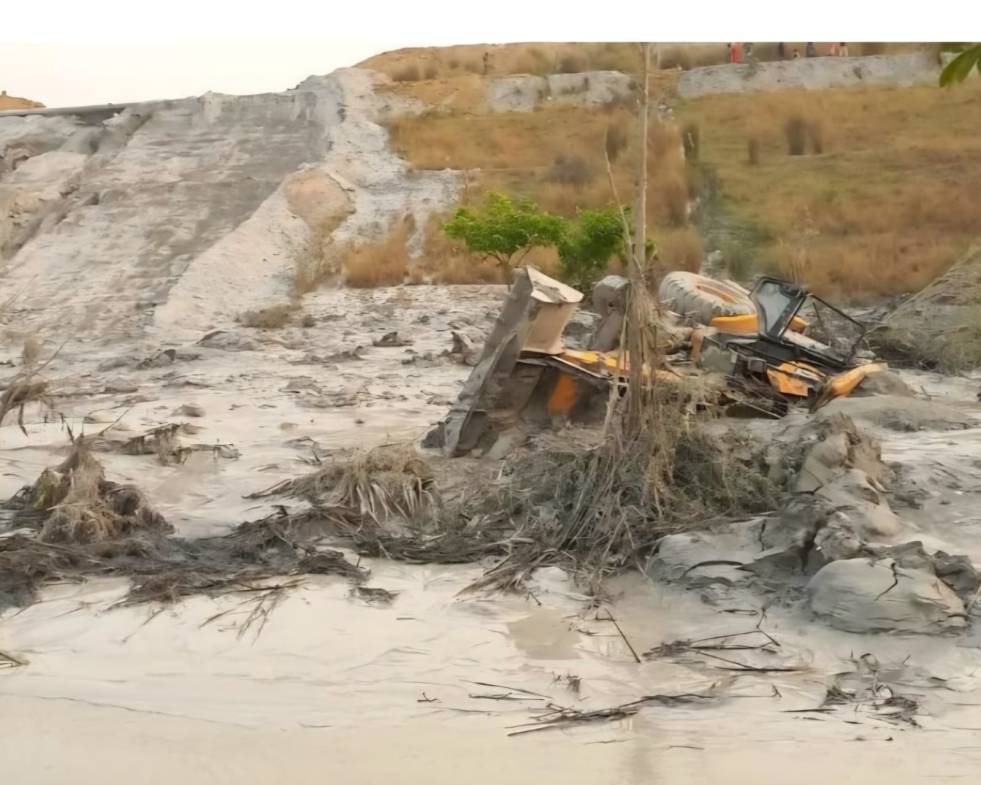
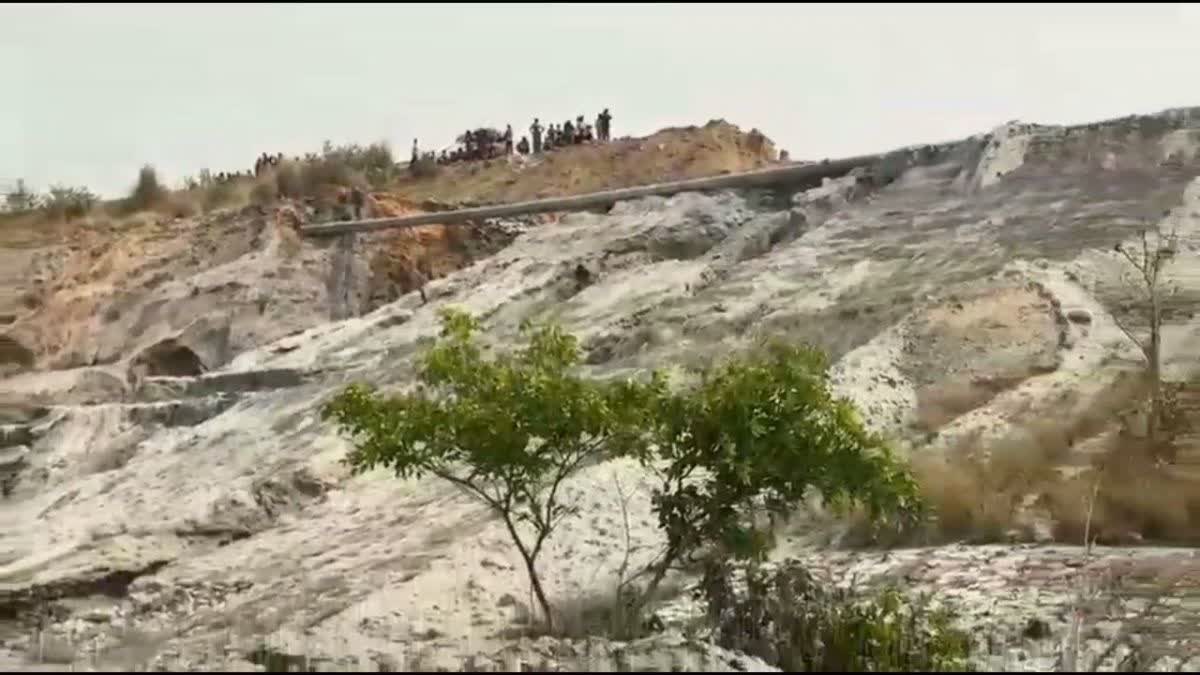
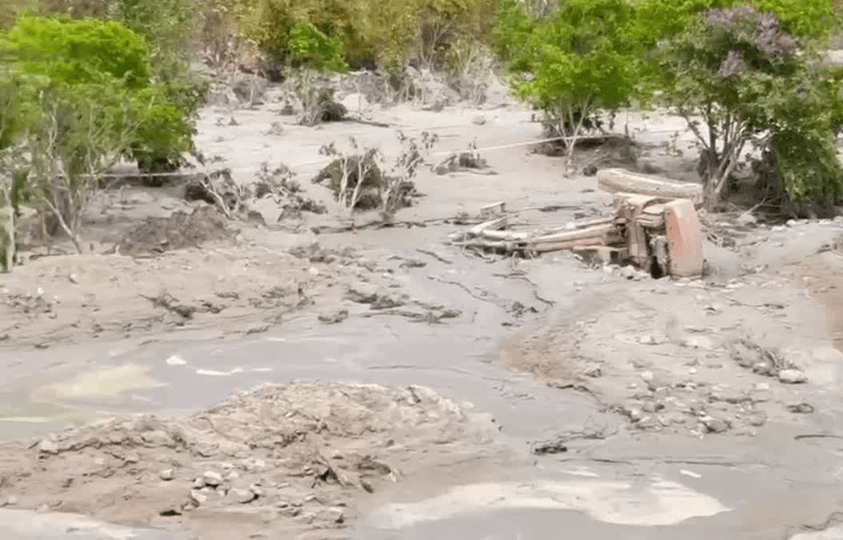
(Feature Image: A JCB trapped in slurry after breach in HTPS fly ash dam in Korba, Chhattisgarh. Source: Hasdeo Express)
A JCB operator was killed after a breach in fly ash dam (Rakhad dam) near Jhabu and Nawagaon villages under Katghora tehsil of Korba district in Chhattisgarh on April 19, 2026. The fly ash dam belongs to Hasdeo Thermal Power Station (HTPS), Korba West. The power station is owned and operated by Chhattisgarh State Power Generation Company Limited (CSPGCL).
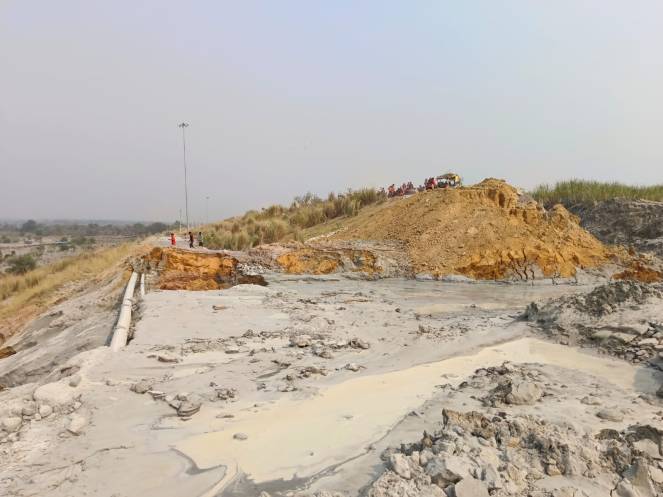
The incident occurred around 12 noon when the JCB operator, identified as 21-year-old Huleshwar Kashyap, along with five other workers, was carrying out earth-filling work on the outer side of about 70-foot-high fly ash dam as part of its maintenance. Suddenly, there was a rise in pressure on one portion of dam embankment and the upper part of it broke away with a loud sound.
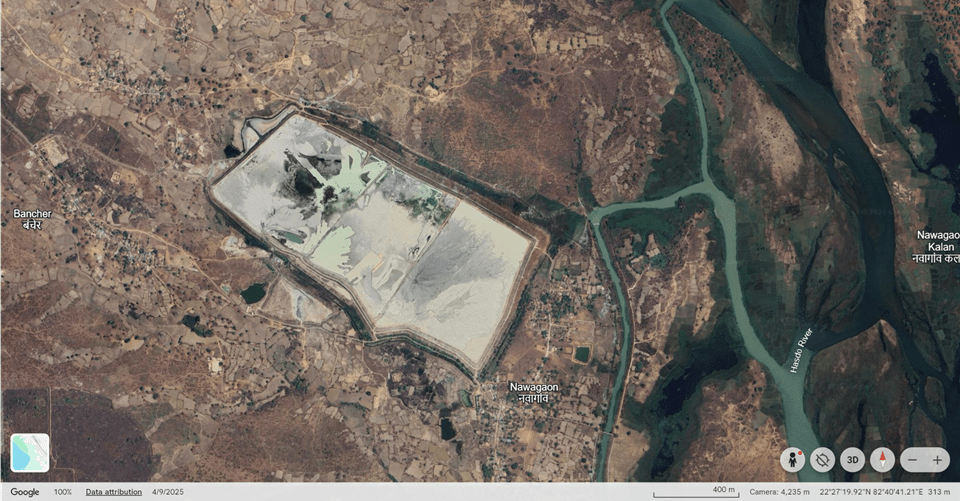
The JCB operator, along with the machine, got trapped under tons of slurry and died on the spot. The other workers managed to save their lives in the nick of time. A police team, officials from the plant and the local administration reached the site after the incident. The body of the deceased was retrieved around 2:00 pm.
Following the accident, a large number of villagers gathered at the scene and began protesting against the company management. The irate crowd refused to allow the body to be removed and stood firm on their demand for compensation. The dispute, which lasted for nearly five hours, was finally resolved following the intervention of the administration. The management assured the deceased’s family of immediate financial assistance of ₹5 lakh, an additional compensation of ₹18 lakh to be disbursed after the completion of legal formalities, and a job for one family member. Subsequently, the police sent the body for a post-mortem examination.
Allegations of Negligence
Terming the incident a result of negligence, local residents have raised questions about the safety measures of fly ash dam by the plant administration. They claimed that the dam had suffered breaches three times in the past. According to them, warnings regarding the precarious condition of the dam had been issued several times but the management ignored them.
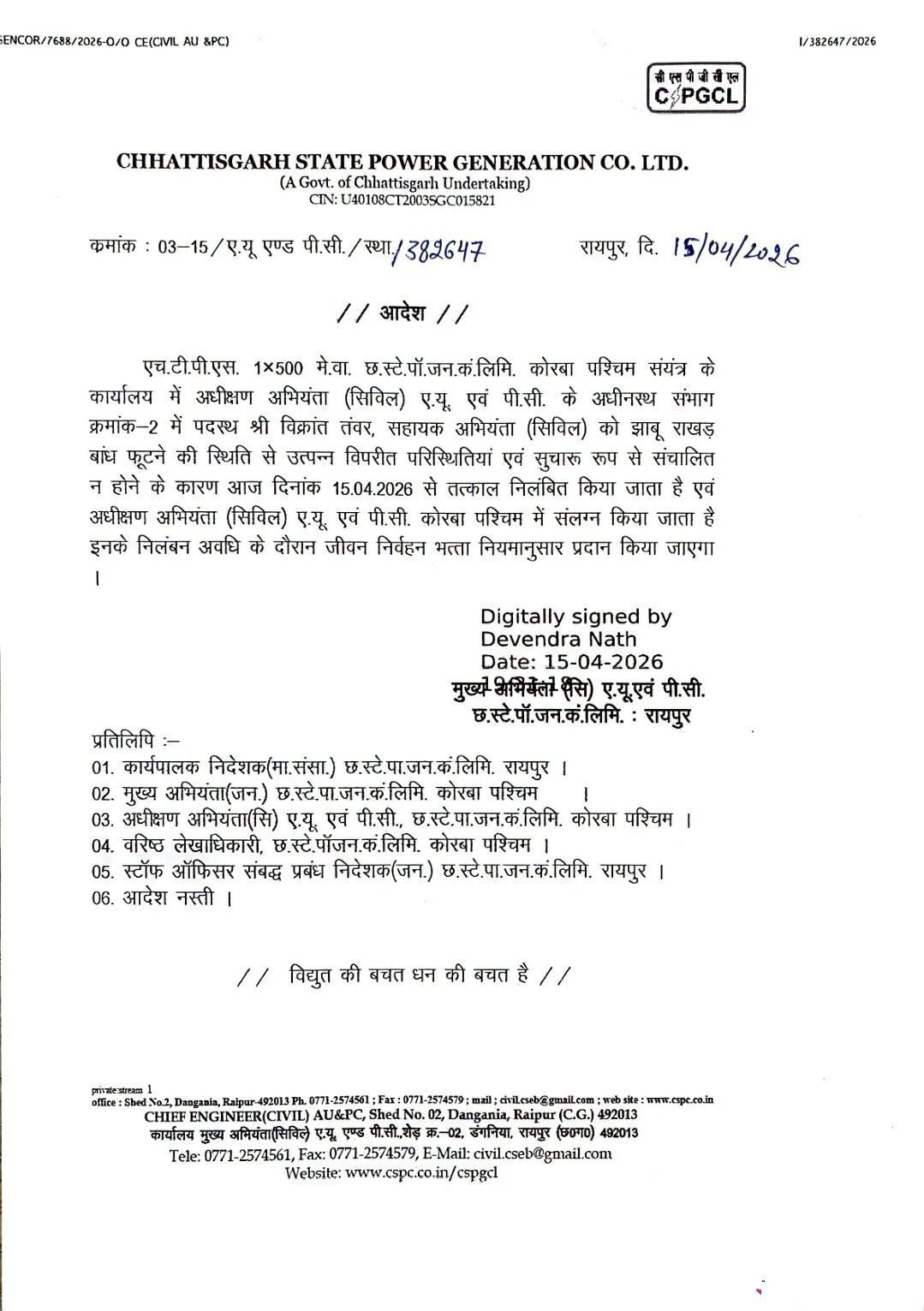
Notably, on April 15, 2026, CSPGCL had suspended a sub-engineer following allegations of negligence in the maintenance work of the dam. The JCB operator was employed by ID Gupta and Shankar Engineering, companies contracted for its maintenance work.
The incident occurred when Devendra Nath, Chief Engineer (Ash Utilization) at HTPS, had arrived from Raipur to inspect the site. According to S K Katiyar, Managing Director of CSPGCL, an assistant engineer and a deputy engineer have been suspended and notices have been issued to several other officials after the incident. He further stated that a probe committee comprising two chief engineers has been set up and action will be taken based on its report.
Instances of negligence in the maintenance and monitoring of ash dams have frequently come to light; however, timely corrective measures have not been taken. Experts believe that such incidents could lead to major environmental crises in the future.
Downstream Impacts
In absence of repair works, the slurry discharge in huge amount from the breached portion of the dam continued for the second day severely contaminated the Hasdeo river in Mahanadi basin. The river is a source of drinking water and irrigation for Korba town and several settlements in Janjgir-Champa district. A sludge layer has covered part of river surface affecting the aquatic life and raising concerns about water supply in dependent areas.
As per Shweta Narayan, Environmentalist and Researcher quoted here, “The fly ash contains toxic heavy metals lead, chromium, cadmium, mercury and arsenic. To conceal its failures, the government has categorized this ash as “non-toxic,” whereas research indicates that it is a major cause of incurable diseases like cancer and kidney ailments. The discharge of this ash into rivers acts as a slow poison for both aquatic life and humans.
Similar incidents in the past have also affected water supply from the river and the deposition of fly ash has rendered several farmlands along the river infertile.
Note: The HTPS has two separate units in the area including 840 Mw (4X210) commissioned in March 1986 and 500 Mw operationalized in Sept. 2013. The breach in fly ash dam in Jhabu village belongs to 500 Mw plant. The fly ash dam of this plant is built close to Hasdeo river on right bank about 6km upstream Darri reservoir.
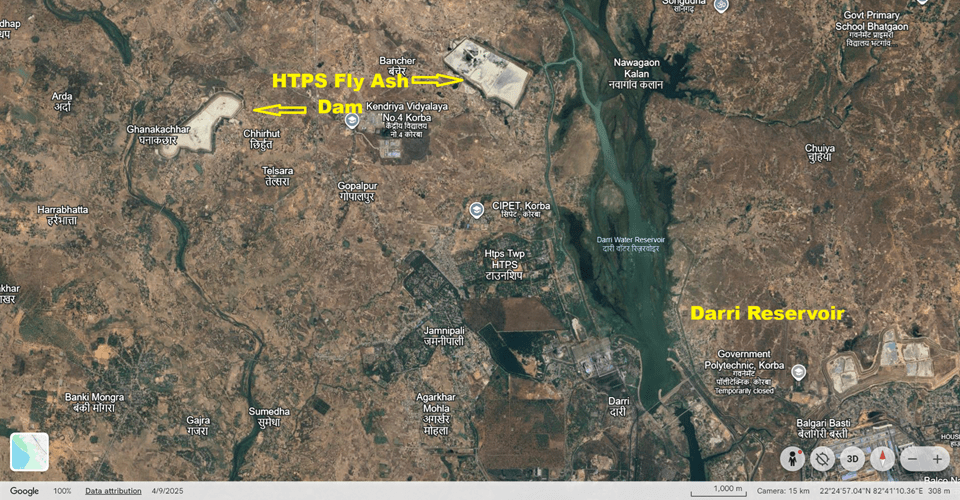
The fly ash dam of the 840 MW plant is located near Chhirhut village, close to the Ahiran River, a tributary of the Hasdeo River in the Mahanadi basin. Both fly ash dams are situated about 4 km apart. Notably, the fly ash dam of the 840 MW HTPS unit also suffered a breach in June 2025, which damaged several farmlands along with crops in the area.
NO REGULATION There is clearly no regulation of fly ash dams in India. The Dam Safety Act 2021 and the institutions created through it do not cover the fly ash dams as they cover only the specified dams defined under the act, which do not include fly ash dams. There is no other agency monitoring or regulating safety, breach and other aspects of fly ash dams in India. The general environmental regulations apply to them, but that is meaningless considering that there is no agency ensuring their construction, operation, maintenance, safety, breach or regulation. The breach of fly ash dams has no consequences for the company that constructs, owns, operates and maintains such dams.
SANDRP
You may also see: 2025: Fly Ash Dam Breach Flood in India
2024: Mining Dam Breach Flood Incidents in India
2023: Fly Ash Bund Breach Incidents in India
2022 Fly ash dam breaches in India
Singrauli Fly Ash Dam Breach: Who regulates these dams in India?


