
This annual overview highlights the dam induced flood disasters, dam failure incidents in India during 2022. This year, the massive floods in Godavari have exposed the flood vulnerability of giant projects like Polavaram and Kaleshwaram. Also there have been multiple dam failures and dam induced floods in Madhya Pradesh, Tamil Nadu and Kerala. In absence of coordination and data sharing Hirakud induced floods in Mahanadi basin have affected several villages in Odisha and Chhattisgarh. There have been several instances of unscientific operations of dams and the operators continue to hide behind TINA (There Is No Alternative) excuse. The functioning of CWC as key flood forecasting and management agency has not shown any significant improvement. However, now it has accepted that faulty dam operations can lead to flood in downstream areas. Please see links to our 2018, 2019, 2020 and 2021 annual compilations on the subject.
Continue reading “Dam Floods, Failures and Disasters in 2022”Tag: Godavari
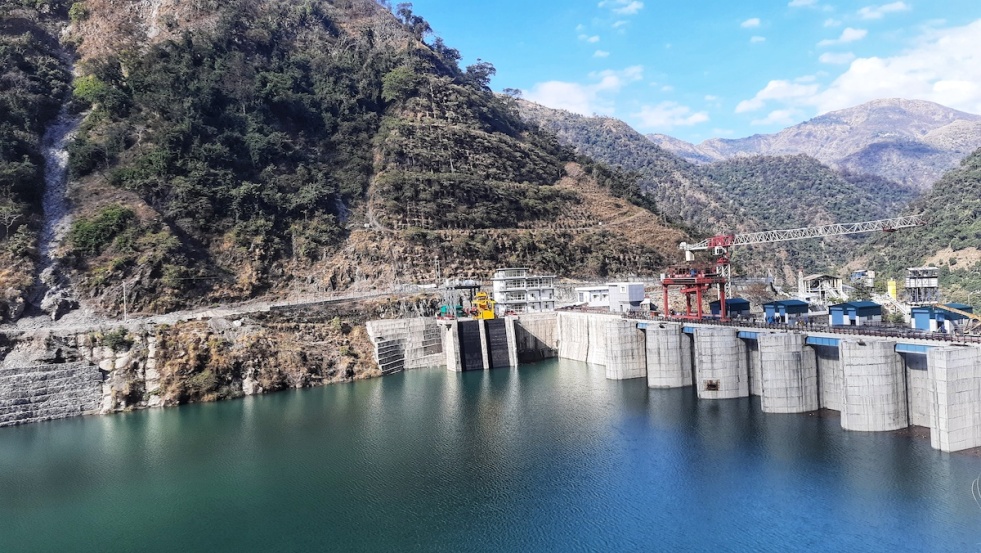
DRP 121222: Green Hydrogen from Hydropower is false solution
(Feature Image: Reservoir of Vyasi hydro project dam on Yamuna river in Dehradun. Credit: Varsha Singh/The Third Pole.)
A section of the hydro lobby has been trying to push hydropower in the name of producing green hydrogen as an alternative energy source. However, it has been known for a long time that this is a false solution. There cannot be green hydrogen when sourced from hydropower as not only hydropower projects have huge social and environmental footprint, they also have huge carbon footprint as the following article shows. It would be best to out rightly reject any such claim of green hydrogen when sourced from hydropower project.
Continue reading “DRP 121222: Green Hydrogen from Hydropower is false solution”
DRP 141122: Jal Shakti Ministry says: Groundwater extraction down, recharge up???
This sounds so counter intuitive. The Ministry Jal Shakti on Nov 9, 2022 made some findings of its latest “National Compilation on Dynamic Ground Water Resources of India, 2022 public, strangely, without making the report public. It is not clear why the govt did not make the report public, though the counter intuitive nature of the findings provide some hint. The report claims that at all India macro level, the ministry claimed that the groundwater extraction is the lowest in 2022 since 2004, or 18 years and that the groundwater recharge has gone up.
Continue reading “DRP 141122: Jal Shakti Ministry says: Groundwater extraction down, recharge up???“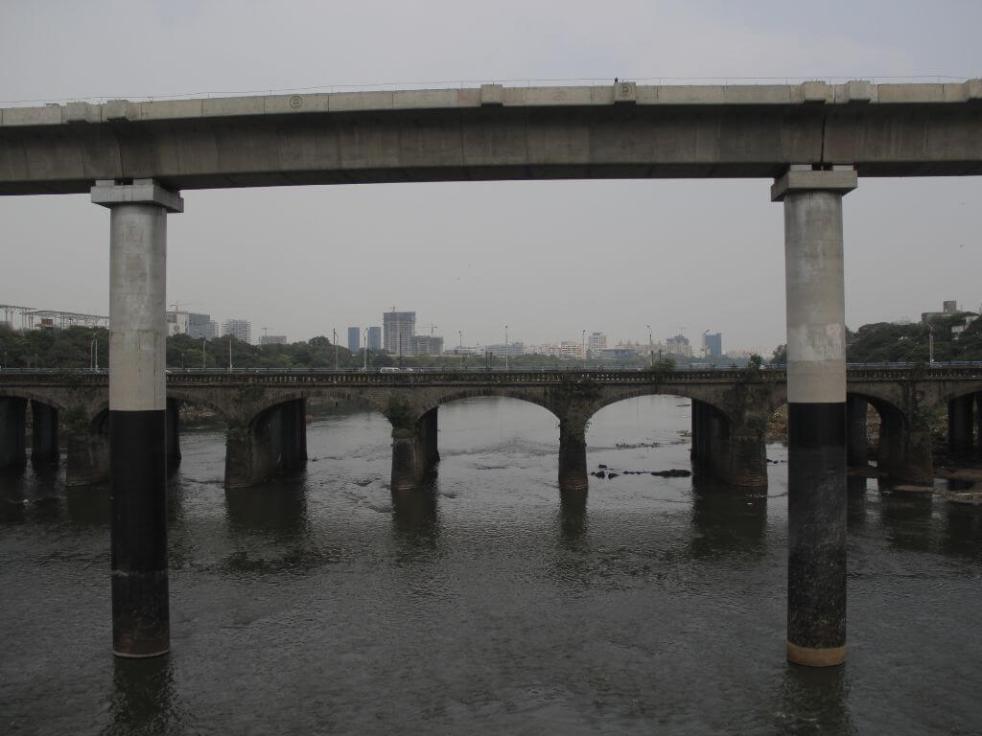
DRP 071122: Increasing focus on Urban Rivers; they continue to face destruction
(Feature Image Source: Question of cities)
It is good to see that focus on Urban Rivers is increasing not only in media, but also by the government. The focus of the latest edition of “Question of Cities” is on Urban Rivers, carrying articles on, beside the lead article by SANDRP coordinator, Article “Rivers & Cities”, Sabarmati (Ahmedabad), Mula-Mutha (Pune), on River Centric Urban Planning Guidelines from Union Ministry of Housing and Urban Planning. In addition, this SANDRP DRP update also carries articles on Dravyawati River of Jaipur, Godavari river in Nasik and a report on Mandakini river in Badrinath.
All this increased focus is welcome, but will be worthwhile only when we see an effective impact of this on rejuvenated Urban rivers. We have yet to see that. In fact, if at all, the movement is hugely in opposite direction, with increasing destruction of Urban Rivers.
Continue reading “DRP 071122: Increasing focus on Urban Rivers; they continue to face destruction“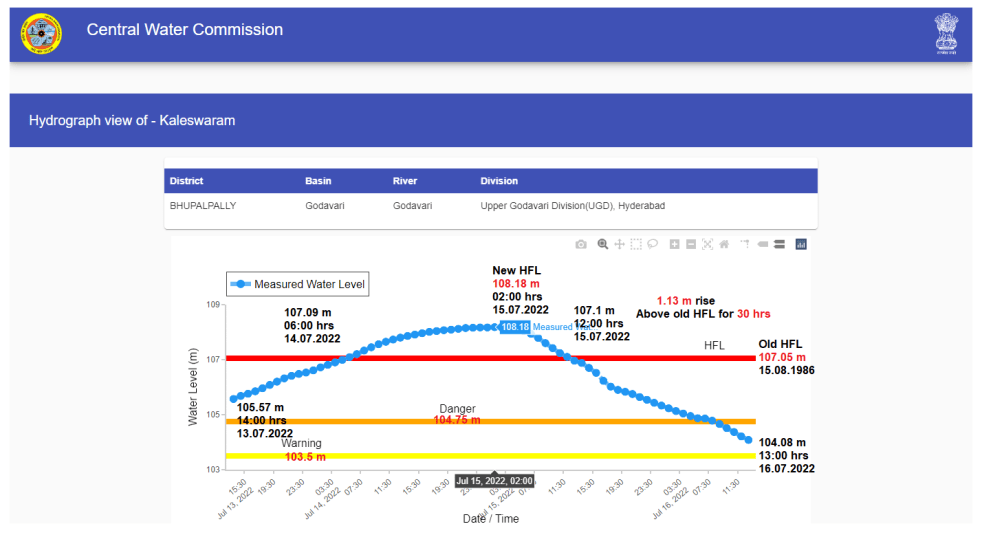
India’s Rivers Breaching High Flood Levels in SW Monsoon 2022
(Feature Image: Hydrograph of River Godavari in extreme flood situation at Kaleswaram level forecast station in Bhupalpally district, Telangana on July 15, 2022. Source: CWC)
Highest Flood Level (HFL) breach incidents are important indicator of flood cycle and could also help in understanding the changing rainfall pattern. Though, with 925 mm rainfall[i], the south west monsoon season 2022 falls in normal category, its distribution both temporally and spatially has seen huge variations. This is also reflected by at least 57 HFL breach incidents in 8 river basin across the country during the SW Monsoon months of July-Sept 2022.
For past four years, SANDRP has been tracking the HFL breach incidents during pre-monsoon and monsoon months. The analysis of such HFL breaches in 2018[ii], 2019[iii] and 2020[iv], May-Sept 2021[v], Oct.-Nov 2021[vi] can be seen on our website. The pre-monsoon months of May and June 2022[vii] have also seen 5 HFL breach incidents. This report tracks the other HFL breach incidents taking place between July and September months.
Continue reading “India’s Rivers Breaching High Flood Levels in SW Monsoon 2022“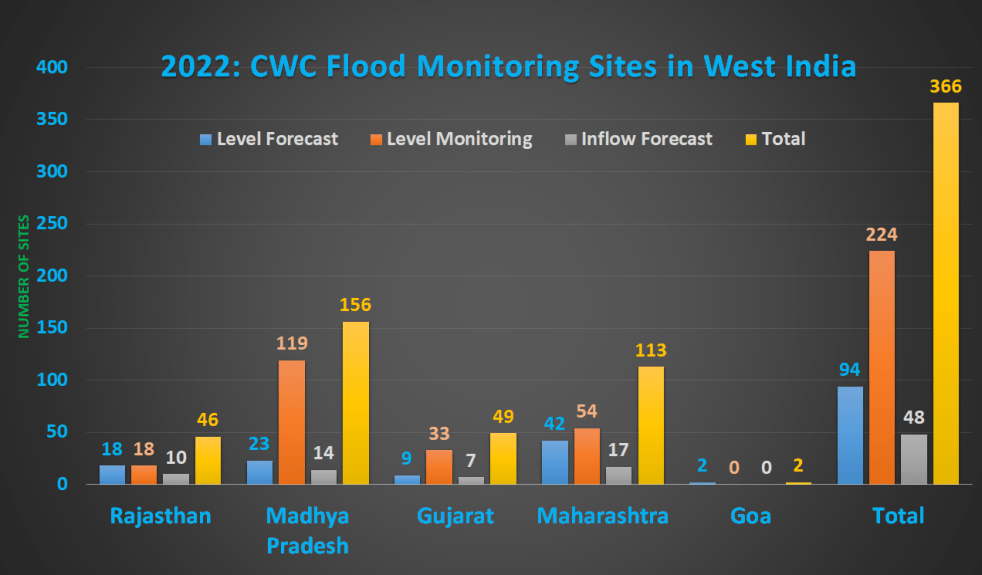
2022: Overview of CWC Flood Monitoring Sites in West India
(Feature Image: Bar chart showing CWC flood monitoring sites excluding UTs of Dadar & Nagar Haveli and Daman & Diu in West India in 2022)
Since 2018, SANDRP has been presenting detailed overviews on flood monitoring sites[i] of Central Water Commission (CWC) which is the only agency doing flood forecast work in India. This year, we have published and highlighted the inaccuracies in CWC’s flood monitoring sites in North[ii], North East[iii] and East[iv] zones. This fourth overview covers the West zone for Rajasthan, Madhya Pradesh, Gujarat, Maharashtra and Goa states. The previous overviews for the region can be seen here (2018[v]) and here (2019[vi]).
Continue reading “2022: Overview of CWC Flood Monitoring Sites in West India“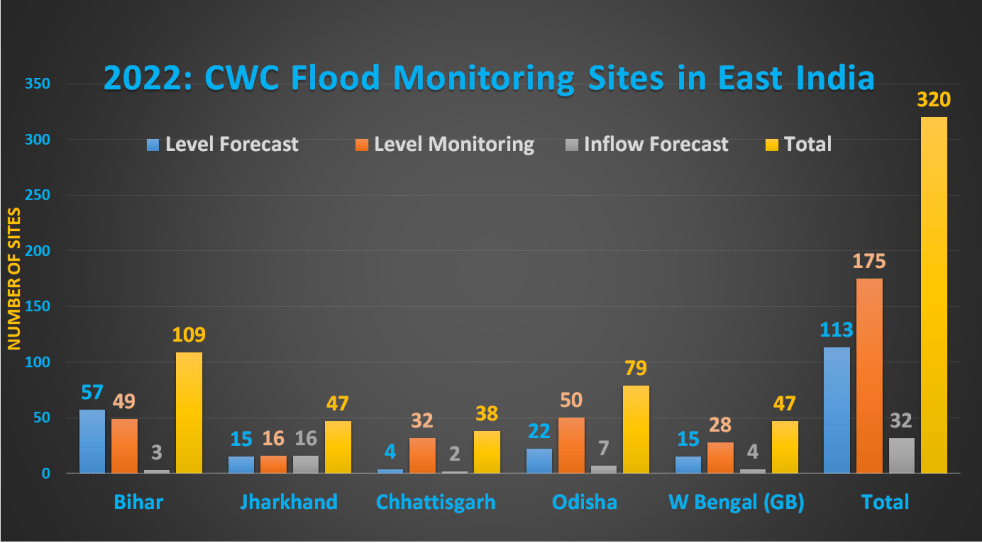
2022: CWC Flood Monitoring Sites in East India
Flood forecast and monitoring is essential part of Central Water Commission’s (CWC) work. Presently, the agency claims[I] issuing flood forecasts at 332 sites including 133 Inflow Forecast (IF) sites and 199 Level Forecast (LF) sites. Since 2018, SANDRP has been presenting critical analysis of CWC’s flood forecast website[II] in region wise manner.
In 2022 SW monsoon season, we have already published the overviews for North[III] and North East[IV] regions of the country. This third part in the series covers the states in East India including Bihar, Jharkhand, Chhattisgarh, Odisha and West Bengal (Ganga Basin). Our previous overviews for the region can be seen here (2018[V]) and here (2019[VI]).
Continue reading “2022: CWC Flood Monitoring Sites in East India“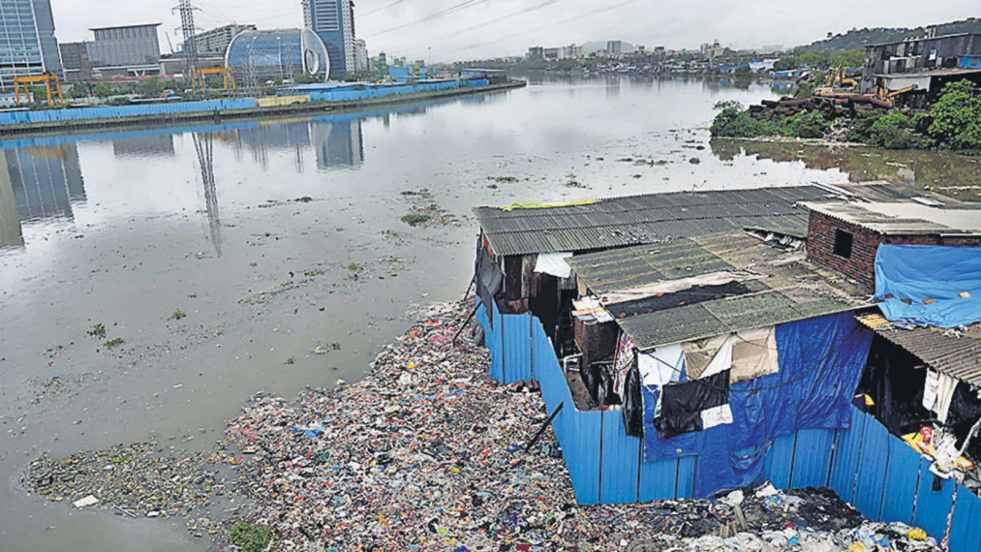
Top Ten Judicial Actions on Urban Rivers 2022: Executors Deliberately Delaying, Diluting, Defying orders
(Feature Image: The order is subject to the orders of the SC which is pending. NGT on Nov. 24, 2021ordered the BMC to deposit within three months an environmental penalty of ₹28.20 crores to the CPCB for discharging raw sewage into the city creeks, rivers and drains. HT Photo)
During past one year, the judicial bodies including National Green Tribunal, Supreme Court, various High Courts have passed several orders and made critical observation while dealing with multiple issues afflicting Urban Rivers in India. This report highlights top ten such judicial interventions across India. The stories underline that the responsible agencies particularly pollution control boards and district, state and union governments have been failing miserably in timely and efficient implementation of these judicial orders, some of which are quite remarkable. If the executive bodies do not show right spirit and seriousness in enforcing the existing rules and court orders the state of India’s urban river only go downhill.
Continue reading “Top Ten Judicial Actions on Urban Rivers 2022: Executors Deliberately Delaying, Diluting, Defying orders”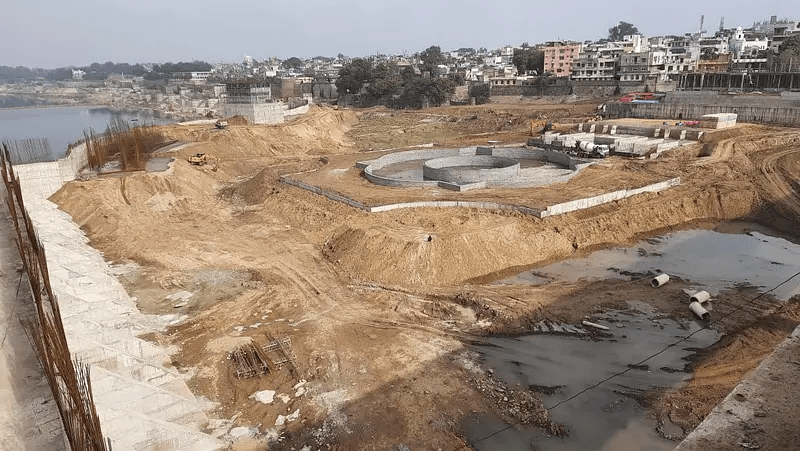
Top Ten River Front Development Stories 2022: Destroying Rivers, Livelihoods
(Feature Image: Work on Rs. 700 crore Chambal RFD project in Kota which is supposed to be ready by Dec. 2022 end. Image Source: Free Press Journal)
The Central and various state governments have been pushing big budget River Front Developments (RFD) projects as panacea for all the urban water woes. In reality, these are River destruction projects with the objective of encroaching on river floodplain and even river beds of Urban Rivers. These RFDs have been failing to deliver on proposed claims and resulting in waste of public money apart from causing more damages to urban rivers eco-system and livelihoods of dependent communities. The projects are also multiplying the Urban Flood potential. In reality, India urgently requires an Urban River Policy as a subset of Urban Water Policy to guide how to treat urban water and urban rivers.
This compilation highlights situation of ten such RFD projects in the country which are failing miserably and facing stiff resistance from concerned citizens and dependent people during last one year or so.
Continue reading “Top Ten River Front Development Stories 2022: Destroying Rivers, Livelihoods”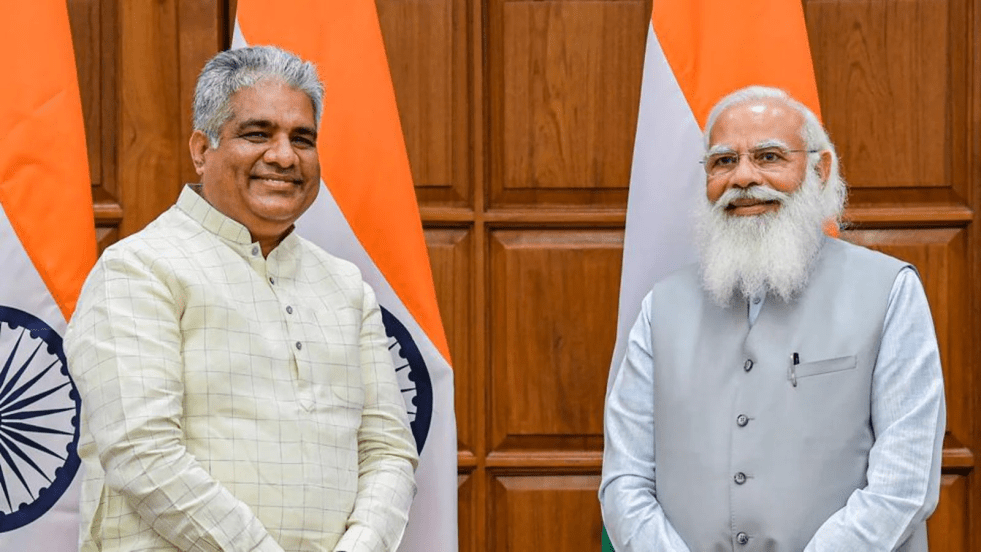
DRP 13 June 2022: Down in Dumps, MoEF becomes more opaque
(Feature image: Union Environment Minister Bhupender Yadav with PM Narendra Modi before taking oath on July 7, 2021 PTI/HT.)
While the news that India has achieved the worst ever ranking of 180, at the bottom of 180 country index in terms of Environment Performance Index was shocking, it should not surprise too many people considering the way environment is treated by the current central government, particularly the Union Ministry of Environment and Forests (MoEF). As expected, MoEF questioned the methodology of the assessment, and the criticism has been responded to and rejected by the authors of the EPI report.
Now with a dictate of the MoEF (dated Apr 8, 2022, preceding the EPI news) coming to light, the trajectory of the MoEF should leave no one in doubt. Through this dictate, the MoEF has asked the Wildlife Institute of India (WII), a supposedly autonomous institute of the Ministry, to seek the ministry’s approval before it publishes any document, that too with retrospective effect! WII in any case, was towing the ministry’s line in many of the cases as is evident from its performance in regulatory committees like the Forest Advisory Committee, National Board of Wild Life and Expert Appraisal Committee (on River Valley Projects, possibly among others). And yet the Ministry has come out with this dictate, without giving any reasons, possibly since some of WII reports have been problematic for the govt in judicial proceedings in some cases. But the MoEF move to stop WII from publishing (and hence doing) any credible studies only shows the paranoia of the ministry. Its performance index would not improve this way, it would only get worse.
Continue reading “DRP 13 June 2022: Down in Dumps, MoEF becomes more opaque”
