
The residents of about 15 villages affected by the Ken Betwa link project are opposing the land acquisition process being initiated in violation of all norms have opposed the move. The notices have not been pasted in the affected villages, gram sabhas have not been conducted and the information promised in the notice is not available at the designated places. When question, the Madhya Pradesh officials have responded arrogantly. The history of manipulations and violations that has been the norm every step of the way in Ken Betwa Project continues. In fact the project does not have final forest clearance, its wildlife clearance has been questioned by the Supreme Court appointed Central Empowered Committee and its Environment clearance is under challenge before the National Green Tribunal. In absence of the clearances, the land acquisition should not even be started if there is any place for prudent norms in such projects. It would be best if the government stops the process and starts it only if and when it gets all the clearances and after taking all the concerned into confidence through a prudent confidence inspiring process.
Continue reading “DRP 11 April 2022: Ken Betwa Affected people protest land acquisition”Tag: Godavari
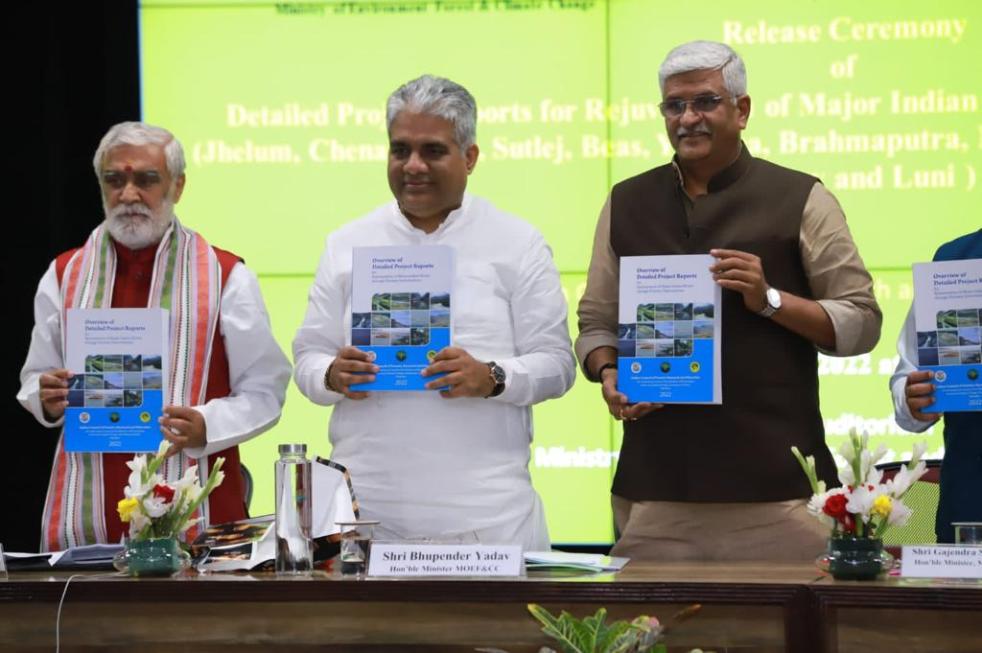
DRP 21 Mar 2022: Centre’s unconvincing Plan to rejuvenate 13 major rivers
The government of India, through joint announcement of Union Ministries of Jal Shakti & Environment and Forests (such joint addresses are rather rare events) this week announced its plans to rejuvenate 13 major rivers of India (excluding Ganga but including some of the key Ganga tributaries!) through the limited activity of plantations is not every convincing on many counts. Firstly it is welcome to see that the government sees a role of forests as a hydrological asset. Unfortunately, this is clearly and completely absent in government’s forest management, both in policy and practice. If we see the forest governance of India through the functioning of the Forest Advisory Committee of MoEF, we see absolutely no sign of acknowledgement of this reality that forests are major hydrological assets. So for example when a decision is taken to allow diversion of major chunks of existing forests, there is never any discussion, assessment or counting of hydrological eco system services that forests provide. This is apparent in many cases, but most recently in the case of Ken Betwa project where the Supreme Court’s Central Empowered Committee too has acknowledged this reality. So again it seems government’s mind or heard does not seem to know what the tongue is conveying!
Continue reading “DRP 21 Mar 2022: Centre’s unconvincing Plan to rejuvenate 13 major rivers”
DRP 070222: Union Budget provisions for ILR inappropriate, shows disrespect to statutory clearances and processes
(Feature image source Money Control:- https://www.moneycontrol.com/news/business/economy/union-budget-2022-live-updates-nirmala-sitharaman-crypto-bill-rail-itr-pf-contribution-cryptocurrency-income-tax-news-custom-duty-relief-gold-etf-8006461.html)
The Union Finance Minister (FM) Smt. Nirmala Seetharaman in her budget for 2022-23 presented in the parliament on Feb 1, 2022 provided Rs 4300 Cr for the controversial Ken Betwa Project in Revised Estimates for 2021-22 and Rs 1400 Cr in Budget estimates for 2022-23. The KBP has not received the final forest clearance. In fact its stage I forest clearance conditions cannot be implemented without changing the project and its cost benefits and impacts. Its wildlife clearance has been questioned by the Central Empowered Committee of the Supreme Court of India and the comprehensive scathing report of the CEC Is yet to be heard by the SC. Its environmental clearance is under challenge before the National Green Tribunal. The hydrological figures that are supposed to provide the scientific basis for the project are neither in public domain, nor has it gone through any independent scrutiny. In this situation, the allocation of the funds for the project in the Union Budget and inclusion of a statement about the project in the speech of the President of India before the Joint Session of Parliament on Jan 31, 2022 are inappropriate. They seem to be timed in view of the upcoming Uttar Pradesh elections.
Continue reading “DRP 070222: Union Budget provisions for ILR inappropriate, shows disrespect to statutory clearances and processes”
DRP 24 Jan 2022: MoEF’s complete surrender: Rating SEIAA on faster clearances
If rating of the State Environment Impact Assessment Authorities (SEIAA) of various states were to be done, it has to be based on how rigorous, how transparent, how participatory, how well defined, how consistent, how comprehensive, how rules following has been the functioning of the various SEIAA. Such an exercise has to be done by a panel of independent experts, who are experienced and knowledgeable about the various aspects of environmental governance and functioning of these authorities. In fact the exercise should also include the National EIAA too and the various Expert Appraisal Committees under it. It clearly cannot be what the MoEF has now proposed. What MoEF has proposed is completely against all basic norms of environmental governance and is part of MoEF’s complete surrender to the vested interests and not is not in the interest of environment governance. As the Tribune editorial noted, such blatant disregard of the environment is completely unacceptable. Similarly as the TOI editorial said, SEIAAs need to be independent of both business and governments. They should put the environment first, and last. There is a role of judiciary to step in here and ensure that MoEF does not go down this path.
Continue reading “DRP 24 Jan 2022: MoEF’s complete surrender: Rating SEIAA on faster clearances”
DRP 111021: Are we being forced towards nature based solutions?
Four interesting developments in this week seems to suggest that mankind is being pushed closer to nature based solutions to society’s needs. In Brussels in Belgium (Europe), the local government has started to uncover the Senne river that now is hidden under the pavements with the declared objective to “return nature to the city” and the river becoming an ecological corridor in the city.
In USA, the Army Corps of Engineers, more known as Dam builders, have over the last five years, moved towards nature based flood control by creating wetlands. In the 2020 Water Resources Development Act, US Congress directed the Corps to consider nature-based systems on equal footing with more traditional infrastructure. Its possibly a baby step, but a very significant one for a traditional dam building organisation that has stopped building dams and have been working towards decommissioning dams.
Continue reading “DRP 111021: Are we being forced towards nature based solutions?”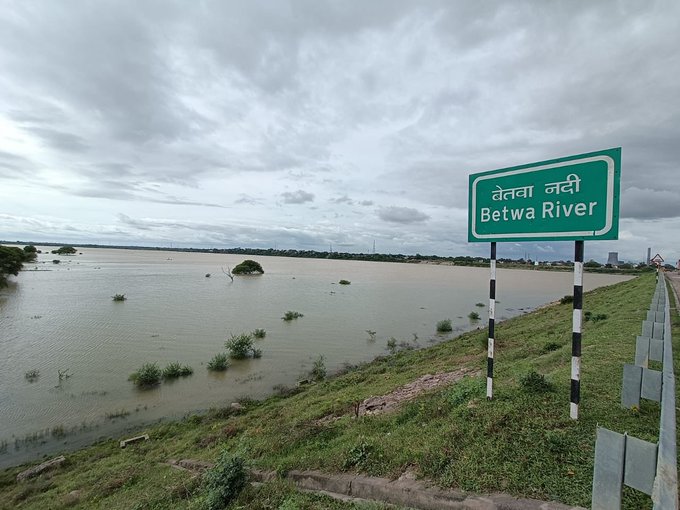
Rivers that crossed Highest Flood Level in Monsoon 2021
(Feature image River Betwa in flood spate on Aug. 4, 2021. Source: Sharad Chandra, Director, CWC)
While India has received 874.6 mm rainfall which falls in normal[i] category in just concluded south west monsoon season, there have been at least 27 incidents of rivers crossing the Highest Flood Levels (HFLs) ever recorded in the past and attaining new HFLs in 5 river basins (some composite basins) in India, as recorded by the Central Water Commission (CWC) Flood Forecasting site[ii] during the monsoon.
The maximum 12 such instances have taken place in Ganga basin followed by 6 in west flowing rivers Tapi to Tadri basin, 5 in Godavari, 2 in West Flowing rivers Tadri to Kanyakumari basin and 1 each in Subernarekha and Tapi basin.
For past three years, SANDRP has been tracking the HFL breach incidents during monsoon season. The analysis of such HFL breaches in 2018[iii], 2019[iv] and 2020[v] can be seen on our website.
Continue reading “Rivers that crossed Highest Flood Level in Monsoon 2021”
DRP 041021: Congratulations to LIFE for much deserved Right Livelihood Award 2021
This week brings a heartening development: Legal Initiative for Forests and Environment (LIFE), headed by lawyers Ritwick Dutta and Rahul Choudhary, are recipients of the Right Livelihood Award 2021, also known as Alternative Nobel Prize for their amazing work on empowerment of the communities through environment defense. This is much deserved recognition for the exemplary work of this group for over 16 years not only through the legal cases in National Green Tribunal (& its predecessor NEAA etc.), High Courts and Supreme Court, but also influencing the government policy and project decisions and also effective training of government officials in environmental matters.
LIFE is one of four organisation to get this award this year. The Swedish Right Livelihood Foundation, which awards the prize, said that in the face of the worsening climate crisis, powerful governmental and corporate interests, and even a terrorist threat, the 2021 Laureates prove that solidarity is key to a better future for all. The 2021 Right Livelihood Laureates are leaders in advancing the rights of women and girls, environmental protection and reclaiming Indigenous rights through mobilising communities and empowering grassroots initiatives. “Hailing from Cameroon, Russia, Canada and India, this year’s change-makers show that lasting change is built on communities banding together,” it said.
Continue reading “DRP 041021: Congratulations to LIFE for much deserved Right Livelihood Award 2021”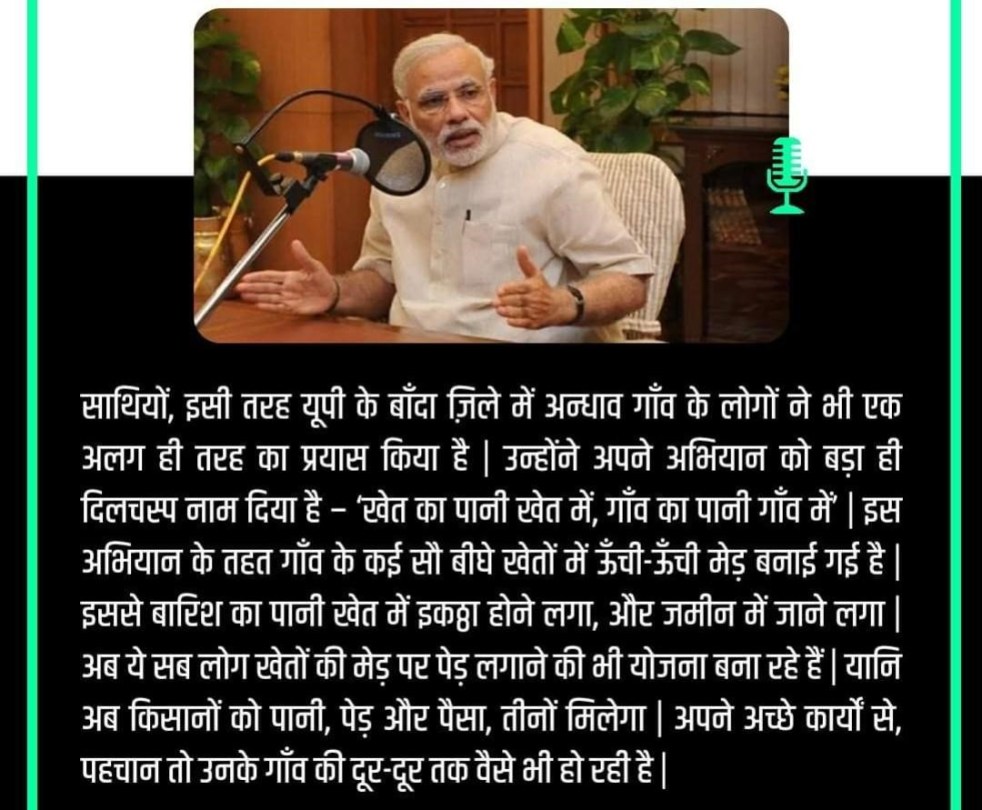
DRP 280621: Where is the impact of lessons of the water conservation efforts that PM praises, on his govt’s water projects & policies?
When the Prime Minister Shri Narendra Modi Mentioned some exemplary water conservation efforts in his Mann ki Baat on June 27, 2021, it was not for the first time he was doing it. These are certainly most welcome.
However, these mentions raise a number of questions. If the Prime Minister considers these local water options as exemplary, which they indeed are, where do we see the reflection of the lessons from such efforts in government programs and policies? In fact why there is no reflection of such lessons in what the government does in water sector? How can the government justify the destruction of Panna Tiger Reserve, over 9000 ha of forests, some 46 lakh trees, the catchment of Ken river and large part of Bundelkhand in the name of Ken Betwa Link Project, in the same Bundelkhand. How can his government justify the destructive projects like the Char Dham Highway, the big hydro projects and so on in the same Uttarakhand where Sachidanand Bharati (who was incidentally recipient of the Bhagirath Prayas Samman of India Rivers Week) works, whose efforts the PM praised? One hope the PM and his government will be awake to the implications and lessons of the works that PM praises.
Continue reading “DRP 280621: Where is the impact of lessons of the water conservation efforts that PM praises, on his govt’s water projects & policies?”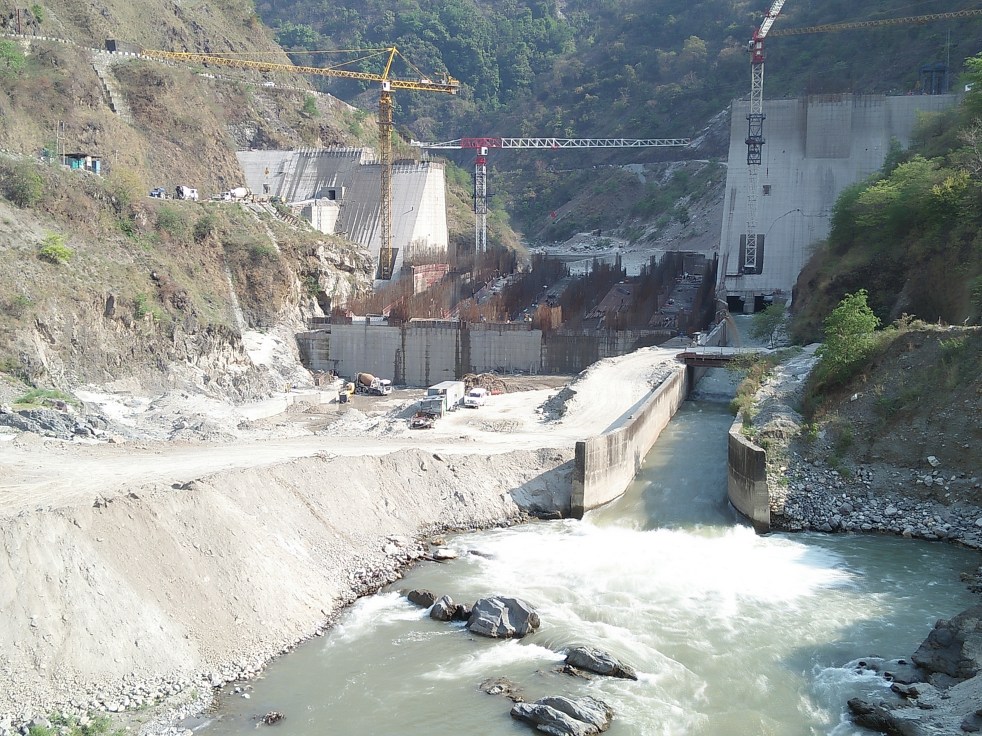
DRP 190421: Hydro lobby at work, but it won’t help forget the WCD guidelines
The Hydropower lobby continues to push unsustainable, unviable, destructive hydropower projects. They want everyone to forget about the World Commission on Dams report and guidelines and the lobby keeps bringing out its own guidelines which has zero credibility. They are looking for new voices to sing their song, and have appointed Ashok Khosla, as the Chair of the Hydropower Sustainability Assessment Council but Ashok Khosla already stands discredited. He or his organisation is not known to be doing any credible work in the area of hydropower projects. He or his organisation Development Alternatives has never taken a stand on any public spirited campaign against destructive hydropower projects in India. So that voice is neither independent nor credible. So this new move by the hydro lobby is not going to help the cause of the lobby either in India or beyond. The write up below, as expected does not mention the WCD report or guidelines. Mr Khosla possibly does not even know about the existence of the WCD report or guidelines because he had no credible role to play there or in any hydropower related work in the past. The write up has loads of misleading and wrong statements too. But all these attempts are not going to help forget people about WCD guidelines as the only globally credible and accepted guidelines on dams and hydropower projects.
Continue reading “DRP 190421: Hydro lobby at work, but it won’t help forget the WCD guidelines”
Inland Fish, Fisheries, Fisher-folks: 2020 Overview
Inland fisheries support millions of people and remains a major source of nutrition for a very large number of poorest people. This includes riverine fisheries, reservoir fisheries, wetland and local water body fisheries. Here we try to provide an overview of developments in this sector during the year 2020.
The overview has following sections: Policy & Governance in Centre, followed by in States, some positive developments, Covid-19 & Fishing Community, Fisher folks’ struggles, New Fish Species, Invasive fish, Fish Deaths & Pollution, Over fishing & Extinction, Studies related to inland fisheries.
Continue reading “Inland Fish, Fisheries, Fisher-folks: 2020 Overview”
