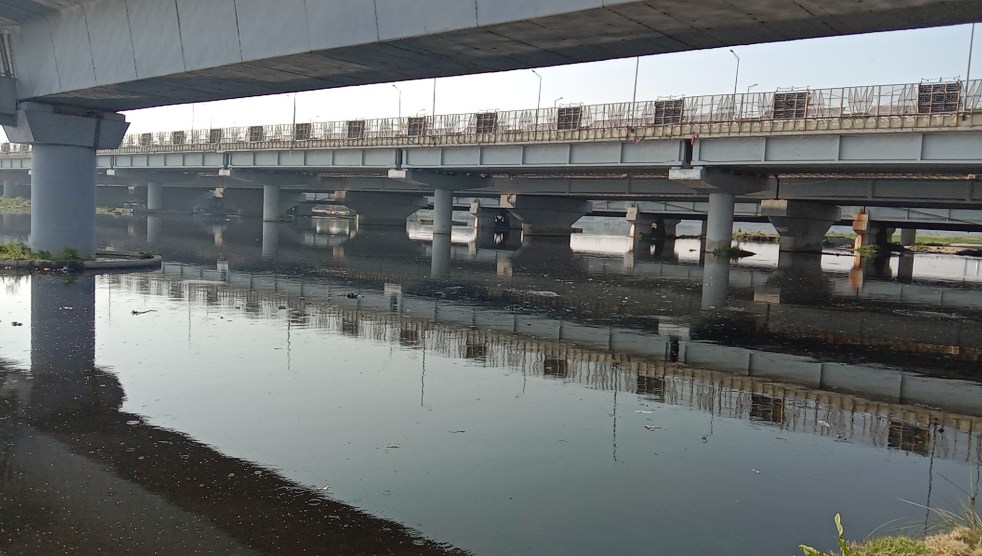
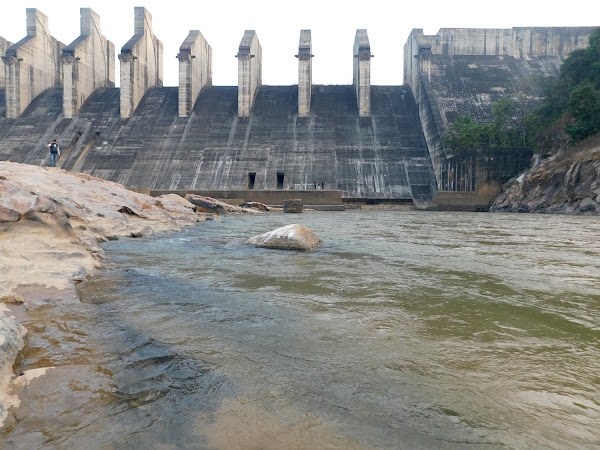
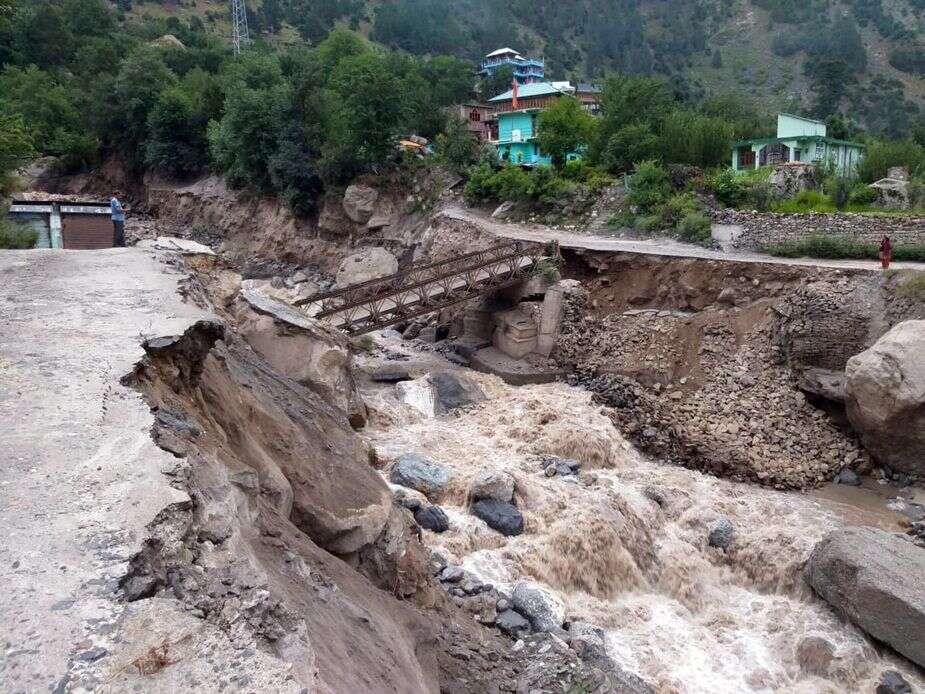
River carrying capacity is such a crucial factor in deciding if certain areas will be flooded and with what severity. This capacity is constantly changing, more so in tropical climate and high silt carrying rivers of South Asia, as new research shows. However, most models that are used in India, including by CWC, assume steady state situation. Nor are there constant and credible efforts to assess the river cross sections and river conveyance capacities and put them in public domain. The study shows how important it is that we wake up to this reality and ensure credible, consistent monitoring and assessments by credible independent agencies at the earliest. This has become even more urgent, the study underlines, since in changing climate, the rainfall patterns are changing fast.
Continue reading “DRP: 18 Nov. 2019: River capacities are changing, but who is monitoring?”Tag: Flood
2019 All India summary of CWC flood forecasting sites
This article provides and overview of flood forecasting work of Central Water Commission (CWC) in 2019 after looking closely at each site details for the five regions of India: North East[i], East[ii], North[iii], West[iv] and South[v] India.
The table below provides an overview of number of Level Forecasting, Level Monitoring and Inflow forecasting sites as per CWC’s FF website during 2019 floods for all the states and regions of India.
Continue reading “2019 All India summary of CWC flood forecasting sites”
2019 Monsoon: Instances when Dam Safety Came into Question
The South West Monsoon in 2019 in India brought the highest rainfall of last 25 years and issues related to heavy rainfall continue even to the end of October 2019. Here we have listed major instances during the monsoon when there were question marks over safety of dams either due to structural safety or due to wrong operations of the dams. Some issues of breaches of embankments/ canals are also included here. As we can see, the instances come from across the country, including North East, North, West, Centre, South.
Continue reading “2019 Monsoon: Instances when Dam Safety Came into Question”
Rivers That Reached New Highest Flood Level during Monsoon 2019
In the monsoon season of 2019 Indian rivers have crossed Highest Flood Level (HFL) at around 37 Level Forecasting and Level Monitoring sites across the country. This account attempts basin wise details and description of HFL breached by the rivers.
Brahmaputra Basin (Assam)
In Brahmaputra basin 2 sites, 1 Aie NH Xing Level Monitoring site on River Aie in Barpeta district of Assam and Dhubri (Level Forecast) site on River Brahmaputra in Dhubri district of Assam narrowly crossed the HFL in July 2019.
Also River Barak at ANIPUR site in Karimganj district on May 24 and River Brahmaputra at Goalpara site in Goalpara district rose close to the HFL level on July 17, 2019. As per CWC (Central Water Commission) FF Website, Goalpara site has not crossed HFL since 1954.
Continue reading “Rivers That Reached New Highest Flood Level during Monsoon 2019”
DRP: 28 Oct 2019: Growing opposition to Large Hydro Projects
As can be seen from the news reports from Jammu & Kashmir, Assam, Arunchal Pradesh, Karnataka, among others, the opposition to Large Hydro Projects and Big Dam is growing all over India. These projects are neither economically viable, nor Socially-environmentally sustainable. There are much better options exist and hope the governments takes informed, democratic decisions. Going by the agenda and minutes of the recent Expert Appraisal Committee on River Valley Projects and other decisions, this hope seems far fetched at the moment.
Continue reading “DRP: 28 Oct 2019: Growing opposition to Large Hydro Projects”
DRP: 21 Oct. 2019: Opposition to restarting work on Lower Subansiri HEP without addressing Assam people’s concerns
With work on NHPC Ltd’s 2,000-MW Lower Subansiri hydro power project restarting after a wait of almost eight years, anti-dam organisations led by the All Assam Students’ Union (AASU) and Krishak Mukti Sangram Samiti (KMSS) vowed to launch an intense resistance movement to stop further construction of the project. AASU, in a statement, alleged that work on the Lower Subansiri project at Gerukamukh along the Assam-Arunachal Pradesh border has been started ‘treacherously’, risking the lives and property of people living in the downstream area. AASU said a scientific study on the possible impact of the dam in its downstream areas besides a cumulative impact study must be completed before expediting work at the dam site.
Continue reading “DRP: 21 Oct. 2019: Opposition to restarting work on Lower Subansiri HEP without addressing Assam people’s concerns”South India Overview of CWC Flood Forecasting Sites 2019
Flood Forecasting (FF) is one of the important activities of Central Water Commission (CWC), which is undergoing expansion and improvement, but there is still a huge scope for improvement. In order to better understand the CWC’s flood monitoring and forecasting work, in this article, we have given an overview of CWC’s flood forecasting and monitoring sites in South India, the last region to be covered for 2019 flood season. It includes state wise list of CWC’s Level Forecast, Inflow Forecast and level monitoring sites in South Indian states of Andhra Pradesh, Telangana, Karnataka, Tamil Nadu, Puducherry (no FF sites) and Kerala. Similar report has been published for North India[i] and North East India[ii], East India[iii] and West India[iv]. Continue reading “South India Overview of CWC Flood Forecasting Sites 2019”
WEST INDIA: Overview of CWC Flood Forecasting Sites 2019
Central Water Commission (CWC) is the only agency doing flood forecasting in India. This article attempts to present an overview of CWC’s flood forecasting and monitoring sites in West India. It includes state wise list of CWC’s Level Forecasting, Inflow Forecasting and level monitoring sites in 5 States in West India: Rajasthan, Gujarat, Maharashtra, Madhya Pradesh, Goa. Similar report has been published for North India[i] and North East India[ii] and East India[iii]. A similar effort was made last year which can be seen here: Overview of CWC Flood Forecasting Sites 2018: WEST INDIA.
Continue reading “WEST INDIA: Overview of CWC Flood Forecasting Sites 2019”
DRP: 7 Oct 2019: Patna – another of India’s water unsmart city – goes under due to man made disaster
There is a lot that Bihar and Union Govt that need to answer why did Patna go under water in spite of fully knowing its vulnerabilities. Why was the city not prepared to face this kind of situation? Some of the major man made reasons include: Sewage Pumps not working, drainage map not available, no emergency plan in place. Not too many people know that there is GANGA FLOOD CONTROL COMMISSION, sitting right in Patna, an organisation under Union Ministry of Water Resources, existing since 47 years now. WHAT HAVE THEY BEEN DOING is a mystery.
Its high time questions are asked if GFCC is doing any useful work. The government may like to brush aside the issues, saying its too high rainfall due to climate change, but that wont help. Patna is bang in the way of Ganga and it doing all kind of mindless activities including river front development, destruction of local water bodies and wetlands, and of course not knowing its drainage map. It shows abysmal failure of the World Bank funded flood management project that existed not so long ago, housed in Patna. And Patna was being funded under Smart city program to do all kinds of water unsmart activities. Over a week since the flooding started, parts of the city is still under water and now the city is facing fresh crisis in the shape of Dengue. The trouble is, there is no sign that the city, state or the country is doing anything to learn from this man made disaster.
Continue reading “DRP: 7 Oct 2019: Patna – another of India’s water unsmart city – goes under due to man made disaster”Overview of CWC’s Flood Forecasting Sites 2019: North East India
Central Water Commission (CWC) monitors water level at several hundred sites in the country during monsoon every year. It publishes this information on its Flood Forecast (FF) website[I]. The website has three ways to get this information: Data Flow Map, List Based Exploration, and Hydrograph view. The Hydrograph view provides information for past 72 hours, supposed to be updated every hour. This is in addition to the list of current forecasts.
The CWC’s FF website had in 2018 monsoon, information about 226 Flood Forecast Sites in the country comprising of 166 Level Forecast Sites and 60 Inflow Forecast Sites. It also monitors 700 Flood sites, information made available through List Based Exploration and Hydrograph View. As reported below, the number of sites have gone up during 2019 monsoon, which is welcome. However, most of the new sites, along with some old ones do not have key information.
Continue reading “Overview of CWC’s Flood Forecasting Sites 2019: North East India”