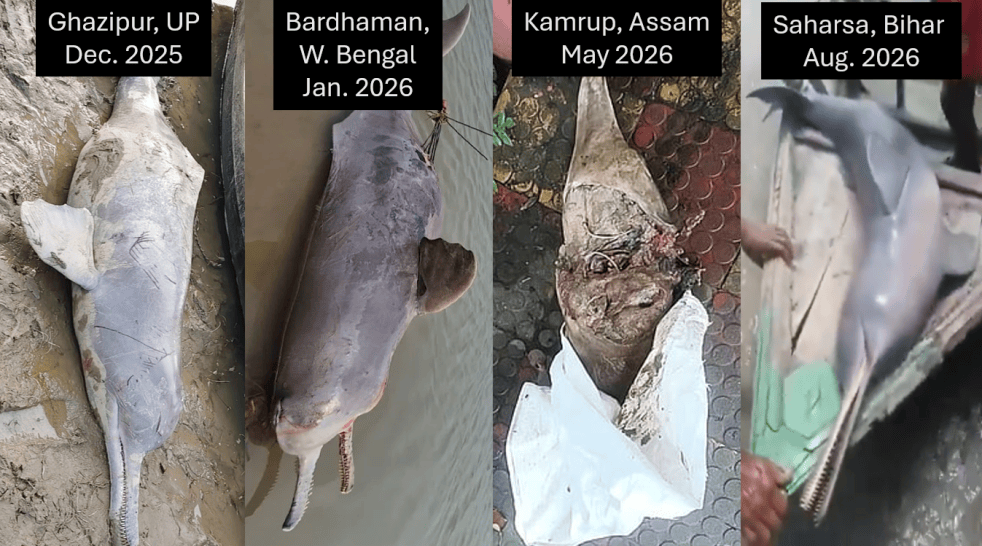
(Feature Image: Collage of Gangetic dolphin corpses found in UP, Bihar, Assam & West Bengal between Dec. 2025 & Aug. 2026.)
Marking the National Dolphin Day-Oct. 5, 2026-, this report highlights the deaths, threats and relevant developments concerning the national aquatic animal. In last one year, we have found reports of at least nine Gangetic dolphin deaths, including five in Uttar Pradesh, two in West Bengal, and one each in Bihar and Assam. The reported death toll is higher than in the previous two years, indicating continuing concerns over their survival.
Developments over the past year also reveal that the precious mammal’s existence is under increasing threats from the existing and proposed dam projects in the Chambal basin. The issue of ensuring dolphin-friendly operation of the Sharda canal network and taking effective measures to prevent dolphins from becoming stranded in the canals also remains unresolved. At the same time, this mascot of healthy rivers continues to face serious survival challenges from increasing pollution, mechanised riverbed mining, fishing nets and hunting across Uttar Pradesh, Bihar, West Bengal and Assam.
In the past six years, SANDRP has documented at least 43 deaths of Gangetic dolphins throughout the Ganga basin including five incidents in Oct. 2025; seven in Oct. 2024, ten in May 2023; eleven in April 2022 and ten incidents in Jan 2021.
Dec. 2025; Uttar Pradesh: 150 kg Gangetic dolphin found dead A 5 feet long and 150 kg dolphin was found dead in the Ganges River at Kalupur Ghat in the Suhawal police station area on Dec. 23, 2025. The forest department team retrieved the dolphin and sent the body for post-mortem. An investigation began to determine the cause of death. Dolphin average lifespan is approximately 28 years. Its post-mortem report, released on Dec. 26, 2026 attributed the death to suffocation. The Forest Department identified some suspects and given its teams 30 days to investigate the death.
Jan. 2026: 10-feet-long Gangetic dolphin found dead A 10-foot-long Gangetic dolphin was found dead under the Ganga bridge in the Jajmau area of Kanpur late in the evening on Jan. 02, 2026. Forest department officials suspected pollution as a reason behind the incident, though the exact reason was to be confirmed after a post-mortem examination. They said the dolphin weighed around 3.5 quintals.
Local residents also said pollution could be the cause, as water quality in this stretch of the Ganga was usually poor. Due to high pollution levels, aquatic animals often suffer from oxygen deficiency, they added. The discovery came ahead of the Magh Snan, which was set to begin on Jan. 03, 2026 in Prayagraj. As part of preventive measures, tanneries had been shut since Dec. 31, 2025.
May 2026: Two Dolphins die in Barabanki canal On 21 May 2026, a mother Ganges river dolphin and her calf died after becoming trapped in the Sharda Sahayak Canal near Rewa Siva village, Baddupur, Barabanki. The canal’s water level had fallen to around two feet after the water supply was stopped, leaving the dolphins unable to move. The Forest Department and a Turtle Survival Alliance (TSA) team from Lucknow prepared a rescue operation, including considering the release of additional water.
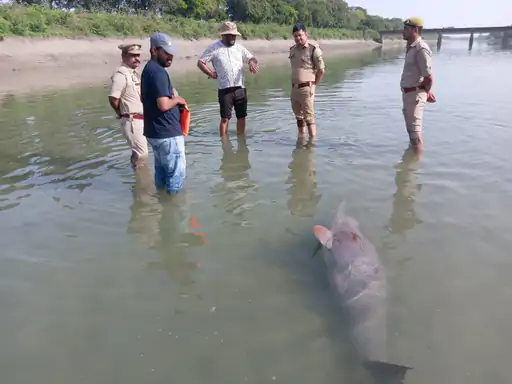
However, the temperature rose above 43°C, and the stagnant water became extremely hot. The mother died around 3 pm, followed by the calf about 1.5 hours later. Villagers alleged that timely intervention could have saved the dolphins. Forest Ranger Mayank Singh said dolphins had been rescued from the same canal and released into the Ghaghara River the previous year. Both dolphins died before the rescue operation could begin. The female dolphin was around five years old, five feet long and weighed about 50 kg. The calf was estimated to be around one year old.
Earlier, on Oct. 27, 2024, the carcass of a dolphin was found in the Sharda Canal between Lucknow and Barabanki amid low water levels. The following day, the team of forest department and TSA rescued a male dolphin from the canal. The dolphin was around four feet long and weighed about 70 kg.
Whenever water is released from the Sharda Barrage, these protected animals enter the canal. According to the DFO, installing an iron mesh barrier or developing a system using ultrasonic waves could prevent the dolphins from entering the canal. Forest Department officials said they had written to the Irrigation Department a year ago requesting the installation of an iron mesh barrier.
July 2026: Dolphin trapped in canal, rescued On July 22, 2026, the NMCG announced the successful rescue of a pregnant Gangetic dolphin that had been trapped for three days in a canal at Partawal in Maharajganj district. The 7.2-foot-long, 147-kg dolphin was rescued through a coordinated operation involving the Forest Department, Gorakhpur Zoo, TSA Foundation, the Irrigation Department and the police.
A 20-km green corridor was created to enable the Ganga Dolphin Rescue Ambulance to transport the animal 52 km for its safe release into the Rapti River. The mammal became trapped in fishermen’s net in the Deoria Branch Canal near Ahirauli village in Maharajganj district on July 18, 2026. The fishermen carefully freed the dolphin without injuring it and released it back into the canal. After inspecting the site, the Forest Department decided to rescue the dolphin from the shallow canal and relocate it safely to the Rapti river.
Sept. 2026: Adult Dolphin found dead in Saryu Sept. 27, 2026, an adult dolphin, around 5 feet long and weighing nearly 100 kg, was found dead in the Saryu river near Katoria village along the Katoria-Chandpur embankment in Basti district. Villagers informed the concerned department after finding the carcass near a spur structure. Residents said dolphins are frequently seen in the river and that another dolphin had died near the same embankment a few years ago.
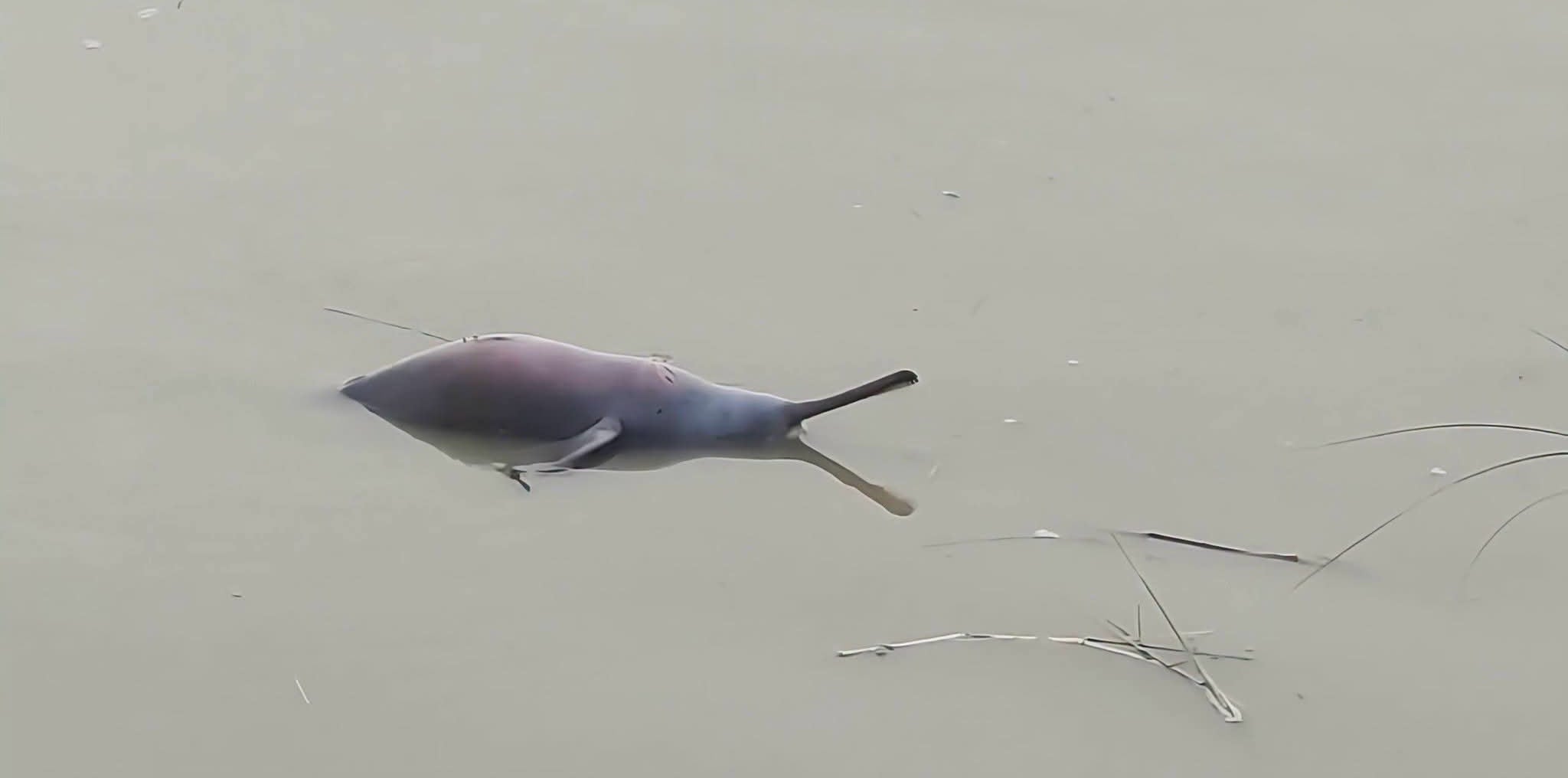
The cause of the dolphin’s death has not yet been confirmed. Only after examination will it be clear whether the dolphin died of natural causes or due to some other reason. This is reportedly third such incident in past three years. Before this, a dolphin was found dead in the Saryu river near Chandpur Ghat in Dubaulia in Dec. 2023. In Feb. 2024, another dolphin was found dead near Bisundaspur. Post-mortem reports in both cases confirmed that the dolphins had suffered injuries, but how they were injured remains a mystery.
The repeated deaths of the protected aquatic species have raised concerns over their safety. Some villagers suspected attacks by poachers, while others suggested that the dolphins may have been injured by iron wires installed near structures along the river embankment.
West Bengal: Jan. 2026 Death of two dolphins in 10 days The carcass of a mature female Gangetic dolphin was found on the banks of the Bhagirathi river in Katwa on Jan. 29, 2026 and as in the previous case, it had been killed by poachers, experts said after examination. The carcass was recovered close to Char Bishnupur near Agradwip, about 30 km by road from Katwa town. The 8 feet long aquatic mammal was apparently killed using an iron fishing blade that was still stuck on its back.
On Jan. 22, 2026, the carcass of a baby dolphin was found hanging from a tree at Jhaudanga in the Agradwip area. “Officially, this is the ninth such cruel murder since March 2025. But according to my estimate, this will be 11th within a 20-km stretch of the river here on the Katwa-Nadia border,” said Ganesh Chowdhury, voluntary Dolphin Conservator operating from Nayachar in Katwa.
Bihar; Aug. 2026: Ganges Dolphin hunted in Saharsa A Ganges dolphin was reportedly caught and killed in a fishing net in Saharsa on Aug. 21, 2026. A video showed fisherman Virendra Mukhiya, a resident of the Nauhatta area, removing the dolphin from his net and saying he would extract oil from it. After taking the dolphin home, family members reportedly took photographs and videos with the carcass.
After the video went viral, the Forest Department registered a case and began searching for Mukhiya, who reportedly fled. His family said he did not extract oil from the dolphin but threw the carcass into the Kosi river after learning that hunting dolphins was an offence. Mukhiya claimed he was unaware of the law and said he found the dolphin already dead when he pulled up his fishing net around 10 am. A joint Forest Department team inspected the site and searched for the carcass but could not locate it.
Assam; May 2026: Dolphin found dead near sand mining site The carcass of an endangered river dolphin was found in the Mora Kolohi River near Boko on May 23, 2026 raising concerns over the impact of sand mining and other human activities on river ecosystems. Forest officials recovered the decomposed dolphin and sent it for post-mortem to determine the cause of death.
Environmental activists and local residents alleged that ongoing sand mining near dolphin habitats may have contributed to the death. Some also raised concerns about illegal fishing and possible industrial pollution in the river. However, forest officials said no conclusion could be drawn until the post-mortem report is completed. The incident renewed concern over the protection of endangered river dolphins in Assam, which is estimated to have around 635 dolphins remaining in its rivers. Environmental groups demanded a thorough investigation and stricter safeguards for dolphin habitats.
Relevant Reports: Can CWC help survival of Chambal River Sanctuary? The MoEF&CC instructed the Central Water Commission (CWC) to provide recommendations on how to sustain environmental flows in the Chambal River during the lean season, ensuring that conservation efforts related to the Ganges River dolphin are not adversely affected.
Concerns arose following the initiation of a series of dam constructions under the East Rajasthan Canal Project (ERCP) over the tributaries of the Chambal River, including the Banas, Kuno, Parbati, and Kalisindh rivers in Madhya Pradesh and Rajasthan. No EIA has been conducted to evaluate how the project will affect dolphin conservation and potentially affect other aquatic life including dolphins, Gharials and Turtles.
According to a study by the Wildlife Institute of India (WII), dolphins require a minimum depth of three metres in flowing rivers to survive during lean seasons. The WII study highlighted that the decreasing flow of the Chambal River has been affecting dolphin movement. During the lean season, dolphins tend to concentrate in the deeper pools of the river.
COMMENT: CWC has very poor track record on all environmental issues related to water and rivers. So, expecting CWC to come up with recommendations in this regard sounds counter intuitive.
Govt asked to halt hydro, irrigation projects on Chambal The Standing Committee of the National Board for Wildlife (NBWL), during the 90th meeting directed that no hydro or irrigation projects, except related to drinking water if no alternatives available, will be considered until the environmental flows of the Chambal River improve.
The committee was informed by the WII that dolphin populations were observed to have shifted downstream compared to their past distribution in 2024. Moreover, during lean season, iconic species are only found in deep pools. Sub-adult gharials prefer more than 4 metres water depth, and muggers avoid shallow water.
After analysing the data of the CWC, the WII found that average flow at Dholpur during lean season (May–June) is around 25–50 m³/s. The minimum required environmental flow during the lean season for dolphins and associated fauna should be 369 m³/s to maintain 3 metre depth and an optimum of 849 m³/s for 5 metre depth.
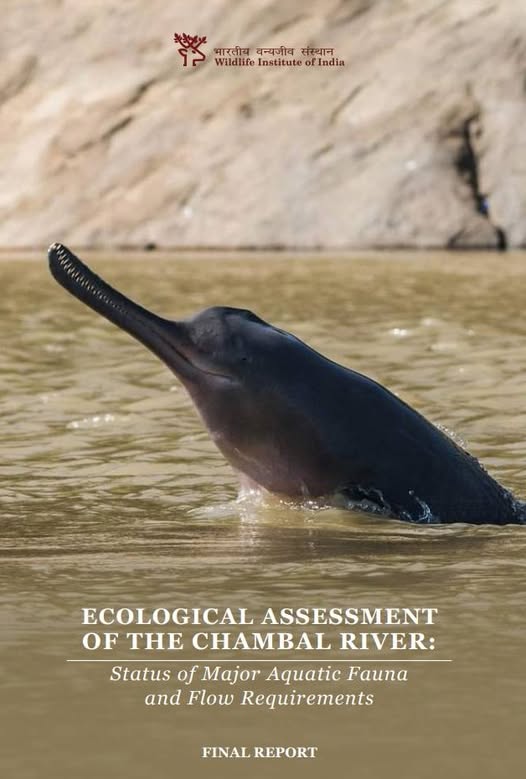
The report, titled “Ecological Assessment of the Chambal River: Status of Major Aquatic Fauna and Flow Requirements,” was submitted to the meeting of the standing committee on March 21, 2026.
Flow cut in Chambal, dolphins shift to Yamuna The report noted that upstream flow has been restricted by the Gandhi Sagar Dam, Rana Pratap Sagar Dam, Jawahar Sagar Dam and the Kota Barrage, warning that any further extraction could lead to complete drying of downstream areas. The study analysed water flow data from the past three decades, showing a consistent decline. In 1990, the water flow was approximately 75 cubic meters per second (cumsec), which drastically reduced to 25 cumsec in 2022 during the lean season. Furthermore, the report also pointed out another consequence of reducing water flow.
Ecological assessment of Chambal river The study cautions that projects like the Parbati–Kalisindh–Chambal (PKC) interlinking could further reduce already stressed lean-season flows and disrupt ecological integrity. It recommends prioritising environmental flow releases from existing dams, avoiding further hydrological diversion and undertaking rigorous cumulative impact assessments before proceeding with interlinking to safeguard critical habitats and river continuity.
Sand mining lays siege to a sanctuary The article describes how illegal sand mining is severely damaging the National Chambal Wildlife Sanctuary that is home to endangered species such as the gharial, Gangetic river dolphin, Indian skimmer, and red-crowned roof turtle. Environmentalists and forest officials say mining has continued for decades and now mostly takes place at night, despite court orders and security deployments.
Unchecked mining activity in Mirzapur Illegal sand extraction persists despite bans in Mirzapur, disturbing nesting sites and undermining conservation efforts in India’s only freshwater turtle sanctuary, which is also home to rare crocodiles and dolphins.
Ganga Treaty Needs a Healthy River Basin The author Md Sarwar Hossain argues that discussions should go beyond water sharing and focus on protecting the ecological health of the entire Ganga basin. It warns that the Farakka Barrage has altered sediment transport, increased upstream flood risks, accelerated downstream erosion, disrupted Hilsa migration and threatened species such as the Gangetic dolphin and gharial.
Bihar’s unheard voices in Farakka debate What is needed is an independent, multidisciplinary assessment of Farakka’s long-term impact. Five decades of data on discharge, sediment, erosion, agriculture, fisheries, dolphins, groundwater and navigation should be placed in the public domain. The barrage’s operation, possibilities of redesign and alternative arrangements should be examined by independent experts. Farmers, fisherfolk and riverbank communities must have a meaningful place in decision-making. (Kumar Krishnan)
Govt Efforts: NBWL focuses on tech, habitat protection & policy issues On March 21, 2026, Union Environment Minister Bhupender Yadav chaired the 90th meeting of the Standing Committee of the National Board for Wildlife (SC-NBWL) in Dehradun, where key policy and conservation issues were discussed. Key discussions included maintaining e-flows in the Chambal River to protect species like dolphins and gharials, and improving conservation of grasslands and rangelands, which are often neglected despite their ecological and livelihood importance. The committee also addressed the role of pastoral and nomadic communities in protected areas, stressing the need for balanced conservation approaches.
Second Dolphins survey started from Bijnor Union Minister of MoEF&CC rolled out the second range wide estimation of riverine and estuarine dolphins under Project Dolphin on Jan. 17, 2026 from Bijnor, Uttar Pradesh. The previous nationwide survey (2021–23) recorded an estimated around 6,327 riverine dolphins in India, including Ganges River Dolphins in the Ganga, Yamuna, Chambal, Gandak, Ghaghara, Kosi, Mahananda and Brahmaputra systems, and a small population of Indus River Dolphins in the Beas. Uttar Pradesh and Bihar accounted for the largest numbers, followed by W Bengal and Assam, highlighting the critical importance of the Gangetic basin for long-term dolphin conservation.
Union Minister of Jal Shakti on Jan. 13, 2026 flagged off a dolphin rescue van of TSAFI to enhance emergency response for Gangetic dolphins and other aquatic species. Before this, the NMCG in Dec. 2025 rolled out advanced real-time monitoring, digital wetland tracking, and scientific tools. These include SMART patrolling and GIS to protect endangered species like gharials and dolphins, identify encroachments, and monitor restoration efforts.
SANDRP


