DRP News Bulletin

DRP 24X22: Stay on Shimla Draft Development Plan 2041 A Right Step by NGT

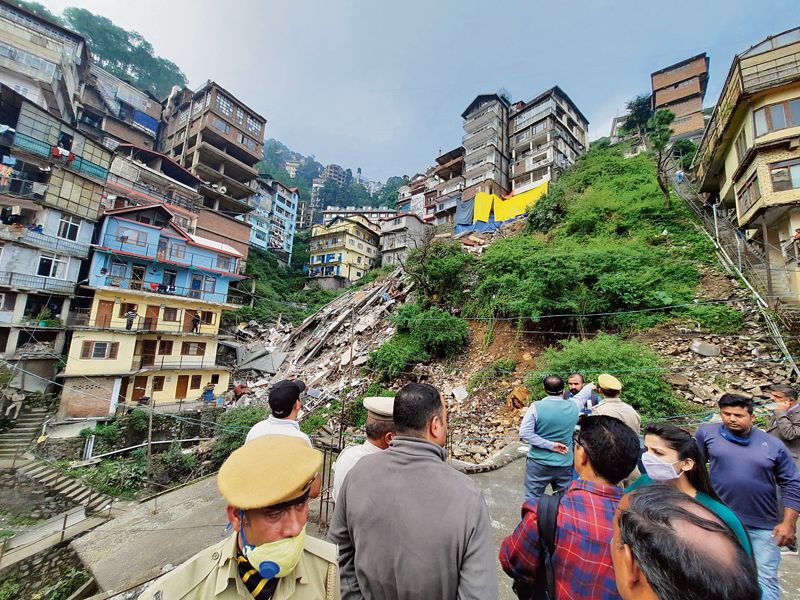
(Feature Image:- Locals gather near the debris of the building which collapsed at Kachi Ghati in Shimla. Credit Amit Kanwar/ The Tribune Oct. 2021)

In a welcome development, National Green Tribunal (NGT) has put Shimla Draft Development Plan (SDDP) 2041 on hold finding it ill-conceived and in directly violation of its earlier order of regulating haphazard construction activity in the state capital. This is a major set back of present government which had been hoodwinking the judiciary to provide relief to unauthorized structures with Shimla Planning Area in view of upcoming state assembly election.

To push the SDDP, the government went on to challenge NGT’s judicial power and even approached Supreme Court and chose to ignore the principle of sustainable development.  The NGT order is a validation of the crusade launched by environmentalists and social organizations to save the Queen of Hills from further concretization and degradation.

The government has failed to get any relief from NGT, High Court and Supreme Court on the issue. Its time, the government wake up to the gravity of concerns and fragility of the hill station which has also been struggling to meet potable water demand and performing poorly on solid and liquid waste treatment front.

Continue reading “DRP 24X22: Stay on Shimla Draft Development Plan 2041 A Right Step by NGT” →
DRP News Bulletin

DRP 17×22: SSP Fails To Provide Promised Water, Rehabilitation: Former Gujarat CM from BJP 

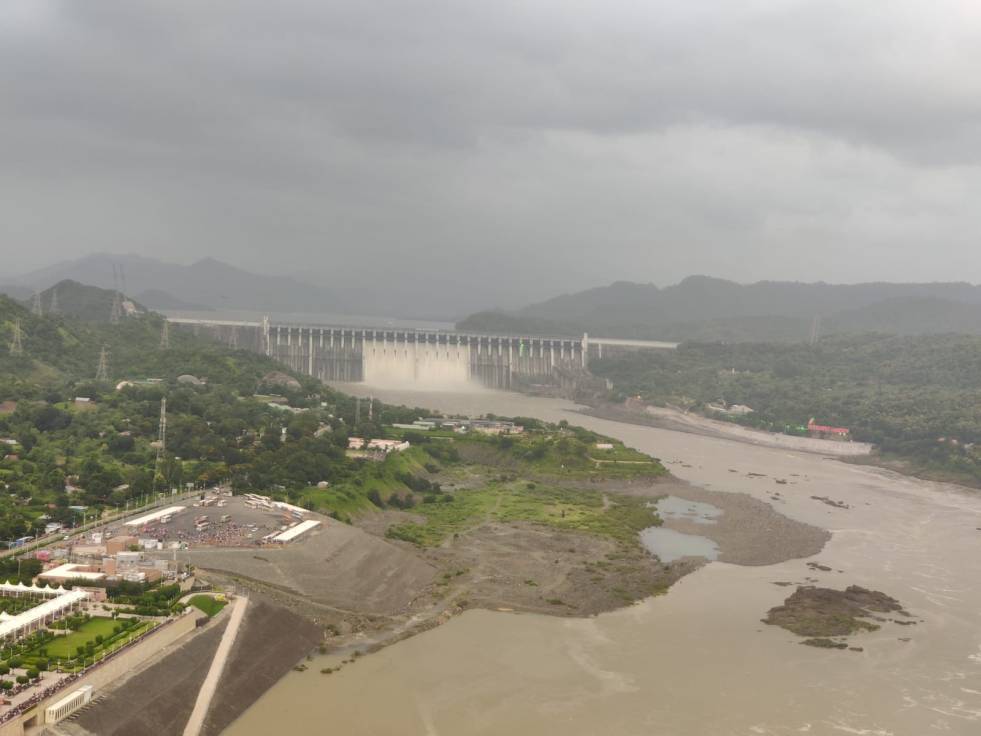
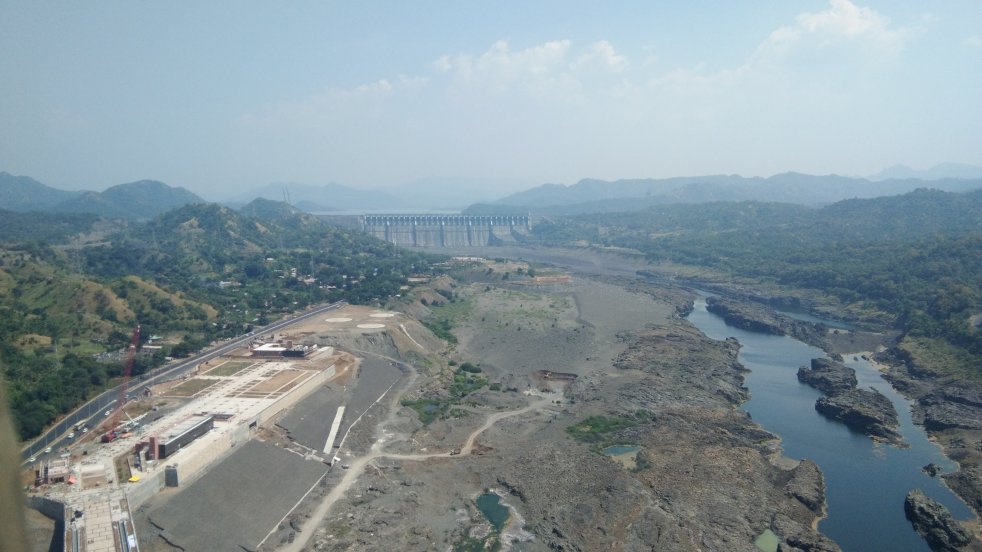
(Feature Image: An aerial view of Narmada river downstream Sardar Sarovar Project in Oct. 2018. Source: CMO Gujarat twitter handle)

With Gujarat state assembly election round the corner, Bhartiya Janta Party (BJP) the party ruling the state and Centre has been evoking the Sardar Sarovar Project as a big achievement in the face of contrasting ground realities as suggested by no less than former Gujarat Chief Minister of BJP Shri Suresh Mehta. The project has failed to provide promised irrigation water to farmers of Kutch and Saurashtra in whose name the dam was pushed as the canal system remains not fully built. The people of Kutch, in whose name Gujarat got 9 Million Acre Feet of water, disproportionate to its catchment area at SSP, were incidentally last to get the water and not first as it should have been. Kutch canals remains largely unfinished and command area largely unirrigated. Who stopped this area to get the water over a decade after the water started flowing from the dam is a question, Gujarat rulers refuse to answer.

Similarly, thousands of project affected people continue to struggle for rehabilitation and compensation despite court orders. The Gujarat rulers have gone silent over unending and unfolding ecological and hydrological impacts of the dam on Narmada river system downstream from the dam including delta area. Thousands of villagers living in miserable conditions submerged in backwater of the dam but have not been officially recognized as project affected people. At this moment, the timely, just rehabilitation and compensation of these villages and project affected families should be top priority of concerned governments including the Central government.

Continue reading “DRP 17×22: SSP Fails To Provide Promised Water, Rehabilitation: Former Gujarat CM from BJP “ →
DRP News Bulletin

DRP 10×22: All Pervasiveness of Climate Change and Anthropocene Impacts

(Feature Image:- Odisha: 10 stranded in flash flood after sudden release of water from Gohira dam. Source: TNIE )

A large number of reports in this week’s news bulletin from SANDRP are tied by a common threat. The report in NYT about how the South Asian Monsoon is becoming more intense. How the droughts like the one in western US are becoming more likely.

In Bengal people killed in October rains while they were doing visarjan of Durga idols and in Odisha people stuck by sudden release of water from a dam. In these cases of W Bengal and Odisha, strangely, there was no warning and no one is even asking why. In both cases it is the destruction of the river in the that led to create the crisis, but again no questions are being asked.

The report of death by avalanches, the more frequent landslides in monsoons are also in the same league. The SW Monsoon is officially over as per India Meteorological Department, but even as we write, the extreme floods in Uttarakhand, Uttar Pradesh and Madhya Pradesh are breaching the Highest Flood Levels in several rivers.

Continue reading “DRP 10×22: All Pervasiveness of Climate Change and Anthropocene Impacts“ →
CWC - Central Water Commission · Dams

India’s Rivers Breaching High Flood Levels in SW Monsoon 2022

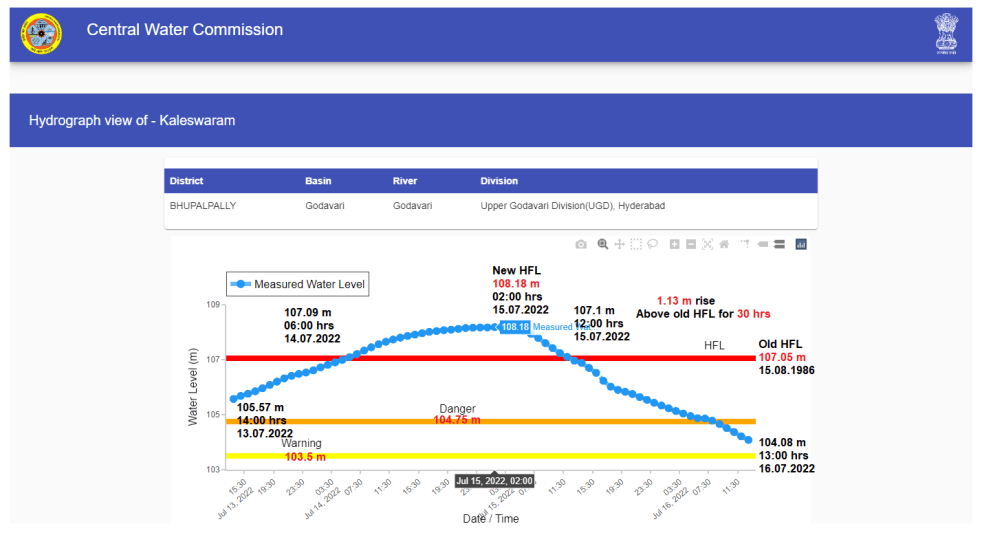
(Feature Image: Hydrograph of River Godavari in extreme flood situation at Kaleswaram level forecast station in Bhupalpally district, Telangana on July 15, 2022. Source: CWC)

Highest Flood Level (HFL) breach incidents are important indicator of flood cycle and could also help in understanding the changing rainfall pattern. Though, with 925 mm rainfall[i], the south west monsoon season 2022 falls in normal category, its distribution both temporally and spatially has seen huge variations. This is also reflected by at least 57 HFL breach incidents in 8 river basin across the country during the SW Monsoon months of July-Sept 2022.

For past four years, SANDRP has been tracking the HFL breach incidents during pre-monsoon and monsoon months. The analysis of such HFL breaches in 2018[ii], 2019[iii] and 2020[iv], May-Sept 2021[v], Oct.-Nov 2021[vi] can be seen on our website. The pre-monsoon months of May and June 2022[vii] have also seen 5 HFL breach incidents. This report tracks the other HFL breach incidents taking place between July and September months.

Continue reading “India’s Rivers Breaching High Flood Levels in SW Monsoon 2022“ →
CWC - Central Water Commission

2022: Overview of CWC Flood Monitoring Sites in West India

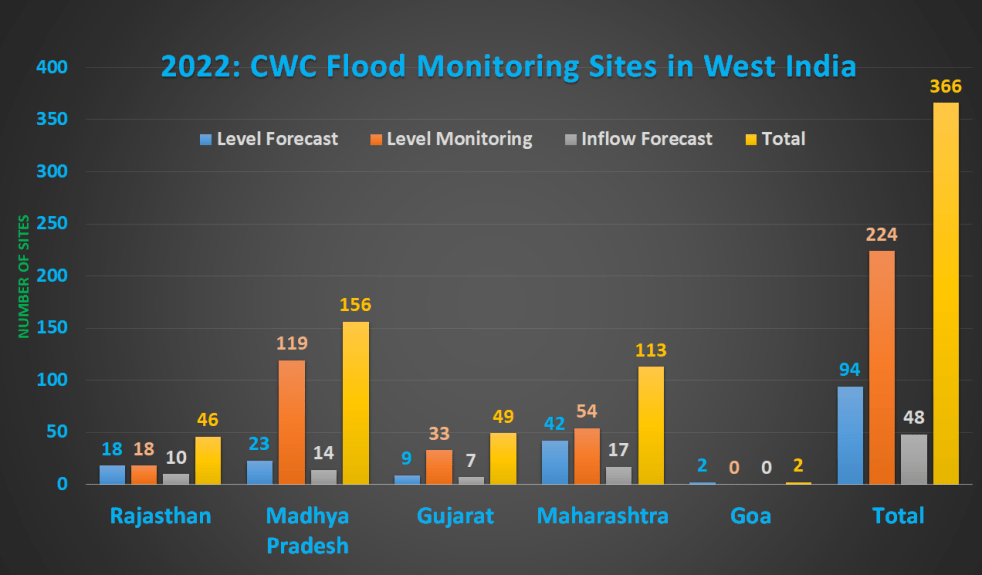
(Feature Image: Bar chart showing CWC flood monitoring sites excluding UTs of Dadar & Nagar Haveli and Daman & Diu in West India in 2022)

Since 2018, SANDRP has been presenting detailed overviews on flood monitoring sites[i] of Central Water Commission (CWC) which is the only agency doing flood forecast work in India. This year, we have published and highlighted the inaccuracies in CWC’s flood monitoring sites in North[ii], North East[iii] and East[iv] zones. This fourth overview covers the West zone for Rajasthan, Madhya Pradesh, Gujarat, Maharashtra and Goa states. The previous overviews for the region can be seen here (2018[v]) and here (2019[vi]).

Continue reading “2022: Overview of CWC Flood Monitoring Sites in West India“ →
DRP News Bulletin

DRP 260922: Need for new credible Polavaram backwater study

(Feature Image:- The construction of the Polavaram dam across the Godavari river has posed a big threat to the Pulasa fish, as its movement to the upstream of the river could be curtailed. HT PHOTO).

Telangana state has demanded fresh backwater study for the Polavaram dam based on a number of grounds including the higher spillway capacity and outdated river cross sections of 1990s used in the old study. The changing rainfall pattern and resultant changing river flow pattern, both due to changed rainfall and changed state of catchment area also should be a reason for such a fresh study. However, more importantly, the study needs to be done in a credible way involving independent experts, not just state or central govt officials or academics from govt run institutions. Moreover, the study and all the information related to it has to be completely and promptly in public domain as these studies are required for the affected people and affected area. Normally Central Water Commission does such studies and refuses to make it public. What is the use or reason for backwater study to be secret? Possibly CWC is not confident of the quality of the study and that is why it is very important to have experts in the study team who are known to take independent stand. It is useful not only for the states of Telangana, Odisha and Chhattisgarh, but also for the people of Andhra Pradesh too. And earlier this is done, better it will be for all concerned.

Continue reading “DRP 260922: Need for new credible Polavaram backwater study“ →
DRP News Bulletin

DRP 190922: Dams bringing unprecedented changes to the World’s Rivers

A new study published this week once again highlights not so well known impact of large dams on the rivers: role of rivers in building, supplying sediment, nutrients to floodplains, deltas, coastlines, estuaries, oceans and supporting so much biodiversity and how large dams are majorly adversely impacting this role of rivers. The study by scientists at Dartmouth using images from the NASA-US Geological Survey for 414 of the world’s largest rivers show the unprecedented changes the dams are bringing to World’s rivers, the impacts that in many cases are outweighing the impacts of climate change. This is particularly true of the northern hemisphere that includes India, World’s third largest dam builder.

Unfortunately in India, there is very little appreciation or acknowledgement of this role of rivers and how dams are affecting it. The least one can expect is that the Government of India should urgently initiate a study to document and understand this phenomena and also highlight what needs to be done about it. The study should be done by an independent team of multidisciplinary experts.

Continue reading “DRP 190922: Dams bringing unprecedented changes to the World’s Rivers“ →
CWC - Central Water Commission

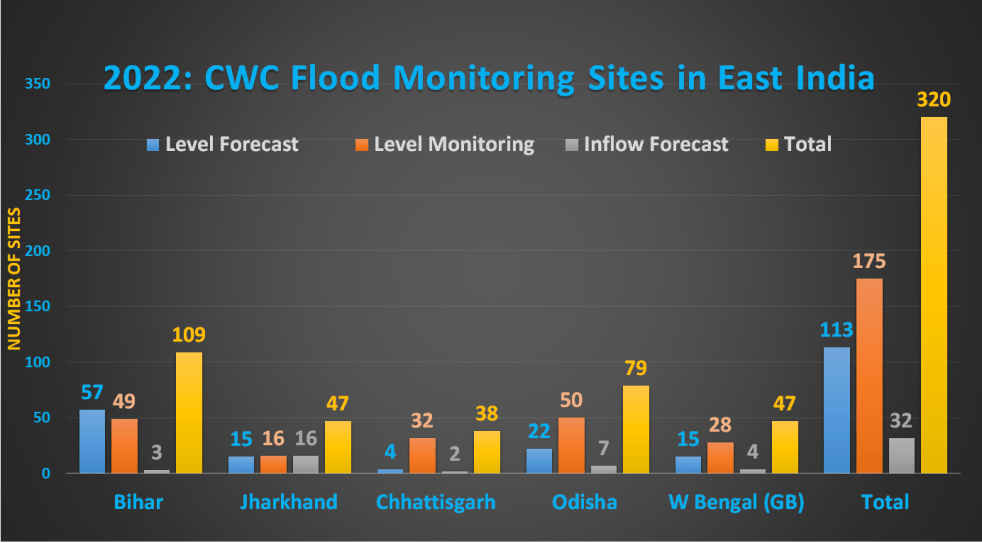
2022: CWC Flood Monitoring Sites in East India

Flood forecast and monitoring is essential part of Central Water Commission’s (CWC) work. Presently, the agency claims[I] issuing flood forecasts at 332 sites including 133 Inflow Forecast (IF) sites and 199 Level Forecast (LF) sites. Since 2018, SANDRP has been presenting critical analysis of CWC’s flood forecast website[II] in region wise manner.

In 2022 SW monsoon season, we have already published the overviews for North[III] and North East[IV] regions of the country. This third part in the series covers the states in East India including Bihar, Jharkhand, Chhattisgarh, Odisha and West Bengal (Ganga Basin). Our previous overviews for the region can be seen here (2018[V]) and here (2019[VI]). 

Continue reading “2022: CWC Flood Monitoring Sites in East India“ →
Dams · DRP News Bulletin

DRP 050922: Corruption in Large Dams & pro dam media Mughals

(Feature Image: Sardar Sarovar Dam on Narmada river. Source: Central Water Commission 30.08.2022)

As this article on corruption in large dams in India shows, it is open secret that large dams involve massive corruption, kickbacks and political funding. But the politicians from PM downwards across the party lines have understandably no interest in this issue.

But unfortunately, the large dams-corruption is not limited to politicians. The corruption in various forms plague even the media Mughals like Swaminathan Ankalesaria Aiyer and Shekhar Gupta, both known for their fundamentalist pro dam views. They too have no  interest in corruption in large dams. In fact some of them have no qualms accepting sponsorships of dam contractors for their media awards! They are however, ever ready to criticize Narmada Bachao Andolan and Medha Patkar, though they have no clue about the issues they are talking about and keep using some flawed study whose reply (by Nandini Oza and Shripad Dharmadhikary) is already out in public domain. It is interesting that they have launched this fresh attack on dam critics just when Gujarat Chief Minister and country’s Home Minister have also launched attack on the NBA. Neither Gujarat CM, PM or HM is replying as to why Kutch, the main justification for Gujarat getting disproportionate share of Narmada waters, were the last to get their share of the water (even now not fully as the canal distribution system is still incomplete), almost two decades after the water rich Central Gujarat started getting Narmada waters. Nor are the pro dam media Mughals bothered about this.

Continue reading “DRP 050922: Corruption in Large Dams & pro dam media Mughals“ →
CWC - Central Water Commission

Monsoon 2022: CWC Changing HFLs in Ad-hock Manner

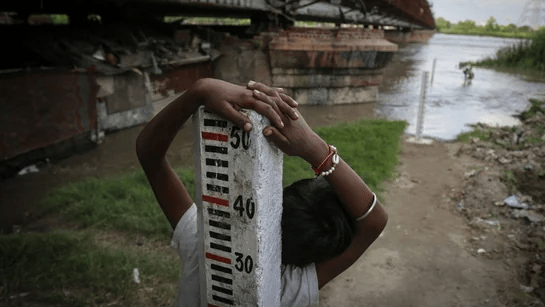
(Feature Image: Pillar with flood level marked on the bank of Yamuna river at Old Railway Bridge level forecast site in Delhi. Source:- Sanchit Khanna/HT Photos)

During monsoon season, Centre Water Commission’s (CWC) carries flood monitoring and forecast work through a network of 332 stations[i] covering 20 major river basins. The stations are comprised of Level Forecast (LF), Level Monitoring (LM) and Inflow Forecast (IF) sites. The LF sites have Warning Level (WL), Danger Level (DL), Highest Flood Level (HFL), date of HFL information while LM sites maintain HFL and HFL date records. At IF sites flood level for respective dams/ barrages with inflow, out flow figures are measured and forecast is issued accordingly.

However, there are plenty of concerns plaguing CWC’s flood forecast and monitoring work across country for years. In this 2022 SW monsoon season, the agency has exhibited one more problematic tendency which exhibits not only its careless approach vis-a-vis keeping accurate information of HFL breach events, but it also seems strange that it realises it has giving wrong HFL level and date information mostly only after crossing the HFL now. 

Continue reading “Monsoon 2022: CWC Changing HFLs in Ad-hock Manner“ →