Himachal Pradesh · Himalayas · Hydropower

The Socio-Ecological Impacts of Small Hydropower Projects in Himachal Pradesh Part-2

-Prof J. Mark Baker (JMark.Baker@humboldt.edu), Humboldt State University, Arcata, CA, USA

Introduction

This post is the second of a two part summary of the results of a study on the socio-ecological impacts of privatized, small, run-of-the-river hydropower projects in Himachal Pradesh.[1]  The study is based on field research conducted in 2012 on all 49 completed small hydropower projects in the state.[1]  Part one, posted here on 8 June, reviews the implementation of the Himachal Pradesh power policy governing privatized small hydropower development and examines the local social and environmental effects of commissioned small (defined as 5 MW or less) hydropower projects.  This part will address two of the claimed local benefits of small hydropower development, namely monetary contributions by the project developer to local community development projects through the Local Area Development Authority (LADA) and local employment generation.  After a brief discussion of the relationship between small hydropower projects and carbon credits through the Clean Development Mechanism, the article reviews two promising institutional models for small hydropower development and concludes with a set of recommendations.

Local Area Development Authority– Implementation and Accountability Challenges

The 2006 Hydropower Policy includes provisions for tangible local benefits, in part to foster local support for power projects.  One primary mechanism is the requirement that project developers deposit one percent of the project cost into an account with the district commissioner.  These funds, known as Local Area Development Funds, are to be allocated by the Local Area Development Authority (LADA) to support local development activities, particularly related to infrastructure and services.[2]

In our survey of the 49 commissioned small hydropower projects we found that the LADA program was not working as well as intended.  Inconsistent record keeping by district authorities, the lack of clearly defined project affected areas, and uneven levels of awareness among local pradhans about the program have enabled some project developers in Himachal to avoid fulfilling their obligations to local communities.  The district revenue department office in Kangra was the only district office that maintained a comprehensive record of LADA obligations and tracked how much the project developer had paid and how much was still owed.  Without such a record, officials in the remaining six districts found it extremely difficult to hold the project developer accountable for their LADA payment obligations.  For example, in District Chamba, ten small hydropower projects together owe Rs 247 lakhs.  However, as of the summer of 2012 they had paid only Rs 70 lakhs and the developers of three projects had contributed nothing at all.  District administrators seem to have little authority or recourse, beyond personal persuasion, to compel the project developer to make the required contributions.

There are also challenges with defining the Project Affected Area (PAA) and Project Affected Zone (PAZ), which is important because 70% of the LADA funds are earmarked for projects in the PAA and 30% for projects in the PAZ.  Very few small hydropower projects have defined PAAs and none had defined a PAZ.  The lack of clearly defined affected areas raises questions about whether or not the authorized development projects actually reach those households and hamlets most affected by the hydropower project.

A related concern is the unevenness of awareness about the LADA program among village pradhans.  Several village pradhans, especially in the remote areas of the state, had never heard of the LADA program, even though one or more small hydropower projects were located within their panchayat boundaries.  Where the program was functional, there are sometimes disputes between the LADA committee and the district commissioner concerning which projects to fund and whether to prioritize projects oriented towards strengthening local employment generation or hard infrastructure development.

We did encounter one example of a panchayat in which the LADA program was working as intended.  The pradhan of the panchayat, located in District Kangra, was a retired military officer.  Well aware of the LADA obligations of the small hydropower project developers in his panchayat, he maintained close communication with the district commissioner’s office in order to ensure that the required deposits were made.  The pradhan also pressured the LADA committee to identify potential projects in a timely fashion and he followed up with the district commissioner to ensure that the expenditure of the requisite funds was authorized.  As a result, in this panchayat LADA funds had been used to construct a cricket playing field, veterinary dispensary, and a handsome hall for village meetings and social functions (figures 1 and 2).  Furthermore, in part due to the effective implementation of the LADA program and the fact that the small hydropower project did not annex cultivated areas, local opposition to the projects was virtually nonexistent.  This example suggests that the LADA can offer tangible local benefits if accurate records are kept, if the project developers are compelled to contribute the requisite amounts, if village pradhans know about the program and their entitlements under it, and if the district administration supports program implementation.

Mark1

Mark2

Employment Generation –Unrealized Potential for Secure Jobs

In addition to requiring project developers to contribute to the Local Area Development Authority, the 2006 Hydropower Policy seeks to generate local benefits by stipulating that 70% of the project’s workers be from Himachal Pradesh.  Because the lack of local employment opportunities is one of the primary drivers of migration from hill areas, the provision of permanent jobs through small hydropower projects could be a significant benefit.  In addition to a steady income, permanent regular employees participate in government-approved pension plans, receive compensation for work-related accidents and injuries, and are protected from arbitrary dismissal.  The project developer is also required to register all workers with the Labour Department and the local police station on a monthly basis.

While the 49 commissioned small hydropower projects in the state generate significant employment, more than half of project developers evade complying with labor law.  All told, the 49 projects employ a total of 951 people, 603 of whom come from the panchayat(s) in which the project is located.  On average, a 5 MW project employs approximately 20 people.  While the total employment these projects generate is substantial, only 22 project developers have registered their employees with the state Labour Department as regular employees.  These workers do receive the protections and benefits of the state’s labor laws, and some of them (in three projects) are also provided subsidized lodging and meals.  However, the workers in the remaining 27 small hydropower projects, while doing the same work as regular employees in other projects, are hired on a daily wage basis and are thus excluded from the benefits and security of regular employment.  A further disjuncture arises from the fact that only 11 project developers have established provident fund contributions for their employees, the remaining 38 have not.  For the majority of workers in small hydropower projects, one of the most important potential local benefits – secure employment – has not been realized.

Given the significant risk of injury or death in this sector, it is of particular concern that unregistered workers are less likely than registered workers to receive compensation should an accident occur.  While we did not develop comprehensive information about accidents and injuries, we did confirm worker deaths, the great majority of which occurred during the project construction phase due to tunnel collapses, falling rock, landslides, and tractor accidents.  A total of 40 people died in accidents related to the construction of the commissioned small hydropower projects in the state, 18 were Himachali and 22 were from neighboring states or from Nepal.  Only three of the families of the forty workers who died in fatal accidents received some form of compensation.  The lack of proper registration and the general absence of compensation suggests the extent to which project developers and their contractors treat workers as a disposable labor force.

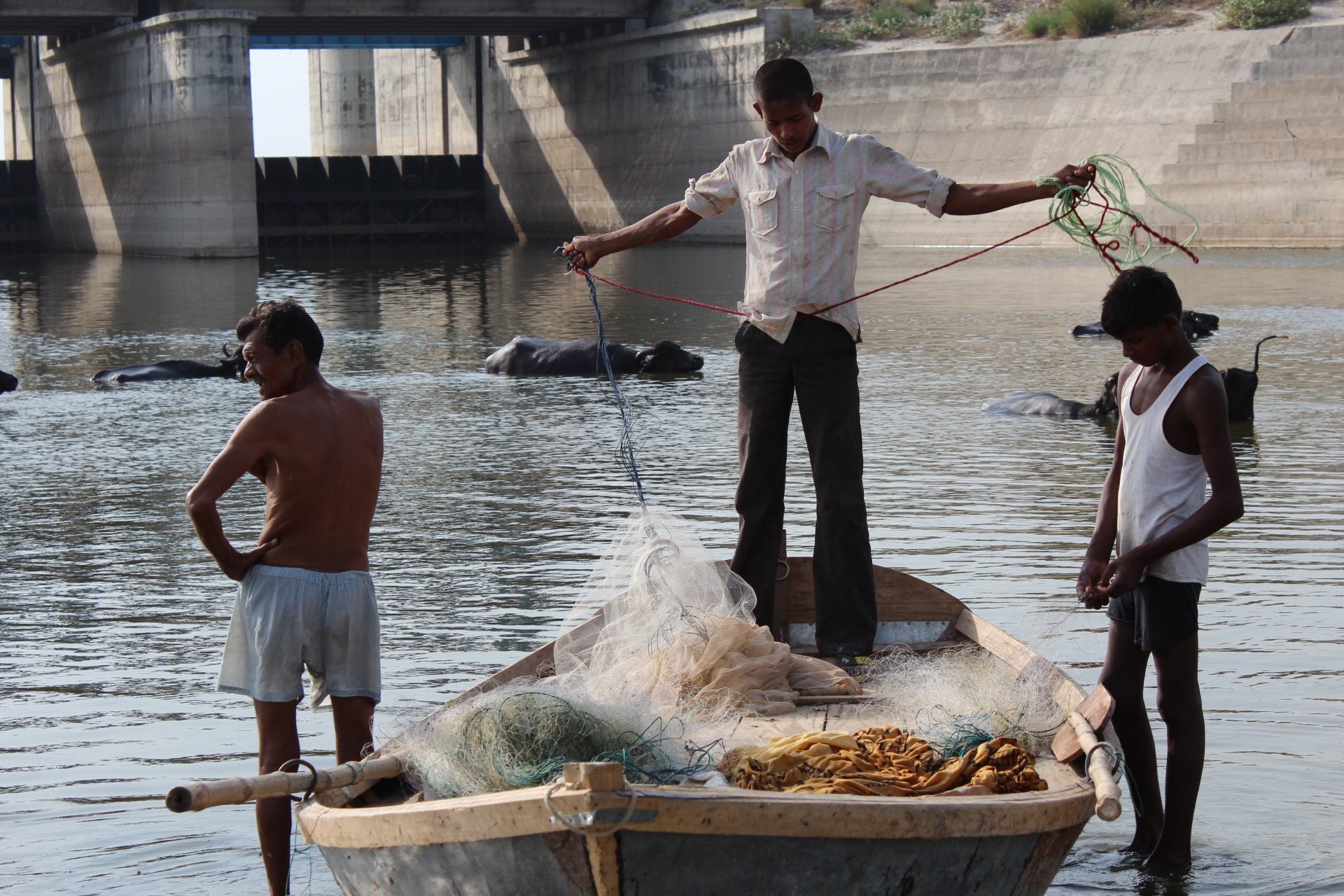
The common practice of contracting out project construction work to subcontractors who hire large numbers of employees challenges the ability of unions to advocate for project workers.[3]  Questions arise concerning who is ultimately responsible for following the relevant labor laws and protections – the project developer or the developer’s subcontractors (figure 3)?  Project developers can evade accountability through the use of subcontractors or by creating subsidiary companies.  For example, in District Kangra in May, 2010 the local construction worker union notified a small hydropower project developer of its intent to strike due to violations of labor laws and working conditions.  In a letter the developer responded that the strike was “totally illegal and off the mark” as the developer was not the owner of the plant but was “merely the contractor.”  Furthermore the developer noted that the project was “generating power in the interest of the public of Himachal Pradesh,” and was “a property of the State and a national asset,” and thus the calling of the strike was “illegal from all perspectives.”  While it is true that the developer to whom the labor union had sent the notice of intent to strike is not the company listed as the owner of the project in the state of Himachal Pradesh’s records, it is also true that the listed company is actually a subsidiary of the developer, whose address is the same as the developer and whose website leads directly to that of the developer.  Furthermore, the power project is showcased on the developer’s website as one of four small hydropower projects they have constructed and are currently operating in District Kangra.  The developer’s attempt to evade accountability for labor law violations by creating a fictitious subsidiary demonstrates the challenges unions face when they seek redress for labor law violations and demand worker rightsMArk3NEW


Payments to Developers for Renewable Energy Production

Part One of this article discussed the economics of small hydropower development.  Clearly, the primary source of income developers receive is the guaranteed purchase price that the Himachal Pradesh State Electricity Board provides.  A second, and much smaller, source of revenue for some projects derives from the sale of carbon credits through the Clean Development Mechanism of the Kyoto Protocol, administered under the United Nations Framework Convention on Climate Change (UNFCCC).  The Clean Development Mechanism allows countries in the global south to sell carbon credits in the form of Certified Emission Reductions (CERs) to countries in the global north that need to purchase such reductions in order to meet emissions reduction limits that the Kyoto Protocol has imposed.  Projects in the global south may be eligible for registration under the Clean Development Mechanism if it can be demonstrated that their implementation will prevent carbon (measured in metric tons of carbon dioxide equivalents) from entering the atmosphere.  The resulting emission reductions can then be sold by the project developer to a carbon generating entity in the global north that needs to purchase such carbon credits.  In the context of small scale hydropower projects, developers argue that if they did not produce electricity using hydropower, the equivalent amount of electricity would be generated primarily through the burning of fossil fuels.  Thus, by producing electricity through hydropower, they are “preventing” a measureable amount of carbon from going into the atmosphere.  If their projects are registered under the Clean Development Mechanisms, then project developers may sell credits to entities in the global north.

Of the 49 commissioned small hydropower projects, approximately 27 are registered under the Clean Development Mechanism.[4]  According to documents relating to these 27 projects on the UNFCCC Clean Development Mechanism website, these hydropower projects are credited with generating 447651 metric tons of carbon dioxide emissions reduction equivalents per year.  Project developers may sell these emissions reductions equivalents (carbon credits) to entities in the global north.  There are at least three points worth noting about these carbon credits.  Firstly, the value of carbon credits has dropped precipitously in the last few years, from a high of approximately rupees 760 in 2008 to its current price of less than rupees 50 per metric ton of carbon equivalent (redd-monitor.org 2013).[5]  The essential collapse of the international carbon credit market has been attributed to an oversupply of credits and weak demand (Singh 2014).  Secondly, there are serious concerns about the ethics of generating marketable carbon equivalents from projects that severely disrupt the livelihoods of communities as described in part one of this post.  Thirdly, there are questions about the integrity of the calculations and procedures employed to calculate the carbon equivalents of such projects and to justify project inclusion in the UNFCCC registry.  One of these questions centers on the requirement of additionality.  Additionality, as the Kyoto Protocol specifies, is the principle that projects are eligible for international support through the Clean Development Mechanism only if they would be uneconomical without such support.  Thus, a small hydropower project that is economically viable without the revenue from selling carbon credits is in principal barred from participating in the carbon credit program.  On the other hand, private sector loan officers will not approve financing for projects that are not economically viable.  At least some project developers resolve this contradiction by developing two sets of project documents.  As one project manager told me, “we prepare two DPRs (Detailed Project Reports), one for CDM and one for the banks.”

In light of the poor remuneration developers receive from the sale of carbon equivalents, at least some project developers expressed the desire to participate in the Government of India’s Renewable Energy Certificate (REC) program, which has its roots in the 2003 Electricity Bill and is part of the country’s renewable energy policy (Carbon Credit Capital 2011).  By becoming designated as “eligible entities” within the REC program, developers would receive one renewable energy certificate for every megawatt hour (MWh) that they sell to the state electricity grid.  Purchasing electricity produced by an eligible entity enables state utilities to meet their Renewable Purchase Obligation, which is the proportion of electricity they purchase that must come from renewable sources.  Eligible entities may trade renewable energy certificates on one of India’s two electricity exchanges.  As of 2012, no small hydropower developer had become an eligible entity within the REC program.  Several developers were interested in joining this program, however the fact that they already have power purchase agreements to sell electricity to the HP State Electricity Board renders them ineligible for the REC program.

Two Alternative Institutional Models for Future Small Hydropower Development

The track record of the 49 commissioned small hydropower projects in Himachal Pradesh is cause for concern.  Patterns of disruption to farmer-managed irrigation systems as well as water mills (gharats), environmental and infrastructural damage from landslides in some regions (especially Chamba District), negative effects on fisheries and the livelihoods that fish farming and sport and subsistence fishing activities support, systemic problems with the Local Area Development Authority, significant uncompensated worker deaths during project construction and on-going concerns regarding labor relations, all comprise the local track record of small hydropower development in the state.  Leaving aside the broader question of whether or not small hydropower projects should be developed, it is clear that if they are going to be developed, then an alternative institutional framework is called for.

Two institutional models for small hydropower development exist that have the potential to realize more sustainable, effective and equitable hydropower outcomes.  These models are represented by the Sai Engineering Foundation (figure 4) and the Churah Cooperative Floriculture Society (figure 5).  Inspired by the teachings of the religious leader Bhagwan Sri Sathya Sai Baba and the religious ideals of Gandhian social service, Sai Engineering Foundation is a registered charitable foundation that promotes social welfare.  They have been involved with hydropower development since the first India Hilly Hydel demonstration projects in the 1990s.  They both own and manage their own projects and provide consulting services for other private power developers.  They invest the revenue from hydropower production in social service and welfare programs in Himachal Pradesh.  These activities include medical and blood donation camps, financial assistance to low income students, community-based welfare programs, working with government programs to deliver services to low income communities, and promoting cooperative societies in the field of power generation, construction, and floriculture (Sai Engineering Foundation 2011).  Because of the social service ideology that informs this organization, when the Sai Foundation develops small hydropower projects, it does so in a manner that prevents or mitigates the negative impacts on local livelihood strategies and is responsive to local concerns and issues.

The second alternative institutional arrangement is the Churah cooperative society.  Although the 2006 Hydropower Policy specifically addresses the need to prioritize working with cooperative societies, and despite repeated calls by community members for more support for local cooperative society involvement in hydropower development, our research revealed only one community-based cooperative society working on small hydropower development.  Since 1996 the Churah Valley Fruits, Vegetables, and Flowers Growers Marketing and Development Cooperative Society (Churah Floriculture Cooperative Society) has worked to promote the economic development of low income families in the Churah Valley, a remote area in Chamba District, not far from the border with Jammu and Kashmir.  The cooperative’s initial and on-going work involves developing floriculture using greenhouses, and marketing cut flowers to cities in north India, as well as off-season vegetable production in neighboring Pangi Valley.  Interestingly, they are also working to develop a small hydropower project under the framework of the 2006 Hydropower Policy.  Four hundred Below Poverty Line (BPL) households, all members of the cooperative society, are involved in this effort.  In order to qualify for the necessary loans, each household is putting up their house and land as collateral.  The cooperative society is currently securing the necessary funding and moving ahead with efforts to secure the required No Objection Certificates.  The revenue from the small hydropower project, once it is commissioned, will be shared among the participating families.

Feature


Both the Sai Engineering Foundation and the Churah Floriculture Cooperative Society represent viable alternatives to the current approach, which emphasizes corporate ownership of small hydropower facilities.  Both of these organizations are accountable to local concerns and interests and prioritize local social and environmental sustainability.  However, both the Sai Engineering Foundation and the Churah Floriculture Society face an uphill battle to get their projects approved and the requisite NOCs obtained.  Both organizations have fewer financial resources to offer in exchange for obtaining NOCs than do private companies; they are thus at a disadvantage when competing with private corporations for bureaucrats’ attention and willingness to provide NOCs.

Concluding Recommendations

Insights from this study provide the basis for proposing concrete steps that together could help small run-of-the-river hydropower projects realize their purported, but not realized, benefits.  Three broad categories of recommendations exist.  Firstly, the process through which potential hydropower sites are identified must include key elements of the agrarian landscape as well as the cumulative effects of multiple projects along a common stream reach; furthermore, when negative social and environmental effects are anticipated, they should be adequately mitigated.  Settlements, networks of kuhl irrigation systems, strings of gharats along streamcourses, irrigated and unirrigated cultivated areas, and proximity to adjacent projects, in addition to hydrological information, should be incorporated into the site evaluation and identification process.  Using this information to avoid siting projects in densely managed landscapes, or too close to each other, would help eliminate many of the negative project impacts on local livelihoods and communities.  In cases where projects do negatively affect local livelihoods, e.g. when a project renders gharats defunct, disrupts a community-managed irrigation system, or disturbs grazing or cultivated areas, then adequate compensation should be provided through a government-facilitated process.  Similarly, negative environmental effects should be mitigated, for example by requiring manual cleaning of desilting tanks, installation of fish-friendly diversion weirs, adequate water (quality and quantity) to support ecosystem needs, and effective muck management approaches.

Secondly, policy implementation and enforcement need to be strengthened.  While the 2006 HP Power Policy and state labour laws contain important safeguards for local communities and workers, implementation and enforcement need strengthening.  For example, district authorities need to be required and empowered to collect the mandatory developer contributions to the Local Area Development Authority.  LADA funds should be allocated in a manner that maximizes local benefits for project-affected households and communities. Similarly, labour laws requiring that workers doing regular work should be hired on a permanent, not a daily wage, basis should be enforced, and workers should receive the perquisites concomitant with regular employment, including compensation in the event of injury or death.  Projects that disrupt local livelihoods and generate unmitigated negative environmental effects should not qualify for carbon credits under the Clean Development Mechanism.  Greater policy and bureaucratic support also needs to be directed towards supporting alternative institutional models for small hydropower development, such as cooperative societies and social service foundations

Thirdly, governance measures that strengthen small hydropower projects’ accountability should be developed.  The record of negative social and environmental effects and the extent of local opposition, attests to the unsustainable nature of the current approach to small hydropower development.  Identifying and implementing governance measures to minimize these negative socio-ecological effects will likely provide a more informed and democratic basis for decision-making.  Measures such as requiring Environmental Impact Assessments, along with the requisite public hearings, as well as obtaining environmental clearance from the state, would go a long way to improving the sustainability of small hydropower in Himachal Pradesh.  If developers, after completing such assessments and hearings, and receiving clearance, were able to more easily obtain the necessary No Objection Certificates, then project delays would also be reduced.

Clearly, alternatives do exist for advancing institutional approaches to small hydropower development that are accountable to local communities and environmental concerns.  Whether or not the state of Himachal Pradesh (and other states since this is likely to be equally applicable to other states where such projects are taken up) chooses to embrace these approaches remains to be seen.  If the next 450 planned or under-construction small hydropower projects in the state generate a track record similar to the first fifty, then regional society and environment will be much the poorer for it.  However, if civil society mobilizations and resistance are sustained, and governance measures strengthened, then power developers will be held more accountable for the local impacts of their activities.  If the state government chooses to offer more support and capacity building resources for entities like cooperative societies and Sai Engineering Foundation, or at least removes some of the barriers they currently face, then these alternate institutional approaches to power development may proliferate.  And if in response to electoral pressures within the state, Himachal Pradesh decides to put more teeth into its currently progressive, but not enforced, power policy, then perhaps the future will be brighter than the recent past.

Please see Part I of the piece here:https://sandrp.wordpress.com/2014/06/08/the-socio-ecological-effects-of-small-hydropower-development-in-himachal-pradesh/

References

Carbon Credit Capital (2011) “India’s Renewable Energy Certificate Market” (New York).  Viewed on 9 June 2014.  Website: http://carboncreditcapital.com/dev/wp-content/uploads/resources/InFocus8.pdf

Newing, Helen (2011): Conducting Research in Conservation: Social Science Methods and Practice (New York: Routledge).

Redd-Monitor.org (2013) “Clean development mechanism: zombie projects, zero emissions reductions and almost worthless carbon credits”.  Viewed on 9 June 2014.  Website: http://www.redd-monitor.org/2013/07/12/clean-development-mechanism-7000-projects-zero-emissions-reductions-almost-worthless-carbon-credits-and-zombie-projects-increasing

Sai Engineering Foundation (2011): “Karmayoga”, Quarterly Newsletter of Sai Engineering Foundation, 1(11) (New Shimla, Himachal Pradesh).

Singh, Namrata (2014) “Companies holding carbon credits stare at ‘real loss’”.  Times of India.  Viewed on 9 June 2014.  Website: http://timesofindia.indiatimes.com/business/india-business/Companies-holding-carbon-credits-stare-at-real-loss/articleshow/31803387.cms

United Nations Framework Convention on Climate Change (2014). “Project Cycle Search.” Viewed on 9 June 2014.  Website: http://cdm.unfccc.int/Projects/projsearch.html.

END NOTES:

1] This study is based on six months of mixed methods, qualitative and quantitative field research that I and two research assistants.  After an initial exploration of the relevance of this topic in 2009, field research commenced in January, 2012.  We began by meeting key state level bureaucrats in Shimla and collecting secondary documents concerning all of the 49 commissioned small hydropower projects from the Himurja (Himachal Pradesh Energy Development Agency) office in Shimla.  We then turned to the district and project level research.  In each district where commissioned small hydropower projects were located, we interviewed district officials and collected secondary information concerning the projects.  We met with district commissioners, sub-division magistrates, tehsildars, and other concerned district officers.  We informed officials of our research, garnered key insights about small hydropower development from them, and collected relevant information and project related records and documents.  We then focused our research efforts on each commissioned small hydropower project.  At each project location, we interviewed project representatives (generally the project manager and occasionally the project owner) and the panchayat pradhans of affected panchayats.  We conducted structured and semi-structured survey interviews with project-affected households and other key informants.  We checked all the information we obtained using between-subject, cross-method, and cross-researcher triangulation (Newing 2011).  We ground truthed what we learned through meetings, surveys and interviews by walking transects from the diversion weir down to the tail race of every commissioned project.  We also photocopied key documents such as petitions, correspondence, court documents, and judicial papers.  Near the completion of the fieldwork, I met the same state level officers and bureaucrats with whom I had met at the beginning of the fieldwork in order to share preliminary research findings and conclusions.

[2] The Local Area Development Authority is a committee, comprised of the sub-district magistrate, other subdivisional officers, affected area panchayat pradhans, and a representative of the project developer.  The committee identifies and prioritizes potential projects, and then submits the prioritized list of projects to the district commissioner, who is to then approve and authorize the necessary expenditure.  Examples of projects include a veterinary dispensary, ayurvedic dispensary, cremation ground, village meeting hall, furniture for meeting hall, irrigation system (kuhl) repair, culverts and road repair, footbridges and playing field for youth.

[3] The labor-intensive project construction process lasts at least two years and often significantly longer.  To accomplish specific tasks, subcontractors hire large numbers of workers.  The majority of these workers live in temporary tin shed housing located along the banks of the stream or river from which the project diverts water.  These “labor camps” often house one hundred or more workers.  The fuelwood consumption for cooking and heating (notwithstanding attempts to provide LPG cylinders) associated with these camps poses a significant environmental concern, as does the fact that most of these labor camps do not have adequate provision for wastewater and sewage.  Consequently the adjacent stream, which is invariably used downstream for washing, irrigation and other purposes, and stream bank, are severely contaminated.  While this research focused on already constructed projects, local residents nevertheless often complained about the negative environmental, health, and social impacts of these labor camps.

[4] This is based on a comprehensive review of the Project Cycle Search webpages of the Clean Development Mechanism segment of the UNFCCC website, accessed on 9 June 2014.

RELATED SUBSEQUENT STORIES:

[5] http://www.indiawaterportal.org/articles/irrigation-systems-himachal-threatened-hydropower-projects


Himachal Pradesh

The Socio-Ecological Effects of Small Hydropower Development in Himachal Pradesh

J. Mark Baker (JMark.Baker@humboldt.edu), Humboldt State University, Arcata, CA, USA

Introduction

This article is part one of a two part summary of the results of a study on the socio-ecological impacts of privatized, small, run-of-the-river hydropower projects in Himachal Pradesh.[1]  It is based on field research conducted in 2012 on all 49 commissioned small hydropower projects in the state.

Map 1

In the late 1990s Himachal Pradesh, as did other states in this region, launched a series of initiatives to privatize and promote small hydropower production (Sinclair 2003).  In 2006 these initiatives were incorporated into a new hydropower policy that aimed to generate revenue through the sale of surplus power to neighboring states and to promote the state’s own development (GoHP 2006).  Because the levels of investment necessary to develop hydropower exceed the state’s financial resources as claimed by the policy, Himachal Pradesh’s power policy provides for private sector involvement and uses central government subsidies.  Small hydropower project construction and operation in Himachal Pradesh is entirely privatized (GoHP 2006).  Small hydropower projects mostly utilize run-of-the-river power generation technologies to convert hydropower into electricity; this study uses the Himachal Pradesh government definition of small as 5MW or less (though the Government of India defines small as below 25 MW capacity).[2]  By 2012, only six years after the implementation of the policy, there were a total of 49 small hydropower projects generating electricity in the state (including the approximately 8 projects commissioned before 2006) (map 1).  Additionally, approximately 50 more projects were under construction, and approximately 400 were in various stages of planning and approval (GoHP 2012) (map 2).[3]

Map 2

The state established a nodal agency, Himurja, to oversee the private development of the state’s small hydropower potential, and to promote utilization of renewable energy more generally.  In 2006 the state formalized the processes and mechanisms that govern private sector involvement in electricity production by passing the Hydropower Policy.  Himurja plays a central role in this process by allocating government-identified small hydropower project sites to private corporations.  After receiving an allotted project site, the corporation (referred to as the project developer or independent power producer) must prepare a series of detailed project reports that include, for example, two years of streamflow data and analysis of the engineering, economic, hydrological, geological, and environmental characteristics of the project.  Once Himurja officers approve these reports, they and the project developer sign a Memorandum of Understanding, a Techno-Economic Clearance document and eventually an Implementation Agreement.  At that point the developer begins the work of securing the required No Objection Certificates (NOCs) from the relevant state and local government entities including the Wildlife Department, Forest Department, Irrigation and Public Health Department Fisheries Department, Public Works Department, Pollution Control Board, Revenue Department, and affected Panchayats.  After obtaining the required certificates, the power producer may commence project construction.

Construction costs generally range from Rs 6-8 crores per megawatt, but these are quickly recouped through the sale of electricity to the Himachal Pradesh State Electricity Board.  Once the project is commissioned, the HP State Electricity Board guarantees the independent power producer a purchase price of Rs 2.50 per kilowatt hour – the equivalent of approximately Rs 2.2 crores per megawatt per year.[4]  The project reverts to the state government free of cost after 40 years of operation.  The developer pays the state government no power royalties for the first 12 years of the project’s life.  However, for the next 18 years the developer must provide 12% of the power it produces free of charge to the state; for the remaining 10 years it must provide 18% free electricity to the state.

For small hydropower projects, there is no requirement that the project developer prepare a formal environmental and social impact assessment or environmental and social management plan subject to public review.  Nor is the developer required to hold public hearings about the proposed project.  This is a serious issue because the absence of a formal environmental assessment and hearing process prevents members of project-affected communities and other civil society groups from sharing concerns about the projects’ anticipated effects.  This is one of the reasons for the growing and significant level of local opposition to small hydropower development in the state.  A significant amount of the local opposition to small hydropower projects stems from the ways in which such projects disrupt rural livelihoods, combined with the inadequacy of local benefits such as rural employment generation and other forms of direct compensation.  The next sections describe some of the livelihood disruptions the commissioned small hydropower projects have caused.  The discussion is organized district by district, reflecting the geographical pattern of these disruptions.

District Kangra – disruption to local irrigation systems and farmer collective action

The majority of District Kangra lies on the southern side of the Dhaula Dhar mountain range, from where it extends across Kangra Valley and into the Sivalik Hills.  The district is notable for its extensive network of community-managed gravity flow irrigation systems (kuhls).  In Kangra Valley alone 750 large and more than 2100 small kuhls irrigate approximately 40000 hectares (Baker 2005) (figure 1).[5]  Kuhl irrigation water is crucial for both kharif crops (rice and corn) and rabi crops (wheat and potatoes).  These crops, except for potatoes, are almost entirely used for home consumption.  Historically, kuhl irrigation water was essential for driving water-powered mills (gharats) and other machines, as well as irrigating home gardens, watering livestock, and meeting household needs for non-potable water.  The importance of ensuring the continuity of these kuhl irrigation systems is reflected in the language of the No Objection Certificates that project developers must obtain from the Irrigation and Public Health Department as well as from village panchayat pradhans.  These certificates contain language that protects community-managed kuhls from disruptions by small hydropower projects and requires the developer to pay full compensation if a project damages or disrupts a community-managed kuhl.

Fig 1

Despite the protections delineated in the No Objection Certificates, small hydropower projects commonly disrupt kuhl irrigation systems or cause them to cease functioning altogether, either by physically damaging the irrigation system or by diverting the water on which the irrigation system relies (figure 2).  When a kuhl is damaged or deprived of water, farmers must shift to rainfed cultivation.  Output from rainfed crops is invariably much less than for irrigated crops, in part due to unpredictable rainfall, increased vulnerability to drought, and damage from hailstorms at harvest time.  Throughout the state, small hydropower projects have disabled a total of at least 13 kuhl irrigation systems; in none of these cases did the project developer compensate farmers for their losses.  This level of disturbance to irrigation is significant – for example, one of the disabled kuhls was the primary source of irrigation water for approximately 2000 households.

Fig 2

Not all local farmers have not stood by idly, watching the lifeline of their subsistence agricultural economy go dry.  Our research documented countless visits from village representatives to district administrative authorities petitioning them to intercede on their behalf in order to seek redress, compensation, and/or release of adequate water flows necessary for irrigation.  Despite these frequent and often repeated requests, we did not encounter one instance in which the district administration prevailed upon the power producer to either compensate for disruptions to these irrigation systems or reduce water diversion to provide adequate water supply.[6]

Seeing the futility of seeking redress for damage or guaranteed minimum flows from already-constructed projects, farming communities in Kangra have started blocking construction of hydropower projects until the power developer agrees to binding conditions.  One example of this concerns Ganetta Kuhl, which diverts water from the Baner stream and conveys it 22 kilometers to the cultivated lands of more than 500 households in 12 different villages.  The diversion weir for a partially completed small hydropower plant is located upstream of the kuhl’s diversion point.[7]  Farmers worried that the project’s water diversion would reduce the water available to them.  When letters outlining farmers’ concerns sent to Prodigy Hydro Power, the deputy commissioner, and even to the chief minister by the panchayat pradhan and kuhl committee president did not produce results, the irrigators used the threat of opposition and civil disobedience to block further project construction (figure 3).  As a result, project construction work was halted for many months.  Finally, in 2013, the project developer agreed to the farmers’ demands, including that their water rights be guaranteed, and in return the farmers rescinded their threats; construction work on this project is currently underway.

Fig 3

The problems associated with project disruption of traditional irrigation systems are most pronounced in District Kangra due to the large number of kuhl irrigation systems.  However, our research revealed that any location in the state in which kuhl diversion structures are located between a project’s trench weir and tail race were liable to experience water shortages during the year.

Chamba District – landslides, damaged watermills, and local activism

District Chamba lies to the north of District Kangra and contains the headwaters of the Ravi River and key tributaries, all of which have cut deeply into the Himalayan mountains.  Because it lacks the broad arable plains that characterize the kuhl-irrigated Kangra Valley, farmers in Chamba combine rainfed cultivation on terraced fields carved into steep slopes with a high level of dependence on timber and non-timber forest resources, which meet both subsistence needs and generate revenue.  The streams that flow from the forests down through the cultivated fields and villages to eventually join the Ravi River often power 10, 20, or more gharats (water-powered mills).

One of Chamba District’s defining characteristics is its steep topography.  Not only are the roads carved, at times precariously, into steep mountain faces, but there are also numerous signs of natural and human-caused landslides.  In some instances the failure of a terraced field has initiated a landslide whose head swale climbs higher upslope each monsoon season.  In other cases road construction is clearly the culprit, especially where roads traverse steep, unstable slopes or cross ravines that may washout during monsoon storms.

Fig 4

In steep, geologically unstable terrain such as this, small hydropower projects trigger large landslides that not only cause extensive environmental damage but may also damage or destroy the project itself.[8]  The Terailla Project is a case in point.  Located beyond the small town of Tissa in a remote area of Chamba District, this is one of four small hydropower projects that take turns diverting and returning the Terailla River’s water in quick succession.  The power channel of the Terailla Project is carved from a steep, unstable slope containing loose gravel and large rocks and boulders.  After the project was commissioned in 2007, landslides destroyed large sections of the power channel.  Car-size boulders slid downslope and deformed the one meter diameter pipe near the upper end of the power channel (figure 4).  Two other landslides carried large sections of the concrete box power channel down the slope towards the source stream (figure 5).  As of the summer of 2012 this power project had been nonoperational for one year due to the landslide damage.[9]

Fig 5

The upper edge of the growing landslide continues to move upslope and is now destroying the common grazing grounds of the adjacent village; if the rate of the slide’s uphill movement continues, then it will begin approaching the village itself.  Additionally, project roads constructed across adjacent steep slopes to provide access to the diversion weir and to the power house have themselves triggered further landslides.  Despite the clear potential for landslides in this area, the Detailed Project Report submitted by the power developer to HIMURJA states that there is no landslide risk in the project area.  That this faulty assessment was accepted and the project approved suggests there are problems with the government review process.

The four tightly spaced small hydropower projects along the Terailla River have triggered numerous small and large landslides and wrought negative environmental and livelihood impacts.  These include damage to grazing land and cultivated areas, destruction of gharats and other landslide-related damage.  The cumulative negative effects of these projects have generated significant local opposition.  Local community members have protested on numerous occasions and filed multiple court cases against these projects.   Some protesters, including local village women, have been arrested and detained overnight in jail.  The close proximity of these projects along one stream reach raises concerns about the cumulative impacts of clustered small hydropower projects.  This is especially troubling because the project review process contains no mechanism for assessing the cumulative impacts of multiple projects located along the same stream or river.

Damage to gharats from small hydropower projects occurs commonly in Chamba.  Gharats are the most common method for grinding corn, wheat, and occasionally rice.  In exchange for grinding neighbors’ grain, the gharat owner usually receives 10% of the volume of grain they grind.  These in-kind payments support the gharat owner’s family.  Interestingly, in our surveys we found many examples of woman-owned and managed gharats; in most of these cases the woman was either a widow or the head of her household.  Thus gharats are an important livelihood source for this otherwise disadvantaged group of people.

Fig 6

The 49 commissioned small hydropower projects in the state have stopped 104 gharats, either by destroying them due to land and rockslides or by diverting so much water that the gharat had to be abandoned due to lack of water (figures 6 and 7).[10]  The elimination of these 104 gharats weakens the economic stability of the large number of households whose livelihoods they previously sustained.  Although the Irrigation and Public Health Department No Objection Certificate directs the power developer to provide adequate water flows for gharats, the policy contains no requirement that compensation be paid gharat owners if the project damages their gharat or restricts the water available for diversion.  This gap in the hydropower policy, which stems from urban policy makers’ general dismissal and undervaluation of gharats’ importance, suggests why the owners of many of these gharats received no compensation.[11]

Fig 7

Seeing the pattern of uncompensated damage, gharat owners in one stream in Chamba decided on a proactive strategy.  For six months, using threats of direct action against a newly-commissioned small hydropower project, the owners of 12 project-affected gharats stopped the power project from operating until an acceptable compensation agreement was successfully negotiated.  Eventually, through negotiations between the gharat owners, the power developer and the district commissioner, an agreement was reached that ensured acceptable levels of compensation for affected gharat owners.  Based on the assumption that the gharat contributed the equivalent of a daily wage for the household (Rs 120), and the expected life of the power project (40 years), the negotiated settlement consisted of a series of five annual payments which together would total the equivalent of 40 years of daily wage labor.  After the first payment had been made to the concerned gharat owners, they removed their opposition to the project and it began producing and selling electricity.  However, as one gharat owner noted, if their payments cease, they will again stop the project through direct action.

The ability of these gharat owners to successfully engage in direct action and then negotiation reflects the pre-existing patterns of social activism and strong local governance traditions prevalent in Chamba.  Local leaders, inspired by Gandhian ideologies of self-governance and sustainable local livelihoods, have worked to strengthen village panchayat institutions over the last two decades.  This awareness building and social mobilization has centered on defending village community timber and non-timber forest product rights, advocating for community-based medicinal herb collection, and strengthening village level democratic institutions (Gaul 2001).  The resulting awareness and knowledge concerning local rights and democratic process has empowered local communities to defend against livelihood threats, including threats from small hydropower projects.

Kullu District – threats to apple wealth, tourism

Kullu District’s fame, which extends throughout India and indeed the world, stems from a variety of characteristics that also influence the pattern of socio-economic and environmental consequences of small hydropower development.  The district, located to the east of Districts Kangra and Chamba, tends to be relatively wealthy, in part due to the revenue from the cultivation of apples and stone fruit.  Other key sources of local revenues include the film productions that regularly occur in the picturesque mountainous scenery, year-round tourism resulting from Kullu’s attraction to honeymooners and outdoor sports enthusiasts, and Kullu’s prominent pilgrimage destinations, which attract large numbers of pilgrims from throughout north India.  The streams and rivers of Kullu District also support the largest number of private trout farms in the state as well as the Fisheries Department’s fish stocking program, which in turn attracts anglers from around the world and whose efforts are supported by the Himachal Angling Association.  Lastly, parts of the district possess unique ecological and biodiversity values, which conservation efforts within the Forest Department, and especially the creation of the Great Himalaya National Park, seek to conserve and maintain.

The diverse elements of the economic foundations of the district – fruit cultivation, commercial film production, tourism, pilgrimage, fisheries opportunities, and conservation values – also heighten the stakes associated with the proliferation of hydropower projects.  The cumulative impacts of the 11 completed small hydropower projects in the district (with many more under construction and planned) undermine the integrity and value of these elements.

The cumulative effects of transmission line infrastructure threaten the aesthetic and economic values of the Kullu landscape.  As noted previously, private power developers are responsible for constructing power towers and installing transmission lines to convey the electricity they produce to the nearest HPSEB substation.  This is a significant undertaking as the distance between power projects and substations ranges from 3 to 15 kilometers.  When multiple power projects are located in one valley, each must separately construct transmission infrastructure; as the density of power projects increases, so does the resulting network of transmission lines spreading across the picturesque mountain landscape.  Already this density has created negative effects.  Residents we surveyed decried the ugly transmission lines that cut through the fruit orchards in the main Kullu Valley and also traverse the deodar forests and cultivated areas of the tributary watersheds of the Beas River.  Many Kullu residents link the area’s natural beauty with the tourism and film industry and are worried about the negative effects on it of hydropower development.  For example, a panchayat pradhan likened the white boulders of the dewatered reach of the Beas River to bleached bones and asked whether tourists would like to see those instead of clean, free running water.  Regarding transmission lines, one local film production manager noted ruefully that the density of transmission lines in the valley has already disrupted shooting operations and is challenging the ability of film crews to obtain sequences not marred by transmission lines. Seeing the damage to apple orchards from transmission line construction and the fact that at least one person has died from electrocution from a low hanging power line, families that own land where towers need to be constructed are increasingly reluctant to sell the small plot of land necessary to construct the power tower.

Kullu District – threats to fisheries-based livelihoods

The negative effects of small hydropower development on water quality and fisheries-based livelihoods were also particularly evident in Kullu District.  In addition to reducing the quantity of water available for kuhl irrigation systems and for gharats, as discussed above, small hydropower projects also affect water quality.  Project managers clean desilting tanks by flushing the accumulated silt directly back into the source stream, thus creating a slug of sediment that harms downstream water quality and aquatic habitat and species.

These sediment slugs negatively affect downstream fisheries operations, both private and government.  The Himachal Pradesh Fisheries Department’s oldest trout hatchery is located at Patlikuhl in Kullu Valley (figure 8).  Established in 1909, the hatchery diverts water from the Sujan stream before it joins the Beas River.  In 1988 a joint Indo-Norwegian effort was initiated to commercialize trout production (Sehgal 1999).  The hatchery now operates independently of Norwegian support.  In 2009-2010 it produced 3.75 lakhs of fish ova, 80 metric tons of fish feed (sold to local fish farmers and as far away as Sikkim, Bhutan, and Uttarakhand), and 12 metric tons of fish (Fisheries Department records 2012).  This fish hatchery operation anchors the state’s fish stocking program and supplies fingerlings and other inputs to the growing number of households in Kullu that have established fish farming operations.  The hatchery depends on clean, cold, oxygenated water to successfully manage the large number of tanks where fish eggs are fertilized and the ova are reared to become fingerlings or adults.  Already, commissioned power projects (small and large) have increased sedimentation in the Sujan stream and more projects are planned.  Hatchery managers are concerned about the threats to their source water posed by upstream hydropower development; they have written letters expressing this concern to the Director of the Fisheries Department.

Fig 8

When asked about the Fisheries Department’s ability to require water quality protection measures as a condition for approving the No Objection Certificate, the Fisheries Department official in charge of the Patlikuhl fish hatchery stated that initially department officers had attempted to restrict the proliferation of small hydropower projects due to their negative effects on fisheries and aquatic ecology.  In some instances they had refused to provide a No Objection Certificate or they had required stringent water quality protection measures.  However, the officer noted in a resigned manner that eventually they “had to give the NOC; it is the policy of the government” (to promote small hydropower).

Many local communities share the Fisheries Department’s concerns about the negative water quality impacts of small hydropower projects, especially given the recent growth of fish farming.  The fingerlings and fish food from the Patlikuhl Fish Hatchery have enabled fish farming in Kullu District to grow rapidly from only four or five small private fish farms a few years ago to 52 farms.  In 2011 these farms produced more than 50 metric tons of trout, which were sold to local and more distant markets at Rs 250-350 per kilogram and netted each of these 52 families approximately Rs 3 lakhs.  This scale of economic production is significant.  And, given the market and transportation linkages with large cities such as Chandigarh, Delhi, and even Mumbai, the potential demand for farmed trout far exceeds current production.  However, the negative effects on water quality from hydropower development could significantly limit realization of this potential.

The potential threat small hydropower development poses for fish farming has strengthened local community opposition, which occasionally manifests as local panchayat refusal to grant the No Objection Certificate.  One example of this concerns the controversy over small hydropower development planned for Haripur Nullah, a tributary of the Beas River on the east side of Kullu Valley.  A project developer had been seeking the requisite NOCs from the three panchayats within whose boundaries the project fell.  Concerned residents, including retired government officers and educators, had earlier formed a local organization (Jan Jagran Vikas Sanstha, JJVS) to successfully oppose a planned ski resort in their area (Asher 2008).  This same group of individuals mobilized against the proposed small hydropower project, due to the anticipated damage to the private and government fish farms the stream supports and the negative effects on the four affected kuhls, the numerous gharats along Haripur Nullah, and the local government seed farm and private agricultural production in the project affected area.  Due to this well organized local opposition, at eight different meetings the developer was unsuccessful in obtaining the NOC.  Finally, just prior to a panchayat election (which the pradhan was not planning to contest) the developer, through a “miracle” (as recounted by JJVS members), managed to obtain a signed NOC from the pradhan.  JJVS members rejected the validity of the NOC, which they claimed was obtained through undue influence, and sought redress through the district administration as well as the local courts.[12]  Meanwhile, despite continued local opposition, the project developer has begun construction.

The intersections between fish, livelihoods, and small hydropower development extend to both sport fishing and subsistence fishing.  Individuals that engage in subsistence fishing obtain cast net licenses from the Fisheries Department.  In 2011 there were 350, 200, and 2000 cast net license holders in Districts Kullu, Chamba, and Kangra, respectively.  The Fisheries Department estimates that in the state overall approximately 10000 households depend entirely or significantly on subsistence fishing for their livelihood.  Sport fishing is also a significant and growing source of economic revenue, especially for those who operate fishing lodges and otherwise cater to sport fishers.  In 2011 the Fisheries Department allocated 752 sport fishing licenses in Kullu District, the center of sport fishing for Himachal Pradesh.  The Tirthan River, which flows out of the Great Himalaya National Park and travels approximately 16 kilometers before it joins with the Sainj and then the Beas Rivers, is one of the centers of sport trout fishing.  The Himachal Angling Association, an active organization that promotes sport fishing, held its 2012 Trout Anglers Meet at Sai Ropa on the Tirthan River.  The keynote address at the angling competition, given by the Association’s Secretary General, advanced strategies for strengthening “Angling Tourism” and denounced the negative impacts of small hydropower development on fisheries and the livelihoods they support.

Fig 9

The competition was attended by Mr. Dilaram Shabab, the retired MLA from this area who had spearheaded the successful effort to have the Tirthan River watershed declared off limits to small hydropower development (figure 9).  Local panchayats, community members, and fishing lodge owners, with the able support and vision of Mr. Dilaram Shabab, as well as eventual backing from Fisheries Department, Forest Department and Great Himalayan National Park officials, launched a five year court battle against small hydropower development in this watershed.  After three years of arguments and rulings in the Kullu District Court and more than one year in the High Court in Shimla, the High Court presiding judge ruled in favor of the arguments set forth concerning the negative effects on the environment, fisheries, and affected communities of the planned small hydropower projects in the watershed.  The court declared the Tirthan off limits to all hydropower projects, and it cancelled the 9 previously approved small hydropower projects (Civil Writ Petition 1038 2006).[13]  This is the only example in Himachal Pradesh of a watershed being declared permanently off limits to hydro development.

This concludes part one of this two part article.  The second part will address labor issues related to small hydropower development and the functioning of the Local Area Development Authority (LADA).  It will also discuss two promising institutional models for small hydropower development and offer a set of recommendations.

J. Mark Baker (JMark.Baker@humboldt.edu), Humboldt State University, Arcata, CA, USA

Please see Part II of this piece here: https://sandrp.wordpress.com/2014/06/11/the-socio-ecological-impacts-of-small-hydropower-projects-in-himachal-pradesh-part-2/

References:

Asher, Manshi (2008): “Impacts of the Proposed Himalayan Ski Village Project in Kullu, Himachal Pradesh – A Preliminary Fact Finding Report” (Himachal Pradesh: Him Niti   and Jan Jagran Evan Vikas Samiti).

Baker, J Mark (2005): The Kuhls of Kangra: Community Managed Irrigation in the Western Himalaya (Delhi: Permanent Black).

Gaul, Karen K (2001): “On the Move: Shifting Strategies in Environmental Activism in Chamba District of Himachal Pradesh”,  Himalaya, 21(2):70-78.

Government of Himachal Pradesh (2006): “Hydro Power Policy”, (Shimla).

Government of Himachal Pradesh (2012): “Memorandums of Understanding”, Himachal Pradesh Energy Development Agency (Himurja).  Viewed on 25 May 2012. Website: (http://himurja.nic.in/moutilldate.html).

Payne, Adam (2010): “Rivers of Power, Forests of Beauty: Neo-Liberalism, Conservation and the Governmental Use of Terror in Struggles Over Natural Resources”, Columbia Undergraduate Journal of South Asian Studies, 2(1):61-92.

Sehgal, KL (1999): “Coldwater Fish and Fisheries in the Indian Himalayas: Culture” in T Petr  (ed.), Fish and fisheries at higher altitudes: Asia. FAO Fisheries Technical Paper. No. 385. (Rome: FAOF).

Selvaraj, S and A Badola (2012): “Validation of the Small Hydro Power Project by Prodigy Hydro Power Private Limited”, (Neuilly Sur Seine, France: Bureau Veritas Certification).

Sinclair, John (2003): “Assessing the Impacts of Micro-Hydro Development in Kullu District, Himachal Pradesh, India”, Mountain Research and Development, 23(1):11-13.

END NOTES:

[1] The material presented here is partly excerpted from a recent article in Economic and Political Weekly, “Small Hydropower Development in Himachal Pradesh: an Analysis of Socioecological Effects,” vol XLIX no 21, pages 77-86.

[2] Run-of-the-river power small hydro projects divert water from a source stream or river through a dam or trench weir into a settling tank where the silt and sediment load settles to the bottom.  From there the water is conveyed through a power channel (usually a large diameter pipe or concrete box tunnel) away from the source stream along a slight downhill gradient.  The power channel length varies from one to as long as eight kilometers.  From the power channel the water flows into the forebay and then passes into the steeply sloped penstock and then inside the power house where the force of the water is used to drive one or more turbines.  The electricity the turbines produce is monitored and managed through a complex set of operating controls.  Power lines one to fifteen kilometers in length convey the generated power to the nearest HP State Electricity Board substation, at which point the power joins the state’s power grid.

[3] The 49 commissioned power projects have a total generating capacity of about 200 MW, which represents about 20% of the small hydropower potential in the state.  Some of these projects were commissioned prior to the 2006 Hydropower Policy.  This article restricts its focus to small (5 MW or less, as defined by the Himachal Pradesh Power Policy) hydropower projects, which are often considered socially and environmentally benign.  Large hydropower projects are also proliferating across the state, and have their own socio-ecological impacts.  Sometimes small and large hydropower projects are located on the same stream or river; however, most of the commissioned small hydropower projects in Himachal Pradesh are located in different watercourses, and generally upstream, of medium and large hydropower projects.

[4] This rate of return assumes the power project operates at full capacity year round.  However, even at half capacity, these projects still fetch a handsome return on investment, especially when central government subsidies are taken into account.

[5] A large kuhl may be defined as irrigating land in more than one village while a small kuhl irrigates land within one village.

[6] This is primarily due to the reluctance of power producers to allow water to flow across their diversion weir without capturing it and harnessing it to generate power and revenue.  Farmers, especially subsistence farmers using traditional irrigation systems, generally do not have the political power and access to the district’s administrative machinery to force power producers to forego potential revenue in order to allow local traditions of water management to flourish.  While some farmers in Sirmaur District resorted to the purchase of diesel pumpsets to lift water to irrigate cash crops (bell peppers, green beans and tomatoes), these efforts also failed due to the lack of water in the stream reach between the hydroproject’s diversion weir and tail race.

[7] Interestingly, and perhaps ironically, this same project received validation through a third party assessment under the Clean Development Mechanism of the Kyoto Protocol for producing Certified Emissions Reductions and satisfying the criteria for being a quality project (Selvaraj, S. et al. 2012).

[8] Indeed, the destructive landslides and other environmental degradation associated with this form of hydropower along the Alaknanda and Bhagirathi river basins resulted in the August 2013 Supreme Court stay on further hydropower development in neighboring Uttarakhand (Hon K S Radhakrishnan 2013).

[9] The Detailed Project Report for this project should have identified these landslide and slippage risks.  In this case the report did not mention this risk.  In the conclusion of the “Geological and Geotechnical Studies” chapter, the report notes that “on the basis of geological investigation carried out it is recommended that weir site, feeder channel, desilting tank, power channel, forebay, penstock and powerhouse sites are geologically suitable for construction.  There is no major geological problem around the study area.”  The next line notes that “there is no landslide zone.”  Clearly this report, upon which approval was granted to the project developer to construct the project, contained inaccurate information about landslide risk.  This raises the issue of how much review of the Detailed Project Reports Himurja officers should undertake.  At least in this case, ground truthing could have avoided these severe and ongoing problems.

[10] In more than one instance, though the power developer told us that no gharats were located between the project’s diversion weir and tail race, site visits to the stream reach revealed this not to be true.

[11] Compensation rates for those gharat owners that did receive some form of compensation varied widely and seemed to depend on the relative bargaining power of gharat owners.  Compensation ranged from monthly payments of Rs 3000 to lump sum payments of Rs 2 to 16.5 lakhs.

[12] The members of JJVS hypothesized that the pradhan had either been paid or coerced into authorizing the NOC, though there is no evidence to support this since there has been no investigation into this issue.  Using monetary incentives to obtain the necessary no objection clearances is common practice.  We heard many instances in which a No Objection Certificate was obtained from a panchayat for a payment of between Rs 30000 to 50000.  As discussed above, NOCs must be obtained from a number of different government agencies, in addition to the project-affected panchayats.  A general rule of thumb appears to be that obtaining NOCs from all the necessary entities usually costs approximately Rs 50 lakhs per megawatt of installed capacity.

[13] The court decision hinged on the anticipated negative effects of the projects on trout and other Tirthan River fisheries, anticipated local livelihood disruptions related to damage to gharats and kuhl irrigation, the fact that the projects would provide little local benefit (minimal local employment would be provided, electricity was not needed locally), and claims that the project documents lacked a real assessment of the burdens of the project on local communities.  The proximity of the projects along the Tirthan River to the Great Himalaya National Park, with its populations of threatened Western Tragopan, Monal and other pheasants, Musk Deer and other species, also influenced the court’s judgment concerning the relative merits and demerits of these small hydropower projects (Payne 2010).

Related subsequent stories:

[14] http://www.indiawaterportal.org/articles/irrigation-systems-himachal-threatened-hydropower-projects

Himalayas · Hydropower

Himalayas cannot take this Hydro onslaught

MESSAGE ON WORLD ENVIRONMENT DAY 2014:

SAVE HIMALAYAS FROM THIS HYDRO ONSLAUGHT!

It is close to a year after the worst ever Himalayan flood disaster that Uttarakhand or possibly the entire Indian Himalayas experienced in June 2013[1]. While there is no doubt that the trigger for this disaster was the untimely and unseasonal rain, the way in which this rain translated  into a massive disaster had a lot to do with how we have been treating the Himalayas in recent years and today. It’s a pity that we still do not have a comprehensive report of this biggest tragedy to tell us what happened during this period, who played what role and what lessons we can learn from this experience.

Floods in Uttarakhand Courtesy: Times of India

One of the relatively positive steps in the aftermath of the disaster came from the Supreme Court of India, when on Aug 13, 2013, a bench of the apex court directed Union Ministry of Environment and Forests (MoEF)[2] to set up a committee to investigate into the role of under-construction and completed hydropower projects. One would have expected our regulatory system to automatically initiate such investigations, which alas is not the case. Knowing this, some us wrote to MoEF on July 20, 2013[3], to exactly do such an investigation, but again MoEF played deaf and blind to such letters.

The SC mandated committee was set up through an MoEF order dated Oct 16 2013[4] and MoEF submitted the report on April 16, 2014.

5 MW Motigad Project in Pithorgarh District destroyed by the floods. Photo: Emmanuel Theophilus, Himal Prakriti

The committee report, signed by 11 members[5], makes it clear that construction and operation of hydropower projects played a significant role in the disaster. The committee has made detailed recommendations, which includes recommendation to drop at least 23 hydropower projects, to change parameters of some others. The committee also recommended how the post disaster rehabilitation should happen, today we have no policy or regulation about it. While the Supreme Court of India is looking into the recommendations of the committee, the MoEF, instead of setting up a credible body to ensure timely and proper implementation of recommendations of the committee has asked the Court to appoint another committee on the flimsy ground that CWC-CEA have submitted a separate report advocating more hydropower projects! The functioning of the MoEF continues to strengthen the impression that it is working like a lobby for projects rather than an independent environmental regulator. We hope the apex court see through this.

Boulders devouring the Vishnuprayag Project. 26th June 2013 Photo: Matu jan Sangathan

Let us turn our attention to hydropower projects in Himalayas[6]. Indian Himalayas (Himachal Pradesh, Uttarakhand[7], Jammu & Kashmir, Sikkim, Arunachal Pradesh and rest of North East) already has operating large hydropower capacity of 17561 MW. This capacity has leaped by 68% in last decade, the growth rate of National Hydro capacity was much lower at 40%. If you look at Central Electricity Authority’s (CEA is Government of India’s premier technical organisation in power sector) list of under construction hydropower projects in India, you will find that 90% of projects and 95% of under construction capacity is from the Himalayan region. Already 14210 MW hydropower capacity is under construction. In fact CEA has now planned to add unbelievable 65000 MW capacity in 10 years (2017 to 2027) between 13th and 14th Five Year Plans.

Meanwhile, the Expert Appraisal Committee of Union Ministry of Environment and Forests on River Valley Projects has been clearing projects at a break-neck speed with almost zero rejection rate. Between April 2007 and Dec 2013[8], this committee recommended final environment clearance to 18030.5 MW capacity, most of which has not entered the implementation stage. Moreover, this committee has recommended 1st stage Environment clearance (what is technically called Terms of Reference Clearance) for a capacity of unimaginable 57702 MW in the same period. This is indicative of the onslaught of hydropower projects which we are likely to see in the coming years. Here again an overwhelming majority of these cleared projects are in Himalayan region.

Agitation Against Lower Subansiri Dam in Assam Source: SANDRP
Agitation Against Lower Subansiri Dam in Assam
Source: SANDRP

What does all this mean for the Himalayas, the people, the rivers, the forests, the biodiversity rich area? We have not even fully studied the biodiversity of the area. The Himalayas is also very landslide prone, flood prone, geologically fragile and seismically active area. It is also the water tower of much of India (& Asia). We could be putting that water security also at risk, increasing the flood risks for the plains. The Uttarakhand disaster and changing climate have added new unknowns to this equation.

We all know how poor are our project-specific and river basin-wise cumulative social and environmental impact assessments. We know how compromised and flawed our appraisals and regulations are. We know how non-existent is our compliance system. The increasing judicial interventions are indicators of these failures. But court orders cannot replace institutions or make our governance more democratic or accountable. The polity needs to fundamentally change, and we are still far away from that change.

Peoples protests against Large dams on Ganga. Photo: Matu Jansangathan

The government that is likely to take over post 2014 parliamentary elections has an opportunity to start afresh, but available indicators do not provide such hope. While UPA’s failure is visible in what happened before, during and after the Uttarakhand disaster, the main political opposition that is predicted to take over has not shown any different approach. In fact NDA’s prime ministerial candidate has said that North East India is the heaven for hydropower development. He seems to have no idea about the brewing anger over such projects in Assam and other North Eastern states. That anger is manifest most clearly in the fact that India’s largest capacity under-construction hydropower project, namely the 2000 MW Lower Subansiri HEP has remained stalled for the last 29 months after spending over Rs 5000 crores. The NDA’s PM candidate also has Inter Linking of Rivers (ILR) on agenda. Perhaps we have forgotten as to why the NDA lost the 2004 Parliamentary elections.  The arrogant and mindless pursuit of projects like ILR and launching of 50 000 MW hydropower campaign by the then NDA government had played a role in sowing the seeds of people’s anger with that government.

In this context we also need to understand what benefits these hydropower projects are actually providing, as against what the promises and propaganda are telling us. In fact our analysis shows that the benefits are far below the claims and impacts and costs are far higher than the projections. The disaster shows that hydropower projects are also at huge risk in these regions. Due to the June 2013 flood disaster large no of hydropower projects were damaged and generation from the large hydro projects alone dropped by 3730 million units. In monetary terms this would mean just the generation loss at Rs 1119 crores assuming conservative tariff of Rs 3 per unit. The loss in subsequent year and from small hydro would be additional.

It is nobody’s case that no hydropower projects be built in Himalayas or that no roads, townships, tourism and other infrastructure be built in the Himalayan states. But we need to study the impact of these massive interventions (along with all other available options in a participatory way) in what is already a hugely vulnerable area, made worse by what we have done so far in these regions and what climate change is threatening to unleash. In such a situation, such onslaught of hydropower projects on Himalayas is likely to be an invitation to even greater disasters across the Himalayas. Himalayas cannot sustain this onslaught.

It is in this context, that the ongoing Supreme Court case on Uttarakhand provides a glimmer of hope. It is not just hydropower projects or other infrastructure projects in Uttarakhand, or for that matter in other Himalayan states that will need to take guidance from the outcome of this case, but it could provide guidance for all kinds of interventions all across Indian Himalayas. Our Himalayan neighbors can also learn from this process. Let us end on that hopeful note here!

Himanshu Thakkar (ht.sandrp@gmail.com)

END NOTES:

[1] For SANDRP blogs on Uttarakhand disaster of June 2013, see: https://sandrp.wordpress.com/?s=Uttarakhand

[2] For details of Supreme Court order, see: https://sandrp.wordpress.com/2013/08/14/uttarakhand-flood-disaster-supreme-courts-directions-on-uttarakhand-hydropower-projects/

[3] https://sandrp.wordpress.com/2013/07/20/uttarakhand-disaster-moef-should-suspect-clearances-to-hydropower-projects-and-institute-enquiry-in-the-role-of-heps/

[4] For Details of MoEF order, see: https://sandrp.wordpress.com/2013/10/20/expert-committee-following-sc-order-of-13-aug-13-on-uttarakhand-needs-full-mandate-and-trimming-down/

[5] https://sandrp.wordpress.com/2014/04/29/report-of-expert-committee-on-uttarakhand-flood-disaster-role-of-heps-welcome-recommendations/

[6] https://sandrp.wordpress.com/2014/05/06/massive-hydropower-capacity-being-developed-by-india-himalayas-cannot-take-this-onslought/

[7] https://sandrp.wordpress.com/2013/07/10/uttarakhand-existing-under-construction-and-proposed-hydropower-projects-how-do-they-add-to-the-disaster-potential-in-uttarakhand/

[8] For details of projects cleared during April 2007 to Dec 2012, see: https://sandrp.in/env_governance/TOR_and_EC_Clearance_status_all_India_Overview_Feb2013.pdf and https://sandrp.in/env_governance/EAC_meetings_Decisions_All_India_Apr_2007_to_Dec_2012.pdf

[9] An edited version of this published in June 2014 issue of CIVIL SOCIETY: http://www.civilsocietyonline.com/pages/Details.aspx?551

Assam · Ministry of Water Resources

Present Tensed, Future Expensive: Large Irrigation Projects in Northeast India

The actual construction costs of large dams are too high to yield a positive return” this was the unequivocal conclusion of a recent study done by a group of experts from Oxford University on dams around the world[1]. Similar conclusions can be reached from a recent analysis done by SANDRP on five large irrigation dam projects from northeastern region of India, where project costs have increased as high as 35 times from its original costs and projects are under construction for 35 years but yet not completed. The Oxford study which has assessed 245 large dams built between 1934 and 2007 in 65 different countries in five continents, including 97 hydropower projects, 59 irrigation projects and 89 multipurpose projects with hydropower component, had identified enormous cost and time overrun as a major problem with large dam projects.

SANDRP had recently done an analysis (https://sandrp.wordpress.com/2014/03/19/lack-of-transparency-and-accountability-remains-the-norm-of-functioning-for-mowrs-advisory-committee/) of the decisions of the Advisory Committee in the Union Ministry of Water Resources for consideration of techno-economic viability of Irrigation, Flood Control and Multi Purpose Project Proposals (TAC in short) for North East India. This analysis covered decisions taken by TAC from 95th meeting of January 2009 to 122nd meeting of December 2013. Within these five years, TAC has given clearance to 38 projects in North East India out of which major number of the projects i.e. 26 are flood and erosion control projects. Rest of the 12 projects includes 6 irrigation projects, 3 barrage projects and 3 multipurpose projects. All these 12 projects involve irrigation as a major component.

Among the 12 projects, five projects draw specially attention because of the humongous cost escalation and time overrun in the construction of these projects. But this focus on five projects out of twelve should not be taken as an ‘All is well’ certificate for the remaining seven projects. There are significant issues with those projects as well but from the perspective of time and cost overrun, these five projects present a very critical picture.[2] Besides, all the five projects discussed here are under construction projects. TAC had paid little attention to these critical issues and therefore very little information is available in the TAC meeting minutes regarding the five projects discussed here. In this analysis, along with details cost and time escalation other important issues related with the projects have been brought together. Three out of these five projects are located in Manipur where as two are located in Assam.

Starting with the three projects from Manipur, the table below summarizes the cost incurred in these three projects. All these projects are age old projects and how much benefits will be acquired from them once there construction is complete, still remains uncertain.

Name of the Project Year of Starting Original cost Considered in 2009 Considered in 2012
Khuga Multipurpose Project (Major- Revised) 1980 15 381.28 433.91
Dolaithabi Barrage Project (Medium – Revised) 1992 18.86 251.52 360.05
Thoubal Multipurpose Project (Revised) 1980 47.25 982 1387.85
Total  (all costs in Rs Crores)   81.11 1614.8 2181.81

Khuga multipurpose project was first considered in the year 1980 when the cost of the project was Rs 15 crores. 1. The Khuga multipurpose project is located near Malta village in Churachandpur district of Manipur, at least 10 km from the district headquarter. The project was to irrigate 15,000 ha of land, provide 10 million galons for drinking water and have installed capacity of 7.5 MW hydropower. The Khuga (considered in the 110th and 115th meeting of TAC) project witnessed cost escalations of 25.42 & 28.92 times respectively from its original cost.

Map of Khuga multipurpose project; Source: India WRIS Wiki

In the 115th meeting of TAC held in July 2012, the completion deadline of Khuga multipurpose project was stated as March 2013 which implies that it would take 33 years only to complete the project. The minutes of the 115th meeting stated “The project authorities indicated that the increase in cost was due to frequent blockades and law and order problem in the project area, as a result Project authority were unable to obtain construction materials like cement, steel etc, in time, which in turn slowed down the progress of the project significantly. Regarding revised target date of completion, the Project authorities informed that land acquisition had been completed and the project would be completed by March 2013.

We came across some of very crucial issues about these projects discussed in detail in the Manipur based website Manipur online, Hueiyen Lanpao[3]. These issues were very much related with the viability of the Khuga project but none of these issues found any mention in the TAC meeting discussions. The project proponent seemed to have completely ignored these issues, some of these are given below.

  • The Khuga project is reported to be inaugurated by Congress chairperson Sonia Gandhi in November 2010.
  • This project was visualized to solve the irrigation, drinking water and electricity problem of Churachandpur district in particular and Manipur in general since agriculture is the main livelihood option of the region.
  • But, in terms irrigation it seemed unrealistic to many since Churachandpur is a hill district where jhum cultivation is practiced. In fact an inspection of the main right canal of the Khuga multi-purpose project showed the very sorry state of the canal.[4] The inspection led by an ex-Minister N Mangi came to the conclusion that the canal had never provided any irrigation to nearby paddy fields.
  • An audit report of Khuga multipurpose project of March 1999 on the performance review of the dam had stated “Since 1984, the IFCD, Manipur, carried out construction work on 25.37 km of canal over an area of 40.27 hectares of forest land in Dampi reserve forest without obtaining the required clearance for diversion of forest land. Barring the unaccounted environmental destruction (that still continues) the overall concept of the multipurpose Khuga Dam project in itself was unpractical and paradoxical.”[5]
  • Regarding drinking water, people in the area when faced with drinking water scarcity, were not sure whether the water reserved in Khuga dam would qualify as good enough for drinking. People of several villages living in the vicinity of the dam had reported that stagnant water actually smells.[6]

    Khuga Multipurpose project in Manipur. Source: http://manipuronline.com/
    Khuga Multipurpose project in Manipur. Source: http://manipuronline.com/
  • The electricity generation component had been scrapped totally even after the power house was reported to be completed by almost 80%. It was said that there were flaws in the design of the Khuga multipurpose project right from the beginning and the electricity generation was not a viable option. It was learnt that the power component was planned and designed without studying its operational feasibility and the power component can be operated for only about 3 or 4 months in a year when there is excess water.
  • There was also a report that a Joint Action Committee on Khuga Dam visited the national capital and submitted a petition to Deputy Chairman of Planning Commission demanding an expert team to investigate the execution of the project.[7] The Joint Action Committee also demanded that the 1.5 MW electricity for the people of Churachandpur district and compensation and rehabilitation money to the affected the villages should be cleared.  None of the above, even the petition submitted to the planning commission was not mentioned in the minutes of the TAC meeting.

Dolaithabi Barrage Project was first approved by the Planning Commission of India in 1992 with a cost of Rs 18.86 crores to be constructed in Imphal East district of Manipur.[8] 22 years have passed since then, but the project is yet to be completed.  The cost of the project has increased 19 times from its original cost when it was considered in the 115th TAC meeting held on 24th July 2012. In that meeting price escalation, change in design on the basis of model studies, detail examination of the project proposal by the CWC field unit had been cited as the reasons for increase in costs of the project. But there was no question on why the design of the project had to be changed 20 years after the project had started. TAC meeting minutes did not mention any completion year for the project, but state Chief Minister Okram Ibobi Singh in an inspection tour to the project site in October 2012, had announced that this project would be over by March 2014.[9] This clearly sounds unrealistic. 

Location map of Dolaithabi and Thoubal project. Source: India WRIS Wiki

Thoubal multipurpose project was first considered by Planning Commission in the year 1980 and the original cost of the project was Rs 47.25 crores. The project is still far from completion and witnessed huge cost escalations. From 2009 to 2013, the Thoubal multipurpose project was considered in two meetings. In the 101st TAC meeting, when this project was considered the cost escalation was already 20.78 times the original cost. As per minutes of the 115th TAC meeting, the cost by then was 29.37 times higher from the original cost. The Thoubal project was also considered in 123rd meeting held on January 30th, 2014 where the projected cost was Rs 1694.27 crores. This is a 35.86 times increase in costs from its original cost. It is interesting to see that in the minutes of the 115th meeting the reasons provided to justify the delay in the construction of Thoubal Multipurpose project are exactly same as those given for Khuga multipurpose project.

Dhansiri irrigation project in Darang district of Assam is another glaring example of mind blowing time and cost overrun. This project was discussed in the 119th meeting on 29th August 2013 for consideration of cost of Rs 567.05 crores. This project started in 1975 and the original cost of the project was Rs 15.83 crores as per the information available in Assam State Irrigation Department website.[10] The same website states that project is supposed to be completed in 2010, 35 years from the time it started.  But in the 119th TAC meeting March 2015 was stated as the new completion target. This implies that the cost of the project has increased by 35.82 times over a period of 40 years but even after that the advisory committee accepts proposal without much scrutiny or enquiry. There was no detailed assessment of the reasons for time and cost overruns (there is no question of delay due to clearances or agitations here) or on whether this project which will take 40 years  just to complete will be viable or not.

Dhansiri irrigation project  command area: Source: India WRIS Wiki
Dhansiri irrigation project command area: Source: India WRIS Wiki

The project proponent stated that due land acquisition and law and order problem the project has not been completed and the TAC seemed to be contended with this. But the minutes of the 119th meeting also showed that major components of the project were in advanced stages of construction with 93% of barrage work, 99% of the canal works and about 83% of works in the distribution system completed. There was no detailed assessment of any of these aspects.

Champamati irrigation project in Chirang district of Bodoland Territorial Area District (BTAD), Assam presents a very unique case. This project started in 1980 with an original cost of 15.32 crores. It was discussed in 103rd meeting of TAC held on 11th March 2010 with a revised cost of 309.22 crores which is clearly a 20 times increase from the original cost. This was 30 years after the project had started and referring to the observation of the Chairman, TAC minutes stated “both physical and financial progress of the work was rather going on a slow pace. He enquired to know whether there was any land acquisition problem persisting or not.”

Map of Champamati irrigation project command area. Source: India WRIS Wiki

Replying to this, the project authorities had stated that “the delay was mainly due to lack of fund and land acquisition problem. However, the main canals had been completed by about 80% while distribution system completed upto 30% which is likely to be completed in another two years.” But in the list of major/medium schemes in the website of Irrigation department, Govt. of Assam the proposed year of completion of this project has been mentioned as 2009.

But in midst of these tall claims of project completion, what is the present status of this irrigation project cannot be confirmed. There is little information available on this project in the internet and from those it can be clearly said that the project was not completed till the mid of 2013. In a news report titled “Centre worried over Cost overruns in old irrigation projects in NE” published in The Sentinal on 26th August 2013 the delay in construction of Champamati irrigation project was also highlighted. On other hand an earlier report “Irrigation scheme damned by delays” published in the Telegraph on 21st August 2006, had indicated that this project had substantial amount of construction left to be done “Till now, only the sluice gate (headwork) of the Champamati irrigation project has been completed, sources said. Of the 37 regulators, only eight are complete, of the 120 canal falls only 20 are complete, while 72 cross-drainage systems have been completed out of a total of 270. Of the 197 bridges, just 50 are finished. The earthwork of the main canal and the branch canal are also incomplete, with only 97.67 km out of 145.95 km finished.

How much benefit these projects will do to the people of India’s Northeast is the question which may appears in the minds of many after going through this analysis. After such humongous in costs and time overrun, the benefits expected to be derived from these projects, would hardly justify the costs incurred. Similar concerns were raised by the representative of the Planning Commission regarding Dhansiri Irrigation project “the benefit cost ratio of the project was 1.2 and any further escalation in cost would result in the project becoming techno-economic unviable.

Whether these projects can actually deliver what had been promised remains uncertain at best. From the history of Khuga project, it is very clear that the promises are never fulfilled and the benefits never reached the people. In fact the Khuga project is also an example of how the expected benefits of the project never become a reality even after completion of construction. The benefits from irrigation largely remained on paper.

This is the case with the several other irrigation projects in northeast. The case of Loktak Lift Irrigation project in Manipur can be cited here about which the minutes of the 122nd TAC meeting (20th December 2013) stated “Loktak lift irrigation project was commissioned in 1986 with an original command area of 24000 ha and 40000 ha as annual irrigation. Due to scarcity of funds from State Government the normal repair and maintenance could not be taken up and as of now the annual irrigation has reduced to 1800 ha.” This is possibly indicative of how much irrigation benefits have actually been accrued from irrigation projects.

Functioning of TAC Barring the cost and time overrun of these projects, the functioning of TAC also needs to be looked into. The Advisory Committee of MoWR very much works like a rubber stamping committee, clearing everything that comes to it. A reading of the minutes of its meetings reveals that there are hardly any critical questions asked on merits of the projects and for the massive delay and cost escalations that most of the considered projects suffer from. Nor is there any discussion about the performance of the projects. Considering the importance of TAC in India, we believe the committee needs to be more serious in performing its duties. It needs to question the merits and need of a project before clearing and need to do performance evaluation. It should no way become a clearing house for projects. Effective steps need to be taken to ensure that the functioning of this committee becomes more transparent, participatory and accountable. SANDRP has written letters to the concerned authorities in this regard, but we are yet to see an effective change.

Parag Jyoti Saikia (with inputs from Himanshu Thakkar) (meandering1800@gmail.com)

~~~~~~~~~~~~~~~~~~~~~~~~~~~~~

END NOTES:

[1] https://sandrp.wordpress.com/2014/05/03/do-large-dams-deliver-deception-and-delusion-oxford-university-research-says-they-do/
[2] In the 100th TAC meeting along with Khuga and Dolaithabi projects there were four other under construction irrigation projects considered by the committee. Three of these projects were from Tripura and one was from Assam. Due to unavailability of the minutes of 100th meeting in the CWC website, those four projects could not be discussed here.
[3] See news sections of http://www.manipuronline.in/ and http://www.hueiyenlanpao.com/
[4] http://www.hueiyenlanpao.com/headlines/item/7311-khuga-multipurpose-project-a-complete-failure-says-mangi
[5] http://manipuronline.com/features/khuga-dam-boon-bane/2011/03/08
[6] ibid
[7] http://manipuronline.com/headlines/jac-negates-ifc-minister-on-two-counts/2011/03/27
[8] http://kanglaonline.com/2012/10/dolaithabi-barrage-to-be-complete-by-2014/
[9] ibid
[10] http://irrigassam.nic.in/

Interlinking of RIvers · Maharashtra · Uttarakhand

Challenges for the new NDA government in India

National Democratic Alliance (NDA) led by BJP’s Mr. Narendra Modi has been given a mandate to govern India for the next five years. Without going into the political and social facets related to this issue, there are a number of justifiable concerns about this government’s stand on critical issues of water and environment.

While the importance of water and environment sectors for the people, their livelihoods, society and economy is acknowledged, how crucial these sectors are for them is not easily appreciated. For example, environment is important not only for tigers and trees, but also for livelihoods of hundreds of millions of Indians who depend on natural resources. More than 60-65% Indians continue to depend on agriculture and every farm can benefit from better water resource management.

Some of the major challenges plaguing the water and environment sectors in India include: urgent need for an inclusive, democratic and accountable governance, holistic assessment of impacts the very many interventions in the Himalayas (lessons from Uttarakhand flood disaster of June 2013[1]), ecological restoration of Ganga and other rivers, dealing with climate change in a way that protects lives and livelihoods of the vulnerable sections, etc., to name a few.

The leaders of the party forming the new government have already declared their agenda in terms of completion of Sardar Sarovar Project (SSP) on Narmada, pushing interlinking of rivers (ILR), pushing for more dams in the name of irrigation, pushing big hydropower projects in North East India (Mr Modi had said in his campaign that NE is heaven for hydropower projects) and mega industrial initiatives like the Delhi Mumbai Investment Corridor.

This agenda indicates that the importance of water and environment to the vast millions is not understood. Nor is the significance of the challenges to this sector appreciated.  Pushing the above agenda is not only fraught with serious risks in terms of social, environmental, economic and interstate issues, but these projects are not likely to deliver the promise of this party at the elections: Better life, more jobs, more development, fulfillment of  basic needs of the people who do not have access to these at the moment. Pushing this agenda is not likely to deliver stated promises, however blind push for more and bigger projects will compound strife and conflicts.

Let us look at the issues related to the NDA Agenda. These are not incidental issues, but issues inherent to the nature of these centralized, mega projects themselves.

Does ILR have scientific basis? The basic premise of ILR is that certain basins are water surplus and others are water deficit. It is assumed that occurrence of floods in a basin means there is surplus water in the basin and occurrence of drought or water scarcity in other basin means it is water deficit. This premise itself is not scientifically, ecologically and socially robust.

While this is said, there is no attempt at assessing and exhausting the available water options in any basin in India. Twithout this exercise, there can be no scientific basis for declaring a basin surplus or deficit. The ILR advocates seem to ignore the reality that India’s water lifeline is groundwater and the best way to sustain groundwater is through local water systems and recharge. They also seem to ignore the massive social, environmental impacts and constitutional issues. ILR is basically a collection of large number of major irrigation projects (over 84), but proponents of ILR do not seem to realize that in last two decades, there has been no addition to net irrigated area by these projects, in spite of addition of thousands of new projects.[2]

“Sabarmati Model” holds no water for Ganga or other rivers During the elections in Varanasi constituency that elected Mr Modi, the issue of cleaning of Ganga remained prominent. BJP claimed that they will clean up Ganga at Varanasi the way they cleaned up Sabarmati River that flows through Ahmedabad in Gujarat. The trouble with this claim is that Sabarmati has not been cleaned up at all. The water flowing through Sabarmati as it flows through the city of Ahmedabad is actually the water of Narmada River, diverted into Sabarmati. Ahmedabad has no right over this water which was supposed to be meant for Kutch, Saurashtra and North Gujarat. If you go upstream along Sabarmati River from the point where Narmada Main Canal releases water in Sabarmati, you will see the reality of dry Sabarmati River. And if you go down to the Vasna barrage, downstream of Ahmedabad along the Sabarmati, you will see the state of polluted Sabarmati River. This model clearly holds no water either for Ganga or any other river.

River Ministry? There is speculation in media[3] that the new NDA government is going to create a new River Ministry at the centre. The same media report also stated that this ministry will push Inter Linking of Rivers (ILR)! This seems like a proposal for Ministry of River Destruction, since ILR is a recipe for destruction of rivers. If at all the new government is  interested in an act of goodwill towards rivers, it needs to start with understanding what is a river and what are its  various functions along the various stretches during various periods, including the social, ecological, economic, hydrological, geo morphological, biodiversity related, groundwater related and most importantly, livelihoods related functions. This exercise will mean understanding the roles of various arms of the government which affect the river. Some key ministries which affect river profoundly include: Ministry of Water Resources, Ministry of Environment and Forests, Ministry of Power, Ministry of Urban Affairs, Ministry of Rural Development, Ministry of Home Affairs (Disaster Management), Ministry of Agriculture, Department of North East Region, Ministry of Non Conventional Sources of Energy, to name only a few. How is this new proposed Ministry of River Going to coordinate with these ministries? Moreover, according to India’s constitution, Rivers are essentially state subjects and no state is likely to welcome such infringement of centre into what the states see as their domain of responsibility.

Ganga a National Project? There are statements from Mr Amit Shah[4], that the new government will give National status to the Ganga Project. It is not clear what is meant by this. Ganga is already under the Prime-Minister headed National Ganga River Basin Authority, but the Authority, five years after its constitution, has failed to change a single attribute affecting the Ganga. Similarly, Ganga River Basin Management Plan that IIT consortium is working on is already known to be pathetic in its understanding of the river, while pushing for privatization. We do not need another project in the name of Ganga, national or local. If the aim of declaring Ganga as a National Project is to wrest its control from the state, as the media suggests, then it is going to raise a lot of hackles.

What we need is a new approach to river governance, which is based on ecological, and not engineering principles, which is participatory, and not exclusive and which is democratic and not autocratic.

Himalayas & Hydro-onslaught Irrefutable evidence shows that building large number of major hydropower projects in Himalayas is having unprecedented impacts, some are known, many are unknown. The flawed environmental governance around these projects is well known in terms of dishonest EIAs, flawed and compromised appraisals, ineffective (these are consultations just in the namesake, in reality there is no basis for  informed participation) public hearing and non-existent compliance, both at project and cumulative level. One implication of this was felt in terms of the role of such projects in the Uttarakhand flood disaster of June 2013, after which, no political leader from any party spoke about this. It was left to the Supreme Court to order and enquiry into this. The report of this investigation clearly indicates the role of hydropower projects in increasing the proportions of the disaster, and more work on this issue remains to be done. In North East itself, India’s biggest mass based public agitation against dams & hydropower projects has been going on. The anger of people has led to stoppage of the work on 2000 MW Lower Subansiri Hydropower project (largest capacity hydropower project under implementation in India) for 30 months now, after over Rs 5000 crores were irresponsibly spent by NHPC without completing even basic studies. Mindless pushing of more such projects in the region is clearly not a prudent move.

Source: MATU Jansangathan

BJP manifesto’s promise of expeditious and single window environment clearances is clearly dangerous in this context. What India needs is stronger and not weaker environmental governance. The advocacy[5] to “reduce time and transaction costs for the industry” under the circumstances seems inappropriate particularly from an organisation which was possibly the only environmental organisation represented on the completely flawed EIA registration process at Quality Council of India. The QCI process failed to achieve any improvement in the quality of EIA in almost 4 years of its existence

Sardar Sarovar Dam The new government wants to take the SSP Dam from its current height of 121.92 m to its final design height of 138.68 m. Firstly, there are serious doubts if this height increase is required since it can be shown that Gujarat and Rajasthan can get their share of water from Narmada without this increase in height. Secondly, Gujarat is not even in a position to use more than 20% of the water it already gets from the river at current height of the dam for the purposes for which the project was designed: providing water for the drought affected regions in Kutch, Saurashtra & North Gujarat. On the other hand, urban centres, industrials areas, SEZs, cosmetic river beautification schemes have appropriated a large chunk of SSP waters without legal, democratic sanction or justification. Gujarat really does not have a case for increasing the height of SSP Dam.

Moreover, this will also entail such massive additional submergence, displacement and disruption of lives of tribals and farmers that it is sure to create huge opposition. The just rehabilitation of already affected people is far from complete, in fact, most of the affected population has not been given minimum 2 ha of land required under the Narmada Tribunal award and subsequent accepted policies.

Mr Modi during his tenure of 13 years as Chief Minister of Gujarat failed to complete the canal network of SSP in the drought prone areas in whose name the project has always been justified. It needs to be noted that the agitation against SSP did not stop Gujarat government from going ahead with construction of canal network. It was not for lack of finances that SSP could not complete the canal network. SSP has been getting largest quantum of money from the Government of India’s Accelerated Irrigation Benefits Programme ever since the AIBP scheme started in 1996. This support to SSP from AIBP was clearly wrong since SSP was never the last mile project for which AIBP was meant, but the big dam lobby in Union Water Resources ministry and Gujarat government were hand in glove in this misallocation of AIBP money for SSP. In fact, Mr Modi arm-twisted the Planning Commission in 2011-12 to sanction the escalated costs for SSP even when the issues raised by Planning Commission officers remained unanswered.

Unused Narmada Canal waters flow into Salt pans, not only at a hige cost, but also affecting lievlihoods of  salt pan workers and the ecology Photo: Counterview
Unused Narmada Canal waters flow into Salt pans, not only at a huge cost, but also affecting livelihoods of salt pan workers and the ecology Photo: Counterview

It is the ineptitude of Gujarat Government under Mr Modi that is on show in why it could not complete the canal network on drought prone areas in Gujarat. Mr Modi would do well to remember the reasons for that failure before he considers the mega projects agenda as Prime Minister.

Moreover, on SSP, the issues of completing repairs of the damages the Sardar Sarovar dam structure suffered four years ago & related issue of safety of the dam are yet to be resolved[6] and Gujarat has embarked on building another Garudeshwar Dam in immediate downstream without any impact assessments, participatory democratic process or required sanctions[7]. The legality of the Garudeshwar Dam work stands challenged in the National Green Tribunal by the affected tribals.

MAJOR RISKS FOR NEW GOVERNMENT Some major risks for the new government include: the track record of Gujarat government that Mr Modi headed for the last 13 years; no checks from coalition of parties; poor image, strength, morale and track record of Congress as the chief opposition party; large sections of almost completely subservient media[8] and BJP’s problematic manifesto[9].

Why UPA faced people’s anger The new government also needs to remember why the outgoing ruling coalition of UPA (United Progressive Alliance) lost so badly in spite of some unprecedentedly remarkable, and pro people steps taken by it. Absence of accountable and participatory governance (which also manifested in terms numerous scams) was one of the major reasons as to why there was huge anger in people’s mind about the UPA regime. Another aspect of corruption and high-handedness was apparent in the scandalous way UPA dealt with governance of environmental issues: blatantly changing its environment ministers from bad to worse.

Even if we leave aside the Rajas and Balus of UPA I, the UPA II began on a positive note with appointment of Mr Jairam Ramesh as environment minister. While we had our share of criticism of functioning of Mr Ramesh as environment minister[10], he was possibly the best environment minister India have had.

But under pressure from misguided and misinformed corporate vested interests, Mr Ramesh was removed (kicked upstairs) and Mrs Jayanthi Natarajan was brought in. She did not really help the cause of environment as is apparent, for example, from her answers to the two debates on Ganga river in Parliament (these debates were unprecedented in their own right) as also sanctioning projects rejected by statutory bodies like Forest Advisory Committee.

Strangely, she too was removed to bring in disastrously, Mr Veerappa Moily[11], who also held the Oil and Petroleum ministry. Mr Moily then went about the designated task of green lighting everything, not bothering about governance issues, people’s concerns or environmental consequences. This led to massive anger anger against Moily as well as UPA.[12]

Such arrogant handling of governance of environmental issues that affect the lives and livelihoods of millions of most vulnerable sections of people was bound to be punished[13]. This is clearly another reason behind the anger of people that UPA government faced in the elections.

Playing favorites UPA is also guilty of playing favorites when it came to appointing non governmental persons in environmental decision making. In almost every committee on environmental decision making, including Prime Ministers’ Council on Climate Change, National Tiger Task Force, Coastal Zone Management Committee, National Ganga Authority, Inter Ministerial Group on Ganga, Western Ghats Task Force, QCI process on registration of EIA consultants, 12th Plan working Groups to name only a few, everywhere one could find representatives of only particular organisation. Leaving aside the issue of effectiveness of the role played by representatives from this organisation, such tendencies of playing favorites is bound to raise serious questions. While many people at grassroots may not be aware of this inappropriate action by UPA government, the resultant outcomes of these committee invited various reactions ranging from disbelief, anger and even an uproar, as it happened in case of Kasturirangan Committee on Western Ghats.

While the result of anger of the voters could be seen in decimation of the UPA in the elections, the new NDA government will also do well to remember that even the Vajpayee government was voted out in 2004 for similar reasons. The mindless pursuit of agenda of inter linking of rivers and 50000 MW Hydropower initiatives, disregarding all the concerns and protests of the people across the country, along with the rejection of India Shining campaign were some of the causes for the voting out of the previous NDA regime in 2004.

SOME SPECIFIC TASKS In what follows we have given several examples of specific tasks before the new government. This is not an exhaustive, but only an indicative list.

Ganga Action Plan, Rivers Action Plans, NGBRA, CPCB, SPCBs Mr Modi has said that he would like to give priority to cleaning of Ganga River. Any such effort has any chance of success only if there is an attempt at understanding why our efforts at river pollution for the last 40 years have shown no impact:

Þ    Water Pollution Control Act, 1974 The Water Pollution Control Act led to setting up a huge and powerful bureaucracy including Central and state pollution control boards. 40 years after setting up of  this whole institutional and legal infrastructure, we do not  have a single that this establishment can claim to have cleaned up.

Þ    Ganga Action Plan, 1986 This plan was launched with much fanfare by the then Prime Minister Rajiv Gandhi, but without trying to understand why the water pollution bureaucracy failed.

Þ    National River Conservation Authority 1994 This authority, the only institution in the name or river conservation in India, had Prime Minister of India, no less, its chairman. In ten years of UPA, the Prime Minister of India did not get time for a single meeting of this authority.

Þ    GAP II 2000 The second phase of GAP was launched, again without making any honest attempt at understanding the failure of GAP I.

Þ    NGBRA 2009 In Feb 2009, just before the last parliamentary elections, National Ganga River Basin Authority, again under Prime Minister. As noted earlier, this too has failed to make any impact on the state of Ganga.

What all this shows is that we have tried many things, including legal, institutional, financial, and authoritative, with Prime Minister at the helm, but have achieved no success. This is also true of the previous NDA regime during 1998-2006. If we do not make an honest attempt at understanding the reasons for these failures, there is little hope for success in future.  The efforts at river cleaning has not suffered due to lack of money (over Rs 20 000 crores have been spent on Ganga alone, as per one estimate), for lack of institutions, for lack of political attention, for lack of media attention, for lack of judicial attention, for lack of infrastructure [where infrastructure exists (e.g. Delhi with the highest Sewage Treatment Capacity], there too there is no change in state of river), or technology. One major reason for the failure was the complete disconnect between the people whose lives depend on the river and those who took the decisions or managed the system. In other words, unless you make the river governance more democratic, there is no hope for Ganga or other rivers.

Some basic steps to make governance of rivers democratic could include: Setting up of management committee (with 50% independent members from outside the government) for management of each Sewage Treatment Plant, each freshwater treatment plant, each tributary, each 10 km stretch of river, each water utility, each city (& sub city level where cities have population above 1 lakh). These committees should be legally empowered and the officials should be made responsible to these committees.

Jayanthi Tax In this regard, it would be useful to remember that during the election campaign, Mr Modi had accused Mrs Jayanthi Natarajan for collecting Jayanthi Tax as environment Minister, allegedly for collecting bribes for environment clearances. This was a very serious charge Mr Modi had leveled. Now that he heads the new government at centre, he must institute a credible enquiry into this charge to prove that he was not making just frivolous statements.

Maharashtra Irrigation Scam One state that has given NDA the highest number of seats after Uttar Pradesh is Maharashtra, the NDA coalition got 42 of 48 seats in this state. One of the major reasons for this debacle of UPA was that the UPA here got a very corrupt image, in spite of its Chief Minister having a relatively clean image. This was largely due to the massive Rs 70 000 crores irrigation scam in that state. The NDA partners in Maharashtra also played a role in exposing this corruption, although the top brass of NDA was also allegedly involved in the scandal. To this  corrupt image was added the arrogance shown, for example, by deputy Chief Minister (who resigned on charges of corruption, but came back even without any investigation into the charges) when he first  asked how are people  expecting him to give water from dams – by urinating in the dams? During elections he actually threatened a village that water will be cut off if they do not vote for his party! This combination of corruption and arrogance was sufficient to enrage the voters.

Here again one expects the NDA government at centre to take decisive credible action in exposing the guilty in Maharashtra irrigation scam and brining to book those who are responsible both among the politicians and bureaucrats-engineers. Here, as BJP spokespersons in Maharashtra have been saying, the Madhav Chitale committee has basically done white washing role[14] and hence we need an independent investigation. We hope NDA government at centre will take this up urgently.

Andhra Pradesh Irrigation Scam Similar action is also required in Andhra Pradesh Irrigation scam exposed by the CAG report[15].

AIBP As noted above, the Accelerated Irrigation Benefits Program has majorly failed in achieving any additional net irrigation area by major projects at national level. The CAG has noted in more than one report the failure of AIBP and so has the Planning Commission. The new NDA government could start with instituting a credible independent enquiry into the reasons for failure of this scheme.

Uttarakhand Disaster and role of hydropower projects[16] Following the worst ever disaster faced by the state of Uttarakhand in June 2013, the role played by indiscriminate construction of hydropower projects and other infrastructure needed to be investigated since prime facie they had played significant role in increasing the proportions of disaster. The UPA government did nothing, and it was left to the Supreme Court to ask MoEF to set up an Expert Body for this. In the meantime, SC ordered stay on any more projects. The MoEF along with Central Water Commission and Central Electricity Authority and the Congress’s Uttarakhand state government, have been trying to push more projects in stead of honoring the Apex Court orders. In April 2014, the report of Expert Body lead by Dr Ravi Chopra has been submitted. The new Union government, it is hoped, will take credible steps to implement the recommendations of the Expert Body at the earliest date.

Independent National Environment Monitor It is well known that MoEF as an independent environmental regulator is seriously compromised with shoddy EIAs, flawed appraisal and non existent compliance. This situation has remained unchanged for the last decade and more. The Supreme Court of India, seeing this, had in 2011 ordered that an Independent Environment Regulator needs to be set up at National and state level. The outgoing central government had shown reluctance to do anything in this regard, in spite of repeated Supreme Court orders. The new government has a historical opportunity to indeed set up a truly independent & accountable environment regulator, at the same time increasing the transparency and participation of people in the environmental governance through fresh round of democratic reforms.

Cabinet Committee on Investment One of the flawed legacy of the previous UPA government is the Cabinet Committee on Investment, which has been created to bypass the statutory work of the MoEF. The new Union government would do well to disband this extra legal committee.

Polavaram Project Authority Even as elections were underway, in a most inappropriate decision, the outgoing government set up a Polvaram Project Authority, without even consulting affected states of Orissa and Chhattisgarh. In both these states there is either BJP government or BJP led government. There are also cases going on against this project, including civil suits filed by the governments of Chhattisgarh and Orissa. In the interest of these states and affected tribals, the new Union Government should scrap the Polavaram Project Authority.

Tribals protesting against Polavaram Project Photo:http://www.frontpageindia.com/andra-pradesh/unique-protest-by-tribals-against-polavaram-project/41401

Mullaperiyar The 119 year old Mullaperiyar dam has already suffered damages in the past and there is no doubt that it has limited life. To overcome the inflexible attitude of Tamil Nadu and respecting the constitutional duty of Kerala government to protect the life and property of people of Kerala, it become the duty of the Union government to initiate process for new a arrangement (e.g. lower the intake level to 50 ft from current 106 ft, as seen promising both by the Empowered Body and Supreme Court in May 2014) and decommissioning of the dam in a time bound manner. The previous Union government completely failed in this and the new government has an opportunity to correct this.

Central Water Commission Central Water Commission is India’s premier technical body on water resources. Water resources development and management has always remained crucial to any country’s water, food, livelihood and environment security. However, for this we need a really independent and credible technical body at the top, on the lines of United States Geological Survey (USGS). USGS, is known to be source of very reliable water resources data world over. However, USGS’s main task is to gather data and put it in public domain. Use of that data for development tasks and such other functions are not the mandate of USGS, there are other bodies for that. Unfortunately in India, CWC tasked with data gathering, sanctioning projects, monitoring and so many other contradictory functions. Moreover, CWC is working more like a big dam lobby, and even the assessment of hydrological data, flood forecasting functioning, water use data and projections, climate change implications, dam safety issues, etc are all getting colored by the lobbying tendency of those who head CWC. This is having a very deleterious effect on the water resources development and management in India.

It is high time that there are reforms in CWC to separate its various contradictory functions and make its functioning transparent, accountable and participatory. The new Union government has a chance to initiate such reforms in CWC and Ministry of Water Resources.

Technical Advisory Committee of CWC The TAC of CWC is a very little known, but powerful body. It sanctions projects worth thousands of crores every year, but its functioning is completely non transparent, unaccountable and it has no independent members. Since the new government has been raising the issue of corruption by UPA during the election campaign, it is hoped that the new government will work to fight corruption and one of the key steps it can do is to make the functioning of TAC transparent, accountable and ensure that at least 50% members of the TAC are non governmental, independent people with track record of having shown independent mind.

Urban Water Sector The social, environmental, economic and carbon footprint of this sector increasing at huge pace, without any success story in sight. The big cities are find it easy to promote construction of big dams rather than go for rain water harvesting, sewage water treatment & recycle, demand side measurement, groundwater recharge, reduction in losses and such other measures. SANDRP report on unjustified dams being pushed in Mumbai highlights this issue. The 12th Plan Working Group report on Urban water issues have several useful recommendations that has remained unimplemented. These need to be urgently implemented.

Climate Change Climate change in the biggest threat that vulnerable sections of Indian people face, as do the vulnerable sections of the rest of the world. This is not only relevant for water and environment sectors that we are discussing here, but for all sectors. As Environmental Groups in Gujarat have noted[17], people of Gujarat do not have good experience of the Modi regime in the state. The record of the 10 year long UPA government is very poor on this issue. We hope the new Union government will do better and begin with identification of the sections of the people who are vulnerable and start working on action plan to address the concerns of such sections, while also reducing the carbon footprint of India through reduction in consumption patterns of richer sections.

Suggestions for positive actions As analysed by Dr. Ashok Gulati (former chairman of Commission for Agricultural Costs and Prices) and Dr. Tushar Shah (International Water Management Institute) separately, the relatively high agricultural growth in Gujarat in first decade of  current millennium was largely due to local water harvesting work that happened in Gujarat through check dams, groundwater recharge etc, largely in non governmental sector. The new government at centre can bring about changes in policies and programs to learn lessons from such success stories to achieve such results all over India.

  • Similarly on the issue or river rejuvenation, management and conservation front as also environmental management front, a decentralized bottom up community driven approach can be taken up.
  • It can encourage people led, scientific and ecological river restoration work.
  • Promote System of Rice Intensification in a major way, it can not only reduce water use, fertiliser use, use of other chemicals, reduce seed requirement, increase farmers’ income, reduce agriculture sector’s carbon footprint and thus help mitigate and also adaptation to changing climate. This is possible in other crops too, as has been demonstrated at farmer level.
  • Encourage measures that can help increase carbon content of the soil, this will also have multiple benefits to farmers, economy and environment.
  • It can strengthen implementation of Forest Rights Act which UPA, despite introducing it, failed to do.
  • It can protect free flowing rivers for their social, ecological, cultural values.
  • It can also engage more effectively with civil society and community groups in a credible manner.
  • A recent SANDRP study “Shrinking and Sinking Deltas: Role of Large Dams” has shown that large dams are playing big  role in sinking of deltas in India. This is not even properly studied. The new government can initiate a scientific study in this regard and ensure that before taking up any new project, this aspect is studied.

Conclusion I started writing this brief note following questions from several media friends, but it has become much longer! So let us come to the conclusion. I am not even sure if the new government is in any mood to listen to such unsolicited suggestions, but let us put it out and hope for the best! I decided to put this out, even as Mr Modi prepares to take office on May 26.

This article tries to show the risks, challenges and some immediate tasks of the new government at the centre. In sum, the new NDA government would do well not to forget the reasons for rejection of NDA in 2004 and UPA now in 2014. Both were guilty of bull dozing ahead with their agendas without listening to the people.  Avoiding that may be the biggest challenge this government faces, besides the specific ones mentioned above.

Himanshu Thakkar[18] (ht.sandrp@gmail.com)

END NOTES:

[1] https://sandrp.wordpress.com/2013/06/23/uttarakhand-floods-disaster-lessons-for-himalayan-states/

[2] https://sandrp.in/irrigation/Failure_of_Big_Irrigation_Projects_and_Rainfed_Agriculture_0510.pdf

[3] http://timesofindia.indiatimes.com/home/lok-sabha-elections-2014/news/Will-an-NDA-government-form-separate-ministry-for-rivers/articleshow/35128448.cms

[4] http://timesofindia.indiatimes.com/home/lok-sabha-elections-2014/news/Modi-plans-to-nurture-Ganga-as-national-project-Amit-Shah-says/articleshow/35082208.cms

[5] http://www.downtoearth.org.in/content/adding-another-national-regulator-will-not-help-environment

[6] https://sandrp.wordpress.com/2014/04/26/why-is-gujarat-neglecting-safety-of-sardar-sarovar-dam/

[7] https://sandrp.wordpress.com/2014/04/18/why-is-this-dam-being-constructed/

[8] https://sandrp.wordpress.com/2014/04/04/why-is-media-missing-the-real-gujarat-story-gujarat-satya-samachar/

[9] https://sandrp.wordpress.com/2014/04/07/election-manifestos-of-bjp-congress-and-aap-comparative-reading-on-environment-and-natural-resource-management/

[10] https://sandrp.in/otherissues/Jairam%20Ramesh%20as%20Environment%20Minister%20-%20An%20Assessment%20July%202011.pdf

[11] https://sandrp.wordpress.com/2013/12/21/veerappa-moily-as-environment-minister-has-the-upa-leadership-learnt-no-lessons-from-aap-experience/ and https://sandrp.wordpress.com/2014/01/03/open-letter-to-upa-leadership-please-remove-mr-moily-from-paryavaran-bhawan/

[12] http://www.greenpeacex.in/petitions/oily-moily-needs-to-go-1

[13] For example, Dakshin Kannada and Mangalore saw a huge socio-political movement against Moily and Congress due to his politically motivated support to Yettinahole Diversion Project.

[14] https://sandrp.wordpress.com/2013/07/08/why-sit-under-dr-chitale-should-be-taken-seriously/ and https://sandrp.wordpress.com/2014/03/03/vijay-pandhares-letter-to-dr-chitale-please-fix-responsibility-of-the-irregularities/

[15] https://sandrp.wordpress.com/2013/07/19/cag-blows-the-lid-off-massive-irrigation-scam-in-andhra-pradesh/

[16] https://sandrp.wordpress.com/2014/04/29/report-of-expert-committee-on-uttarakhand-flood-disaster-role-of-heps-welcome-recommendations/

[17] http://paryavaranmitra.wordpress.com/2014/05/

[18] The numerous suggestions given by Ms Parineeta Dandekar of SANDRP are gratefully acknowledged.

[19] https://sandrp.in/Dams_in_tribal_belt_of_Western_Ghats_for_the_Mumbai_Metropolitan_Region.pdf

[20] https://sandrp.in/Shrinking_and_sinking_delta_major_role_of_Dams_May_2014.pdf

Interlinking of RIvers · Maharashtra · Western Ghats

Interbasin Diversion Dams in Western Ghats: Unknown impacts and uncertain Benefits

ManjarpadaBoxDiscussions on Interlinking of Rivers are gaining momentum as new government takes charge at the centre. It is predicted that the new government will be supportive of ecologically and socially questionable plan of interlinking rivers. In this backdrop, it will be interesting to study the fate of a little known scheme of diverting west flowing water to the Godavari Basin in Maharashtra. While the entire ‘grand’ plan includes many such schemes, we are focusing on one of the biggest interbasin diversion project under this scheme. Manjarpada Phase I project which is on a shared basin between Maharashtra and Gujarat, located in the Dindori Taluka of Nashik District. We also look at the status of about 28 interbasin diversion schemes proposed and under construction in this region, their justifications, benefits as well as impacts.

  1. Manjarpada Phase I under Upper Godavari Irrigation Project

Manjarpada Phase I forms part of the Upper Godavari Irrigation Project under the Water Resources Department, Maharashtra. The original proposal of the Upper Godavari Irrigation Project included Dams like Waghad, Karanjvan, Palkhed and Ozarkhed, which received administrative sanction in 1966. Work was started in 1968. From here on a number of components like Punegaon Dam, Tisgaon Dam, several canals kept getting added to the scheme. However, it remained essentially an intra basin project, there was no inter linking rivers component here.

In 2008 a radically different component was added to Upper Godavari Project. This was the inclusion of 12 diversion weirs on Paar, Taar, Damanganga Basin Rivers that in normal course would flow into Gujarat. These weirs envisaged near the ridge line, transferring waters of these into dams built in the Godavari Basin, via deep canals across the Western Ghats, which will transfer water from west flowing rivers to the east flowing Godavari. According to the White Paper on Irrigation Projects brought out by the Water Resources Department of Maharashtra in December 2012, these diversion weirs and Manjarpada Phase I scheme added an irrigation potential of about 30,000 hectares in the Upper Godavari Projects. The total irrigation potential of the entire Upper Godavari projects is estimated as 74,000 hectares (including 30,000 hectares from Diversion projects), of which potential of 69000 hectares is claimed to be created. This is unbelievable as the Diversion weirs, with a total command of 30,000 hectares, are just about half complete. The White Paper states that about 55% work on Manjarpada project and about 60% work on 11 diversion weirs has been completed.

An interbasin transfer scheme that claims a cumulative irrigation potential of 30,000 hectares will have significant impact on ecosystems, communities and downstream hydrology. But no such studies have been conducted for these projects, there has been no public consultation process and it is not even known if there is any interstate agreement for this transfer. The most striking example is Manjarpada Phase I project which envisages transferring about 500 million cubic feet (Mcft) from the Paar basin into Punegaon dam in the Godavari basin by way of a dam and two significantly big tunnels. Officials of Water Resource Department have stated that the project, submerging 95 hectares of land, also needs Forest Clearance for 65 ha forest land, which has not been granted yet, although work is in an advanced stage! This is clearly illegal as per the Forest Conservation Act (1980).

SANDRP’s visit to Manjarapada Phase I Project When we visited the site of Manjarpada project, we were first struck by the name. The project has nothing to do with Manjarpada village, but is entirely based in Devsale Village of Dindori Taluk. Work on the main dam has been stopped for many months now. The villagers say that this is due to local protests, while the officials claim this is due to paucity of funds.

No impact assessment of the project has taken place. When we visited Devsale village, we were mobbed by villagers who wanted to show us the damages caused by the project for which they have received no compensations. The incessant blasting of the tunnel in the hardrock has resulted in cracks to many homes. More than 250 villagers claim that they have lost water from their shallow wells/ bore wells. More than 50 well owners have submitted a memorandum to the Collector and Zilla Parishad office about drying up of their wells.

M1

Above: Manjarpada Dam wall under construction. Photo: Amit Tillu for SANDRP

The villagers indicate 2 tunnels under construction for the same project, one of which is complete in 1 km length and the other complete in nearly 8 km length, with a huge air vent 20 m wide and over 150 m deep. The depth of the tunnel underground is about 150-300 feet.

m2

Above: Under construction tunnel at Manjarpada Phase I Photo: Amit Tillu for SANDRP

The laborers employed by the subcontractor do not understand Marathi and cannot respond to questions asked by the villagers. Work on the main dam wall has stopped since the last 2 years. Villagers say that blasting and tunneling has severely affected groundwater in the region, which has fallen drastically after tunneling. Blasting has resulted in not only cracks in over 100 homes, it has led to collapse of more than 10 built open wells, turning them into puddles. This was witnessed by us. Displaced families have not been resettled[1] yet.

Corruption involved in the unfeasible Manjarpada Project: Whistle-blower of the Water Resources Department Vijay Pandhare has been highlighting issues about Manjarpada project since a long time, when he was in service as Chief Engineer at Maharashtra Engineering Training Academy. He had pointed serious irregularities about this project in his letters to the Secretary, Maharashtra Water Resource Department, state Chief Minister Prithviraj Chavan as well as separately to Dr. Chitale who was supposed to be investigating the Maharashtra dam scam.

Pandhare talked exclusively with SANDRP on Manjarapada Project, he said: “This project is planned to transfer about 500 million cubic feet of water and is costing about Rs 500 crores and these estimates will increase. It should have costed a fraction of this. The entire process of Manjarapada Phase 1 was driven by the politician and contractor lobby and there was never any space for rational questioning. In addition to Manjarpada Stage I, the department is now also pushing for Manjarpada phase II downstream of this project, which will divert water right into the Tapi Basin. Now the catchment area of Manjarpada Phase I and Phase II actually overlap and the projects are simply unfeasible as there is no water availability as stated in the water availability certificates. This needs to be thoroughly investigated and I had written about this to many authorities, in vain.”

Shri. Pandhare is justified in raising these issues. If we look at the internal note of MID, with SANDRP, it states that in 2008 Manjarapada project was approved Rs. 62.54 Crores. Till December 2013, Rs 122.66 Crores were spent on this project! This has resulted in 30% work on spillway, 80% on connecting tunnel, 100% on open canal, 72% on diversion tunnel.

The last line on the project drops a bomb. It states: “An estimate for Third administrative approval for Upper Godavari Project, which includes the cost of this project at Rs 430.74 crores for Manjarpada project, has been presented before the government for approval.” So within 5 years, cost of the project shot up nearly 6 folds!

M3Above: One of the several open wells collapsed due to balsting for Manjarpada project Photo: Amit Tillu for SANDRP

Pandhare writes in his letter to the Secretary and Chief Minister, the letter that initially shook the water management circles in Maharashtra[2]. “The system that makes cost estimates in WRD is has been nearly killed. So the field officer has been made in-charge of working on estimates. In reality the contractor makes these estimates and they are sanctioned without checking. Otherwise such unfeasible and costly work would not be undertaken… In case of Manjrapada project, the cost estimates, especially tunnel excavation costs have been bloated beyond measure. The benefits are hazy. When Phase I is questionable, unfeasible and hugely costly Manjrpada II is being pushed by political backing. This project has a water availability certificate, when in fact the catchment does not have enough water.” He has specifically requested Dr. Chitale to investigate this project.[3]

When we met the Executive Engineer, MI Projects (Local Sector), for Nashik division, he agreed that there is controversy surrounding Manjarpada Projects, especially related to feasibility and overlap of catchment area, but refused to comment further. He softly added that political interference with water resource department should reduce. In the meantime, Chagan Bhujbal, former MP from Nashik region (he lost in 2014 Parliamentary elections by huge margin of close to 2 lakh votes) has been stating that Manjrapada II will happen at any cost.[4]

One of the official stated that Manjarpada project is the ‘Boss’ of these schemes as it will route water from many schemes in the Paar Basin into the Godavari Basin. Though he later added that the main reason for pushing Manjarpada was that the Punegaon Dam, downstream Manjarpada has not been filling up in monsoon and Manjarpada will aid it. This again underlines Pandhare’s claim that water availability certificates being given for projects in Maharashtra (like Punegaon) are not scientific and driven by other motives!

M4

Above: Villagers at Devsale talking about issues of Manjarpada Project I Photo: Amit Tillu for SANDRP

Incidentally, according to white paper, it’s interesting to see the list of water users downstream of these projects. They include Ranwad sugar factory, K Distillery, Ashokumar Hatcheries, Everest Industries, Seagram Distillery, Shivam chemical, Kadwa Sugar industry, Dinodri MIDC (which is a Wine MIDC in Maharashtra) & have a reservation on 136 MCFt. While Manmad taluka suffered acute water stress in drought in 2012-13, water supply to distilleries and wine industries continued.

This whole episode involving the project, its decision making process, lack of impact assessment and credible techno-economic appraisal and monitoring raises many questions. In the first place, the Manjarpada project highlights the need for thorough participatory processes that should be undertaken before taking up such projects, especially when they involve interbasin transfers.

Maharashtra and Gujarat have signed an MoU to transfer waters from Damanganga River into Vaitarna basin through Bhugad, Khargihill and Pinjal Dams and tunnel systems. The tunnel envisaged between Pinjal and Khargihill stretches over 64 kilometers, more than 5 times the tunnel in Manjarada. It is clear that the impacts of not only the dams, but the tunnel systems will be huge and need investigation.

More than 19 Diversion Projects diverting “unutilized water going waste to the Arabian Sea”

When we met officials at the Minor Irrigation Division (MID), they showed us the map of intricate links planned in the entire Damangagang, Paar, Naar Basin as well as parts of Vaitarna and Ulhas basin to transfer water “flowing unutilized to the Arabian Sea” into the Godavari Basin. It is difficult to imagine that a project of this massive scale, which can transfer nearly 400 MCM from West Flowing basins into the Godavari basin is going on without any project specific impact assessment, cumulative impact assessment, cost benefit studies, environmental appraisal, environment management plan, public consultations, environmental monitoring and based on questionable water availability studies.

The Maharashtra Irrigation Dept GR dated Sept 2005 approved the proposal of diversion schemes near the ridge line to divert water which was “going waste, unutilised into the Arabian Sea” to Godavari Basin in the East. 19 such schemes have received approval from the Hydrology Project (Jal Vgyan Prakalpa) Nashik. Of these 19 schemes, 13 have been included in the second administrative approval of the Upper Godavari Project, but there are in all nearly 28 diversion schemes under consideration. Table in Annexure 1 provides details of the various schemes under this project.

M5

Above: Diversion Weirs at Dindori, with deep canal on the upstream transferring water Photo: Parineeta Dandekar, SANDRP

SANDRP team also visited some of these diversion weirs.

In case of Amboli Diversion Weir, its capacity is supposed to be close to 1 MCM (million cubic meters). It was bone dry in May when SANDRP team visited it. Sagar Marathe, who resides next to the weir states that the weir, now complete, hardly holds any water in it. The reason seems obvious. Just 200-300 mts upstream the dam wall, a high canal embankment runs, which means that the dam has nearly no catchment area! There is no study on the amount of water that is indeed diverted into Kashyapi River here, a tributary of Godavari.

M6

Above: Dam wall and the dry Amoboli Diversion Weir reservoir can be seen on the left, on the right is a tall embankment of an older canal which runs parallel to the dam wall and is much longer. Effectively, the dam has nearly no catchment. Photo: Parineeta Dandekar

In case of Waghera diversion weir, which is supposed to be under construction, the tribal villagers told SANDRP that the mud dam has been existing since the past 20-25 years and the only work going on is digging the canals! But the MID note does not state that the dam is already existing, possibly indicating an irregularity.

These examples are only indicative. They highlight the need for transparent and participatory studies surrounding these projects.

M7

Above: Unlined canal in Dindori, transferring water onto Waghad Dam. Photo: Parineeta Dandekar, SANDRP

Environment laws violated, but MoEF in dark and inactive! Manjarpada Diversion and other diversion dam projects are coming up in violation of the EIA Notification 2006, but MoEF seems to know nothing about it. Manjarpada or other diversion schemes cannot claim exclusion from the environmental appraisal process since it involves huge irrigation, in addition to inter basin transfer, domestic & industrial water supply.

The entire diversion scheme raises big questions about significant impacts, needs of the downstream population, local opposition and finally questionable and unassessed benefits. We hope MoEF will take cognizance of the legal violations and take stringent steps against Maharashtra government. Unfortunately Maharashtra is mired with too many of such examples, in addition to the dam scam.

– Parineeta Dandekar ( parineeta.dandekar@gmail.com), Amit Tillu ( amittillu@gmail.com) with inputs from Himanshu Thakkar ( ht.sandrp@gmail.com)

 ~~~~~~~~~~~~~~~~~~~

Annexure 1

Table 1 Overview of Interbasin diversion projects planned to divert water into the Godavari Basin.

Name Basin Basin in which water is transferred Quantity Remark
Manjarpada Diversion Project Nashik Par Godavari: Punegaon and Karanjvan Dams 17.16 MCM
Golshi Mahaji Flow Diversion Project, Dindori Damanganga origin 10 nallahs to be diverted Waghad Dam, Godavari 0.47 MCMto be transferred Current cost around 32 Crores( 12.97 spent, 21.31 requested)
Nanashi Flow Diversion Project, DindoriNashik Nar-Par. Dam at the origin of Par, from here to Hattipada DW, from there to Karanjvan Dam Karanjvan Dam, Godavari 1 MCM into Godavari 0.55 MCM for local use Initial estimate was 3.04 crores in 2008. Actually 3.81 crores spent, Now application for 17.1 crores made for 3rd administrative approval
4. Golshi 1, Flow Diversion Project, Dindori Dindori Damanganga Basin Waghad Dam 3.11 MCM 1.29 crores in 2008.3.15 crores asked in 3rd administrative approval
5. Hatti pada, Flow Diversion Project, Dindori DindoriNashik Paar Basin Karanjvan dam, Godavari Basin 0.93 mcm to Karanjvan Dam. 0.67 mcm for local use 3.11 crores in 2008, 7.64 crores spent till Dec 2013, now requested: 14.24 crores in 3rd approval
6. Dhondalpada Flow Diversion Project NA Godavari basin 1.73 MCM Consists of5 saddle dams
7. Chaphyacha pada Na Godavari 0.30 MCM
Ranpada Diversion project NA Godavari 0.35 MCM
Payarpada Flow Diversion Canal, Dindori Nashik NA Godavari 2.039 MCM Local opposition to Land aquisition. Hence work not started.
Ambaad Diversion canal. Dindori Nashik 0.40 MCM Local opposition to land acquisition. Work not started
Pimpraj F diversion Project NA Godavari 1.26 MCM
Ambegan F Diversion Prjct NA Godavari 1.40 MCM
Jharlipada F Diversion Prct Waghad Dam, Godavari Basin 1.05 MCM
Chimanpada Flow Diversion Project Dindori Godavari 0.83 MCM for diversion; 0.45 MCM for local use, No technical Sanction yet
Waghera Flow Diversion Scheme, TrimbakNashik Damanganga Basin Godavari ( no dam, u/s of Ganga pur Dam) 1.19 MCM Sanctioned cost in 2007 was 15 crores. 80% work complete, Link cut work under progress
Pegal wadi Flow Diversion Project, Trimbak, Nashik Vaitarna Basin Godavari 0.695 MCM In 2004, 17.92 crores approved
Amboli (Bombiltekpada) Godavari 0.92 MCM 17.92 Cr approved in 2004 (an error?)
Total 34.83 MCM
Schemes which do not have administrative approval, but are included in the Upper Godavari Project by the Godavari Irrigation Development Corp.
Velunje-Amboli Dvrsn Prjct Damanganga Godavari 1.447 MCM 16.07 crores estimated
Kalmuste Diversion project Damanganga Godavari 23.141 MCM by a diversion weir 333 Crores estimated price
3. Kapwadi Diversion Project Ulhas Godavari 7.04 MCM Estimated cost 60.8 Cr
Sub Total 31.62 MCM
Projects with survey permissions and administrative approval
Lift dvrsn prjct 3, Surgana Paar Godavari 94.37 MCM
Lift dvrsn prjct 4, Surgana Paar Godavari 89.12 MCM
Sub Total 183.49 MCM
Water Diversion from Upper Vaitarna Basin to Godavari Basin
Note: GOM approved the scheme to fit doors to the saddle dam of Vaitarna project and transfer water into Godavari. However, Thane Circle of KIDC had acquired 4689 hectares of Upper Vaitarna Project. Eventually, Dam height was reduced and 623 hectares was additional land left which should have been returned to the PAPs. But this was not done. There is a strong opposition of local people to any survey without this return. No has been conducted as yet. 28.50 MCM.
6 Diversion projects for Ahmednagar under very primary planning
Hivra Walvani Diversion Weir Pravara 18.46 MCM 13 hectares forest land
Samrand Diversion weir Pravara 17.98 MCM 6 hectares forest land bot fall in PA. Hydrology Project communicated that the project is not supported by the GOM. CE, KIDC has written in 2012 that there is no water to transfer to the east.
Sub Total 36.44 MCM
Transfer water from Shai and Kalu Basins into Akole between Harishchandragad and Ajoba Mountain into Mula basin
Tolarkhind Tunnel Project 18.08 MCM CE, KIDC has written in 2012 that no surplus water available in Shai & Kalu Basins for dvrsion.
Khirehwarer Tunnel Prject 40.01 MCM
Sadada Tunnel Project 11.13 MCM
Pathar Ghat dvrsn canal pr 7.67 MCM
Diverion from Kalu and Shai Basin 76.89 MCM
TOTAL PLANNED DIVERISON FROM WEST TO EAST in Godavari Basin 391.77 MCM

Source: Minor Irrigation Department, Nashik Division

~~~~~~~~~~~~~~~~~~~

END NOTES:

[1] http://indianexpress.com/article/india/india-others/land-lost-to-irrigation-project-tribal-families-reel-in-poverty/

[2] https://sandrp.in/irrigation/Letter_Maharashtra_Irrigation_Scam_Oct12.pdf

[3] https://sandrp.wordpress.com/2014/03/03/vijay-pandhares-letter-to-dr-chitale-please-fix-responsibility-of-the-irregularities/

[4] http://www.deshdoot.com/news.php/news/4313229

Arunachal Pradesh · Dams

Dibang Project Rejected Forest Clearance for the Second Time

PROJECT UNABLE TO SUBMIT SATISFACTORY PROPOSAL EVEN SIX YEARS AFTER PM LAID FOUNDATION STONE!

In a remarkable decision, the Forest Advisory Committee (FAC) of MoEF has rejected the forest clearance to 3000 MW Dibang multipurpose project for the second time in its meeting held on 29 -30 April 2014. In that meeting FAC considered the Dibang multipurpose project for diversion of massive 4577.84 ha of biodiversity rich forest land which would lead to cutting down of huge 3.24 lac trees.

Continue reading “Dibang Project Rejected Forest Clearance for the Second Time”

Chenab · Jammu and Kashmir

Massive Kwar and Kiru HEPs on Chenab, J and K : Poor quality & cut paste EIAs, flawed public hearing

It seems we do not want to learn any lessons from the massive Uttarakhand disaster of June 2013. Two more huge capacity hydropower projects have been submitted to the Expert Appraisal Committee (EAC) of Ministry of Environment & Forest (MoEF) for grant of Environmental Clearance (EC) with very poor quality Environmental and Social Impact Assessment (EIA) reports.

EIA reports of Kiru Hydro Electric Project (HEP) (660MW) and Kwar HEP (560 MW) proposed in Kishtwar district, Jammu and Kashmir by Chenab Valley Power Projects Ltd. (CVPP) were submitted to the EAC for River for its 74th meeting held on 5-6 May, 2014 for grant of EC. The projects are run-of-river schemes proposed on river Chenab as a part of cascade development of Chenab basin.

Vicinity Map

Vicinity Map (Source Kiru EIA Report)

 Partial map of Hydro Electric Projects on Chenab river basin

Partial Map of Commissioned and Proposed HEPs in Chenab River Basin (Map by SANDRP)


Chenab basin may have one of the highest concentrations of hydropower projects among all basins in India[1]. The basin has over 60 HEPs under various stages of planning, construction and commissioning in states of Himachal Pradesh (HP) and Jammu and Kashmir (J&K).

While 49 of these projects are planned or under construction in Chenab in HP, 28 projects of combined generation capacity of 5,800 MW are at an advanced stage of obtaining (Environment Ministry) clearances[2]. State of J&K has 13 projects planned of total capacity 8,623 to 8,923 MW. These consist of at least four operational projects (of total 1563.8 MW), three under construction projects (of 1450.5 MW) and six proposed projects (of 5608.7 MW).

Table 1: Cascade Development of Chenab Basin

Source: EIA report of Kiru & Kwar

Sr. No. Scheme River Capacity
1 Salal (Stage- I & II) Chenab 690 MW
2 Sawalkot Chenab 1856 MW
3 Baglhar (Stage-I & II) Chenab 900 MW
4 Shamnot Chenab 370 MW
5 Ratle Chenab 850 MW
6 Dulhasti Chenab 390 MW
7 Kwar Chenab 560 MW
8 Kiru Chenab 660 MW
9 Kirthai-I Chenab 350 MW
10 Kirthai-II Chenab 990 MW
11 Barinium Chenab 240 MW

Himalayan ecosystem, of which the Chenab river basin is a part, is known to be geologically fragile. Cascade of hydel projects proposed on the river basins of this region would make the region even more vulnerable to extreme and erratic weather events, which will increase in changing climate. This has already been witnessed during Uttarakhand disaster of June 2013. Expert Body (EB) headed by Dr Ravi Chopra recently has officially acknowledged this connection in the report submitted to MoEF[3]. In light of this, a thorough impact assessment of all the proposed hydro power projects in this region is thus of critical importance. Various organizations and experts including SANDRP have repeatedly highlighted the fact that Cumulative Impact Assessment (CIA) of all the proposed, under construction and operational projects and carrying capacity assessment (CCA) of the river basin to see if it can support the massive number of HEPs in safe and sustainable way is one of the first steps before considering clearances to HEPs in this region. Without such a study, considering any hydropower project in the basin will be an invitation to disaster[4].

Even though the MoEF sanctioned TORs for cumulative impact assessments of the HEPs on Chenab in HP in February 2012, this critical task was entrusted to the Directorate of Energy, Government of Himachal Pradesh. This is a clear case of conflict of interest. Further the project specific ECs were delinked from the CIAs[5].

More importantly, no such study has been initiated in Chenab basin in J&K or in the Chenab basin as a whole. State of Jammu and Kashmir is not even considering CIA of HEPs on Chenab in the state as MoEF has not asked for it yet. CIA of the entire Chenab basin including HP and J&K is not being considered, which itself is violating MoEFs Office Memorandum dated May 28 2013. The OM states that all states were to initiate carrying capacity studies within three months from the date of the OM No. J-11013/I/2013-IA-I. Since this has not happened in case of Chanab basin in J&K, considering any more projects in the basin for Environmental clearance will be in violation of the MoEF OM.

On Cumulative Impact Assessment, the OM said, “While, first project in a basin could come up without insisting on cumulative impact study, for all subsequent hydro-power projects in the basin, it should be incumbent on the developer of second/ other project(s) to incorporate all possible and potential impacts of the other project (s) in the basin to get a cumulative impact assessment done.” The EIA of both the projects does not include the cumulative impacts.

MoEF continues to give clearances to individual HEP projects despite of poor quality Project Feasibility Reports (PFRs) and EIA reports submitted for appraisal. Kiru & Kwar EIA reports are a classic example of such poorly conducted EIAs. The EIAs demonstrate several serious issues across various stages from TOR non-compliance, non assessment of impacts, cut and paste job, lack of any references, faulty public hearings, the issued raised at public hearings have not been addressed in EIAs, as statutorily required. SANDRP recently made detailed submissions to EAC highlighting these issues for both the projects. Some highlights below:

Copy paste job while preparing EIA reports Both the reports are prepared by a consortium of RS Envirolink Technologies Pvt. Ltd. (Gurgaon) and Jammu University. Kiru EIA report demonstrates a casual approach towards impact prediction and proposing mitigation measures in EMP. The report also misses out on a number of important aspects of EIA like impact of construction activities on geology, flora fauna, impact of climate change, cumulative impacts of cascade development in Chenab basin etc. While Kiru EIA is inadequate on several fronts it was utterly shocking to discover that Kwar EIA report is a complete replica of the Kiru EIA Report. Entire text, save project specific numbers, remains the same in both reports, to the extent that the Kwar EIA report mentions Kiru instead of Kwar at several places!! The impact prediction for both the cases is so vague and generic that the changes in numbers for project-specific details like proposed installed capacity, submergence of reservoir, FRL, head race tunnels etc. do not reflect at all in the reports!

Brief Project Profiles Kiru H.E. Project and Kwar H.E. Project are run-of-river schemes proposed on river Chenab located in the district Kishtwar of J&K.

Kiru HEP envisages the construction of a 193 m long and 123 m high concrete gravity dam above the river bed across river Chenab at village Kiru with four intake, four pressure shafts, an underground powerhouse of 4 units of 165 MW each. Impoundment will cover an area of 1.03 Km extending 6.5 km upstream of dam. The average river bed level at the dam site is about EL 1394 m corresponding to an FRL of 1515 m, the gross storage of the reservoir is 41.50 Mcum and area under submergence is 1.03 Km.

Proposed dam site for Kiru HEP

Proposed dam site for Kiru HEP(Source Kiru EIA Report)

 Kwar HEP envisages construction of a concrete gravity dam 101 m high from river bed across river Chenab at village Padyarna, four number intakes, four pressure shafts, an underground powerhouse to accommodate 4 units of 140 MW each and two number tail race tunnel. FRL of reservoir is proposed at EI 1385M. Gross storage of the reservoir at FRL is 27.167 Mcum. The reservoir will submerge an area of about 0.8 Sq. Km at FRL.

Proposed dam site for Kwar HEP

Proposed dam site for Kwar HEP (Source Kwar EIA Report)

 TOR non-compliance First and foremost glaring issue about the proposed projects is the non-compliance with the TORs (Terms of Reference) laid down for conducting the EIA. These TORs were granted by MoEF. We have listed here only an indicative list of non compliance below, not an exhaustive one.

Kiru HEP The TOR clearance letter was issued for Kiru project on Sept 9, 2008, the TORs are valid for a period of 3 years, but the project developer never came back for extension of the TOR on expiry of 3 year period and has come now for EC over 5.5 years after the TOR clearance. Thus the TOR clearance is no longer valid for Kiru HEP as per the law. Also originally the TOR clearance for Kiru was given for 600 MW installed capacity. The EIA however has been conducted for 660 MW capacity. No permission was sought by the PP for this increased capacity.

Kwar project has undergone several changes since the grant of TOR on 17 March 2010. Table given below compares some of these changes. First and foremost alteration has been in the proposed total power generation. While the TORs were granted for 520 MW the EIA has been conducted for 560 MW. Number of affected families goes up by 160% and project cost escalates by 29%. The TORs were granted for over four years back and the project authority never got back to EAC/MoEF for renewal of the TOR as other projects do. Thus the TORs granted originally do not remain valid in this case too.

Table 2: Changes in the scope of Kwar project after grant of TOR on 17 March 2010
Sr. No. Parameter Scope at the time of TOR clearance Current scope of the Proposed Project
1 Total power Generation 520MW 560 MW
2 Land requirement 5 Ha Government land 93.66 Ha Government land
3 Power House Units 4 x 130 MW (4 x 140MW)
4 Affected families 35 91
5 Project Cost Rs 3386.11 Cr Rs. 4375.50 Crores at Jan’2012 PL

Casual approach towards impact prediction

 Kwar EIA copy pasted from Kiru EIA report: It is evident that the EIA consultants have done nothing but copy paste job while preparing Kwar EIA report. At certain places Kwar report mentions ‘Kiru’ instead of Kwar. See for example point number 1.7 in Index of Kwar EIA mentions ‘Need of the Kiru HE project’ instead of Kwar and point number 4.4 mentions ‘Basin characteristics of free draining area of Kiru HEP’ (p.3 & p.6 of the document). Page 28 of Kwar EIA states that “The case for forest clearance of Kiru HE Project for diversion of 29.75 ha of forest land has been approved in the 81st meeting of J&K State Forest Advisory Committee (FAC) held on 09.12.2013…”

Other than very project specific figures, the entire text for both the reports is exactly the same. Impact prediction is the heart of an EIA study. However in Kwar EIA report an important chapter like Chapter 8- “Identification, Prediction and Evaluation of Environmental Impacts” is also copy pasted. The text of the chapter is same as that of Chapter 8 from Kiru EIA report save the project specific numbers and their description. The impacts predicted are vague and are conveniently kept the same in both the reports. It is clear that no real field work or application of mind is done. Such an EIA study defeats the basic purpose of conducting an EIA.

Impact of construction activities: The Kiru project involves a reservoir of live storage 10.5 MCM, a concrete dam on height (from river bed) 123.0 M & length 193 M, construction of 4 head race tunnels (of 7 m dia and 165 to 190 m length each) for discharging the water to an underground powerhouse of 4 units of 165 MW each. The project also envisages 33.4 Lakh CuM of construction material required from the project site.

The Kwar project involves construction of 101 m (above river bed)/ 109 m (above deepest foundation) high concrete gravity dam, Underground power house complex of four units of 140 MW each, Two concrete lined 9.5 m internal diameter main tailrace tunnels (having length of 2676 m and 2883 m) amongst several other features like four 5.65 m internal diameter main pressure shafts (each with a length of 108-182 m), etc. The project also envisages 38.36 Lakh CuM of construction material required from the project site.

View of Naigarh Nala Rock Quarry at Kwar Dam site

View of Naigarh Nala Rock Quarry at Kwar Dam site (Source Kwar EIA Report)

 All these activities will have significant impact on the geology and hydrology of the region. However no significant assessment or quantification of these impacts in terms of change in drainage patterns, springs in the project area, increased thereat of landslides, seismic activities has been carried out.

While talking about the impact of construction activities, the only impact of these two EIAs discussed in the chapter is ‘muck generation’. It does not mention impacts of tunneling and blasting involved in construction and also does not talk about its impact on fragile geology and hydrology of Himalayan region at all[6]. While talking about quarrying activities in the same chapter it states only two impacts viz. visual impacts and noise generation[7]. Impacts on landslides have been randomly dismissed stating that the sliding activity may not be significantly induced by project construction activities[8]. The reports trivialize the impacts on migratory fish Mahseer by stating that the upstream migration of this fish from the lower reached of the Chenab River have already been blocked by Salal and Baglihar, Dul Hasti dams. Thus they conclude that impact of this project on this fish species is not expected to be significant[9]. Option for fish ladder and fish lift has been ruled out for both the projects stating that it is not techno-economically feasible at the project site. Development of a hatchery at the project site has been proposed instead. The impact of the project on all the fish available in the river should have been assessed based on baseline assessment of the fisheries in Chenab River, which is not done. Secondly, there is no credible evidence to show that hatchery as a management option is useful or effective.

Left Bank slide for Kiru Project downstream of Ludrari Nala

Left Bank slide for Kiru Project downstream of Ludrari Nala (Source Kiru EIA Report)

 Right Bank slide for Kiru Project about 16 km downstream of Gulab Gargh

Right Bank slide for Kiru Project about 16 km downstream of Gulab Gargh (Source Kiru EIA Report)


The southern boundary of the Kishtwar National Park is approximately at an aerial distance of 11 km away from the proposed project, it is claimed, but this needs to be independently assessed. Also, just because it lies outside the boundary of study area which is radius of 10 KM, the EIA does not consider the impacts on this national park at all! EIA reports for both Kiru and Kwar HEPs simply state that the proposed activities shall have no impact on the National park[10].

Biodiversity at Kishwar National Park I

Biodiversity at Kishtwar National Park (Photo: Travel Places[11] & Beauty Spots of India[12])

 Several Important aspects of EIA are missing

No mention of free flowing river stretch: There is no mention of what is the flowing river stretch upstream and downstream of the project. As is clear from the EIA, the elevation difference between FRL of Kiru HEP (1515 m) and TWL of upstream Kirthan II (1526.5 m) is just 11.5 m. The elevation difference between TWL of Kiru HEP (1388 m) and FRL of downstream Kwar HEP (1385 m) is just 3 m. Similarly the elevation difference between TWL of Kwar HEP (1270 m) and FRL of downstream Hasti HEP (1264 m) is just 6 m. However, it is not clear what the flowing river lengths in all these locations are. Unless this length is assessed and is found to be adequate for river to regain its vitality, the project should not be considered and it should be asked to change the parameters.

Environmental Flows: The Kiru EIA report states that significant downstream impacts related to the water quality, fisheries, socio-economic and aquatic biodiversity are not foreseen since toe power house is proposed downstream of the dam and tail water level is EL 1388.52 m, discharge will be less only in a “very small stretch of about 800 m”. This seems to show the ignorance of the EIA consultants about how biodiversity in a flowing, lively river like Chenab survives.

Kwar EIA report states that the water entering the reservoir will be released back to river at a distance of 2.6 KM downstream. The report claims that though there in no human activity in this stretch of 2.6 KM the aquatic life will be definitely affected, as also terrestrial biodiversity, groundwater recharge, use of river and silt flow pattern.

10% of average of lean season discharge has been prescribed to be released through the dam gates as environmental flow for both the projects. This quantity has been calculated as 9.0 cumecs based on discharge data of the river. There is no mention of environmental flows in EMP. Firstly, this is even below the norms being followed by EAC and MoEF (30% in monsoon, 20% in lean season and 25% in rest, each at 90% dependability). Secondly, the amount of E-flow required needs to be arrived at based on actual assessment, but no such assessment has been done.

Impact of peaking generation not assessed: The reports talk about advantage of hydropower in terms of ability to providing peaking power. However, when a project operates as peaking station, there are severe impacts in the downstream and also upstream (rim stability). These impacts have not been assessed, nor is it assessed how the project will perform in the cascade development it is in.

Some other important aspects of impact assessment that report misses out on are:

  • Impact of the project on disaster potential in the project area as well in the downstream due to construction and also operation at various stages, say on landslides, flash floods, etc.
  • Social and Environmental Impacts of construction and operation of the coffer dams and diversion tunnels during construction phase are not included.
  • The reports do not even mention Climate Change.Impact of climate change on the project and impact of the project on the local climate has not been assessed. No mention or attempt has been made about or to assess the impact of green house gas emissions from the project.
  • Impacts on the flood characters of the river due to this dam, what will be the changes and how these will impact downstream areas.
  • Impact of changing silt flows downstream from desilting chamber and from silt flushing in monsoon on the downstream areas not analyzed. A detail account of how the silt from the dam would be flushed out annually and what would be the impact of this in the downstream as well as on the geo morphology, erosion, stability of structures etc was not done.
  • Options Assessment is missing, this is crucial part of the EIA to establish that among all options, including non project option, the given option is the least cost and best option.

Cumulative Impacts not assessed The EIA report gives list of Major hydroelectric projects executed /under execution/ under investigation so far in the basin in J&K which are a part of Cascade Development. Kirthan HE Project (990MW with proposed FRL at 1764 m and TWL at 1526.50m) which is yet to be commissioned is proposed upstream of Kiru (660 MW with FRL at 1515M). Downstream of Kiru is Kwar HE Project (560 MW with FRL at 1385 m and TWL at 1270 m) which is yet to be appraised and Dul Hasti HE Project (390 MW with FRL at 1264 m) which is commissioned.

Impoundment of Chenab at Dul Site

Impoundment of Chenab at Dul Site (Source: Kwar EIA Report)

 Moreover, the EIA does not provide the list of hydropower projects being taken up in Chenab basin in upstream Himachal Pradesh[13]. The cumulative impacts of all such projects will be huge.

The report summarizes cumulative impacts in single sentence: “The increased pressure will include uncontrolled logging, hunting of wildlife, non-timber forest product collection, livestock husbandry, the cultivation in forest areas and forest fires.”[14]

EIA report completely misses out on the detailed analysis of cumulative impacts in terms of

  • Impacts on flora, fauna, carrying capacity, livelihoods
  • Impact of reduction in adaptive capacity of the people and area to disasters in normal circumstance AND with climate change
  • Impacts on springs and drainage pattern
  • Disaster potential of the area
  • Tunneling and blasting
  • Geological disturbance caused
  • Seismic impacts
  • Carrying capacity

Inadequate Dam Break AnalysisThe Dam break analysis does not take into account the cumulative disaster potential including existing and proposed upstream and downstream projects. The EIA report also does not include cumulative disaster management plan.

Improper Public Hearing Public hearing conducted for both the projects were flawed. Excerpts from the speeches made by the officials from J&K State Pollution Control Board (SPCB) and CVPP that are noted in the public hearing report show that what these persons spoke was inappropriate, misleading and intimidating[15]. Also point wise responses to the issues raised by people at the Public Hearing are not provided in the EIA, as statutorily required. Hence even when people ask for Resettlement and Rehabilitation as per latest Act of 2013 (made effective from Jan 1, 2014), the EIA talks about National Resettlement and Rehabilitation Policy of 2007. The public hearing report strangely end for both projects with the officials asking those who are for the projects to raise their hands. There is no formal provision for voting for or against the project. Such public hearing should be declared null and void and fresh public hearing should be conducted.

Poor quality EIA reports that reflect pro hydro bias of the consultant EIA is the most effective tool to ensure environmental compliance in India. Needless to state that it is of critical importance. Casually predicted, unaddressed impacts and copy paste job of the Kiru and Kwar EIA reports once again highlights the poor quality of EIA reports submitted to the ministry for grant of EC. These reports decide fate of the project, of the people and environment surrounding the project site. Such quality of the report is most definitely not acceptable.

Further, an EIA report is an attempt to understand what are the adverse social and environmental impacts of a project and weather the impacts are acceptable, if the project is viable, optimal and desirable. The answer to this exercise can also include the answer that the project is not viable or desirable or acceptable. In view of this, the EIA consultant needs to be completely unbiased and should be ready to even conclude that the project is unacceptable. However, in case of the EIA consultant for the Kiru & Kwar HEP, EIA starts in very 1st chapter with a shockingly unscientific and biased statement: “Hydropower projects are dependable, renewable, economic, environmentally benign sources of energy with ability to stop and start instantaneously.” This statement is factually wrong on many counts (e.g. hydropower project is renewable or dependable or environmentally benign source of energy). It, along with whole para 1.2 also reflects the bias of the EIA consultants RS Envirolink Technologies Pvt Ltd (with Jammu University) and we urge the EAC and MoEF to reject such poor quality and biased EIAs and take other necessary steps to debar such agencies from doing any EIA or environmental studies in future.

CONCLUSION Looking at serious issues above, based on merit of the EIA reports, as well as complete cut-paste jobs, we are hopeful that the MoEF will not recommend EC for these projects. This case also highlights the importance of cumulative impact assessment in an over developed Himalayan basin. When the experience with Uttarakhand flood disaster of June 2013 is fresh, we hope that MoEF will not commit another blunder.

Amruta Pradhan, SANDRP

END NOTES:


[1]https://sandrp.wordpress.com/2013/07/01/pm-kick-starts-850-mw-ratle-project-in-jk-without-full-impact-assessment-invitation-to-another-disaster-in-chenab-basin/

[2]https://sandrp.in/hydropower/Dams_on_Chenab_How_many_are_too_many_Dec2012.pdf

[3]https://sandrp.wordpress.com/2014/04/29/report-of-expert-committee-on-uttarakhand-flood-disaster-role-of-heps-welcome-recommendations/

[4] Refer to SANDRP studies on Chenab

https://sandrp.wordpress.com/2013/07/01/pm-kick-starts-850-mw-ratle-project-in-jk-without-full-impact-assessment-invitation-to-another-disaster-in-chenab-basin/

https://sandrp.in/hydropower/Dams_on_Chenab_How_many_are_too_many_Dec2012.pdf

https://sandrp.wordpress.com/2014/05/06/massive-hydropower-capacity-being-developed-by-india-himalayas-cannot-take-this-onslought/

[5]https://sandrp.wordpress.com/2013/07/01/pm-kick-starts-850-mw-ratle-project-in-jk-without-full-impact-assessment-invitation-to-another-disaster-in-chenab-basin/

[6]p.291 of Kiru EIA Report & p.288 of Kwar EIA report

[7]p.293 of Kiru EIA Report & p.289 of Kwar EIA report

[8]p.298 of Kiru EIA Report & p.294 of Kwar EIA report

[9]p.307 of Kiru EIA Report & p.303 of Kwar EIA report

[10]p.221 of Kiru EIA Report & p.223 of Kwar EIA report

[11]http://www.4to40.com/travel/index.asp?p=Kishtwar_National_Park&state=Jammu_and_Kashmir

[12]http://beautyspotsofindia.com/kishtwar-national-park-jammu-kashmir/
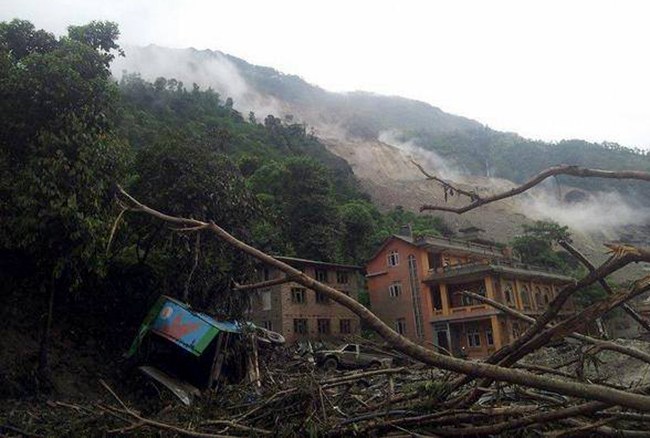
[13] See for example: https://sandrp.in/basin_maps/Hydro_%20Electric_Projects_in_Chenab_River_Basin.pdf

[14]P. 306 of Kiru EIA

[15]The Public hearing report of Kiru says that Shri Sajjad Mufti, Regional Director of J&K SPCB said at the public hearing, “Construction of project should not deteriorate the environment….” This is a very strange, untruthful and inappropriate statement from J&K SPCB official. Why should the official be speaking at all at the public hearing and that too make such a statement that would also affect the atmosphere of the public hearing? Similarly the statement of GM of CVPP at the public hearing, “The most viable and cleanest of all (sources of power) is hydro power” was again, wrong, intimidating and inappropriate. The statement of Shri Khursheed Ahmed Butt of CVPP, “forest clearance has already been granted to the proposed project” is incorrect since the proposal for forest clearance for the project has not even come before FAC. Such public hearing should be declared null and void and fresh public hearing should be conducted.

The Public hearing report of Kwar says that the GM of CVPP said at the public hearing, “The best source of power generation is hydro power” was wrong, intimidating and inappropriate. The statement, “forest clearance has already been granted to the proposed project” is incorrect since the proposal for forest clearance for the project has not even come before FAC.

[16] See for details and link to PCA orders: https://sandrp.wordpress.com/2013/12/23/international-court-asks-india-to-release-more-water-and-rejects-plea-to-re-interpret-february-verdict-on-kishanganga/

Assam · brahmaputra · Embankments · Floods

Matmora (Assam) Geo-tube Embankment on Brahmaputra: State Glorifies, but No End to Peoples’ Sufferings after Three Years of Construction

The state of Assam in the northeastern India annually bears the brunt of floods and where embankment construction and repairing seems like permanent affair. Displacement of people living on the banks of rivers due to river bank erosion is another major issue here. The braiding and meandering river Brahmaputra and its tributaries continue to erode the banks rapidly. The Brahmaputra is well known for the rate in which it erodes. Among the places in the path of the river where the brunt of erosion has been felt severely include the following:

–        Rohmoria and Dibrugarh town in Dibrugarh district,
–        Matmora in Dhakukhana subdivsion of Lakhimpur district,
–        Majuli and Nimati Ghat in Jorhat district,
–        Lahorighat in Morigaon district and
–        Palashbari and Gumi in Kamrup district.

Map of areas taken up for erosion protection in Assam (Source– Assam 2011, A Development Perspective, published by Planning and Development Dept., Govt. of Assam)
Map of areas taken up for erosion protection in Assam. Source– Assam 2011, A Development Perspective, published by Planning and Development Dept., Govt. of Assam

SANDRP recently traveled to Matmora and Nimati ghat, two of these areas.

Bearing the Brunt of Erosion Silently Once a large village now only the name Matmora remains. Locals show us towards the middle of the river, to indicate where the village used to be. The rate of erosion is such that the Brahmaputra dyke from Sissikalghar to Tekeliphuta (popularly known as Sissi-Tekeliphuta dyke/embankment) takes the shape of a bow for nearly five kilometers at this place. From 2010, Matmora became very significant in the embankment history of India since country’s first embankment using geo-textile technology was constructed here. This was constructed at the bow shaped eroded line using geotextiles tubes. These tubes were filled up using water and sand from the banks of the river. This five kilometer embankment became a part of the Brahmaputra dyke from Sissikalghar to Tekeliphuta which is 13.9 km long. For the state government and Water Resources Department (WRD) of Assam, Matmora geotube embankment is a story of success of preventing floods and erosion. But what we saw in Matmora presents a different picture.

At Nimati Ghat, the river Brahmaputra is eroding its banks ferociously and people are intimidated by the river. A local person whose village used to be nearly two kilometers from the present bank line, told me, “Nothing can stop Baba Brahmaputra from claiming what he wants”. At Nimati Ghat, the Water Resources Department (WRD) is doing anti erosion work using geo-bags.

Funding for Embankments in Assam The total length of embankments in Assam is 4448 km as stated in a debate in the Legislative Assembly of Assam in 1998. Even though the present length of embankments is not known, it is very clear that the state of Assam continues to construct of newer embankments. In a recent analysis by SANDRP, it was found that the funds continue to increase for construction of embankments in the state. In five years from January 2009 to December 2013, the Advisory Committee in the Union Ministry of Water Resources for consideration of techno-economic viability of Irrigation, Flood Control and Multi-Purpose Project Proposals (TAC in short) had given clearance to projects worth Rs 1762.72 crores. A detailed list of these sanctioned projects can be found in Annexure 1 below.

Matmora Geo-tube embankment after its construction in 2010. Source– Assam 2011, A Development Perspective, published by Planning and Development Dept., Govt. of Assam.

Has Geo-tube been helpful for the people   Between January 2009 to December 2013, the Brahmaputra dyke from Sissikalghar to Tekeliphuta, was considered twice by the TAC. The committee in its 95th meeting on 20th January 2009 accepted the project titled “Raising and Strengthening to Brahmaputra dyke from Sissikalghar to Tekeliphuta including closing of breach by retirement and anti-erosion measures (to protect Majuli and Dhakukhana areas against flood devastation by the Brahmaputra, Lakhimpur district, Assam). The estimated cost of this project was Rs 142.42 crore and its project proposal envisaged – (i) Raising and strengthening of embankment for a length of 13.9 km, (ii) Construction of retirement bund with geo-textile tubes of length 5000 m. (iii) Construction of 2700 m long pilot channel.

Geo-tube embankment in Matmora, three years after construction. Photo: SANDRP.

Protection work of the same dyke was considered in the 117th meeting held on 21st March 2013 under the proposal for “Protection of Brahmaputra dyke from Sissikalghar to Tekeliphuta at different reaches from Lotasur to Tekeliphuta from the erosion of river Brahmaputra Assam.” The estimated cost of this project was Rs 155.87 crore. According to the minutes of 117th TAC meeting, the scheme envisaged “restoration of existing embankment in a length of 15300m at upstream and downstream of existing geo-tube dyke, Sand filled mattress in a length of 15604 m at river side slope, geo-tube apron length of 7204 m and Reinforced concrete porcupines as pro-siltation device at different reaches to prevent floods and erosion in Dhakukhana Civil sub-division of Lakhimpur district and Majuli sub-division of Jorhat district.” In the same minutes,while referring to the previous project proposal of 95th meeting the minutes stated that, it “was taken up primarily for closure of breach in the existing embankment including raising of embankment around the breach area only. The proposed works in the present scheme were in the same river reach and these would be required to protect the bank from further erosion and provide flood protection.”

This clearly shows that the geo-tube embankment in Matmora cannot be called a success. Government documents which showed that major part of the Brahmaputra dyke from Sissikalghar to Tekeliphuta remained vulnerable even after the construction of the geo-tube embankment. In fact submitting a proposal for the whole Sissi-Tekeliphuta embankment at first and later saying that the money was spent in constructing a smaller part of the embankment also raise questions. The time gap between the two proposals also raises questions. If the whole money from first proposal was to be spent in constructing only a part of the embankment, why was it not stated clearly in the first proposal? In fact, this was not stated in the first proposal and second proposal reflects that the first project failed to achieve the objectives. If the first proposal was indeed only for part of the embankment, why the proposal to strengthen the larger part of the embankment took 5 years to appear before the committee? The latter proposal also did not mention about the breach which swept away a large part of the Sissi-Tekeliphuta embankment from Jonmichuk to Amgiri Tapit under Sissikalghar and Jorkata village panchayat. According to the local people this breach occurred in the morning hours of 25th June 2012. The photo below shows the breach happened at the Jonmichuk end.

The breached area of 2012. This photo is taken from the new embankment and the lake formed at this spot can also be seen. Photo - SANDRP
The breached area of 2012. This photo is taken from the new embankment and the lake formed at this spot can also be seen. Photo – SANDRP

Jonminchuk area is nearly 15 km upstream of the geotube embankment in Matmora and part of the Sissi-Tekeliphuta embankment. A new embankment of nearly four kilometer long is being constructed at this place but the remnants of the old embankment still exist. The embankment was breached for nearly 3 kms and the water which entered the fields during that time could no longer go out and a large lake has been formed at this place, see the photo. It was surprising to see people living in the patches of the old embankment.

In the downstream, right from the point where the geo-tube embankment ends, the condition of the Sissi-Tekeliphuta embankment is pathetic. There were cracks in the embankment and water seepage has almost shattered the embankment. The embankment was in need of urgent repairs.

Condition of the Sissi-Tekelphuta embankment at the end point of the geo-tube embankment towards the village side. Photo - SANDRP
Condition of the Sissi-Tekelphuta embankment at the end point of the geo-tube embankment towards the village side. Photo – SANDRP
Sissi-Tekelphuta embankment at the same spot mentioned above towards the river side.  Photo - SANDRP
Sissi-Tekelphuta embankment at the same spot mentioned above towards the river side. Photo – SANDRP

Besides, one does not have to travel far to find erosion in the downstream of the geo-tube embankment. After travelling, less than three kilometers from the end point of the geo-tube embankment, rapid erosion was observed at the place where the Matmora and Tekeliphuta ghats join, due to low water level. This joint ghat is more than a kilometer from the toe line of Sissi-Tekeliphuta embankment but seeing the rapidity of the erosion the locals opine that the river would reach the toe of the embankment within this monsoon. It was difficult to believe that the river can erode so fast, until a young man pointed towards a black line in the middle of the river and said that that area which now seemed to be char/sand bar used to be his village three years back. He with his family now live beside the embankment. In this ghat we also witnessed that spurs constructed from the embankment inside the river, mainly to divert the flow of water, have been eroded as well.

The Spur has also been eroded. Photo - SANDRP
The Spur has also been eroded. Photo – SANDRP
Erosion at Matmora-Tekeliphuta Ghat. Photo - SANDRP
Erosion at Matmora-Tekeliphuta Ghat. Photo – SANDRP

It is also important to note that protection of Majuli from floods was one of the main aims of the geo-tube embankment project, but there were reports of devastating floods affecting Majuli in 2012 & 2013.

After geo-tube comes geo bags With the construction of geo-tube embankments being hailed as a success by the state government, construction of embankments using geo-bags followed. Geo-bags are smaller than geo-tubes and come at a cheaper cost. Embankments on many rivers were constructed using geo-bags which were also used for erosion protection. But effectiveness of the geo-bags as protective measure to flood and erosion, still remains disputed. A news report titled “ADB, river engineers differ on geo-bags” published in Assam Tribune on 9th September 2010 reported about the difference of opinion among the water resource engineers of Assam and powerful lobby of the Asian Development Bank (ADB) for the use of geo-bags to resist Brahmaputra erosion in Palasbari-Gumi and Dibrugarh. Referring to the engineers the news report stated “They have alleged that the ADB provided 23,000 geo-bags for an experiment. They were dumped in the month of September 2009 at a 150-metre-long selected erosion-prone reach at Gumi for testing their efficacy. But, a diving observation made in the month of December 2009, suggested that the bags were not launched uniformly in a single layer as it was claimed. They were found lying in a haphazard manner in staggered heaps with gaps in between and the total distance they covered was only about 8 metres, against the claimed and required 35 metres…..The ADB then carried out another diving observation at Gumi in May last (2010) and found no bag at the site. The State WRD did not get any feedback from the ADB on this issue.”

Work of piling up the geo-bags is going on in Nimati Ghat. Photo - SANDRP
Work of piling up the geo-bags is going on in Nimati Ghat. Photo – SANDRP
Status of the geo-bags put last year. Photo - SANDRP
Status of the geo-bags put last year. Photo – SANDRP
The spot where not a single Geo-bag was seen.  Photo - SANDRP
The spot where not a single Geo-bag was seen. Photo – SANDRP

Nimati Ghat was the other place which SANDRP visited to find out the effectiveness of geo-bags. The work of piling up the geo-bags for erosion protection was going on when SANDRP visited the area in the second week of April 2014. The bags which were used previously for the same purpose were seen to be mostly lying in water in shattered condition. Locals told us that majority of the bags are now under water. In the eroded bank line, these geo-bags were lying without any order and in a way suggesting how the river has dealt or to say played with these jumbo bags. In this bank line, there was a stretch of nearly five meters where the river has eroded more than the other parts. At this stretch none of the geo-bags were to be seen.

There were also contradictions regarding when the present erosion protection work at Nimati ghat had started. Some of the shopkeepers of the ghat said that the work of putting up geo-bags started in February 2014. But according to the contractor in charge of the work, the work started in November 2013. Construction or repairing of embankment just few months before the advent of monsoons is one of the constant criticisms, leveled against the Water Resources department of the state and in Nimati too we heard the same complaint.

Is Geo-tube really a ‘permanent solution’ to floods? In the present discourse of floods in Assam this has become a very significant question. The local people have been fed with various information about geo-tube and most of which are wrong. The life of embankment constructed using geo-tube is of 100 years, we were told by the locals when we travelled to the upstream areas of Matmora geo-tube. This is absolutely not true. In fact, for Prof Chandan Mahanta of IIT Guwahati the scouring[1] done by the river Brahmaputra will be the major cause of concern for geo-tube embankments in the long run.

The geo-tube embankment has already faced threat of scouring right after its construction in the monsoons of 2011. It was on the morning of 14th July, 2011 when two of the apron tubes at the tail of the embankment, were launched due to increase force of water. The apron tubes were laid at the toe of the geo-tube embankment and with the increased force of water scoured at the bottom by the embankment toe line. WRD engineers flung into action and immediate repairing work was taken up at the site. According to WRD engineers this had happened because the trees which were  left outside the  embankment  had  obstructed  and  increased  the  force  of  water and they were immediately cut down. Concrete porcupines were also thrown into the water. Asomiya Pratidin, a regional newspaper reported this on that day but thereafter no report on this could be found. The incident was almost forgotten. When we visited the geo-tube embankment, it was observed that along the toe-line of the embankment a scour line runs for substantial length of the embankment. This clearly shows that scouring by the river has increased in this area. The news report published in Assam Tribune [2]also points out a significant problem associated with geo-bags – “The lobby is mounting pressure for use of geo-bags in the form of bank revetment. Bank revetment is generally not adopted in Brahmaputra because of many reasons. Most important of them is – it produces a permanent deep channel along the existing riverbank.”

On the issue of lobbying behind geo-tube, an interesting perspective was provided by activist-researcher Keshoba Krishna Chatradhara who coordinates ‘Peoples’ Movement for Subansiri and Brahmaputra Valley (PMSBV)’. He opines that the construction of geo-tube embankment in Matmora was an experiment, done to see whether such embankments can withstand the flood and erosion of Brahmaputra. The reason for choosing Matmora first and not other severe erosion affected places like Dibrugarh or Rohmoria, was because even if the embankment fails it won’t be as significant loss for the state compared to those places. Dibrugarh is one of the most important towns of upper Assam with a glorious history whereas Rohmoria became important for the state when Oil India Limited found oil deposits in Khagorijan[3]. Infact several local people and activists also opined that the Sissi-Tekeliphuta embankment which is on the north bank of the river was cut several times, to save the areas in the upstream south bank, mainly the Dibrugarh town. They said that in the past, before the geo-tube embankment came, whenever there was any news of water rising in Dibrugarh, there would soon be a breach in Sissi-tekeliphuta embankment. In fact considering these breaches in the larger Sissi-tekeliphuta embankment, Mr. Chatradhara opined that even if the geo-tube embankment survives the flood, erosion and breaches in future, it might become a small island in midst of a submerged land as there will surely be breaches in the rest of the Sissi-Tekeliphuta embankment.

ADB loan for Geo-textile Embankments in Assam After the construction of the geo-tube embankment at Matmora, the state government is leaving no stone unturned to make it sound like a glorious success. But it is surprising to know that, even before the Matmora embankment was commissioned in December 2010, the state government have filed proposal for two more embankment project where geo-textile would be used for construction and got it cleared. The two subprojects of Assam Integrated Flood River Bank Erosion Risk Management Project (AIFRERM) in Dibrugarh and Palashbari were cleared in the 106th meeting of TAC held on 16th September 2010. It is important to note that for the total AIFRERM project ADB is giving a loan of $56.9 million. The cost of Dibrugarh and Palashbari subprojects are Rs 61.33 crore and Rs 129.49 crore respectively. But these investments have been cleared without even doing a post-construction impact assessment of Matmora geo-textile embankment. The Palashbari subproject also included erosion protection for Gumi area through the use of geo-bags but the Assam Tribune report quoted above already mentioned about how geo-bags scheme has failed in that area.

It is important to note here that, the first geo-tube embankment has been constructed only three years back and it would be premature to give any verdict of success, on the contrary there are many signs of failure. But the state government of Assam and the Assam Water Resources department are claiming it as success without really any credible basis and than have used that self certification to go on building more embankments using geo-textile and in several occasions these plans have failed. They first should have done a detailed impact assessment of the embankment at Matmora before going on building more embankments of the same nature.

It seems the Assam government, ADB and CWC are pushing these projects to deflect attention from the failure of embankments in flood management. Such attempts won’t succeed, but it is possibly a ploy to prolong the use of embankments as a flood management technique.

Parag Jyoti Saikia (meandering1800@gmail.com)

Annexure 1

Flood and Erosion Projects approved for Assam – 2009 to 2013

TAC meeting no & date Project Appr. year River/ Basin L of Emba. (m) Original (revised) Cost-CrRs Benefitting area (Ha) Decision
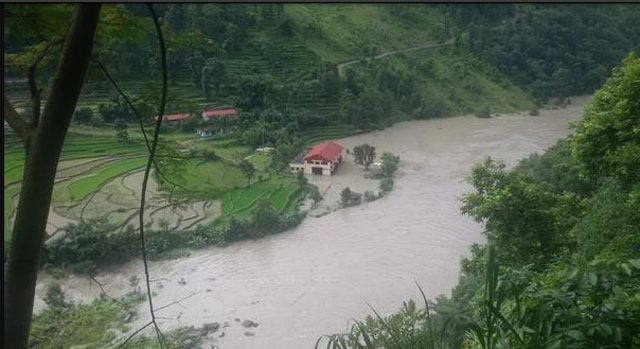
95th -20.01.2009 Protection of Sialmari Area from the erosion of Brahmputra 2002 Brahmaputra NA 14.29 (25.73) NA Accepted
Protection of Bhojaikhati, Doligaon and Ulubari area from the erosion 2002 Brahmaputra NA 14.52 (27.92) NA Accepted
Raising & strengthening Brahmputra Dyke from from Sissikalghar to Tekeliphuta including closing of breach by retirement and anti erosion measures New Brahmaputra NA 142.42 NA Accepted
96th -16.02.2009 Flood protection of Majuli Island from Flood and Erosion Ph-II & III New Brahmaputra NA 115.03 NA Accepted
Restoration of Dibang & Lohit rivers to their original courses at Dholla Hattiguli New Brahmaputra NA 23.32 (53.11) NA Accepted partly & suggested that proposal of coffer dam, pilot channel, etc. to be put up for expert opinion
101st -30.11.2009 Raising and strengthening to Puthimari embankment New Brahmaputra NA 30.23 15000 Accepted
Anti Erosion measures to protect Brahmputra Dyke on left bank New Brahmaputra NA 27.97 5000 Accepted
Protection of Gakhirkhitee & adjoining areas from erosion New Brahmaputra NA 19.06 20,000 Accepted
102 -28.1.’10 Emergent measures for protection of Rohmoria in Dibrugarh District New Brahmaputra NA 59.91 18,000 Accepted
106th -16.09.2010 Raising and strengthening of tributary dyke along both banks of Kopili River New Kopilli/ Brahmputra NA 110.72 NA Accepted
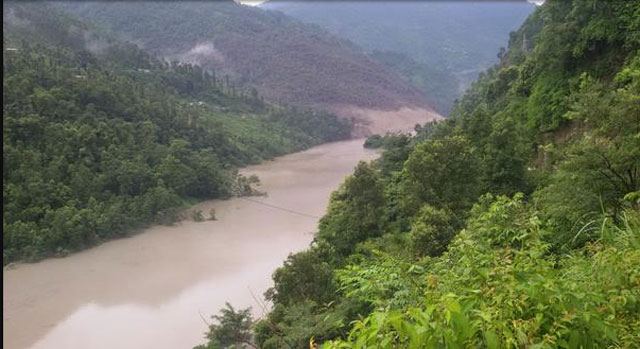
Assam Integrated Flood River Bank Erosion Risk Management Project New Brahmaputra NA 61.33 NA Accepted
Assam Integrated Flood River Bank Erosion Risk Management Project New Brahmaputra NA 129.49 NA Accepted
110th – 20.07.2011 Protection of Majuli from Flood and Erosion Ph II & III 2011 Brahmaputra 115.03 Accepted
Restoration fo rivers Dibang & Lohit to their original courses at Dholla Hatighuli 2011 Brahmaputra 54.43 Accepted
111th – 17.08.2011 Protection of Biswanath Panpur including areas of upstream Silamari and Far downstream Bhumuraguri to Borgaon against erosion New Brahmaputra 167.09 Accepted
117 – 21.3.’13 Protecion of Sissi-Tekeliphuta dyke from erosion – Lotasur to Tekeliphuta New Brahmaputra 153000 m 155.87 153000 m Accepted
118th – 30.07.2013 Flood management of Dikrong along with river training works on both banks embankment New Dikrong/Brahmaputra 105.96 Accepted
Flood management of Ranganadi along with river training works on both bank embankments New Ranganadi/Brahmaputra 361.42 Accepted

[1] Scour can be termed as a specific form of the more general term erosion. In case of geo-tube embankments Scour is the removal of sediment from the bottom of the geo-tubes. Scour, caused by swiftly moving water, can scoop out scour holes, compromising the integrity of a structure.

[2] ADB, river engineers differ on geo-bags – http://www.assamtribune.com/scripts/detailsnew.asp?id=jun2410/at08

[3] See ‘Rohmoria’s Challenge: Natural Disasters, Popular Protests and State Apathy’ published in Economic and Political Weekly, Vol XLVI NO 2, Janurary 8, 2011.

Himalayas · Hydropower · Hydropower Performance

Massive Hydropower capacity being developed by India: Himalayas cannot take this onslaught

At least 49 large[1] hydropower projects are under construction in India today, with a cumulative capacity of 15006 MW[2]. As per the latest bulletin from Central Electricity Authority[3], “Status of Hydro Electric Projects under Execution for 12th Plan & beyond (Excluding projects above[4] 25 MW)” dated March 31, 2014, 35 of these projects (9934 MW) are expected to be commissioned in 12th Five Year Plan[5] and remaining 14 with installed capacity of 5072 MW would provide benefit beyond 12th Plan.

Considering that 1534 MW capacity has already been added in first two years of ongoing 12th Five Year Plan (during 2012-13 and 2013-14), CEA projections means that India hopes to add massive 11468 MW capacity during the current five year plan. This will be higher than capacity added in any other five year plan and 254% of the capacity addition during the last, 11th Five Year Plan (2007-12) when India added 4514 MW. The graph below shows how steeply our hydropower installed capacity is going up over the last 25 years.


Rapidly Increasing installed capacity of Large Hydropower Projects in India

The proponent of even more accelerated hydro capacity addition misleadingly talk about the need for having 40% of installed grid capacity as hydro.

In line with this, the CEA came out with plans to add 65000 MW in 13th Five Year Plan (2017-2022: 30 000 MW) and 14th Five Year Plan (2022-2027: 35 000 MW). (see http://www.energylineindia.com/ of May 6, 2014)

There is no science behind this  advocacy. It is basically a suggestion possibly based on the general assumption that peaking demand is 40% higher than base-load demand. Hence if we have 40% installed capacity from hydro in the grid, this can take care of total demand optimally. However, this is based on assumption that hydro capacity is indeed used for peaking. This assumption is completely wrong in India, with no agency monitoring or even reporting how much of the hydro generation currently provide peaking power. Without such optimum use of current hydro capacity, where is the case for 60:40 grid capacity ratio for hydro? It goes without saying that when hydro projects are used for peaking power, there are additional social and  environmental impacts in the downstream and upstream. These need to assessed and those who suffer are compensated.

On similar lines, one can answer the advocacy for claim that hydro is clean, green, renewable and cheap source of power or that  run of the river or small hydropower projects are more environmentally benign. However, this blog is not attempting to answer all such fallacies here, it needs a separate blog.

While this is happening, the Expert Appraisal Committee of Union Ministry of Environment and Forests on River Valley Projects has been clearing projects at break a neck speed with almost zero rejection rate. Between April 2007 and Dec 2013, this committee recommended environment clearance to 18030.5 MW capacity, most of which has not entered the implementation stage. Moreover, this committee has recommended 1st Environment clearance (what is technically called Terms of Reference Clearance) for a capacity of unimaginable 57702 MW in the same period. This is indicative of the onslaught of hydropower projects which we are likely to see in the coming years.

Figure 1 TORs (First Stage EC) and EC recommended by EAC between April 2007 - December 2013
Figure 1 TORs (First Stage EC) and EC recommended by EAC between April 2007 – December 2013

 Table: Sector-wise & plan-wise number of & capacity of under construction HEPs

Sector

During 12th FYP

After 12th Plan

Total

No of Projects Installed capacity, MW No of Projects Installed capacity, MW No of Projects Installed capacity, MW
Central

11[6]

5312 3 2615 14

7927

State

12

1506 3 736 15

2242

Pvt

12

3116 8 1721 20

4837

Total

35

9934 14 5072 49

15006

Among the three sectors, the largest number of under construction projects (20) are from private sector. However, among all sectors of under construction projects, central sector projects have the highest installed capacity (7927 or 53% of under construction capacity of 15006 MW).

Figure 2 Sectorwise ownership of under-construction HEPs in Numbers

Vulnerable Himalayas are the target In the second table the state-wise and sector-wise break of numbers and capacity of under construction HEPs has been given. Himachal Pradesh has the highest number and highest installed capacity projects among all states. That state also has the highest installed capacity (8139 MW or over a fifth of operating HEP capacity at national level) of large operating hydropower projects. Sikkim, however, has the highest number and capacity of private sector hydropower projects under construction. In fact, half of the total national-level private sector projects which are under construction are in that tiny state. Their installed capacity is more than half the installed capacity of all the private sector hydropower projects under construction at national level. Ironically, the state also has the highest biodiversity in the country.

Figure 3 Installed Capacity of under construction HEPs, sector-wise ownership, in MW

Himachal Pradesh and Uttarakhand also have 5 and 3 private sector HEPs under construction respectively. The 5 Himalayan states of Jammu & Kashmir (J&K), Himachal Pradesh, Uttarakhand, Sikkim and Arunachal Pradesh between them have 38 of the 49 under construction hydropower projects with total capacity of 13550 MW or over 90% of under construction capacity. In addition, the projects of Mizoram, Meghalaya, W Bengal (Teesta L Dam IV) and Punjab (Shahpur Kandi on Ravi River) are also in Himalayan zone.

Table: State-wise & sector-wise number and capacity of under-construction HEPs

State

Central Sector

State Sector Private Sector

Total

No of projects Installed Capacity, MW No of projects Installed Capacity, MW No of projects Installed Capacity, MW No of projects Installed Capacity, MW
J&K

1

330 1 450 1 850 3

1630

Himachal P

4

2532 6 956 5 460 15

3948

Uttarakhand

4

2135 3 505 7

2640

Sikkim

10 2622 10

2622

Arunachal P

3

2710 3

2710

Mizoram

1

60 1

60

Meghalaya

1 40 1

40

W Bengal

1

160 1

160

Punjab

1 206 1

206

Madhya Pr

1 400 1

400

Maharashtra

1 80 1

80

Andhra Pr

3 410 3

410

Kerala

2 100 2

100

Total

14

7927 15 2242 20 4837 49

15006


Figure 4 State-wise and sector-wise number of HEPs under construction
Figure 5 State-wise installed capacity of under construciotn HEPs

Diminishing Returns This blind rush for hydropower projects (which have serious and irreversible impacts on social and ecological systems) is difficult to understand and justify considering their poor generation performance, rising costs and availability of better options. To illustrate, in the graph below we can see how power generation per unit (MW) installed capacity has been steadily reducing over the last two decades. From 1993-94 to the latest year of 2013-14, there has been a huge drop of 16.5%.

Diminishing power generation from India's Hydropower Projects over the last two decades
Diminishing power generation from India’s Hydropower Projects over the last two decades

Yawning gap between promised and actual generation of Hydro Projects Another way to look at performance of hydropower projects would be to compare the projected (as promised in Techno Economic Clearance) and actual generation (both at 90% dependability) of electricity by HEPs. This assessment shows that about 89% of India’s operating hydropower projects are generating at below the promised levels. Shockingly, half of under performing projects are generating at below 50% of promised generation levels.

How much Peaking Power are we generating? A third way to assess the hydropower generation is in terms of peaking power, a USP[7] of hydropower projects. However, no figures are available as to how much of the generation from hydropower projects are happening during peaking hours. No agency in India is even monitoring this or reporting this: including CEA, Central or State Electricity Regulatory Authority, National, Regional or State Load Dispatch Centers, Union or state Power Ministries or individual operators. In short, there is no case for justifying more hydro in the name of providing peaking power if we are neither monitoring nor optimizing hydropower generation during peaking hours. One expected CEA to do this job, but it seems they are busy lobbying for hydropower projects rather than functioning as India’s premier Technical Power sector agency.

Invitation to disaster? The consequences of such massive capacity addition are and will continue to be disastrous for the rivers, forests, biodiversity and people. The Uttarakhand disaster of June 2013 has shown the vulnerability of hydropower projects in Himalayas, as well as their impacts. The disaster and independent reports[8] also show how the construction and operation of these projects have contributed to compounding the proportion of the disaster. Climate Change is accentuating this situation and will continue to do so with increasing intensity as per the IPCC reports.

Role  of HEPs in Uttarakhand disaster: CEA and CWC in denial mode This analysis of under construction hydropower projects as reported in the latest CEA bulletin shows that Himalayas is the target for overwhelming majority of hydropower projects being taken up India (& neighbouring countries like Bhutan, Nepal, Pakistan and Tibet). The Uttarakhand disaster showed how hydropower projects are increasing the existing vulnerabilities and disaster potential of the Himalayan region in times of natural calamities. An independent committee appointed by MoEF following Supreme Court orders of Aug 13, 2013 pointed out the role of hydropower projects in Uttarakhad disaster of June 2013.

It should be highlighted here that multiple hydropower projects should invite cumulative impact assessment. As Supreme Court order of Aug 13, 2013 highlighted, such cumulative impact assessment need to be done in a credible way and not the way AHEC of IITR did for the Bhagirathi-Alaknanda basin.

Strangely, instead of accepting this reality and taking this into account in decision making processes, Central Water Commission and Central Electricity Authority are in a denial mode! They collectively submitted a completely unscientific and unfounded report to Union Environment & Forests Ministry, advocating for hydropower projects rather than assessing their role in disaster, which was the mandate given by Supreme Court of India to MoEF. The CEA is clearly jeopardizing whatever credibility it has in joining hands with CWC. It would be better for both the agencies to accept and wake up to these realities.

Else, such onslaught of hydropower projects on Himalayas is likely to be an invitation to further disasters all across the Himalayas. All our decision makers and all others concerned need to take note of this urgently.

Himanshu Thakkar (ht.sandrp@gmail.com)

END NOTES:

[1] Defined as those projects having installed capacity above 25 MW

[2] In reality, there are many other large HEPs under construction, but his figure is based on CEA.

[3] http://cea.nic.in/reports/proj_mon/status_he_execution.pdf, CEA has been pretty irregular in putting up these bulletins, after Nov 2013, the next bulletin was available only now.

[4] In reality, this should be “below”, we have italicized the word since the error is in the original.

[5] Ending on March 31, 2017

[6] CEA projects that out of 2000 MW installed capacity of Lower Subansiri HEP in Arunachal Pradesh, 1000 MW will be commissioned in 12th Plan and the rest of 1000 MW thereafter.

[7] Unique Selling Proposition

[8] https://sandrp.wordpress.com/2014/04/29/report-of-expert-committee-on-uttarakhand-flood-disaster-role-of-heps-welcome-recommendations/