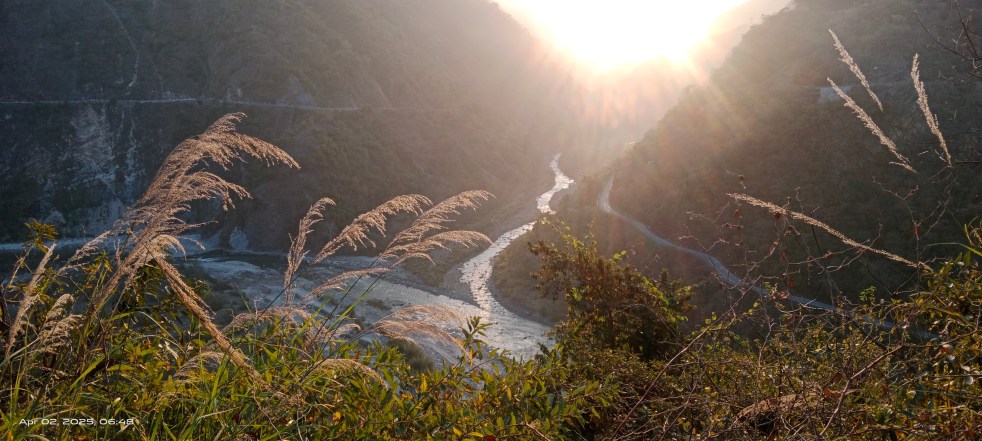
(Feature Image: Confluence of Yamuna (left) and Aglar river (left) in Dehradun in April 2025. BS Rawat/SANDRP)
In a significant development, the ongoing proceedings before the Hon’ble Supreme Court on May 27, 2026, in the Kondli drain pollution matter appear to have expanded into a broader Yamuna rejuvenation case. Notably, this marks the third such intervention by the apex court, with the previous two not resulting in any substantial change in river governance or pollution control or state of the river.
Earlier, on April 24, 2017, the Supreme Court transferred a 23-year-old Yamuna pollution PIL to the National Green Tribunal (NGT), observing that parallel jurisdictions on the same issue should be avoided. The matter in SC had originated in 1994, when the Court took suo motu cognisance of a newspaper article titled “And Quiet Flows Maili Yamuna” and began monitoring efforts to clean the river.
While transferring the case, the SC made a remarkable admission. Then Chief Justice J.S. Khehar remarked that despite 23 years of proceedings and significant financial expenditure, “nothing has happened” and “something has to be changed.” The Court also noted that the NGT was already examining similar issues and had issued detailed directions on Yamuna rejuvenation.
Subsequently, on Jan. 13, 2021, a three-judge Bench comprising CJI S.A. Bobde, Justice A.S. Bopanna and Justice V. Ramasubramanian took suo motu cognisance of pollution in the Yamuna while hearing a matter related to high ammonia levels in Delhi’s water supply. The matter was converted into a broader case on the remediation of polluted rivers across India, appointing an amicus and seeking reports from agencies including NGT-appointed monitoring committees.
After hearing the matter for nearly five years, a Bench comprising CJI Surya Kant and Justice Joymalya Bagchi, on Feb. 24, 2026, closed the proceedings, observing that the Supreme Court’s role overlapped with the ongoing monitoring by the NGT. The Court noted that such parallel proceedings created practical difficulties and reiterated that the NGT was the more appropriate forum for continuous oversight of river pollution matters.
The only difference in present instance is that it is not a sou moto case but originated from a 2018 NGT petition, alleging that untreated sewage from Noida and Delhi was flowing through the Kondli drain into the Yamuna. In Feb. and Aug. 2022, the NGT imposed environmental compensation of ₹100 crore on the Noida Authority and ₹50 crore on the Delhi Jal Board (DJB) for failing to prevent sewage pollution. Both entities then filed civil appeals before the Supreme Court, which stayed the penalties in Nov. 2022 and has since been hearing the matter.
During the May 27, 2026 hearing, a Bench of Justices Manoj Mishra and Manmohan observed that multiple agencies were functioning in silos, resulting in weak coordination. The Court highlighted the absence of a comprehensive Yamuna rejuvenation plan and proposed the constitution of a high-level nodal committee under the Union Home Ministry. It emphasised the need for a basin-wide integrated approach with clearly defined roles, timelines and accountability mechanisms.
The Bench has also flagged key issues including encroachments on floodplains, discharge of untreated sewage, industrial pollution and underperforming infrastructure, noting that systems meant to control pollution are instead aggravating it.
After two earlier judicial interventions failed to ensure accountable river governance, it remains uncertain whether this third attempt by the apex court will be able to address the systemic gaps and deliver meaningful accountability. The persistence of long-identified problems causing pollution in Yamuna clearly underline that the institutional accountability and implementation are real challenges. At the same time, the Court’s renewed emphasis on integrated planning, coordinated institutional mechanisms and stricter enforcement offers a hope.
‘Agencies working in silos’: SC forms panel for Yamuna clean up The committee will include the chief secretaries and heads of pollution control boards of all states through which the Yamuna flows, along with amicus curiae and senior advocate K Parmeshwar. It has been asked to submit its report within eight weeks.
The court said there was no single, comprehensive action plan for the Yamuna’s rejuvenation. “A river is greater than the sum of its parts. Its revival requires a long-term, integrated strategy akin to the Namami Gange Program. The plan must clearly state its objectives, implementation strategy, roles and responsibilities of each agency, budgetary allocations and timelines. Coordination and monitoring must be entrusted to a single authority.”
Accepting a suggestion made by the amicus, the court decided to create the panel under the Union home secretary, with liberty to co-opt experts or other authorities as required. The judges observed that encroachment on the Yamuna riverbed, especially in Delhi’s fragile zone ‘O’, indiscriminate discharge of toxic effluents by illegal industries, untreated sewage from unauthorised colonies, and the mixing of sewage with rainwater drains had pushed the river to the brink.
“Multiple agencies working in silos have left drainage, sewage, stormwater, drinking water and effluent treatment systems either non-functional or operating below capacity,” the court said. “Instead of curbing pollution, they are aggravating it.” It added that “tough decisions” such as removing encroachments, shutting illegal industries & relocating unauthorised colonies were unavoidable, but could succeed only if the Centre, states and Union territories acted together.
SC amicus proposes nodal agency The amicus stressed that Yamuna pollution cannot be tackled through isolated state-level actions and called for a unified basin-level strategy involving Delhi, Uttar Pradesh, Haryana and other concerned authorities.
Faulty STPs continue to pollute Yamuna-linked drain in Noida: SC record A note submitted before the Supreme Court has revealed that untreated sewage from Noida continues to pollute the Kondli-Noida drain and eventually the Yamuna despite earlier court and NGT directions. The report blamed incomplete trapping of drains and malfunctioning or underutilised society-level STPs for the ongoing pollution.
According to the report, Noida has 8 STPs with a total capacity of 411 MLD against an estimated sewage generation of 240 MLD. However, a CPCB inspection found that only 3 STPs were complying with discharge norms, the remaining plants violated one or more pollution parameters. The note said significant amounts of untreated or partially treated sewage are still entering the Kondli-Noida drain through 26 drains of Yamuna.
Home Minister reviews Yamuna Rejuvenation Union Home Minister Amit Shah chaired a high-level review meeting in Delhi on June 8, 2026, directing the Delhi, Haryana and Uttar Pradesh govts to work through a coordinated action plan and jointly ensure adequate ecological flow (e-flow) in the river.
The Centre emphasized that Yamuna cleaning should be pursued through an integrated approach rather than piecemeal efforts by different agencies and states. All Yamuna rejuvenation projects should have clear timelines, implementation plans and long-term maintenance arrangements. Progress of the Yamuna rejuvenation programme will be reviewed every 20 days.
A total of 129 STPs have been completed in Delhi, Haryana and Uttar Pradesh, while 59 additional STPs are planned by the end of 2027. Industrial CETPs and dairy waste treatment facilities should be designed keeping future requirements in mind.
Of the targeted 28.57 lakh metric tonnes of silt to be removed from Yamuna drains, 97% has already been desilted, with the remaining work expected to be completed by June 15, 2026.
An MoU will be signed between the MCD and the National Dairy Development Board (NDDB) to prevent dairy waste from entering the Yamuna. The waste will instead be used for biogas and manure production.
YAMUNA POLLUTION
UP govt to expand STP infrastructure 83 STPs with a combined treatment capacity of 3,697 MLD are currently operational, several new projects are under construction.
The state government said projects worth around ₹7,000 crore are being implemented under schemes. The measures aim to stop untreated sewage from flowing into rivers and improve urban sanitation coverage.
Delhi approves ₹860 for 12 STP The Delhi govt has approved projects worth around ₹860 crore for construction and upgradation of 12 STPs.
DJB asks firms to adopt drains, fund wastewater treatment Facing the challenge to clean the Yamuna, the DJB is now asking firms to adopt drains and finance efforts that can treat wastewater before it reaches the river.
Govt plans Okhla barrage redesign to reduce froth The current structure of the barrage slows water flow, allowing pollutants and foam to accumulate near the surface. The proposed redesign aims to improve water movement and prevent froth build-up by modifying the barrage’s hydraulic system. Authorities are also considering measures such as aeration systems, better sewage treatment, and stricter pollution control to improve river water quality.
9 Delhi STPs fail pollution norms in April A Delhi Pollution Control Committee (DPCC) report found that 9 of Delhi’s 37 STPs either failed to meet Central Pollution Control Board (CPCB) standards in April or were non-operational. The STPs failed on key parameters such as BOD, TSS and faecal coliform levels.
Why Delhi’s sewage still ends up in Yamuna Delhi currently has an installed sewage treatment capacity of about 814 million gallons per day (MGD), while sewage generation has crossed 992 MGD, according to Economic Survey estimates. Even if the city achieves the planned expansion to 964.5 MGD by this Dec, that alone will not solve the crisis.
Haryana sets Dec 2027 deadline for cleaning projects During a review meeting, Chief Secretary Anurag Rastogi directed officials to expedite ongoing works related to sewage treatment, drainage management, and pollution abatement in districts along the Yamuna. Officials informed that several projects aimed at enhancing sewage treatment capacity by over 425 MLD and industrial effluent treatment capacity by more than 150 MLD are currently at various stages of approval, tendering, and construction.
The HSPCB has also conducted a detailed study of 11 drains from 34 towns of 10 districts that lead to the Yamuna. The study revealed that industrial units in the region have played a major role in polluting the river. Vinay Pratap Singh, Chairman, HSPCB, recently visited Panipat and Sonepat district and reviewed the flow of Drains 1 and 2 of Panipat and Drain 6 of Sonepat before issued directions to the officials concerned.
NGT to probe violation claims against Faridabad electroplating units The NGT has formed a committee to investigate alleged violations of environmental norms by 250 electroplating units and the CETP operating in Faridabad’s Sector 58 industrial area. A report is due in eight weeks. Faridabad deputy commissioner will act as the nodal agency for the joint committee. Further hearing on Aug 24, 2026.
The petitioner, Faridabad resident Narendra Sirohi, alleged that some electroplating units, despite being connected to the CETP, are discharging industrial effluent into open land and natural drains through tankers. Meanwhile, the CETP is allegedly not linked to the Continuous Emission/Effluent Monitoring System (CEMS), which is used for real-time monitoring.
Over 60 illegal bleach houses operating on Panipat farmland A report has alleged that more than 60 illegal bleaching units are operating on agricultural land in Haryana’s Panipat district, violating environmental regulations and causing pollution. Environmental activist Varun Gulati submitted evidence, including drone footage and geo-tagged images, to the Haryana State Pollution Control Board (HSPCB), claiming that the units discharge untreated chemical effluents into drains, sewers and groundwater through illegal borewell systems.
Action against illegal bleach houses in Panipat Following a report by The Tribune, the Panipat district administration ordered a survey of illegal bleach houses accused of discharging untreated wastewater and causing pollution. The HSPCB also sought action against units operating without proper environmental clearances or treatment facilities.
Notices served to illegal dyeing units in Gurgaon The HSPCB has issued notices to several dyeing units in Gurgaon for allegedly violating pollution control norms after coloured industrial effluents were found flowing through drains in Bajghera and Sarai Alawardi areas. The contaminated drains eventually connect to the Najafgarh drain and flow into the Yamuna. The notices warned that prosecution proceedings and environmental compensation could be initiated if the violations were not rectified within 15 days.
How Gurgaon sewage ends up in Yamuna Gurgaon has 12 operational STPs with a combined capacity of 415 MLD. However, only around 388 MLD sewage is reaching these plants, even though the city is estimated to generate nearly 433 MLD sewage daily. This gap indicates that a significant quantity of wastewater is bypassing the formal sewer network and flowing directly into drains. Officials estimate that around 287 MLD untreated sewage from Gurgaon continues to enter open drains connected to the Najafgarh drainage system, which eventually feeds the Yamuna in Delhi.
There are major gaps in sewer connectivity, interception systems and drain management have prevented large sections of the city from being linked to treatment infrastructure. A senior HSPCB official said many STPs were originally designed based on projected populations, but rapid and unplanned urban growth created sewage loads outside the planned network. The problem has worsened over the past decade as areas along Dwarka Expressway, New Gurgaon, Sohna Road and Manesar expanded faster than sewer and drainage infrastructure.
Untreated sewage discharge in Gurugram housing society Residents of Siddhartha NCR Green society in Gurugram’s Sector 95 have alleged that untreated sewage has been flowing from a non-functional STP into a nearby vacant plot for over two years, creating a large pool of contaminated wastewater and raising serious environmental and public health concerns. Residents claim repeated complaints to the builder and authorities have failed to resolve the issue, with fears of foul odour, mosquito breeding, groundwater contamination, and disease risks. The case has added to broader concerns over sewage management failures in Gurugram, where gaps in sewer infrastructure and malfunctioning STPs continue to contribute to untreated wastewater discharge into drains connected to the Yamuna river system.
DAMS & HEPs IN YAMUNA BASIN
UP govt approves ₹700 cr for Lakhwar, Renukaji dams The Uttar Pradesh cabinet approved over ₹700 crore as its share in two interstate water projects—₹356.07 crore for the Lakhwar Multipurpose Project on the Yamuna River and ₹361.04 crore for the Renukaji Dam Project on the Giri River. The Lakhwar project (total cost ₹5,647 crore) includes a 204 m high dam, 300 MW hydropower generation, and irrigation benefits for about 33,780 hectares, along with water supply for domestic and industrial use. It is targeted for completion by December 2031. The Renukaji project (₹6,946.99 crore) involves a 148 m high dam with 498 MCM storage capacity and 40 MW power generation, aimed at improving water availability across multiple states.
Decisions EAC meeting held on May 8 2026 Panari Pumped Storage Project (1800 MW) in 581.68 Ha at Sub Dist Majhgawan & Panna, Dist Satna and Panna, Madhya Pradesh by Panari Energy Pvt Ltd – Terms of Reference: APPROVED
Decisions of EAC meeting held on May 25 2026 Cumulative Impact Assessment (CIA) and Carrying Capacity (CC) Study for HEPs in the Yamuna, Tons and their tributaries: Revised report accepted.
INTERLINKING OF YAMUNA RIVERS
Ken-Betwa Linking NAPM Calls for Dialogue, Accountability of the State, and Protection of People’s Constitutional Rights and a comprehensive review of the socio-ecological impacts of the Ken–Betwa River Linking Project in Madhya Pradesh. The video discusses growing resistance to the Ken–Betwa Link Project in Bundelkhand, where local communities and activists argue that the project will lead to large-scale displacement, destruction of forests and ecological damage. Activist Amit Bhatnagar is shown leading protests and demanding transparency, fair rehabilitation and protection of forests and tribal rights.
YAMUNA WATERWAYS PROJECT
Yamuna cruise launch delayed again as river stretch dries up Delhi government’s proposed Yamuna cruise service between Sonia Vihar and Jagatpur has been delayed again due to critically low water levels in the river. Officials said the cruise boat can currently move only a few hundred metres as large parts of the 5-km route have dried up, with water depth in many places falling to just 2-3 feet — far below the required navigable depth of 6-7 feet. The ₹20-crore project, initially planned for launch in February and later postponed to May, is now unlikely to begin even in June. Authorities also expressed concerns over operating the service during monsoon months due to safety risks from rising river levels.
Experts said that the ecotourism, water sports, and cruise plan seems to be poorly thought out. Bhim Singh Rawat of SANDRP said that the rejuvenation of the river should the first priority and the eco-tourism and water sports should only come later. “The river is struggling to get a basic minimum environmental flow. Barely 350 cusecs of water is being released from the Hathinikund, while the river needs at least 1500 cusecs. A similar plan to run taxi in the stretch had failed in the past but no lessons have been learnt.”
YAMUNA RIVERS
NGT notice on Illegal construction, pollution in Pahuj river Taking a serious cognisance of alleged encroachment, pollution, and obstruction of natural water channels in Pahuj river running through MP and UP, the principal bench of NGT, New Delhi, has issued notices to the concerned authorities seeking their responses in the matter which will be heard on Aug 17. A petition was filed by local residents and environmental activists.
According to the petition, the Pahuj, referred to as ‘Pushpavati’ in ancient texts, is a major tributary of Sindh river and plays a crucial role in maintaining water security, groundwater recharge, and ecological balance in the drought-prone Bundelkhand region. The petitioner alleged that large-scale concrete construction work is being carried out illegally within the riverbed and floodplain areas near Unao in Datia district of MP. They claimed that such activities are obstructing the river’s natural flow and threatening its ecological system.
Probe into encroachment allegations in Ghurari river A multi-departmental committee has been formed by Jhansi District Magistrate Gaurang Rathi to investigate allegations of encroachment, illegal construction, and pollution in the Ghurari River, following directions from the NGT. The river, a tributary of the Betwa, is an important water source for several villages in Uttar Pradesh and Madhya Pradesh.
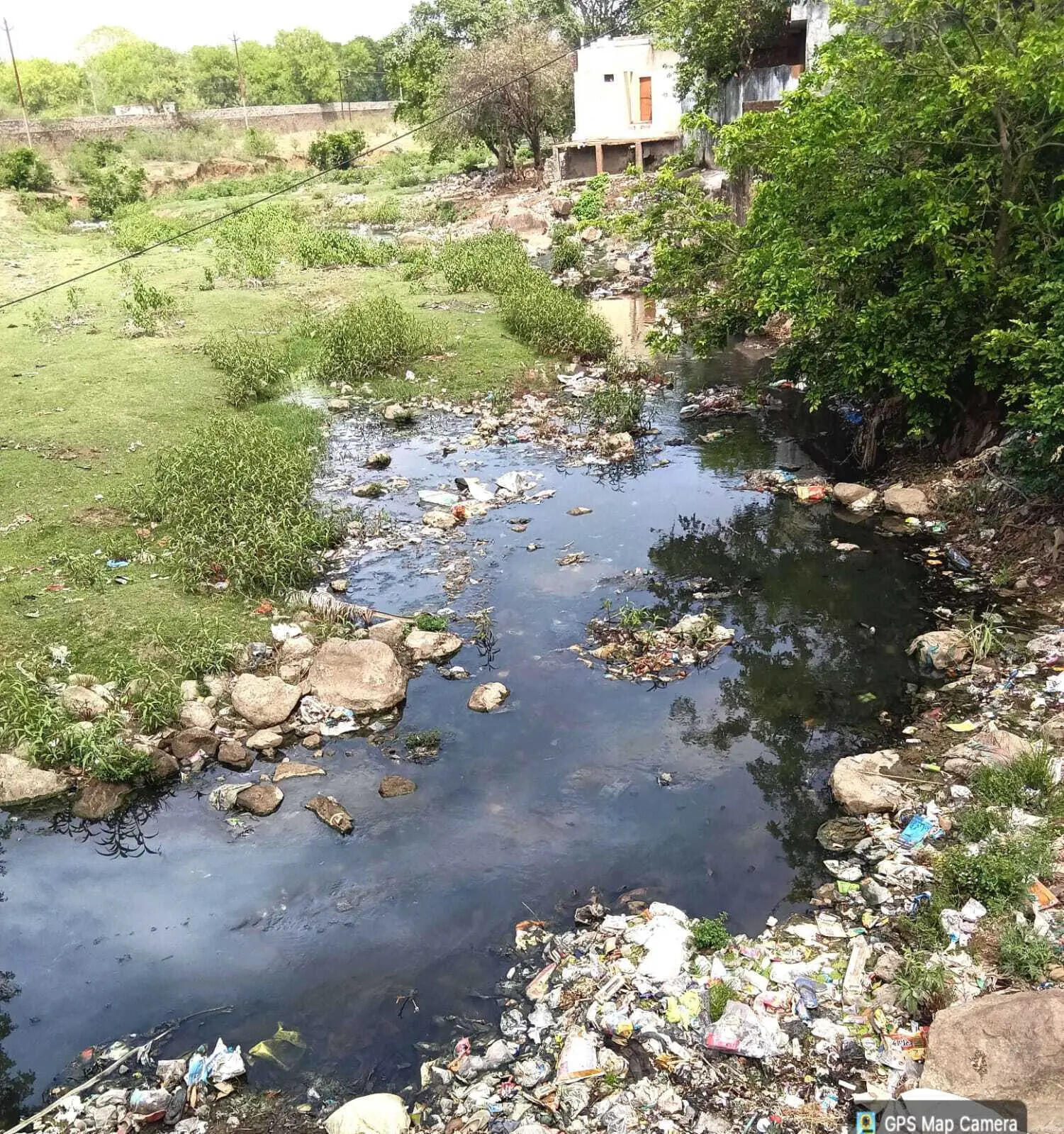
The issue was raised by the ‘Jal Saheli’ group from Simrawari village, which had earlier revived the nearly dried-up river—an effort praised by the Prime Minister in Mann Ki Baat. They alleged large-scale encroachment in the riverbed and catchment, illegal construction within the 100-year floodplain, and dumping of garbage that has narrowed the river channel.
Environmental activists also approached the NGT, highlighting problems such as siltation, water hyacinth spread, debris dumping, and discharge of polluted water, all affecting the river’s flow and water retention. Taking cognisance, the NGT has directed district authorities in Jhansi (UP) and Niwari (MP) to take necessary action and address the environmental damage.
Ghaziabad to start eviction drive in illegal colonies along Hindon Days after the UP govt informed the NGT that 258 unauthorised colonies in Ghaziabad were discharging untreated sewage daily into the Hindon, district magistrate Ravindra Kumar Mandar on June 05 directed officials to launch a coordinated drive to identify and remove encroachments along the river. The directions, issued at a meeting with officials from the Loni SDM’s office, irrigation department, GDA and municipal bodies, require teams to cross-reference revenue records, irrigation data and maps against ground conditions to pinpoint illegal occupations.
The tragic death of Hindon The video report highlights the severe pollution crisis in the Hindon River, once a vital lifeline of western Uttar Pradesh, now reduced to a “dead river” due to unchecked urbanisation, industrial waste, untreated sewage, and plastic dumping. It warns that rapid development in Noida, Greater Noida, and Ghaziabad is degrading the river, threatening groundwater quality, ecosystems, and public health, while raising concerns about whether meaningful revival is still possible.
YAMUNA FLOWS
Yamuna hits historic low in Delhi The Yamuna level on May 31 dropped to 668 feet, 6.5 notches below the normal level and close to a historic low of 667ft recorded in 2021.
Yamuna levels dip sharply near Wazirabad Officials linked the crisis to extreme summer heat, rising demand and inadequate upstream flow in the Yamuna. Bhim Singh Rawat of SANDRP, said, “Yamuna has never been a seasonal river but its exploitation has reached such a level that river beds are dry and river is largely running dry…Both Haryana and Delhi have the maximum role to play in restoring the river. Haryana needs to adopt water saving measures, drip irrigation and shift away from water guzzling crops to reduce irrigation water consumption. Delhi needs to focus on revival of other sources, minimise wastage and increase treated waste water use to reduce the direct dependence on river.”
Yamuna shrinks into narrow brown stream in Delhi Experts attribute the river’s condition to extremely low upstream water releases, excessive diversion through canals and barrages, intense summer heat and rising pollution loads. Reduced flow has weakened the river’s ability to dilute sewage & industrial waste, worsening water quality & making the river muddy.
According to an official mandate, Haryana’s Hathnikund Barrage has been releasing just 9.9 cumecs (352 cusecs) into the Yamuna. “However, this is too little and cannot meet the ecological needs of the river. Also, this water can travel barely 10 kilometres downstream in summer through the vast stretches of the floodplains, factoring in percolation and evaporation,” said Bhim Singh Rawat SANDRP. A study by the National Institute of Hydrology in 2019 recommended a flow of 23 cumecs in the lean season, he added.
CAG flags chronic low water levels at Wazirabad Barrage A Comptroller and Auditor General (CAG) report revealed that Delhi’s Wazirabad barrage recorded water levels below the required mark for 494 days between 2017 and 2022, affecting nearly 27% of the period. The report highlighted the need for coordinated action between the Delhi and Haryana govts to maintain adequate Yamuna flows, while officials also pointed to heavy silt accumulation and delayed desilting projects as factors aggravating the crisis.
Receding Yamuna exposes idols and waste on riverbed Environmentalists and civic agencies have repeatedly warned that idol immersion and dumping of puja waste is a major contributor to pollution in the river. Bhim Singh Rawat of SANDRP, said this shows that judgments of the NGT are being violated. “This is clearly illegal. NGT has time and again pointed out that idols and worship material cannot be dumped in the river. Artificial ponds and symbolic immersions in them must be carried out. These idols are made of POP (plaster of paris) and toxic chemicals which seep into the river where the water is still relatively clean while harming the biota and river ecology.”
He said this showed that the marshals and personnel of territorial army deployed to prevent this were having little impact. “It seems Delhi’s govt has left the river orphaned with anyone allowed to do anything. The wire mesh on bridges is broken. There are no collection points or regular cleaning drives. Even if activists request people to stop dumping, no one cares to listen. Harming river is no way to worship it,” he added. He said that court & NGT orders have been ineffective and that an independent body like Yamuna monitoring committee should oversee such drives.
YAMUNA FLOODPLAIN
Delhi HC warns against new construction on floodplains The Delhi High Court observed that residential colonies in Delhi’s Yamuna floodplain area (Zone ‘O’) are environmentally unsustainable and “completely impermissible.” While noting that 91 unauthorised colonies currently enjoy temporary protection from demolition until December 2026, the court directed authorities to ensure that no fresh construction, repair, or renovation takes place in the ecologically sensitive floodplain zone. The court also expressed concern over continuing illegal construction activities and asked the Centre, DDA, and other agencies to develop a strategy for the future of lakhs of residents living in the area.
Delhi HC fefuses to halt Yamuna bazar demolitions The HC has refused to stay the demolition of homes in the Yamuna Bazar area, where eviction notices have been issued to over 310 families living along the Yamuna floodplain. The petition was filed by the Yamuna Bazar Residents Welfare Association, which argued that the demolitions ignored the area’s historical, cultural, and religious significance & violated residents’ rights. The court dismissed the plea, saying the association lacked proper authorisation from residents to file the case.
Authorities said the settlement lies in Delhi’s ecologically sensitive O-Zone floodplain area, where construction is prohibited. The Delhi Disaster Management Authority (DDMA) issued notices asking residents to vacate within 15 days, citing recurring flood risks and safety concerns. Many affected families said they have lived there for generations and depend on river-related work such as priest services, boating, cremation duties, and daily wage labour. Residents fear displacement, loss of livelihood, and disruption to children’s education if demolitions proceed.
Delhi CM Clarifies: Existing O-Zone Buildings to Stay Days after signboards declaring parts of the Yamuna floodplain as O-Zone (environmentally sensitive area) triggered panic among residents, CM Rekha Gupta clarified that no demolition action will be taken against existing homes and structures in the area. The restriction applies only to new or ongoing construction, in line with the Delhi High Court’s observations.
The clarification came after concerns among nearly 15 lakh residents living in about 91 unauthorized colonies and a dozen villages located in the Yamuna floodplain O-Zone. The CM directed the Delhi Development Authority (DDA) to revise the wording of recently installed signboards to avoid unnecessary fear among residents.
Bhim Singh Rawat of SANDRP, said the constant encroachment into the floodplains cannot be encouraged by legalising more and more properties within the O-zone. “It is not safe for the river, and it is not safe for the people. The sandy river bed does not support good foundations, and more encroachment into the floodplain will lead to frequent floods,” he said. Urban expert Jagdish Mamgain said that while older illegal structures are often protected through regularisation, new illegal constructions – such as additional floors – continue with the alleged involvement of civic officials.
On May 23, the Delhi High Court directed authorities (MoHUA, MCD, DDA) to hold a meeting & submit an action report on stopping & demolishing unauthorised construction in the Yamuna O-Zone. It ordered that no new construction should be allowed, even in the name of repairs.
The Delhi government clarified that only new or ongoing illegal constructions will be demolished, not existing colonies. Political representatives argued that 91 colonies were regularised in 2008 (earlier under F Zone) and later shifted to O-Zone in 2010, with a pending proposal to move them back. They also claimed an expert committee found these colonies do not harm the river, while emphasising that restrictions should apply only to fresh construction.
The Delhi High Court had earlier observed that residential colonies in the Yamuna floodplain O-Zone are generally impermissible, though existing colonies currently enjoy protection under special legal provisions until December 31, 2026.
DDA’s zone O markers raise eviction fears Officials, however, said the boards are intended to mark and identify the regulated floodplain area, where construction and land-use activities are subject to environmental restrictions.
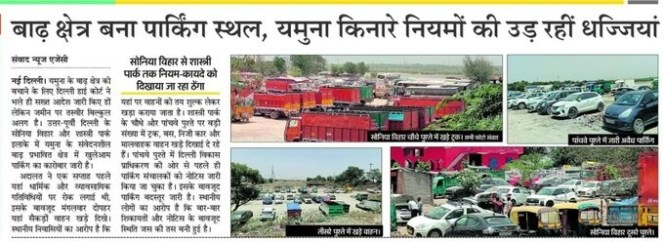
Floodplain turned into parking lot This report highlights alleged large-scale violations of environmental norms along the Yamuna floodplain in Delhi’s Sonia Vihar area, where parts of the floodplain have reportedly been converted into parking lots. The report says heavy vehicles, private cars, and commercial activities are operating on the riverbank despite restrictions on construction and land use in floodplain zones. The situation has also raised questions over enforcement of Yamuna floodplain protection rules.
Living Precariously by the Yamuna “What we are seeing on the ground right now is not ecological restoration of the river or floodplain. What is actually happening is a riverfront project,” says Bhim Singh Rawat of SANDRP. “Whatever is being done in the name of disaster management or rejuvenation has little to do with river ecology. The larger aim appears to be to reclaim land and eventually commercialise and privatise it,” he added.
Historically, rivers in India were not empty spaces. Floodplains supported communities—boatmen, fishermen, priests, divers, and farmers—who built their livelihoods around the river’s seasonal cycles. “These people have lived and worked around the river. During floods, communities move away temporarily, and when the water recedes, they return. Their livelihoods have always evolved around the rhythm of the river,” says Rawat from SANDRP.
YAMUNA RIVERS BIODIVERSITY
Sand mining lays siege to Chambal sanctuary The article describes how illegal sand mining is severely damaging the National Chambal Wildlife Sanctuary, a protected area spread across Madhya Pradesh, Rajasthan, and Uttar Pradesh that is home to endangered species such as the gharial, Gangetic river dolphin, Indian skimmer, and red-crowned roof turtle. This ground report found large craters and deep pits across the Chambal river floodplains where sand has been extensively extracted.
Rare rusty-spotted cat found in Chambal Sanctuary Researchers from the Wildlife Institute of India recorded the first confirmed sighting of the rare rusty-spotted cat in the National Chambal Sanctuary, marking its first documented presence in southern Uttar Pradesh. The discovery was based on two roadkill cases found in 2025 near the Chambal-Yamuna ravine landscape.
YAMUNA FISH, FISHERFOLKS
Mass fish Death in Sanjay Lake due to Mismanagement This mass fish death episode amply demonstrates the level of inefficiency prevailing among the multiple agencies managing the lakes in Delhi. It exposes the deep institutional failures affecting the water governance. Blaming the heat spell will only act as a cover up, allowing the real culprits go scot-free. The incident indeed warrants a thorough independent probe and strict action against all involved. Is that too much to ask?
“The main reason appears to be the dumping of untreated, a situation that worsens during the summer when, due to high temperatures, there is more evaporation and a decrease in the flow of fresh water,” Bhim Singh Rawat, of SANDRP, explained. According to Rawat, parts of the lake dried up due to leakage in the Delhi Jal Board’s water supply pipeline, which may have caused large-scale fish deaths. Bhim Singh Rawat, SANDRP, said several incidents of mass fish mortality had been seen over the past month in the Yamuna upstream of Delhi and in associated waterbodies, including Sahibi river channel and Sanjay Lake.
MINING IN YAMUNA RIVERS
SC orders crackdown on illegal mining in Chambal The Supreme Court (May 26) stressed that environmental governance must be proactive, not reactive, and directed states to take urgent action against illegal mining. It ordered filling of vacant enforcement posts, setting up surveillance systems (CCTV, monitoring centres, GPS), and completing these in six months.
The Court also mandated strict investigation of illegal mining cases targeting entire networks—not just drivers but owners, financiers and operators—and encouraged involving local communities in conservation efforts.
While noting some progress, the Court criticised states for lacking effective enforcement, poor surveillance, and failure to curb unregistered vehicles, calling the situation a result of “administrative apathy and institutional paralysis” leading to serious ecological damage. Further hearing on July 22.
‘Can’t plead helplessness’ The Supreme Court’s latest indictment reflects years of judicial frustration with persistent administrative apathy, leading to an environmental and governance crisis. The apex court, which took suo motu cognizance of the matter in March, was particularly harsh on Rajasthan in its May 26 order, slamming its “wholly casual, indifferent and indolent” conduct, and rebuking the state administration for demonstrating “persistent inaction” and a “disturbing lack of seriousness”.
SC issues fresh directions The Court warned that if the report was correct, it indicated serious enforcement failures and possible false affidavits by authorities. It directed Rajasthan, MP & UP to consider granting prosecution immunity or legal protection to forest guards engaged in anti-mining operations in the Chambal Sanctuary. The Court noted that forest personnel face violent attacks and retaliatory cases while acting against illegal sand miners.
The SC observed that strict enforcement alone may not stop illegal sand mining in the National Chambal Sanctuary and stressed the need to provide alternative livelihoods to local communities dependent on mining activities. The Court suggested involving local people in conservation work, eco-restoration, afforestation, eco-tourism and surveillance activities linked to the sanctuary.
On May 20, 2026, the SC directed the Rajasthan government to expedite recruitment of forest guards while hearing a case related to illegal sand mining in the Chambal Gharial Sanctuary. The Court expressed concern over the severe shortage of trained forest staff and questioned the state over continued dependence on home guards for forest protection duties.
The SC observed that action against drivers and labourers alone would not stop illegal sand mining in the National Chambal Sanctuary and stressed the need to target the “kingpins” operating the mining networks. The Court suggested attaching properties acquired through illegal mining as an effective way to reach the main operators behind the trade.
Crackdown on illegal mining The editorial criticises state governments for weak enforcement and lack of political will, despite repeated court interventions and warnings from the SC and NGT.
Yamuna mining: NGT seeks report from Ghaziabad authorities The NGT has directed the state environment impact assessment authority (SEIAA) & the Ghaziabad district magistrate to examine whether the environmental clearance granted to a company mining sand on the Yamuna riverbed near Loni be cancelled, following repeated allegations of violation of norms.
A 3-quorum comprising Justice Arun Kumar Tyagi, A. Senthil Vel, & Afroz Ahmad, in an order on May 18 said the authorities have to take the decision after taking into consideration 23 incidents of illegal mining. NGT directed the authorities to probe into the allegations and take appropriate action after hearing the applicant & the company. An official from the Ghaziabad administration said fines of Rs 50,000 & Rs 5 lakh had been imposed on the violators. The company appealed against the action in the Supreme Court, it was referred back to the NGT.
NGT Action on Yamuna Sand Mining near Narela The NGT on May 06, 026 was informed by the Narela SDM that excavators and vehicles involved in illegal sand mining in the Yamuna floodplain were seized and FIRs registered. The action follows an ongoing case based on a 2024 report highlighting rampant mining. Authorities from Delhi and Uttar Pradesh are coordinating boundary demarcation, with a joint survey conducted in March 2026. An inter-state task force and increased police patrolling have also been deployed, with boundary marking expected to be completed within six weeks to strengthen enforcement.
IPS officer seeks 10- year mining ban in Bundelkhand After Banda in Uttar Pradesh recorded a scorching 47.6°C, MP cadre IPS officer and ADG Rail Raja Babu Singh urged UP Chief Minister Yogi Adityanath to stop illegal sand and stone mining in Banda, Mahoba and Hamirpur. He said excessive mining in the Ken river and hill cutting have damaged the environment, altered river systems and turned the region into a “heat chamber.” Singh demanded a complete ban on minor mineral mining leases for the next 10 years to allow nature to recover.
Mining ravaging Yamuna in Kalpi Questions have once again been raised regarding illegal mining in the Yamuna River. Local residents and farmers have alleged that in BMS Sections 2 and 3, mining and soil extraction are being carried out with machines in the main river channel, beyond the designated lease boundaries. It is also alleged that overloaded trucks are passing day and night beneath the old Yamuna bridge, posing a threat to the bridge.
Villagers say that such mining activities are altering the river’s natural form. In several places, erosion has intensified, leading to complaints of landslides and collapsing farmland. Farmers claim that the operation of heavy machinery is causing the groundwater level to decline rapidly.
Illegal mining in Chitrakoot According to the report, heavy Pokland machines are being used day and night to excavate sand from the middle of the river channel. Overloaded trucks are transporting sand continuously, causing damage to roads & agricultural fields. Villagers have accused local authorities of ignoring complaints despite repeated appeals. Residents also allege that mining activities are taking place beyond permitted hours, with official patronage.
The article further warns that deep excavation in the riverbed is damaging the Yamuna’s natural flow, harming crops and causing major revenue losses to the government through illegal extraction and overloading.
YAMUNA WETLANDS
HC takes notice of wetland degradation across Rajasthan The Court noted that Rajasthan has around 46,748 wetlands, but only a small number have been notified for statutory protection, while many face threats from encroachment, sewage discharge, pollution, waste dumping, shrinking water spread and inadequate conservation measures.
The Court directed the State Govt, SWA, RSPCB and district administrations to submit detailed status reports on wetland inventory, GIS mapping, boundary demarcation, encroachments, pollution sources, Ramsar sites, biodiversity conservation and restoration measures. It also ordered a statewide wetland survey, prevention of new encroachments, prohibition of untreated sewage and industrial effluents entering wetlands, and preparation of a time-bound conservation roadmap. Three advocates were appointed as Amicus Curiae to assist the Court. Further hearing on 6 July 2026.
Noida Forest Dept to revive 10 ponds Noida forest dept has sought action to revive 10 ponds across Gautam Budh Nagar to improve groundwater recharge. The initiative follows directions under NGT guidelines & will involve desilting, cleaning & structural restoration of selected ponds in villages including Satharpur, Harola, Roza, Salarpur Khadar & Koudli Bangar.
WATER MANAGEMENT IN YAMUNA BASIN
NMCG pushes circular water economy The NMCG is promoting a “circular water economy” model that treats sewage as a resource rather than waste. Under its framework for safe reuse of treated water, wastewater from sewage treatment plants is being supplied for industrial and non-potable uses, including at the Mathura Refinery, Pragati Power Plant in Delhi, and Jojobera Thermal Power Plant in Jharkhand. The initiative aims to reduce freshwater extraction from rivers and groundwater by replacing it with treated wastewater in sectors such as industry, agriculture, construction, and power generation.
Drying Naulas of Uttarakhand The article warns that their loss is not only a water crisis but also a loss of cultural heritage and indigenous ecological knowledge in the Himalayas. Many naulas are drying up due to deforestation, climate change, reduced groundwater recharge, and unplanned construction that disrupts natural spring catchments.
Hill springs key to water security A commentary highlights that urban springs in Himalayan towns are rapidly degrading, despite being crucial sources of drinking water and groundwater recharge. The commentary calls for community-led conservation, among other steps.
Haryana’s ₹489-cr canal project remains unfinished The Haryana govt approved the Remodelling of Augmentation Canal project in Dec 2017 at an estimated cost of Rs 489 crore. Passing through Yamuna Nagar and Karnal districts, the project was designed to increase the canal’s carrying capacity from 3,100 cusecs to 6,000 cusecs, strengthening the Western Yamuna Canal system. Work was to begin in 2018-19 and be completed by 2020-21. Nearly five years after that deadline, it remains incomplete. Around Rs 350 cr has already been spent.
Significant quantities are lost through seepage and transmission – sector estimates suggest losses of 600-800 cusecs in parts of the system. Conserving even a fraction of these losses, could improve availability during peak summer months. Nitin Bassi, fellow at CEEW, said the capital’s water supply had fallen to about 70% of total demand of 1,250 MGD – a gap further widened by leakages and theft amounting to roughly 40% of supplied water. A circular water economy, including reuse of treated wastewater for horticulture, landscaping & industrial cooling, was critical. “In many cities, reuse remains below 3% of total freshwater demand. Ideally, it should be at least 20%, which would free up water for domestic use,” he said.
NGT plea flags “grave” water crisis across Haryana A petition before the National Green Tribunal highlights a deepening water crisis in Haryana, marked by widespread waterlogging, soil salinity, and severe groundwater depletion. It states that nearly 9.8 lakh acres are affected, with over 60% of groundwater units over-exploited.
Export crops drying out Bundelkhand’s villages The report argues that groundwater depletion in Bundelkhand is being driven not only by drought and climate stress but also by the cultivation of water-intensive crops such as wheat and rice that are linked to national procurement systems and export markets. As groundwater extraction rises faster than recharge, wells and hand pumps are running dry, especially in poorer and marginalized communities. The burden falls disproportionately on Dalit households, many of whom face both water scarcity and social exclusion in accessing water sources. Current schemes address infrastructure gaps but fail to tackle the issues of groundwater over-extraction, crop policy, and unequal access to water.
Bundelkhand’s Soil Revolution Since 2022, over fifty ancient Chandela-era tanks in the aspirational block of Gaurihar, have seen community-led desiltation. The process has helped move accumulated fertility, the region’s best topsoil for decades, back to the farms that needed it most. For every rupee the project spends on desilting, farmers spend about three rupees of their own money transporting the silt to their fields. The Gaurihar intervention is not just a water conservation story but has been designed with a view to regenerating agriculture naturally.
Bundelkhand’s soils did not collapse in a season. They will not recover in one either. But standing between the roar of the crushers at Kabrai & the quiet hum of a bio-input drum fermenting under a neem tree in Khadera, you get a sense of what is at stake. One economy is mining the earth’s past. The other is carefully, stubbornly, investing in its future. (Shambu Prasad & Sachin Oza)
Water conservation in Jakhni village The small village of Jakhni in Banda district has set an inspiring example of water conservation, earning recognition across the country. Behind this transformation is Padma Shri awardee water conservationist Uma Shankar Pandey. For nearly 30 years, he has been promoting the idea of “farm bunding (field embankments) and tree planting on bunds” to conserve water. Started without any government support, this initiative has transformed the village. Where wells and ponds once dried up in summer, today water remains available even during the peak heat of May and June.
Massive tree felling for rail project raises concerns The Khajuraho–Panna railway project has already led to the felling of 54,578 trees, with nearly 50,000 more likely to be cut after authorities changed the rail alignment, citing safety concerns with the original route. Environmentalists and local residents have raised concerns over large-scale forest destruction and wildlife impacts. Satellite images show extensive loss of greenery in the area since 2022.
MP villagers fetching water from Rajasthan The report describes a severe water crisis in villages near the Madhya Pradesh–Rajasthan border, where residents are forced to walk long distances every day just to collect drinking water. Groundwater levels have dropped sharply and local hand pumps and wells have dried up. In some areas, people travel around half a kilometre or more carrying pots and containers under extreme summer heat to fetch water for daily use. Women and children bear most of the burden.
Kota’s water crisis fuels parallel supply by water mafia This ground report found that severe water shortages in several Kota settlements have led to the rise of private “water mafia” networks supplying water through private and government borewells. Residents in areas like Shivnagar, Rozdi and Barda pay ₹500–₹1,000 per month for limited water supply, often receiving water for only 30 minutes a day.
The report says one borewell supplies 40–50 houses through privately laid pipelines, while local operators control water timing and quantity through valves. Residents also alleged illegal control of govt borewells by influential locals. Govt tanker supply reaches many areas only once every two to three days, forcing people to buy water or fetch it from distant sources.
Water crisis in Gwalior village expose gaps The report underlines the poor condition of rural water infrastructure despite govt claims of expanding tap water connectivity under Jal Jeevan Mission.
Water crisis in Prayagraj With borewells and hand pumps running dry, residents of Riwa village on the outskirts of Raipur depend on a handful of solar-powered pumps, standing in long queues each day for drinking water in the middle of a brutal heatwave.
YAMUNA URBAN WATER
Growing water wastage in big cities The article highlights massive water wastage in Indian cities such as Mumbai, Bhopal, and Indore due to leaking pipelines, poor infrastructure, and inefficient water management systems. Despite growing water scarcity and rising demand, a significant share of treated drinking water is reportedly lost before reaching households.
It states that nearly 60 crore urban residents face water stress, while around 33% of water is lost or wasted in 166 major Indian cities because of leakage, theft, and poor infrastructure. In some cities, leakage rates are extremely high — including Delhi (65%), Bengaluru (60%), Kolkata (55%), Bhopal (50%), and Ahmedabad (48%).
Delhi’s water future Umang Bajaj argues that widespread adoption of rainwater harvesting, better groundwater recharge, and stronger enforcement of conservation rules are essential. The author also emphasizes that both government action and citizen participation are needed to ensure Delhi’s long-term water security.
Delhi parched despite being a river city Delhi faces recurring water crisis despite being located on the banks of the Yamuna.
How urban water systems fail There are underlying systemic factors that lead to the mixing of sewage water with drinking water. The risk of contamination in drinking water pipelines is almost always present. (Arkaja Singh)
Crisis in Delhi Delhi continues to face a water shortage of about 50 MGD as the Yamuna River has nearly dried up, affecting water treatment plants and supply across the city.
Delhi to push Haryana for water via the Somb route With negotiations over the Munak canal yielding only a partial recovery, the Delhi Jal Board will send officials to Haryana to seek the release of additional water through the Somb, a smaller tributary of the Yamuna. Bhim Singh Rawat, SANDRP, cautioned that the Somb route was not without constraints. “Somb used to be a perennial tributary, but it has been badly exploited and turned into a seasonal stream. It will still have evaporation losses as the sandy bed is now parched, and a regular, constant release will be needed for water to reach Wazirabad,” Rawat said. He noted that a sustained large-scale release over 15 days was arranged during Chhath last year and said the current crisis warranted a similar effort.
Govt efforts The government also reviewed long-term initiatives, including a feasibility study by IIT-Roorkee on bringing water from Haryana through a dedicated pipeline network to reduce transmission losses and leakages. Officials said work is underway on dredging and de-silting near Wazirabad, construction of new water treatment plants, development of additional borewells in the Yamuna floodplains, and implementation of a phased dual water supply system for non-potable use of treated wastewater.
Water level of the Yamuna dipped to around 668.5 ft on May 28, six ft below the normal level of 674.5 feet, at the Wazirabad barrage, leaving just around 1-1.5 feet of water in the pondage area, from where the water treatment plants at Wazirabad and Chandrawal draw raw water.
Crisis worsens at Delhi’s Gulmohar Park More than a week after residents of South Delhi’s Gulmohar Park began complaining of foul-smelling and contaminated water supply in parts of the colony, the crisis has now spread across several lanes, with households reporting illness, hospitalisation and acute shortage of clean water. even as repair work by the DJB continues.
Polluted water supply in Janakpuri Residents of several DDA blocks in West Delhi’s Janakpuri have alleged that black, foul-smelling water resembling sewage has been flowing from taps for months, forcing families to rely on bottled water and spend heavily on plumbing repairs. The worst-affected areas include B1C, B3A, B3B and BE blocks.
NGT Orders Probe into illegal GW extraction in Noida & Greater Noida Allegations have emerged that several major construction projects in Noida and Greater Noida are illegally extracting groundwater without proper permissions. Key projects named include those in Sectors 145, 153, 94, 150, Techzone-II, and the YEIDA area, raising concerns over large-scale misuse of groundwater amid rapid urbanisation.
Acting on a petition by Vikrant Tongad, the NGT directed the UP Groundwater Dept to investigate. The tribunal ordered site inspections and asked for corrective & punitive action against any illegal tube wells or borewells, with the process to be completed within 3 months.
64% of Gurugram’s RWH pits still clogged before monsoon Municipal Corporation of Gurugram (MCG) officials said only 150 of the 408 existing rainwater harvesting systems have been cleared so far, while work on the remaining 258 pits is underway. Among the city’s four zones, 66 rainwater pits have been desilted in Zone 1, 28 of the 47 pits in zone 2, while zone 3 has seen the slowest progress with only 24 of the 121 pits cleared. In zone 4, desilting has been completed in 32 of the 107 pits.
MCG has identified 155 waterlogging-prone hotspots across the city where work is currently being carried out on a priority basis ahead of the monsoon. These include 41 hyper-critical locations where water remains for more than five to six hours, 54 medium-priority sites and 60 areas classified as minor waterlogging points where water remains for an hour.
Illegal RO unit thrive in Gurgaon The article exposes the rapid spread of illegal RO (reverse osmosis) water plants in Gurgaon amid worsening groundwater depletion. These unlicensed units reportedly operate in areas such as Basai, Dhankot, Sectors 9-10, 86, and 95, supplying hundreds of water jars daily using cheap containers and fake or lookalike labels that imitate established brands.
YAMUNA FLOOD MANAGEMENT
Govt plans desilting near ITO barrage Officials said accumulated silt and debris around the barrage reduce the river’s carrying capacity and increase flood risk during high flows. In 2023, due to unprecedented rainfall in the Yamuna catchment, there was a huge runoff in the river, due to which the highest flood level of 208.66 meters was observed on 13 July 2023 at the Old Railway Bridge, surpassing an earlier HFL of 207.49 meters recorded on 6 Sep 1978.
According to an IFC report, as the gates on the east end of the barrage could not be opened at the peak water level of the Yamuna, the pressure was so high that the water started spilling onto roads & colonies situated along the river in the stretch between Wazirabad & ITO barrage.
RELEVANT REPORTS
No more HEPs in Upper Ganga: Science demands same for rest of Himalayas The four main reasons given in the affidavit for the decision include: Seismicity, Geology, disaster proneness and biodiversity, in addition to cumulative impacts. These reasons apply for the whole of Himalayas from J&K to Arunachal Pradesh and also other vulnerable geographies like the western Ghats. One hopes that better sense will prevail and the science behind this decision will also be applied to these other vulnerable areas.
NGP riverfront displacing Ganga people The program measures success in infrastructure – STPs, dolphin counts, tourist ghats – but structurally ignores the displacement of Nishad, Mallah, Kewat, and Bind communities while benefiting politically connected sand mining operations. The central parable of Namami Gange program is vast in ambition, lavish in public relations, and structurally incapable of seeing the people it displaces as anything other than an obstacle to the river it claims to restore.
Call for Papers: 7th Nadi Utsav (2026) As part of the 7th Nadi Utsav, IGNCA, in collaboration with the Department of English, University of Delhi, invites abstracts for the national seminar: “The Eternal Yamuna: Chronicles of Conflict, Biotic Healing, and the Socio-Cultural Hearth”. We welcome interdisciplinary perspectives that explore the Yamuna through culture, ecology, history, literature, livelihoods, heritage, and conservation. Last date for abstract submission: 19 June 2026; Abstract: 250 words; Bio: 100 words; nadiutsavignca@gmail.com

SANDRP
Also see: Yamuna Manthan May 2026 & April 2026
Follow us on: www.facebook.com/sandrp.in; https://twitter.com/Indian_Rivers


