
The highlight of the overview of wetlands in India in 2020 here (keeping aside the Wetlands related developments in Maharashtra in 2020 and Positive wetlands related developments in 2020, on both these subjects we have published separate reports), is that the National Green Tribunal (NGT), various High Courts and even the Supreme Court have been quite active on wetlands front, but there is very little impact of this on the wetlands and their governance in India. This is basically because, and this is the second key highlight of this overview, the central and state governments have shown almost no interest, understanding or will to protect the wetlands. This is in spite of the huge number of new Indian wetlands brought under the Ramsar convention in 2020, since experience and also this overview shows that Ramsar convention does not seem to particularly help the fate of the wetlands. The third highlight of the overview is that there is a lot of civil society effort, both in terms of advocacy and work on ground for the protection of wetlands in India. In fact the legal action that we see in the NGT and Courts is largely due to their efforts. In fact whatever little positive developments we see here is coming from community and civil society efforts.
Continue reading “Wetlands Overview 2020: Judiciary is active, but remains ineffective”Tag: MoEF
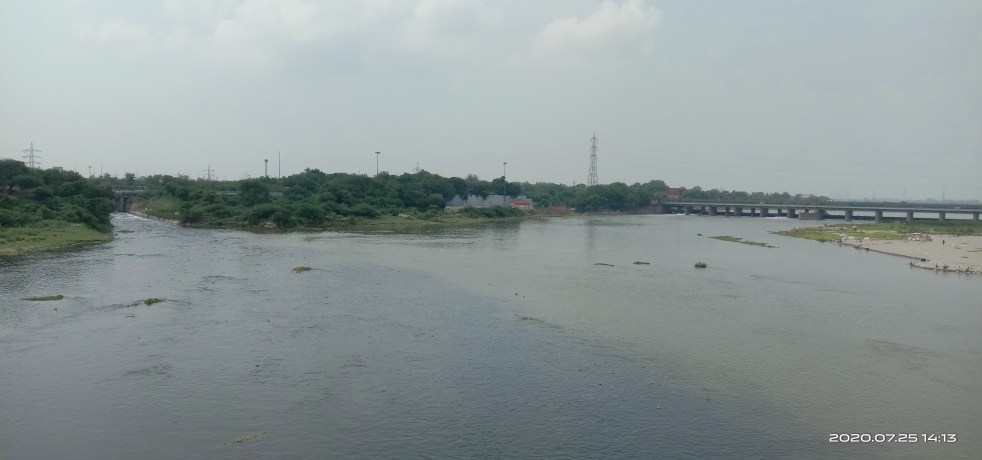
DRP 180121: Is there any hope for Yamuna from Delhi, SC actions?
Yamuna is again in headlines in this week’s Bulletin. It carries the Nov 2020 announcement of Delhi Govt plan to clean river by 2023 and the action by the Supreme Court. There is nothing very convincing, path breaking or new in what the Delhi Govt has announced, such announcements keep coming every few years and then tend to be forgotten, to be renewed with announcement of new deadlines in this case. Unfortunately, the Supreme Court action is not particularly different. One only needs to remind the apex court and everyone else that in 1994, the SC had taken up Yamuna case suo moto. No impact on the river could be achieved till around 2017, when the SC decided to handover the case to NGT. It is not clear what exactly has prompted SC to take it up again, but the move does not inspire confidence considering the past track record.
We hope we are wrong and the Delhi Plans and the SC move does lead to better days for Yamuna. In the meantime, the Yamuna Monitoring Committee set up by the NGT is doing its role, but one wishes, their hands and plans as strengthened and pushed by the NGT, which does not seem to be the case currently.
Continue reading “DRP 180121: Is there any hope for Yamuna from Delhi, SC actions?”
DRP 110121: Big question marks over viability of Ganga waterway
[Feature image: A cargo stuck in Ganga in Balia, image source Dainik Jagran, June 2018. https://www.jagran.com/uttar-pradesh/ballia-stuck-cargo-ship-in-the-ganges-for-a-month-18139816.html]
This latest episode described below once again raises big question marks over the viability, feasibility and desirability of pushing Ganga as the National waterways. Its economic viability has been questioned many times earlier and this episode only reinforces it. The ecological viability is dependent on refusal to conduct any environmental impact assessment in any credible, transparent or participatory way, while the massive adverse impacts on the river, its biodiversity including the National Aquatic animal Dolphin as also on the livelihood of millions of fisher people and boats people are all known, but being ignored by the Ministry of Inland waterways headed by and pushed by Mr Nitin Gadkari rather blindly. The only way to resolve the issue is if there is an independent, informed assessment, which can happen only if the judiciary were to step in. Will they?
Continue reading “DRP 110121: Big question marks over viability of Ganga waterway”
Dammed Fisheries of India
Far out in the estuary of Aghanashini, as Ismail Bhai spread out Indian Mackerel for drying, a carpet of silver spread out before us. “We fish in the river but the Bangde we catch in the sea also have their links to Aghanashini. We owe her everything”. Estuary of the modest, free-flowing Aghanashini supports around 5000 fisherolk. In the neighboring dammed Sharavathi, fish diversity plummets, so do dependent livelihoods. But rivers like Aghanashini are a rarity now.
Continue reading “Dammed Fisheries of India”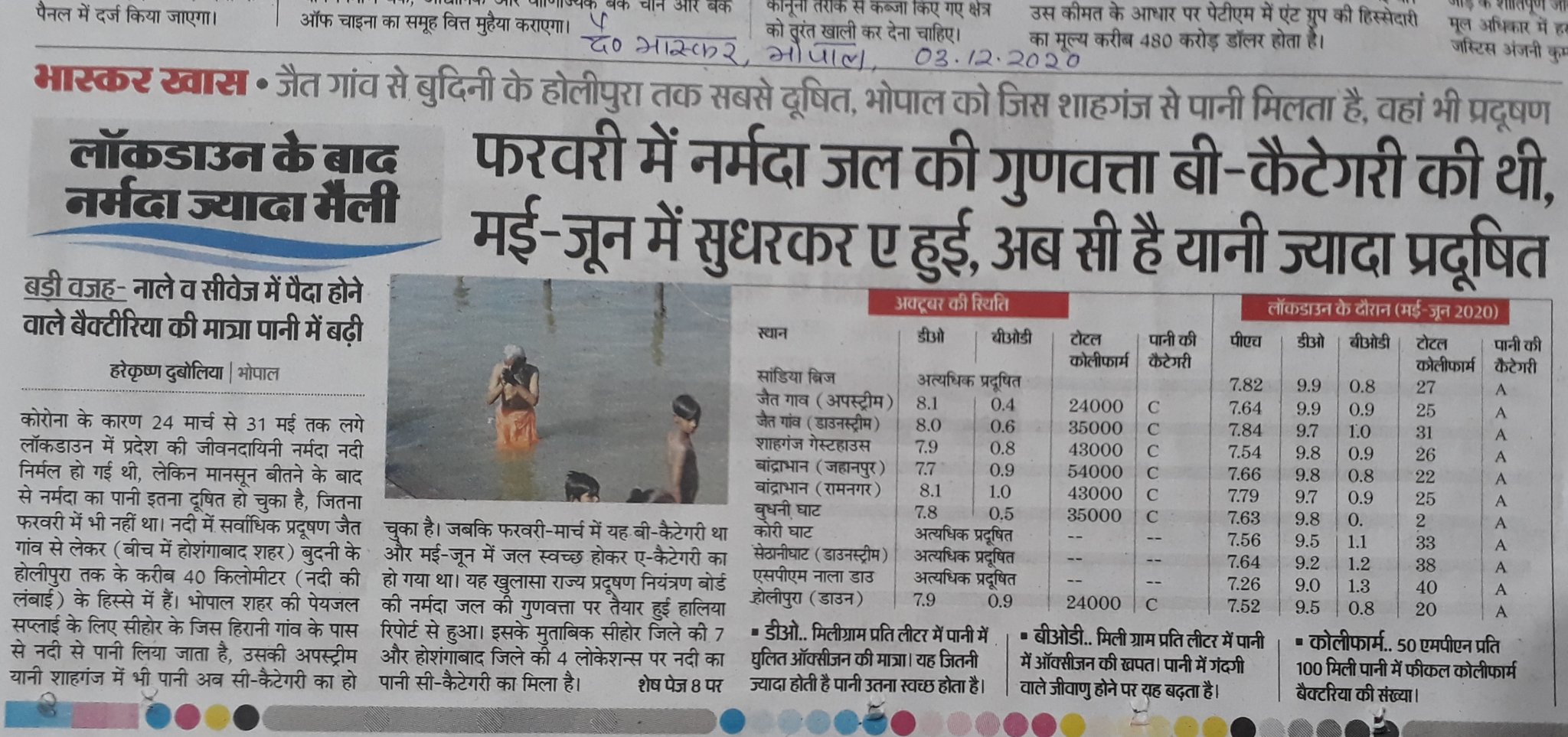
DRP: 28 Dec. 2020: Five Positives of outgoing Corona year
The outgoing year 2020 is likely to be remembered as Corona year as Covid 19 pandemic has been the most influential aspect of the year. However, there have been many positives of the outgoing year. We identify five biggest positives as we see them.
Firstly, the complete lockdown that we experienced during March-April 2020, to slow down the spread of the Covid 19 infection showed, among many other things that it is indeed possible to clean up our rivers and also indicated the way forward: tackle industrial pollution. Unfortunately, those clear lessons have not been learnt by the government, its been busy in ease of doing business, not even understanding that in changing climate, clean rivers are going to be a major resource that will help people adapt.
The second notable positive was the major across the country protests, particularly from the younger generation against the government’s attempt to bulldoze the completely anti- environment amendment to the EIA notification. The protests along with the judicial orders have so far stopped the amendment from getting implementation. The government will do well to abandon any attempt to push them.
Similar to the protests against amendments to EIA notification were the protests against trying to bulldoze the massive Etalin Hydropower project in Dibang Valley in Arunachal Pradesh, at the cost of lakhs of trees and biodiversity rich forest and river and against the wishes of the people of Arunachal Pradesh and North East India. Here again it was good to see that the campaign has so far been successful.
India Rivers Week 2020 organised Zonal and National dialogues on river sand mining in India, in which large number of groups and stakeholders from across the country participated and has created a new wave of awareness and energy on this very important but so far largely ignored issue. We are hopeful that this energy will lead to change in governance of river sand mining in India.
Continue reading “DRP: 28 Dec. 2020: Five Positives of outgoing Corona year”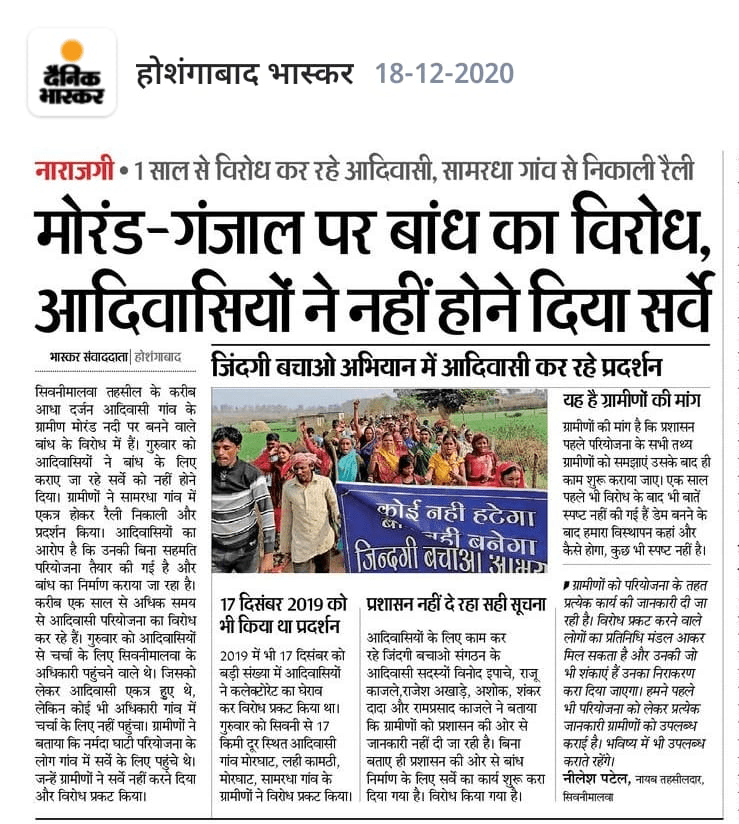
DRP: 21 Dec 2020: Morand Ganjal Dam opposed in Narmada Valley
Tribals of large number of villages from Seoni Malwa Tehsil of Hoshangabad district in Madhya Pradesh have been strongly opposing the Morand Ganjal dam for several years now, as they again came out in large numbers this week on Dec 17, 2020, also remembering their rally exactly a year ago on Dec 17, 2019. They has simple demand: plz first provide all the information about the project in Narmada Valley and get approval of all the involved villages as required under the law. But the arrogant administration has not even responded to basic demand of all the relevant information.
Under the Rs 2813 Cr project, dams are to be built on Morand river near Morghat village of Seoni Malwa tehsil and on Ganjal river near Jawardha village of Rahatgaon tehsil-Harda district with the objective of irrigating 4,617 ha of land in 28 villages of Hoshangabad, 17,678 ha in 62 villages of Harsud tehsil-district Khandwa, and 29,910 ha in 121 villages of Harda, Khirkiya, Sirali and Rahatgaon tehsils of Harda district. The project was approved in 2017. Some 23 villages and over 3000 ha of land is facing submergence, affecting Korku tribals in Hoshangabad, Harda and Betul districts, but there is no rehabilitation plan in place as per the Narmada Valley R&R policies.
Dams are no longer delivering promised benefits and the age of building dams is over. But the political economy of massive funds spent on a major project keeps driving the politicians and officials to keep pushing more projects. The least one can expect from the government is to provide all the relevant information to the affected people in manner and language they can understand, have public consultation and approval in each affected village in front of an independent panel. Without such due process pushing such dams are bound to raise more conflicts, confrontations and opposition.
Continue reading “DRP: 21 Dec 2020: Morand Ganjal Dam opposed in Narmada Valley”
DRP: 14 Dec 2020: Constitution of EAC for River Valley Projects Challenged in High Court
The Karnataka High Court has taken up the petition challenging the constitution of the Expert Appraisal Committee (EAC) on River Valley and Hydropower projects. Notices have been issued to MoEF and also all the members of EAC on a petition filed by the United Conservation Movement Charitable Welfare Trust. Such a scrutiny of the appointment of the EAC was long overdue and urgently required. One hopes the High Court will take the matter to its logical conclusion and ensure that MoEF has a credible, transparent process of appointment of these committees as without such a process, the MoEF gets away with appointing only yes people on the committee who are happy to tow the government line. That nullifies the whole purpose of the constitution of the committee, the EIAs, the public consultations, the appraisals, the clearances and even credible monitoring and compliance. It is complete failure of environment governance and laws and MoEF even gets away with appointment of people with clear conflict of interest. MoEF has no process of selection of the chair and members of these committees. Hoping for the best for the case to correct all this.
Continue reading “DRP: 14 Dec 2020: Constitution of EAC for River Valley Projects Challenged in High Court”
DRP: 30 Nov 2020: J&K SEAC denies EC to sand mining
In otherwise bleak governance of sand mining in India, J&K State Expert Appraisal Committee (SEAC) has denied environment clearance to sand mining projects on Jhelum river, since the proposals were not in conformity with the MoEF’s 2016 Sand Mining Management Guidelines, involved in-stream mining, did not have proper District Survey Reports, proper Sand Mining Plan or Replenishment studies. One hope this is emanating from genuine concern for proper governance and this needs to spread to more areas so that at least the guidelines get properly implemented.
Continue reading “DRP: 30 Nov 2020: J&K SEAC denies EC to sand mining”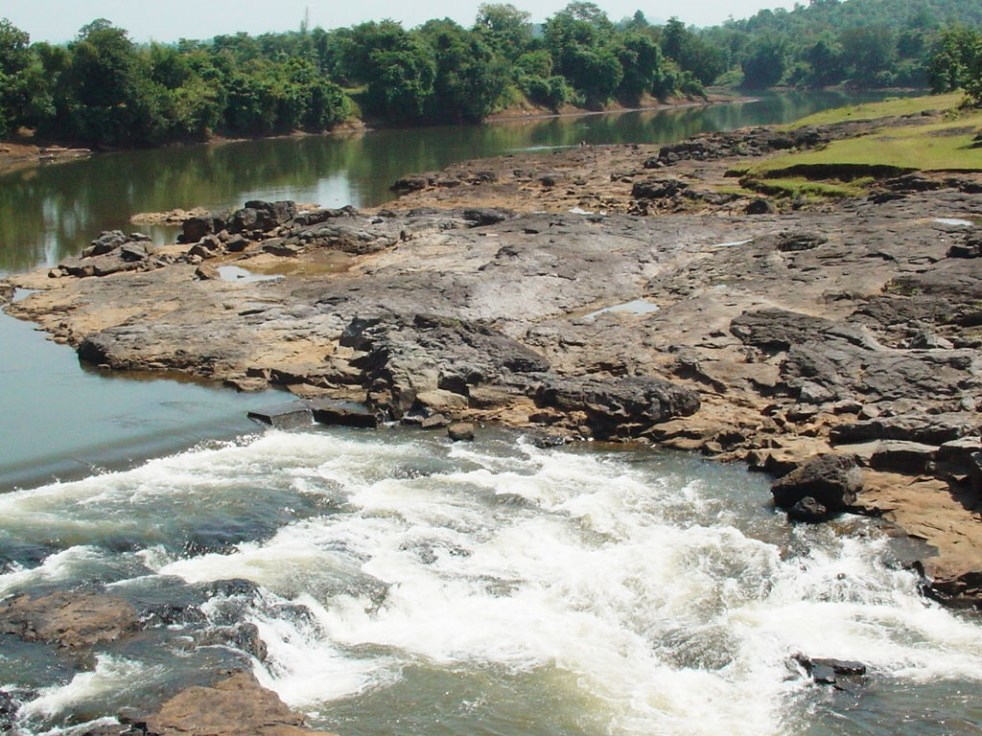
The Real Worries about MoEF’s Expert Committee on River Valley Projects
Guest Article by RITWICK DUTTA
The Union environment ministry issued a new office memorandum on November 18, 2020, that mandates its expert appraisal committee (EAC) to meet “at least” twice every month to “cut down the time” for environmental clearances (ECs).
The EAC is an expert body of the ministry responsible to okay or reject proposed projects – by awarding or withholding ECs – under the environment impact assessment process. Though the EAC is an advisory body, the Union environment ministry in almost all instances goes by its recommendations, since it comprises experts.
Continue reading “The Real Worries about MoEF’s Expert Committee on River Valley Projects”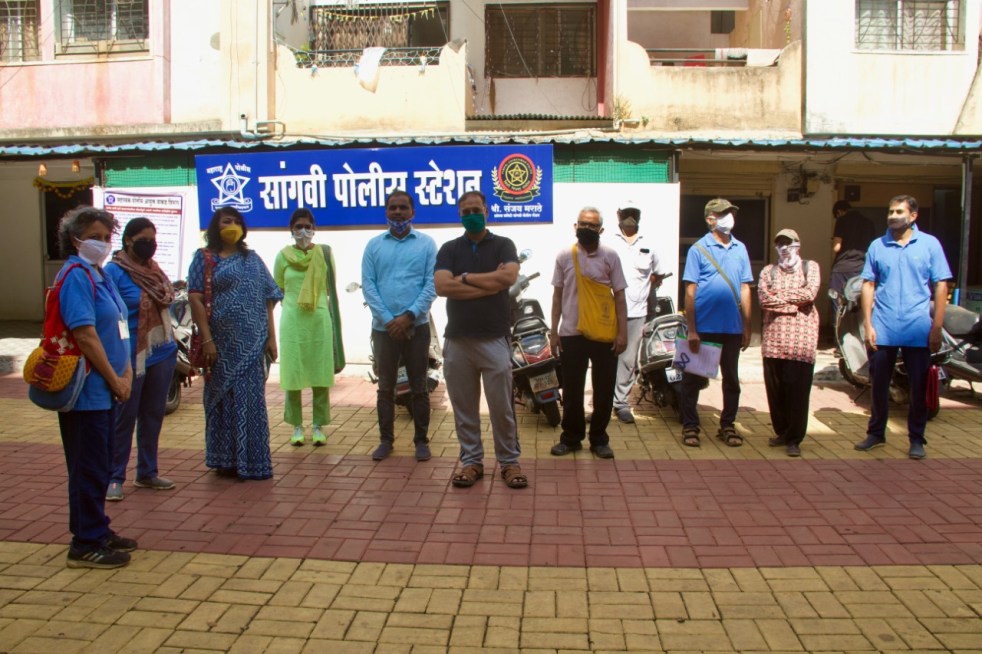
DRP: 23 Nov 2020: Pune Citizens Expose illegal River Sand Mining in Pune City
This is remarkable, first of its kind of development where the citizens of the city have come together to expose the illegal River sand mining in the Pune City in the middle of the night. They alerted the police, who did take action, caught one of the culprits along with Poclain machine. The rest of the machines, which too should have been guarded, were taken away by the miners after police left, it seems. Salutes to all the citizens involved including Vaishali Patkar and Pushkar Kulkarni and their supporting organisations including Jeevit Nadi, Aundh Vikas Mandal.
It is only when citizens come together in this way that there is any possibility of stopping the menace of illegal sand mining and other menace affecting our rivers. Kudos to the Pune Citizens to show the way for the rest of the country too and hope such collective efforts by the Pune citizens will continue to show the way forward for all concerned.
The prompt action by the Pune police also should be appreciated and one only hopes the police will investigate the case professionally and produce a strong legal case, apply all the relevant sections of IPC, Environment Protection Act and Mines and Minerals Development Act, all the government department will play their role and bring everyone guilty to book with exemplary punishment. Pune citizens will surely keep a watch on this.
Continue reading “DRP: 23 Nov 2020: Pune Citizens Expose illegal River Sand Mining in Pune City”
