Dams · DRP News Bulletin

DRP: 17 September 2018: How Much of This Drought Is Man Made?

  1. Gujarat suffering due to political use of water for elections in 2017.
  2. Rajasthan given more water for elections there in 2018. Will Punjab, Haryana suffer now?
  3. Kerala drought: how much could have been reduced if dams were operated more prudently?
  4. North Interior Karnataka is suffering, but Krishna basin dams are almost full? Issue of unsustainable cropping patterns, groundwater overuse, and neglect of recharge & regulation?

Gujarat Water scarcity looms large with state receiving only 74% rainfall so far

  • Kutch and North Gujarat are likely to face severe water scarcity this year, officials said. The Kutch region has received a mere 26.51 percent of average rainfall so far, while North Gujarat has received 42.93 percent, central Gujarat 66.83 percent, Saurashtra 72.20 percent and South Gujarat the highest 94.79 percent.
  • However, the Sardar Sarovar Dam is filled up to 125.82 meters, and it can provide drinking water for the entire state till the next summer, the govt said. As per Govt. storage in Sardar Sarovar Dam on the Narmada, which will be enough to meet the state’s need for drinking water through the next summer.
  • The Narmada water will also be used to fill up empty dams in Saurashtra including Aji 1, Macchu 2, Vadod and Ankadia through the Sauni scheme, officials said.
  • “The state govt will provide 20,000 cusecs water for the next 20 days to save the crops in water-starved areas,” Deputy CM Nitin Patel told reporters in Gandhinagar said.
  • “We plan to fill up 400 big and small ponds in North Gujarat by Narmada water through canals and pipeline network of the Sujlam Suflam scheme,” he said.
  • “We also plan to fill the dams in Saurashtra region and provide water for irrigation from Narmada Dam under the SAUNI scheme,” he said. https://www.firstpost.com/india/water-scarcity-looms-large-in-gujarat-with-state-receiving-only-74-rainfall-so-far-this-monsoon-says-government-5188271.html (15 Sept. 2018)

Himachal Pradesh Rajasthan quietly given extra water by BBMB to improve BJPs Poll prospects A detailed story about how BBMB, controlled by Central Power Ministry, released excess water to BJP ruled Rajasthan this poll year, which has deepened the water availability at BBMB dams this year. This is not that the first time that the water releases have happened to achieve poll objectives. https://www.huffingtonpost.in/2018/09/16/rajasthan-quietly-given-extra-water-by-bhakra-dam-board-to-improve-bjps-poll-prospects_a_23528788/  (14 Sept. 2018)

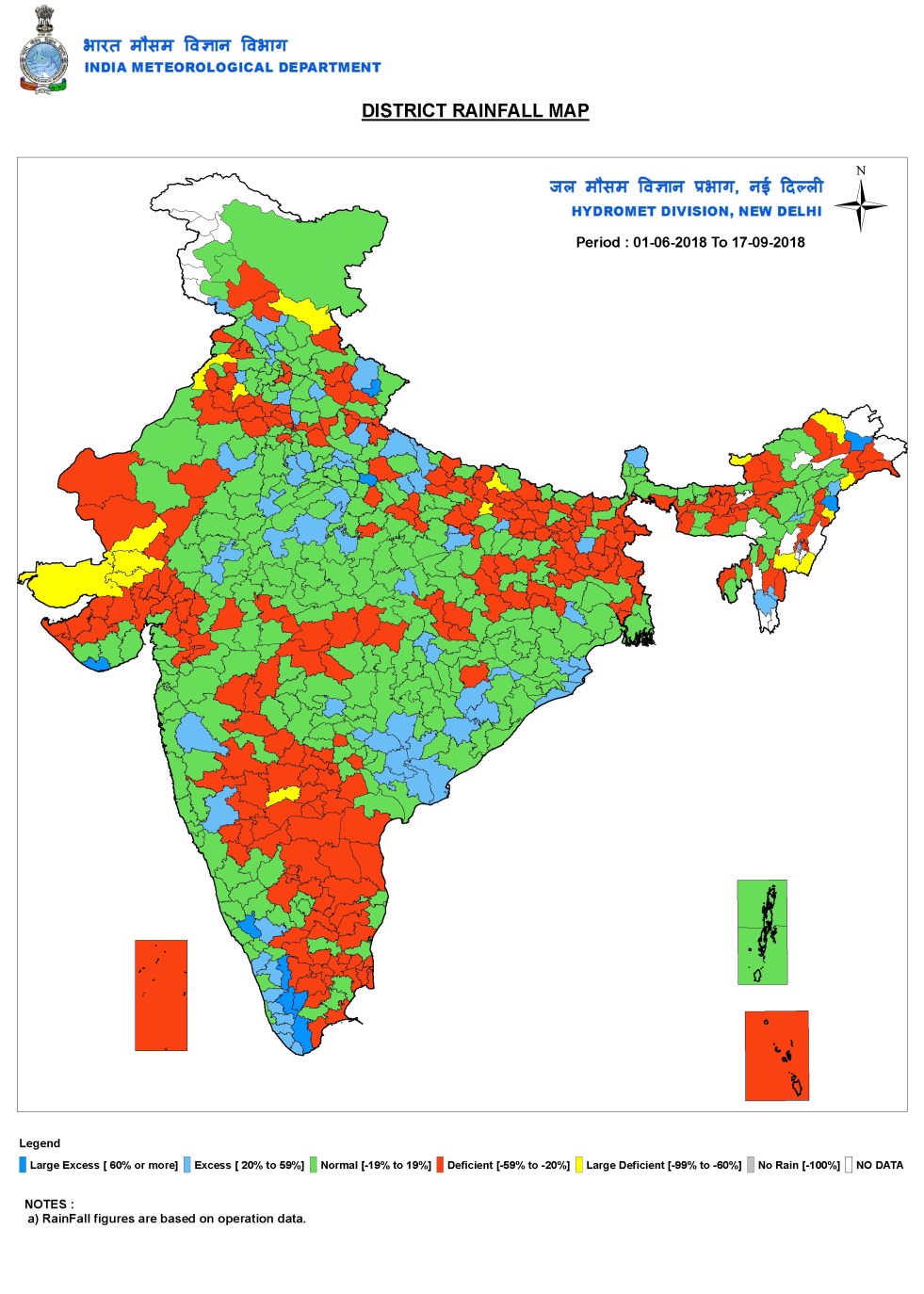
Rajasthan Rainfall deficit in many districts As per IMD, Badmer district of Rajasthan has received rainfall 48 percent below normal till Sept. 16. Similarly rainfall deficit in Hanumangarh 58 percent so far. Jallor district is facing maximum rainfall deficit of 60 per cent less than normal. Likewise the rainfall in Pali district is 35 per cent below the normal and in Jaislmer is facing a rainfall deficit of 38 per cent. In Western Rajasthan it rained only 193 mm during entire monsoon season causing a  deficit of 24 per cent below the normal.

Continue reading “DRP: 17 September 2018: How Much of This Drought Is Man Made?” →

Dams · Rivers

The River, Her Bounty and Fury: The Sakura and Tokyo

GUEST BLOG BY: Aparna Datar

The cherry blossoms of Japan are a glorious seasonal spectacle, swathing the entire country into a gentle blanket of soft pink Sakura flowers. Tokyo’s rivers turn pink as the Sakura petals, float upon their surfaces.

Sakura is a genus of the Prunus, with a genetic name Prunus serrulata, or the Japanese Cherry.

Continue reading “The River, Her Bounty and Fury: The Sakura and Tokyo” →

Dams · Floods

Overview of CWC Flood Forecasting Sites 2018: WEST INDIA

Central Water Commission is the only agency doing flood forecasting in India. As per CWC’s Flood Forecasting website[i] the Data Flow Map has information about 226 Flood Forecast Sites in the country comprising of 166 Level Forecast Sites and 60 Inflow Forecast Sites. It also monitors 700 other sites, information is made available through List Based Exploration and Hydrograph View, but no flood forecasting is done for these sites.

In order to better understand the CWC’s flood monitoring and forecasting work, in this article, we have given an overview of CWC’s flood forecasting and monitoring sites in West India. It includes state wise list of CWC’s Level Forecasting, Inflow Forecasting and level monitoring sites in 5 States in West India. Similar report has been published for North India[ii] and North East India[iii] and East India[iv] and South India[v]. This is the last part in the series.  Continue reading “Overview of CWC Flood Forecasting Sites 2018: WEST INDIA” →

Dams · DRP News Bulletin

DRP: 10 Sept 2018: NIDM Lecture on Role of Dams in Kerala Floods

National Institute of Disaster Management, Ministry of Home Affairs, Govt of India invited Himanshu Thakkar, Coordinator of SANDRP,  to speak on the topic at IHC on Saturday. At the packed hall with participants that included members from Central Water Commission, National Disaster Management Authority, Embassies, Media and Civil Society,  the speaker explained how unwise and  unaccountable operation of dams, violating all norms, hugely contributed to the proportions of the Kerala flood disaster. Giving the example of Idukki dam, he showed, how if the dam was operated as per rule curve,  its contribution to the floods could have been reduced by over 50%. Similar is the story of other dams in Kerala.

Continue reading “DRP: 10 Sept 2018: NIDM Lecture on Role of Dams in Kerala Floods” →
Dams · DRP News Bulletin

DRP: 3 Sept 2018: CHINA HAS STARTED DECOMMISSIONING DAMS

In a mountain village in southwest China’s Sichuan province, authorities have demolished seven small dam projects this year along a river to clear illegal developments in a new nature reserve. The demolition is part of a nationwide programme to close hundreds of tiny and often ramshackle dams and turbines and bring order to China’s massive hydropower sector after years of unconstrained construction.

The dams sat on an unnamed tributary of the fierce and flood-prone Dadu river, which feeds into the Yangtze, Asia’s largest and longest river, where the government says the “irregular development” of thousands of small hydropower projects has wrecked the ecology. But green groups say the campaign will not necessarily save the environment because it will not affect big state hydropower stations, which they say have caused the most damage.

On the 48 km Zhougong, authorities have already demolished small projects built in nature reserves or encroaching upon new “ecological red lines” drawn up to shield a quarter of China’s territory from development.

The government says small dams have disrupted the habitats and breeding patterns of many rare species of fish, although green groups argue the damage wrought by bigger dams is more severe, with entire towns and ecosystems submerged in water, which they say increases the risk of earthquakes, landslides and even climate change.

Continue reading “DRP: 3 Sept 2018: CHINA HAS STARTED DECOMMISSIONING DAMS” →
Dams · Floods

Overview of CWC Flood Forecasting Sites 2018: SOUTH INDIA

Central Water Commission is the only agency doing flood forecasting in India. As per CWC’s Flood Forecasting website[i] the Data Flow Map has information about 226 Flood Forecast Sites in the country comprising of 166 Level Forecast Sites and 60 Inflow Forecast Sites. It also monitors 700 Flood sites, information made available through List Based Exploration and Hydrograph View, but no flood forecasting is done for these sites.

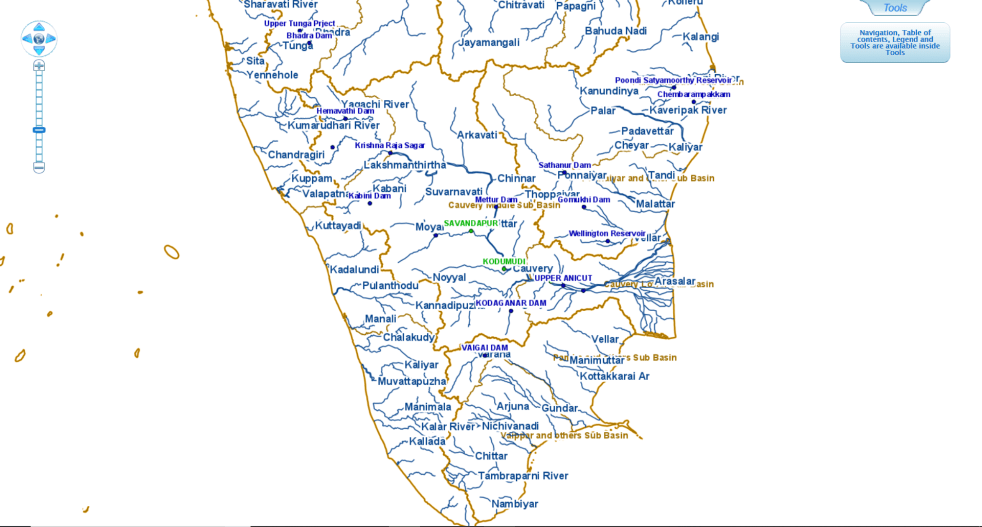
In order to better understand the CWC’s flood monitoring and forecasting work, in this article, we have given an overview of CWC’s flood forecasting and monitoring sites in South India. It includes state wise list of CWC’s Level Forecast, Inflow Forecast and level monitoring sites in South India. Similar report has been published for North India[ii] and North East India[iii] and East India[iv]. 

Tamil Nadu There are 3 Level Forecasting, 48 Level Monitoring and 14 Inflow Forecasting sites in Tamil Nadu State. Out of total 65 sites, 19 Level Monitoring and 2 Inflow Forecasting sites are inactive. MWL information is given only for 1 Inflow Forecasting site out of 14. IRRUKKANKUDI, Sathanur and Gomukhi sites are repeated with incomplete information. Out of 48, HFL figure and date is not provided for 25 Level Monitoring sites.

Continue reading “Overview of CWC Flood Forecasting Sites 2018: SOUTH INDIA” →

Dams · Floods

Overview of CWC Flood Forecasting Sites 2018: East India 

Central Water Commission is the only agency doing flood forecasting in India. As per CWC’s Flood Forecasting website[I] the Data Flow Map has information about 226 Flood Forecast Sites in the country comprising of 166 Level Forecast Sites and 60 Inflow Forecast Sites. It also monitors 700 Flood sites, information made available through List Based Exploration and Hydrograph View, but no flood forecasting is done for these sites.

In order to better understand the CWC’s flood monitoring and forecasting work, in this article we have given an overview of CWC’s flood forecasting and monitoring sites in East India. It includes state wise list of CWC’s Level Forecast, Inflow Forecast and level monitoring sites in East India. Similar report has been published for North India[II] and North East India[III] and we hope to publish reports covering other regions of India too. 

Continue reading “Overview of CWC Flood Forecasting Sites 2018: East India “ →

Dams · DRP News Bulletin

DRP: 27 Aug 2018: WRONG Management of DAMS Create FLOODS, Accept Officials and Experts

Accepting that reservoirs operation and flood management in India lack scientific supports, Madhavan Nair Rajeevan, Secretary, Ministry of Earth Sciences, in an interview has revealed that dams and water reservoirs need flood management systems that use scientific methods to understand when the time is right to open the gates.

“As per my understanding, no big reservoir has a decision support system. So we don’t know when to open them, how to open them… I am not attributing the Kerala floods to an individual. There is a common perception that in India most of the flood management systems are not supported by science… I am very sure we don’t have the decision support system and we need it.” https://indianexpress.com/article/india/not-just-kerala-no-scientific-dam-water-management-across-india-madhavan-nair-rajeevan-secy-earth-sciences-5322003/  (24 Aug. 2018)

In another interview he says that while Kerala records among the highest amounts of rainfall in the country, the State did not have a flood warning system in place. He added that while there were several sophisticated tools to anticipate extreme weather events, India still lacked a mechanism to effectively deploy them. https://www.thehindu.com/sci-tech/energy-and-environment/reservoirs-not-managed-using-a-scientific-decision-support-system-m-rajeevan/article24785253.ece  (26 Aug. 2018)

Further in a detailed interview, he pitches for ‘decision support systems’ at dams, acknowledges the challenge of climate change, warn against repercussions of ‘fast-warming’ Indian Ocean. https://indianexpress.com/article/india/kerala-floods-m-rajeevan-ministry-of-earth-sciences-met-department-5324840/  (26 Aug. 2018)

Continue reading “DRP: 27 Aug 2018: WRONG Management of DAMS Create FLOODS, Accept Officials and Experts” →
Dams · DRP News Bulletin

DRP: 13 August 2018: Existing Sediment Management Draft Policy Promoting Navigation & Not Rivers’ Health

Traditionally, our river management strategies are mainly focused on the water flows, including flood management, and these have resulted in various interventions such as dams, barrages, canals and embankments. Most of these interventions have had very little consideration for sediment transfer and even if they did, they were generally defunct within a few years of their operations either due to improper design or inadequate maintenance.

A long-term sediment management strategy has never been a part of any protocol of river management, not just in India, but in several other parts of the world. It is amply clear that sediment management must form an important component of management strategies for the Himalayan rivers. The Union Water Ministry has recently circulated a draft policy on sediment management.

Continue reading “DRP: 13 August 2018: Existing Sediment Management Draft Policy Promoting Navigation & Not Rivers’ Health” →
Dam Induced Flood Disaster · Dams

Idukki Dam releases water when Kerala is in Floods: Could this have been avoided?

Kerala is facing serious floods. Army, Navy, NDRF, neighbouring states are all out. Dozens of people have died, landslides happening, houses washed away, the whole machinery is out to deal with the crisis.

In this flood crisis, Idukki & Idamalayar two of the Kerala’s biggest dams along with about two dozen others, are releasing water, adding to the floods and the disaster. Why are Idukki and Idamalayar, both having live storage capacity above a Billion Cubic Meters, releasing water NOW, when whole of Kerala is facing floods due to recent excessive rains? Standard excuse: The dams are full and they have no option but to release the water, they cannot store more. But why did they wait to start releasing water till the dams are full and they are faced with TINA: There is No Alternative. This love to be in TINA situation seems like a disease affecting all dam operators.

Continue reading “Idukki Dam releases water when Kerala is in Floods: Could this have been avoided?” →