Dams · Floods

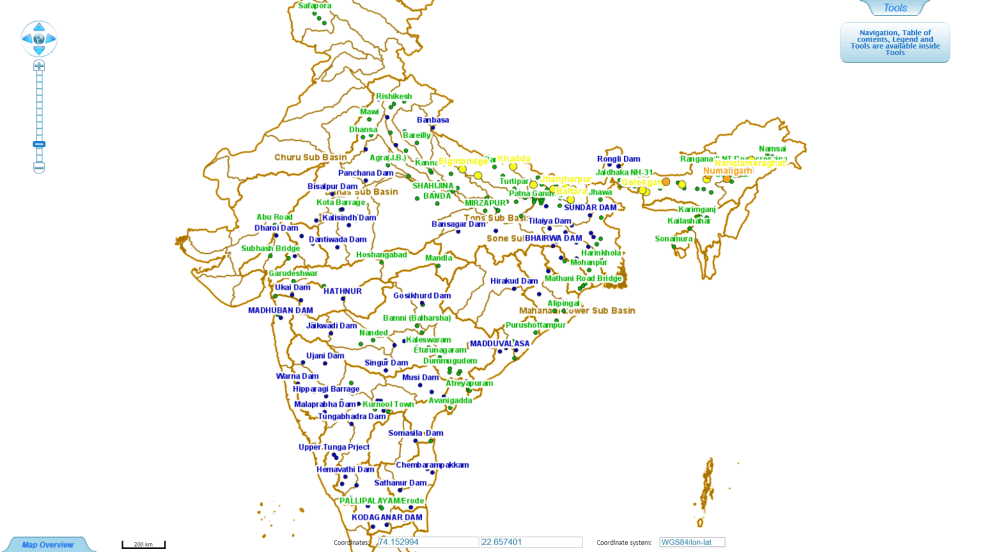
Overview of CWC Flood Monitoring Sites 2018: INDIA

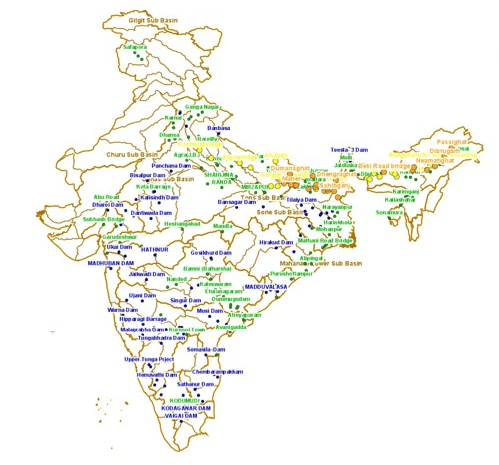
Central Water Commission is the only agency doing flood forecasting in India. As per CWC’s Flood Forecasting website[i] the Data Flow Map has information about 226 Flood Forecast Sites in the country comprising of 166 Level Forecast Sites and 60 Inflow Forecast Sites. It also monitors 700 Flood sites, information made available through List Based Exploration and Hydrograph View, but no flood forecasting is done for these sites.

In order to better understand the CWC’s flood monitoring and forecasting work, SANDRP has published report of CWC’s Level Forecast, Inflow Forecast and level monitoring sites in 5 zones of North India[ii], North East India[iii], East India[iv], South India[v] and West India[vi].  Through this report, we have presented all the data at one place with links to separate zone wise reports with detailed description.

Continue reading “Overview of CWC Flood Monitoring Sites 2018: INDIA” →

Dams · Floods

Overview of CWC Flood Forecasting Sites 2018: East India 

Central Water Commission is the only agency doing flood forecasting in India. As per CWC’s Flood Forecasting website[I] the Data Flow Map has information about 226 Flood Forecast Sites in the country comprising of 166 Level Forecast Sites and 60 Inflow Forecast Sites. It also monitors 700 Flood sites, information made available through List Based Exploration and Hydrograph View, but no flood forecasting is done for these sites.

In order to better understand the CWC’s flood monitoring and forecasting work, in this article we have given an overview of CWC’s flood forecasting and monitoring sites in East India. It includes state wise list of CWC’s Level Forecast, Inflow Forecast and level monitoring sites in East India. Similar report has been published for North India[II] and North East India[III] and we hope to publish reports covering other regions of India too. 

Continue reading “Overview of CWC Flood Forecasting Sites 2018: East India “ →

Dams · DRP News Bulletin

DRP: 13 August 2018: Existing Sediment Management Draft Policy Promoting Navigation & Not Rivers’ Health

Traditionally, our river management strategies are mainly focused on the water flows, including flood management, and these have resulted in various interventions such as dams, barrages, canals and embankments. Most of these interventions have had very little consideration for sediment transfer and even if they did, they were generally defunct within a few years of their operations either due to improper design or inadequate maintenance.

A long-term sediment management strategy has never been a part of any protocol of river management, not just in India, but in several other parts of the world. It is amply clear that sediment management must form an important component of management strategies for the Himalayan rivers. The Union Water Ministry has recently circulated a draft policy on sediment management.

Continue reading “DRP: 13 August 2018: Existing Sediment Management Draft Policy Promoting Navigation & Not Rivers’ Health” →
Dams · Dams, Rivers & People

How India Measures Water Storages

Govt and media typically report the status of water storage in India using the CWC’s Weekly Reservoir Storage Bulletin, which contain information about just 91 reservoirs in India. In this article we show that the state websites provide information about huge 3863 reservoirs, which even if not sufficient, is a huge improvement over just 91 reservoirs that CWC bulletin includes. We hope all concerned will try to improve the reservoir storage reporting.

It should be added here that this measures only surface water stored in some of the large reservoirs of India. This excludes large number of big reservoirs, lakhs of smaller reservoirs, groundwater aquifers and soil moisture storage. In spite of these limitations, this provides more accurate picture than just the 91 reservoirs of CWC that everyone in India, including media, govt monitoring and policy makers look at.

Continue reading “How India Measures Water Storages” →

Dams · Yamuna River

Happy Birth Day, Yamuna! In pics from Friends of Yamuna

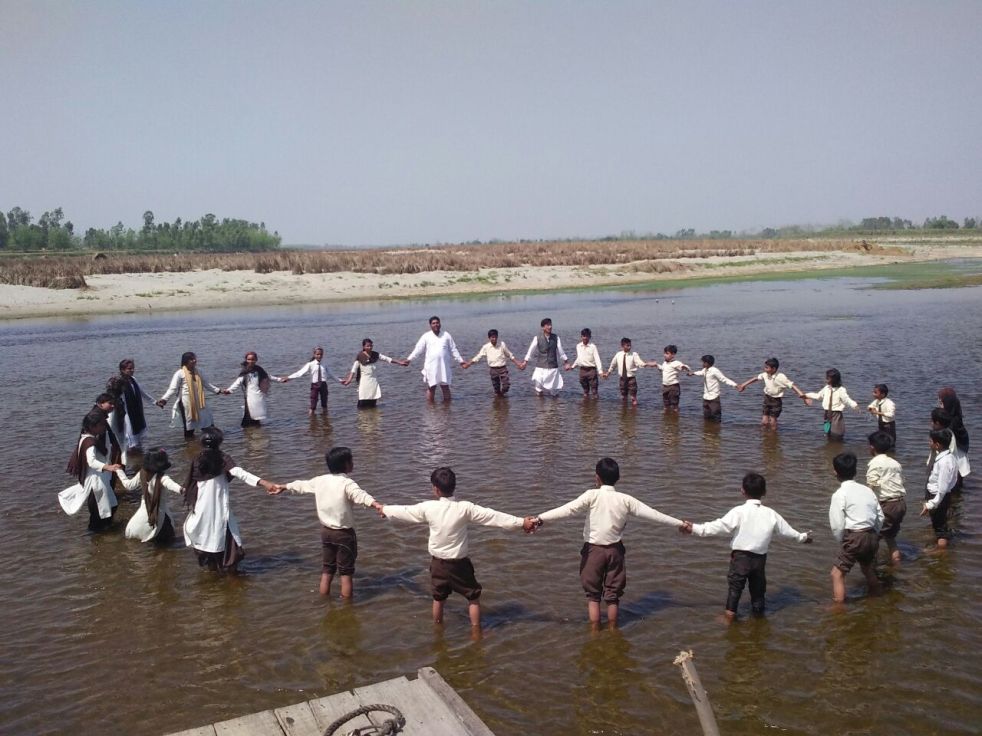
Every year on the sixth day of summer Navratra the birthday of Yamuna river is celebrated. This year it was on 23 March 2018. On this occasion, SANDRP has prepared a photo blog covering almost entire length of the river. The Yamuna Mitra Mandali (YNMM) (Friends of Yamuna River) group established by Yamuna Jiye Abhiyan has essential contributed for this pictorial blog.

The photo blog tries to show the present day situation of river Yamuna  and activities of YNMM on the day of Yamuna Jayanti.

Continue reading “Happy Birth Day, Yamuna! In pics from Friends of Yamuna” →

Dams

India Rivers Studies 2017: Rivers Succumbing To Dams, Pollution & Climate Change

After reviewing status of India rivers, SANDRP presents an account of research, studies and important reports on erratic monsoon, climate change, floods which all are severely affecting the rivers, their aquatic life and livelihood of dependent communities.

Rivers and Monsoon

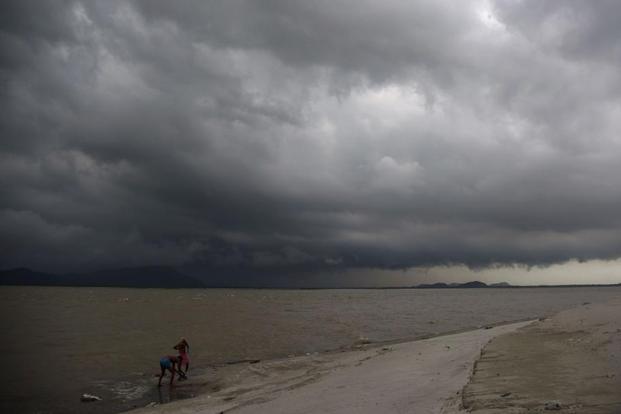
Number of rainy days falling across river basins in India The study has found that number of rainy days is falling across river basins in India and rainfall intensities are seen to be increasing. The analysis determined changes in heavy precipitation and peak flood for seven river basins in India—Krishna, Godavari, Mahanadi, Narmada, Cauvery, Sabarmati and Brahamani and Baitarani. For the study, data pertaining to daily flows for about 30 odd years and precipitation for 61 years (from 1951 to 2012) were analysed.

The analysis also said the rivers which flow from west to east direction (in India) have more rainy days compared to those which flow towards the west. The study also held that anthropogenic activities (construction of storage reservoirs, diversions, urbanization, land-use change, and soil and water conservation measures, among others) have probably affected the generation of peak floods in the rivers of India. http://www.livemint.com/Politics/c7v8oXmsMDHIldjDv9k6lK/Number-of-rainy-days-falling-across-river-basins-in-India-s.html (Live Mint, 27 April 2017)

Continue reading “India Rivers Studies 2017: Rivers Succumbing To Dams, Pollution & Climate Change” →

Dams

Positive Rivers Stories 2017: Citizens Reconnecting with Rivers

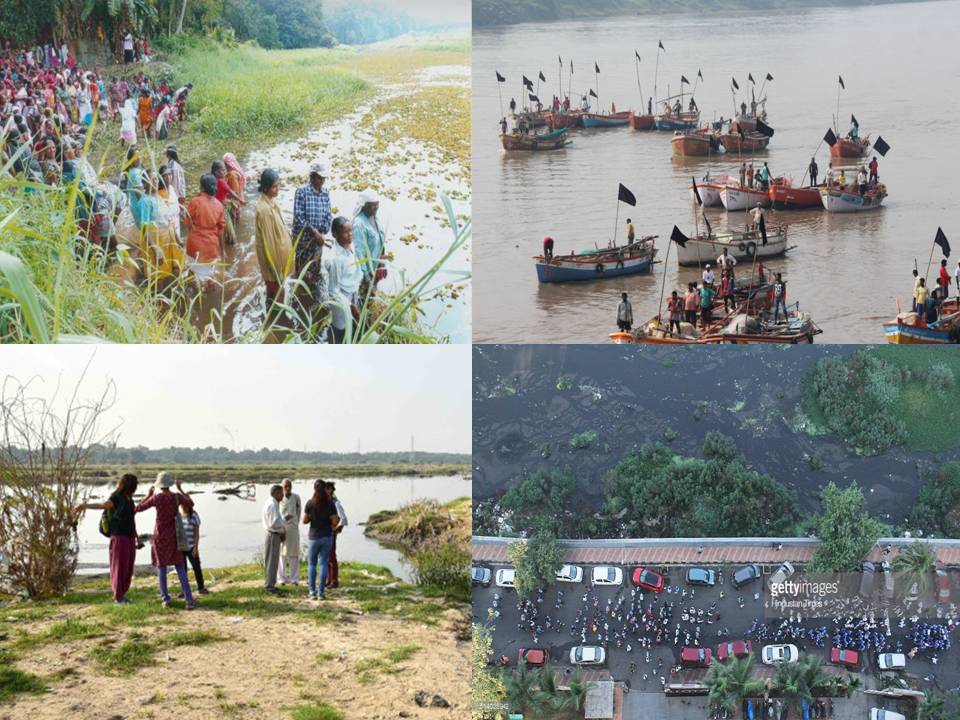
On occasion of International Day of Action for Rivers 14 March 2018, SANDRP presents a compilation of positive rivers stories that took place in the year 2017. The report highlights the exemplary rivers restoration work done by communities, village Panchayats.  It also attempts to acknowledge remarkable on going protests and struggle by fisherfolks, villagers and river communities in rural areas to protect the lifelines from unsustainable development projects. The report also presents the interesting “River Marches” where citizens have come forward to take actions against the threats on rivers in Urban areas and encouraging “River Walks” helping citizens rediscover their bond with RIVERS.  Continue reading “Positive Rivers Stories 2017: Citizens Reconnecting with Rivers” →

Dams

New Grounds Why Pancheshwar Dam Is Unviable Project

Date 3.12.2017

To,

The Chairman and members,     

The Expert Appraisal Committee,                                                                    

River Valley Projects,

Ministry of Environment, Forests and Climate Change, Govt of India,

Jor Bagh, New Delhi 110 003

Sub: Urgent submission regarding the Environmental Clearance for the proposed 5040 MW Pancheshwar Multipurpose Project in Uttarakhand and Nepal.

Dear Chairman & Members of the Expert Appraisal Committee,

This is to bring to your notice, and to place on record, some serious concerns related to the Environmental Clearance of the proposed 5040 MW Pancheshwar Multipurpose Project. The concerns are both, on Points of Order, as well as observations on and serious flaws in the Environmental Impact Assessment report submitted by WAPCOS.

Continue reading “New Grounds Why Pancheshwar Dam Is Unviable Project” →

Dams

DAM BUILDING MUST BE HALTED FOR A SAFE AND SECURE WORLD

Guest Blog by Manoj Misra

Rivers in different parts of the world have been dammed to fulfill human needs like water for irrigation, industries and domestic supplies. Then there are dams that have been raised to control floods or to produce electricity.

These have often been celebrated as human victory over nature, glorified as engineering marvel and claimed variously as highest, longest etc as a matter of national pride.

But rarely has there been a holistic assessment or appreciation of what a dam does to the natural entity called river and its adverse impacts on all the associated life forms, including humans.

Continue reading “DAM BUILDING MUST BE HALTED FOR A SAFE AND SECURE WORLD” →

Dams · DRP News Bulletin

DRP: 20 Feb. 2017 (Bihar Govt Demands Decommissioning of Farakka Dam)

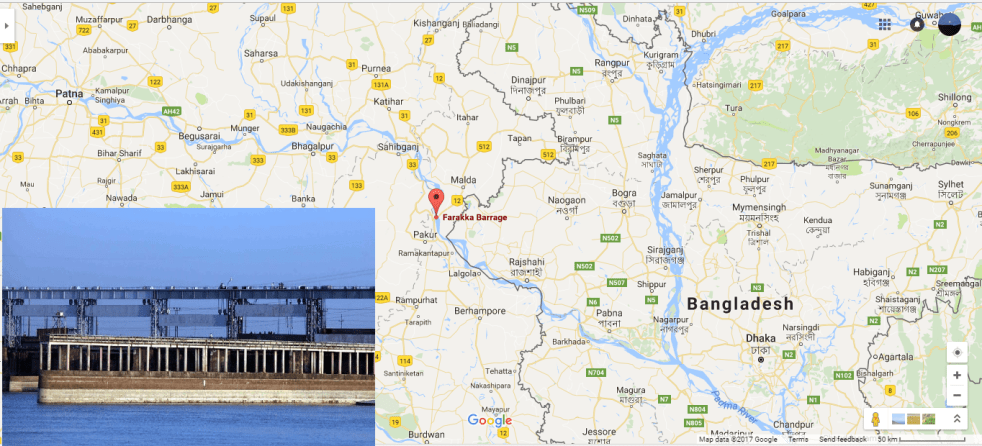
Bihar wants Farakka barrage to be decommissioned The Nitish Kumar govt has held the Farakka barrage in West Bengal responsible for heavy floods in Bihar and asked the Centre to decommission it to de-silt the heavily loaded upstream of Ganga River. The state has made the recommendation, observing that the dam is the “genesis of severe” flood consequences and responsible for “alarming” silt increase in the river’s upstream. According to sources, Nitish Kumar dispensation has made the demand before an experts’ committee formed by the Centre to work out guidelines for de-silting Ganga following last year’s devastating floods. 

As per the statement, decommissioning the barrage will help automatically de-silt the heavily loaded upstream, allowing silt to move to deltas before the sea thus helping  in restoration of deltas and its eco-system which is also getting adversely affected due to this barrage. To buttress its point, the state government has referred to Kolkata Port Trust’s data, which suggests that silt dredging at the port has increased from 6.40 million cubic metres annually from pre-Farakka days to four times, i.e. at 21.88 MCM annually, during 2003. The state government has also recommended the panel to come up with ‘National Silt Policy’ to address the problem. Bihar faced one of its worst floods as Ganga swelled in August last year, claiming lives of over 20 persons and affecting 20 lakh people.

Bihar Government has rightly asked for decommissioning of Farakka barrage and held it as the genesis of severe, destructive and prolonged floods that Bihar and other regions upstream from Farakka face year after year. Good to see that Bihar government has officially demanded decommissioning of the Farakka barrage before an expert committee of Ministry of Water Resources. Hope this starts the ball rolling to remove this unnecessary and giant dam on Ganga, which will also help the cause of fisheries (including Hilsa), downstream Bengal and also the river in general. The road cum rail line on the  barrage can continue to exist.

Continue reading “DRP: 20 Feb. 2017 (Bihar Govt Demands Decommissioning of Farakka Dam)” →