DRP News Bulletin

DRP 10×22: All Pervasiveness of Climate Change and Anthropocene Impacts

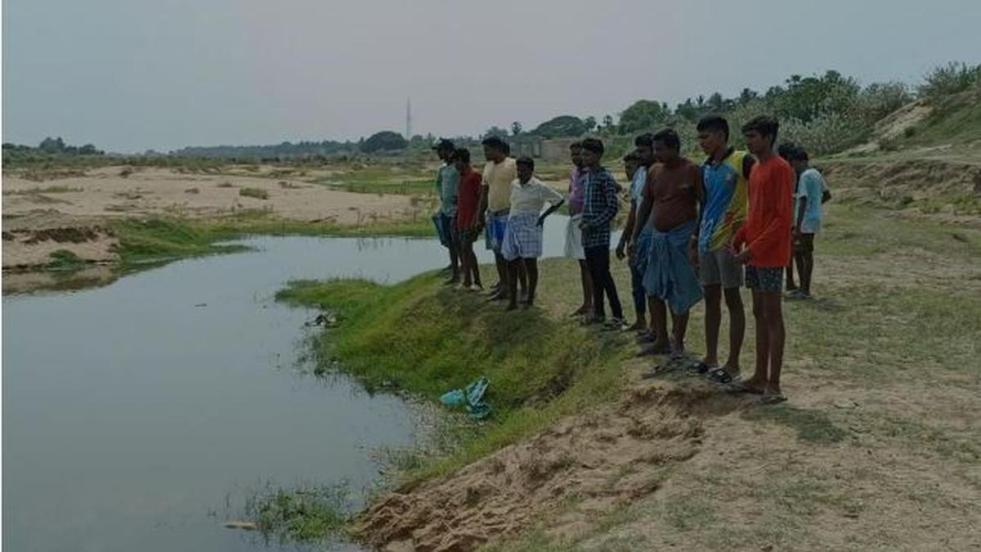
(Feature Image:- Odisha: 10 stranded in flash flood after sudden release of water from Gohira dam. Source: TNIE )

A large number of reports in this week’s news bulletin from SANDRP are tied by a common threat. The report in NYT about how the South Asian Monsoon is becoming more intense. How the droughts like the one in western US are becoming more likely.

In Bengal people killed in October rains while they were doing visarjan of Durga idols and in Odisha people stuck by sudden release of water from a dam. In these cases of W Bengal and Odisha, strangely, there was no warning and no one is even asking why. In both cases it is the destruction of the river in the that led to create the crisis, but again no questions are being asked.

The report of death by avalanches, the more frequent landslides in monsoons are also in the same league. The SW Monsoon is officially over as per India Meteorological Department, but even as we write, the extreme floods in Uttarakhand, Uttar Pradesh and Madhya Pradesh are breaching the Highest Flood Levels in several rivers.

Continue reading DRP 10×22: All Pervasiveness of Climate Change and Anthropocene Impacts
CWC - Central Water Commission · Dams

India’s Rivers Breaching High Flood Levels in SW Monsoon 2022

(Feature Image: Hydrograph of River Godavari in extreme flood situation at Kaleswaram level forecast station in Bhupalpally district, Telangana on July 15, 2022. Source: CWC)

Highest Flood Level (HFL) breach incidents are important indicator of flood cycle and could also help in understanding the changing rainfall pattern. Though, with 925 mm rainfall[i], the south west monsoon season 2022 falls in normal category, its distribution both temporally and spatially has seen huge variations. This is also reflected by at least 57 HFL breach incidents in 8 river basin across the country during the SW Monsoon months of July-Sept 2022.

For past four years, SANDRP has been tracking the HFL breach incidents during pre-monsoon and monsoon months. The analysis of such HFL breaches in 2018[ii], 2019[iii] and 2020[iv], May-Sept 2021[v], Oct.-Nov 2021[vi] can be seen on our website. The pre-monsoon months of May and June 2022[vii] have also seen 5 HFL breach incidents. This report tracks the other HFL breach incidents taking place between July and September months.

Continue reading India’s Rivers Breaching High Flood Levels in SW Monsoon 2022
Dams · Madhya Pradesh · Rehabilitation

Legally enforceable Humane Rehabilitation, not compensation needed: Madikheda Dam in Madhya Pradesh

Guest Article by Bageshwer Singh and Pooja Chand

Dam construction on any river is often preceded by displacement of locals and followed by submergence of villages, turning them into ghost villages. All the major river water projects involve large scale displacement of locals, and most of these displacements lead to creation of vulnerable groups. The stories of displacement and forced evictions can be traced back to construction of dams like Sardar Sarovar Dam on river Narmada, or Tehri Dam on Bhagirathi or Hirakud Dam on Mahanadi. Almost always, these displacements are rife with little insight into the village specific consequences of dam construction, villagers are left with no option but to give up on their ancestral lands to move out to alien colonies with no land to their name. Arundhati Roy, in her essay, ‘The greater common good’, while arriving at the figure of number of people displaced in the developmental projects in the last fifty years writes, “Fifty million people. I feel like someone who’s just stumbled on a mass grave.” 

Continue reading “Legally enforceable Humane Rehabilitation, not compensation needed: Madikheda Dam in Madhya Pradesh”
DRP News Bulletin

DRP 031022: Great Victory of People: MP govt scraps all contracts related to Maheshwar Dam

(Feature image: A protest by Narmada Bachao Andolan in Nov. 2006. Source: @Sripadmanthan)

On Sept 27, 2022, the Madhya Pradesh Government cancelled all contracts related to the Maheshwar Dam Project on Narmada. This massive dam on Narmada River in Madhya Pradesh upstream of Sardar Sarovar Project and downstream of the Omkareshwar Project was to be a multi-purpose project with a 400 MW hydropower component and water supply component among others. It was opposed by the people’s movement lead by Narmada Bachao Andolan for over two decades now. The project being implemented by the private textile company S Kumars showed no will or intention of taking care of the social or environment impacts of the project. Madhya Pradesh government so far was trying to push ahead with the project by hook or by crook, but finally had the sense to realise that this is going to be a massively costly affair at estimated Rs 42000 crores and the state and the people of state are only going to suffer costs and adverse impacts. The cancellation of all the contracts for the project signals a major victory of the people’s movement.

While congratulating the state government for cancelling the contracts, we would also suggest that the government needs to quickly decide about decommissioning of the dam, so that it does not pose safety risk to the people upstream and downstream and also perpetuates unnecessary adverse social and environment impacts. Earlier the dam is decommissioned, quicker will be the relief from these impacts. Moreover, the MP government should also not let the private company go scot free and all attempts should be made to recover the money spent and also penalise them for breach of the contracts. The private company should also be made to pay for the decommissioning costs.

Continue reading DRP 031022: Great Victory of People: MP govt scraps all contracts related to Maheshwar Dam
Monsoon · Rainfall

High Rainfall days in India’s districts in Sept 2022

An analysis of the daily district wise rainfall data from India Meteorological Department (IMD) for the month of September 2022, the last month of India’s South West Monsoon 2021 shows that there were 417 (489 in Sept 2021[i]) instances when district rainfall of a day was above 50 mm. Such high rainfall instances included 365 (374 in Sept 2021) instances when rainfall was 50-100 mm, 47 (84 in Sept 2021) instances when it was 100-150 mm, 3 (20 in Sept 2021) times it was 150-200 mm and twice (eleven in Sept 2021) times above 200 mm.

Continue reading High Rainfall days in India’s districts in Sept 2022
CWC - Central Water Commission

2022: Overview of CWC Flood Monitoring Sites in West India

(Feature Image: Bar chart showing CWC flood monitoring sites excluding UTs of Dadar & Nagar Haveli and Daman & Diu in West India in 2022)

Since 2018, SANDRP has been presenting detailed overviews on flood monitoring sites[i] of Central Water Commission (CWC) which is the only agency doing flood forecast work in India. This year, we have published and highlighted the inaccuracies in CWC’s flood monitoring sites in North[ii], North East[iii] and East[iv] zones. This fourth overview covers the West zone for Rajasthan, Madhya Pradesh, Gujarat, Maharashtra and Goa states. The previous overviews for the region can be seen here (2018[v]) and here (2019[vi]).

Continue reading 2022: Overview of CWC Flood Monitoring Sites in West India
Monsoon · Rainfall

SW Monsoon 2022: District wise rainfall in India

In the just concluded South West Monsoon 2022, India received 925 mm rainfall, about 106.5% of the Normal SW Monsoon rainfall of 868.6 mm or 6.5% more than the normal SW Monsoon rainfall as per India Meteorological department. This rainfall will now be categorised as normal rainfall though the distribution has been far from normal, both temporally and spatially. The monsoon withdrawal[i], however is yet to happen from most of India, except a small part in North West India including parts of Rajasthan and Haryana. IMD has predicted that the withdrawal of monsoon will not be completed till at least Oct 15 as due to a fresh cyclonic activity in Bay of Bengal, rainfall over MP and UP is likely to continue in first week fo Oct 2022.

Continue reading SW Monsoon 2022: District wise rainfall in India
Beas · Free flowing rivers · Himachal Pradesh

In Photos: Gharats of Tirthan: For the tastiest Parathas

In the Tirthan Valley of Himachal Pradesh, as we crisscrossed tiny wheat fields moist with dew and apple orchards laden with white blossoms, a rhythm accompanied the steps: a constant ghrr-ghrr-ghrr. It came from small slate shelters with sloping roofs, which looked like tiny shrines. Sometimes, the shelters were made directly over a stream, but many times they were on the banks, with a channel diverting some water to them.

These were the Gharats: water-mills running on the kinetic energy of flowing water and milling fresh, cool flour.

Throughout Tirthan Valley, Gharats dot the streams at several locations. Raju Bhartiji says that Tirthan had many more Gharats in the past, but the floods of 1995 washed many of them away and most remaining fell into disrepair. Even so, as compared to other parts of Himachal, Tirthan valley is fortunate. Hydropower dams, including mini hydro projects, with their headrace and tailrace tunnels, flow diversions and blasting have destroyed thousands of Gharats in Himachal and Uttarakhand. These water mills are special not only because they are decentralized and appropriate technology structures. They are a part of the heritage of the land: almost all of the materials for building one come from the surroundings and the masons who build them are artists.

Continue reading “In Photos: Gharats of Tirthan: For the tastiest Parathas”
Dams · Free flowing rivers · Photo Feature

In Photos: People of the Free-Flowing Tirthan

River Tirthan, a tributary of the Beas in Himachal Pradesh is one of the rarest rivers in India. Not because it is teeming with trout, not because the tiny valley is home to nearly 100 species of butterflies, not because it has several functioning water mills running with flow of the river, but because it is protected by the Himachal Legislature as a perpetually free-flowing river: A No-Go River for Hydropower and other dam projects. Read about how it came to pass here: Muktadhara Tirthan (https://sandrp.in/2022/06/15/muktadhara-tirthan/)

Continue reading “In Photos: People of the Free-Flowing Tirthan”