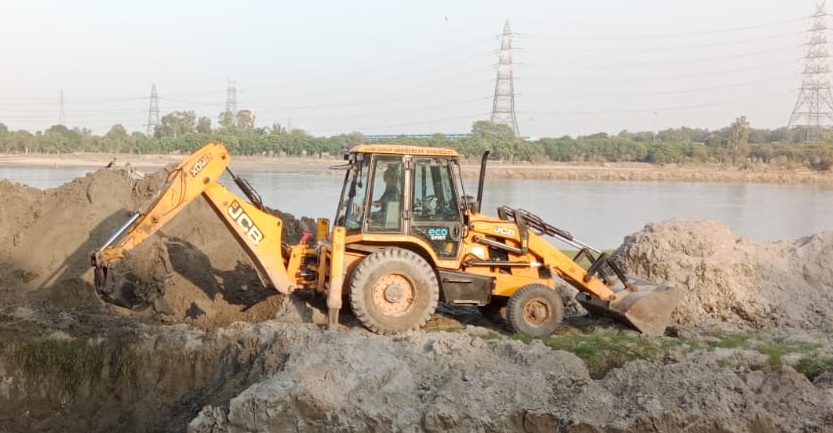
An interesting sequence of events in Karnataka has led to the High Court Chief Justice taking up a suo moto case and suggesting a court monitored probe into the illegal sand mining menace in the state. One hopes this leads to a proper independent investigation, monitored by the High Court, culminating in ensuring community have the key role in monitoring and compliance of sand mining in their respective area, since that is the most important missing link in governance of sand mining.
The sequence of event started with a lady legislator Devadurga Karemma Nayak of JD-S being threatened by sand mining mafia from Raipur district of Karnataka. The MLA raised the issue in the Legislative Assembly in Karnataka. Home minister G Parameshwara on Jan 27 in the assembly, while replying, underlined the involvement of big influential people from all parties being involved. These are all known characteristics of illegal sand mining, including threats, open defiance, involvement of influential people and armed, violent attacks.
The trouble is that the Union government, particularly Union MoEF has shown least interest in addressing this key issue that is lingering since decades. One hopes the Karnataka High Court also makes MoEFCC also a party in the matter and ensure necessary governance changes right from top.
Big people from all parties involved in illegal sand mining: Home minister Home minister G Parameshwara Jan. 27 told the legislative assembly that “big people from all parties” were involved in illegal sand mining in Karnataka and it is a “big racket” that is “embarrassing” the govt. He was replying to Devadurga’s Karemma Nayak of JD(S), who said she was followed and threatened by sand mafia operatives for attempting to end illegal sand mining along Krishna River in Raichur district. “I have not shared details of who is involved and who the leader is. It is a big racket. Big people from all parties are involved… It is embarrassing,” Parameshwara said.
Revealing that she received threats at her residence, Karemma said, “I’m a woman. What action is the govt to prevent such things. Those who threatened me also did so at a press conference where two police personnel were present. It should stop.” She said local demand for sand was high, and the govt had floated tenders for extraction and supply, but bids were not opened. “Big hands are behind it as illegal mining means money. It results in a loss of royalty for the govt,” she said. Parameshwara admitted illegal sand mining was not limited to Devadurga but was happening across the state.
In Oct 2025, Basavaraj Rayareddi, CM Siddaramaiah’s economic adviser accused officials of shielding the sand mafia, alleging the state was losing over Rs 400 crore annually in royalty. In a letter to the CM, Rayareddi said corrupt officials and the mafia were together plundering natural resources and questioned why sand royalty could not be collected as efficiently as income tax or GST. He also alleged routine bribery in the mines and geology department and police, rampant illegal sand transport from Koppal, and sought transfers of long-serving officials. He also flagged illegal granite mining in several areas.
Need a court-monitored probe on illegal sand mining: Karnataka HC Taking cognizance of Home Minister G. Parameshwara’s statement that he was “helpless” in taking action against illegal sand mining due to “involvement of many influential persons”, the High Court of Karnataka has said that the issue of illegal sand mining now requires a court-monitored probe by a Central agency or a specially-constituted agency, or a Special Investigation Team.
A Division Bench, comprising Justice D.K. Singh and Justice Tara Vitasta Ganju, passed the order while suo motu initiating a PIL petition based on Dr. Parameshwar’s Jan 27 statement, made on the floor of the Legislative Assembly, reported in newspapers on Jan 28. The Bench took note of the Home Minister’s reported statement: “Illegal sand mining is a big racket. I am not giving any explanation or naming anyone, as it is a little embarrassing. I have given only a restricted answer, but it involves many influential people. I will call a meeting to discuss the issue.”
The court mentioned reports of sand being mined from the Krishna River basin at night, farmers complaining of dust settling on crops, etc. It also mentioned reports of a woman MLA from Raichur district (Karemma G Nayak) who complained about a threat to her life from the sand mafia for raising the issue of illegal sand mining in her area. The court issued notice to the state govt and directed it to file a response in three weeks. It also directed the registry to register the suo motu petition and post it before Chief Justice Vibhu Bakhru for it to be assigned an appropriate bench.
“There have been several deaths caused by vehicles involved in illegal sand mining in absence of CCTV cameras and check posts to monitor the movement of vehicles in areas of sand mining.
HYDRO POWER PROJECTS
EAC & FAC decisions on Dams, HEPs & Irrigation Projects– 2025 Due diligence is expected from the EACs while they evaluate applications from project proponents for environmental studies and Environment Clearance (EC). The actual functioning of the EACs leaves much to be desired. In the above context, from South Asia Network on Dams, Rivers and People (SANDRP) evaluated in detail the decisions taken by EAC for River Valley and Hydroelectric projects in 2025 and also answered some relevant questions from participants.
Punjab Govt finds BBMB’s PSP proposals unviable & imprudent The Punjab govt spokesperson said the BBMB’s proposals for Pump Storage Projects were neither economically viable nor financially prudent for the partner states. In spite of Punjab’s objections, BBMB has invited expression of interests for the PSPs. BBMB wants to set up 13000 MW of PSPs including 4 each in Sutlej and Beas basins and some self-identified ones, all in HP.
CEA seeks to ease green norms for PSPs The Central Electricity Authority (CEA) has proposed a major regulatory reset to fast-track the expansion of hydro pumped-storage projects (PSPs). In its latest roadmap, the CEA has recommended allowing hydro PSPs within eco-sensitive zones (ESZs) and up to a 10-km aerial distance from protected areas where ESZs have not been formally notified. It has also called for a differentiated regulatory framework for renewable energy projects and relaxation of stringent conditions applicable to the Western Ghats. The recommendations come amid environmental concerns and local protests against PSPs in states such as Tamil Nadu, Karnataka, Rajasthan and Maharashtra’s Western Ghats, where communities and activists have flagged potential risks to forests, fragile ecosystems and endangered wildlife.
NHPC declares SLHEP unit operational The NHPC Limited during the intervening night of Jan. 31 and Feb. 01 achieved synchronization of the third unit (Unit 1 of 250 Mw) with the national grid of its Subansiri Lower Hydroelectric Project (SLHEP) and thereafter the commercial operation of the second unit (Unit 3 of 250 Mw) adding another 250 Mw to the national grid. With this, the SLHEP has contributed 500 Mw out of its total 2,000 Mw (8 X 250 Mw) capacity.
Arunachal nod to SGST grants for 2 HEPs Arunachal cabinet on Jan. 31 approved SGST reimbursement concessions for the 1,200 MW Kalai II hydroelectric project in Anjaw district and the 680 MW Attunli project in Dibang Valley. The two projects involve a cumulative investment of about Rs 21,700 crore and are expected to generate about Rs 458 crore annually in free power and Rs 84 crore annually under local area development fund after commissioning.
The cabinet also approved the provision of a grant of annuity for the entire lifetime of the project to project-affected families through the LADF. Cabinet approved the Renovate–Own–Operate–Transfer Policy for small hydropower projects. The policy seeks to revive and improve the performance of existing small hydropower projects by attracting private investment.
KalaiII HEP: Villagers fear losing land For Nukung village, the sense of vulnerability has exacerbated with the proposed Kalai-II HEP, a 1,200Mw dam planned on the Lohit River. Villagers believe large infrastructure projects, especially dams, can rupture the delicate relationship between humans and the spirits of the river and mountains. Nukung, with just 107 people across 21 households (2011 Census), is the only one among more than 30 affected villages to openly oppose the project. The Lohit River, for the Mishmi, is not merely a water source. It is a living presence, woven into ritual, livelihood, and worshipped during the Namshang. Blocking its flow, elders say, risks disturbing forces that cannot be measured in megawatts.
Climate risk & insurance for India’s Infra projects This paper argues that India’s infrastructure push may be expanding climate exposure faster than risk-transfer mechanisms are adapting. This could create a growing protection gap that may translate into fiscal and financial stress, and reduced investment appetite in high-risk regions due to a pullback by the insurers. It is argued that till the time climate risk remains insurable, the losses can be pooled and/or transferred through various mechanisms. When this is no longer possible, the losses would shift to the project owners, its lenders and ultimately, the states and the Centre. Due to the uncertainty of how climate impacts will manifest, this is a daunting prospect that needs a discussion.
Hydro-meteorological disasters dominated India’s climate impact calendar in 2025, with flooding, extreme rainfall, cyclones and landslides repeatedly hitting capital-intensive infrastructure, the report said. These risks were ranked high to very high for urban assets, highways, ports and hydropower projects. States such as Assam, Andhra Pradesh, Odisha, Uttarakhand, Himachal Pradesh, Sikkim, Ladakh and parts of the Northeast are among the most climate-vulnerable, even as large infrastructure investments are concentrated there. The total investment exposure in these regions is estimated at about Rs 2.95 trillion, spanning ports, tunnels, highways and major hydropower projects.
DAM SAFETY
Medigadda barrage is highest risk irrigation project The NDSA, which conducted post-monsoon inspections of 1,681 specified dams across India in 2025, has placed the Medigadda barrage under Category I, which is the highest risk classification. The NDSA has recommended the complete removal and reconstruction of block 7 of the Medigadda barrage. The authority has also suggested additional remedial measures to strengthen the overall structure. For the Sundilla and Annaram barrages, which are also part of the Kaleshwaram project, similar safety-related interventions have been advised. The assessment was disclosed in a written reply in the Lok Sabha by Union Minister of State for Jal Shakti Raj Bhushan Choudhary.
There are only three irrigation structures in India that fell into Category-I, as per the minister’s reply. While one was Medigadda barrage in Telangana, the others wer the Lower Khajuri dam in Uttar Pradesh, and the Bokaro barrage in Jharkhand. As many as 216 other dams in the country fell in Category-II, he added.
The minister also made it clear that the responsibility for safety of dams, including their operation and maintenance, was that of the dam owners. In Telangana’s case, the Medigadda barrage is owned by the irrigation department. While the Lower Khajuri dam and the Bokaro barrage of the Damodar Valley Corporation were included in DRIP-II scheme for rehabilitation and safety enhancement, as far as the Medigadda barrage is concerned, Telangana was “requested to implement the various preventive and mitigating measures recommended by the NDSA to safeguard the structure’s integrity and resilience.
Govt ropes in expert agency to de-pollute Jaipur dams The WRD has roped in an expert agency authorised by the Govt of India to depollute Jaipur’s three major dams: Kanota, Chandlai, and Nevta. A WRD official said the agency will prepare a detailed project report (DPR), focusing on improving water quality, identifying sources of pollution, GIS-based mapping, biodiversity conservation, use of modern water treatment technologies, and exploring possibilities for local livelihood generation and eco-tourism.
DAMS
Guj Govt to allocate “unused” Narmada R&R land to industries The Gujarat govt has taken an in-principle decision to allocate 6,247 hectares of unused land reserved for rehabilitation of persons displaced by the Narmada dam project for industrial purposes and other development works.
An in-principle decision was taken by the Gujarat Cabinet to transfer the unused land reserved in 40 talukas of 9 districts to the revenue department which will then allocate it for various projects. Vadodara has the highest such reserved land, with 1,347.77 hectares, followed by Bharuch (1198.16 hectares), Ahmedabad (944.07 hectares), Chhota Udepur (691.75 hectares), Panchmahal (660.01 hectares), Narmada (593.31 hectares), Kheda (570 hectares), Tapi (98.24 hectares) and Mahisagar (93.69 hectares).
Mah to set up floating solar plants in reservoirs in Krishna Godavari Basins The state water resources minister Radhakrishna Vikhe Patil announced on Jan 23 that Maharashtra will implement floating solar projects on dam reservoirs across the Krishna and Godavari basins.
DAM FLOODS
A study about 2023 Punjab floods does not even mention Rule Curve! According to Himanshu Thakkar, a dam expert and convenor of SANDRP, who was not part of the study, the role of the dam in causing the floods of 2023 and the more recent floods of 2025 in Punjab is “indisputable.” “Considering the rainfall in the catchment area which started on August 10 in 2023, the outflows from the dam should have started much earlier instead of waiting till it was at near-full capacity,” he said.
However, Thakkar pointed out that the outflows from the dam were decreasing till August 15 even though the reservoir was approaching its safety limit. Though the dam’s absolute maximum capacity is listed as 432 m, the Full Reservoir Capacity, or safety limit, is 1,390 feet, or 423 m, to protect against flash flood instances. At its peak during preceding the flood, the reservoir capacity had crossed this threshold, reaching 426.5 m, according to the IIT-Mandi study. “The study doesn’t mention the dam’s rule curve, which is a guide for dam operators to fill the dam to its capacity by a certain date during the monsoon season. For the Pong and Bhakra dams, that date is September 20,” said Thakkar.
“If in July if there was heavy rainfall upstream and the dam was required to absorb the impact, outflows should have remained relatively higher to abide by the rule curve. In any case, heavy rainfall in the catchment had already started by August 10. In this case, the outflows kept reducing before suddenly increasing hugely after August 15, which was too late and ended up creating avoidable floods.”
Punjab farmers bearing flood impact Even four months after the water receded, the crisis is far from over. Hundreds of acres of farmland are still buried under layers of sand and silt. Farmers say it may take 3–4 years to restore soil fertility and make the land cultivable again. The damage is not just to crops—but to Punjab’s agricultural backbone.
INTERLINKING OF RIVERS
MP gets no money for KBL in 2025-26 so far The Union Govt was to give Rs 630 Cr for Ken Betwa Project for the financial year 2025-26, but so far in ten months till end of January, no money has been released to MP.
IRRIGATION
WB clears Rs 5,700 cr for ‘Jal Sanrakshit’ Haryana The World Bank has approved technical and financial assistance of Rs 5,700 crore for Haryana under the ‘Jal Sanrakshit Haryana Project’, aimed at making the state self-reliant in the water sector, Chief Minister Nayab Singh Saini said on Jan. 24. Chairing a review meeting on the programme, Saini said the funds will be released in phases between 2026 and 2032 and will be used primarily for large-scale canal restoration, micro-irrigation, groundwater recharge and sustainable agriculture initiatives.
To strengthen groundwater recharge, about 80 water bodies will be constructed in various districts of southern Haryana. In addition, treated water from four major sewage treatment plants located in Jind, Kaithal, and Gurugram will be reused to ensure irrigation for about 28,000 acres of agricultural land, for which the World Bank has provided loan of about Rs 600 crore.
URBAN RIVERS
PMC pushes Mula–Mutha RFD PMC officials have stated that nearly 90 percent of the work on the Sangamwadi–Bund Garden stretch has been finalized. Specifically, a 1.5-km riverfront track at Sangamwadi has been completely developed. The fully developed 1.5-km riverfront stretch is set to be officially inaugurated on Feb 15, 2026, coinciding with the PMC Foundation Day. PMC officials have indicated that nearly 5 km of riverfront development between Sangamwadi and Kalyani Nagar is anticipated to be completed by the end of March 2026.
Environmentalist Prajkta Divekar said that the way it is being implemented, the Pune RFD is a vanity project. “It is neither rejuvenation nor is it connecting people to rivers. It is just a permanent construction on the banks. The project is disruptive, because it destroys the existing diversity of the ecosystem along the banks and imposes an unnatural uniformity. The PMC should have just revived the river, protected and preserved biodiversity, while carving recreational spaces for children and families. A large amount of money is being spent on little gains,” she said. Critics have said the RFD project would significantly impact the river’s ecosystem, potentially leading to increased flooding during the monsoon season. Additionally, it could be primarily driven by real estate development.
SC allows tree felling for Sabarmati RFD The Supreme Court on Jan 27 observed that development & protection of the environment have to go hand in hand. A Bench of Chief Justice of India Surya Kant and Justices R Mahadevan and Joymalya Bagchi was hearing plea by a resident of Ahmedabad’s Hansol village about large-scale tree felling for the second phase of a riverfront development project. The Court refused to interfere with the tree felling after noting that the trees being cut were of wild growth and not much effort would be required for their regrowth.
The NGT had earlier declined to interfere with the tree felling after noting that the trees sought to be felled were gando baval (prosopis juliflora) trees, which were not protected vegetation, and that these trees lay on non-forest land. The NGT also rejected a claim that these trees lay in ecologically sensitive land, while closing an application filed to stop the tree-felling activities. The NGT’s December 2025 ruling in the matter was then challenged before the top court.
How Gangua Became Bhubaneswar’s sewage canal Gangua, also known as Gangabati, has historical significance, but rapid urbanization and poor waste management have plunged this river into a serious crisis. Several high-level meetings have been held regarding the rejuvenation of the Gangua, but so far, no concrete changes are visible on the ground.
MGR canal will be sewage-free by April Chennai Metropolitan Water Supply and Sewerage Board (Metro Water) has set an April deadline to make MGR Canal, which runs through residential areas such as Virugambakkam and KK Nagar, sewage-free. Despite being the essential flood water drain of the locality; the canal is largely polluted by untreated sewage inflow. According to a Metro Water official, the rehabilitation of MGR Canal, which is being carried out by the Greater Chennai Corporation to construct retaining walls, was expected to be completed last Nov. 2025. However, the work is now expected to finish by February. The canal drains into the Adyar River
RIVERS
Guiding India’s Evolving Water Governance One of the key contributions of this report is an attempt to draw innovative water maps, which integrate: rivers and river basins, elevation, bio-geographies, and soil features—a perspective that aligns with holistic water governance with natural ecological boundaries rather than administrative boundaries. By recognizing the interconnectedness of ecosystems, climate, and local hydrology, these maps serve as a decision-making tool to identify the most suitable water management practices for different regions.
Why some rivers refuse to mix This phenomenon, observable at various locations, occurs due to differences in temperature, density, and sediment load, which create temporary boundaries that challenge our understanding of fluid dynamics.
Low Narmada flow threatens Jayanti celebrations In the representation, the Samast Bharuch District Fishermen Community emphasized that releasing water downstream from the Sardar Sarovar Dam is essential to ensure proper observance of Narmada Jayanti. At present, only about 600 cusecs of water released from the Godbole Gate reportedly gets absorbed within 15 km downstream, while the water visible in Bharuch district is largely influenced by tidal effects, leading to muddy riverbanks.
Clarifying that there is no demand for an excessive release of water, the representation proposed that the River Bed Power House at the Sardar Sarovar Dam be made operational by starting all six turbines to generate electricity. This, it said, would serve one of the dam’s primary objectives while also ensuring adequate water flow downstream during the festival period. Narmada Jayanti is also celebrated in MP.
Can Mirzapur afford a coal power plant Rivers in the region are already struggling to sustain local needs. Yet, under the proposed arrangement, they are expected to shoulder an additional burden by supplying water to the power plant under construction. If local river water is diverted for the project, the impact will extend far beyond the plant site. Vindham Falls could lose what little seasonal flow it receives, 5,000 farming families may be left without adequate irrigation, and the water supply to the Barkachha campus of Banaras Hindu University could also be affected.
‘River-specific studies vital’ Paleo-climatologist Kaustubh Thirumalai on why only few climate models capture Ganga drying trends & the importance of paleo-climatology in understanding future changes in river basins.
Centre directs Haryana, UP to divert flows in Yamuna At a recent meeting on the rejuvenation of the Yamuna, Haryana and Uttar Pradesh were issued clear directions to increase environmental flow, trap drains and curb industrial effluents entering the river. According to officials, the meeting also decided to hire a third-party company to carry out an audit of all the drains in Haryana, Uttar Pradesh and Delhi having an outfall into the Yamuna River.
“Three projects to boost the environmental flow (E-flow) in the upstream of the Yamuna River were discussed at the meeting, among other issues,” a senior government official said. The plan is to divert almost 800 cusecs of water from the Upper Ganga Canal directly at the Wazirabad barrage. Another project aims to add 100 cusecs of water from the Munak Canal directly into the river, the official said. Another project is to construct a third stream of water from the Hathnikind barrage into the river, which will help reduce the accumulation of silt and waste in the river, officials said. To clean the river from the drains in neighbouring Haryana, a deadline of 2026 has been set to regulate the outfall of all its drains up to the acceptable norms.
Untreated sewage affecting cleaning In a meeting held last week at Delhi Secretariat officials said untreated and partially treated sewage remain the biggest pressure point, with a persistent gap between sewage generation and effective treatment. Large volumes of sewage continue to enter the river through multiple drains due to incomplete sewer connectivity and underutilisation of treatment infrastructure. Delays in construction and upgradation of STPs during the previous govt’s term were also flagged as factors affecting compliance with prescribed discharge standards. “There are 37 STPs in Delhi; only 16 of them were upgraded till Feb 2025 according to the new standards,” said an official. Industrial pollution was highlighted as another area of concern, with officials pointing out the absence of a comprehensive industrial waste management framework at the sub-drain level.
The absence of fresh water flow during the dry season was identified as a structural issue affecting river health. During these months, 23 drains discharge nearly 650 cusecs of wastewater into the Yamuna, while the river carries little to no fresh water downstream of Wazirabad, sharply reducing dilution capacity and worsening water quality. Officials also drew attention to institutional challenges, noting that Delhi’s 11,000km stormwater drain network is managed by seven different agencies.
Ammonia level in Yamuna is yet to return to its normal level with the Wazirabad WTP continuing to operate below capacity, even as the overall water supply situation in Delhi showed signs of improvement on Jan. 24, officials said. The ammonia level has to be below 1 ppm for plants to treat the water. “The more worrying issue is that pollution in Yamuna is rendering Wazirabad WTP ineffective. This has become a recurring incident for the past several years, revealing how untreated industrial effluents in increased amounts from Haryana are entering the river. This raises serious questions on the role and functioning of the Haryana State Pollution Control Board, Central Pollution Control Board and National Mission for Clean Ganga as well,” said Bhim Singh Rawat of SANDRP.
Froth reappears in Yamuna The phenomenon has intensified during winters despite Delhi Jal Board using a record quantity of defoaming chemicals between October and December, highlighting the continued ecological decline of the river, they added. Environmentalists said low temperatures help stabilise froth bubbles, but stressed that foaming is only a symptom of deeper pollution. “The attempts of defoaming were only trying to treat the symptoms. Reality is the river water is extremely polluted and ecologically dead at this point,” said Bhim Singh Rawat of SANDRP. Rawat said the issue has been repeatedly flagged in multiple studies and even discussed in a parliamentary committee in 20224, but agencies including the Central Pollution Control Board, Delhi Pollution Control Committee (DPCC), Haryana Pollution Control Board (HPCB) and National Mission for Clean Ganga (NMCG) have failed to improve river conditions.
Baansera Park is set to soon get a Rs 4-cr houseboat complete with leisure and entertainment facilities. In Nov 2024, the authority opened Cafe Bamboo Oasis to the public and added a tethered hot-air balloon on Dec 1, 2025.
GMDA identifies 53 sewage discharge points A senior GMDA official said 14 of the identified discharge points have already been “tapped”, while the remaining 39 are targeted to be closed by June 2026. Earlier in Jan, two high-level meetings were held to discuss measures to tap 52 MLD of untreated effluent in leg II and 56.2 MLD in leg III. Officials said effluents from around 274 industries, amounting to nearly 11.7 MLD, are discharged into leg III after treatment at the CETP. However, several small manufacturing units continue to burden the existing 55-MLD CETP at IMT Manesar.
HSPCB has identified 51 points during recent survey along Drain-2 in Panipat where factories are discharging polluted water into the drain. Shockingly, these factories are secretly releasing the toxic water into the drain under the cover of darkness using tractor-tankers. This drain flows through Raslapur and Sanauli before emptying directly into the Yamuna River, thereby destroying the entire river’s ecosystem. Villagers in Chhajpur, Kurar, Shimla Gujran, and Rasalpur, located along the banks of Drain Number 2, have now mobilized against this hellish situation.
FISH, FISHERIES, FISHERFOLKS
NGT directs 5 states to act and protect Yamuna’s native fish biodiversity The NGT has directed Himachal Pradesh, Uttarakhand, Delhi, Haryana and Uttar Pradesh to urgently implement the recommendations of the Central Inland Fisheries Research Institute (CIFRI) at Prayagraj to curb pollution in the Yamuna River and restore its native fish biodiversity. The NGT also emphasised maintaining proper fish catch records, adhering strictly to ICAR-CIFRI ranching guidelines to prevent genetic pollution, and banning the release of exotic fish during religious rituals. Additionally, the NGT directed agencies such as the CPCB, NMCG and DJB to enforce effluent standards, accelerate sewage treatment infrastructure, and conduct continuous water quality monitoring. The NGT also called for fish ladders at major barrages, regulation of sand mining, promotion of native fish aquaculture, and strict action against illegal introduction of exotic species to revive the Yamuna’s ecological health.
Endemic fish promote ecological structure in a tropical biodiversity hotspot Abstract: –Our study demonstrates how different dimensions of diversity interact to produce ecological structure, thereby underlining their role in resilience. Thus, this framework has application in conservation and policy and can guide global efforts to protect endemic biodiversity in hotspots.
SAND MINING
Madras HC seeks report on steps to protect Amaravathi river The Madras High Court has directed the WRD and the Department of Geology and Mining to file reports to the suo motu proceedings initiated to take necessary steps to protect Amaravathi river in Karur district. A Division Bench of Justices G. R. Swaminathan and B. Pugalendhi sought the reports from the authorities and posted the matter for hearing to January 29.
According to the status report, in 2024-2025 and 2025-2026 up to Dec 2025, a total of 191 vehicles and 31 bullock carts had been seized for illegal transportation of river sand and other minerals. A total of 148 criminal cases had been registered. A total of ₹8 crore was collected from offenders and ₹73.49 lakh was collected for illegal transportation of minerals as per the court orders.
Telangana Minister irked by illegal sand mining in Chennur Labour Minister Dr G Vivek who toured Chennur town recently, was learnt to have warned the leaders against illicit mining and transport of sand from Godavari river at different parts of Chennur segment. He is said to have reprimanded them to mend their ways and stop the exploitation of the natural resource and affecting income of the govt. “The Minister pointed out that certain Sarpanch candidates managed to win local body elections by distributing money earned through sand mining.
UP officers liable for illegal sand mining The NGT has held senior officers of UP’s mining department and pollution control board responsible for allowing illegal sand mining along the Ganga in Kanpur and Unnao districts and threatened to prosecute them. The principal bench of the tribunal said, “Serious violations revealed by the material on record in the present case warrant an order for the prosecution of the director, geology and mining, govt of UP, and the member secretary, UPPCB, for non-compliance with the order passed by this tribunal, but we consider it appropriate to take a lenient view and do not direct their prosecution. We forewarn them that, in case of any future non-compliance, we may be constrained to order the prosecution without any further leniency.”
Shifting sand This second part of the Sediment Stories series explores how people in India continue to live with and adapt to the ever-changing nature of sand and silt.
WETLANDS, LAKES, WATER BODIES
WWD 2026: Govts Wetlands Protection Actions mostly fail to convince Among all states the Punjab seems to have completed ground truthing of 1143 wetlands in 2025 and made recommendations for notification of 72 of them. The govts had also planned to complete the mapping of wetlands in of Odisha, J&K and Andhra Pradesh during the year. However, there is no further update on the present status of the exercise. Notably, the second phase of Tamil Nadu State Planning Commission report has highlighted that the state economy is losing Rs 19,910.6 crore annually due to unrealized ecosystem services relating to 141 prioritized wetlands. As per the report the combined ecosystem value of 141 wetlands at 2024 prices stands at Rs 8,303.8 crore, while their potential value is Rs 28,214.37 crore.
Top Ten Reports on Our continued Failure to Identify, Protect Wetlands At national level, the progess of identification and notification process of wetlands over 2.25 ha is very slow. Official health cards of very few wetlands are in public domain. Proposal for an industrial park in Assam have endangered the rich aquatic, wildlife and socio-economic services offered by Dorabeel wetland. In J&K the solid waste dump near Anchar lake has ruined the livelihoods of lake dependent people. A study has found reduction in wetlands area in Kerala.
A controversial private road has been built along the ecologically sensitive shorelines of the Periya Eri and Chitteri lakes in in Chengalpattu district of Tamil Nadu. The dumping of cow dung and panchayat lacking management funds have defeated the purpose of over 20 Amrit Sarovar in Karnal, Haryana created after spending crores. In Dharmashala, Himachal Pradesh the historic Dal lake has turned dry after an ill convinced renovation plan.
Failure to restore wetlands costs economy ₹19K cr per year: TN Planning panel The state economy is losing Rs 19,910.6 crore annually due to unrealized ecosystem services relating to 141 prioritized wetlands, according to a report submitted by the State Planning Commission. The report highlighted that the combined ecosystem value of 141 wetlands at 2024 prices stands at Rs 8,303.8 crore, while their potential value is Rs 28,214.37 crore.
The report, Economic Valuation of Ecosystem Services – A study of 61 prioritized wetlands/waterbodies in Tamil Nadu, released by CM MK Stalin, is the second phase of the study on wetlands. The first phase covered 80 waterbodies. The report suggests community-based management as a long-term strategy for sustainable waterbody governance, as local communities possess traditional ecological knowledge accumulated over generations.
The study also highlighted the fact that unilateral water transfers to cities, without compensating traditional users, triggers a cycle of displacement, increased urban demand, and ecosystem degradation, undermining sustainability. “Prioritizing urban water use over rural livelihoods is a false economy with hidden social and environmental costs,” it added. The report reiterated the finding that current wetland loss rates – three times faster than forest loss – threaten the foundational resources necessary for sustainable development.
According to the report, the total restoration cost for all 61 inland wetlands is estimated at Rs 5.4 crore (2024 prices) – this spending could help avert losses up to Rs 13,081 crore per annum which arise due to wetland degradation. In the first phase of the study, the ecosystem value of 81 water bodies was assessed. The report highlighted the fact that most waterbodies and wetlands in the study are owned and managed by the Public Works Department (PWD) and are mainly used for irrigation.
However, declining agricultural activities have reduced the demand for irrigation, shifting to diverse activities like recreational opportunities, local fisheries, biodiversity conservation, groundwater recharge and climate regulation. As a result, a multi-agency governance structure is needed – including local communities, environmental departments, tourism boards, and fisheries authorities, among others – to ensure equitable distribution of multiple benefits from the wetlands.
The environmental costs of replacing mangroves with a road In December, the Bombay High Court cleared the Versova-Bhayandar DP road, a project that will affect more than 45,000 mangrove trees along Mumbai’s western coast. The decision has drawn sharp criticism from citizens, fisherfolk, and environmental activists, who have raised concerns about the significant impact on the environment, livelihoods, and people. Experts say that the loss of mangroves could worsen tidal flooding, air pollution, and other climate extremes, putting people at high risk.
Manipur identifies 27 wetlands for conservation Manipur has 134 wetlands across its 16 districts, of which 27 have been proposed for conservation, said Tourangbam Brajakumar Singh, Director of Environment and Climate Change, on Jan. 29. Several wetlands, including Utra Pat, Yaral Pat, and Waithou–Phumnou Pat, have already been notified and made public, while Jaimeng Wetland (Kangpokpi), Kachouphung/Achau Maki Wetland (Kamjong), Pumlen–Khoidum Pat (Kakching), Ikop–Kharung Pat (Thoubal), and Kakching Wetland are under consideration. The Director also highlighted major threats to wetlands, such as encroachment, land reclamation, unplanned urbanization, tourism-related construction, and inadequate drainage systems, which lead to ecosystem degradation.
RAMSAR WETLANDS
World Wetlands Day 2026: India’s Ramsar Sites Facing Threats “Wetlands and traditional knowledge: Celebrating cultural heritage” is theme for global World Wetlands Day (WWD) 2026 celebrated annually on Feb 2. On the occasion, we share reports about 21 Ramsar wetlands from various Indian states underlining the worsening plight of Ramsar sites in India. This does not necessarily mean that the Ramsar wetlands not listed here are in any better state, it only means that media attention has not brought their stories in public domain with sufficient prominence. The state of Ramsar wetlands in India clearly shows complete lack of any governance in place to ensure that the Ramsar sites get protection from degradation, threats and destruction. Worryingly, even Ramsar Convention seems completely disinterested in doing anything to ensure protection of the wetlands that get Ramsar tag.
How community action in Kerala is reviving Vembanad’s rare black clam.
India adds 2 more wetland to Ramsar list India has added two new sites—Chhari Dhand in Gujarat and Patna Bird Sanctuary in Uttar Pradesh—to the List of Wetlands of International Importance, also known as the Ramsar List. This brings the total number of Ramsar Sites in the country to 98. Meanwhile, both sites are under threat from invasive species and pressure from religious tourists.
NGT orders encroachment removal from Kaliyasot-Bhoj wetland The NGT on Jan. 30 directed Collector of Bhopal and Bhopal Municipal Commissioner to remove encroachments under their personal supervision. The tribunal also ordered a detailed action report to be submitted with an affidavit within 2 weeks and said departmental inquiries should be conducted against negligent officers to fix responsibility. The NGT expressed concern that sewage treatment plants have not become fully operational even after the stipulated deadline, causing untreated wastewater to be released into reservoirs. The next hearing is scheduled for March 17.
Warehouses charred in fire were built on EKW Two warehouses on the eastern fringes of Kolkata, where at least 27 people are feared dead after a massive blaze earlier on Jan. 27, were likely built illegally on the protected East Kolkata Wetlands where no construction is allowed, people aware of the developments said on Jan. 30.
Fresh Water Surge Threatens India’s only meteor crater lake Formed 50,000 years ago, India’s only basaltic meteor impact crater — a geological marvel that scientists study as a rare terrestrial mirror for Mars — is currently being threatened by an unprecedented influx of fresh water. A designated Ramsar wetland in Maharashtra’s Buldhana district, the Lonar lake has historically maintained a chemistry so extreme — characterised by high salinity and a pH level of 11.5 — that it remained a world apart. No fish could survive its caustic embrace; instead, it hosted a unique kingdom of specialised microbes and biodiversity. That uniqueness faced an existential shock last year when fish were spotted in the lake for the first time in recorded history.
But what began as a scientific curiosity has escalated into an environmental emergency. As water levels continue to surge, the Nagpur bench of the Bombay High Court has taken suo motu notice, demanding as to why one of India’s most significant natural monuments is being irreversibly altered. Nine of the 15 ancient temples that dot the shoreline —relics of a medieval architectural era —are now partially or fully underwater. In Nov last year, when forest officials surveyed the site, the water was merely lapping at the steps. Today, the flood threatens to submerge the idol of Kamalja Devi, the village deity whose temple has survived centuries, only to be besieged by 21st-century environmental shifts.
Ashok Tejankar, a veteran hydrogeologist and former pro-vice chancellor of Dr. Babasaheb Ambedkar Marathwada University, recently conducted a survey of the 1,800-meter-diameter crater. He found that the lake level has risen by a staggering 20 feet—a change driven by an inadvertent breach of the crater’s natural plumbing. While the area has seen high rainfall over the past two years, Tejankar’s study points to a more permanent problem: the proliferation of deep borewells.
“Farmers in the surrounding catchment area have drilled borewells to depths of 600–700 feet,” Tejankar said. “These wells have punctured the basaltic rock layers that were once impermeable. By piercing these deep aquifers, they have effectively activated a massive underground drainage system that is now funnelling groundwater into the crater.”
The numbers are alarming. Historically, only two freshwater springs—Dhar (Gomukh) and Sitanahani—fed the lake. Now, two additional springs, Ram Gaya and Papareshwar, have begun flowing with such intensity that their combined discharge is equivalent to a 10-horsepower pump running around the clock. As fresh groundwater slowly percolates through the rock, it dilutes the lake’s concentrated salts and minerals. The pH has plummeted from 11.5 to nearly 8.5. Tejankar said, “This fundamental shift in chemistry will trigger a domino effect across the flora, fauna, and microorganisms that have evolved here over 500 centuries.”
Despite being a Ramsar site, Lonar suffers from a lack of coordinated protection. Atul Jethe, head of the geography department at CT Bora College, said that 40% of Lonar village is built directly on the “ejecta blanket” — the debris field created by the original meteor impact. Jethe argued, “In the US, the Barringer Crater is meticulously protected. In Lonar, we have allowed roads, agriculture, fertilizers, and pesticides to encroach on the ejecta zone. Every time a new road is built or a new field is ploughed on the rim, the crater suffers.” The govt’s attempt to fix this by acquiring 86 hectares of land for research and conservation has stalled. Local farmers, fearing the loss of their livelihoods, are resisting.
Why water in Lonar lake rising? The lake is fed by multiple streams but has no stream outlet, according to Maloof’s research paper. This means that the only loss of water at the lake happens due to evaporation. However, the current increase in water levels was not sudden. In total, the water level at the lake has risen by about four metres since 2022, says Chetan Rathod, Assistant Conservator of Forests at Akola. A strong monsoon season in 2025 led to a more dramatic increase in water level in the past few months leading to the Kamalja Devi Temple being partially submerged two meters underwater.
GROUNDWATER
NGT pulls up cricket stadiums for using groundwater The NGT on Jan. 22 has pulled up various cricket stadiums across the country for still using groundwater to irrigate their grounds, instead of treated wastewater, as per a recent order. It also imposed a fine of ₹5,000 each on Arun Jaitley Stadium in Delhi and 11 other stadiums for not submitting the required details about their water usage to the Central Ground Water Authority (CGWA), as ordered by the court.
On the issue of non-submission of the required details by 12 cricket associations, the court said it has “delayed” the decision in this matter. “Hence, cost of ₹5,000/- each is imposed upon the above 12 cricket associations who have not submitted a copy of the reply to the CGWA… Subject to deposit of this cost, these 12 cricket associations are granted six weeks’ time to furnish a copy of the reply to the CGWA,” the order said.
Rejecting the plea that treated water was unavailable, NGT observed that such conduct reflected reluctance to comply with environmental norms and posed a serious threat to groundwater sustainability. The tribunal also noted that stadiums at Nagpur, Kolkata (Eden Gardens), Lahli (Haryana), Thiruvananthapuram (Kerala) and Guwahati continued to use groundwater. These associations were granted six weeks to submit explanations and disclose steps taken to eliminate or reduce groundwater usage.
The Tribunal observed that several stadiums continue to draw large quantities of groundwater for the irrigation of pitches and surrounding green areas. The IS Bindra Stadium PCA Stadium, Mohali, was panned for using 6,000 kilolitres of groundwater per month, despite the availability of secondary and tertiary treated water from nearby Sewage Treatment Plants (STPs), as submitted by Greater Mohali Area Development Authority (GMADA).
For the stadiums that had already submitted details of the use of groundwater and treated water, and the status of rainwater harvesting systems, the tribunal sought more details, including the steps taken to avoid the use of groundwater for irrigating the cricket ground. The next hearing in the matter is scheduled for April 16, 2026.
Telangana to face Zero Day in 2034 with depleting GW? A forward-looking analysis warns that nearly 65% of Telangana’s groundwater resources are already being utilised—dangerously close to the 70% critical threshold—and if current farming practices continue, groundwater levels could plunge by as much as 133% by 2047. More alarmingly, the study cautions that Telangana could face a ‘zero day’ water situation as early as 2034. The analysis shows that the current baseline groundwater level of 7.72 metres below ground level (MGBL) could drop sharply to 13 MGBL by 2034—a decline of 68%. If unchecked, it may sink further to 18 MGBL by 2047.
These findings are part of a study titled ‘Telangana agriculture: Livelihood scenarios–The strategic choice scenarios across three horizons 2024-2034 and 2047,’ presented at the Telangana Agriculture Futures workshops organised by the Telangana Agriculture and Farmers Welfare Commission (Rythu Commission), Centre for Sustainable Agriculture (CSA), Deccan Development Society (DDS) and University of Hyderabad. Adding to the concern is the sharp decline in soil health. Soil organic carbon, a key indicator of fertility and moisture retention, stands at just 0.4%, far below the healthy range of 1.5% to 3%, the study revealed.
GV Ramanjaneyulu, CSA director and a member of the Rythu Commission, cautions that the state is approaching a policy ‘win or lose’ moment. Beyond this point, he says, the damage could become irreversible. He warns that water utilisation may touch 85% by 2034, leading to a 45% failure rate of borewells, making further drilling economically and ecologically unviable. This, he notes, would mark an ecological tipping point. The analysis identifies the rapid expansion of paddy cultivation after 2014 as the central driver of the crisis.
However, the study offers a note of cautious optimism. If corrective measures under the regenerative agriculture transformation model are implemented immediately, groundwater trends could be reversed by 2047. By allowing rainwater to recharge aquifers through improved soil infiltration, wells could become viable again. Under this approach, groundwater levels could improve by 16%, rising from 7.72 to 6.5 MGBL, with only a marginal dip to 7.5 MGBL projected by 2030, the study said.
Karnataka: Groundwater under pressure A GIS-based analysis of Karnataka’s groundwater vulnerability reveals that approximately 11 per cent of the state is highly vulnerable to both groundwater availability and pollution, while more than 86 per cent falls under moderate vulnerability. The analysis shows that high-risk zones are primarily located in the northern and central parts of the state, including Vijayapura, Kalaburagi, and Bagalkote. In contrast, the southern and western districts, such as Kodagu, Uttara Kannada, and Mysuru, exhibit low vulnerability due to protective features, including dense vegetation cover.
Researchers emphasise the need for improved groundwater monitoring, better recharge management, and careful land-use planning in districts with higher groundwater vulnerability risk. “The analysis provides a valuable decision-support tool for groundwater management in Karnataka. The results can guide the prioritisation of monitoring networks, regulation of pollutant sources, placement of recharge structures, and identification of districts requiring immediate intervention,” the researchers noted in the study.
Athani to get 1,000 injection borewells for groundwater recharge MLA Laxman Savadi has proposed setting up 1,000 injection borewells across 18 villages in the Athani segment to boost groundwater recharge, in association with the Minor Irrigation Department. The project aims to inject about 1 TMC ft of water into underground aquifers by capturing and filtering canal water, rainwater and surface run-off, and channeling it deep underground. Injection borewells help rejuvenate dried borewells, curb soil erosion and improve water quality.
URBAN LAKES, WETLANDS
Bellandur and Varthur lakes still await revival Six years after the NGT issued directions, and four years after two reminders were sent to the state government, Bellandur and Varthur lakes are yet to be fully rejuvenated or desilted. The two lakes had once made Bengaluru global news due to severe pollution, frothing and even incidents of fire on the water surface. Frustrated by the slow pace of work and the tendency of state agencies to shift blame, experts, including former members of the NGT-appointed committee, are now seeking a detailed account of expenditure and progress. They are also preparing to approach the NGT again to expedite the work and safeguard the lakes.
On January 15, experts and local residents from areas surrounding the lakes met Bangalore Development Authority (BDA) Commissioner P Manivannan and Chairman N A Haris, submitting a memorandum seeking urgent action. The BDA is the custodian of both lakes. Experts highlighted unscientific inlet designs that allow sewage to enter stormwater drains and flow into the lakes. They also pointed out that silt continues to enter the lakes, undermining the desilting work carried out so far.
Debris dumping raises alarm at Bellandur buffer zone Several truckloads of debris have been dumped inside the buffer zone of the Bellandur Lake near Koramangala, allegedly in violation of orders of the NGT and the Supreme Court.
GBA to survey Bellandur buffer zone for proposed road The Greater Bengaluru Authority (GBA) will conduct a detailed survey to assess building a road in the buffer zone of Bellandur Lake to ease traffic congestion.
Residents flag alleged encroachment at Jakkasandra Lake Residents of south Bengaluru have complained to the Chief Minister over alleged encroachment at Jakkasandra Lake, where large-scale dumping using tipper lorries has continued for days, sparking fears of groundwater depletion and water scarcity. Locals approach the CM seeking urgent action as dumping continues at an identified lake site in Begur Hobli, raising serious concerns over groundwater and future drinking water security.
Chandigarh ropes in citizens as ‘wetland mitras’ to protect Sukhna A senior UT forest and wildlife department official said that the move is part of the “Save Wetland” campaign of the ministry of environment and forest. “All are encouraged to participate. They will be given training and provided with badges after selection. Our aim is to have around 500 such mitras for the Sukhna wetland.” Citizens can register via the Save Wetland campaign portal to participate in surveys, bird monitoring, and community mobilisation.
The administration is also pursuing the proposal to designate Sukhna Wetland as a “Ramsar site”. The proposal for declaring Sukhna Wetland as a Ramsar Site was forwarded to MoEF&CC, GoI. After getting the central govt’s nod, it is being sent to the Ramsar secretariat in Gland, Switzerland.
Survey finds Najafgarh jheel under ecological stress Disrupted drainage connectivity, encroachment pressures and the presence of globally threatened raptor species across the transboundary wetland spanning Haryana and Delhi — Najafgarh jheel is under ecological stress. The findings are part of a preliminary scientific assessment of Najafgarh jheel by a two-member team from National Centre for Sustainable Coastal Management (NCSCM). The findings emerged from a two-day reconnaissance survey conducted on Nov 19 and 20, 2025, by the NCSCM team, comprising Dr Subbareddy Bonthu and Dr Hariharan G, along with officials from Delhi’s irrigation and flood control department and Haryana’s GMDA.
NGT on Jan 19 granted the MoEF&CC time until March 2026 to submit the final boundary delineation and ecological assessment. MoEF&CC informed the NGT that interim reports prepared earlier by WISA and WWF India are being revalidated by NCSCM. The matter will next be heard on April 8, 2026.
Jharoda ond filled near Wazirabad not a wetland: DDA A pond near Wazirabad that was filled up was not a wetland, DDA on Jan. 31 submitted in NGT, denying the existence of any such waterbody in official records. DDA said it had bought the land from a private owner. The possession of two land parcels near Jharoda Majra metro station was taken by DDA from the land & building department of Delhi govt on Feb 14, 1983, the authority stated in its reply. “Nowhere in the possession proceedings were the subject land parcels declared as ‘johad’. It is, therefore, evident that as far back as 1983, no waterbody existed on the said land parcels,” it claimed, adding that the land does not feature in the list of 1,047 notified wetlands by Delhi Wetland Authority.
URBAN WATER
Indore: HC orders judicial inquiry, daily testing of water The MP High Court on Jan. 27 appointed its former judge, Justice Sushil Kumar Gupta, as a one-man commission of inquiry to look into the issues relating to water contamination in Indore’s Bhagirathpura where several deaths have been reported in recent weeks. Pertinently, the Court directed daily water quality testing and holding medical camps in the affected areas.
The order was passed on a batch of writ petitions relating to the water contamination in Bhagirathpura (Ward No 11 of Indore Municipal Corporation) and other areas. While the State said that out of total 23 deaths, only 16 were on account of the water contamination, the petitioners and media reports said the death toll was about 30. Considering the discrepancies in the State audit, the Court appointed the commission and asked it to file a report on the cause of contamination and number of actual deaths reported in the area.
The judges noted that causes of death were not clearly established, reasoning was missing, and the report lacked supporting medical and scientific evidence. The court directed authorities to submit more appropriate, concrete, and authentic documents to establish the credibility of their findings. Rajaram Bourasi, a retired teacher and resident of Bhagirathpura, died on Jan. 25, raising the death count linked to contaminated drinking water in Indore to 28. Anita Kushwah, 65, who had been battling for survival for over a month, died on Feb. 01 night, taking the official death count to 32.
Bengaluru using treated waste water In addition to the 34 STPs operated by the BWSSB, Bengaluru has over 3,500 decentralized apartment STPs. However, apartments typically reuse only 20–30% of treated water for flushing and gardening. The remaining water is often illegally discharged into drains because transporting it elsewhere is costly.
Currently, Bozon supplies about 12.36 lakh litres per day from apartment STPs. Over the past four years, the company has recycled over 111 crore litres of wastewater. “To scale this model citywide, we partnered with BWSSB using a Rs 50 lakh grant from Titan. A pilot project at the Kadubeesanahalli STP (50 MLD) treats 70,000 litres per day of BWSSB’s treated water into high-quality reuse water, which is supplied to IT parks along the Outer Ring Road for cooling tower applications, in a data centre,” he explains.
BWSSB begins summer preparedness plan Among the major concerns officials are trying to address is the increase in demand that could result from the drying up of borewells. To address this, the BWSSB has begun an analysis of groundwater levels in the city in collaboration with the Indian Institute of Science (IISc).
Chennai plans IoT, sentinel system for STPs maintenance Chennai has 12 STPs at Kodungaiyur, Koyambedu, Perungudi, Nesapakkam, Sholinganallur and Tiruvottiyur with a total waste water treatment capacity of 934 MLD. According to Metro Water, the sentinel system will help overcome limited centralised visibility of data and the need for manual logging in SCADA systems, which causes delays in fault response.
The project will be implemented at an outlay of Rs 6 crore and Metro Water will install flow meters at STP outlets to monitor the volume of filtered water. This feature will help Metro Water increase the revenue through sale of secondary treated water to industries. Presently, the Board sells 25 MLD of secondary treated water to industries located at Manali-Minjur Corridor.
Mamallan drinking water reservoir project The proposed sixth reservoir for Chennai near Thiruporur should be built by striking a balance between development and protecting livelihood issues of all stakeholders.
40 MGD extra potable water for south Kolkata high-rises The proposed water treatment plant, with a capacity to produce 40 MGD, will cater to the potable water needs of south Kolkata areas where residents still depend on tubewells, with a special focus on high-rises. According to an estimate, around 10 lakh people will benefit when the plant becomes operational. Currently, the Garden Reach water works (having six independent plants) produce 210 MGD. However, water produced here goes to major areas of south Kolkata and its suburban areas extending up to areas located off EM Bypass. Apart from this, the plant at Garden Reach supplies potable water to adjacent municipalities like Pujali and Maheshtala.
INDUSTRIAL WATER SUPPLY
Telangana plans to supply grey water to Data Centres The Telangana govt is planning to supply grey water – water released from sewage treatment plants — to data centres for their cooling, creating a scenario that reduces the flow of polluted water into the river Musi and addresses the water needs of data centres. Data centres having an aggregated capacity of around 800 MW are in various stages of completion in Hyderabad. However, data centres are some of the thirstiest of all businesses, with each MW capacity of theirs requiring around 15 million litres of water a year.
An estimated 210 crore litres could be required every year to keep the existing and upcoming data centres in and around Hyderabad cool. The capacities of data centres are measured in MW, the power they consume, and the heat generated from the centres matches the energy consumed, and this is where the requirement for huge amounts of water to keep the systems cool comes from. Next week, a meeting of senior officials from various departments and representatives of data centre companies is expected, where a serious exercise to assess the current and future water requirements will be assessed.
JJM/ RURAL WATER SUPPLY
₹67,670 crore to JJM in Budget 2026 In 2023-24, the budget estimate and actual expenditure were both pegged at ₹70,000 crore, indicating full utilisation. However, despite the unfinished target, the allocation saw only a marginal increase to ₹70,163 crore in 2024-25. Revised estimates for that year were sharply lower at ₹22,694 crore. For 2025-26, the budget estimate was reduced to ₹67,000 crore.
Funds only after 15-day constant supply: Govt States would receive funds under the JJM only after signing of separate MoUs, with each scheme mapped through a unique Scheme ID and future releases linked to the demonstration of 15 days of continuous water supply, Union Jal Shakti Minister C R Patil said on Jan. 27.
WATER
Meghalaya turning water-deficit: Economic Survey The much-awaited Economic Survey 2025-26, a precursor to the annual Union Budget tabled in Parliament on Jan. 29, took serious note of the drying up of more than half of Meghalaya’s natural springs, observing that the rainiest state in the country is turning into a water-deficit one due to anthropogenic factors and climate change.
CM Conrad K. Sangma had previously raised an alarm over the deepening crisis, citing a recent study by the state’s Soil & Water Conservation department that mapped over 55,000 of the state’s 70,000 identified spring sheds. According to the grim findings, 792 water sources were found to be in critical condition, with many dried up completely and some beyond revival, even as water-related projects worth Rs 8,000 crore have been implemented. Many of these spring sheds support supply systems under the JJM in the state capital, Shillong.
AGRICULTURE
Climate-resilient rice is yet to take off Despite the potential for high economic returns, the adoption of climate-resilient rice varieties in India remains limited. The varieties are particularly beneficial in drought and flood-prone areas. But uptake is hindered by supply-side constraints and farmers’ cautious approach to new technologies.
MONSOON
Below normal rains in Jan. 2026: IMD India recorded 31.5 per cent below-normal rainfall in January even as temperatures across the country remained above normal, the IMD said. Speaking at a press conference, the IMD Director General, Mrutyunjay Mohapatra Jenamani, said rainfall during the month remained deficient over Northwest India, East and Northeast India, and Central India, while South Peninsular India received near-normal rainfall, registering 10.9 per cent above the long-period average. The deficit was particularly acute across large parts of East and North East India, and central India. “Northwest India recorded 12.1 per cent less rainfall, while East and Northeast India saw a massive 86.2 per cent shortfall. Central India also witnessed the decline, with rainfall plunging 79.4 per cent below normal,” Jenamani said.
El Nino on the horizon during monsoon months There is a chance that the El Nino phenomenon may occur after July this year, but clarity will only emerge in April, according to M. Mohapatra, director-general of the IMD. “ENSO-neutral conditions are likely to persist until July and there’s a probability it might move towards El Nino conditions,” he said on Jan. 31 during his monthly briefing on expected weather conditions in India in February.
The latest climate models show a greater than 50% chance of an El Nino appearing over India after June and increasing to nearly 70% during July, August, and September. July and August are the most important months of the summer monsoon. Jatin Singh, chairman of private weather forecasting company Skymet, said that “early” climate models signal a likely El Nino in 2026, raising the risk of a “sub-par monsoon and drought conditions over India.”
ENVIRONMENT GOVERNANCE
Company’s turnover relevant factor to determine environment damage compensation The Supreme Court on Jan. 30 observed that the company’s scale of operation (like turnover, production volume, or revenue generation) can be a decisive factor in determining the environmental damage compensation. “If a company has a high turnover, it reflects the sheer scale of its operations.
The appeals arose from separate orders of the NGT imposing compensation of ₹5 crore on Rhythm County and approximately ₹4.47 crore on Key Stone Properties for violations of environmental laws during the execution of large residential projects in Pune. The NGT took into consideration the developer’s scale of operation to determine the compensation.
The court also rejected the arguments that NGT did not have the jurisdiction or power to arbitrarily impose such high environmental damage compensation charges. Justice Datta said through the NGT Act the legislature has deliberately given the tribunal discretion to grant relief based on the seriousness of environmental harm.
The bench upheld the quantification of the NGT while laying down that “the dictum in Goel Ganga Developers treated 5% of the project cost as a general guiding principle and not as an inflexible ceiling.” The court found the NGT action in both cases to be “reasoned, proportionate and consistent with the polluter pays principle” and directed the companies to pay the amount to the Maharashtra Pollution Control Board (MPCB) within three months.
Maharashtra CM ignored own committee to approve mining in a Tiger corridor This is the gist of a proposed mining project approved by the Devendra Fadnavis-chaired State Board for Wildlife (SBWL) in Chandrapur district, in the heart of the Reserved Forest Zone in the Brahmapuri Division, which directly connects to India’s largest national park—the Tadoba Andhari Tiger Reserve. The commencement of the project now depends on approval from the National Board for Wildlife (NBWL), which has yet to respond to the state government’s clearance.
The project proposed near Lohardongri village involves diverting a biodiversity-rich area of 35.94 hectares of Reserved Forest land, with over 18,000 trees, for iron ore mining. Additionally, the area has numerous documented medicinal plants, fruit-bearing trees, and water bodies such as lakes and canals, which serve as vital water sources not only for wildlife but also for local communities.
The Aravallis: A Gadgilesque reimagination Ecologist Madhav Gadgil’s powerful imagination would include the common man’s way of looking at Aravalli hills—through sacred memories, stories and livelihoods. In contrast, the scientific report on the range is arid. ( Shiv Visvanathan)
First Asiatic wildcat sighting in Gurgaon’s Aravalis An Asiatic wildcat has been recorded on camera for the first time in the Mangar forest landscape, conservationists said on Feb. 01. The nocturnal animal was photographed by a camera trap installed in the Mangar area late on Jan 24. This is the first confirmed visual record of the species from this part of the Aravali range.
CLIMATE CRISIS
Glacial Lakes: Habitat worthy of protection? Should growing glacial lakes be used for energy production and water supply – or remain protected as ecologically valuable systems? A research team from the University of Potsdam, together with partners from the University of Leeds, has recorded the distribution and volume of glacial lakes worldwide. Their findings allow various usage scenarios to be derived, particularly in areas where the largest glaciers still exist today. Their scientific article has been published in “Nature Water”.
The researchers therefore developed a new method that uses these known volumes to estimate the water volume of all glacier-fed lakes within a ten-kilometre radius of today’s glaciers. The results show that glacial lakes worldwide store around 2,000 cubic kilometres of fresh water – more than 40 times the volume of Lake Constance.
“This enormous volume of water is extremely unevenly distributed,” emphasises Dr Georg Veh, lead author and scientist in the Natural Hazards research group at the University of Potsdam. “More than 80 per cent of all glacial lakes are smaller than 0.1 square kilometres and together store less than one per cent of the total volume.” In contrast, the 40 largest lakes together contain more than half of the global meltwater in glacial lakes.
SOUTH ASIA
Decline of Himalayan rivers could trigger nuclear war: UK report The decline of rainforests and glacier-fed rivers could lead to global competition for food and water as early as the 2030s, UK intelligence chiefs have warned, adding that the decline of Himalayan rivers will “almost certainly escalate tensions” between China, India and Pakistan, potentially leading to nuclear war. The British govt report warns that ecosystem degradation is occurring across all regions and “every critical ecosystem is on a pathway to collapse”.
THE REST OF THE WORLD
Water Security Atlas reveals pressures on rivers, lakes and groundwater across the world that endanger supplies for people and wildlife. It shows: water stressed zones, satellite data, major water users, pollution data, population density, flood zones, displaced people, water-related conflicts and more. The WATERSHED Pollution Map reveals a huge range of potential pollution sources that can harm rivers, lakes, groundwater, coasts and more.
SANDRP


