
River carrying capacity is such a crucial factor in deciding if certain areas will be flooded and with what severity. This capacity is constantly changing, more so in tropical climate and high silt carrying rivers of South Asia, as new research shows. However, most models that are used in India, including by CWC, assume steady state situation. Nor are there constant and credible efforts to assess the river cross sections and river conveyance capacities and put them in public domain. The study shows how important it is that we wake up to this reality and ensure credible, consistent monitoring and assessments by credible independent agencies at the earliest. This has become even more urgent, the study underlines, since in changing climate, the rainfall patterns are changing fast.
Continue reading “DRP: 18 Nov. 2019: River capacities are changing, but who is monitoring?”Tag: Pollution

DRP: 11 Nov 2019: Wetlands can help water security, help adapt to & mitigate climate change impacts
Wetlands are critical part of hydrological systems. They provide multiple ecological services to people living in proximal areas. The invisible contribution of wetlands in saturating aquifers and checking groundwater depletion is essential given the growing water scarcity. Additionally, wetlands are home to a variety of plants and animals species making them fully functional and self-sustaining eco-system. Sadly, despite the environmental significance and associated support services, wetlands have been subjected to degradation for past many decades.
Continue reading “DRP: 11 Nov 2019: Wetlands can help water security, help adapt to & mitigate climate change impacts”
DRP: 14 Oct 2019: Whither Environmental Jurisprudence in India?
India’s environmental Legal system is in deep trouble. Ritwick Dutta shows this through two brilliant articles, but this is also apparent from the failure of pollution control mechanism and people, rivers and environment continues to suffer as is apparent from the poisonous Hindon river basin water that people of over a hundred villages are forced to drink while the cases have been going on in National Green Tribunal. The Yettinahole verdict of the Supreme Court now and NGT earlier seem to have completely ignored all the illegalities and falsehoods involved in the case. The verdict thus also ignored the severe vulnerabilities of the Western Ghats that is getting worse with such mindless developmental interventions. And the government seems happy to destroy the independence status of the NGT through problematic appointments, as Ritwick Dutta shows through another article. What is the hope when the judiciary itself is blind to such glaring disasters?
Continue reading “DRP: 14 Oct 2019: Whither Environmental Jurisprudence in India?”
DRP: 30 Sept. 2019: Constitutional status of Water a state subject under threat
Under India’s constitution, water is supposed to be STATE subject. That seems to be under serious threat. First it happened with Waterways Act in 2015 (this was opposed by a number of ministries at centre and number of states, but the bill still got passed). Now the three new bills, as listed below are further threatening this. The advocates of centralisation, including the World Bank and the Central govt big dam lobby, have been wanting to change the constitutional status, but they have not succeeded so far, but now effectively, they could achieve that objective if all these bills are passed.
3 Water Bills Threatening Federalism Three Bills are presented by the Centre in the recently concluded session: a) River Basin Management Bill, 2019 proposing 13 River Basin Authorities for various river basins in our country, b) River Water Disputes Bill, 2019, to have a dispute resolution committee DRC, and c) Dam Safety Authority Bill, 2019, which significantly shift rights and authority of the States over rivers to the Centre.
With these Bills staring at federalism, the new question emerging is: Who will have final say on the water in rivers; the Centre or the States, the Peoples’ representatives or bureaucrats? https://countercurrents.org/2019/09/three-water-bills-threatening-federalism (25 Sept. 2019)
The Interstate River Water Dispute Bill is making it mandatory for the Central government to make such scheme. Under the Act, the Central government maintains a data bank and information system at the national level for each river basin. The Bill provides that the Central government will appoint or authorise an agency to maintain such data bank.
This amendment Bill is a mix of some good provisions which are very much required, and over-centralisation of power. Some States like Tamil Nadu and Odisha have expressed apprehension of appropriation of more powers by the Centre. https://countercurrents.org/2019/09/interstate-river-water-dispute-bill-2019-more-centralisation-of-centres-power (26 Sept. 2019)
Continue reading “DRP: 30 Sept. 2019: Constitutional status of Water a state subject under threat”
DRP: 9 Sept 2019: Sand Mining issues proliferate even in monsoon
One expects that River sand mining issues will be minimal in monsoon, with riverbeds flooded, but that is far from the case, as we can see from this week’s bulletin. Recent news include the positive story of Dakshin Kannada deputy commissioner being remembered for curbing illegal sand mining; Institute of Engineers demanding curb in sand mining around the 90 year old Krishna Raj Sagar dam on Cauvery considering its safety; in Tamil Nadu, the most dangerous place in the context of sand mining, there is the news of police forcing activists to apologise; While the TN minister is in denial mode about illegal sand mining round Chennai; firing between sand mafia and police in Rajasthan leading to two deaths and several injuries; in MP, a video is in circulation showing police negotiation with sand mafia; new sand mining policies in several states including Andhra Pradesh, Madhya Pradesh and Bihar and in Delhi the DJB has written to NGT to take steps to curb illegal sand mining downstream of Hathnikund barrage. And there is more.
That’s a lot of news during monsoon on River Sand mining. Unfortunately, there is no light at the end of the sandy tunnel. There is no effective policy or action on the horizon either from the states, centre or judiciary. It seems a lot more focused work is required on this issue.
Continue reading “DRP: 9 Sept 2019: Sand Mining issues proliferate even in monsoon”
DRP: 2 Sept 2019: Dam Floods due to SARDAR SAROVAR and other Dams
Different kinds of Dam Floods is affecting India this monsoon. Sardar Sarovar Project (SSP) Dam, thanks to decision of the Govt of India and its Ministry of Water Resources, Narmada Control Authority including its Chairperson UP Singh (Secretary, Union Ministry of Water Resources), Gujarat Govt is flooding hundreds of villages in Madhya Pradesh, displacing Thousands of families, whose rehabilitation has not been done even as per the Madhya Pradesh government. Medha Patkar and 1000 other women of Narmada Bachao Andolan are on indefinite fast. As we finslise this, the water level of Narmada at SSP Dam is already at 134.99 m and Gujarat Chief Minister has said it will be taken to Full Reservoir Level of 138.68 m this year. The Prime Minister declared his joy when water level crossed 134 M and he will shortly have occasion to celebrate again as water level crosses 135 m. There is not a word of concern for the thousands of victims of this joyous achievement from any of them. The Photo Blog by Parineeta Dandekar provides one perspective of the Narmada Valley events.
In Maharashtra, the govt has set up a committee to investigate the role of dams in floods in Sangli, Satara and Kolhapur district in August 2019, but it does not seem to have people who can speak up independently and do not hesitate to call spade when they see one.
Karnataka is yet to set up such a committee for the Krishna basin floods in that state that happened the same time and a few days latter while Maharashtra was suffering. As SANDRP has written, there seems also a case of Dam induced floods in Uttara Kannada district too in Karnataka, that will require a separate investigation. We hope that too happens soon.
The Goa Chief Minister has written to his Maharashtra counterpart that Tillari Dam of Maharashtra created floods in Goa.
Continue reading “DRP: 2 Sept 2019: Dam Floods due to SARDAR SAROVAR and other Dams”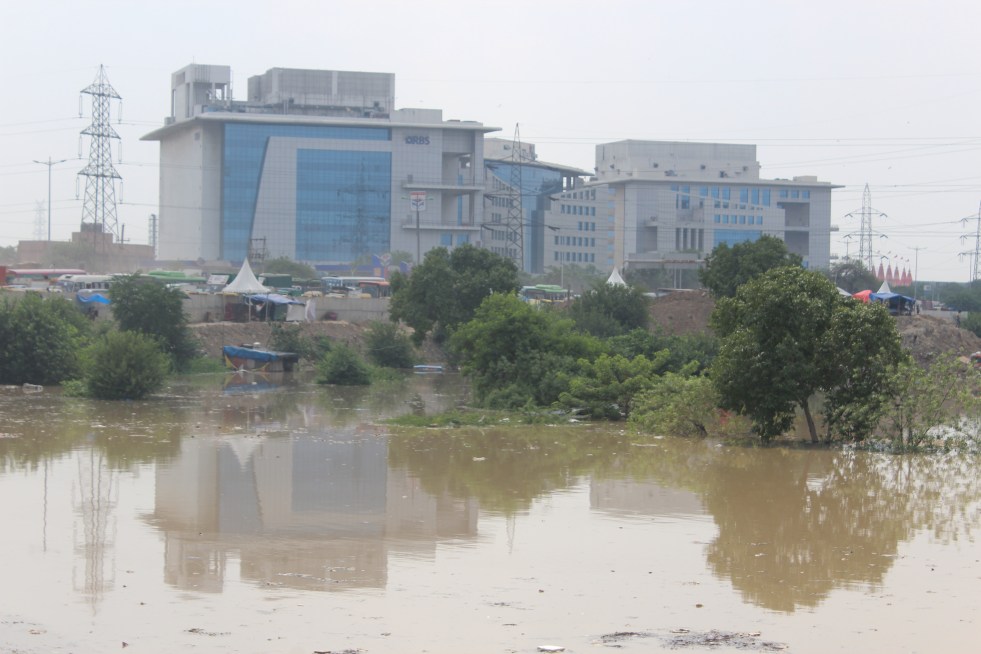
Aug 2019 Yamuna Flood: Floodplain Encroachments Exposed Again
On August 21, 2019, the first big flood spell of monsoon season 2019 has passed through Delhi. The river swelled to cross first warning level 204.00 metre and then danger level 204.83 metre at Old Railway Bridge (ORB) Delhi, finally receding from 206.6 metre which is 0.89 meter short of 207.49 Highest Flood Level (HFL) set in 1978.
The delayed and much awaited flood spell hit the city after highest ever recorded discharge of 8.28 lakh cusec water for two hours from Hathini Kund Barrage (HKB), Yamuna Nagar in Haryana on August 18, 2019 at 05:00 pm and 6:00 pm. The highest since the commissioning of HKB in 2000. The water release this year has also surpassed the discharge of 7.09 lakh cusec the previous highest discharge recorded at Taje Wala Barrage (TWB) during the highest flood recorded in River Yamuna in September 1978. The British era TWB barrage, some 6 kilometre upstream of HKB was washed away in 2010 floods.
Continue reading “Aug 2019 Yamuna Flood: Floodplain Encroachments Exposed Again”

DRP: 26 Aug. 2019: Canalisation of Rivers will worsen Punjab Flood and Water Situation
Following recent Punjab floods, the Punjab Chief Minister said that the state government would go for canalisation of rivers, as if that is going to help in managing or avoiding flood disaster. This proposal seems to come out from nowhere, but considering that the CM talked about funding by the World Bank and Asian Development Bank, either this is already under discussion or these institutes have proposed this to the Chief Minister. The Proposal seems blind to the impacts, costs, risks and wider implications of the canalisation of rivers.
To avoid duplication, the excellent report in MINT below provides detailed reasons why it is a disastrous Idea. The Indian Express report below is in fact a bad example of reporting, since it does not even mention the impacts, costs or risks of the canalisation proposal. And the report that follows these two from California in USA shows how there the work is ongoing to reverse the trend and bring more flood plains in connection with the rivers at a huge cost. Why do we have to repeat the blunders of others, as propagated by the World Bank and ADB and then pay the price in reversing the blunders?
Continue reading “DRP: 26 Aug. 2019: Canalisation of Rivers will worsen Punjab Flood and Water Situation”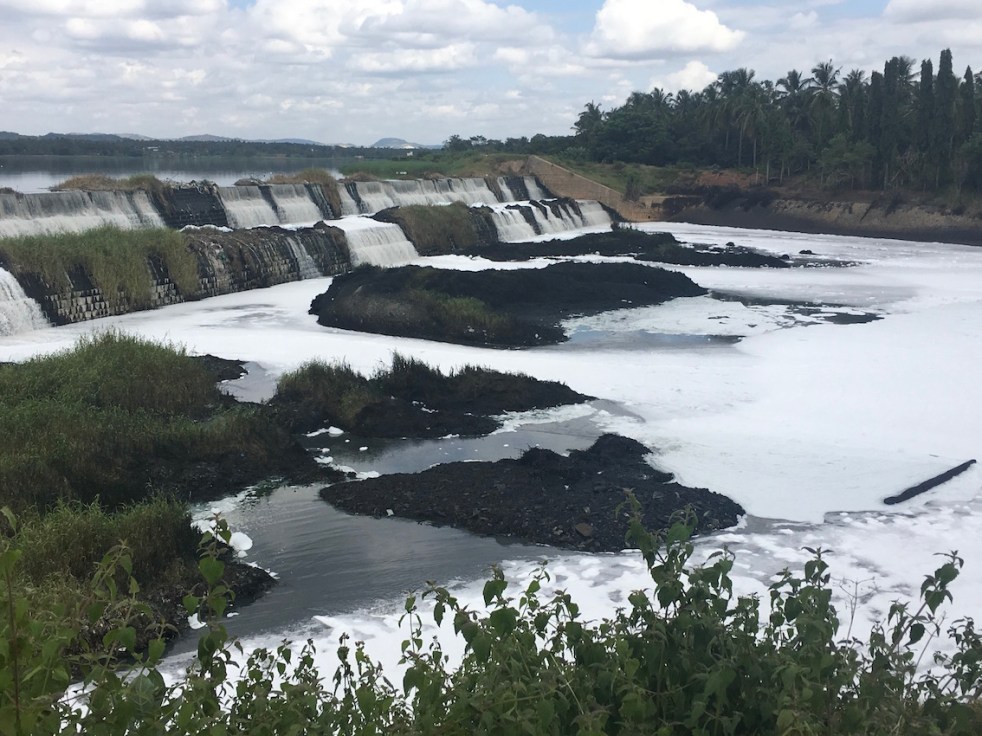
Brewing Farmer Crisis in heavily polluted, frothing Byramangala Tank Region
Guest Blog by: Nirmala Gowda
Diverting sewage and desilting are cornerstones of all lake rejuvenation today. Some important questions loom large. Doesn’t this push the problem downstream to the next water body? The lake filled with sewage and other questionable effluents is a problem for residents around the lake. Quite understandable so: The Mosquitoes, the intolerable stench, garbage piling up along with the recklessly growing vegetation. So, sewage gets diverted and garbage get thrown in someone else’s backyard. This apparently, is called Nimbyism. Continue reading “Brewing Farmer Crisis in heavily polluted, frothing Byramangala Tank Region”

DRP: 12 August 2019: URGENT REVIEW OF FLOOD MANAGEMENT REQUIRED
It’s great to see the top edit in THE TIMES OF INDIA today (Aug 12, 2019) calling for urgent review of flood management in India. Indeed the current floods can be a big wake up call.
TOI Edit rightly says: “Similarly, there’s also an urgent need to upgrade dam management in the region. Despite heavy rain warnings, why couldn’t Maharashtra and Karnataka coordinate to release dam waters downstream as a pre-emptive measure? We need much more proactive and punctilious supervision of dam waters.” Indeed there is need to fix the responsibilities of failures in Dam Management, including forecasting failures, Violations of rule curves, mismanagement of reservoirs and lack of information sharing and coordination.
Continue reading “DRP: 12 August 2019: URGENT REVIEW OF FLOOD MANAGEMENT REQUIRED” SANDRP