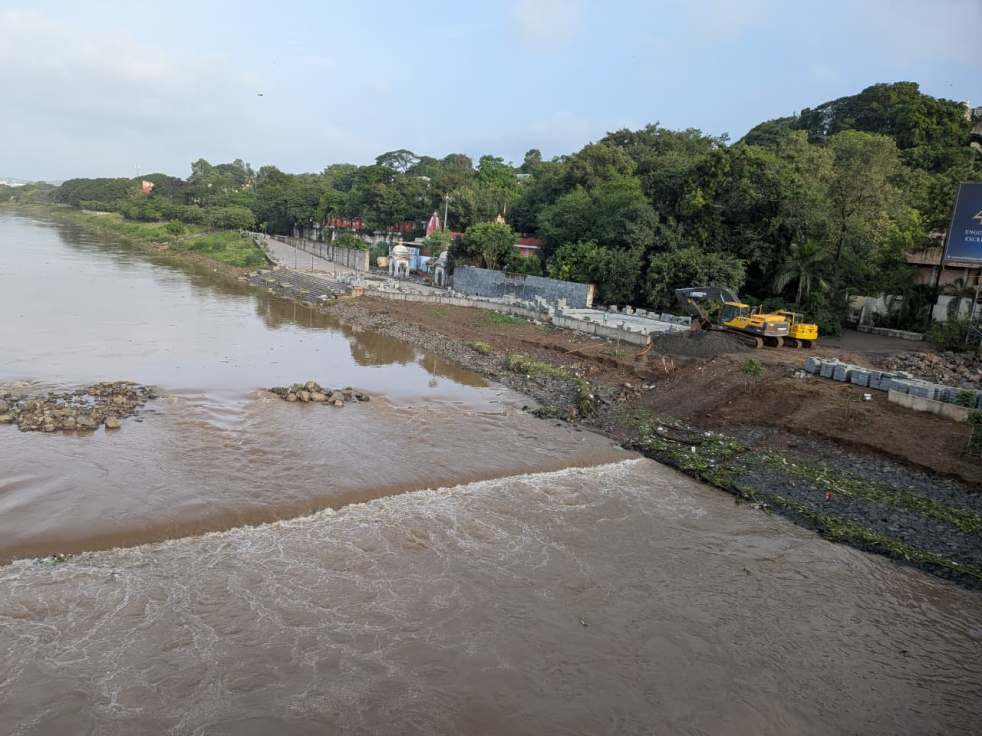
The Pune Riverfront Development – designed by HCP Design, Planning and Management Pvt. Ltd. is the same company behind projects like Central Vista and Sabarmati River Front. The riverfront development in Pune is claimed to be a “copy paste” of that from Sabarmati River – a river basin with completely different landscape and conditions than the Mula -Mutha Basin. Experts and researchers flag various faults with this riverfront development. Here’s what architect and river front researcher Sarang Yadwadkar has to say about this particular project from an urban planning lens through his presentation. In this presentation he connects the project DPR, correspondence with and amongst departments, government reports, and government circulars. He connects these to flag the discrepancies in the project which highlights the violation of guidelines and how the rights of citizens to be free from adverse impacts of climate change are violated.
Continue reading “Unravelling Pune River Front Development: The Five Questions”Tag: National Green Tribunal

Groundwater 2024: Top Ten Judicial Decisions
(Feature Image: A water conservation message painted on a wall in Dehradun. BS Rawat/SANDRP, May 2024)
This fifth part of annual groundwater overview covers top ten judicial interventions regarding groundwater in India in 2024. The first part of the overview compiles important groundwater studies published in 2024. The second part and third part have compiled the reports revealing rising contamination and depletion of groundwater resources in India. The fourth part has focused the top ten relevant decisions taken by various governments regarding management and conservation of the finite natural resource in the country.
Continue reading “Groundwater 2024: Top Ten Judicial Decisions”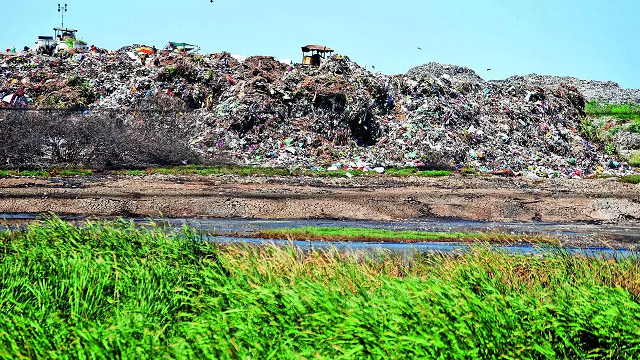
WWD 2024: Top Ten Judicial Actions for Wetlands in India
(Feature Image: A file picture of garbage dumping extending to an additional patch of land at the Pallikaranai marshland. Source: ToI)
The fourth part of the wetlands overview 2023 covers the top ten judicial interventions for the protection of wetlands including Ramsar sites in India. The report shows that the judiciary is increasingly petitioned with legal disputes as the governmental bodies dealing with urban authorities and particularly the regulators have been failing to check unabated pollution and encroachments of the wetlands in their jurisdiction. The legal cases pertaining to encroachments and degradation of Ramsar sites and other wetlands in Himachal Pradesh, J&K, Ladakh, Bhoj lake in Bhopal, Tampara lake in Odisha and Sundarbans in West Bengal clearly indicate the fate of lesser known but equally important water bodies in the country. Overall, the judiciary seems to be finding it tough to stir executioners and unwilling governments and is not equally effective everywhere. However, it has made some landmark orders.
Continue reading “WWD 2024: Top Ten Judicial Actions for Wetlands in India”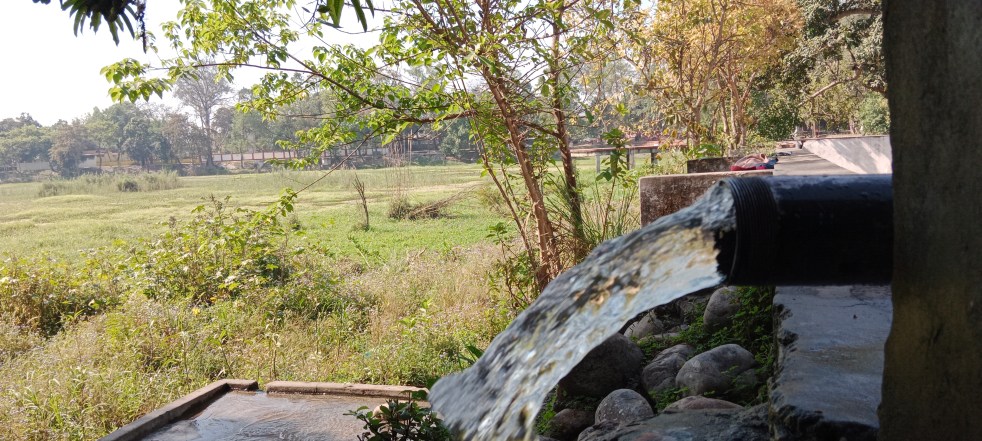
GW Overview 2023: Top ten Govt actions
(Feature Image: Drona Sagar Taal in Kashipur, Uttarakhand being filled with tubewell water in April 2023. Bhim Singh Rawat/SANDRP)
This second part of yearend overview on Groundwater issues in India lists top ten Government actions. While the groundwater has become backbone for all types of consumption including domestic water supply, irrigation, industrial use; depletion of the finite resource continue; the government efforts particularly of central government have been limited to mapping and monitoring. There is neither a recognition that groundwater is India’s water lifeline, nor is there any serious attempt at effective bottom up, decentralised regulation of groundwater.
The aquifer mapping scheme ongoing since 2012 has been extended till March 2026. The govt has planned to increase the number of monitoring wells and equipped them with digital sensors. Meanwhile the Parliament panel report has revealed that the National Water Mission (NWM) lacks adequate funds and autonomy. Several state governments have taken respective measures for protection of groundwater sources however they have largely shown no noteworthy results so far.
Continue reading “GW Overview 2023: Top ten Govt actions”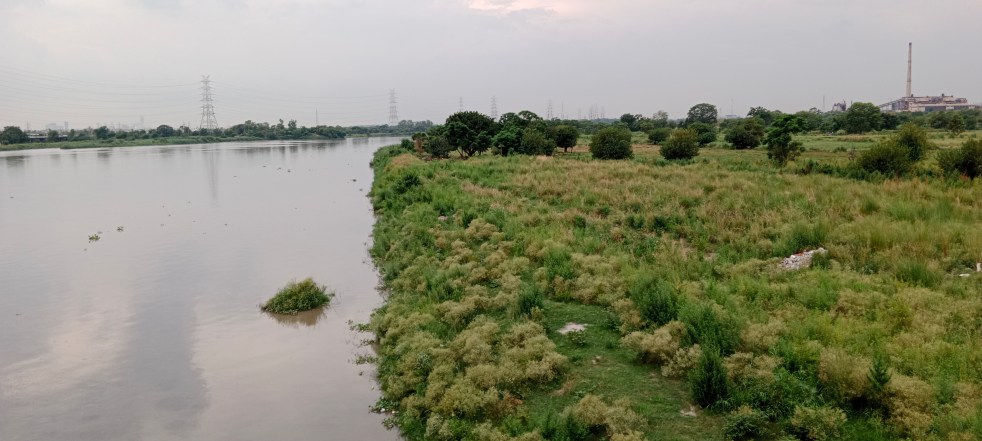
SC & NGT Reject Delhi Police’s Plea for Construction on Yamuna Floodplain
(Feature Image: Part of Yamuna river & its floodplain downstream Geeta Colony bridge in Delhi in June 2023. Bhim Singh Rawat/SANDRP)
In a welcome decision, the Supreme Court of India has rejected Delhi Police’s petition seeking permission for construction of the Police trainees’ accommodation in the floodplains of Yamuna River in Delhi. The plea was rejected by the Bench of Justices Abhay S Oka and Ujjal Bhuyan on January 2, 2024.
The Bench was hearing the Civil Appeal (No. 000002 of 2024 (Arising out of Diary No.44256 of 2023) by Commissioner of Police Delhi which was represented by Mukesh Kumar Maroria, Senior Government Advocate against National Green Tribunal (NGT) dismissal of same proposal on 28 September 2020.
Continue reading “SC & NGT Reject Delhi Police’s Plea for Construction on Yamuna Floodplain”
Maharashtra Wetlands Overview 2021: Mumbai Civil Societies’ Untiring Efforts to Protect Wetlands, Mangroves
(Feature image source: FPJ https://www.freepressjournal.in/mumbai/navi-mumbai-nmmc-chief-writes-to-forest-department-to-take-action-if-any-destruction-found-in-two-wetlands-in-nerul)
Civil Society groups in Maharashtra and particularly in Mumbai and Navi Mumbai have been doing exemplary work protecting the wetlands and mangroves for past several years. In 2021 too, the citizens kept raising multiple issues impacting the threatened wetlands and mangroves. The year also saw some positive outcomes.
This report highlights the significant efforts by the civil society groups, relevant steps by the state government and judiciary during 2021. We have already published three part series on India wetlands overview 2021. Part 1 covers important reports on current situation of wetlands in India, part 2 carries relevant reports on governmental actions and part 3 deals with significant judicial decisions. On World Wetlands Day 2022, we also published a collection of positive actions for protection of wetlands in 2021. We had also earlier published the Maharashtra Wetlands Overview for 2020.[i]
Continue reading “Maharashtra Wetlands Overview 2021: Mumbai Civil Societies’ Untiring Efforts to Protect Wetlands, Mangroves”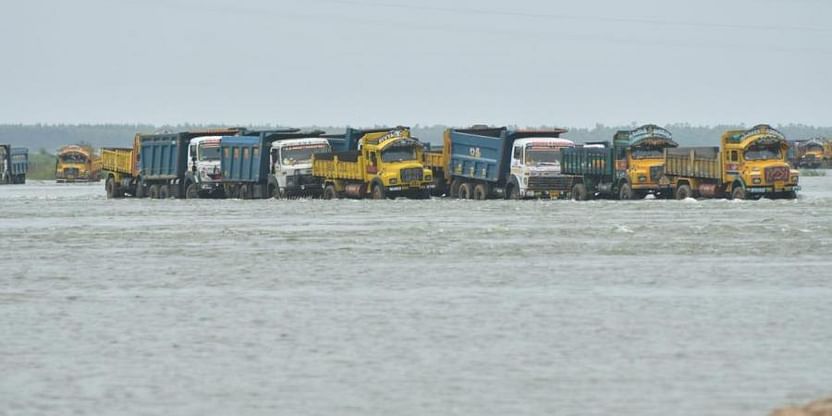
Riverbed Mining India 2021 Overview: Judiciary unable to fix Governance
Feature Image:- Trucks seeking to transport sand stuck in Krishna river after flash floods, 300 people rescued (Image source: TNIE)
Rivers and riverine communities in India have been facing significant threats from large scale unsustainable sand mining operations. As part of our annual overview, SANDRP has compiled the prevailing scenario in the country over the year 2021 in first part. The second part has focused on some important policy and governance steps taken by various state governments. This third part tracks top ten judicial decisions and interventions in 2021 by various High Courts, National Green Tribunals (NGT) and Supreme Court.
Continue reading “Riverbed Mining India 2021 Overview: Judiciary unable to fix Governance “
Goa Riverbed Mining Overview 2019: Civil Societies Form Network To Curb Mining Menace
All through the year 2019 illegal sand mining was rampant in Goa rivers despite judicial interventions. The Mandovi, Tiracal and Chapora rivers were particularly seen bearing adverse impact of unsustainable excavation. Amid worsening scenario the riverbank communities and civil societies have been making remarkable efforts to protect the rivers in the state. The work of Rainbow Warriors NGO and civil society groups who have formed the Goa River Sand Protectors network to monitor the illegal sand mining activities have truly raised hopes and shown way forward to all concerned fighting old battle against growing riverbed mining menace.

Maharashtra Riverbed Mining Overview 2019: Mining Posing Bigger Threats As Government Fails To Act
(Feature Image:In Sindhudurg, the pollution is already shrinking mangrove cover, taking away a source of shelter and food, shrinking hunting grounds and forcing marine species further outside their territories in search of fish, Sindhudurg coastline had the potential to become an International tourism destination. Pratik Chorge/HT PHOTO)
The beaches, creeks, rivers, mangroves in the state of Maharashtra all are bearing the brunt of unsustainable mining, amid several attempts by government, judiciary and civil societies to keep a tab on illegal sand mining activities. As the detailed compilation by SANDRP highlights that mining menace warrants immediate actions from government before the threats turns into a disaster.
Expert Appraisal Committee on River Valley Projects Green signals all in 2019
Even as the Expert Appraisal Committee (EAC) on River Valley Projects (RVP) appointed by the Union Ministry of Environment and Forests (MoEF) in December 2016 completes three years with the end of 2019, it has kept up its record of green signaling everything that came its way in 2019.
There was just one exception: EAC in its meeting on January 28, 2019 rejected the proposal for EC (Env Clearance) extension for the Brutang Major Irrigation Project in Nayagarh District of Odisha, but it was essentially on procedural issue and the EAC “recommended for taking of the proposal afresh”, so it was not a full stop, but only a comma. The EAC failed to creditably appraise the EIA, the TORs, the public consultation process and decide on merit if the project was fit for approval. It approved everything that came its way, at the most occasionally asking for additional information. Never looking into the adequacy of the impact assessment or public consultation process or optimality of the project. Continue reading “Expert Appraisal Committee on River Valley Projects Green signals all in 2019”

