Dams · Sand Mining

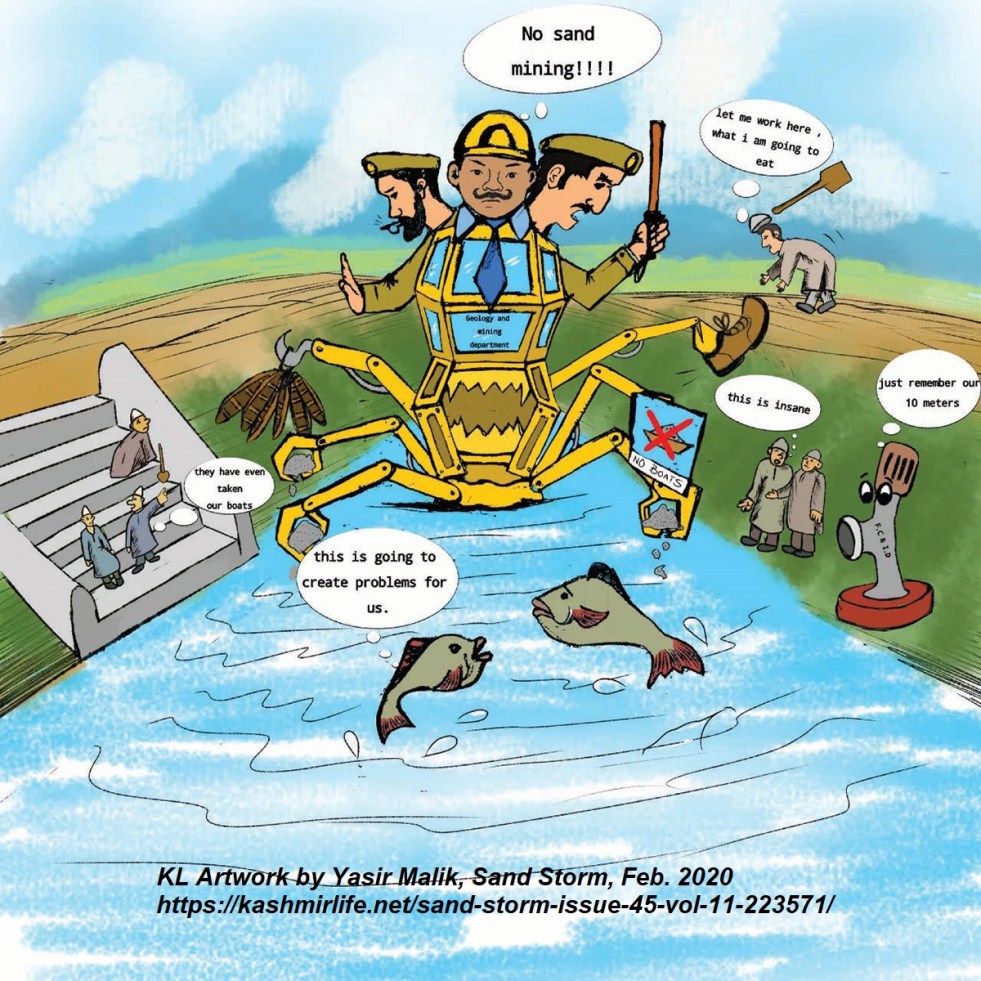
J&K Riverbed Mining 2020: Rivers exposed to mechanized mining

Unsustainable, unscientific excavation of riverbed minerals has been having significant impact on river eco-system and riparian communities for past several years. Since 2016, to develop better understanding and highlight the problems SANDRP has been preparing state wise annual overview of riverbed minerals (RBM) mining activities. Having putting together year end round up for Gujarat, Maharashtra, Goa, Rajasthan, Madhya Pradesh, Punjab, Haryana states, this compilation attempts to cover prevailing situation in Jammu & Kashmir (J&K) over the last one year. The link of 15 overviews in 2018 can be see here.

Continue reading “J&K Riverbed Mining 2020: Rivers exposed to mechanized mining”
Dams · Rivers

Cleaner rivers in lockdown: Lessons we can learn

Within a week of 21-day long lockdown in India that started at midnight on March 24, 2020, several reports in print, electronic and social media have been doing rounds showing remarkable improvements in water quality in many rivers in the country. Most of these are on the basis of naked eye observations in the form of pictures and videos by people.

Some of the reports quote pollution control boards’ officials and experts with some analytical data. People generally believe that the shutting down of industrial units has led to reduction in discharge of industrial effluents in the rivers, breathing fresh life in pollution laden streams. It’s right that there is halt in industrial belts and there is less industrial pollution reaching the rivers. However there are other factors contributing to the change in the scenario. 

Continue reading “Cleaner rivers in lockdown: Lessons we can learn”

Dams · DRP News Bulletin

DRP: 30 March 2020: Chilika has fishing cat & otters, but why we know so little about aquatic biodiversity?

There is some good news this week. A survey has found existence of fishing cat and two otter species in Chilika lake – this was not known so far. However, this also underlines how little we know about India’s aquatic biodiversity in our rivers, lakes and deltas. Its high time we have authentic baseline survey across India, hopefully in participation with the local communities who would already know so much about this. And may be rather urgently, once we are through with the current Covid-19 Crisis.

Continue reading “DRP: 30 March 2020: Chilika has fishing cat & otters, but why we know so little about aquatic biodiversity?”
Dams · Water

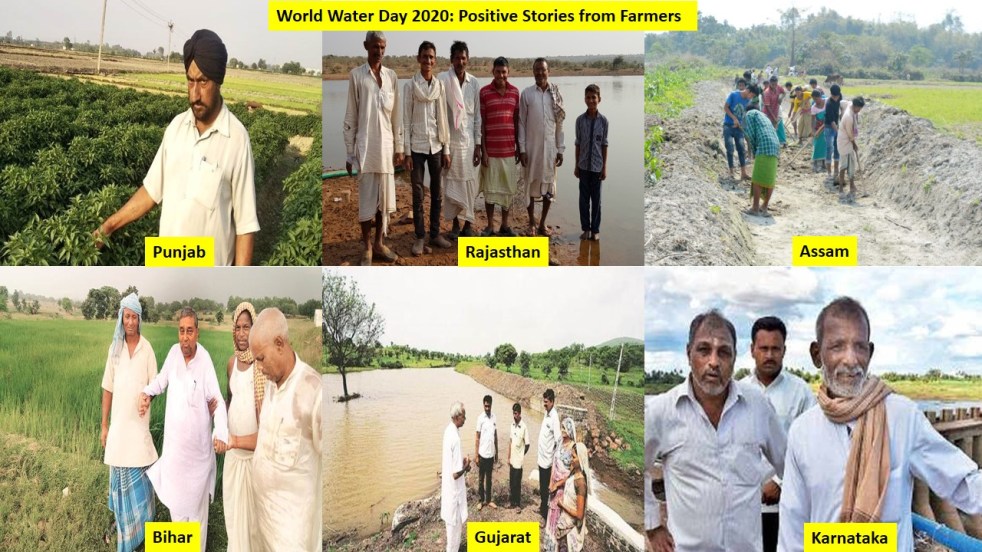
World Water Day India 2020: Top Positive Stories from Farmers

The theme for World Water Day 2020 is ‘Water and Climate Change’. Indeed the changing climate has been altering the weather system in multiple ways.  Extreme weather events like flash floods, intense heat, prolonged droughts, intense cold spells striking different parts of the world are increasingly being linked to the climate change. Changing water cycle is a major consequence. The farmers are among the most affected, facing all kinds of water problems including droughts, scarcity, flooding, hail storms, cyclones, unseasonal rains and pollution.

Several initiatives are being taken by the farmers, civil society groups to find right solutions to the water challenges, many of which have brought positive changes. Here we have compiled some such positive water options from the past one year. We hope this can encourage us to look for such community driven water options.

Continue reading “World Water Day India 2020: Top Positive Stories from Farmers”

Agriculture · Water

ECONOMIC SURVEY 2020: WHERE IS THE GROUND REALITY?

One of the key objective of the Economic Survey is to provide an accurate account of ground realities on various aspects affecting the Economy of the country and also what has the govt been doing to address the issues that such an account throws up. From a look at the key issues that SANDRP focuses on, it seems that the Economic Survey for 2019-20 that was released on January 31, 2020 does not even attempt to provide an account of the ground realities. Continue reading “ECONOMIC SURVEY 2020: WHERE IS THE GROUND REALITY?”

Sand Mining

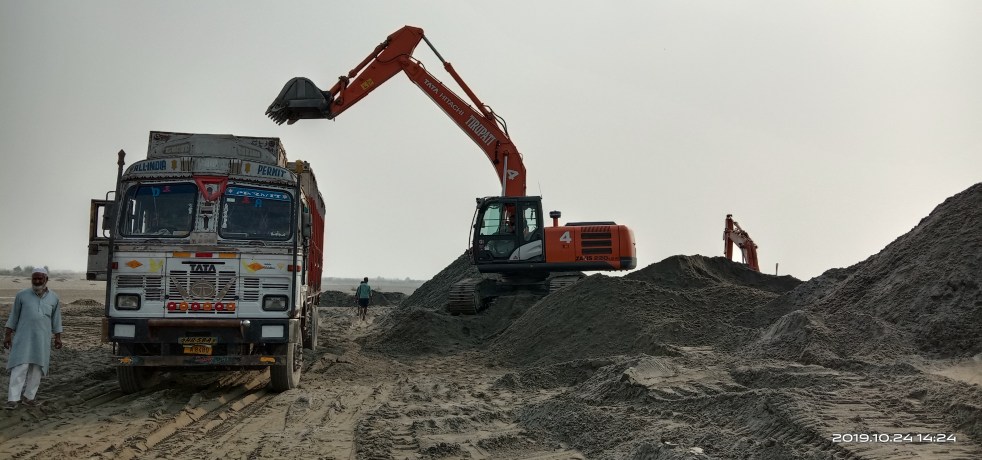
Haryana Riverbed Mining 2019: Yamuna Robbed of Minerals, Flows

For past two years, large scale mechanized and illegal mining is happening in Yamuna River in Haryana state. The miners have created deep pits across the riverbed in Yamuna Nagar, Karnal, Panipat and Sonipat districts. Year 2019 has been a deficit monsoon year in Yamuna basin and the river had started shrinking unusually during October month. The rampant riverbed excavation has further robbed it of lean season flows. This detailed overview of river sand mining in Haryana in 2019 shows the severe impact of unsustainable and illegal mining practices on the river and villagers due to insensitive government and inefficient administration.

Continue reading “Haryana Riverbed Mining 2019: Yamuna Robbed of Minerals, Flows”

DRP News Bulletin

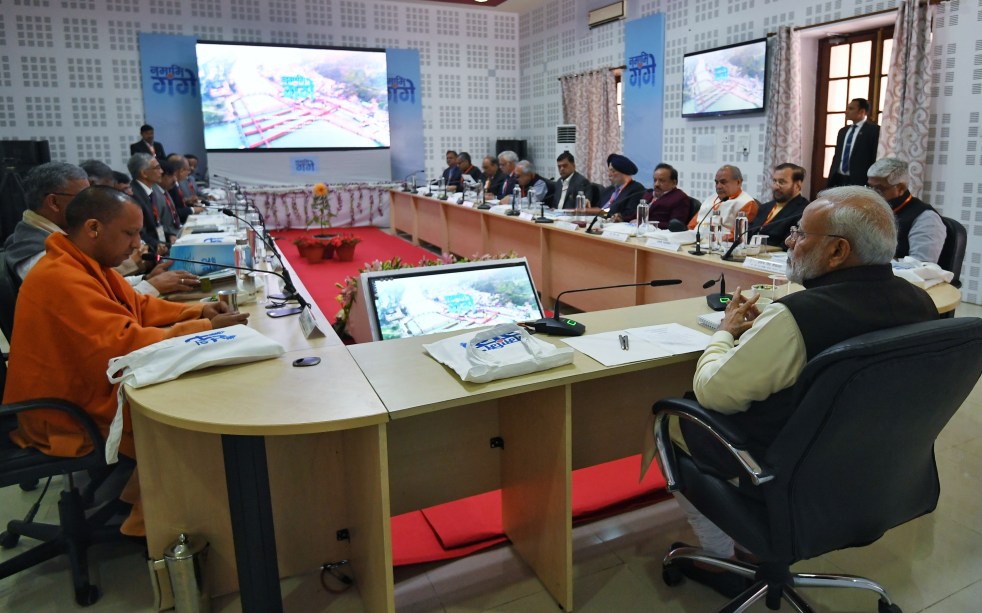
DRP: 16 Dec. 2019: Why the first NGC meeting signifies Govt’s Failure on Ganga

The Prime Minister finally found time to have the first ever meeting on National Ganga Council, over three years after the Ganga Notification of Oct 7, 2016. The meeting happened at Kanpur, where the NGT recently fined the state government for continuing to release untreated effluents into the Ganga. In fact NGT in recent weeks have taken several decisions that also shows how abysmally the govt has failed on Ganga front. And now after the first NGC meeting, the Prime Minister, in an effort to divert attention from Namami Gange failure, is proposing the new slogan of Arth Ganga, which basically seems to suggest focus on Money, which is Exactly what is not going to help the cause of Ganga. The Ganga is still on the lookout for the Ganga putra that promised a clean Ganga in May 2014.

Feature image above is of first NGC meeting, source is: PIB PR: https://www.pib.gov.in/PressReleasePage.aspx?PRID=1596482&reg=3&lang=2

PS: Second meeting of NGC happened on Dec 30 2022 in Kolkata, where the PM participated through video conferencing. No further meetings have happened till date (March 5 2026).

Continue reading “DRP: 16 Dec. 2019: Why the first NGC meeting signifies Govt’s Failure on Ganga”
DRP News Bulletin

DRP: 18 Nov. 2019: River capacities are changing, but who is monitoring?

River carrying capacity is such a crucial factor in deciding if certain areas will be flooded and with what severity. This capacity is constantly changing, more so in tropical climate and high silt carrying rivers of South Asia, as new research shows. However, most models that are used in India, including by CWC, assume steady state situation. Nor are there constant and credible efforts to assess the river cross sections and river conveyance capacities and put them in public domain. The study shows how important it is that we wake up to this reality and ensure credible, consistent monitoring and assessments by credible independent agencies at the earliest. This has become even more urgent, the study underlines, since in changing climate, the rainfall patterns are changing fast. 

Continue reading “DRP: 18 Nov. 2019: River capacities are changing, but who is monitoring?”
DRP News Bulletin

DRP: 1 Apr 2019: Dead Sabarmati shows failure; Ganga going the same way?

As joint monitoring report by Paryavaran Surakhsha Samiti (PSS) and Gujarat Pollution Control Board (GPCB) shows, Sabarmati is severely polluted river, downstream of Ahmedabad and is practically a dead river. Upstream of Ahmedabad, the once perennial river has no water of its own and is stealing the Narmada water meant for drought prone areas.

This incidentally is supposed to be model river rejuvenation as told to SANDRP coordinator on a television channel by no less than Executive Director (Technical) of National Mission on Clean Ganga. In fact posters during the 2014 Parliamentary elections in Varanasi, where Mr Modi fought from, said exactly that. So is the National Ganga river going down that path? Narmada itself is in same situation downstream of the dam in Gujarat as another report here shows. Gujarat model has many examples to show, it seems. 

Continue reading “DRP: 1 Apr 2019: Dead Sabarmati shows failure; Ganga going the same way?”
DRP News Bulletin

DRP: 25 Mar 2019: Gujarat groundwater pollution; Implications not assessed

A report of groundwater pollution in Luna village accessed by Paryavaran Suraksha Samiti (PSS) has once again pointed to the alarming rate of groundwater contamination in the industrial belt in Padra in Vadodara. The report accessed through RTI found that that the Chemical Oxygen Demand (COD) level in groundwater was an alarming 2225mg/I and 27222mg/I in October and December 2018.

It should be noted that even in treated effluent water the accepted levels of COD is 250 mg/I. For ground water the level should be nil. The report was a result of joint investigation carried out by the Gujarat Pollution Control Board (GPCB), Paryavaran Suraksha Samiti (PSS), Farmers Action Group (FAG) and affected farmers in October and December 2018.

Continue reading “DRP: 25 Mar 2019: Gujarat groundwater pollution; Implications not assessed”