Climate Change

Feb 2019 Hailstorm, Snowfall Affects Life in Northwest India

Since the beginning of 2019, there have been couple of incidents of hailstorm in Haryana and Punjab. The region has also seen good rainfall in January. The hilly states of Jammu & Kashmir, Himachal Pradesh and Uttrakhand have been repeatedly facing heavy snowfall events gripping the large parts of North India in cold waves.

The initial rains and snowfall were seen usual events and considered as beneficial for rabi crops and water demands. However the unusual hailstorm accompanied by heavy rainfall In January 2019 and again on Feb 7-8, 2019 have caused significant damage to standing crops in large part of Haryana, Punjab and Western parts of Uttar Pradesh.

Continue reading “Feb 2019 Hailstorm, Snowfall Affects Life in Northwest India” →

Dams · DRP News Bulletin

DRP: 29 Oct 2018: Better Paddy Options Exist For Punjab

A try-out of the technique to grow paddy without puddling at village Chehlan of Ludhiana has resulted in higher yield in comparison to puddled fields, while saving water in the process. The crop was ready for harvest days before expected time, saving irrigation water otherwise to be used for another fourteen days. This trial was funded and supervised by ATMA, a central govt.  scheme under the Union Ministry of Agriculture.

Puddling is a traditional method of flooding paddy fields with running water, whereas in non-puddling technique, ‘ridges and furrows’ are formed in soil to let water store in spaces and let it stay, thus reducing irrigation frequency.

“Not paddy but puddling is the enemy of waters of Punjab. It is wastage of water to puddle fields as most of it just evaporates. We have saved 45-50 per cent of water in non-puddled fields. Our yield has been almost 30 per cent more from fields where crop was not puddled. Also, non-puddled crop matured very early, saving at least ten days of irrigation water,” says Rupinder Singh Chahal (43) who along with his brothers Jasvir Singh (48) and Kulwinder Singh (52) experimented with ‘non-puddling’ technique on four acres this year.

Continue reading “DRP: 29 Oct 2018: Better Paddy Options Exist For Punjab” →
Dams · Floods

Overview of CWC Flood Monitoring Sites 2018: INDIA

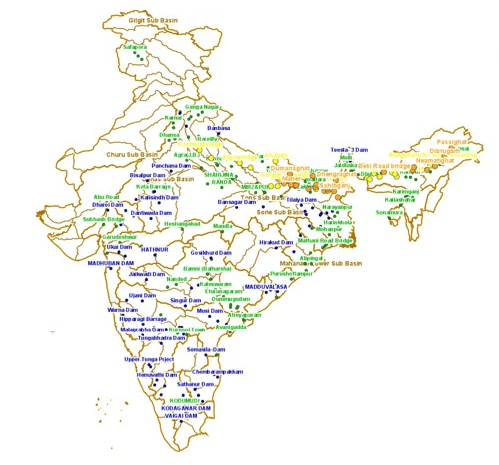
Central Water Commission is the only agency doing flood forecasting in India. As per CWC’s Flood Forecasting website[i] the Data Flow Map has information about 226 Flood Forecast Sites in the country comprising of 166 Level Forecast Sites and 60 Inflow Forecast Sites. It also monitors 700 Flood sites, information made available through List Based Exploration and Hydrograph View, but no flood forecasting is done for these sites.

In order to better understand the CWC’s flood monitoring and forecasting work, SANDRP has published report of CWC’s Level Forecast, Inflow Forecast and level monitoring sites in 5 zones of North India[ii], North East India[iii], East India[iv], South India[v] and West India[vi].  Through this report, we have presented all the data at one place with links to separate zone wise reports with detailed description.

Continue reading “Overview of CWC Flood Monitoring Sites 2018: INDIA” →

Monsoon

The mirage of normal monsoon

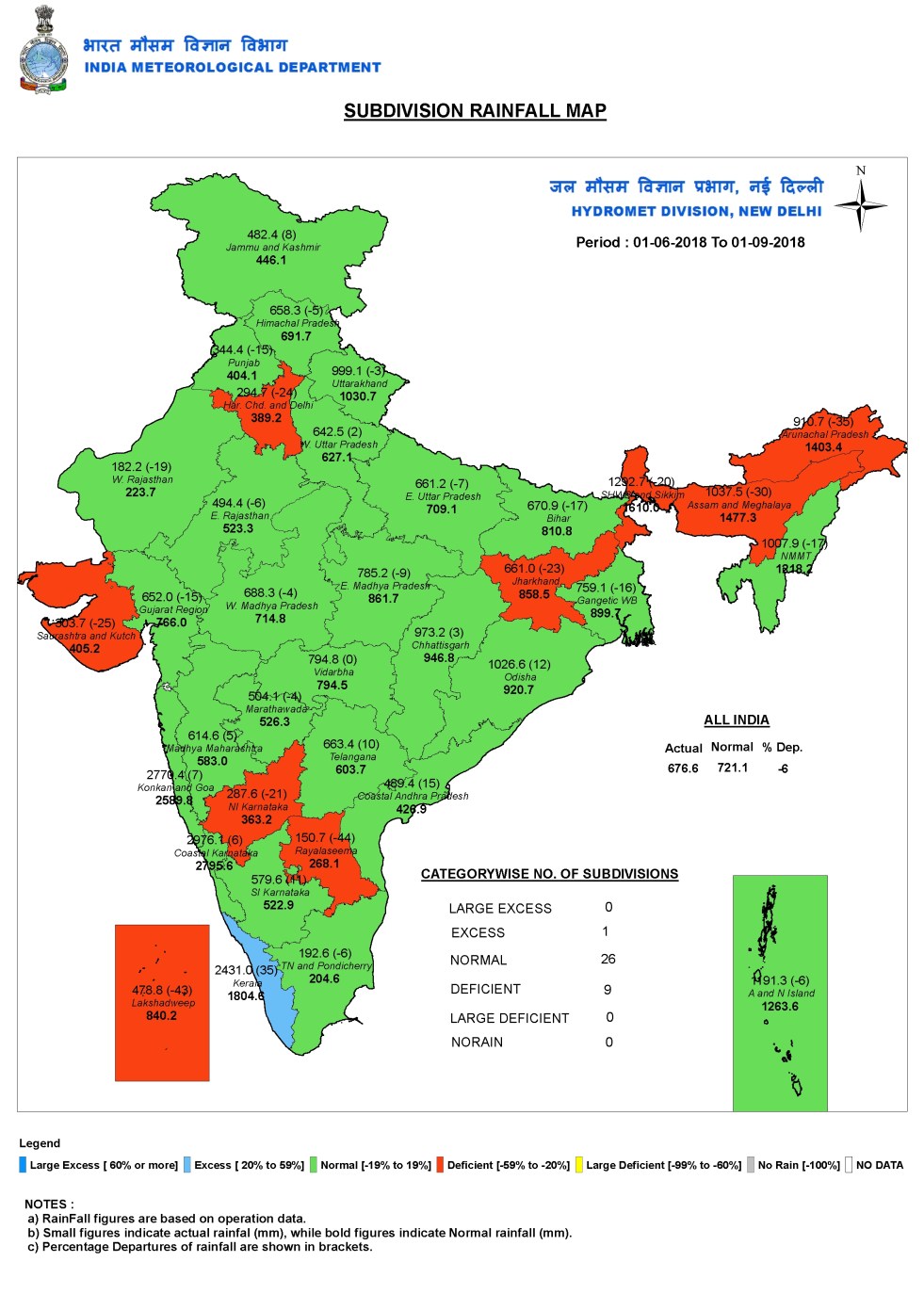
According to IMD, India is having normal monsoon this year, so far, as per rainfall till date (Sept 1, 2018). Against normal rainfall of 721.1 mm, India has received 676.6 mm rainfall, which is 6.2% below normal, considered within normal rainfall definition as per IMD. So India is having normal monsoon rainfall, says IMD. Let us check this against some ground realities.

However, East and North East India, one of the four regions for which IMD provides rainfall data, has so far had 27% below normal rainfall, while South India had 9% surplus rainfall.  Thus, while at all India level, what seems all normal, is average of different, though serious departures from normal rainfall. Let us say this is first level of mirage of normal rainfall. Continue reading “The mirage of normal monsoon” →

Dams · Floods

Overview of CWC Flood Forecasting Sites 2018: North India

Flood forecasting is an important activity during monsoon, considering the huge and increasing flood prone area, flood frequency, extent and flood damages. Accurate and timely flood forecasting can hugely help reduce the damages due to floods. Central Water Commission (CWC) is the only agency responsible for flood forecasting in India. To understand the CWC’s flood forecasting better, we have compiled the list of the various flood, inflow forecasting sites and flood monitoring sites in India.

In this compilation, we have given state wise list of CWC’s flood forecasting, flood monitoring and inflow forecasting sites, along with available details like rivers, sub basin, river basin, Warning level, Danger Level, High Flood Level, Full Reservoir Level, Maximum Water Level. As we see below, there are many gaps in this basic information for the sites that are part of CWC’s list.

Continue reading “Overview of CWC Flood Forecasting Sites 2018: North India” →

Dams

Yamuna River Developments in 2016-2- Other River Interventions

(During monsoon the polluted river cleanses itself allowing migrant fishermen to move in and seek out their livelihood through fishing ;  Photo by Burhaan Kinu)

The exploitation of Yamuna Rivers that starts in upper basin comprising Uttarakhand (UKH) and Himachal Pradesh (HP) gets worse as the river is dammed at Hathini Kund Barrage (HKB) while passing through Shivalik Hills located at the border of Haryana and Uttar Pradesh (UP), the barrage has severely compromised lean season (8-9 months) water flow in the river downstream.

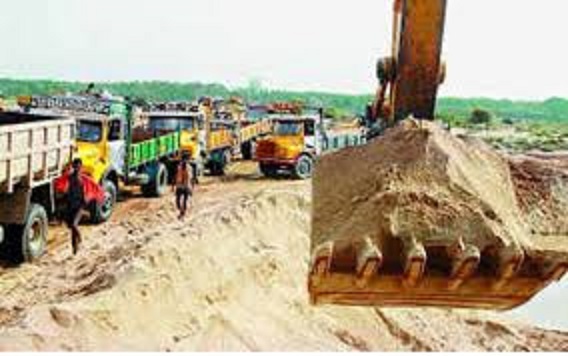
As a result, the waterless riverbed resembles a desert till Delhi’s potable water is released back into the river at Palla village, the border of Delhi and Haryana. The absence of flow facilitates intensive illegal riverbed mining for sand and boulders for longer periods in a year which further destroys the river’s eco-system. More over industrial and domestic effluents in great volume from nearby towns reach the river via tributaries, storm water drains. Amid all this successive State Governments show no will to achieve even basic flow of freshwater in the river, even as they keep pushing more dams.

Here is an account of the projects planned and launched in 2016 related to the River Yamuna. 

Continue reading “Yamuna River Developments in 2016-2- Other River Interventions” →

Dams · Sand Mining

River Sand Mining in India in 2016

For past many years, incidents of illegal river sand mining across the country are on the rise. Given its resultant and adverse impact on river system and dependent communities, various state and central governments continue to go through the motions of devising a mechanism for judicious excavation of this minor mineral. But there seems no will to achieve compliance. At the same the time, people and concerned groups affected by illegitimate riverbed mining practices are approaching judiciary seeking legal intervention to curb the unsustainable mining of the natural resource.   

In this backdrop, continuing[1] tracking of this issue (like in 2015) SANDRP is providing an overview of various aspects related abstraction of the finite grit material from the rivers through a three part blog series. The first part of the series presents description of the most of the illegal riverbed sand mining incidents that have taken place in different Indian States through the year 2016. The second part of the blog gives account of the measures taken by governments at States and Central level to check the pilferage of this natural resource. The third part will highlight on the legal interventions by respective courts including Honorable Supreme Court (SC) and National Green Tribunal (NGT) to regulate unscientific quarrying of riverbeds.

Continue reading “River Sand Mining in India in 2016” →

Dams

Sutlej Yamuna Link Row:  Chronology of Events

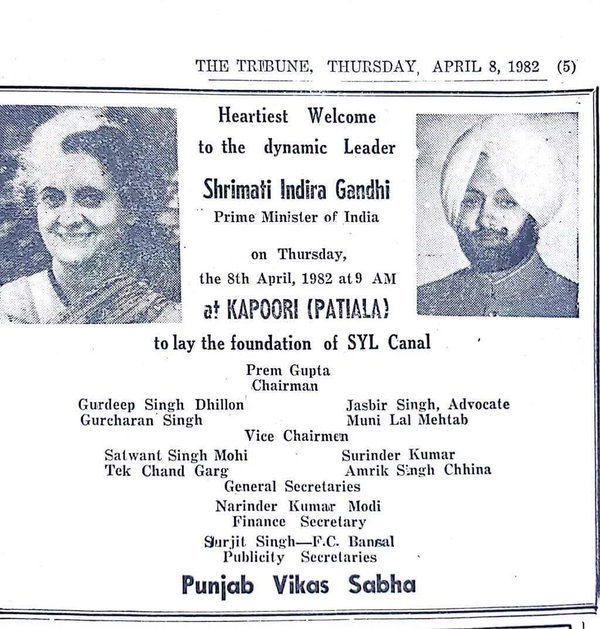
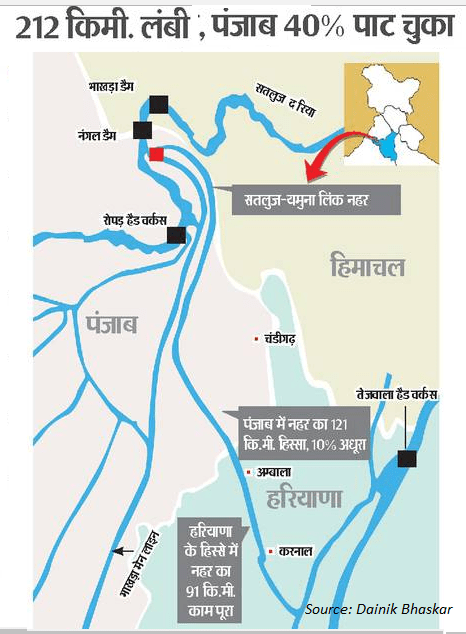
The SYL Row has been going on inconclusively for over last about 50 years. The matter also has been languishing in SC for last 40 years without any resolution. The seemingly unending disputes have been raising questions in the mind of many as to why the issue remains undecided and for how long the controversy will go on. To have better understanding of the issue we have put together a chronology of the events around the SYL dispute.

On November 10, 2016, Honorable Supreme Court (SC) of India has pronounced its judgment on Sutlej Yamuna Link Canal (SYL). In the decision, the apex court has termed the Punjab Termination of Agreements Act 2004 invalid and ruled that Punjab is bound to share Ravi-Beas river waters with Haryana and Himachal Pradesh, Rajasthan, Jammu and Kashmir and Delhi. The court has also ordered Punjab to comply with its two judgments for completion of the SYL canal.

Continue reading “Sutlej Yamuna Link Row:  Chronology of Events” →

Dams

एसवाइएल विवाद:  जल संरक्षण में पिछडे़  पंजाब ओर हरियाणा

Guest Blog by Manoj Thakur 

सतलुज यमुना नहर (एसवाइएल ) पर हरियाणा के पक्ष में निर्णय आते ही पंजाब ओर हरियाणा में राजनीति तेज हो गई। पंजाब का कहना है वें अपनी जान दे देंगे लेकिन पानी नहीं देंगे। इधर हरियाणा का कहना है कि उन्हें पानी चाहिए क्यांकि यह पानी उनका हक है। अब सवाल यह उठ रहा है कि दोनों राज्यों में से कोई एक राज्य तो गलत बोल रहा है। लेकिन हकीकत यह है कि एसवाइएल पर दोना ही राज्य झूठ बोल रहे हैं।

Continue reading “एसवाइएल विवाद:  जल संरक्षण में पिछडे़  पंजाब ओर हरियाणा” →

Dams

Landmark Supreme Court Order on Govt Failure in Tackling Drought

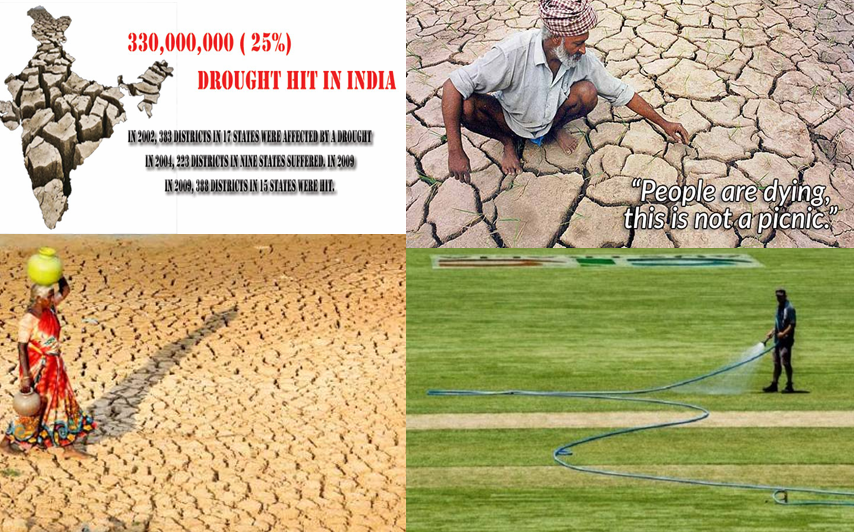
A PIL under Article 32 was filed by the NGO, Swaraj Abhiyan praying for directions for declaration of drought and relief in affected areas. The apex court came out with a 3 part judgment earlier this month – the first one dealt with the issue of drought and the latter judgments took up the poor implementation of the National Food Security Act, 200513 (NFSA) and the Mahatma Gandhi National Rural Employment Guarantee Act, 2005 (NREGA). These directions largely signify the failure of the governance in tackling drought and suggest actions to be taken hence, we need to be thankful to the petitioners and apex court for this. We also hope the apex court continues to monitor the implementation of the directions. 

Continue reading “Landmark Supreme Court Order on Govt Failure in Tackling Drought” →