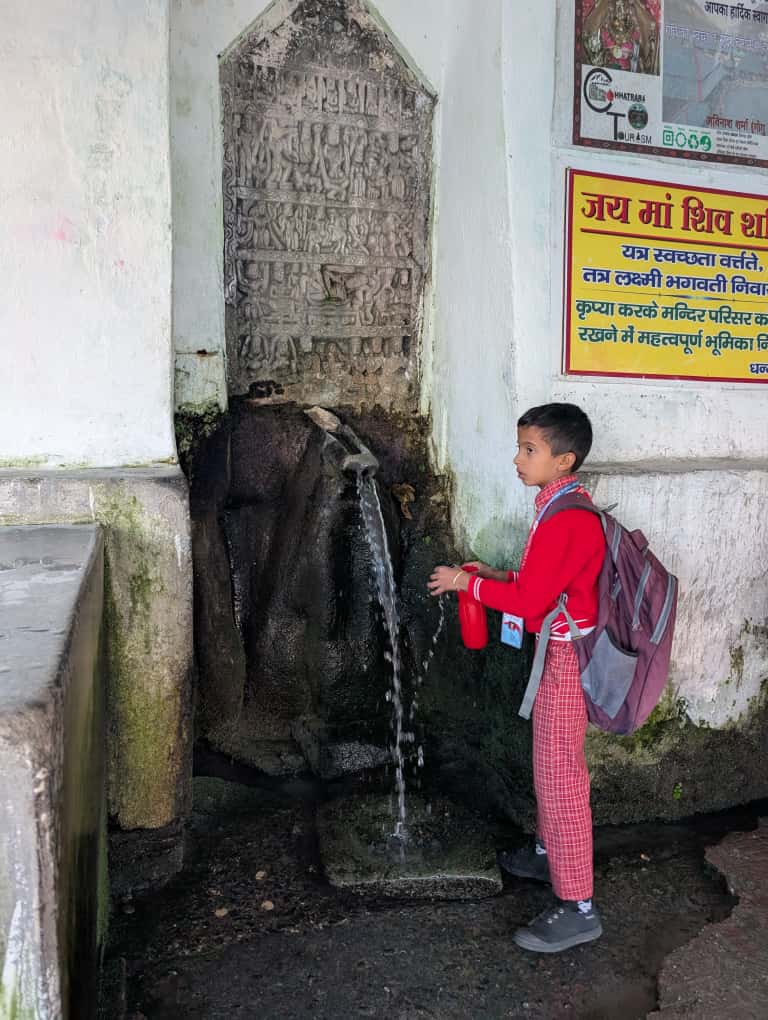
“If you really want to see Panihars, you should visit Chhatradi” says the shy Aditya. He is 15 years old and studies in class X. We are standing on a busy and dusty bridge across a tributary of Ravi in Chamba, Himachal Pradesh. Beside us is the legendary Fulmutala spring fountain (Panihar). Hundreds of people come here every evening to collect cool and clear drinking water. Most have piped water supply in their homes but insist that waters of Fulmutala are peerless. Spring Fountains are a way of life in the Ravi Basin. And yet, very little is said about these beautiful places bringing together groundwater, rivers, ecology and culture.
Continue reading “Chhatradi: Thirty-Six Spring Fountains of the Ravi”Tag: groundwater
Yamuna Manthan 0426: Will Govts Ensure Survival of Chambal River Sanctuary?
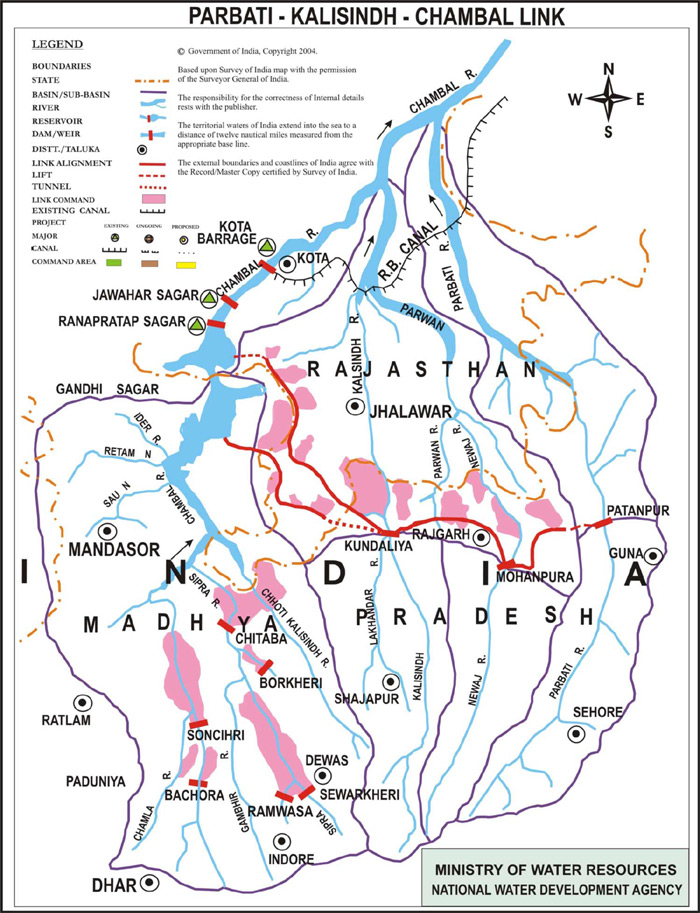
(Feature Image: Index map of Parbati-Kalisindh-Chambal River Interlinking Project. Souce: NWDA)
Two critical developments over the past month have once again highlighted the scale of threats undermining the ecological integrity of the Chambal, the largest tributary of the Yamuna. The rich aquatic life in the Chambal Sanctuary has already been adversely affected by the gradual decline in river flows and unabated illegal sand mining.
Continue reading “Yamuna Manthan 0426: Will Govts Ensure Survival of Chambal River Sanctuary?”DRP 6 April 2026: CAG Report on DJB indicates fundamental issues
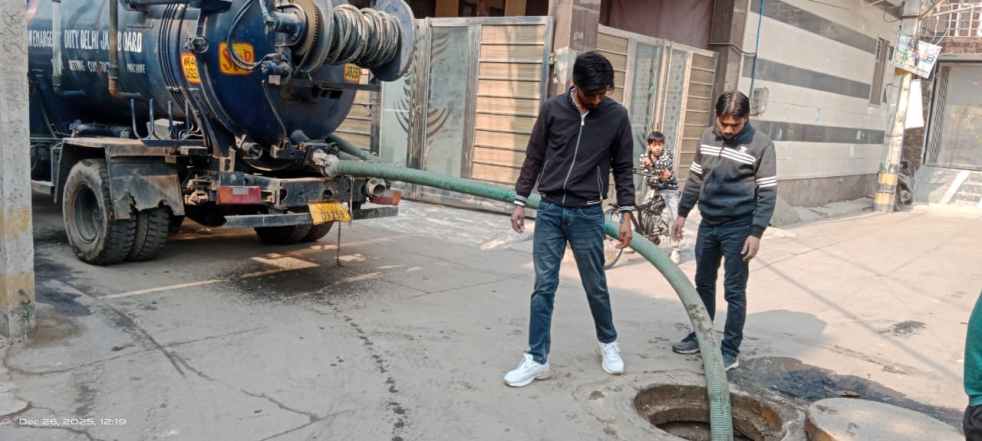
(Feature Image: Sewer line cleaning work by DJB in North West Delhi’s Sanjay Colony. Credit: Bhim Singh Rawat/SANDRP)
The Report of the Comptroller and Auditor General (CAG) of India Audit of Delhi Jal Board (DJB) for 2017-2022 highlights the fundamental issues facing Urban Water Sector in India. Unfortunately, CAG stops short of reaching the conclusion that lack of National Urban Water Policy and lack of accountable governance are the fundamental issues also plaguing DJB like other Urban Water Bodies in India.
Continue reading “DRP 6 April 2026: CAG Report on DJB indicates fundamental issues”Urban Groundwater: NGT’s Struggle to Improve Governance in 2025
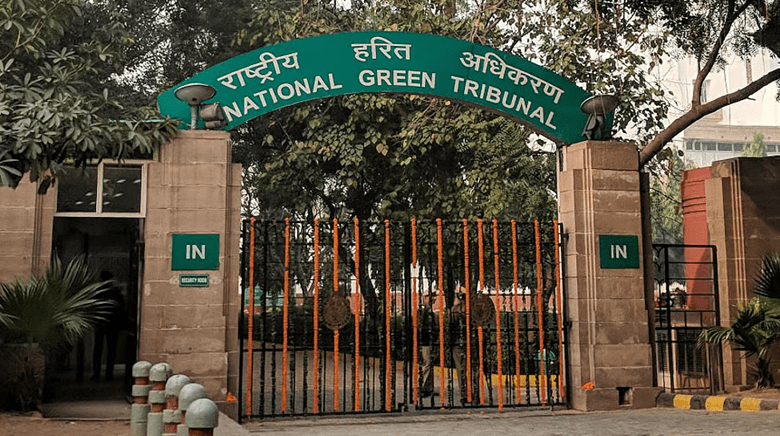
(Feature Image: Entry gate of NGT’s principal bench in New Delhi: Source: Bar & Bench)
This overview looks at how the judiciary particularly; the National Green Tribunal (NGT) has tried to address the urban groundwater depletion and governance crisis during 2025. Cases from Delhi, Gurugram, Faridabad and other cities indicate a common problem of weak regulation, poor coordination among concerned agencies and slow enforcement of court orders, allowing illegal groundwater extraction to continue. Many cases have been going on for years without clear results.
Continue reading “Urban Groundwater: NGT’s Struggle to Improve Governance in 2025”Groundwater in India: Judiciary Failing to Resolve Governance Crisis in 2025?
(Feature Image: Illustration on deepening groundwater levels in India by Binay, Source: IWP)
This overview tracks the major judicial interventions concerning groundwater conservation and management in India during 2025, highlighting persistent failure to address the gaps in governance. The Central Ground Water Authority (CGWA) have been criticized for no real action, inadequate data, weak transparency and poor enforcement. The inefficiency of state-level groundwater authorities reflects a deeper systemic failure.
Continue reading “Groundwater in India: Judiciary Failing to Resolve Governance Crisis in 2025?”Groundwater: Govts Actions to Recharge, Regulate in 2025 in India
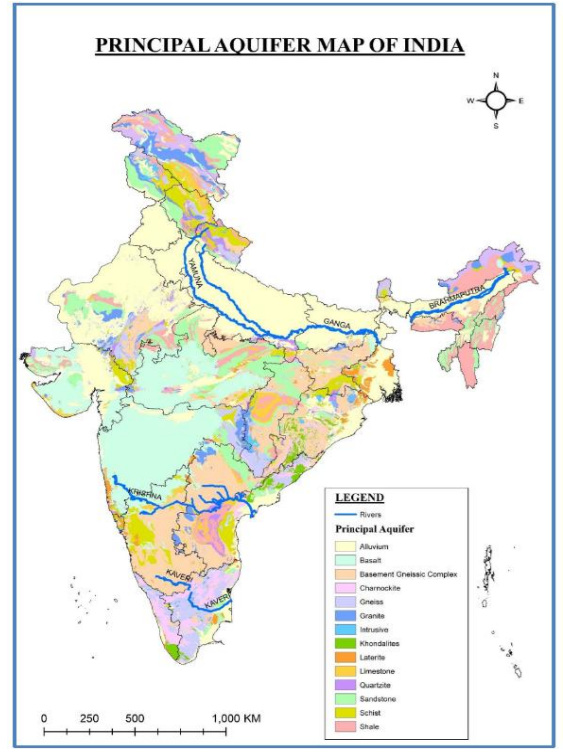
(Feature Image: Principal Aquifer Map of India. Credit: CGWB’s Annual Ground Water Quality Report 2025, Figure 02, Page 09)
This overview highlights the top ten measures undertaken by various governments to protect groundwater in India in 2025. At the central level, the Ministry of Jal Shakti (MoJS) has a master plan for artificial recharge, targeting the construction of 1.42 crore structures. As per MoJS, 21 states and UTs have adopted Model Groundwater Management Bill 2020. The MoJS is also piloting pressurized irrigation systems and water accounting technologies to improve efficiency, especially in agriculture, which consumes 87% of extracted groundwater.
Continue reading “Groundwater: Govts Actions to Recharge, Regulate in 2025 in India”DRP 300326: Sad state of migratory Riverine fish in India
(Feature Image: Cover page of CMS summary report on Global Assessment of Migratory Freshwater Fishes)
The key CMS (Conservation of Migratory fish Species) report this week once again highlights the sad state of migratory Riverine fish, fisheries and fisherfolks in India. Shockingly, even when thousands or tens of thousands of fisherfolks lose their livelihoods due to projects on rivers, there is not even assessment of impacts of such projects on fish, fisheries and fisherfolks, leave aside consideration of compensation or rehabilitation for them. The Sardar Sarovar Project on Narmada River in Gujarat, one of the most celebrated dams of India, as an apt example of this situation. Farakka Dam is another such example.
Continue reading “DRP 300326: Sad state of migratory Riverine fish in India”DRP 230326: Small Hydro environment friendly and help community development?
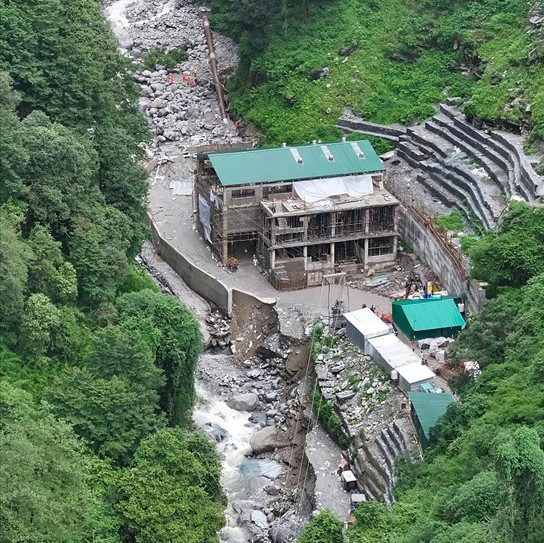
(Feature Image: Priyadarshini Small HEP on Manuni khad in Kangra, Himachal Pradesh damaged after flash flood in June 2025. At least 8 workers of the project were also killed in the disaster. Image Source: Gems of Himachal, post on X.)
The impression being given through the following PIB Press Release dated March 18 2026 that this scheme cleared by the Union Cabinet to promote small hydropower projects will promote environment friendly and socio-economically beneficial projects in North East and other hilly areas is incorrect and misleading.
Continue reading “DRP 230326: Small Hydro environment friendly and help community development?”WWD 2026: Collective Groundwater Conservation Efforts in India
(Feature Image: In Rajasthan’s Chambal, wives of ex-dacoits lead revival of water sources and hope. Source: The Tribune)
On the occasion of World Water Day (WWD) 2026, themed around water and gender, this overview highlights ten stories of collective efforts by communities, experts, and government agencies to conserve groundwater from across India. These examples show how decentralized actions such as reviving wells, recharging aquifers, harvesting rainwater and managing surface water bodies offer simple yet effective alternatives to large-scale infrastructure projects to address the water scarcity. The compilation demonstrates that sustainable groundwater management depends on collective action, local knowledge and active participation of local people.
Continue reading “WWD 2026: Collective Groundwater Conservation Efforts in India”DRP 160326: Urgent need for adaptive reservoir management in India
(Feature Image: Vyasi dam on Yamuna river in Uttarakhand. Bhim Singh Rawat/SANDRP)
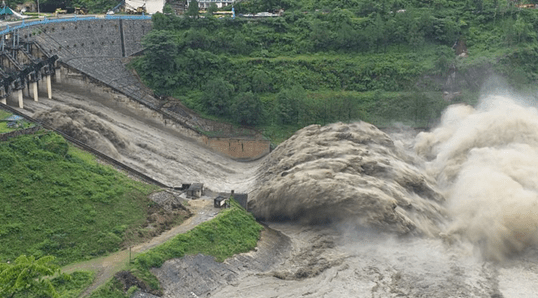
A detailed report this week in an international Water Power Magazine underlines the urgent need for India, as rest of the world to adopt adaptive reservoir management. This has become urgent as under changing climate, the Probable Maximum Precipitation figures are changing fast. In India, it has already increased by 35% in 84% of mainland. This makes the current reservoir operation models including rule curves and spillway capacities outdated. Human activities in the catchment and aging infrastructure are making the situation worse.
Continue reading “DRP 160326: Urgent need for adaptive reservoir management in India”