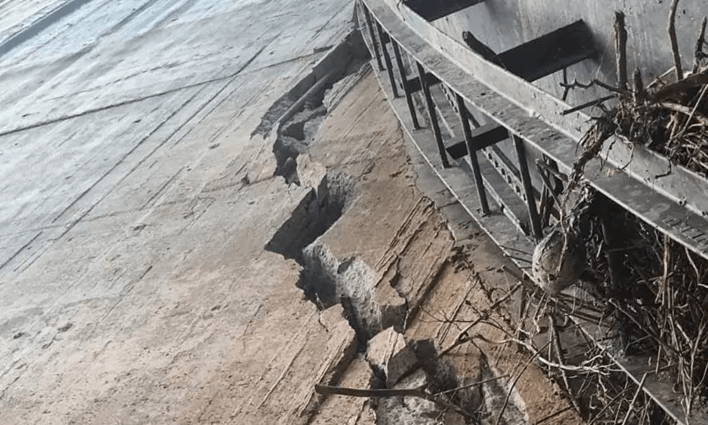
The news this week that the Union Ministry of Jal Shakti, not known for any concern for rivers, has set up the National River Research Centre (NRRC) is welcome with usual caveats. The fact that NRRC has been set up under the Wildlife Institute of India (WII), a body under Union Environment Ministry is not necessarily as positive sign since MoEF too is not known for any concern for rivers. Moreover, setting up of NRRC through NMCG and NRCD also does not provide any hopeful sign for the same reason. WII, where the NRRC has been situated for now itself has had at best mixed track record as far as rivers are concerned.
Continue reading “DRP 160226: National River Research Centre Welcome, will it help the cause of rivers?”Tag: groundwater
DRP 090226: NGT Critiques Shoddy CGWA report
The criticisms of the National Green Tribunal (NGT) on January 30 about the report of the Central Ground Water Authority (CGWA), set up under the Environment Protection Act 1986 in late 1990s is rather mild and seems symbolic, but it has the potential of open up a pandora’s box since CGWA has essentially totally failed in doing anything effective about groundwater regulation in India.
Continue reading “DRP 090226: NGT Critiques Shoddy CGWA report”WWD 2026: Top Ten Judicial Interventions to Protect Wetlands in India
Marking the World Wetlands Day (WWD) 2026, this overview presents top ten interventions by judiciary to protect the wetlands in India during 2025 so far. Apart from this, there have been several wetlands protection related court cases going on across the country during the year and reports of some of the relevant matters can be seen here. The judiciary has also been pursuing cases pertaining to conservation of several Ramsar wetlands in the country as covered in the first part of the overview here.
Continue reading “WWD 2026: Top Ten Judicial Interventions to Protect Wetlands in India”DRP 020226: Karnataka High Court Monitored Probe into sand mining menace?
An interesting sequence of events in Karnataka has led to the High Court Chief Justice taking up a suo moto case and suggesting a court monitored probe into the illegal sand mining menace in the state. One hopes this leads to a proper independent investigation, monitored by the High Court, culminating in ensuring community have the key role in monitoring and compliance of sand mining in their respective area, since that is the most important missing link in governance of sand mining.
Continue reading “DRP 020226: Karnataka High Court Monitored Probe into sand mining menace?”WWD 2026: Govts Wetlands Protection Actions mostly fail to convince
(Feature Image: An aerial shot of Madambakkam lake in Chengalpattu district, Tamil Nadu shows buildings on the banks of the waterbody: Source)
On occasion of World’s Wetlands Day 2026, this overview compiles top ten reports from 2025 covering decisions and steps taken by various state governments for the protection of wetlands in India. There could be some more relevant reports which we could not track and compile. The first part and second part of the overview have covered the continual degradation of Ramsar sites and other wetlands across the country.
Continue reading “WWD 2026: Govts Wetlands Protection Actions mostly fail to convince”WWD 2026: Top Ten Reports on Our continued Failure to Identify, Protect Wetlands
(Feature Image: Vegetation layer covering entire surface of Giri taal of Kashipur in US Nagar, Uttarakhand in Oct. 2025)
While the World Wetlands Day (WWD) 2026 on February 02 will be celebrated with “Wetlands and traditional knowledge: Celebrating cultural heritage” theme, the top ten reports about wetlands in India in one year since 2025 WWD shows our collective failure in protecting both the traditional knowledge and cultural heritage concerning Indian wetlands. At national level, the progess of identification and notification process of wetlands over 2.25 ha is very slow. Official health cards of very few wetlands are in public domain.
Continue reading “WWD 2026: Top Ten Reports on Our continued Failure to Identify, Protect Wetlands”World Wetlands Day 2026: India’s Ramsar Sites Facing Threats
(Feature Image: Dead fish floating on Ashtamudi Lake at Kadavur in Kollam in last week of Oct. 2025)
“Wetlands and traditional knowledge: Celebrating cultural heritage” is theme for global World Wetlands Day (WWD) 2026 celebrated annually on Feb 2. On the occasion, we share reports about 21 Ramsar wetlands from various Indian states underlining the worsening plight of Ramsar sites in India. This does not necessarily mean that the Ramsar wetlands not listed here are in any better state, it only means that media attention has not brought their stories in public domain with sufficient prominence. The state of Ramsar wetlands in India clearly shows complete lack of any governance in place to ensure that the Ramsar sites get protection from degradation, threats and destruction. Worryingly, even Ramsar Convention seems completely disinterested in doing anything to ensure protection of the wetlands that get Ramsar tag.
Continue reading “World Wetlands Day 2026: India’s Ramsar Sites Facing Threats”Dam Protest 2025: People Demands Development Not Displacement
The annual overview tracks top ten people’s resistance stories against large dam projects in India during 2025. It is encouraging to see that the year ended with the Odisha CM announcing scrapping of Samakoi dam project after strong opposition by local villagers. Interestingly, the NTCA and CEC have boldly underlined the threats to tribal people, tigers and forest biodiversity from proposed Morand-Ganjal dam in Madhya Pradesh and dams in Shivalik national park in Haryana. During the year, the villagers have organized mass protests against massive Guna and Dongari dams under PKC link project. Demanding basic information and consultation, the affected tribals have halted ground surveys for Basania dam project.
Continue reading “Dam Protest 2025: People Demands Development Not Displacement”DRP 291225: Looking back on 2025, Looking forward to 2026
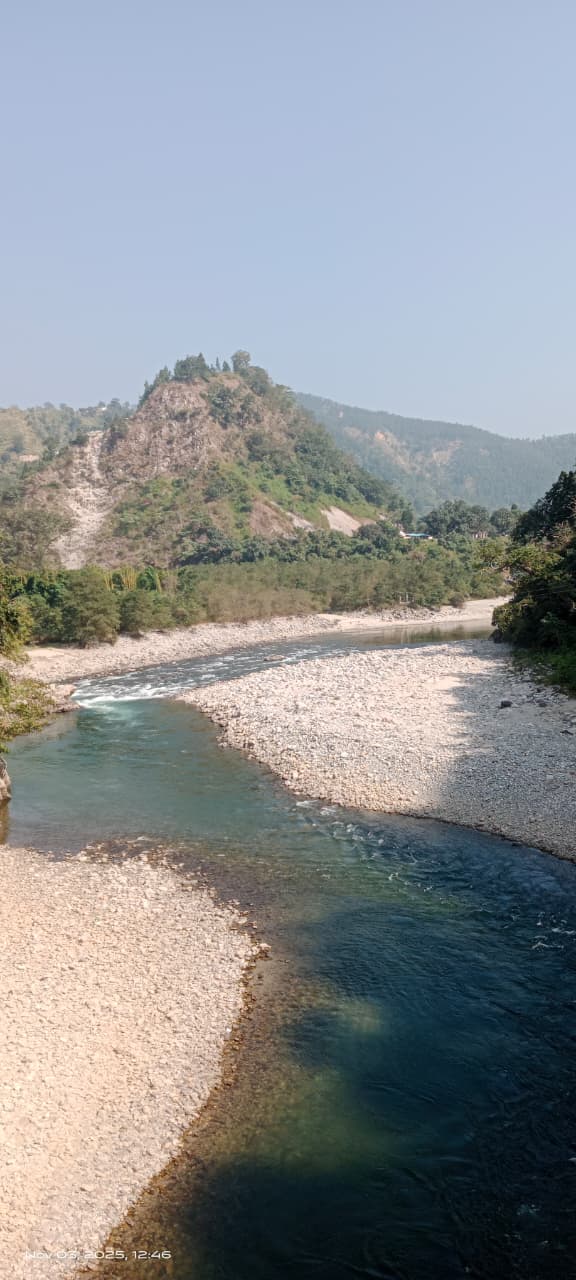
(Feature Image: Ramganga river at Marchula on Nov. 03, 2025. SANDRP)
As the year 2025 ends, reflecting on the DRP related developments over the year and even in this last DRP of 2025, one cannot but see largely pessimistic situation for India’s Rivers, Water Bodies, Hills and Mountains, Floodplains, and for the environment in general. As we saw during South West Monsoon 2025, the flood disasters have been so severe that the number of deaths in South Ais are the highest among all climate disasters of 2025 according to the just released Christian Aid report. The spread, intensity and frequency of the disasters are only going to increase, but we, including the government and the society seems to show little sincerity in dealing with this.
Continue reading “DRP 291225: Looking back on 2025, Looking forward to 2026”DRP 221225: Is it so difficult to understand the importance of Aravalli Mountains?
(Feature Image: Aravalli mountain ranges along the Bewar-Jaipur stretch. Credit.)
Why is it so difficult, for the Union Govt, MoEF, its experts, but most shockingly, for the Supreme Court to understand the importance of Aravalli Mountains – India’s most ancient and ecologically sensitive range? What exactly is driving the unacceptable decision of the apex court? According to the Forest Survey of India, applying the new definition would result in only around 8.7% of the mapped Aravalli landforms being eligible for protection, leaving a substantial portion unregulated.
Continue reading “DRP 221225: Is it so difficult to understand the importance of Aravalli Mountains?”