Indian Meteorological Department · Monsoon · Rainfall

District Wise rainfall in India in June 2020

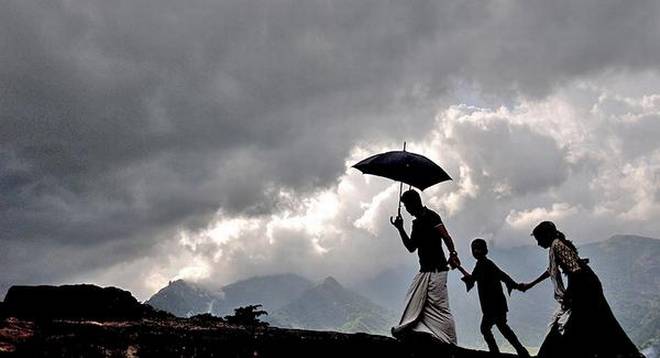
Here we present the rainfall figures from India Meteorological Department in the just concluded month of June 2020, the first month of SW Monsoon 2020. The overall rainfall at all India level in June 2020 was 196.2 mm, 18% above normal rainfall in the month at 166.9 mm. It was 33% deficit last year.

This is India’s wettest June 12 years, The Times of India reported on July 1, 2020. Agriculture Ministry Data shows that sowing is 68% higher at 31.56 m ha. The June rainfall was 202 mm in 2008, the rainfall this year is the highest since then. All four IMD regions (Northwest, Central, South, East & NE) have recorded surplus rainfall, the surplus is the highest in Central (30.5% surplus) and E-NE (15.7%) regions. North West India had the lowest surplus at 3.5%. IMD Head Mrutyunjay Mohapatra said that whole of India was covered by monsoon on June 26, 12 days ahead of the normal date of July 8.

State wise rainfall Three states had large excess rainfall (above 60% surplus rainfall), namely Bihar, Madhya Pradesh and Sikkim. Eight states/UTs (Union Territories) had excess rainfall (20-59% surplus): Assam, Meghalaya, UP, Chhattisgarh, Maharashtra, Telangana, Andhra Pradesh & Andaman and Nicobar. Nine had deficient rainfall (20-59% deficit): Lakshadweep, Mizoram, Manipur, J&K, Ladakh, Himachal Pradesh, Delhi, Dadar & Nagar Haveli. Rest of India had Normal Rainfall. Continue reading “District Wise rainfall in India in June 2020”
Environment Impact Assessment · Ministry of Environment and Forests

Draft EIA Notification 2020: Dilutes EIA process & encourages violations

Guest Blog by Amruta Pradhan

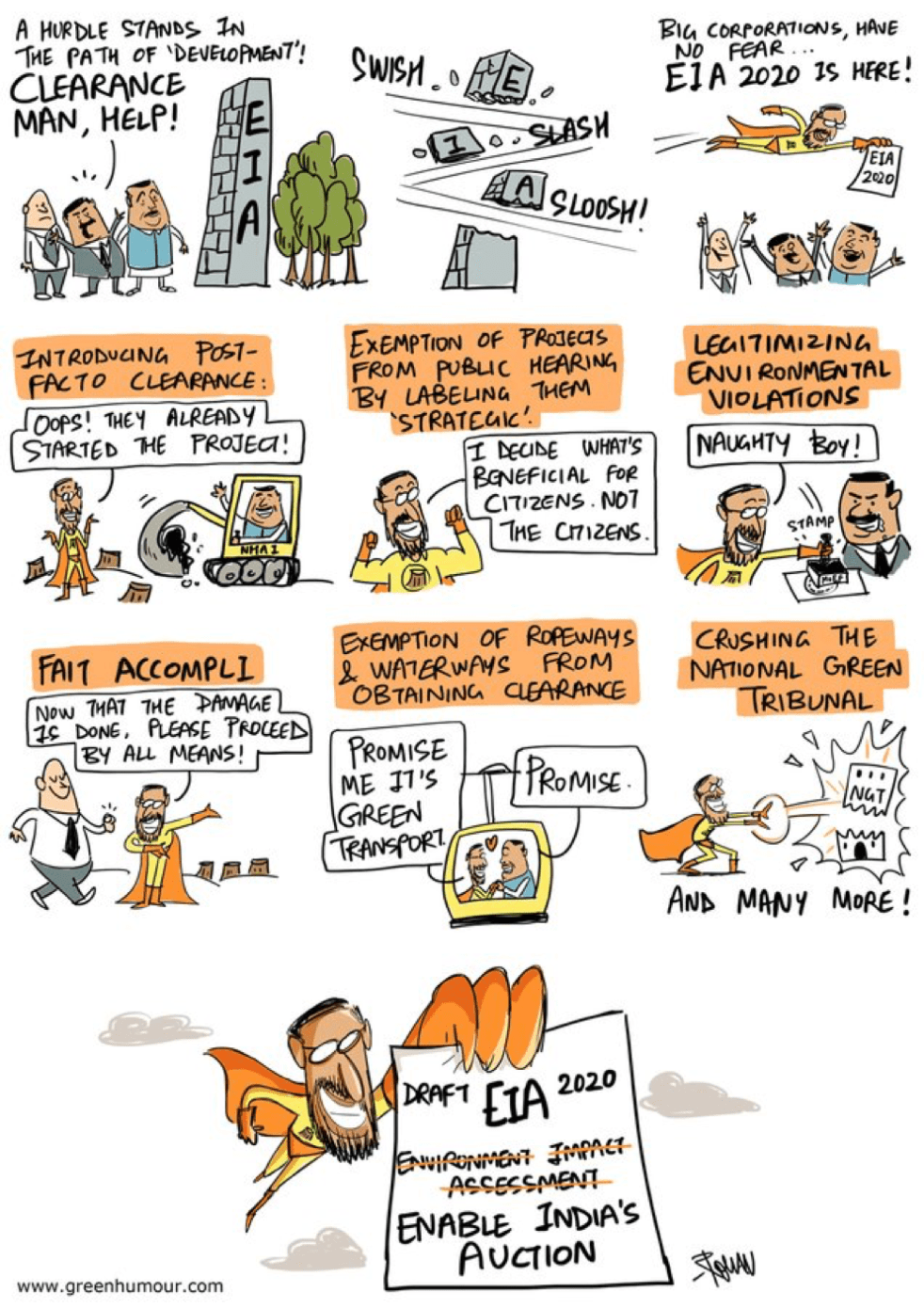
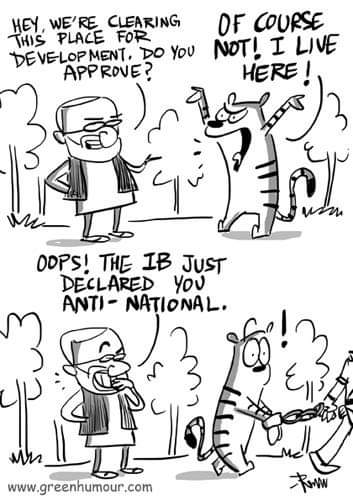
The Ministry of Environment Forests and Climate Change (MoEFCC) has issued Draft Environmental Impact Assessment (EIA) Notification 2020 in March 2020. The opening paragraph of the draft notification 2020 states that the purpose of the notification is “imposing certain restrictions and prohibition” on the development projects. The purpose of amending the notification is said to “make the process more transparent and expedient”. However, as one reads through the 83 paged verbose notification and puts several pieces of the proposed amendments together, it becomes more and more clear that the purpose is in fact dilution of the EIA process, protecting the project proponents from any kind of public scrutiny, covering up for the violations and making the Environmental Clearance (EC) process more and more non-transparent, undemocratic, unjust and unaccountable. Continue reading “Draft EIA Notification 2020: Dilutes EIA process & encourages violations”

Environment Impact Assessment · Ministry of Environment and Forests

Draft EIA 2020 will weaken every aspect of EIA process

Experience of the current Environment Impact Assessment (EIA) process under the current EIA notification of Sept 2006 tells us that the process needs strengthening in every aspect. The Narendra Modi government has now proposed a new EIA notification, whose draft has been made public, strangely during the lockdown period. The draft notification, in stead, proposes weakening of the whole EIA process in practically every aspect. Continue reading “Draft EIA 2020 will weaken every aspect of EIA process”

Climate Change · Ministry of Environment and Forests

Earth Day 2020: Can we sustain the Collateral Benefits of Covid Lockdown?

Clearer rivers[i], cleaner air, more birds and wildlife around us, reduced emissions of global warming gases, rock bottom demand of fossil fuels, quieter surroundings, view of Himalayan mountains from Jalandhar and other places, more flamingoes in Mumbai, reduced road accidents, to name a few. Can we call them collateral Benefits of Covid-19 induced lockdown? It’s true that with the kind of unprecedented sickness, misery and impacts that Covid-19 has brought, with all the attendant Hardships to the poor, the death and the sickness of thousands, it’s difficult to talk about any benefits of this episode. But on this 50th anniversary of Earth Day 2020 on April 22, a lot of people are talking about healing of the earth. (The above photo is a screenshot from official Earth Day 2020 website.)

And there is little doubt that this indirect fall out of man made Covid-19 crisis, this healing of the earth was long overdue. It has in fact brought people closer to the nature. Naturally, question arises, how can we sustain these collateral benefits of this crisis? It will of course demand a lot of doing by each of the earth resident to make it possible to sustain these benefits. Continue reading “Earth Day 2020: Can we sustain the Collateral Benefits of Covid Lockdown?”

Indian Meteorological Department · Monsoon

IMD’s 1st Long Range forecast for SW monsoon 2020

IMD’s 1st Long Range Forecast for SW Monsoon 2020 on Apr 15, 2020[i] says:

– Rainfall will be normal (100% of LPA: Long Period Average of 88 cm). IMD says Neutral El Nino Southern Oscillation prevails in Pacific Ocean and Neutral Indian Ocean Dipole conditions prevail in Indian Ocean, likely to remain throughout the monsoon as per most models, some indicate weak La Nina conditions in Pacific Ocean in second half of monsoon.

– FORECAST BASED ON MONSOON MISSION COUPLED FORECASTING MODEL There is high probability (70%) of monsoon rainfall being above average to excess (over 104% of normal)

– FORECAST BASED ON OPERATIONAL STATISTICAL ENSEMBLE FORECASTING SYSTEM: 9% probability of Deficient monsoon (Over 10% below normal); 20% probability of below normal (90-96% of normal) rainfall; 41% probability of normal monsoon (96-104% of normal rains); 21% probability of above normal (104-110% of LPA rains) and 9% probability of excess (over 110% of normal) rains.

Continue reading “IMD’s 1st Long Range forecast for SW monsoon 2020”

CWC - Central Water Commission

2019 All India summary of CWC flood forecasting sites

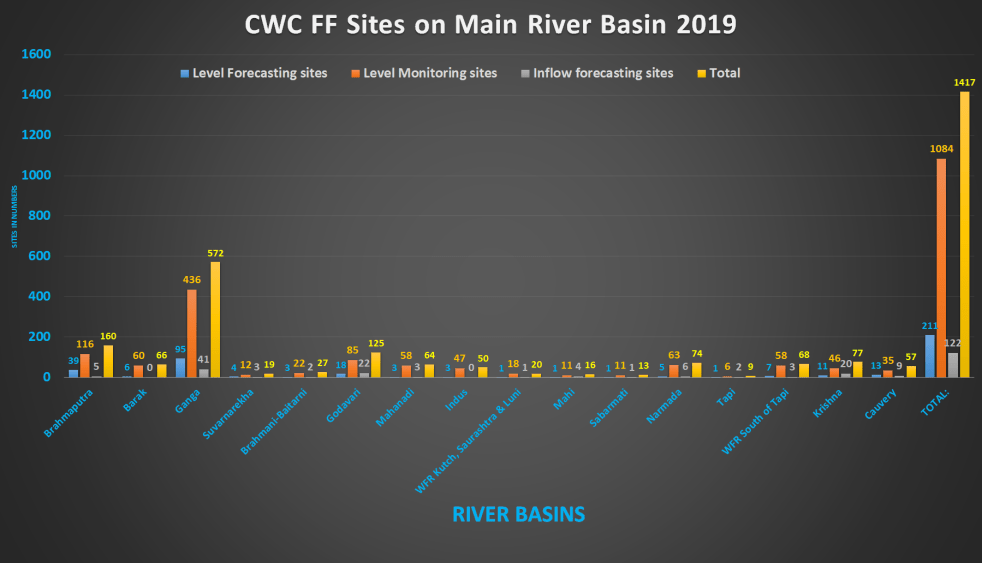
This article provides and overview of flood forecasting work of Central Water Commission (CWC) in 2019 after looking closely at each site details for the five regions of India: North East[i], East[ii], North[iii], West[iv] and South[v] India.

The table below provides an overview of number of Level Forecasting, Level Monitoring and Inflow forecasting sites as per CWC’s FF website during 2019 floods for all the states and regions of India.

Continue reading “2019 All India summary of CWC flood forecasting sites”

CWC - Central Water Commission

Rivers That Reached New Highest Flood Level during Monsoon 2019

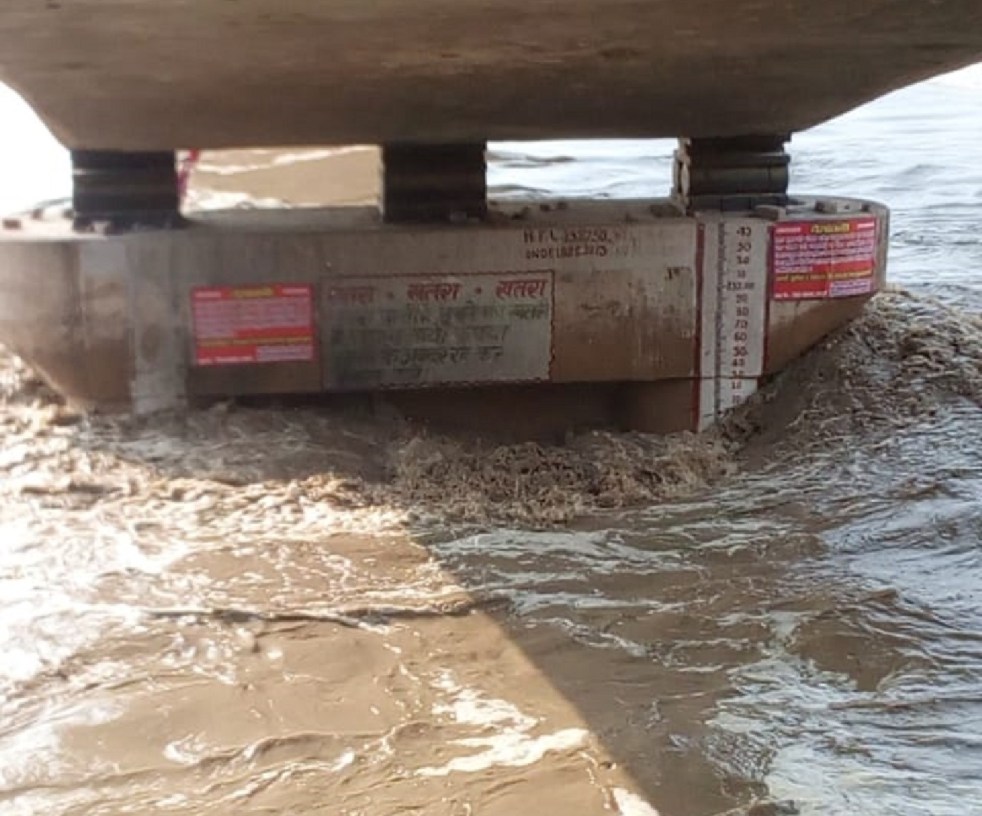
In the monsoon season of 2019 Indian rivers have crossed Highest Flood Level (HFL) at around 37 Level Forecasting and Level Monitoring sites across the country. This account attempts basin wise details and description of HFL breached by the rivers.   

Brahmaputra Basin (Assam)

In Brahmaputra basin 2 sites, 1 Aie NH Xing Level Monitoring site on River Aie in Barpeta district of Assam and Dhubri (Level Forecast) site on River Brahmaputra in Dhubri district of Assam narrowly crossed the HFL in July 2019.

Also River Barak at ANIPUR   site in Karimganj district on May 24 and River Brahmaputra at Goalpara site in Goalpara district rose close to the HFL level on July 17, 2019. As per CWC (Central Water Commission) FF Website, Goalpara site has not crossed HFL since 1954.

Continue reading “Rivers That Reached New Highest Flood Level during Monsoon 2019”

CWC - Central Water Commission

South India Overview of CWC Flood Forecasting Sites 2019

Flood Forecasting (FF) is one of the important activities of Central Water Commission (CWC), which is undergoing expansion and improvement, but there is still a huge scope for improvement. In order to better understand the CWC’s flood monitoring and forecasting work, in this article, we have given an overview of CWC’s flood forecasting and monitoring sites in South India, the last region to be covered for 2019 flood season. It includes state wise list of CWC’s Level Forecast, Inflow Forecast and level monitoring sites in South Indian states of Andhra Pradesh, Telangana, Karnataka, Tamil Nadu, Puducherry (no FF sites) and Kerala. Similar report has been published for North India[i] and North East India[ii], East India[iii] and West India[iv].    Continue reading “South India Overview of CWC Flood Forecasting Sites 2019”

CWC - Central Water Commission

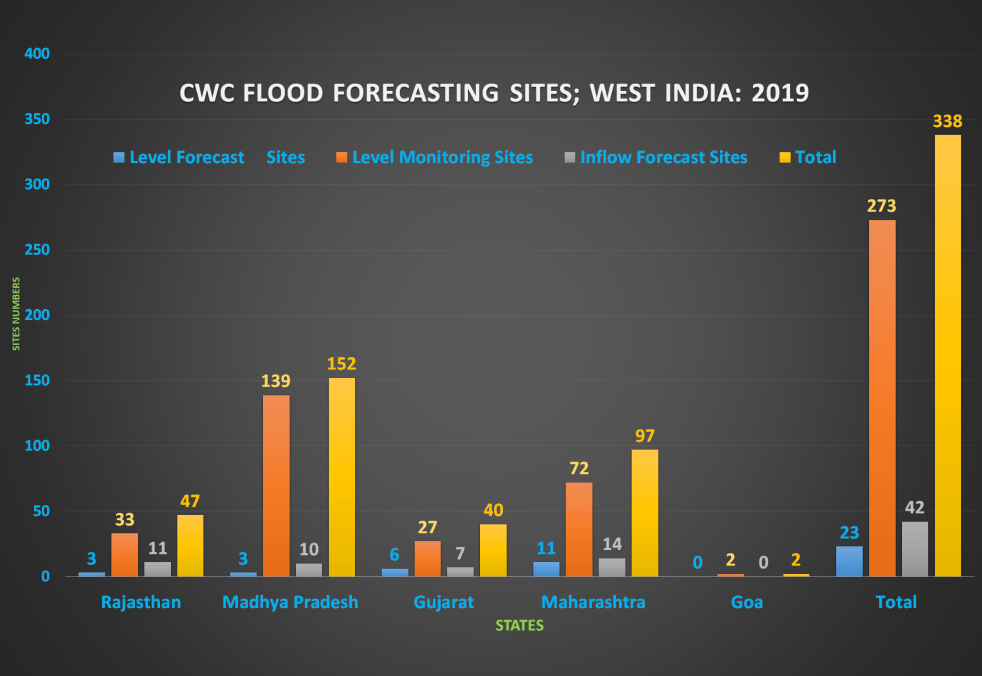
WEST INDIA: Overview of CWC Flood Forecasting Sites 2019

Central Water Commission (CWC) is the only agency doing flood forecasting in India. This article attempts to present an overview of CWC’s flood forecasting and monitoring sites in West India. It includes state wise list of CWC’s Level Forecasting, Inflow Forecasting and level monitoring sites in 5 States in West India: Rajasthan, Gujarat, Maharashtra, Madhya Pradesh, Goa. Similar report has been published for North India[i] and North East India[ii] and East India[iii]. A similar effort was made last year which can be seen here: Overview of CWC Flood Forecasting Sites 2018: WEST INDIA. 

Continue reading “WEST INDIA: Overview of CWC Flood Forecasting Sites 2019”

central water commission

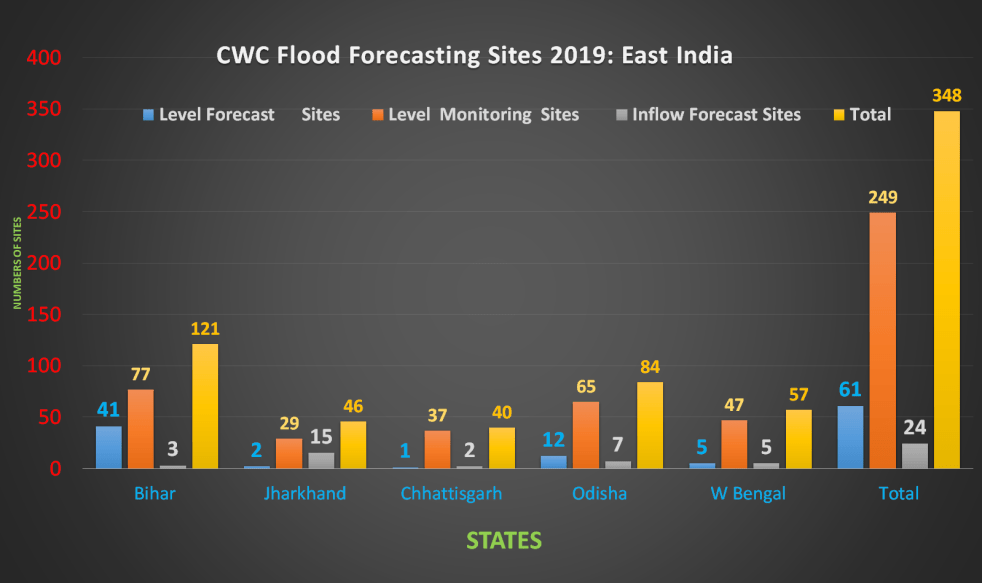
East India: 2019 Overview of CWC Flood Forecasting Sites 

Central Water Commission (CWC) is the only agency doing flood forecasting in India. CWC’s Flood Forecasting (FF) is available on its website[I]. In this article we have given an overview of CWC’s flood forecasting and monitoring sites in East India. It includes state wise list of CWC’s Level Forecast, Inflow Forecast and level monitoring sites in East India. Similar report has been published for North East India[II] and North India[III] and we hope to publish reports covering other regions of India soon. East India includes five states: Bihar, Jharkhand, Chhatisgarh, Odisha and W Bengal.

Continue reading “East India: 2019 Overview of CWC Flood Forecasting Sites “