CWC - Central Water Commission

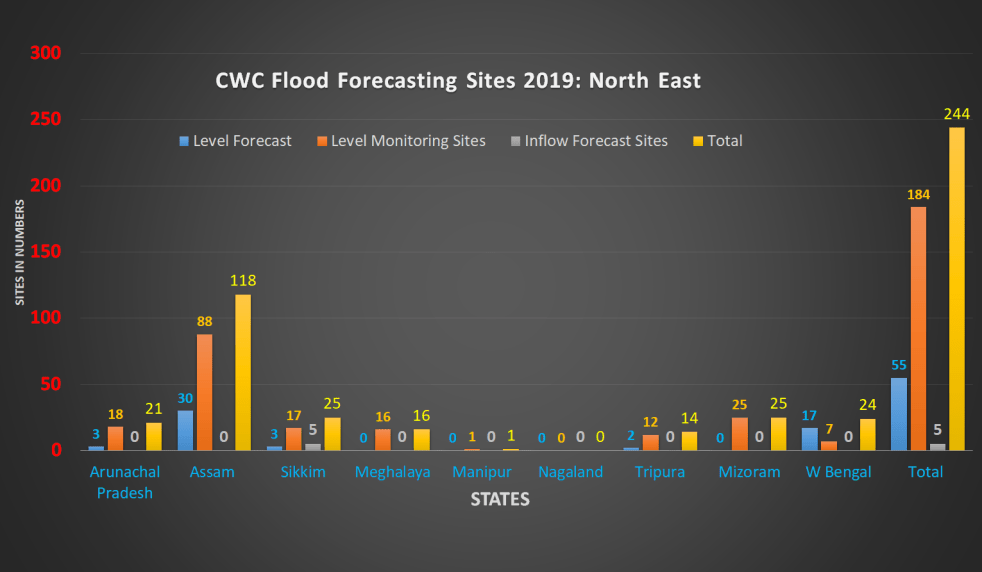
Overview of CWC’s Flood Forecasting Sites 2019: North East India

Central Water Commission (CWC) monitors water level at several hundred sites in the country during monsoon every year. It publishes this information on its Flood Forecast (FF) website[I]. The website has three ways to get this information: Data Flow Map, List Based Exploration, and Hydrograph view. The Hydrograph view provides information for past 72 hours, supposed to be updated every hour. This is in addition to the list of current forecasts.

The CWC’s FF website had in 2018 monsoon, information about 226 Flood Forecast Sites in the country comprising of 166 Level Forecast Sites and 60 Inflow Forecast Sites. It also monitors 700 Flood sites, information made available through List Based Exploration and Hydrograph View. As reported below, the number of sites have gone up during 2019 monsoon, which is welcome. However, most of the new sites, along with some old ones do not have key information.

Continue reading “Overview of CWC’s Flood Forecasting Sites 2019: North East India”
CWC - Central Water Commission

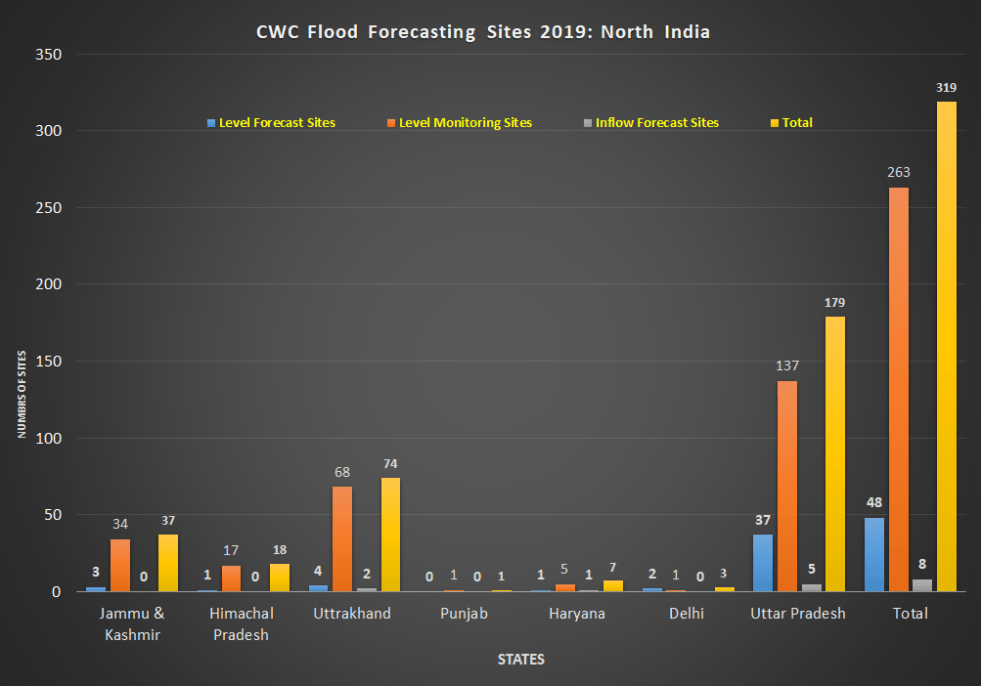
Overview of CWC Flood Forecasting Sites 2019: North India

Flood forecasting is an important activity during monsoon, considering the huge and increasing flood prone area, flood frequency, intensity and flood damages. Accurate and timely flood forecasting can hugely help reduce the damages due to floods. Central Water Commission (CWC) is the only agency responsible for flood forecasting in India. To understand the CWC’s flood forecasting better, we have compiled the list of the various flood, inflow forecasting sites and flood monitoring sites in India.

In this compilation, we have given state wise list of CWC’s flood forecasting, flood monitoring and inflow forecasting sites in North India, comprising of states of Jammu & Kashmir, Punjab, Haryana, Himachal Pradesh, Uttarakhand, Uttar Pradesh, Delhi and Chandigarh. It includes available details like name of river, sub basin, Warning level (WL), Danger Level (DL), High Flood Level (HFL), Full Reservoir Level (FRL), Maximum Water Level (MWL), as applicable. As we see below, there are many gaps in this basic information for the sites that are part of CWC’s list. A similar zonewise overview of CWC’s sites was compiled in 2018, which can be seen here. Overview of CWC Flood Forecasting Sites 2018: North India. We have brought this updated compilation for 2019 as there are large number of changes as ou can see.

Continue reading “Overview of CWC Flood Forecasting Sites 2019: North India”

CGWB · CWC - Central Water Commission

Can Outdated Water Institutes steer India out of dire crisis?

As even NITI Aayog report acknowledged in June 2018[i], there is consensus that India is facing dire water crisis, which will only get worse. This was also predicted by the World Bank way back in their 2006 report called “India’s Turbulent Water Future”. But do we have the institutions that are capable of taking us out of this crisis? Remember the current institutes are at the root of our water crisis.

Imagine you have to forecast flood using a mathematical model run on a Pentium processor; or manage your office with typewriters instead of a desktop! How frustrating isn’t it, to manage an office with the near obsolete typewriter or run a flood forecasting model using outdated Pentium processor? Continue reading “Can Outdated Water Institutes steer India out of dire crisis?”

CWC - Central Water Commission · Floods

HFL crossing flood events during India SW Monsoon 2018

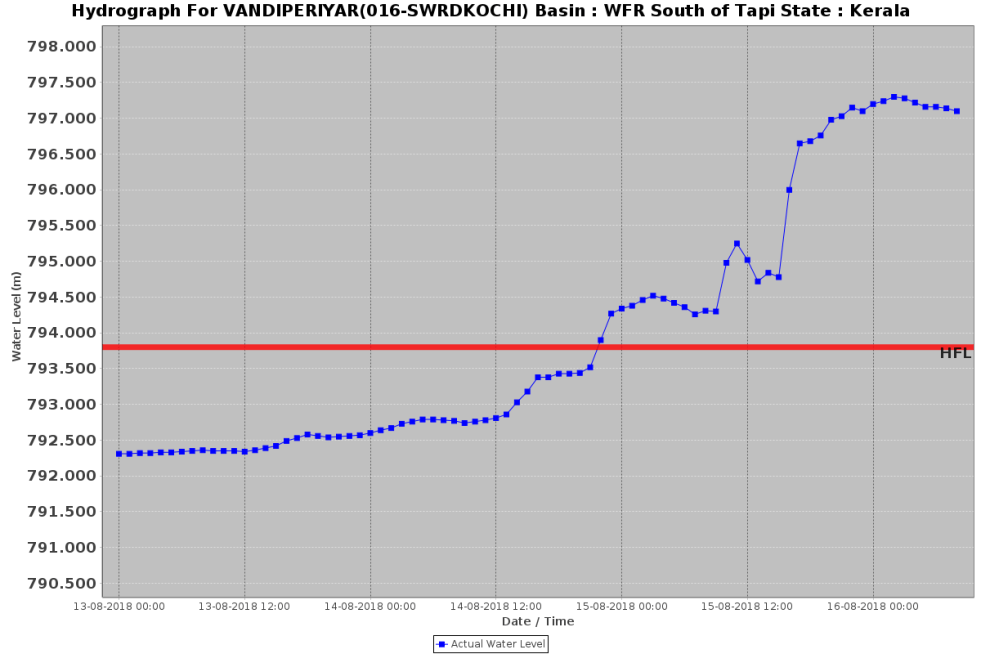
Even as the rainfall during South West Monsoon of India during June Sept 2018 was 9.4% below normal, a number of HFL (Highest Flood Level) crossing flood events were recorded on CWC’s (Central Water  Commission) Flood Forecasting (FF) website[i]. Since CWC’s FF site does not provide archived information or comprehensive list of such events, we are here putting together a list of such events that we had noted during the SW monsoon, for future records and also understanding trends of high floods. Continue reading “HFL crossing flood events during India SW Monsoon 2018”

Indian Meteorological Department · Rainfall · Rivers

River Wise Rainfall in Monsoon 2018

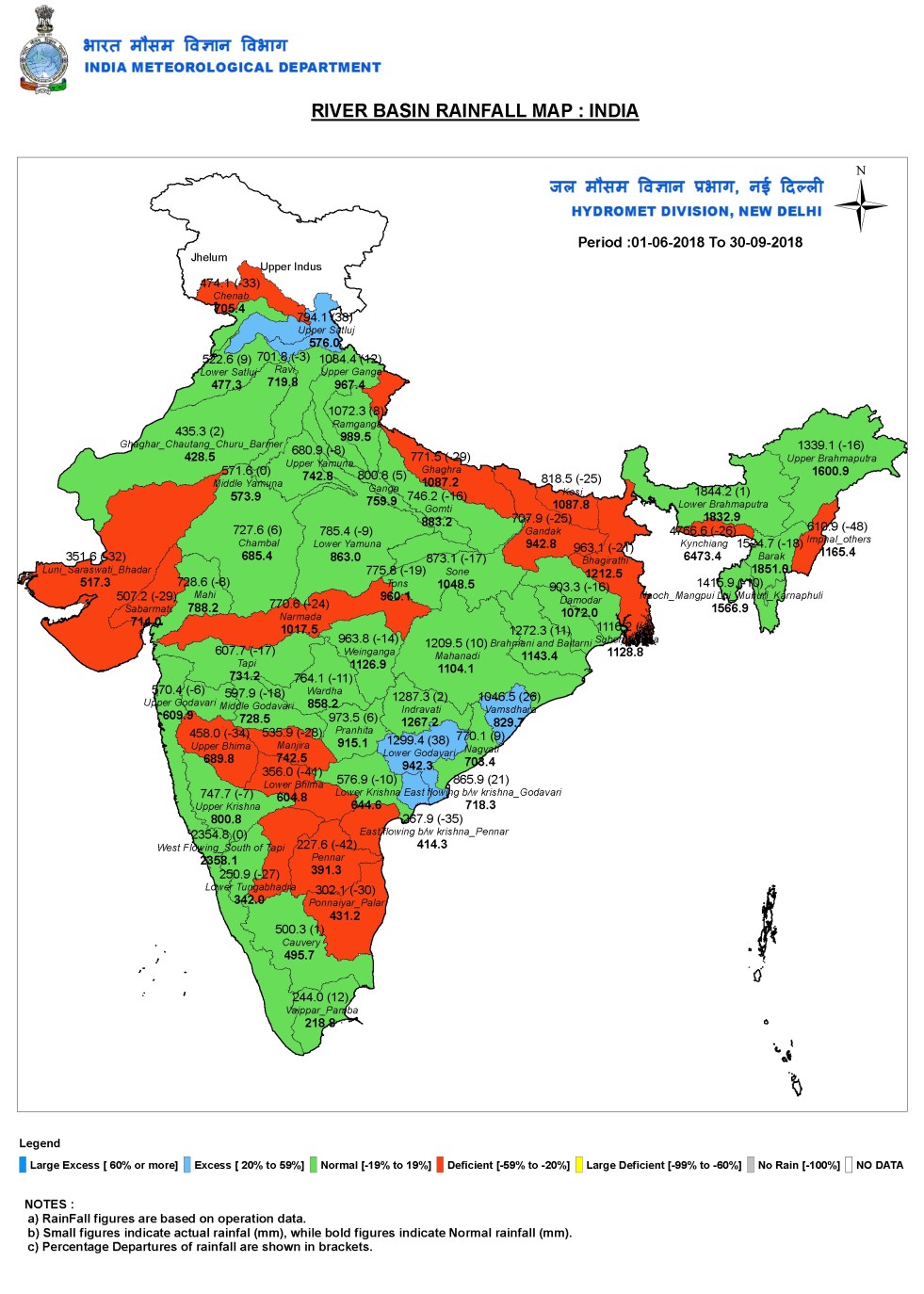
India’s most important season from water point of view, the June-Sept South West Monsoon has just ended officially on Sept 30, 2018. India Meteorological Department (IMD) reported that India received 804 mm rainfall in these four months of monsoon 2018, compared to normal rainfall of 887.5 mm. So Monsoon 2018 rainfall was 9.4% below normal, also proving IMD forecast wrong. Continue reading “River Wise Rainfall in Monsoon 2018”

Ganga · Ministry of Water Resources

What ails Ganga: Why Namami Gange is spectacular failure

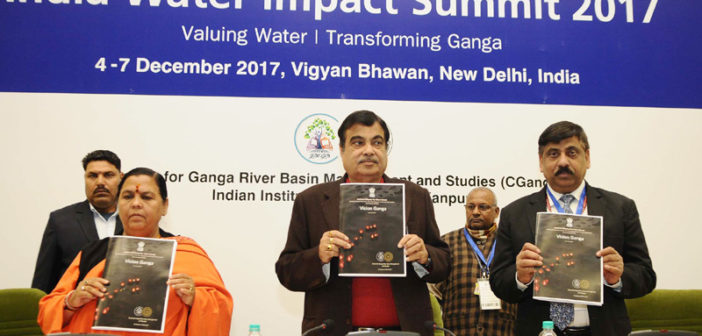
Ganga river basin’s importance is well acknowledged. The World Bank, that is funding a currently ongoing USD 1 Billion project for Ganga Clean up says in its Project Appraisal Document[i]: It’s the most populous basin in the World. 50% of India’s poor are in the five states along the main stem of Ganga: Uttarakhand, Uttar Pradesh, Bihar, Jharkhand and W Bengal. The basin of the 2525 km long river spans four countries (China, Nepal, India, Bangladesh) and 11 Indian states. More than 60 million people came to the Ganga river in the city of Allahabad for pilgrimage in January 2007 during Kumbh Mela, making it the largest gathering in the world. It will again happen in January 2019. Continue reading “What ails Ganga: Why Namami Gange is spectacular failure”

central water commission · CWC - Central Water Commission · Floods

Reply to CWC response on SANDRP’s article on CWC’s flood forecasting in NE India

On Aug 5, 2018, SANDRP had uploaded blog[i] titled: “Overview of CWC’s Flood Monitoring & Forecasting in North East India”. CWC posted its 3-page reply to it around 7 pm on Aug 7, 2018.

Firstly, we welcome CWC’s reply to SANDRP blog. Here some responses to the content of what CWC has replied. Continue reading “Reply to CWC response on SANDRP’s article on CWC’s flood forecasting in NE India”

Cauvery · central water commission · Dams · Disasters · Floods · Karnataka · Tamil Nadu

Cauvery is facing very serious flood risk, but CWC is in slumber

(The figure above is screen shot of CWC Flood forecasting site showing no warning signs even at 5 pm on 230718)

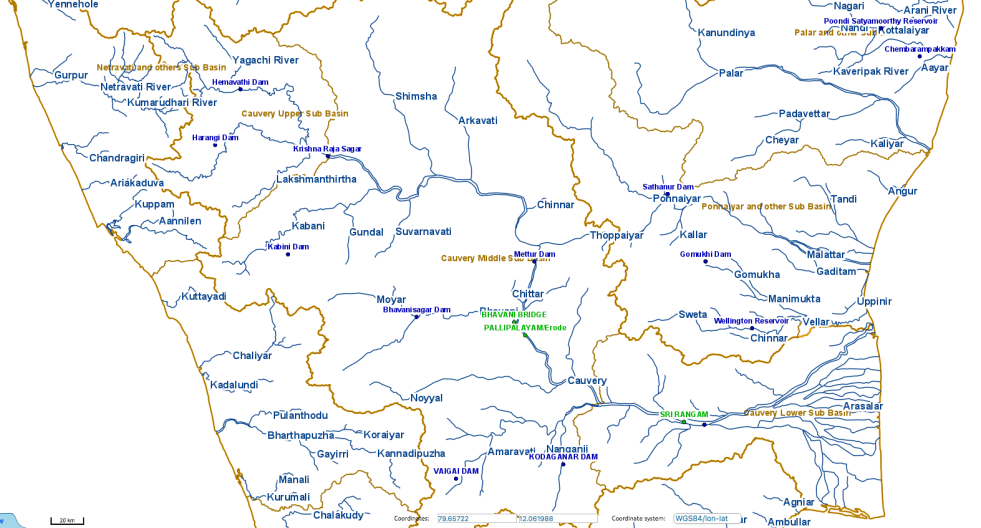
Almost all the big dams in Cauvery Basin are full on the earlier ever monsoon date this year. This includes Krishnaraj Sagar, Mettur, Kabini, Harangi, Hemavathi and Bhavanisagar. They are almost full and have started releasing large flows to the downstream areas. This is when we are past just about six weeks of South West Monsoon, the North East monsoon would come after that. It means that the basin is facing major risk of floods in next 2-5 months. And yet Central Water Commission, India’s flood forecasting agency, seems to be in deep slumber. It has not even bothered to update the flood readings on its designated sites from the 2017 figures.  Continue reading “Cauvery is facing very serious flood risk, but CWC is in slumber”

CAG Report · Dams · Groundwater · Irrigation · Ministry of Water Resources

AIBP: just a pack of unverifiable claims or worse?

Union Ministry of Water Resources (MoWR) has been claiming that Accelerated Irrigation Benefits Program (AIBP) is a success story of Modi government and some media stories[i] are happy to uncritically report those claims. If we take a close, objective look at the MoWR website[ii], we gather that the claims of success is just that: claim of the ministry. There is no evidence available on the ministry’s website or in the media report that support such claims to show that additional irrigation has actually been achieved. Continue reading “AIBP: just a pack of unverifiable claims or worse?”

Dams · Environment Impact Assessment · Expert Appraisal Committee · Himalayas · Irrigation · Landslide · Ministry of Environment and Forests · Nepal · Public Hearing

Who exactly needs the Pancheshwar Dam?

Bolo Jai Jai Baba Bhole”, the Prime Minister Narendrabhai Modi, while speaking at Kedarnath in Uttarakhand in Oct 2017[i], asked the people in audience to chant with him. Indian deity Mahadev, the presiding deity at Kedarnath on the banks of Mandakini river is possibly the closest to rivers and nature among all the deities, as is also clear from his attire. Baba Bhole is one of the many names of this deity. Incidentally, the massive, controversial Pancheshwar Dam a pet project of Mr Modi will also submerge the Pancheshwar Mahadev Temple, where too, the presiding deity is same Bhole Baba. But we will come back to Bhole Baba. Continue reading “Who exactly needs the Pancheshwar Dam?”