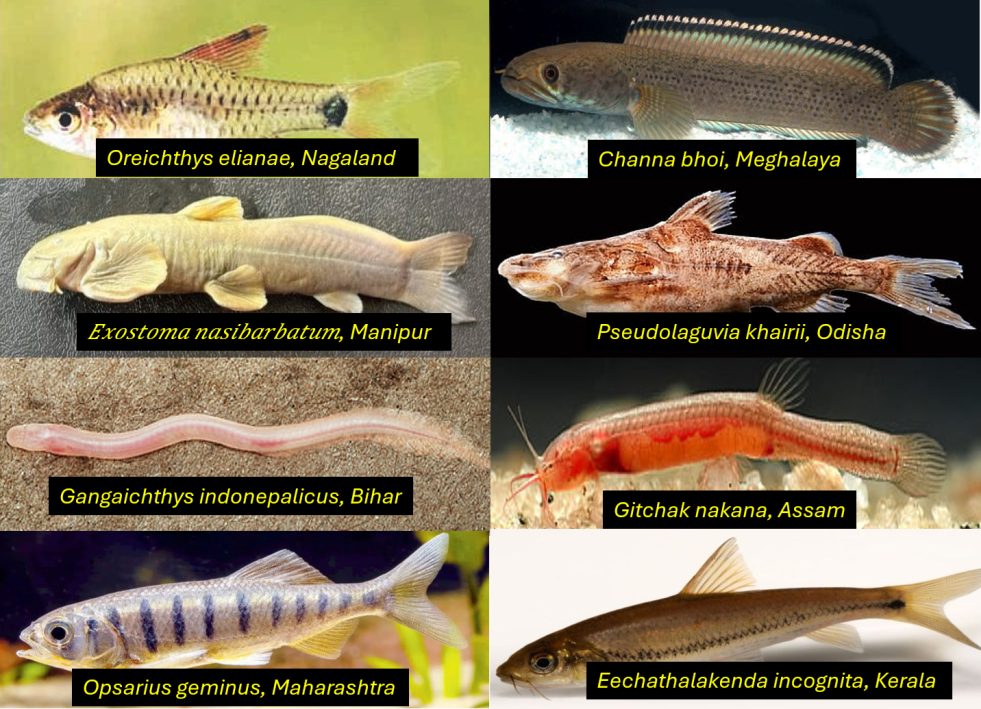
World Fisheries Day (WFD) has been celebrated annually on November 21 since 1997 to highlight the importance of sustainable fisheries management, aquatic ecosystem protection and the livelihoods of fishing communities. The theme of the 29th World Fisheries Day is “Empowering People for Change: Advancing Decent Work in Fisheries and Aquaculture, Particularly for Youth and Women.” To mark the occasion, we compile here top ten reports on new freshwater fish species discovered in India during past one year.
There are several new freshwater fish species either discovered or formally described in India in 2026. The findings show that the Northeast region accounts for a large share of these discoveries, followed by the Western Ghats. Two remarkable discoveries are subterranean fish species found in groundwater in Bihar and Assam, while new catfish species have been described from rivers and streams in Odisha and Manipur. Other important findings include new or previously unrecognized fish species from Maharashtra’s Krishna basin, Karnataka’s Cauvery basin and Kerala’s Periyar river system. Most importantly, these discoveries reveal the still-undocumented diversity of fish in Indian rivers and freshwater ecosystems. They also highlight the threats these species and their habitats face from pollution, dams, habitat destruction, river modification, invasive species and groundwater over-extraction, underlining the urgent need for better research and conservation.
1 Assam: Gitchak nakana the first groundwater-dwelling fish from Northeast Abstract: Of the more than 300 known subterranean fishes, fewer than 10% have been recovered from aquifers and are encountered only rarely and serendipitously. Here we report the discovery of a tiny, blind loach of the family Cobitidae from a dug-out well in Assam, India, which exhibits a number of characters commonly associated with subterranean life, so-called troglomorphies. This loach, described here as Gitchak nakana, represents a new genus and species, differing from all other genera of cobitids by a number of unique characters. The most unusual among these is the complete lack of a skull roof with the brain covered dorsally only by skin. Gitchak nakana is the first aquifer-dwelling (phreatobitic) fish from Northeast India, and marks the first discovery of a previously unknown subterranean fauna in this part of Asia.

In the study, these scientists have identified North-east India’s first known groundwater-dwelling fish, a tiny blind species called ‘Gitchak nakana’. The finding expands our understanding of subterranean biodiversity in India and highlights the urgent need to protect groundwater ecosystems that are increasingly threatened by over-extraction, pollution, and urban expansion.
The discovery raises an exciting question: could Northeast India’s aquifers harbour more undiscovered subterranean species? Researchers believe this find signals the presence of a specialized and previously unknown groundwater fauna in the region, comparable to that known from the lateritic aquifers of the Western Ghats.
However, Gitchak nakana has so far been found in only a single well, and its exact location remains undisclosed to prevent over-collection. Past experience, such as the appearance of Meghalaya’s cave mahseer Neolissochilus pnar in the international aquarium trade, underscores the need for caution. Beneath the soils and sediments of Northeast India, an invisible ecosystem may be thriving, one that science is only just beginning to uncover.
1A Rakthamichthys anchi, a new species of phreatobitic synbranchid eel Abstract: Rakthamichthys anchi, a new species of phreatobitic synbranchid is described from wells in a small village in Goalpara District. It is distinguished from the northeastern Indian R. rongsaw, and the Western Ghats congeners R. roseni, R. digressus, and R. mumba by absence of lateral-line canal pores in the frontal. From R. roseni, R. digressus, and R. mumba, it is further distinguished by more preanal vertebrae (90–100 vs. 76–88 in) and from R. indicus by more vertebrae (159 vs.162–169).
It is also distinguished from the Western Ghats species by an uncorrected p-distance of ~15–20% in the barcoding gene. From R. roseni, the only Western Ghats species for which detailed osteological information is available, R. anchi is distinguished by several anatomical characters. The discovery of R. anchi from wells in the same village in which Gitchak nakana Britz et al. was recently described highlights the presence of a formerly unknown and highly dynamic subterranean habitat: the groundwater aquifers in alluvial deposits in northeast India.
Interestingly, these wells are about 1.5 metres wide and roughly 7 metres deep, with water sitting around 2.5 metres below the surface without sunlight. This may be the reason why the eel lost its sight entirely, and its body carries no pigment at all. Its blood red colour, which gives the species its name, actually comes from blood vessels showing through its almost transparent skin. In fact, the name anchi is a Garo word meaning ‘blood’.
The Rakthamichthys genus of phreatobitic (residing exclusively within the phreatic zone of groundwater aquifers) swamp eels (Synbranchidae) is endemic to India. After Rakthamichthys rongsaw, Raktℎamicℎtℎys ancℎi is now the second swamp eel of the genus to be discovered in the Northeast. The other four members of the genus have been recorded from wells and groundwater aquifers in the Western Ghats, thousands of kilometres away in western and southern India.
2 Meghalaya: New species of snakehead fish discovered in Ri-Bhoi Scientists discovered a new species of snakehead fish from a small mountain stream near Iewmawlong village in Ri-Bhoi district of Meghalaya, marking a significant addition to India’s freshwater biodiversity. The newly-identified species has been named Channa bhoi, after the indigenous Bhoi people of the Khasi tribe who inhabit the Ri-Bhoi region. The discovery has been formally documented in the international peer-reviewed journal Ichthyology & Herpetology, published by the American Society of Ichthyologists and Herpetologists.
Specimens were collected during field surveys conducted in 2021 from a shallow hill stream flowing through rocky terrain with sandy substrates and dense riparian vegetation near Nongpoh. According to the researchers, Channa bhoi belongs to the “Gachua group” of snakehead fishes, a group known for its high diversity in the Eastern Himalayan region. The new species can be distinguished from its close relatives by a unique colour pattern, characterised by a bluish-grey body marked with minute black spots on each scale, forming eight to nine horizontal rows of broken lines along the sides.
The discovery brings the total number of Channa species recorded from India to 26 and highlights Meghalaya as a major hotspot for snakehead fish diversity. Scientists have emphasised that many hill-stream species in Meghalaya remain understudied and may still be awaiting discovery. The study adds to growing scientific evidence that Meghalaya’s freshwater ecosystems are of exceptional ecological importance and warrant stronger conservation attention, particularly in the face of habitat alteration and unregulated collection of ornamental fish species.

Scientists note that Meghalaya, particularly the Khasi and Ri-Bhoi hills, has emerged as a centre of snakehead fish diversity, with several new species described in recent years. The discovery of Channa bhoi once again highlights how Meghalaya’s streams—often flowing past homes and villages—can still hold species unknown to science. Researchers and conservationists say the finding also underlines the need to protect small hill streams from pollution and unregulated development, as such narrowly distributed species could vanish before they are even documented. For Ri-Bhoi, the discovery is more than a scientific milestone—it is a reminder that the district’s natural wealth flows quietly through its backyard streams.
3 Nagaland: Two new fish species Abstract: Two new species of fishes are described from the tributaries of the Brahmaputra River in Nagaland, Northeast India. Glyptothorax sentimereni, described from the Dikhu River, is distinguished from congeners in having the following combination of characters: ventral surfaces of pectoral spine and first pelvic-fin ray with plicae, serrated posterior edge of dorsal-fin spine, thoracic adhesive apparatus completely encinctured by striae, length of dorsal-fin spine 13.7–16.1% SL, body depth at anus 17.1–19.6% SL, length of dorsal-fin base 12.0–13.1% SL, post-adipose distance 20.8–22.2% SL, head depth 16.5–17.0% SL and dorsal-to-adipose distance 21.8–23.5% SL.
Oreichthys elianae, described from the Tsurang River, is distinguished from its congeners by a combination of characters that include 19+1 scales (with 5 pored scales) in longitudinal series, ½3/1/2½ scales in transverse row, 9 predorsal scales, 14–15 pores on cheek, a black spot on the caudal-fin base, and reddish fins.

The species belongs to a group of torrent-dwelling catfishes adapted to fast-flowing mountain streams and possesses a specialised adhesive structure on its underside that helps it cling to rocks in strong currents. Researchers said the discoveries add to the known aquatic biodiversity of the Brahmaputra river basin and highlight the ecological richness of Nagaland, located at the intersection of the Eastern Himalaya and Indo-Burma biodiversity hotspots.
4 Manipur: New Catfish Species Discovered in Chandel’s Chakpi River In a major contribution to biodiversity research and scientific knowledge, researchers have discovered a new species of freshwater catfish in the Bupal stream of the Dujang River, a tributary of Chakpi River in the Chindwin river system along the Indo-Myanmar border of Chandel district, Manipur. The newly identified species, named Exostoma Nasibarbatum, belongs to the family Sisoridae and has been described in the internationally recognised Journal of Natural History, published by Taylor & Francis.
The researchers noted that the newly discovered species is presently known only from its type locality in the Bupal stream. Its discovery highlights the rich but still insufficiently explored aquatic biodiversity of the Chindwin River drainage in Manipur. The study further emphasised that remote and relatively inaccessible streams in the region may harbour other undocumented species. It also underlined the need for further exploratory surveys, comprehensive ecological assessments and molecular studies to better understand the biodiversity and evolutionary history of the region.
The discovery of Exostoma Nasibarbatum marks an important milestone for scientific research in Chandel district, placing the district on the map of freshwater biodiversity research. Beyond its taxonomic significance, the finding also underscores the ecological importance of protecting the district’s rivers, streams and surrounding forest ecosystems. The research has brought scientific recognition to Chandel’s natural heritage and reinforced the importance of continued exploration and conservation of its unique freshwater ecosystems.
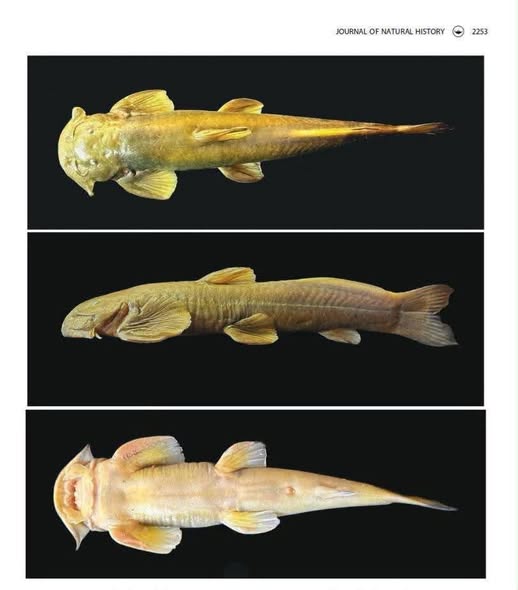
Unlike fish that spend much of their time swimming through open water, hill-stream catfishes such as Exostoma live close to the riverbed, where water rushes over rocks and boulders. A streamlined body helps a fish move through water, but Exostoma nasibarbatum has another advantage: its head and body are strongly flattened. This allows it to remain close to the rocky surface, reducing the force of the current acting against it. The most distinctive feature of the newly described species is also the one that inspired its scientific name. Nasibarbatum combines the Latin words nasus, meaning nose, and barba, meaning beard. It refers to the fish’s prominent nasal barbel, a slender sensory appendage near the nostril that extends beyond the rear edge of the eye socket.
Barbels are not unusual among catfishes. These whisker-like structures contain sensory cells that help fish detect their surroundings. They can provide information through touch and chemical cues, helping a fish locate food and navigate its environment. For a fish living close to a rocky streambed, such sensory structures are useful because the water is constantly moving and visibility can vary. The nasal barbel is therefore more than an unusual physical feature—it is an important part of how the fish interacts with its surroundings. Its length also gives researchers a visible characteristic that helps distinguish it from closely related species.
5 Bihar: New genus of earthworm eel from Indo-Gangetic Plain Abstract: Gangaichthys indonepalicus gen. et sp. nov., is described from the Indo-Gangetic Plain, Bihar, India. This is the first stygobitic chaudhuriid and first subterranean fish from the alluvial aquifers of the Gangetic Basin and Indo-Gangetic Plain, with all three specimens collected from borewells. As the first subterranean member of the family Chaudhuriidae it is readily diagnosed from other genera and species of the family by a unique set of morphological characters linked to its stygobitic habit such as reduced eyes, the complete absence of body pigmentation, and apparent absence of ribs.
In addition to its stygobitic characters, Gangaichthys is distinguished from all known chaudhuriid genera by the following osteological characters: neural spines laterally narrow and tapering to a point posteriorly or dorso-posteriorly, no spinelike projection on neural arch in front of neural spine; preorbital extension of ectopterygoid does not reach beyond coronoid process of dentary; metapterygoid elongate. Gangaichthys indonepalicus gen. et sp. nov. may further be distinguished from all known chaudhuriid genera and species by the presence of 64 vertebrae (28 abdominal, 36 caudal), and in having a single pectoral fin-ray, six caudal fin-rays, 37 dorsal, and 35 anal fin-rays. Molecular data place Gangaichthys indonepalicus gen. et sp. nov. within Chaudhuriidae, and it is > 20% divergent from two genera of the family for which there is comparative mitochondrial CO1 sequence data.

The fish with no scientific name came out of a hand pump in a village in Bihar in Jan. 2025. It measured 40.6 mm from snout to tail base, had no body pigment at all, and had eyes reduced to skin-covered spots. “Gangaichthys means fish of the Ganga,” author Ishan Agarwal from the Thackeray Wildlife Foundation said. ” This is the first stygobitic fish from the Indo-Gangetic plains and from the Gangetic basin,” Agarwal said. The authors wrote, “Gangaichthys indonepalicus gen. et sp. nov., is described from the Indo-Gangetic Plain, Bihar, India.
The discovery began with a video posted on TikTok in 2024. About four centimetres long, the transparent, colourless fish has eyes covered by skin and appears to lack ribs. The species has been named Gangaichthys indonepalicus. It is the first known subterranean fish found in groundwater aquifers of the Ganga Basin and the Indo-Gangetic Plain, and the first member of the family Chaudhuriidae known to be fully adapted to underground aquatic habitats.
All three known specimens were found in borewells. Genetic and morphological studies confirmed that the fish is distinct enough to be classified as a new genus and new species. The discovery highlights the possibility of a rich and largely unexplored world of life within underground aquifers, underscoring the need to better understand and protect these ecosystems. The effort illustrates one of the major difficulties of studying subterranean ecosystems: even when researchers know an organism exists, reaching the underground habitat where it lives can be extremely challenging.
6 Maharashtra: New freshwater fish species discovered in Western Ghats A new species of freshwater fish has been described from a tributary of the Krishna River in Maharashtra’s Western Ghats, while a second species, originally discovered by British ichthyologist Francis Day in 1869 and forgotten for over a century, has been brought back to attention. The newly described species, Opsarius geminus, was collected by Balaji from the upper reaches of the Koyna River, a major Krishna River tributary in Satara district. Its name, geminus — Latin for “twin” — reflects its striking resemblance to Opsarius barna, a related species found in the Ganges-Brahmaputra river system.

The authors said fish previously identified as Opsarius barna in surveys of the Krishna River in Maharashtra are most likely misidentified specimens of the newly recognised species, highlighting how closely related fish can be confused in the field. The team also revalidated Barilius papillatus, first described in 1869 from the Cossye River in Odisha. Long misclassified as Opsarius barna, researchers used fresh samples from the Mahanadi River and historical specimens from Sydney’s Australian Museum to confirm its distinct identity.
7 Karnataka: New species of cyprinid fish from the Cauvery A study published in the Journal of Fish Biology identified a new freshwater fish species, Labeo kaage, from the Cauvery River basin in Karnataka. Named after the Kannada word for crow (“kaage”) due to its dark colour, the species belongs to the “dark labeo” group found in the Western Ghats. Researchers confirmed it as a distinct species through detailed morphological and genetic analysis. The study also highlights the rich but underexplored freshwater biodiversity of the Cauvery basin.

According to the researchers, these discoveries reveal that the rivers of the Western Ghats harbour several unique and previously undocumented freshwater fishes. They warned that increasing threats such as habitat destruction, dam construction, pollution and river modification could endanger many species before they are scientifically documented.
According to Charan Ravi, the initiative was undertaken as part of the Cauvery River exploration project launched in 2016. “The study covering the Karnataka stretch of the Cauvery began in 2018 and was completed in 2022. In the second phase, we will focus on studying fish species in the tributaries of the Cauvery,” he said.
Karnataka’s fisherfolk also played an important role in the discovery. Researchers showed photographs of the newly identified fish to local fishermen across several regions to check whether they recognised it. One fisherman in Kodagu district told the team that the fish builds small nests using gravel — a behaviour not seen in its related species. “Generally, fish of this genus are shoalers and not solitary. So there may be something different – for which further studies will be required,” Ravi said.
8 Kerala: Study unveils new fish species in Western Ghats A team of scientists has discovered a new fish species and successfully resolved a decades-old evolutionary mystery surrounding one of the most elusive aquatic lineages in the Western Ghats. Published in the journal Systematics and Biodiversity, the study details the unexpected discovery of Eechathalakenda incognita, a new species of cyprinid fish (Torinae), described from various streams inside the Periyar Tiger Reserve. This newly described species had been confused with Eechathalakenda ophicephala for the last 70 years. Both species have restricted distribution and face habitat threats, suggesting a high risk of extinction and that they are an urgent priority for conservation efforts.

Named Eechathalakenda incognita, the fish had remained unrecognised for decades. It was mistaken for a closely related species, Eechathalakenda ophicephalus, originally described from Kerala’s Pamba River in 1941. The newly identified species was found in the neighbouring Periyar River system, within the Periyar Tiger Reserve. Until this study, researchers believed that fish populations in both river systems belonged to the same species. The discovery shows that even neighbouring river basins can support distinct fish species and evolutionary lineages.
Researchers warned that both species have limited distributions and are vulnerable to habitat degradation. Native fish in the reserve also face threats from at least four invasive alien species: African catfish, tilapia, common carp and guppies. The discovery highlights how little is still known about freshwater fish diversity, even within protected areas such as the Periyar Tiger Reserve. It also underlines the need to conserve individual river systems and their ecological integrity.
9 Odisha: New catfish from Budhabalanga river Legendary tigress Khairi, who became the face of wildlife conservation and a unique human-animal bond in Odisha nearly five decades ago, has now been honoured in a different way through a tiny freshwater catfish discovered in the Budhabalanga river in Mayurbhanj district. Researchers Balaji Vijayakrishnan, Gaurav Anil Shinde and Prakash Chand Gogineni have named the new species as Pseudolaguvia khairii, as a tribute to the orphaned Royal Bengal tigress whose extraordinary life and close association with legendary conservationist Saroj Raj Choudhury left an indelible mark on India’s wildlife conservation. The discovery, published in the international taxonomic journal Zootaxa on July 26, adds another species to the genus Pseudolaguvia, a group of small hillstream catfishes inhabiting the clear, fast-flowing rivers of India, Bangladesh, Nepal and Myanmar.
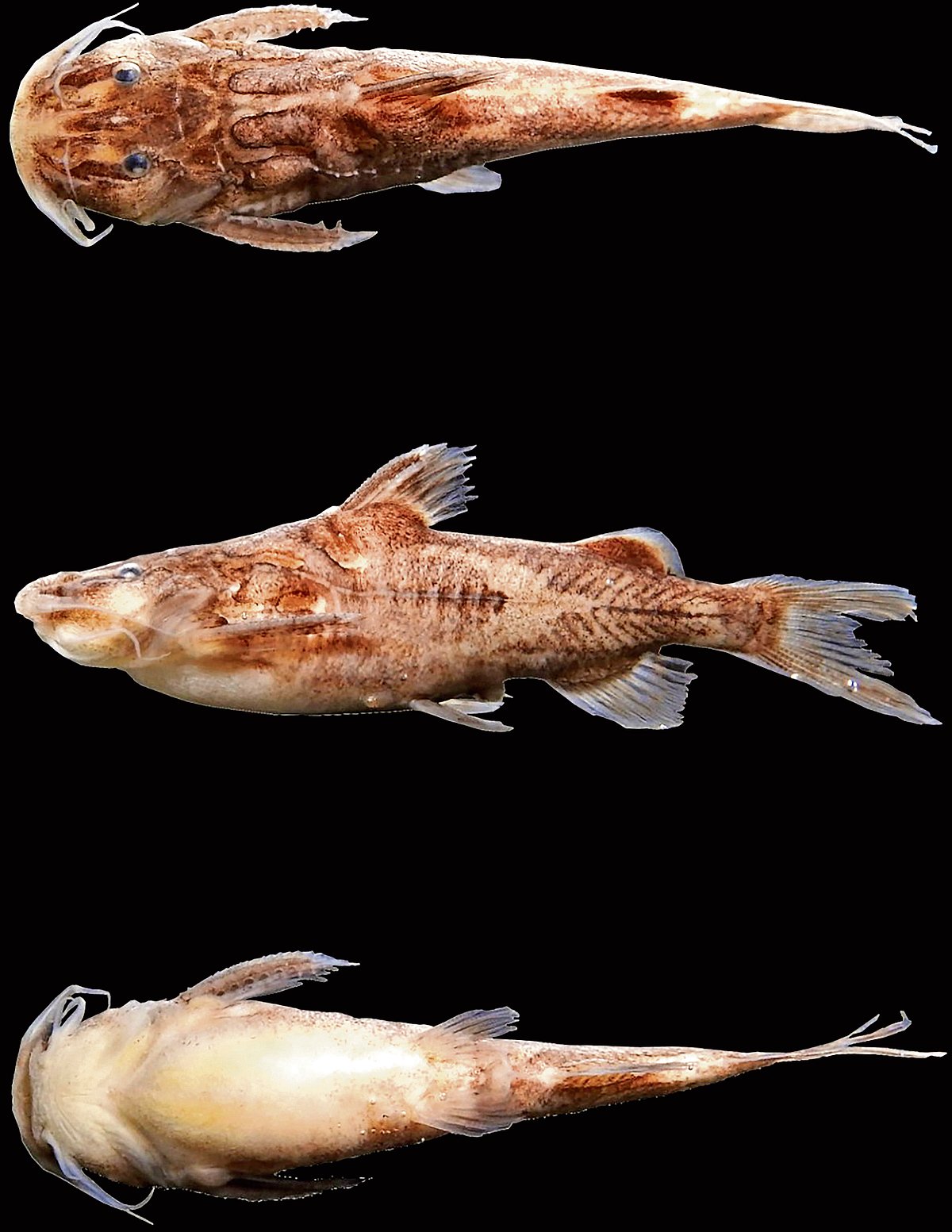
Only a few centimetres long, Pseudolaguvia khairii can be distinguished from all its known relatives by a unique fleshy protuberance at the base of its dorsal fin, a feature not previously recorded in the genus. The researchers also identified several other distinctive morphological characteristics that confirmed it as a species new to science. The discovery also draws attention to the remarkable yet poorly documented biodiversity of India’s river systems. Scientists say freshwater ecosystems continue to reveal species previously unknown to science despite increasing ecological pressures, with small bottom-dwelling fishes such as Pseudolaguvia khairii serving as important indicators of healthy river habitats.
10 Maharashtra: DNA study finds 7 different groups of freshwater garfish DNA analysis of freshwater garfish from Maharashtra’s Ujani reservoir has identified seven distinct groups among fish currently classified as the same species, suggesting that their diversity may be greater than previously recognised. Researchers compared garfish collected from Ujani reservoir between 2018 and 2021 with samples from across India and other countries.
Freshwater garfish are found across India and several other parts of South and Southeast Asia, and are also traded in regional fisheries. However, researchers said genetic studies of the fish have been limited and carried out only in certain locations. For Maharashtra’s freshwater ecosystems, including the Bhima basin and Ujani reservoir, the study highlights that the visible variety of fish may not tell the whole story. Fish that appear to belong to one species could include several genetically different groups, making accurate identification important for future biodiversity research and conservation.
SANDRP


