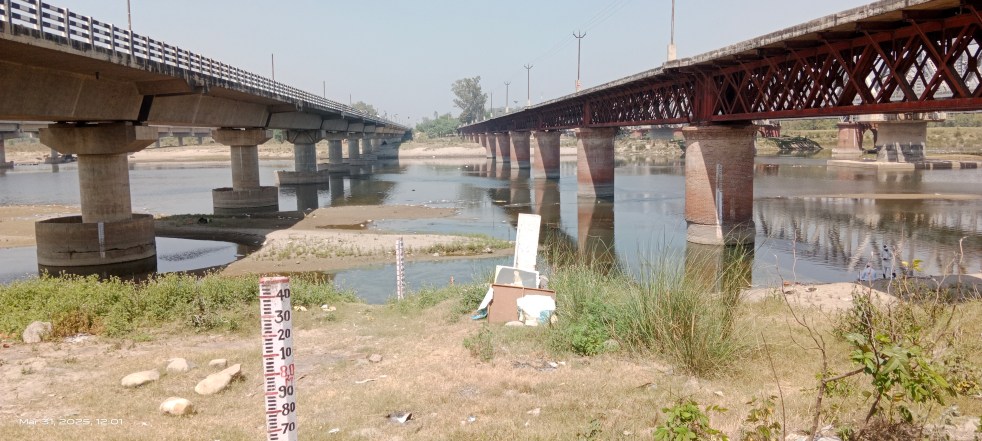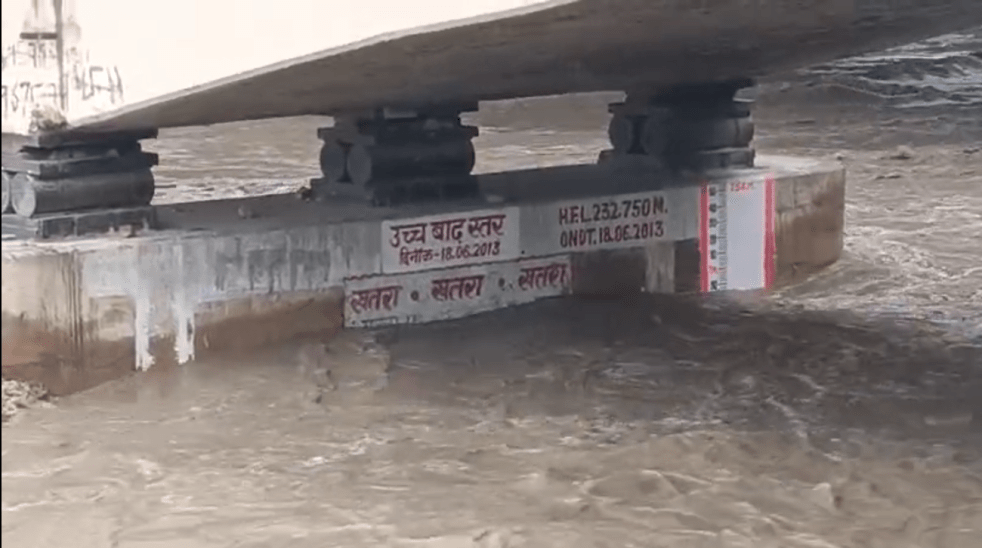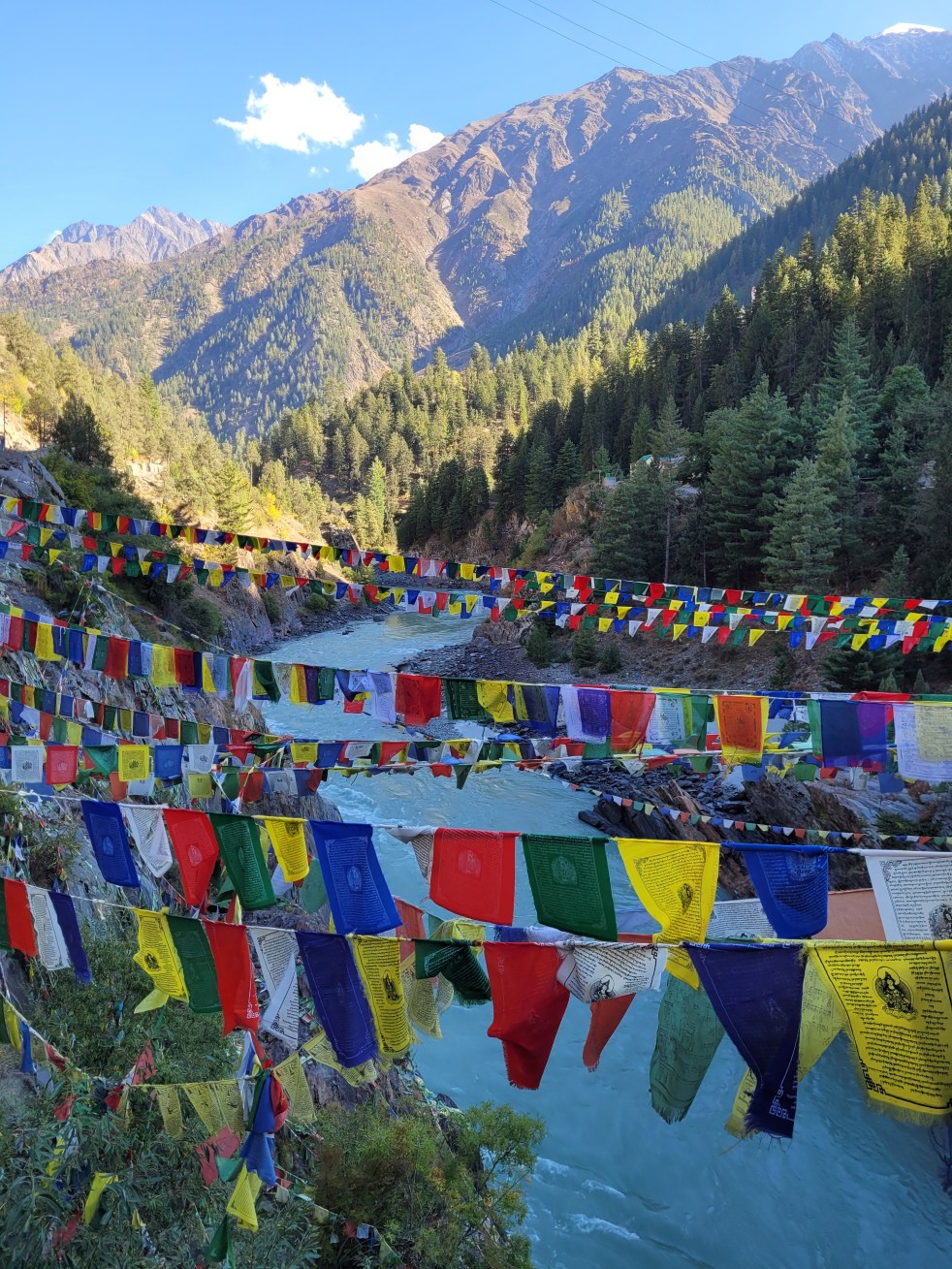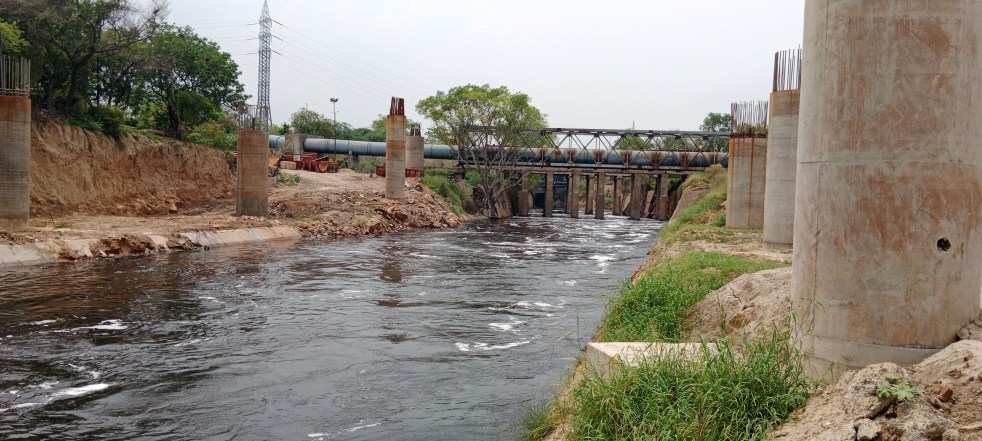
This is the summary report of Highest Flood Levels (HFL) breach incidents which we could document from CWC’s flood monitoring website during South West Monsoon Season 2025. The monthly reports for HFL breach incident for July 2025, August 2025 and September 2025 can be seen by clicking the hyperlinks and the detailed final report can be seen here. SANDRP’s previous reports on the subject can be seen here: HFL breach incidents in 2018, 2019, 2020, 2021 (I), 2021 (II), 2022 (I), 2022 (II), 2023, and 2024.
Continue reading “Rivers in Extreme Floods During SW Monsoon 2025”Tag: Jhelum
Rivers Flowing in Extreme Floods in September 2025
(Feature Image: Yamuna river in severe flood at Mawi site in Kairana, UP on Sept. 02, 2025)
We have been able to observe river attaining new Highest Flood Level (HFL) at least at 18 flood monitoring sites of the Central Water Commission (CWC) in the last month of South West Monsoon 2025. These 18 sites are spread over 7 States & UT, including Jammu & Kashmir (6 sites), Maharashtra (4 sites), Uttar Pradesh (3 sites), Haryana (2 sites), Madhya Pradesh, Telangana and Karnataka (1 each site) comprising 5 river basins including Indus (6), Ganga (6), Krishna (3), Tapi (2) and Godavari (1).
Continue reading “Rivers Flowing in Extreme Floods in September 2025”Infrastructure Projects in Chenab Basin and Climate Change: Need to Exercise Caution
The current developments around Indus Waters Treaty are deeply troubling. Following the heinous attack on tourists in Pehelgam, India has announced that Indus Waters Treaty, the only water sharing mechanism between India and Pakistan put in place in 1960, has been put in abeyance.
Continue reading “Infrastructure Projects in Chenab Basin and Climate Change: Need to Exercise Caution”DRP NB 111223: NMCG failure: Wither Ganga Rejuvenation?
(Feature Image: Najafgarh drain at Wazirabad barrage Delhi in June 2023. Bhim Singh Rawat/SANDRP)
A careful reading of the PIB release on the statement of Minister of State for Jal Shakti, Shri Bishweswar Tudu in Rajya Sabha on Dec. 04 regarding Namami Gange Program shows that the NMCG has actually failed to make any significant improvement in cleaning of River Ganga so far. Firstly, the program has been extended upto March 2026 without any course correction during its first 7 years of implementation between June 2014 and March 2021.
Secondly, the program since beginning has primarily been focusing on creation and upgradation of sewage treatment capacity and river bank infrastructures without even looking into the root causes including ineffective and undemocratic governance affecting the ecosystem of Ganga rivers let alone the questions of addressing them.
Continue reading “DRP NB 111223: NMCG failure: Wither Ganga Rejuvenation?”J&K & Ladakh Cloud Bursts 2022: Missing Monitoring & Mitigation
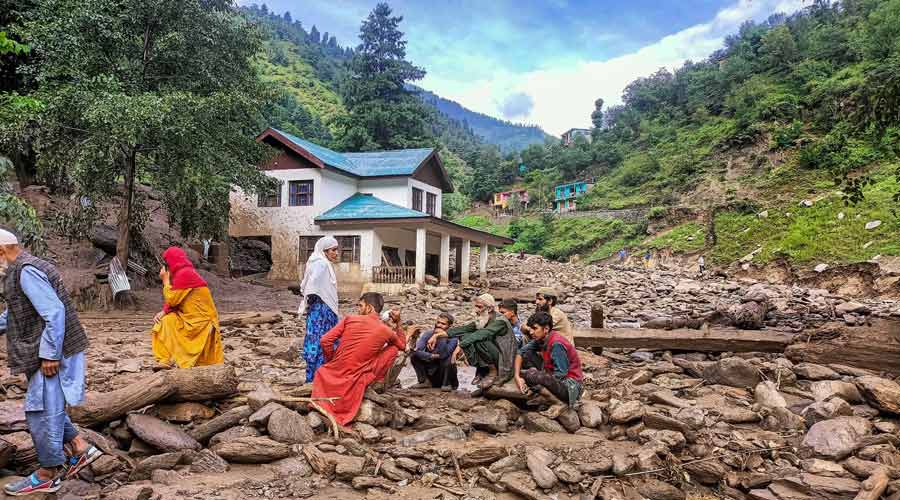
(Feature Image: Cloudburst triggers flashfloods; 13 structures washed away, 20 damaged in Doda. Photo PTI/The Telegraph, 20.07.2022)
Tracking cloud burst incidents occurring before and during South West Monsoon season 2022 in North West Himalayan region, this report covers the Union Territories of Jammu & Kashmir (J&K) and Ladakh. Kindly see the links for SANDRP’s reports covering the Uttarakhand (31 cloud burst incidents) and Himachal Pradesh (39 cloud burst incidents) in 2022. Our previous reports for J&K and Ladakh region can be seen here 2021, 2020, 2019.
Continue reading “J&K & Ladakh Cloud Bursts 2022: Missing Monitoring & Mitigation”2022: CWC Flood Monitoring Sites in North India
(Feature image: Bar Chart showing number of Level Forecast/Monitoring, Inflow Forecast sites in North Indian States & UTs)
Continuing analysis of Central Water Commission’s flood forecast website, SANDRP presents the details of flood monitoring sites in North Indian states comprising Union Territories of Jammu & Kashmir, Ladakh, Chandigarh, Delhi and states of Himachal Pradesh, Uttarakhand, Punjab, Haryana and Uttar Pradesh. Before this, we have prepared similar critical reports and highlighted problematic issues in flood monitoring sites in North India in 2018, 2019 and 2020.
Continue reading “2022: CWC Flood Monitoring Sites in North India“Top Ten River Front Development Stories 2022: Destroying Rivers, Livelihoods
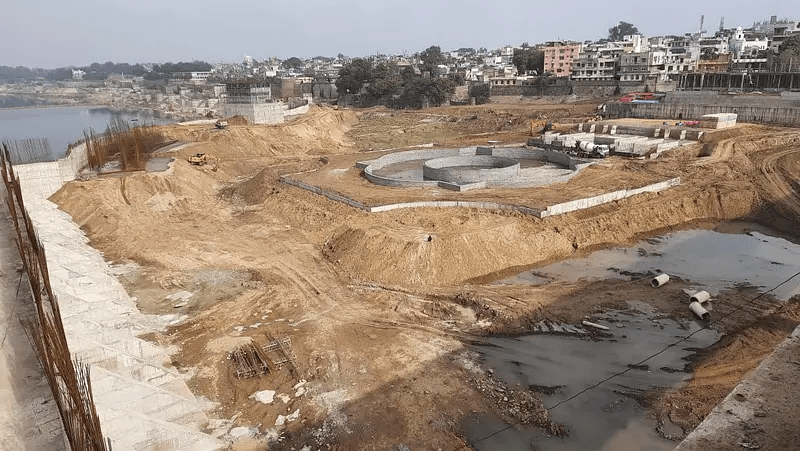
(Feature Image: Work on Rs. 700 crore Chambal RFD project in Kota which is supposed to be ready by Dec. 2022 end. Image Source: Free Press Journal)
The Central and various state governments have been pushing big budget River Front Developments (RFD) projects as panacea for all the urban water woes. In reality, these are River destruction projects with the objective of encroaching on river floodplain and even river beds of Urban Rivers. These RFDs have been failing to deliver on proposed claims and resulting in waste of public money apart from causing more damages to urban rivers eco-system and livelihoods of dependent communities. The projects are also multiplying the Urban Flood potential. In reality, India urgently requires an Urban River Policy as a subset of Urban Water Policy to guide how to treat urban water and urban rivers.
This compilation highlights situation of ten such RFD projects in the country which are failing miserably and facing stiff resistance from concerned citizens and dependent people during last one year or so.
Continue reading “Top Ten River Front Development Stories 2022: Destroying Rivers, Livelihoods”Monsoon 2021: Cloud bursts in Jammu & Kashmir and Ladakh
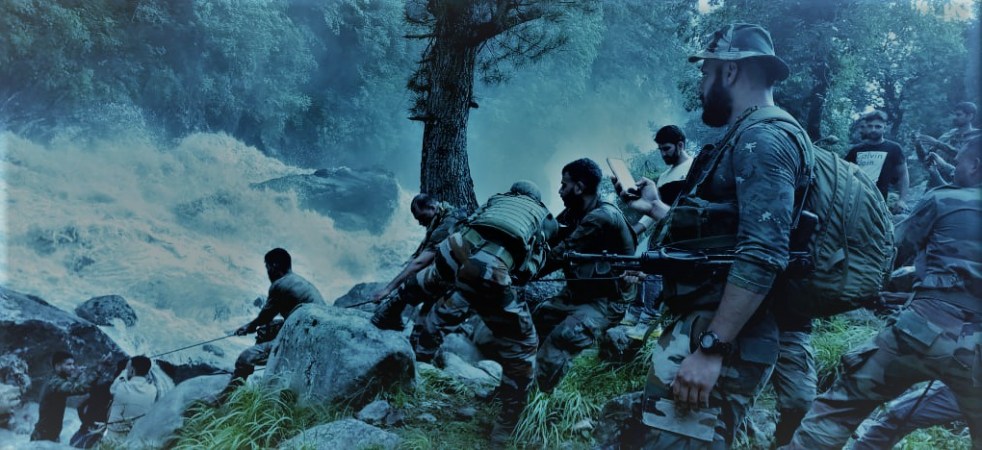
(Feature image:- Local people, army personnel carrying rescue work at Honzar, Kishtwar after davastating cloud burst on July 28. Image source: Social Media)
The increasing incidents of cloud bursts in Himalayan states have been proving significant disaster for lives and livelihoods of native people, rivers and environment of the states. Since 2018, SANDRP has been compiling reports on these extreme weather events to analysis the frequencies and impacts. After documenting cloud bursts reports in pre[i] and during[ii] monsoon season in Uttarakhand and in Himachal Pradesh[iii], this is fourth and last report of this series in 2021, this one from Jammu and Kashmir (J&K) and Ladakh Union Territories (UT). We have not come across any such incidents reported in North Eastern states this year.
Continue reading “Monsoon 2021: Cloud bursts in Jammu & Kashmir and Ladakh”June-Aug 2021: District wise rainfall in India’s SW Monsoon
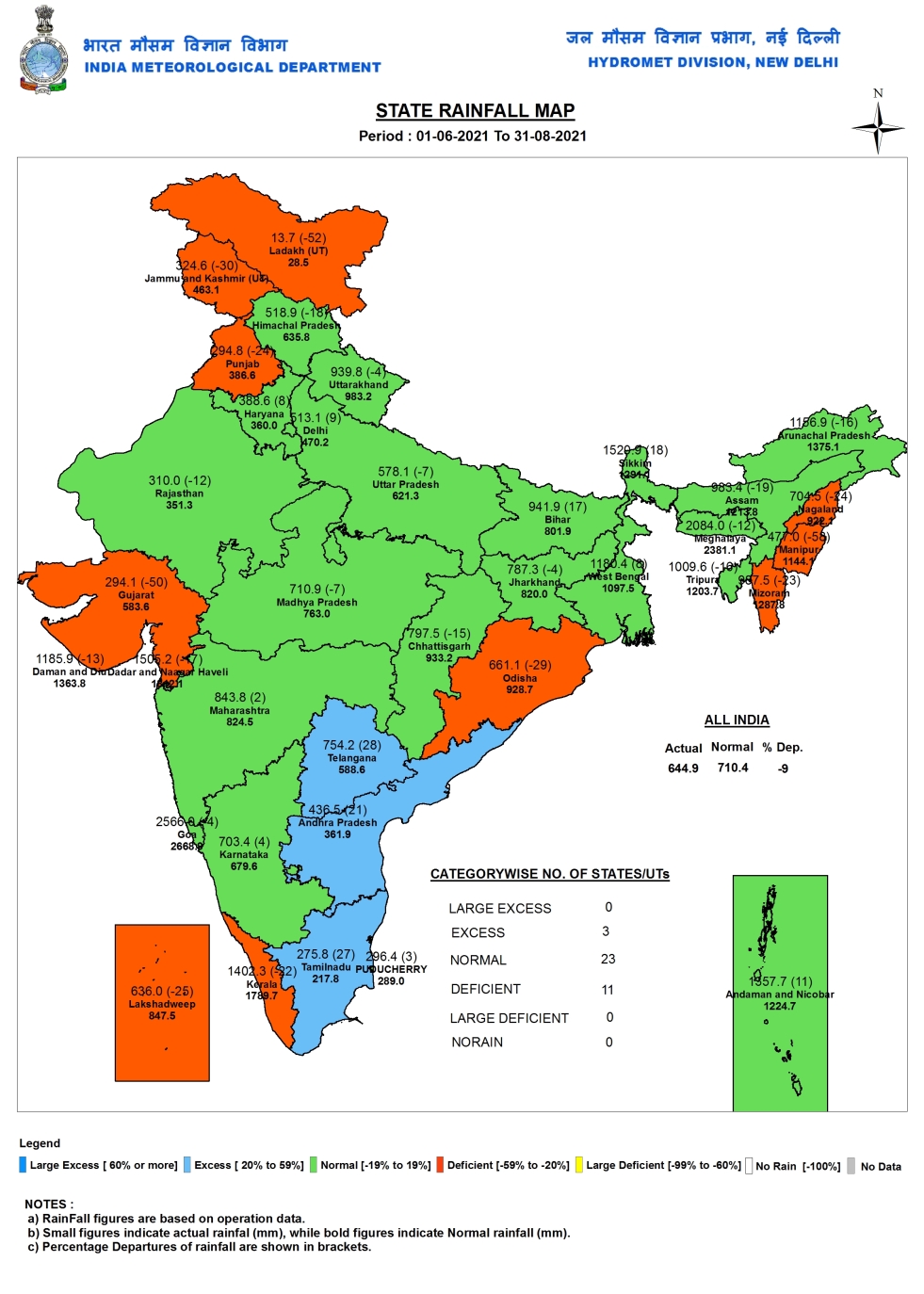
In the just concluded month of August 2021, the rainfall in India was a massive 24.13% below normal. Actual rainfall was 195.9 mm, compared to normal rainfall of 258.2 mm, as per figures from India Meteorological Department (IMD). Contrast this with the rainfall in August last year, at 327 mm, was 26.6% above normal, ,and 44 year high. Even in July 2021, the rainfall was much higher at 266.1 mm, 6.73% below normal. In June 2021, the rainfall was 182.9 mm (10.96% above normal), not much below the August 2021 rainfall, when August is supposed to have much higher rainfall than June.
Continue reading “June-Aug 2021: District wise rainfall in India’s SW Monsoon”North India; CWC Flood Forecasting Sites 2020; New Website Old Problems
Flood forecasting is an important activity during monsoon, considering the huge and increasing flood prone area, flood frequency, intensity and flood damages. Accurate and timely flood forecasting can hugely help reduce the damages due to floods. Central Water Commission (CWC) is the only agency responsible for flood forecasting in India. To understand the CWC’s flood forecasting better, we have compiled the list of the various flood, inflow forecasting sites and flood monitoring sites in India.
In this compilation, we have given state wise list of CWC’s level forecasting, flood monitoring and inflow forecasting sites in North India, comprising of Union Territories Jammu & Kashmir, Ladakh, Chandigarh, Delhi and states of Himachal Pradesh, Uttarakhand, Punjab, Haryana and Uttar Pradesh. It includes available details like name of river, sub basin, Warning level (WL), Danger Level (DL), High Flood Level (HFL), Full Reservoir Level (FRL), Maximum Water Level (MWL), as applicable. As we see below, there are many gaps in this basic information for the sites that are part of CWC’s list. A similar zonewise overview of CWC’s sites was compiled in 2018 and 2019, which can be seen here: Overview of CWC Flood Forecasting Sites 2018: North India; Overview of CWC Flood Forecasting Sites 2019: North India. We have brought this updated compilation for 2020 as there are large number of changes.
Continue reading “North India; CWC Flood Forecasting Sites 2020; New Website Old Problems”