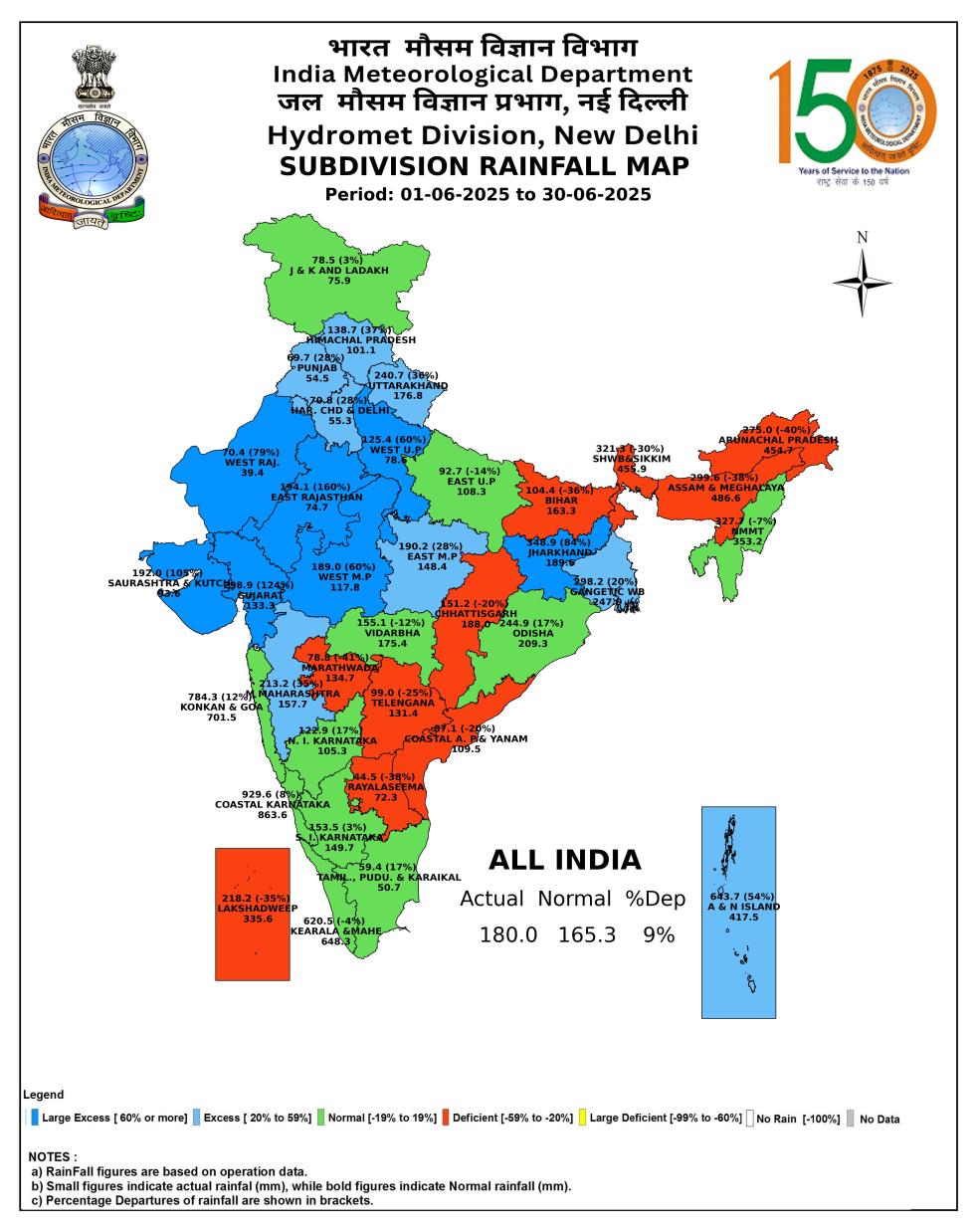
In the just concluded month June 2025, the first month of India’s South West 2025 monsoon, India received 180 mm rainfall, 8.89% above the normal June rainfall of 165.3 mm as per India Meteorological department. In June 2024 the rainfall was 147.2 mm, 11% below normal, June 2023 rainfall was 148.6 mm (10% below normal), in June 2022 the rainfall was 152.3 mm (8% below normal), in June 2021, the rainfall was 182.9 mm (about 11% above normal) and in June 2020, the rainfall was 196.9 mm (about 18% above normal) and in June 2019 it was 33% below normal. So in last seven years from 2019 to 2025, India had below normal rainfall in 4 years in June, and above normal in three years (2020, 2021, 2025). Nine times since 2008 June rainfall was below normal.
Continue reading “June 2025: District wise rainfall in India’s SW Monsoon”Tag: IMD
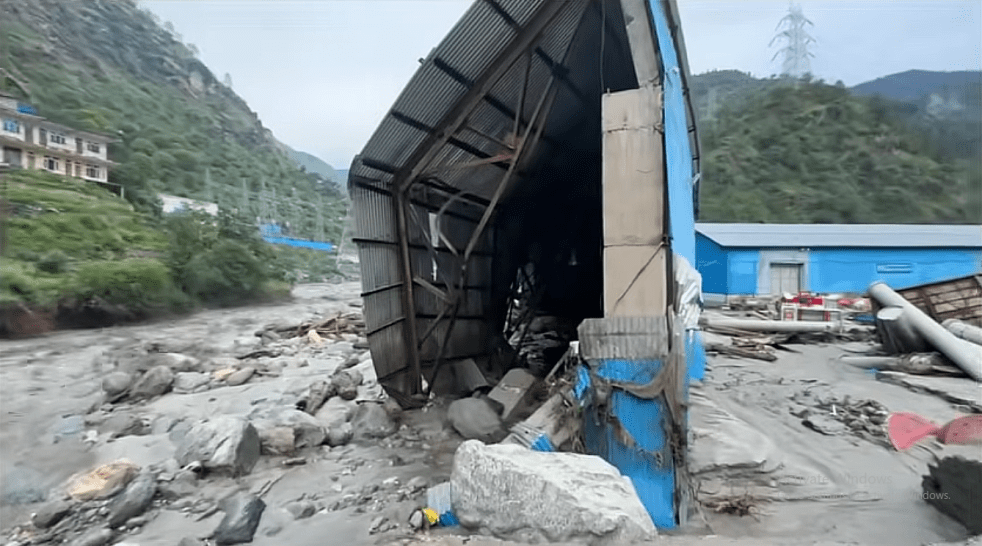
June 2025: NHPC Parbati II, III HEPs damaged in floods
(Feature Image: Screen shot of remaining portion of washed away tin-shed of NHPC’s Parbati II HEP. Source: Anil Khatri Vlog)
In addition to severely damaging the Jiwa and Priyadarshini small hydro power projects, the ‘cloudburst’ induced flash floods on June 25, 2025 has also significantly affected the Parbati II & III projects in Sainj Valley of Kullu district in Himachal Pradesh.
Continue reading “June 2025: NHPC Parbati II, III HEPs damaged in floods”
Pre-Monsoon 2025: District wise rainfall in India
In the just concluded three month pre-monsoon season (March 1 to May 31, 2025) India received 185.8 mm (125.9 mm in Pre-Monsoon 2024, 146.6 mm in Pre Monsoon 2023[i]) rainfall, 42% above (4 below normal in Pre-Monsoon 2024 and 12% above in Pre Monsoon 2023) the normal rainfall of 130.6 mm as per the India Meteorological Department (IMD). In 2020[ii] , 2021[iii] and 2022[iv] India received 158.5 mm, 155.2 mm and 130.6 or 20% above normal, 18% above normal and 1% below rainfall respectively. So, India has received the highest pre monsoon season rainfall in 2025 compared to those in previous five years.
Continue reading “Pre-Monsoon 2025: District wise rainfall in India”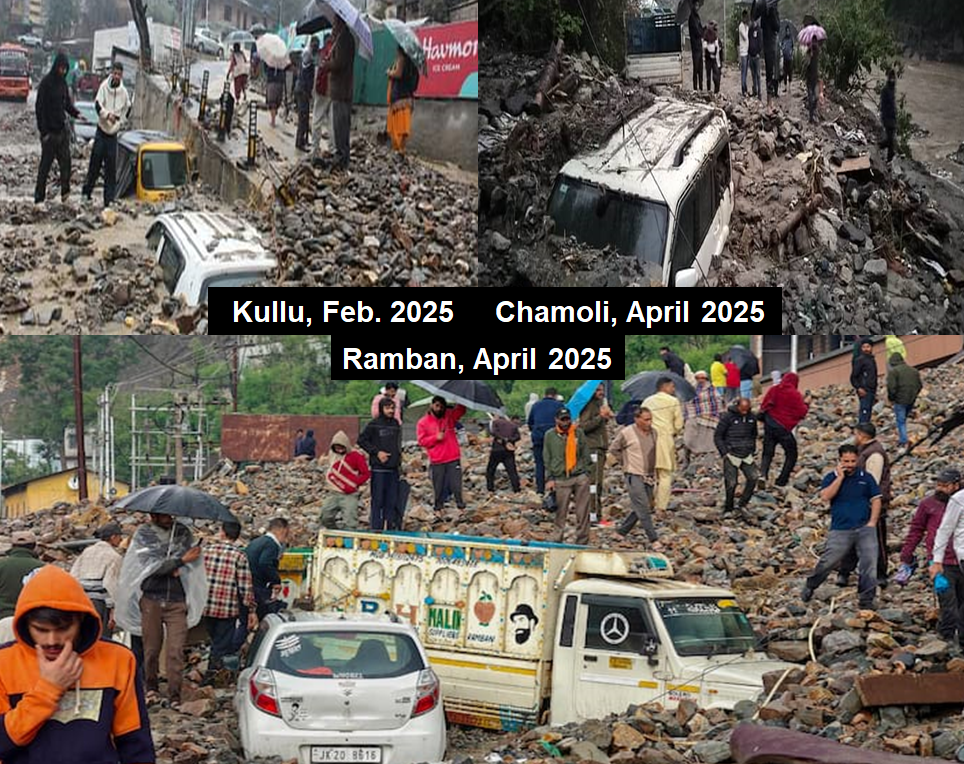
CWC, IMD Need to Improve Extreme Weather Forecast Services
The rising numbers and intensity of western disturbances (WDs) in pre-monsoon months are causing excessive but short rainfall spells across the country particularly in the Himalayan states. These events are then resulting in sudden flash floods and taking a huge toll on human life and public infrastructure. However, the specific monitoring and warning services for such disasters by the Central Water Commission (CWC) & Indian Meteorological Department (IMD) are largely unavailable as these agencies are mainly forecasting floods during the monsoon.
Continue reading “CWC, IMD Need to Improve Extreme Weather Forecast Services”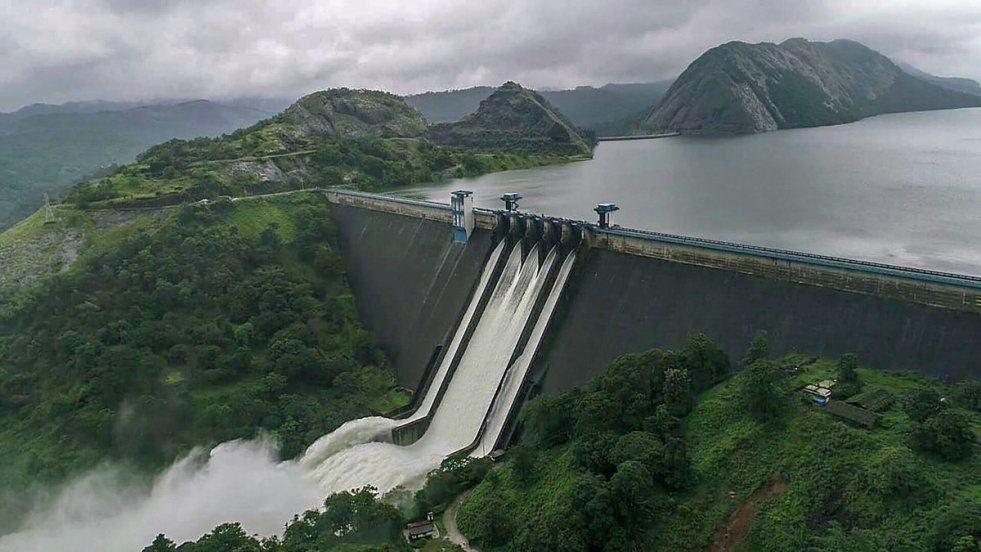
Room for optimality in Kerala Summer Electricity Demand vs Hydro Generation
Guest Article by S P Ravi
The share of hydro electricity in the energy mix of state of Kerala has come down sharply over the last three summers. Hydro share that used to be around 25-30 percent in previous summers has come down to well below 15 percent on many days. This is despite a sharp rise in electricity demand since 2023.
Continue reading “Room for optimality in Kerala Summer Electricity Demand vs Hydro Generation”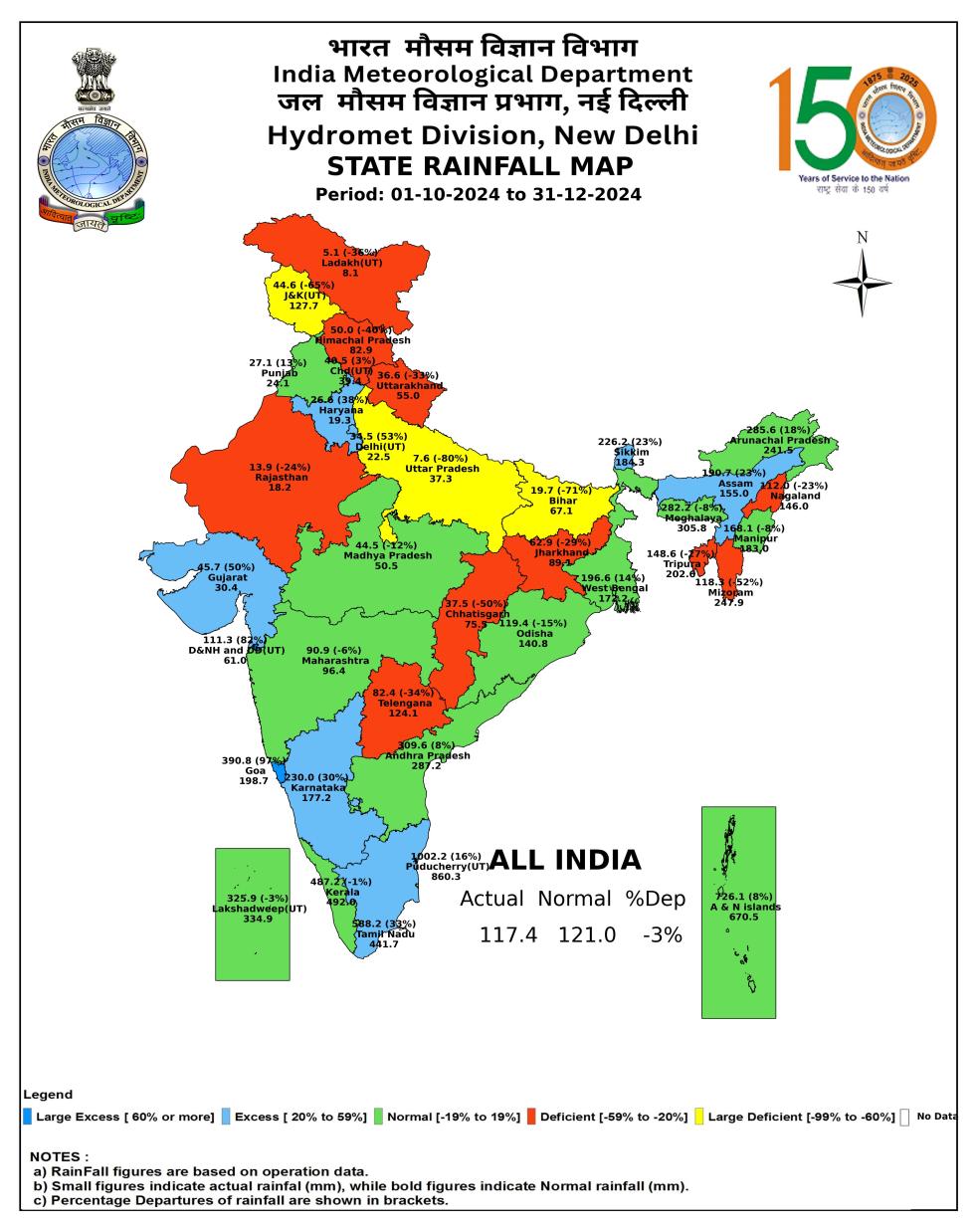
Post Monsoon 2024: District wise Rainfall in India
According to India Meteorological Department (IMD), during the Post Monsoon Rainfall for 2024, that included rainfall during the three Oct-Dec 2024 months, India received 117.4 mm rainfall, 3% below normal (110.7 mm, 9% below normal in Post Monsoon 2023[i], 144.1 mm, 19% above normal in Post Monsoon 2022[ii] and 177.7 mm rainfall, 43.54% above normal in Post Monsoon 2021[iii]) rainfall of 121 mm. In the same period in 2020, India received 124.6 mm rainfall, 0.64% above the normal rainfall. As per IMD[iv] definition, the rainfall in Post Monsoon 2024 was in Normal Rainfall category.
Continue reading “Post Monsoon 2024: District wise Rainfall in India”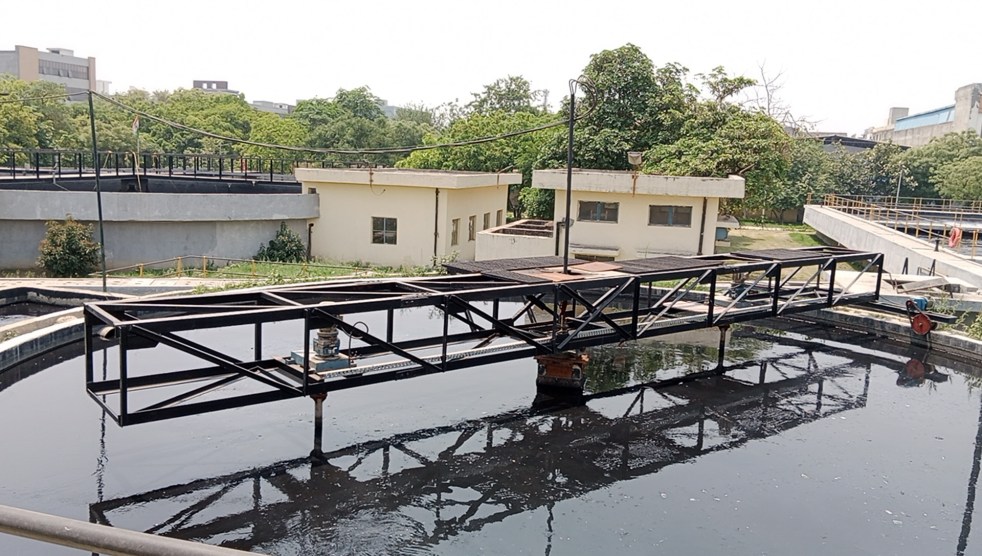
DRP 270125: India’s non-functional Sewage Treatment Plants
(Feature Image: 10 MLD Kundli CETP in Sonipat. BS Rawat/SANDRP/May 2023)
A detailed report in this week’s DRP News Bulletin below shows how India’s Sewage Treatment Plants (STPs), Govt’s main weapon against pollution of rivers in Urban areas, have been a failure for decades. It is pertinent to note that this is the golden jubilee year of Water Pollution Control Act of 1974, that led to the formation of Central, state Pollution Control Boards, and the whole water pollution control bureaucracy, institutions and legal architecture. There should be little doubt that whole architecture has abysmally failed in achieving basic objective for which it was created, including ensuring proper treatment of urban sewage.
India has spent thousands of crores of rupees on these STPs, mostly, mega, centralized projects. But there has been little effort to address governance of the STPs, to ensure that they function as required and provide the results that they have been set up for. Whether they function or not, qualitatively or quantitatively, year after year and decades after decades, there are no consequences! In fact, if treated properly, sewage can become a asset rather than nuisance that it now is. The Judiciary too, right up to the apex court, have badly failed in achieving any improvement in this eminently justiciable issue.
Continue reading “DRP 270125: India’s non-functional Sewage Treatment Plants”
DRP 200125: Whither Env Clearance Rejection rate from Expert Appraisal Committee or MoEF?
A detailed review of functioning of Union Ministry of Environment and Forests’ (MoEF) Expert Appraisal Committee (EAC) on River Valley Projects (RVP) for 2024 by SANDRP shows that the committee or for that matter MoEF has almost non-existent rejection rate. Even when a project is not cleared, when it applies again, it gets clearance, whether the application if for stage I (Terms of Reference) or Stage II (Environment Clearance- EC) clearance. Even in some cases like Pump Storage Projects (PSP) in Western Ghats or the Hydropower projects in disaster prone Himalayas, including the disaster-stricken projects like the 1200 MW Teesta III projects in Sikkim, the scrutiny including field visits by the EAC Sub committees is minimal, not worthy calling even scrutiny.
Continue reading “DRP 200125: Whither Env Clearance Rejection rate from Expert Appraisal Committee or MoEF?”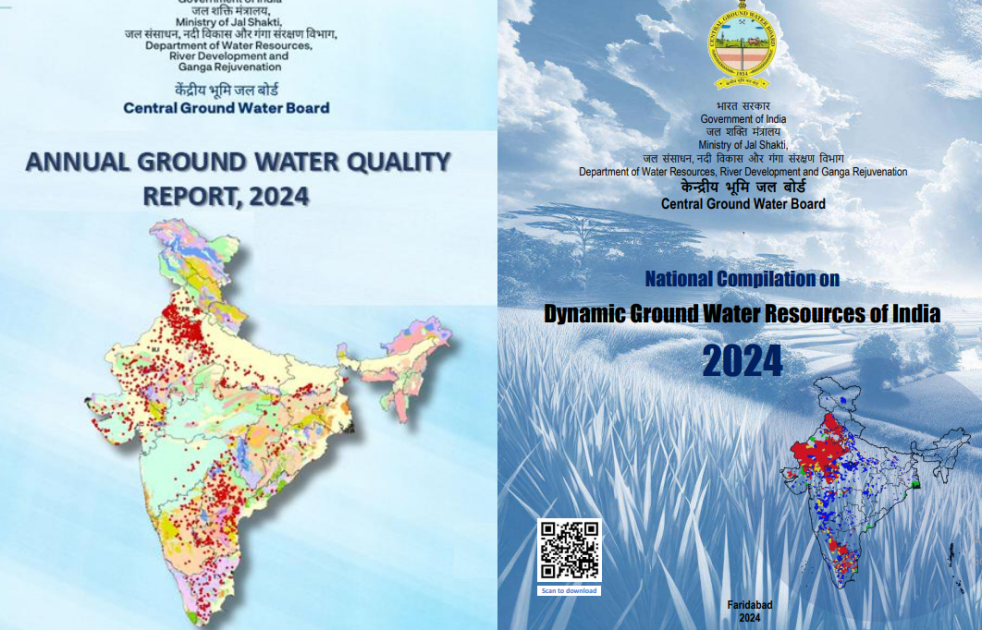
DRP 060125: Concerns about & Contradictions in CGWB’s Reports
The Central Ground Water Board (CGWB) released two important reports last week. While the Annual Ground Water Quality Report 2024 reveals rise in nitrate fluoride, arsenic and uranium contimination of groundwater resource in India, the Dynamic Groundwater Resource Assessment Report 2024 claims substantial rise in annual groundwater recharge and decline in extraction of the resource.
As per the first report, the number of districts affected by high nitrate levels in groundwater has gone up to 440 (near 56% of all 779 districts in country) from 359 found in 2017 assessment which means in 7 years 81 more districts have been found having excessive nitrate levels in groundwater. This should concern us from a number of points of view.
Continue reading “DRP 060125: Concerns about & Contradictions in CGWB’s Reports”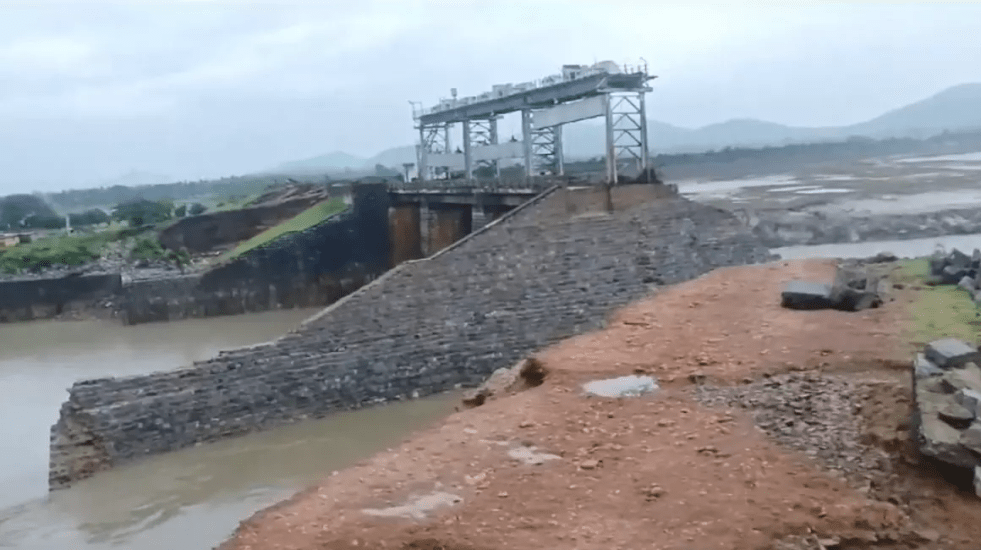
2024: Dam Induced Floods in India
(Feature Image: Breach in the earth dam of Peddavagu project flooded several villages in Telangana & Andhra Pradesh on July 17, 2024. Source: DC)
India has seen several manmade flood disasters during the 2024 monsoon. The mismanagement of dams in Narmada valley including Bargi, and SSP inundated several dam affected villages despite adequate actionable advance warnings. The uninformed excess releases from DVC dams have led to flooding in large areas in West Bengal as repeatedly raised by the state government. The extensive floods in Tripura have revealed glaring loopholes in flood prevention and disaster management.
The floods in the year have also washed away or damaged several earthen dams, tanks in Madhya Pradesh and Rajasthan affecting human population, agricultural lands in their vicinity. Even during Northeast monsoon, the sudden releases from Sathanur and Veedur dams in Tamil Nadu created avoidable flood damage in downstream areas. Similarly, the states of Gujarat, Telangana, Haryana and Delhi have seen deluge due to mismanagement or breaches in the canals. The case of Narmada canal waters flooding large areas of Little Runn of Kutch is quite concerning.
Continue reading “2024: Dam Induced Floods in India”
