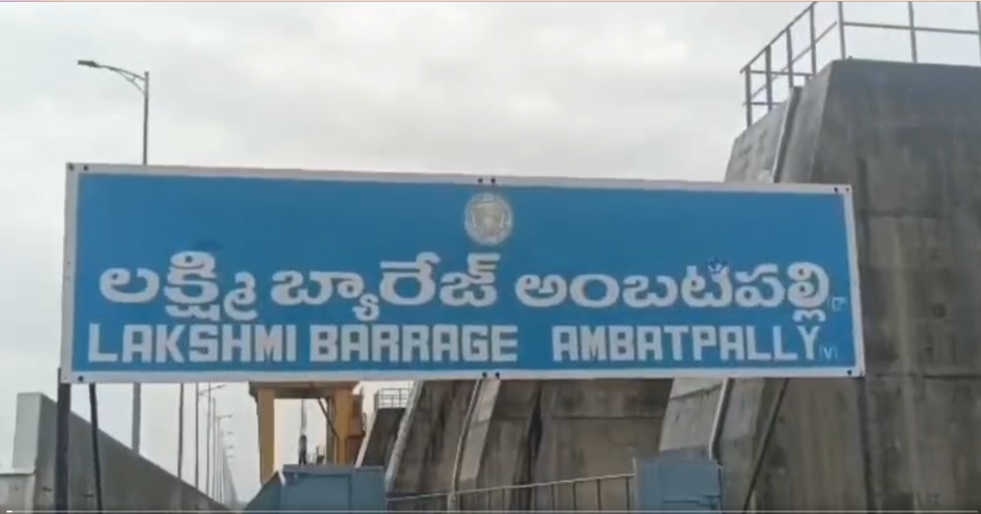
A portion of the Lakshmi (Medigadda) barrage on Godavari river on Telangana-Maharashtra border, part of the Kaleshwaram Lift Irrigation Project (KLIP) in Telangana’s Jayashankar Bhupalpally district[i] caved in on Oct 21 2023, Saturday night with a loud sound. The incident led to the temporary closure of the bridge of the barrage across the Godavari River that links Telangana’s Mahadevpur mandal with Maharashtra’s Gadchiroli district. The KLIP is the world’s largest Lift Irrigation Project, possibly the costliest, with expenses already above Rs 1 lakh crore. The Union Govt, recognising this as a major dam failure under para 8 of Schedule II of Dam Safety Act 2021, has promptly sent a team of six experts to assess the damage.
Continue reading “Medigadda dam of Kaleshwaram project in Telangana damaged in Oct 2023”
DRP 231023: Need to be a little serious about Dam Safety, Flood Forecasting, Use of Early Warnings
(Feature Image: Landslide warning board at Lakhwar dam site on Yamuna river. SANDRP, June 2015)
India need to relook the Dam Safety Act Experts say the Sikkim incident exemplifies blind spots in both legislation and implementation. The DSA does not promote risk-based decision-making and fails to incentivise transparency. Himanshu Thakkar, an environmental activist and coordinator of South Asia Network on Dams, Rivers and People, says that the frequency and scale of such disasters reveal a pattern of neglect: “It keeps happening regularly, people face disastrous consequences and we call these ‘natural disasters’. But there’s nothing natural about them.”
A robust DSA should allow different stakeholders to access information easily, but India’s framework falls short. “Dam safety is a public purpose function. Everything about dam safety, functions of all the institutions and committees and authorities, their reports, decisions minutes and agendas, everything should be promptly available to the public,” says Mr. Thakkar. “But nothing is in the public domain.” He adds that transparency is further obstructed when national and State bodies comprise government employees and engineers who worked on these projects, compromising objective decision making and lacking “people with a proven track record of taking independent decisions.”
Continue reading “DRP 231023: Need to be a little serious about Dam Safety, Flood Forecasting, Use of Early Warnings”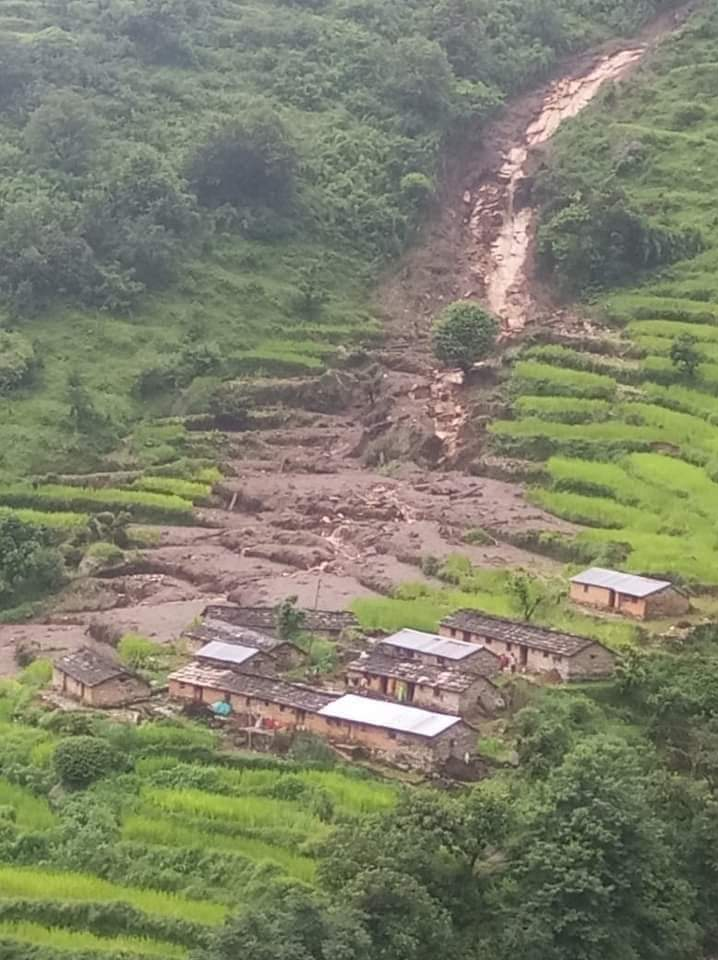
Uttarakhand: Cloudbursts in SW Monsoon 2023
(Feature Image: A ‘cloudburst’ incident damaging crops, farmlands & threatening Majju Gawad tok of Syun village in Dasholi block, Chamoli on August 06, 2023. Source: Raftaar news)
Since 2018, SANDRP has been documenting the increasing ‘cloudburst’ related disasters taking place in the Himalayan states. This report details the occurrence of such incidents in Uttarakhand during South West monsoon 2023. Our previous report on the subject for Uttarakhand can be seen here: 2022; 2021; May 2021; 2020; 2019 & 2018.
Continue reading “Uttarakhand: Cloudbursts in SW Monsoon 2023”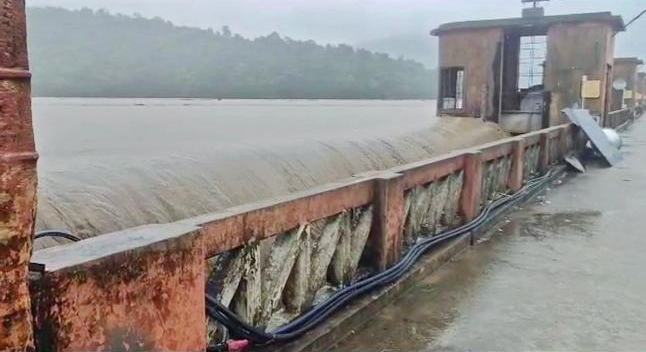
DRP 161023: Kaddam Dam Rehabilitation in Telangana: Many more will need this
(Kaddam dam spilling over with flood waters in July 2023. Image Source: SM)
Telangana’s Kaddam Dam, built with inadequate spillway capacity, has seen multiple threats and disasters over the years, starting from the very first year after its commissioning in 1958. The dam again saw threat of being washed away during monsoon this year. The Telangana government has decided to rehabilitate the dam at a cost of Rs 640-700 Cr, by reconstruction of spillway and installation of new gates. We hope the new spillway capacity will be in line with the changed monsoon rainfall pattern and will be able to take care of the higher probable maximum precipitation and higher probable maximum flood. Though we are unlikely to get to know how this is going to happen, as the standard operating procedure of all dam owners in India is secrecy rather than transparency even in dam safety aspects. One also hopes this is done at the earliest, and till that is achieved, the dam rule curve will be changed to ensure the dam does not face disastrous situations during monsoon.
Continue reading “DRP 161023: Kaddam Dam Rehabilitation in Telangana: Many more will need this”
Dam Safety Act & the role of Dams in the 2023 HP Floods
In order to have high standards of dam safety the prerequisites are designing and constructing dams with reasonable safety margins; operating and maintaining them safely; and having emergency arrangements to address situations that might arise. Operation of dam within its ambit also includes thorough understanding of likely impacts and its management in case of flooding, in any emergency situation or in the event of dam failure, both upstream and downstream on communities living there, their livelihoods and also on infrastructure and property which can get affected. In fact in many countries like Sweden and in many states of the USA, a dam is assigned a dam safety class i.e. A, B or C depending upon the significance of the damage that might occur in case of dam failure, class A being assigned to dams whose failure might cause significance loss of public life and property. Dam safety requirements are calibrated accordingly and a higher burden is put on dam owners of higher class, concerning safety management system, emergency plans, overall assessments, and annual dam safety reporting.
Continue reading “Dam Safety Act & the role of Dams in the 2023 HP Floods”
DRP 091023: MoEF Panel concerned about impacts of Small Hydro
(Gangani SHP on Yamuna river in Uttarkashi affected by June 2013 flash flood. Image: Yamuna Jiye Abhiyan/July 2013)
The Forest Advisory Committee of Union Ministry of Environment and Forests (MoEF) have rightly raised concerns about the impacts of so called small hydropower projects, that is hydropower projects with capacity below 25 MW. The MoEF assumes, following such unknown science or logic, that such projects have no environment and social impacts, they do not need environment and social impact assessments or management plan, they do not need any public consultation process, they do not need any monitoring or compliance and most significantly, they do not even need any clearances! A more unscientific thinking of the govt of India’s top environmental body would be difficult to find.
Continue reading “DRP 091023: MoEF Panel concerned about impacts of Small Hydro”
Oct 2023: CWC Flood Forecast FAILS during Teesta Glacial Floods
(Feature Image: NHPC’s Teesta VI hydro project at Sirwani, Sikkim affected by GLOF deluge on Oct. 04, 2023. Image Source: Weatherman Shubham.)
The Teesta River has witnessed unprecedented scale of floods following South Lohnak Glacial Lake Outburst Flood (GLOF) event in the intermittent night of October 03-04, 2023. The details and impact of the deluge can be seen here. The incident has once again underlined shortcomings in Central Water Commission’s (CWC) flood monitoring and forecasts work.
Continue reading “Oct 2023: CWC Flood Forecast FAILS during Teesta Glacial Floods”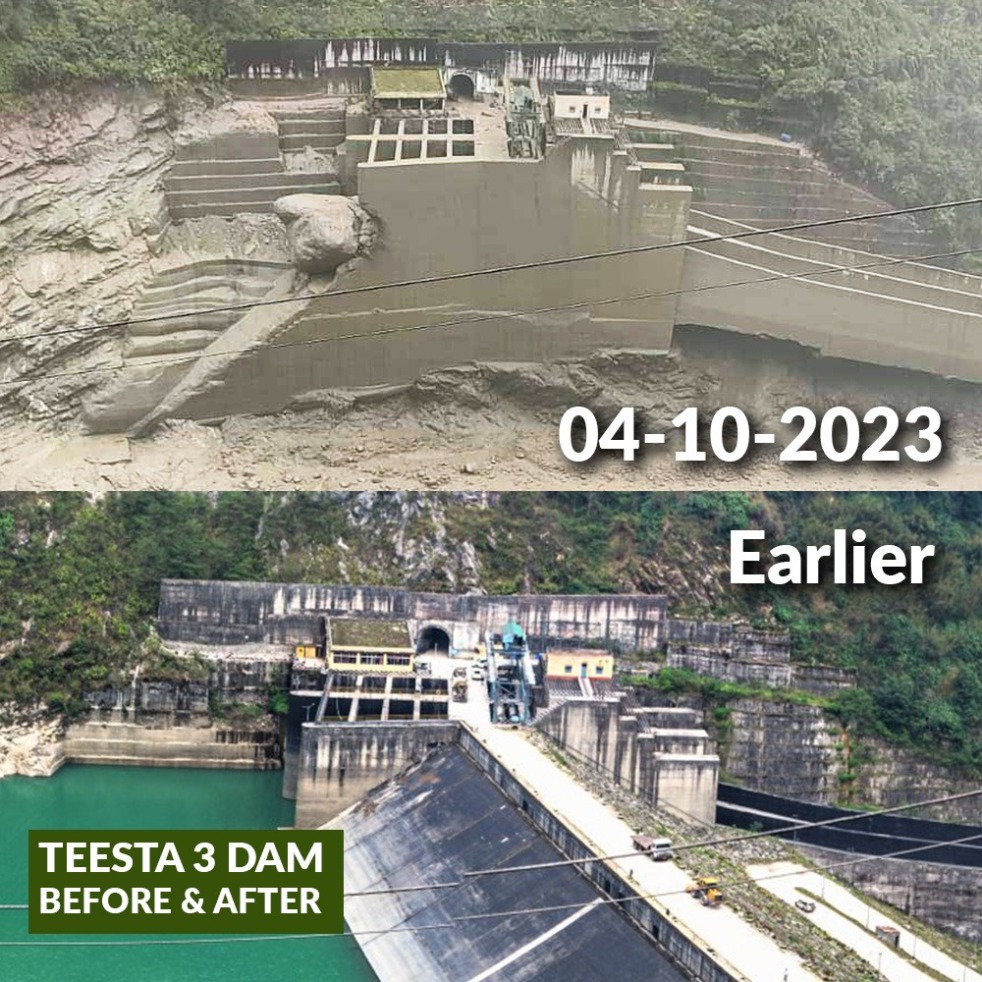
Glacial Lake FLood destroys Teesta-3 Dam in Sikkim, brings wide-spread destruction
A Glacial Lake Outburst Flood (GLOF) that originated at South Lhonak Glacial Lake at around 00.40 hours on Oct 4, 2023, washed away the 60 m high dam of Sikkim’s biggest hydropower project, the 1200 MW Teesta 3 HEP. The flood has brought unprecedented disaster all along the river in Sikkim and further downstream in W Bengal and then Bangladesh. Central Water Commission (CWC) reported early in the morning of Oct 4 that there was cloud burst at the site of the lake burst, the cloud burst could have played the role in triggering the lake burst. (Feature image above: A combination of before after photos of Teesta 3 dam put together by Siddharth Agarwal.)
Continue reading “Glacial Lake FLood destroys Teesta-3 Dam in Sikkim, brings wide-spread destruction”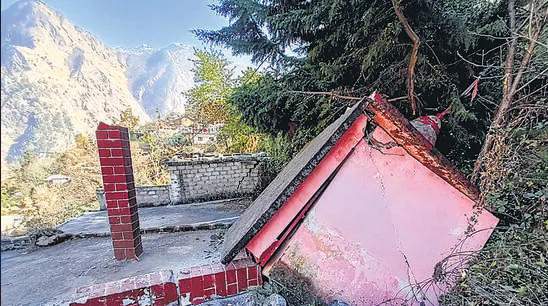
DRP 021023: Why this culture of opaque governance around Joshimath?
(Feature Image: A temple collapses after the gradual ‘sinking’ of Joshimath in Chamoli district, on Jan. 08, 2023. PTI/HT)
It is clear that the Union and the Uttarakhand government did not want the reports prepared by different national institutes related to Joshimath Sinking, to be made public and the state High Court had to order it to do so. The government’s view of the report is clear from that. It took the judiciary so many months to finally order the report to be made public. What is it that the government wanted to hide? Why? From whom? Why is there this culture of opaque governance even in disaster management related issues? Is it growth fundamentalism that is driving the government as the single most factor? Or is it the arrogance and adamant attitude of the governance, not wanting to consider any questions raised against their decisions? Why is there so little faith in the people, society and transparent, accountable governance? Why is the judiciary allowing such a culture to prevail generally?
These are some of the key questions that arise from this and other such episodes.
Continue reading “DRP 021023: Why this culture of opaque governance around Joshimath?”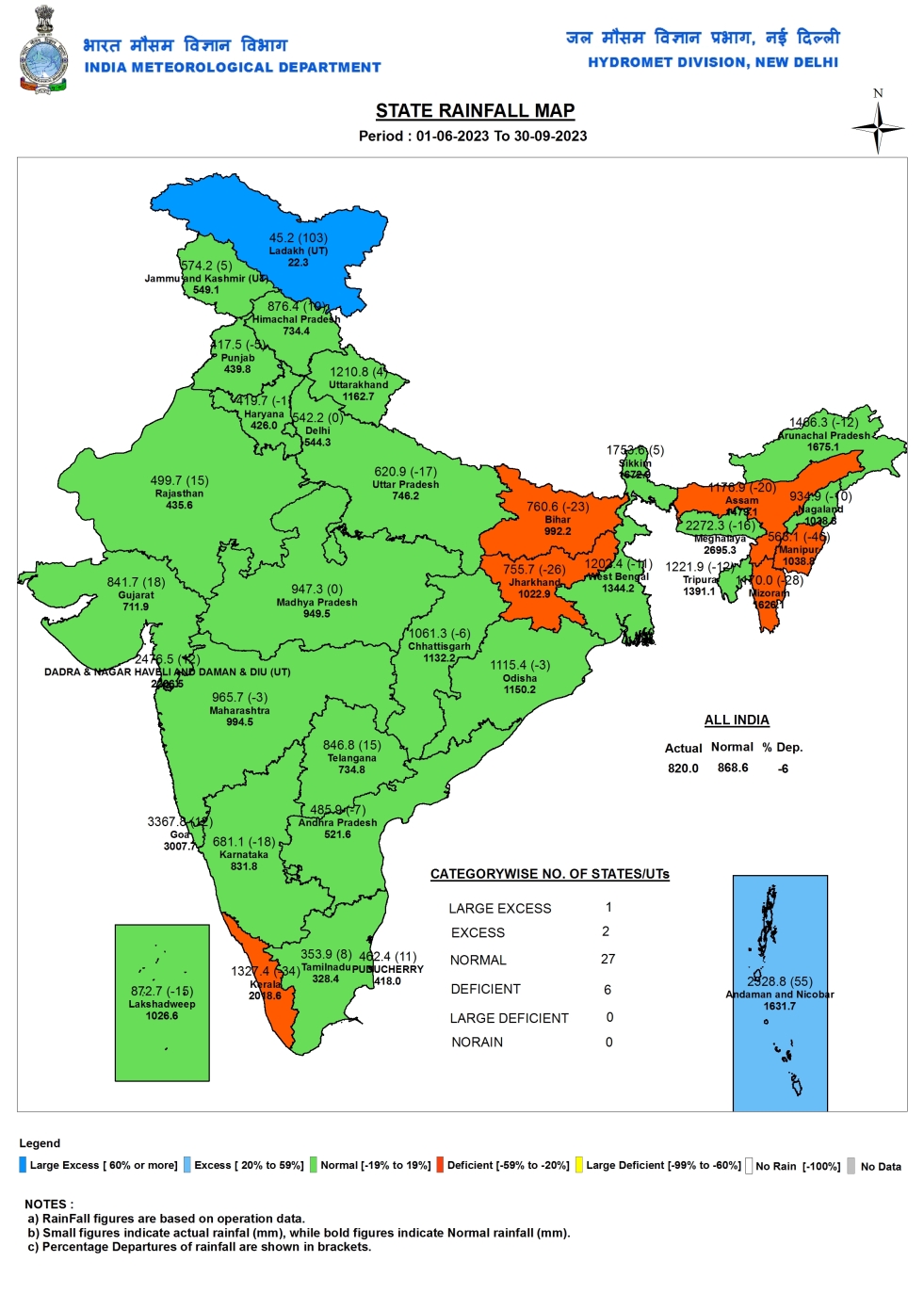
SW Monsoon 2023: District wise rainfall in India
In the just concluded South West Monsoon 2023, India received 820 mm (925 mm in SW Monsoon 2022[i]) rainfall, about 94.45 % (106.5% in 2022) of the Normal SW Monsoon rainfall of 868.6 mm or 5.55% (6.5% above normal in 2022) below normal SW Monsoon rainfall as per India Meteorological Department (IMD). This rainfall will now be categorised as below normal rainfall though the distribution has been unprecedented, both temporally and spatially.
Continue reading “SW Monsoon 2023: District wise rainfall in India” SANDRP