(Feature Image: Shintaphu Lake. Source: The Bhutanese. It is not clear whether the image is old or post Oct 2026 GLOF)
A glacial lake outburst flood (GLOF) was reported from Shintaphu Lake in Bhutan’s Gasa district on the evening of Oct. 29, 2026. The disaster triggered flash flood alerts in downstream areas of Bhutan and India. Bhutan’s National Centre for Hydrology and Meteorology (NCHM) is stated to be monitoring the situation. The cause, volume of water released and full extent of the damage are still being assessed.
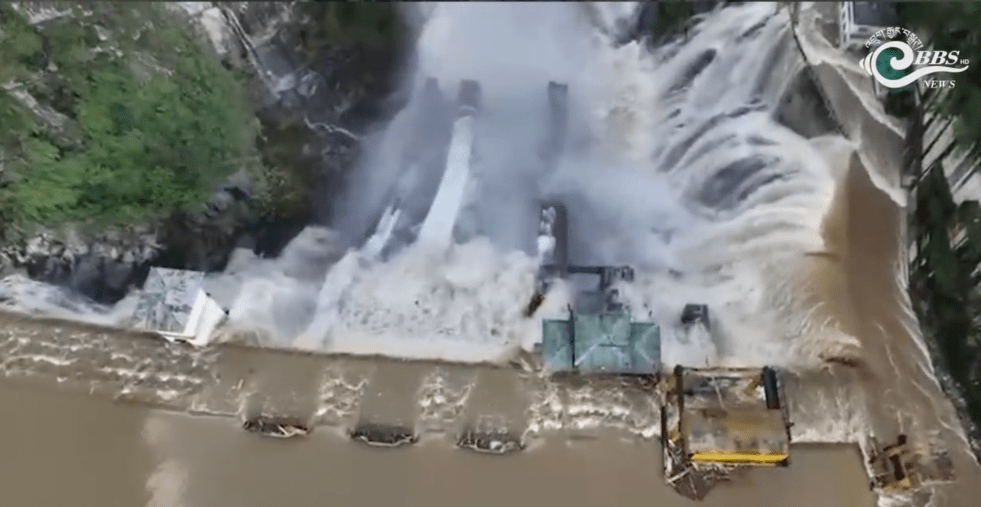
In a major scary incident, the Tala Dam on Wangchhu River in Chukha district of south Bhutan has overtopped for the first time ever, on Oct 5 following unprecedented rainfall in western Bhutan, prompting flood warnings for downstream areas in India’s north Bengal. Bhutan’s NCHM confirmed that DGPC reported that the dam gates failed to open, leading to river water flowing over the dam, considered most dangerous situation for any dam as dams are not designed for such an eventuality.
The Dams, Rivers & People overview of Bhutan here, mainly from media reports from Bhutan, highlights the failed hydropower goal of adding 10000 MW capacity by 2020. The fate of the 1200 MW Punatsangchu I remains uncertain, yet to be decided if the dam will be abandoned for barrage. The flood disaster in July 2023 that washed away 32 MW Yungichhu HEP and killed about 23 people was possibly sign of things to come, as shown by the washing away of the 1200 MW Teesta 3 project in neighbouring Sikkim in early Oct 2023 with GLOF. On positive side, Bhutan has decided to go for Solar and Wind. The Nikachhu HEP is likely to be commissioned soon, adding 118 MW to Bhutan’s installed capacity.
But let us begin with a postive story of a woman River Guardian.
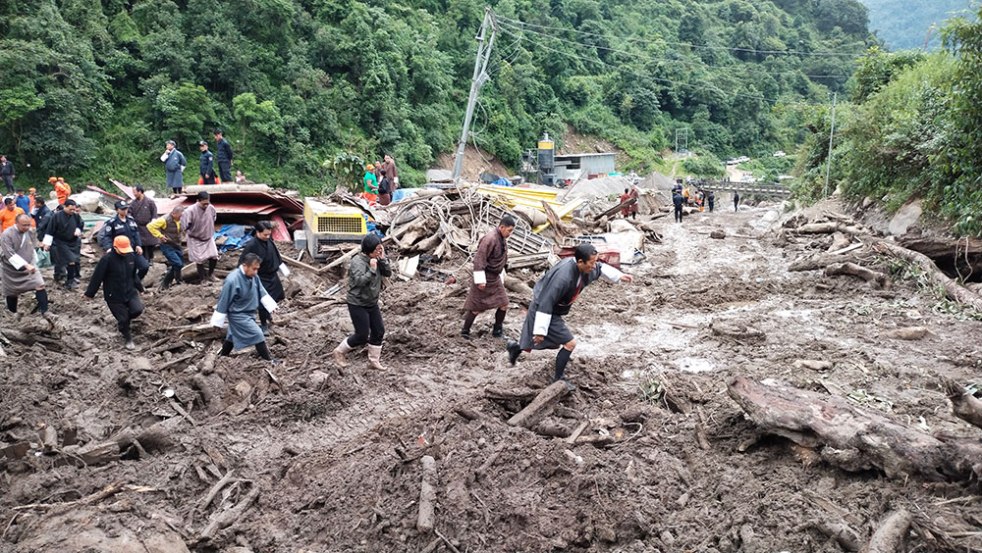
At least seven people were killed and 16 others missing in Bhutan after flash floods and landslides triggered by heavy rains washed away a section of a hydroelectric plant on July 20 2023[i]. They were washed away by the sudden burst at the residential area next to the worksite at Ungar village, according to a press release from the Prime Minister’s Office. Prime Minister Dr Lotay Tshering, who is in Lhuentse, said the devastating flashflood presented one of the biggest loss of lives and properties in recent memory, and shook the core of the nation.
Plea to act to save the THIRD POLE In this TED talk in July 2019, former Prime Minister of Bhutan and President of the People’s Democratic Pary Tshering Tobgay makes impassioned plea to act on the melting glaciers of Hindu Kush due to climate change and among other things, form a Third Pole Alliance of eight countries of the region, including China, India, Pakistan, Nepal, Bhutan, Bangladesh, Myanmar to work collectively to avert the future catastrophe affecting 1.6 billion people. (https://www.ted.com/talks/tshering_tobgay_an_urgent_call_to_protect_the_world_s_third_pole#t-855110) Continue reading “Bhutan DRP Overview 2019”→
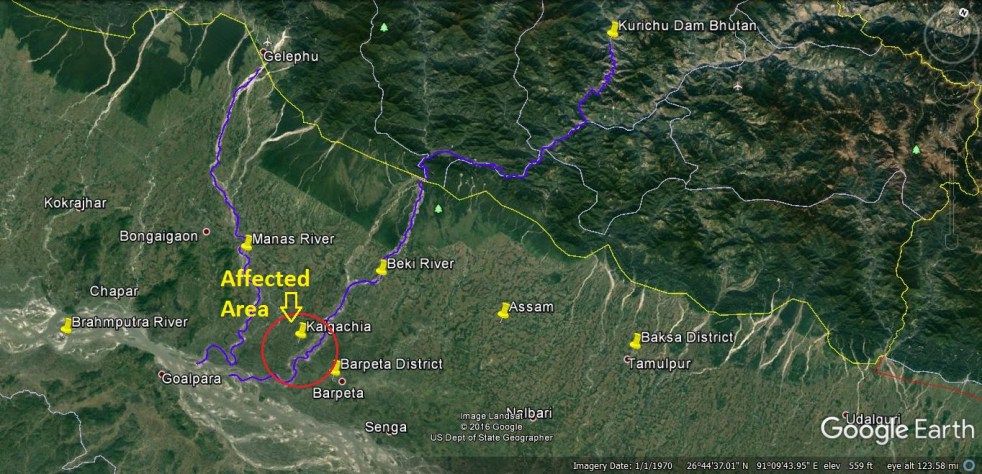
Above: Google Map showing relevant locations (Map by Bhim Singh Rawat of SANDRP)
Several media reports have alleged that sudden water releases from Kurichu Dam in Bhutan has led to floods in Beki and Manas rivers in Assam on Oct 13, 2016 (Thursday), affecting thousands of people in Barpeta district & also reportedly Baksa district. This is not the first time that Kurichu water releases have led to this kind of situation, it has happened in the past including in 2004, 2007, 2008, 2009 (150 villages affected[i]), among other instances. The Indo Bhutan joint mechanism, established in 2004-05, following the July 2004 floods, has clearly failed to effectively address this issue. Continue reading “Bhutan’s Kurichu Dam releases floods Assam, again in 2016”→
Bhutan is the only country in the world that measures its development in terms of Gross National Happiness, which includes environmental conservation and preservation of culture[1]. However, Bhutan’s hydropower construction spree in the recent years has increased debt burden on the country. Concerns are emerging over Bhutan’s profligate spending on a single sector without bringing commensurate benefit to its citizens. Hydropower development in the country faces severe risk of climate change effects and has a huge social and ecological cost. But Bhutan continues to develop hydropower claiming that the revenues would fuel economic growth and the loans are self-liquidating. This review of hydropower developments in Bhutan during the year 2015 is based on media reports throughout the year and other publicly available information. Continue reading “Bhutan Hydropower Developments in 2015”→
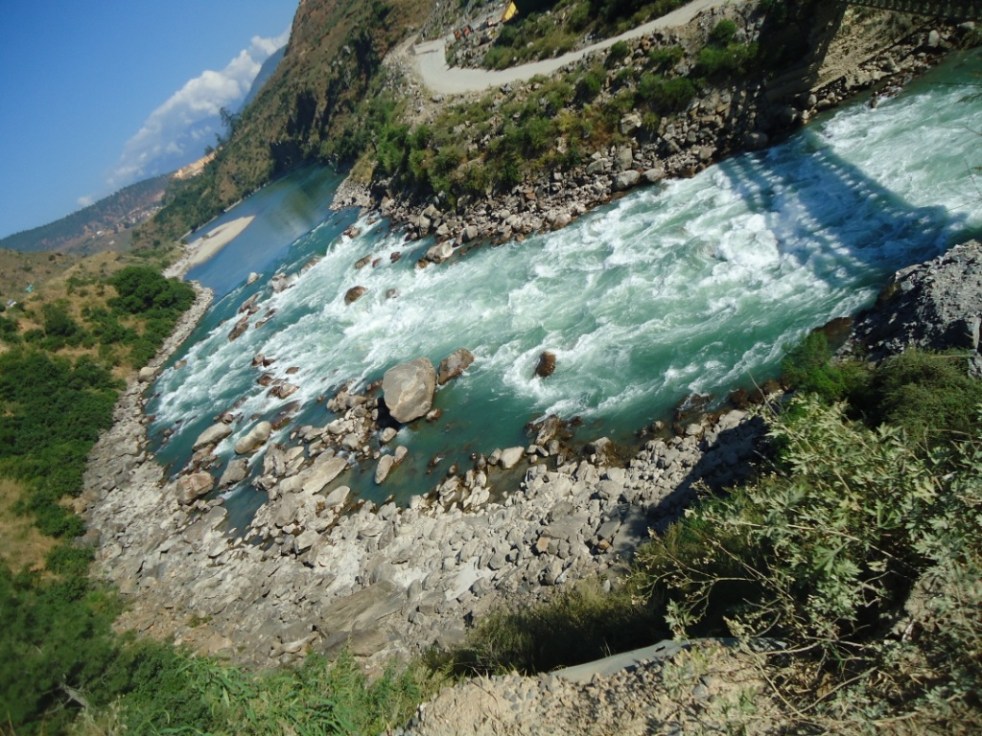
Punatsanghchu River in Bhutan, All Photos by SANDRP
Prime Minister Narendra Modi has been saying to Nepal and others that Bhutan is a good example to show how a country can prosper from hydropower generation and export. During his trip to Bhutan in June 2014, soon after taking over as Prime Minister of India, he said, “Our Hydropower cooperation with Bhutan is a classic example of win-win cooperation and a model for the entire region.”
“We want sacred rivers of Tawang to flow freely, not inside Tunnels!” What makes the assertion on this banner more remarkable is the fact that the people holding it up are not fiery activists, but peace-loving Buddhist monks of the Monpa community, from the farthest corner of Arunachal Pradesh: Tawang (photo by Urmi Bhattacharjee). About 13 hydropower projects are slated to come up on main river stem and tributaries of Tawang Chhu (River) in Tawang in a distance of just 160 kms[1].
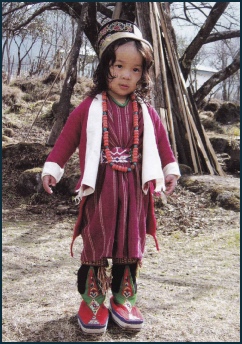
Monpa Child from Tawang Photo: tawang.nic.in
Tawang is a tiny district of Arunachal Pradesh nestled between Tibet and Bhutan. The region has had a troubled past and is home to Monpa Buddhists who practice an ancient form of Buddhism. Monpa culture itself is unique and fragile, with less than 50,000 Monpas in Tawang and less than one lakh globally. The region is famed for Tawang Monastery, Galden Namgey Lhatse (which literally means Celestial Paradise on a Clear Night), which is the 2nd largest monastery in the world. Continue reading “Cumulative Impact Assessment of Tawang Basin: Highlights from the NEHU Study”→
Countries like Bhutan, Nepal, parts of Tibet and parts of India like Sikkim have some lovely Buddhist traditions linked to the nature. On the edges of forests, overlooking valleys and atop majestic mountains flutter tiny colorful prayer flags.Inside Dzongs, fixed prayer wheels spin by the tug of a pious hand. While spinning and fluttering, the prayers are supposed to be disseminated in the universe, reaching every sentinel being.
But there is a third kind of fascinating prayer wheel. It worships not only the creator, but also flowing water. Today, as naturally flowing waters become rarer, it is strangely reassuring to see these wheels spinning away, as the stream pushes the small wooden turbines round and round. These wheels are more fascinating for their symbolic significance: In these regions where water wheels worship the flow, the same flow is being harnessed for generating money and power: Hydropower. In Bhutan, the 10,000 MW + hydropower initiative supported by India and financial institutions like ADB & other foreign players will dam almost all of the big river systems in the country.
In fact, institutions like ADB are so over-enthusiastic in pushing hydropower in Bhutan ( ADB is ‘administering‘ Hydropower grants to Bhutan from countries like Norway and Japan) that they see Bhutan’s strong environmental conservation practices as ‘hurdles’ in this development. ADB says: “Bhutan’s strong environmental conservation policies have affected the pace of implementing power projects because of the time required to complete procedures such as environmental impact assessments, public consultations, forestry clearances, and road planning.”
What follows is a short photo feature on Water Wheels in Bhutan as well as the hydropower development in the Punatsangchu Basin, through the 1200 MW Punatsangchu I HEP. Just a few kilometers downstream is the proposed intake and dam of Punatsangchu II which is also underway.
Bhutan is the only country in the world which measures its development not only in terms of GDP, but through Gross National Happiness (GNH), which is an aggregate of a number of things, including environmental conservation and preservation of culture.
Let us hope that this dense hydropower development does not affect the Bhutanese tenets of happiness…
Majestic three- tiered prayer wheels in Paro, on way to Tiger’s Nest Monastery Photo: SANDRP
A tiny water wheel in agricultural fields of Paro Photo: SANDRP
One more water wheel on way to Taktsang Monastery Photo: SANDRP
A water prayer wheel in a village near Paro Photo: SANDRP
A water wheel on a flowing stream in a dense forest, on way to Phobjikha Valley Photo: SANDRP
The wooden wheel blades Photo: SANDRP
A roadside Prayer wheel with steel blades Photo: SANDRP
A roadside water wheel on way to Thimpu Photo: SANDRP
On way to Thimpu Photo: SANDRP
On way to Taktsang Monastery Photo: SANDRP
Cascade of three water wheels in Phobjikha Valley Photo: SANDRP
Different ways of using the flow: A storehouse for Apples and other seasonal fruits, built on the top of a stream, which acts like a natural AC Photo: SANDRP
Fresh fruits, preserved in a storehouse on the stream! Photo: SANDRP
HYDROPOWER IN BHUTAN
At the same time, huge, unprecedented hydropower developing is also challenging the tiny nation. Much of it is pushed by India.
Planned, underconstruction and commissioned hydropower projects may cover all the river systems in Bhutan. Photo: Down to Earth from CEA
In 2006, India and Bhutan signed an agreement to “facilitate and promote development and construction of hydropower projects and associated transmission systems as well as trade in electricity, through both public and private sector engagements”. Under this agreement, India has agreed to minimum imports of 5,000 MW of hydropower capacity by 2020. The agreement will be valid for a period of 60 years and can be extended. In addition to this agreement, a protocol between India and Bhutan was signed in 2009 through which India will develop 10,000 MWs of hydropower in Bhutan for export of surplus power to India by 2020. This has been going on through a mix of soft loans and grants. This also means services for Indian engineering and design consultants like WAPCOS and Indian developers & contractors like L and T, NHPC, Gammon India, JP Associates, BHEL, SJVN, THDC, Tatas, HCC, Jindal, etc.[1] Indian companies like NHPC, WAPCOS are also involved in Detailed Project Reports, while other Indian companies are bagging the construction and equipment contracts.[2]
Already, three hydro projects funded and built by India are operating in Bhutan which include 336 MW Chukha, 60 MW Kurichu and 1020 MW Tala HEP. Under-construction projects funded mainly by India include 1200 MW Punatsangchhu HE Project Stage-I, 1020 MW Punatsangchu Stage II and 720 MW Mangdechu HEP. News reports indicate that Bhutan and Indian government have together identified 10 HEPs with a total capacity of 11,576 MW by 2020 for development. In addition the country has about 16 operating HEPs[3].
Punatsangchu I Project, 130 mts high dam, envisages submergence of 673 acres of Reserve forest land, 78 acres of private land (involving 116 land owners) and 6 acres of Institutional Land (2 institutions) till the end of April 2013 for the project construction. Punatsangchu II project with 80 mts high dam, involves 479 acres of reserve forest land, 14 acres of private land (involving 17 land owners) and 5 acres of Institutional Land (3 institutions) till the end of April 2013 for the project construction.
In 2014, India and Bhutan also signed an agreement for 2120 MW hydropower capacity through four projects which include 600 MW Kholongchu project, 180 MW Bunakha project (with 230 MW downstream benefits from Tala, Chukha and Wangchu HEPs), 570 MW Wangchu project, and 770 MW Chamkarchu-I project.[4]
Following are some pictures from Punatsangchu I Site.
Riparian farming on a tributary of Punatsangchu Photo: SANDRP
Coffer dam and diversion of PSHP I Project Photo: SANDRP
Dam Axis of PSHP I Photo: SANDRP
Diverted River, dry and without flows Photo: SANDRP
Huge muck disposal next to the river bank near the intake chambers Photo: SANDRP
L and T India is the contractor for construction of Diversion Tunnel, Dam, intake and Desilting Chambers Dam Wall Photo: SANDRP
Gammon India is contractor for 7.48 kms Head Race Tunnel. Bharat Heavy Electricals and HCC are also contractors in PSHP I Photo: SANDRP
Stretch of Punatsangchu River that will be diverted through the tunnel when the dam is commissioned Photo: SANDRP
Baso Chhu River, entirely dried as it is diverted for the 66 MW BasoChhu Power Project of Druk Green Photo: SANDRP
The Six symbols of Longevity celebrated in Bhutan ( also Tibet). Photo: At Punakha Monastery, SANDRP
In almost all Dzongs, as well as hotels and homes rests a picture of Six Symbols of Longevity ( see picture above), all of them are interlinked, hold symbolic significance and are supposed to be auspicious.
They include Man, Animals, Birds ( The Black Necked Cranes, incidentally threatened by an Indian Dam: 780 MW Nyamjangchu, close to Bhutanese border), Mountains, Trees and Rivers!
[5] Samir Mehta’s blog on Hydropower Challenges in Bhutan: http://www.internationalrivers.org/blogs/257/bhutan-s-picture-of-gross-national-happiness-blurs
[7] Sector Study of Bhutan’s Hydropower by World Bank: http://documents.worldbank.org/curated/en/2007/12/9425448/bhutan-hydropower-sector-study-opportunities-strategic-options
[8] ADB pushing for Hydropower in Bhutan, also for storage projects, which have huge impacts! http://www.adb.org/features/bhutan-s-hydropower-sector-12-things-know?ref=countries/bhutan/features