
This letter from SANDRP to MoEF and ETC on Etalin Project highlights how poor has been the EIA and E-flows reports of the Etalin Project and how flawed has been the Environmental Appraisal Process by the EAC. It also shows the shoddy Dibang Basin study for Cumulative Impact Assessment cum Carrying Capacity Study, shockingly done by the same consultant that also did the Etalin EIA, showing clearly that MoEF, EAC and CWC, all of whom were involved in the process, do not understand what is conflict of interest. The E flows study done by the CIFRI (Central Inland Fisheries Research Institute) does not even provide the list of fish they found in the Etalin project area! And shockingly, the EAC approved the biggest ever hydropower project of India based on such shoddy documents. The Environment Clearance approval needs to be reviewed, the EIA, E-flows and Dibang Basin CIA needs to be rejected and fresh studies need to be commissioned. https://sandrp.in/2020/05/23/open-letter-to-moef-river-valley-eac-review-recommendation-to-grant-ec-to-etalin-hep/ (23 May 2020)
Continue reading “DRP: 25 May 2020: Review Environment Clearance Approval for Etalin Project”Tag: NGT

DRP: 18 May 2020: Signs of Impending Dam Floods in SW Monsoon 2020?
These are rather ominous signs. As per the latest reservoir storage bulletin of Central Water Commission dated May 14, 2020, the 123 reservoirs monitored by CWC has massive, 64.6 BCM (Billion Cubic Meters) in live storage capacity, which is about 165% of the capacity on same date last year and average of last ten years, even as monsoon is just weeks away. Most dams known to create DAM INDUCED FLOODS in the past, including Bhakra dams (we wrote about it earlier this month: https://sandrp.in/2020/05/07/are-we-ready-to-use-more-water-from-snow-melt-in-indus-basin-this-year/), Narmada dams, Odisha and W Bengal dams (Cyclone AMPHAN is going to bring a lot of water here in next few days, even before the monsoon), Krishna basin dams, Cauvery basin dams, Bansagar and Gandhi Sagar Dams, and Kerala dams among others. All these dams have above average storage situation.
Continue reading “DRP: 18 May 2020: Signs of Impending Dam Floods in SW Monsoon 2020?”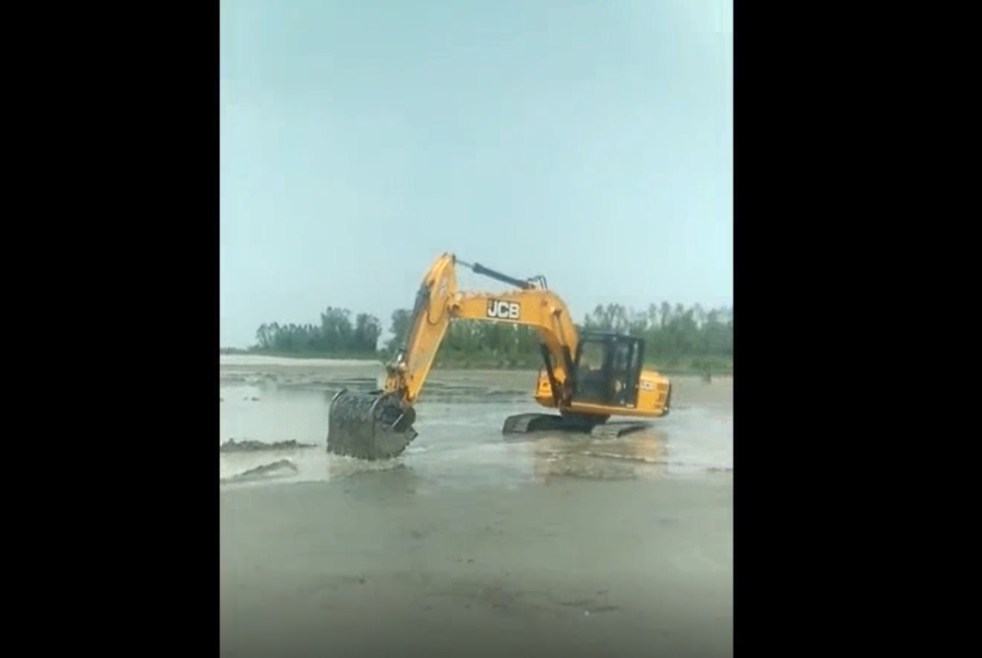
Yamuna facing illegal, in-stream mining during lockdown
In April May 2020, local people and media reports have highlighted riverbed mining practices going on in the Yamuna river impacting river eco-system and riparian communities in gross violation of lock down norms during the Covid 19 crisis.
The first case is reported from Yamuna Nagar district, Haryana on April 30, 2020 by Times of India, where miners had created a bund across the river in the Gumthala-Jathlana area impending the natural flow of the river.
Continue reading “Yamuna facing illegal, in-stream mining during lockdown”

DRP: 11 May 2020: Jindal accepts Etalin HEP is unviable!
This must be the defining (and predictable, this was the lead story in our DRP NB of April 27, 2020, see: https://sandrp.in/2020/04/27/drp-nb-27-april-2020-for-whom-is-this-unviable-etalin-project-being-pushed/) moment in the campaign to save the Dibang Valley now from the proposed 3097 MW Etalin Hydropower Project. The CEO of Jindal Power Ltd has said in so many words that project is NOT an attractive investment, they will struggle to find buyers for the costly power and only support from government can help make the project viable. The CEO seemed to suggest that they would be happy to sell the project to NHPC or form a joint venture with NHPC to get the govt funding for the project. Again completely on predictable line. The question then is why should government spend previous public money on such an unviable project?
So the question remains the same, the one we asked on April 27, 2020: For whom is this unviable Etalin Project being pushed?
Continue reading “DRP: 11 May 2020: Jindal accepts Etalin HEP is unviable!”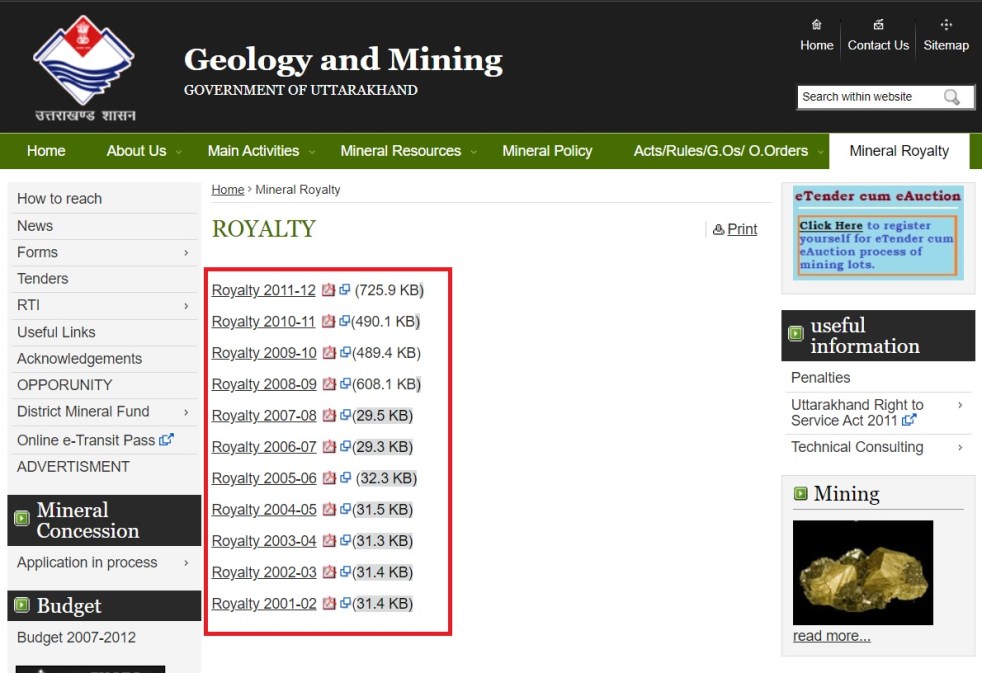
Uttarakhand Riverbed Mining 2020: Rivers, People, Revenue Robbed
The hilly state of Uttarakhand also known as land of rivers has seen increase in riverbed quarrying operations over past decade. With establishment of stone crushers industry, scale and intensity of riverbed minerals (RBM) excavation has further increased in past few years. So has become the impact on villagers and rivers.
However, the government lacks monitoring, transparency, accountability in checking the unscientific, unauthorized RBM as is evident from a review of Uttarakhand Mining and Geology Department (M&G) website and media reports. In fact the state government has neither conducted replenishment study nor formed District Mineral Foundation (DMF), suggesting that it is hand in gloves in organized loot of RBMs.
Continue reading “Uttarakhand Riverbed Mining 2020: Rivers, People, Revenue Robbed”
DRP: 27 April 2020: For whom is this unviable Etalin project being pushed?
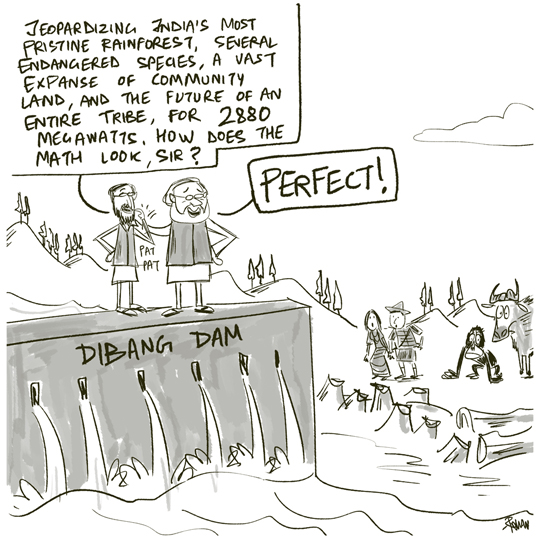
In the ongoing debate on forest clearance for the controversial Etalin Hydropower project in Dibang Valley in Arunachal Pradesh between the Forest Advisory Committee, The Hindustan Times’s consistent reporting and Sanctuary magazine launching a campaign along with others, one (of the many) key question that remains unanswered is: for whom this economically (in addition to socially, environmentally and from climate change perspective) unviable, massively expensive project being pushed in a power surplus country?
Electricity from hydropower projects is no longer economically viable, since cheaper options are available. Some misguided people are claiming virtue in hydropower project claiming it provides peaking power. The fact is India is today not only power surplus, the peak power deficit has been just around 1% or less for long time. This when there is no attempt to either monitor as to how much of the electricity produced from existing hydropower projects provides peaking power, nor is there any attempt to achieve optimisation of operation of existing hydro projects to produce maximum possible hydropower. Nor is there any attempt to even manage the peaks either through pricing or other policy measures. In such a situation there is clearly no justification for more hydro for peaking. Moreover, the storage option is becoming increasingly cost effective, reducing the peaking power needs. So then for whom this project whose cost won’t be less than Rs 30000 crores at most conservative estimates, being pushed? The contractors, the equipment suppliers, the hydro lobby, the consultants, the timber lobby, the dam lobby, or the kickbacks?
Continue reading “DRP: 27 April 2020: For whom is this unviable Etalin project being pushed?”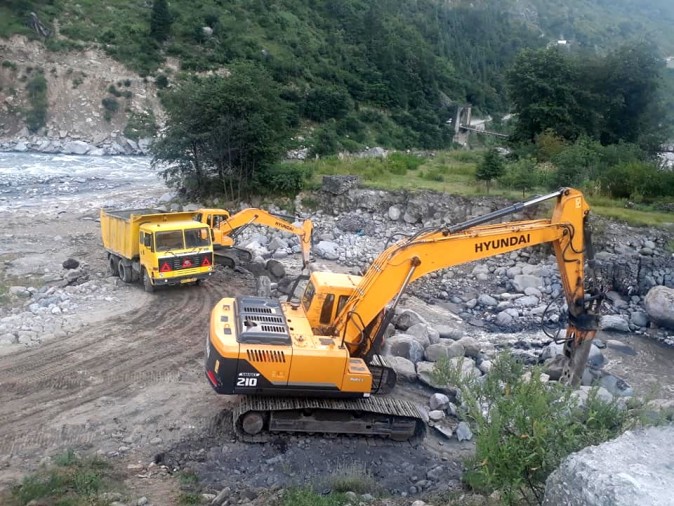
Himachal Pradesh sand mining 2020: No Replenishment study, district foundation
Himachal Pradesh is a hilly state where large scale, mechanized mining of riverbed minerals has been going on for past many years. The damaging impacts on rivers, streams and dependent communities are evident and on the rise. However the state government has failed to bring any change in the scenario as can be seen in this overview covering the related developments during 2019-20.
Continue reading “Himachal Pradesh sand mining 2020: No Replenishment study, district foundation”

DRP: 20 April 2020: Solutions to Covid 19 & Climate change are same?
This proposition clearly sounds simplistic and seems devoid of science or logic. But the case studies of the epidemics since 1980 and loss of forests, biodiversity and sustainability shows that this is not to be dismissed that easily. In fact the following interview with Dr Aaron Bernstein makes a powerful case to show why this indeed has a lot of science and logic behind it. It also hence makes a case that yesterday (our “normal”), is no longer a good model for better tomorrow.
Continue reading “DRP: 20 April 2020: Solutions to Covid 19 & Climate change are same?”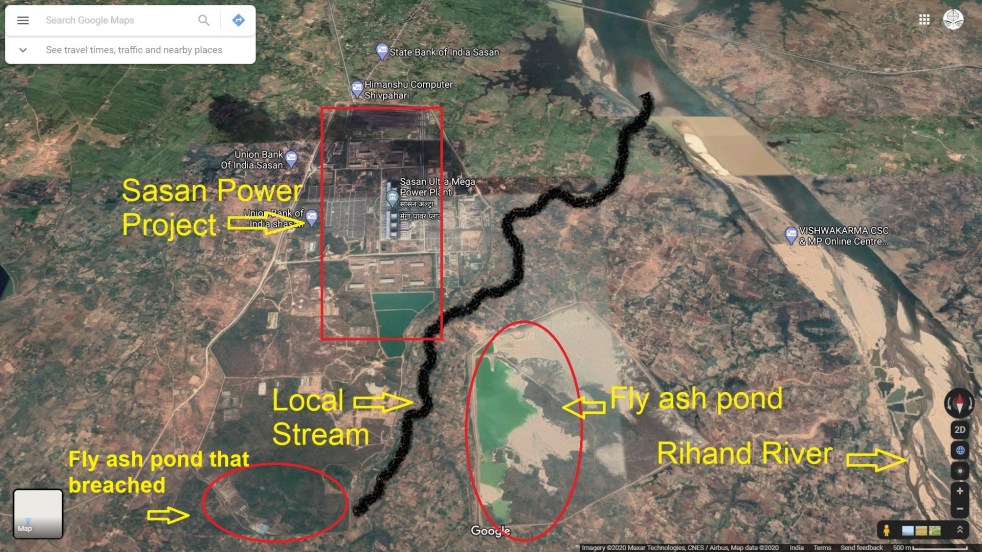
Singrauli Fly Ash Dam Breach: Who regulates these dams in India?
A fly ash Dam of Sasan Ultra Mega Power Project of Reliance Company has breached[i] in the evening of April 10, 2020, near village Harrahva in Singrauli district of Madhya Pradesh, killing six people and destroying downstream river and fields. Following the breach there was massive flash flood of coal ash mixed sludge reportedly affecting hundreds of villages and destroying crops on thousands of acres.
Of the six people feared to have been killed in the flash floods, dead bodies of two have been found in faraway areas, while four are still missing. Two women injured in the aftermath are reported to be in stable condition in local hospital. Reports also suggest that many people could be trapped in their homes because of the poisonous sludge.
Continue reading “Singrauli Fly Ash Dam Breach: Who regulates these dams in India?”
Cleaner rivers in lockdown: Lessons we can learn
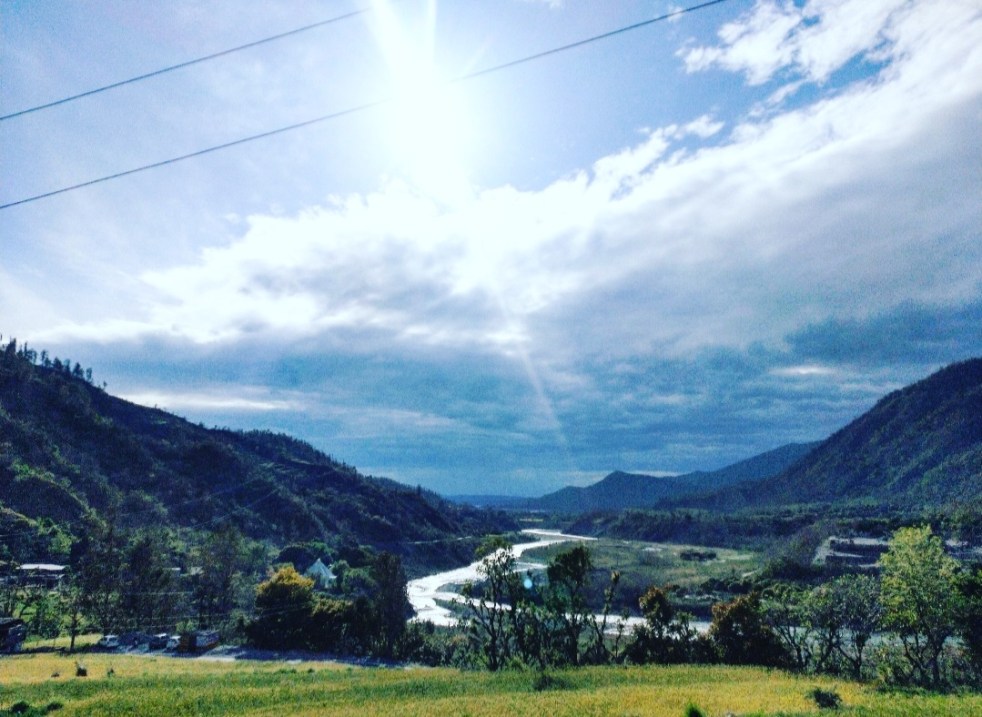
Within a week of 21-day long lockdown in India that started at midnight on March 24, 2020, several reports in print, electronic and social media have been doing rounds showing remarkable improvements in water quality in many rivers in the country. Most of these are on the basis of naked eye observations in the form of pictures and videos by people.
Some of the reports quote pollution control boards’ officials and experts with some analytical data. People generally believe that the shutting down of industrial units has led to reduction in discharge of industrial effluents in the rivers, breathing fresh life in pollution laden streams. It’s right that there is halt in industrial belts and there is less industrial pollution reaching the rivers. However there are other factors contributing to the change in the scenario.
Continue reading “Cleaner rivers in lockdown: Lessons we can learn”

