DRP News Bulletin

DRP: 26 Oct 2020: Why Floods is not big issue in Bihar elections?

Or may be it is a major issue at a number of places. Like in Kishanganj district along Mahananda river in North East Bihar, as the report here mentions. We hope it is. Since floods and how they are managed affect so fundamentally and in so many different ways so many people, it should be an election issue. Particularly when the incumbent Chief Minister Nitish Kumar is fighting to be voted in after being the Chief Minister of the state for 15 years since Nov 2005 (except brief ten month period in 2014-15).

15 years is long enough time to have been able to make at least some dent in flood management. On ground, the situation seems to have only gone worse. It was in this 15 year period that the unprecedented Kosi floods happened after the Kusaha breach in 2008. But the word unprecedented has been used for several more floods in these 15 years, including by Nitish Kumar. He also raised a number of pertinent issues in this period, including impact of Farakka barrage on Bihar floods, need for its decommissioning, Bihar’s right to get Ganga water from the headwaters in Uttarakhand [currently it gets none except during monsoon]. He is currently silent on these issues, but voters and media do not have to be silent.  

Continue reading “DRP: 26 Oct 2020: Why Floods is not big issue in Bihar elections?” →
Floods

Rivers That Reached New Highest Flood Level during Monsoon 2020

Flooding in Madhya Pradesh, late August 2020. Photo: MP Govt., flood list.

In 2020, south west monsoon season when rainfall was 8.74% above normal, rivers reached new Highest Flood Levels (HFLs) at least at 37 locations across the country, as per information available to SANDRP. Maximum 13 such instances come from Central and East India, each. Five instances happened in South India, three in North India and two in North East India. This article provides wise details and hydrographs of all these sites.

SANDRP has been tracking the Highest Flood Level (HFL) breach incidents during monsoon season. The analysis of such HFL breaches in 2018 and 2019 are available on our website. In 2018 we had listed 25 such instances though SW Monsoon rainfall was 9.4% below normal. In 2019 we listed 37 such instances when the SW Monsoon rainfall was 10% above normal.

Continue reading “Rivers That Reached New Highest Flood Level during Monsoon 2020” →
Free flowing rivers

World Rivers Day 2020: Celebrating Rivers across the world

The World Rivers Day[i] (WRD) is celebrated annually on the fourth Sunday of September. The event strives to highlight the invaluable ecological, hydrological services and cultural, recreational values offered by the rivers. Indeed, the most of the once wild, scenic, free flowing rivers across the globe are facing existential crisis on account of various anthropogenic activities hastened over the past century.

However, there are small but significant steps being undertaken by individuals, organizations and governments to restore some of the flowing eco-systems. This account attempts to compile some such positive developments that have taken place in the one year.

We have already published a compilation of the positive river stories of India on the occasion of International Day of Actions for Rivers being held on March 14 2020. In addition to Indian rivers, this compilation also covers some remarkable development concerning river conservation worldwide. There could be many more stories and developments happening, we invite readers to send us such stories they know about. 

Continue reading “World Rivers Day 2020: Celebrating Rivers across the world” →
DRP News Bulletin

DRP: 21 Sep 2020: IHA President accepts-Hydro faces massive slowdown & worse

International Hydropower Association (IHA) is essentially global leader of hydropower lobby. So when IHA President Roger Gill speaks about the problems hydro industry is facing, it becomes very interesting for all concerned.

In this interview the Roger Gill makes it clear that Hydro investments have been slowing down in last five years when compared with investments in immediate earlier decades. It has further slowed down in 2019 and has been further majorly affected by Covid-19 pandemic. Gill also accepts that the hydro is perceived as much more risky compared to solar and wind. The claim he makes of low levelised cost of electricity from hydro projects is a bit of fiction, since cost of any under construction or new hydro will be hugely costlier than solar and wind power projects. The IHA president is catching at the straws when he takes encouragement from investments in existing hydro projects and pump storage, though he keeps making it clear that market is still unclear as far as pump storage tariffs are concerned. A friendly interview also reveals a lot!!

It is high time that the Indian hydropower lobby led by NHPC and power ministry takes due note of the realities and would not push unjustified, unviable and destructive hydropower projects down the throats of reluctant states and people, using scarce public resources.https://energy.economictimes.indiatimes.com/news/power/hydro-power-requires-100-bn-investment-annually-roger-gill-international-hydropower-association/78131561 (17 Sep 2020)

Continue reading “DRP: 21 Sep 2020: IHA President accepts-Hydro faces massive slowdown & worse” →
Dam Induced Flood Disaster · Gujarat · Narmada

How SSNNL violated its own Flood Memorandum 2020 during recent SSD induced floods

During the recent Sardar Sarovar Dam (SSD) induced flood disaster in areas downstream of the dam in Gujarat, the dam operator, SSNNL (Sardar Sarovar Narmada Nigam Limited) violated its own Flood Memorandum (FM) 2020[i] in multiple ways.

The FM-2020 titled “Disaster Management Plan – 2020” provides detailed information about how the dam operation is to be done during South West Monsoon 2020, that is from June 1, 2020 to Oct 15, 2020, or whenever the monsoon has withdrawn. It is published by SSNNL’s Flood Control Cell and carries the names of six highest functionaries of SSNNL on second page: Chairman, Managing Director, Jt MD, Director (CAD), Director (Canal) and Director (Civil). It says Officer in charge of Flood Control Cell of SSNNL is Executive Engineer (Narmada Project Main Canal Division-2) and the FM-2020 is compiled by Superintending Engineer, Narmada Project Design Circle.

An earlier version of the Flood Memorandum for 2018[ii] is also available, which is useful as it has some additional information.

Continue reading “How SSNNL violated its own Flood Memorandum 2020 during recent SSD induced floods” →
DRP News Bulletin

DRP: 7 Sep 2020: On Himalaya Diwas, will Supreme Court stop destruction of Himalaya by Char Dham Road?

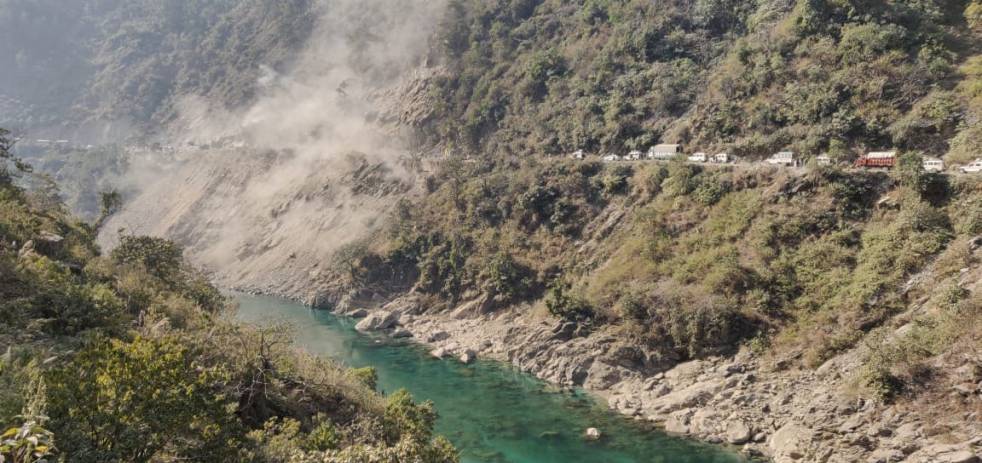
The people and state government of Uttarakhand would be celebrating Himalayan Diwas on September 9; the Supreme Court of India would be hearing the issues related to the controversial Char Dham Road project a day before it on September 08. During the last hearing on August 31, the apex court has rescheduled the case by extending the hearing date by a week amid concerns of recurring landslides raised by the petitioners.

The ongoing adverse impacts on forests, rivers, streams, soil covers, hills and people continue to concerns scientists, geologist who are alarmed by the scale of destruction and shocked by the brazen manner the state and central governments have been marching ahead without bothering to assess the impacts or address the genuine issues being raised by all concerned.

Multiple reports have been showing that the deliberate dilution of environmental rules and violations of already weakened norms applied by none other than governments themselves to avoid scientific scrutiny and push the project through climatically and ecologically sensitive mountains is proving to be a Himalaya blunder. There is still time to pause, ponder, review the project, assess the impacts, reduce road width and prepare an action plan to restore the damages and pay heed to scientific suggestions before the blunder leads to another inevitable disaster of Kedarnath or larger scale. Hope the apex court would not fail Himalayas.  

Continue reading “DRP: 7 Sep 2020: On Himalaya Diwas, will Supreme Court stop destruction of Himalaya by Char Dham Road?” →
Dam Induced Flood Disaster · Gujarat · Narmada

SSD induced Bharuch Flood disaster: Reality behind SSNNL claims that it saved Bharuch

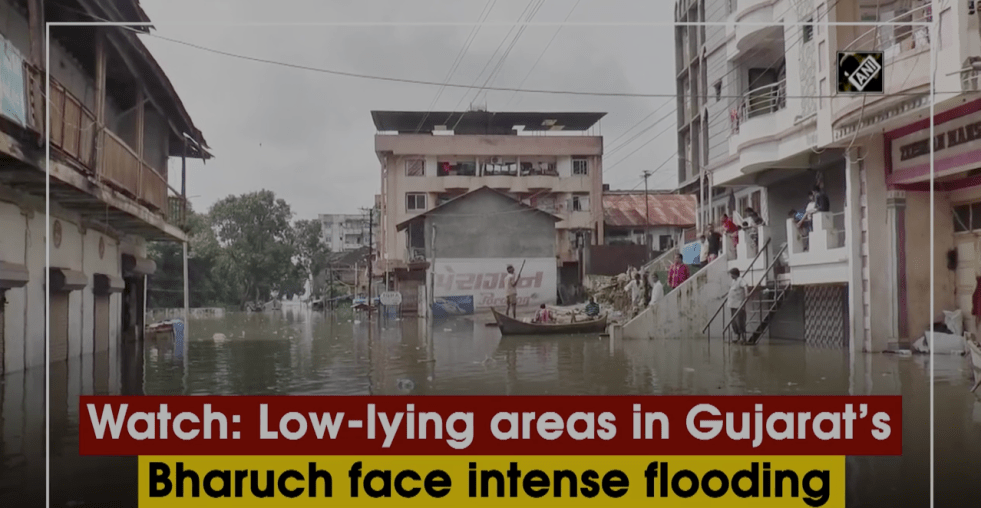
We showed on Sept 2, 2020[i] using official information that Sardar Sarovar Dam (SSD) created an avoidable flood disaster in Bharuch, downstream of SSD starting on Aug 29, 2020, due to sudden, adhoc release of massive quantities water upto 10.72 lakh cusecs. The Sardar Sarovar Narmada Nigam Limited (SSNNL), official agency responsible for operation of the SSD is yet to provide any clear, coherent and fact based response. However, some of the spokespersons of SSNNL/ Government of Gujarat (GOG) are claiming that scientific operation of SSD saved Bharuch from bigger disaster. While this claim has no basis, this is like spraying salt on the fresh wounds.

Only an independent (not by serving or retired bureaucrats of the government) investigation would be able to bring out the truth as to how SSD operated, how it should have been operated, who is responsible for the massive disaster that Bharuch experienced, how can we fix accountability and what lessons we can learn for future.

Continue reading “SSD induced Bharuch Flood disaster: Reality behind SSNNL claims that it saved Bharuch” →
Dam Induced Flood Disaster · Narmada

Sardar Sarovar Creates avoidable flood disaster in Bharuch

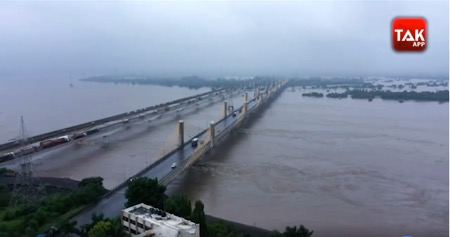
Sardar Sarovar Dam (SSD) operators are operating the dam callously, almost cruelly, without consideration of the impact of the operation in the downstream area. Till Saturday-Aug 29, 2020 early hours, they were not releasing any water from the spillway gates of the dam, in spite of sufficient actionably information at least since Aug 26 that rainfall is hugely increasing in upstream Narmada basin. They were not even operating powerhouses even though the dam was close to 70% full. Suddenly, by Aug 29 night they started releasing upto ten lakh cusecs – Cubic Feet Per Second (28320 cumecs or Cubic Meters per second) of water[i]. Three days later, in the evening of Tuesday, Sept 1, they closed most of the spillway gates, thus reducing releases from spillway to less than a tenth of the earlier figure. During these 3-4 days (Aug 29-Sept 1), massive quantities were released, upto 30 000 cumecs through spillways, and almost nothing before or after! It created massive flood disaster all along the downstream from Gaudeshwar to Chandod to Bharuch, but the Sardar Sarovar Project (SSP) authorities or the Gujarat government seem least bothered. It is high time people of Gujarat wake up and hold the SSP operators accountable for this man made disaster.

Continue reading “Sardar Sarovar Creates avoidable flood disaster in Bharuch” →
CWC - Central Water Commission · Dam floods · Floods

Central India downpour brings unprecedented flows in Brahmani, Chambal, Godavari, Mahanadi, Narmada, Suvarnarekha

A massive wave of flood is flowing down the rivers originating in Central India states from Odisha in East to Gujarat-Rajasthan in the west. At least fourteen river sites have seen breach of Highest Flood Levels (HFL) in last four days, a record by itself: 7 in Mahanadi, 5 in Godavari, 2 in JNarmada and one each in Suvarnarekha and Chambal. In at least four of these cases, the earlier HFL had survived for 26 years and has now been broken.

The flood wave that is traveling down is above above 35500 cumecs (12.54 lakh cusecs) in Narmada (at Indira Sagar Dam), above 25000 cumecs (8.83 lakh cusecs), in case of Mahanadi (at Hirakud Dam) and Godavari (at Gosikhurd Dam) rivers & over 15000 cumecs (5.3 lakh cusecs) in Chambal (at Gandhi Sagar Dam) River. Continue reading “Central India downpour brings unprecedented flows in Brahmani, Chambal, Godavari, Mahanadi, Narmada, Suvarnarekha” →