Dams · Wetlands

Ramsar Wetlands Crisis 2020: North East India

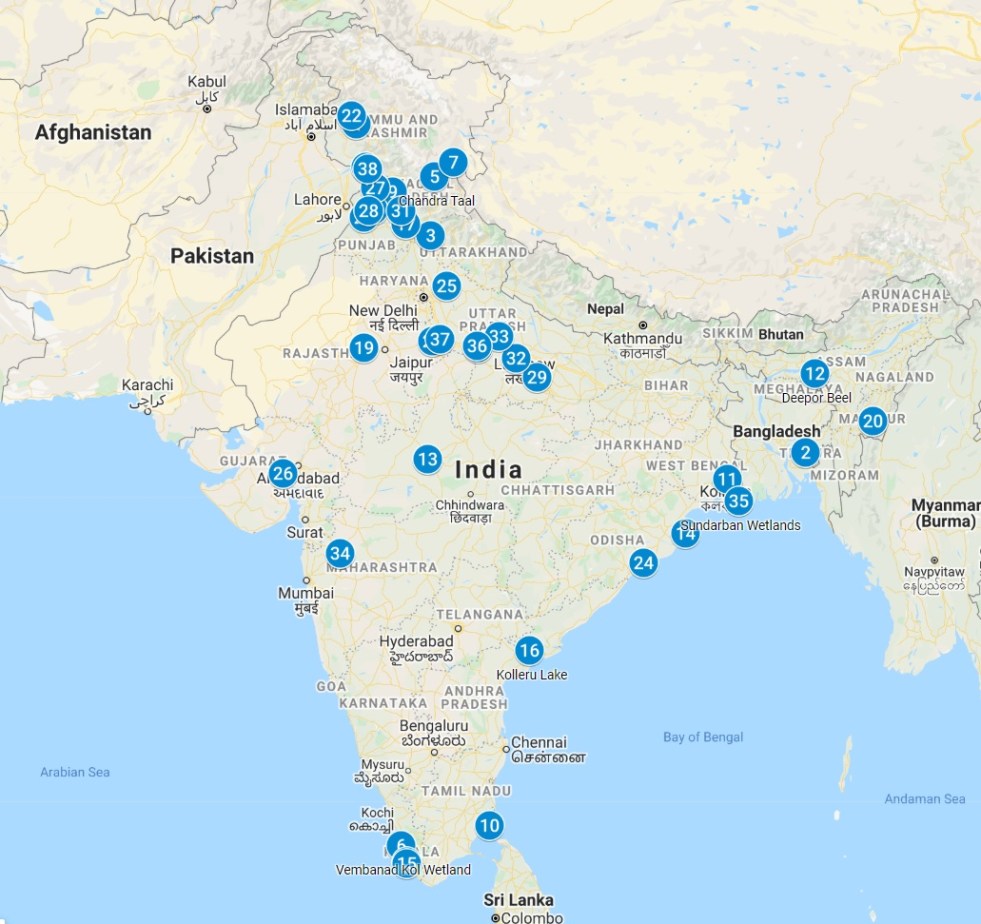
There are three Ramsar sites in eight states of north east India which includes Deepor Beel in Assam, Loktak lake in Manipur and Rudrasagar in Tripura. There are no Ramsar wetlands in remaining North East India states of Arunachal Pradesh, Nagaland, Mizoram, Meghalya, Sikkim. Here is an account of issues these Ramsar sites are facing.

Continue reading “Ramsar Wetlands Crisis 2020: North East India”

Dams · Wetlands

Ramsar Wetlands in crisis 2020: West India

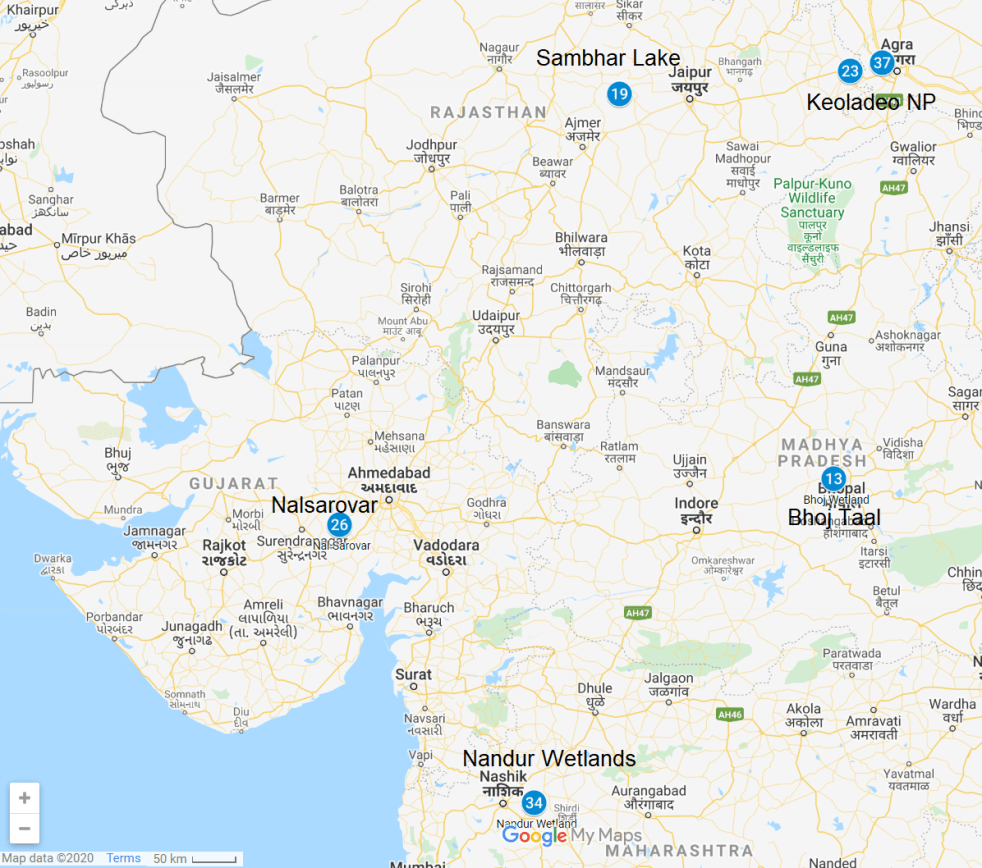
The four state of West India have only five Ramsar sites of international importance. These includes Sambhar lake and Keoladeo NP in Rajasthan, Nalsarovar in Gujarat, Bhoj Taal in Madhya Pradesh and Nandur Madhmeshwar Wetlands in Maharashtra. There is no Ramsar site in Goa state.

Continue reading “Ramsar Wetlands in crisis 2020: West India”

DRP News Bulletin

DRP: 3 Feb 2020: Some welcome news on Pinjal & other dams

A number of welcome developments around dams appear in this week’s DRP News Bulletin from SANDRP. The prominent is the Brihanmumbai Municipal Corporation declaring that it may not need Pinjal Dam, which SANDRP had said in its report way back in 2012-13 and the then BMC commissioner had agreed to in an interview to NDTV. This should also lead to cancellation of the Damanganga Pinjal River Link proposal. The Maharashtra govt decision to review the need for Human dam is also welcome. The Kerala State Information Commissioner’s decision to direct that the Dam Break Analysis should be in public domain is also a useful precedent that all states and CWC need to follow immediately and also amend the proposed Dam Safety Act to include a provision that all Dam Safety related information, including meeting minutes, agenda, decisions, status reports etc will be in public domain.

Continue reading “DRP: 3 Feb 2020: Some welcome news on Pinjal & other dams”
Wetlands

World Wetlands Day 2020: Positive Stories from India

On February 2, the World Wetlands Day is celebrated globally. The theme of 2020 is Wetlands and Biodiversity to emphasize the critical roles the wetlands plays for wildlife, aquatic life, and native vegetation. They also play crucial role in harvesting rainwater, recharging groundwater, providing livelihoods, acting as carbon sinks and providing cushion against flash floods thus they hold immense significance in changing climate.

This compilation puts together some of the positive developments related to wetlands that took place in 2019. It also includes few individual initiatives of lakes and water bodies cleaning from greater Noida, Chennai and Udaipur. There have been some fruitful efforts by citizen and community groups in Maharashtra, Goa and Kerala.

Continue reading “World Wetlands Day 2020: Positive Stories from India”

Wetlands

Punjab Wetlands Overview 2019: More Ramsar Tags no guarantee for Wetlands protection   

Punjab government has been successful in getting three more wetlands declared as Ramsar sites of international importance. The state already has three wetlands with Ramsar tags namely Harike, Kanjli and Ropar wetlands. The government in October 2019 had proposed a total of five sites including Ranjit Sagar conservation reserve and Hussainiwala wetland for Ramsar tags. The new wetlands selected for the tag are Keshopur-Miani community reserve, the Beas conservation reserve and Nangal wildlife sanctuary. So now six wetlands in the state are covered under Ramsar convention.

The state forest department and WWF team were working in this direction over past couple of years. In the year 2019, the government has also taken some remarkable decisions regarding conservation of wetlands in the state. However, by the year end, there has not been any significant progress on the issue from the government.

Continue reading “Punjab Wetlands Overview 2019: More Ramsar Tags no guarantee for Wetlands protection   “

Fish, Fisheries, Fisherfolk

WFD 2019: Mass Fish Kill Incidents Due to Pollution, Dry Rivers In India

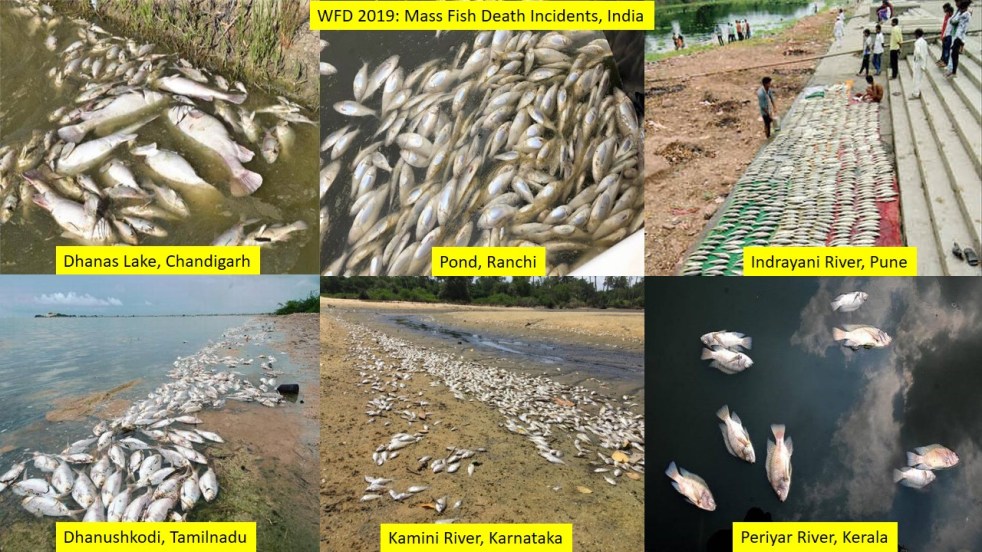
21 November is celebrated as world fisheries day across the world. Apart from crucial source of food and livelihood to lakhs of fisherfolks in India, fish diversity determines the health of the water body including lakes, ponds and rivers. However with growing threats and pollution mass fish mortality has been taking place in various rivers and lakes in the country every year. On World Fisheries Day 2019 SANDRP has put together known mass fish kill incidents that took place this past year to highlight the gravity of threat so that corrective measures can be taken by respective Governments and others concerned.

Continue reading “WFD 2019: Mass Fish Kill Incidents Due to Pollution, Dry Rivers In India”

Fish, Fisheries, Fisherfolk

World Fisheries Day 2019: Fish, Fisheries Update from India

Every year, November 21 is celebrated as World Fisheries day across the world. SANDRP with the help of selective media report, presents an overview of key developments and problems affecting fisheries and fisher folks in India and South Asia.

Continue reading “World Fisheries Day 2019: Fish, Fisheries Update from India”

DRP News Bulletin

DRP: 11 Nov 2019: Wetlands can help water security, help adapt to & mitigate climate change impacts

Wetlands are critical part of hydrological systems. They provide multiple ecological services to people living in proximal areas. The invisible contribution of wetlands in saturating aquifers and checking groundwater depletion is essential given the growing water scarcity. Additionally, wetlands are home to a variety of plants and animals species making them fully functional and self-sustaining eco-system. Sadly, despite the environmental significance and associated support services, wetlands have been subjected to degradation for past many decades.

Continue reading “DRP: 11 Nov 2019: Wetlands can help water security, help adapt to & mitigate climate change impacts”
DRP News Bulletin

DRP: 28 Oct 2019: Growing opposition to Large Hydro Projects

As can be seen from the news reports from Jammu & Kashmir, Assam, Arunchal Pradesh, Karnataka, among others, the opposition to Large Hydro Projects and Big Dam is growing all over India. These projects are neither economically viable, nor Socially-environmentally sustainable. There are much better options exist and hope the governments takes informed, democratic decisions. Going by the agenda and minutes of the recent Expert Appraisal Committee on River Valley Projects and other decisions, this hope seems far fetched at the moment.

Continue reading “DRP: 28 Oct 2019: Growing opposition to Large Hydro Projects”

DRP News Bulletin

DRP: 23 Sept. 2019: World Rivers Day; Several Moves to Conserve Rivers in India

GANGA Uttar Pradesh Floodplain set to be demarcated for 1st time State government has demarcated the Ganga’s floodplain and submitted a final report to the Jal Shakti ministry. The NMCG under Jal Shakti ministry would be the final authority to decide the floodplain. Once the report is approved, the centre would notify Ganga’s floodplain in the state for the first time.

In the first phase, the river stretch from Haridwar till Unnao has been covered. At least 200 metres from the embankment in the city and 500 metres from the embankment in rural areas might be marked as the river’s floodplain. A floodplain is the maximum area that a river has flooded in 25 years. Though the river may not rise that high every year but the demarcating it will mark the area that a river may engulf.

After the floodplain demarcated, it would further be divided into ‘no-development’ and ‘restrictive’ zones. The activities for each of the zones would be defined by the Centre and state government. If any activity is allowed in the ‘no development’ zone, it would be agriculture but on the condition that no fertilizer would be used, said sources in the state government. https://timesofindia.indiatimes.com/city/lucknow/gangas-floodplain-set-to-be-demarcated-for-first-time/articleshow/70877778.cms  (28 Aug. 2019)

Continue reading “DRP: 23 Sept. 2019: World Rivers Day; Several Moves to Conserve Rivers in India”