Dams

Jammu and Kashmir Rivers Profile (Jhelum and Chenab Basins)

This report discusses a few of the significant issues in the Jhelum and Chenab basin two of the main tributaries of the Indus and provides the readers a snapshot of the issues confronting the water resources development in the basins. On the basis of these factors, the health and status of the Jhelum and Chenab basins is determined using an assessment matrix providing qualitative weights to each of the indicators and influencing factors to arrive at the overall score of the river categorizing a riverscape as healthy, sick and dying.

Continue reading “Jammu and Kashmir Rivers Profile (Jhelum and Chenab Basins)”

Dams · DRP News Bulletin

DRP: 5 June 2017 (Agitation To Stop Illegal Mining in Ganga)

Today is 13th day of the Swami Shivanand fast unto death to protect Ganga River from illegal mining. The health of 70 years old Marti Sadan head is turning critical with each passing hour. If no intervention is done immediately, the Saint’s life will be in danger.  

Matri Sadan resumed its fight against rampant mining in Ganga on  May 13th, 2017 after State Government opened Ganga riverbed mining which the Ashram is strongly opposing for last many years.  

For first eleven days two disciples of the Ashram observed hunger strike. But seeing no response from Govt, Swami Shivanand himself sat on fast unto death on May 24, 2017 against indiscriminate mining of national river.  Still the Govt went ahead with Ganga mining activities stating that it was necessary to protect the city from flood. 

In response the Saint shunned even taking water. But instead of communication with the protesters, the State Govt reportedly on May 28, 2017 tried to force feed the saint to fail the agitation for which the Govt was criticized greatly.

After mounting pressure the CM of Uttarakhand is learnt requesting to stop hunger strike. Following this mining was stopped in Ganga and the saint started taking water after six days but decided to continue fast as long as Government imposes complete ban on mining in writing. 

On June 02, 2017, accusing the State Govt of blatant apathy towards Swami Shivanand’s hunger strike against illegal mining on the Ganga riverbed in the Kumbh Mela area, a group of scientists,  activists and followers have written to the PM Modi requesting the PM to intervene without delay to stop unscientific mining of the Ganga.

Continue reading “DRP: 5 June 2017 (Agitation To Stop Illegal Mining in Ganga)”
Dams

Madhya Pradesh Rivers Profile

About Madhya Pradesh

The state of Madhya Pradesh (MP) was bifurcated in the year 2000.  The total area of MP state is 3,08,245 sq. km. The state has been divided into 50 districts and 342 sub districts. The total human population of the state is 725.97 million. (2011 census) with a decadal growth rate of 20.3%. Key centres of growth are around the urban centres of Gwalior, Indore, Bhopal and Jabalpur.

Climate

It has a subtropical climate. Hot dry summer extends from April to June followed by monsoon from July to September and winter months (November to February) are cool and relatively dry. The average rainfall is about 1,370 mm and it decreases from east to west. Summer mean maximum temperature rises to about 42.5 deg C in northern parts and the average temperature during winters is as low as 10 Deg C again in the north while it varies from 10 – 15 deg C in the south. (Source: Gosain et al in Climate Change in Madhya Pradesh: A Compendium of Expert Views – II)

Continue reading “Madhya Pradesh Rivers Profile”

Expert Appraisal Committee · Ministry of Environment and Forests · River Valley Projects

Open Letter to MoEF: Remove Chairman of Expert Appraisal Committee on Dams for conflict of Interest: He is DG of NWDA

May 30, 2017

To:

Dr. Harsh Vardhan,

Union Minister of State of Environment, Forests and Climate Change (Independent Charge)

Paryavaran Bhawan, Jor Bagh, Delhi 110 003

dr.harshvardhan@sansad.nic.in, ps2mefcc@gov.in (PS to MoEF Minister)


Respected Sir,

We have just learnt that Prof Sharad Jain of NIH, Roorkee, and chairman of Expert Appraisal Committee (EAC) on River Valley and Hydropower Projects (RVP), is also holding additional charge of DG of NWDA, see: http://www.nwda.gov.in/writereaddata/linkimages/6419983647.pdf. His office just told one of us that he has been holding this charge since about three months already.

This is a clear case of conflict of interest. As you know, a number of NWDA projects come to EAC for approval at various stages. One such project that came before the EAC headed by Dr. Jain was the Ken Betwa project, which the committee headed by Dr. Jain promptly cleared in very first meeting of the reconstituted EAC in Dec 2016, weeks before Dr. Jain took over as Director General of NWDA, over ruling the issues that earlier four meetings of the EAC had raised about this project. How can one expect that the EAC chairman would be able to objectively, independently and scientifically appraise a project of the organisation (NWDA in this case) of which he is the Director General?

Under the circumstances, we believe there is no option, except that you must ask Dr. Jain to resign from his post as chairman of EAC, as his holding additional charge of NWDA DG, and already in conflict of interest. We also request you to ask the EAC to review their decision about Ken Betwa Project (and any other NWDA project) that the current EAC may have appraised, after appointing a new chairman of EAC.

We would like to bring to your attention that there is already a precedent in this context when in 2009, the then chairman of the EAC (RVP), Dr P Abraham was asked to resign since he was also director of hydropower companies whose projects came before EAC headed by him.

We hope you will act promptly on this issue. There is some urgency of this since the next meeting of EAC (RVP) is on May 31, 2017, that is tomorrow.

Thanking you,

Yours Sincerely,

1. Prof Brij Gopal (Retired Prof from JNU, Delhi), Centre for Inland Waters in South Asia, Jaipur, brij44@gmail.com

2. Dr E A S Sarma, former Secretary, Govt of India, Vishakhapatnam, eassarma@gmail.com

3. Dr Bharat Jhunjhunwala (Formerly with IIM Bangalore), Uttarakhand, bharatjj@gmail.com

4. Vimal Bhai, MATU jan Sangathan, Uttarakhand, bhaivimal@gmail.com

5. Shripad Dharmadhikary, Manthan Adhyayan Kendra, Pune, manthan.shripad@gmail.com

6. Dr Raghu Chundawat & Joanna Van Gruisen, Baavan, Bagh Aap Aur Van Trust, Panna, Bundelkhand, joannavg@gmail.com

7. Pushp Jain, Director, ERC Resource Centre, Delhi, pushp@ercindia.org

8. Gunjan Mishra, Banda,  Bundelkhand, mishra.gunjan22@gmail.com

9. Dipani Sutaria, (James Cook University, Australia), Ahmedabad, dipani.sutaria@gmail.com

10. Dr. A.J.T Johnsingh, Bengaluru, ajt.johnsingh@gmail.com

11. Suman Jumani, Senior Research Fellow, Foundation for Ecological Research, Advocacy and Learning, Bengaluru, sumanjumani@gmail.com

12. Manu Bhatnagar, Delhi, manucentaur@hotmail.com

13. Cara Tejpal, Sanctuary Nature Foundation, Mumbai, cara@sanctuaryasia.com

14. Siddharth Agarwal, Veditum India Foundation, Kolkata, siddharthagarwal.iitkgp@gmail.com

15. Himanshu Thakkar, South Asia Network on Dams, Rivers & People, Delhi.

ht.sandrp@gmail.com, 09968242798

16. Dr Bhartendu Prakash, Kisan Vigyan Kendra & Grameen Vigyan Vikas Trust, Bundelkhand, UP, brsc2008@gmail.com

17. Dr Latha Anantha, River Research Centre, Kerala, latha.anantha9@gmail.com

18. Theophilus, Munsiari, Uttarakhand, etheophilus@gmail.com

19. K Ramnarayan, Himal Prakriti, Munsiari, Uttarakhand, ramnarayan.k@gmail.com

20. Malika Virdi, Himal Prakriti, Munsiari, Uttarakhand, malika.virdi@gmail.com

21. Prof Sunil Kumar Choudhary,Prof. & Head, University Dept. of Botany, T. M. Bhagalpur University, Bhagalpur, sunil_vikramshila@yahoo.co.in, 09431875861

Copy to: 1. EAC (River Valley Projects) members

2. Prime Minister’s office

MEDIA COVERAGE:

  1. June 1, 2017: http://timesofindia.indiatimes.com/india/chief-of-eac-on-rivers-faces-conflict-of-interest-charge/articleshow/58937121.cms
  2. June 1, 2017: https://www.nationalheraldindia.com/environment/2017/05/31/ken-betwa-river-linking-project-a-clear-case-of-conflict-of-interest

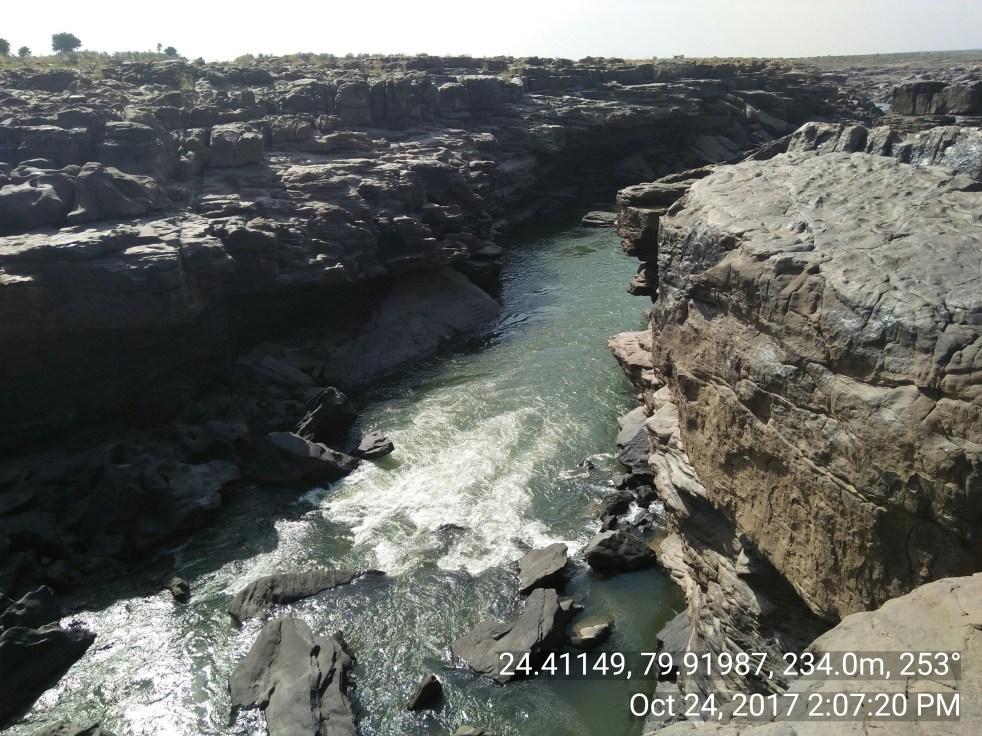
A fabulous view of Ken river. Nesting sites of Long-billed vultures are to the right. All will go under water if Ken-Betwa linkup is carried out,AJT Johnsingh

Dams · DRP News Bulletin

DRP: 29 May 2017 (Drought Options: Lessons from Rajasthan)

Rajasthan Lessons from a reborn river The district of Alwar in Rajasthan is water-stressed, receiving less than 650 mm of rainfall in a year, most of which falls during the Southwest monsoon. But Alwar exists in a stable equilibrium, where even if there is a drought, the Johad’s and the forests make it possible for water to be stored underground. Because of strong communal interdependencies, all villagers stuck to sensible crops for the region, and maintaines the Johads. The community, the Forests, the Johads, the choice of crops, all worked together and reinforces one another. Equilibriums are maintained by such reinforcing activities that fortify status quo. FASCINATING account of how Arvari community rejuvenated their rivers and what are the lessons.

Continue reading “DRP: 29 May 2017 (Drought Options: Lessons from Rajasthan)”
Dams · DRP News Bulletin

DRP: 22 May 2017 (SOLVE SILTATION OF GANGA OR REMOVE FARAKKA DAM TO REVIVE GANGA: BIHAR CM)

Bihar Chief Minister Nitish Kumar again has urged the central govt to remove the Farakka barrage in West Bengal and make a countrywide policy on silt management for letting river Ganga to flow freely.

“Siltation is destroying Ganga’s ecology and health. It’s due to heavy deposits of silt on the riverbed that stream of the river is being badly affected,” Kumar said at a two-day national seminar on ‘Obstacles in the Incessant Flow of the Ganga’.

Speaking on the occasion, Swami Avimukteshwara Anand criticised Union Water Resources Minister Uma Bharati for doing absolutely nothing for the cause of the river Ganga and said she seems more interested in her chair rather  than the river. He also criticised  Prime Minister Modi for claiming that he is son  of Ganga, but doing nothing positive for the river. Swami ji said Nitin Gadkari seems bent on further destroying the river in the name of National Waterway.

Addressing the seminar Nitish Kukar said that Bihar’s demand for the framing of national policy on desiltation of the Ganga and clearance of silt in the state is not a political issue, as the matter is related to larger environmental and biodiversity issues facing the people.

He added, “Concrete steps have to be taken to ensure incessant flow of the Ganga. Otherwise, cleanliness of the river is not possible.” Referring to the need to protect biodiversity, he said conservation of the Ganga dolphins is dependent on the cleanliness of its water. He added the Farakka barrage constructed across the river in West Bengal has led to slow flow of water between Buxar to Bhagalpur, and consequent annual flood and waterlogging during the monsoon.

Nitish recalled the devastating flood that the state had witnessed in the Ganga basin last year and said Bihar had spent Rs 1,058 crore over the last five years to prevent soil erosion. He appealed to the Centre to frame a sound policy on silt management, stressing that it should be prepared by making on the spot survey and assessment of the prevailing situation. Nitish said even the report of the committee headed by Madhav Chitale had accepted the problem of siltation facing the Ganga.

Continue reading “DRP: 22 May 2017 (SOLVE SILTATION OF GANGA OR REMOVE FARAKKA DAM TO REVIVE GANGA: BIHAR CM)”
Dams · DRP News Bulletin

DRP: 15 May 2017 (MP talks about Narmada Seva after destroying the River with Dams, displacement of Lakhs)

On conclusion of five month long Narmada Sewa Yatra, Prime Minister Narendra Modi is today ( May 15, 2017) launching a road-map for steps to be taken for the conservation of the Narmada river. The MP state assembly has also recently declared river Narmada a living entity. Even otherwise quiet on rivers environment minister Anil Madhav Dave has expressed concerns for Narmada.

Contrary to all this, the Central Govt and 3 states of MP, Maharashtra and Gujarat have begun a process towards sanctioning completion of the Sardar Sarovar Dam, with closure of the 17 meters high gates. It is a countdown towards impounding waters in the 214 km land stretch where more than 40,000 families are residing till date. There are standing crops and massive plantations; thousands of pakka houses, schools, other public and private services erected; hundreds of temples, tens of mosques (as opposed to three temples claimed by the authorities), adivasi gods and worship places, all of which will be submerged. In protest thousands of people from Narmada valley, to be affected by Sardar Sarovar Project created a Human Chain on the borders of living village communities and on the banks of the river, protesting against any decision to close the dam gates.

Continue reading “DRP: 15 May 2017 (MP talks about Narmada Seva after destroying the River with Dams, displacement of Lakhs)”
Dams · DRP News Bulletin

DRP: 8 May 2017 (Inspiring: How Kerala Panchayat brings a dying river back to life)

The Kuttamperoor stream in Kerala, connecting the Pampa and Achankovil rivers, had been a nearly stagnant, shrunken cesspool of dumped waste and weeds for more than a decade. Some weeks ago, it was resuscitated as a flowing river, thanks to the will of the Budhanur gram panchayat in Alappuzha district, and the commitment of 700 local men and women who worked to bring the river back to life under the MGNREGA.

The Kuttamperoor was once a full 12 kilometres long and, at places, over 100 feet wide. The river originates from Achankovil at Ulunthi, near Mavelikkara, and flows through Ennackad, Budhanur, Kuttamperoor, Mannar, and Pandanad before merging with the Pampa at Nakkida near Parumala in Pathanamthitta district.

Continue reading “DRP: 8 May 2017 (Inspiring: How Kerala Panchayat brings a dying river back to life)”
Dams · DRP News Bulletin

DRP: 1 May 2017 (Ken Betwa won’t help, here is what CAN help Bundelkhand)

Union Water Ministry has launched an extensive water conservation program for drought prone areas of Bundelkhand, Marathwada, Kalahandi, Bolangir and Koraput in Odisha on April 28, 2017 at Bandri, Sagar Madhya Pradesh. As per report, the Water Ministry has prepared a master plan for artificial recharge of ground water in Bundelkhand region.

In UP region of Bundelkhand, around 1100 percolation tanks, 14000 small check dams/Nala bunds and 7200 Recharge pits/shafts have been identified. In MP region of Bundelkhand, around 2000 percolation tanks, 55000 small check dams/Nala bunds and 17000 Recharge shafts have been identified. She said as a part of ground water exploration, 234 wells in UP are proposed to be constructed in five districts of Bundelkhand i.e., Banda, Hamirpur, Jalaun, Chitrakoot and Mahoba. As a part of ground water exploration, 259 wells in MP are proposed to be constructed in six districts of Bundelkhand.

Continue reading “DRP: 1 May 2017 (Ken Betwa won’t help, here is what CAN help Bundelkhand)”
Andhra Pradesh · Dams · Karnataka · Maharashtra · Telangana

STOP DIVERSION OF WATER FROM DROUGHT HIT KRISHNA BASIN

Release water from Koyna & Tata dams to drought hit Karnataka, Telangana & Andhra Pradesh

Large parts of South India, including parts of Karnataka, Andhra Pradesh and Telangana are facing unprecedented drought and water scarcity. However, Maharashtra is sending OUT billions of liters of water FROM drought hit Krishna basin to High Rainfall Konkan region to flow to the sea. Continue reading “STOP DIVERSION OF WATER FROM DROUGHT HIT KRISHNA BASIN”