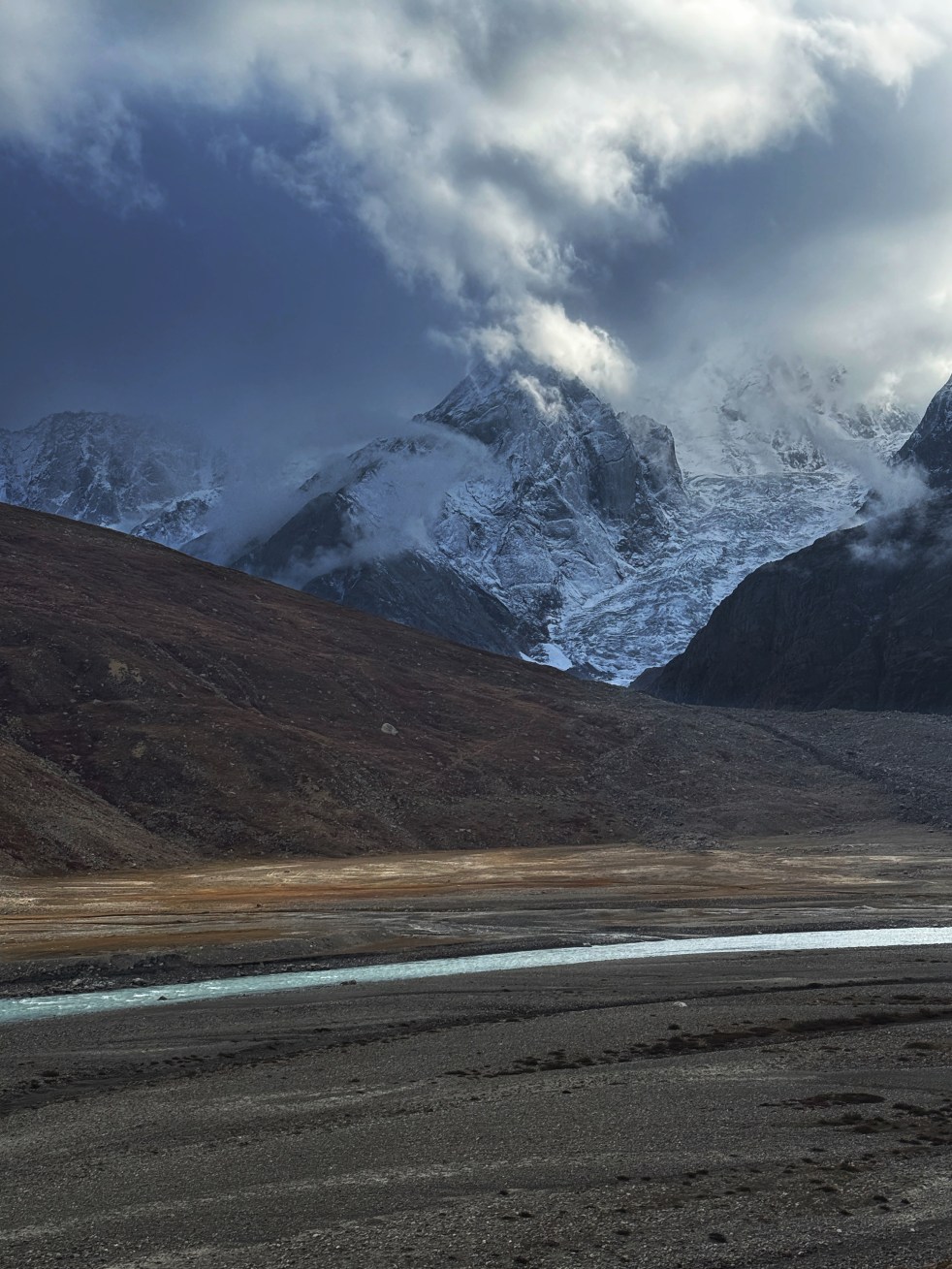
Increasing incidences of Glacial Lake Outburst Floods (GLOFs) are being experienced in the Indian Himalayas. One of the most notable examples of GLOF was the Chorabari Lake GLOF that occurred on 16th June 2013 in Kedarnath, Uttarakhand[1] which was triggered by heavy rainfall induced mass movements into the lake. The GLOF devastated villages of Kedarnath, Rambara, and Gaurikund. Around 6,000 people were officially killed, and a significant number of the deaths were linked to the GLOF. Countless bridges and roads were washed away, and about thirty hydropower plants were affected or completely devastated. Several Hydropower projects resulted in exponential losses to life and livelihoods. Whole of Uttarakhand was affected in the disaster, and a significant proportion of it was related with GLOF.
Continue reading “Hydropower-GLOF Nexus in Chenab Headwaters: Absence of credible studies and accountable governance”Tag: Chenab

March 2024: 3 Hydropower Workers Killed in Avalanche in Kinnaur-Himachal Pradesh
(Feature image: Rescue work being done at Selti-Masrang HEP site in Kafnu, Kinnaur on March 11, 2024. Image Source: News 18 Hindi)
A snow avalanche has killed three workers of under construction Selti-Masrang hydroelectric power (HEP) project in Kinnaur district of Himachal Pradesh. The incident occurred in after noon hours reportedly around 01:00 pm on March 11, 2024.
The 24 Mw project is being built by Hyderabad based Ramesh Hydro Power Private Limited on Wangar khad, a tributary of Sutlej River near Kafnu village panchayat in Bhaba valley of the district. The basic information about the project can be seen here. A forest land of 4.75 ha was diverted for the project wide permission given in May 2013. In 2016, 0.64 ha more forest land was applied for. The project cost then in 2016 was Rs 154. 27 cr.
Continue reading “March 2024: 3 Hydropower Workers Killed in Avalanche in Kinnaur-Himachal Pradesh”
2022: Accidents & Damages related to Hydro projects in India
In this annual review, SANDRP compiles the hydro power related accidents, disasters and damages in North West and North East Himalayan states during 2022. It also covers relevant reports revealing gradual decline in power generation by hydro power projects amid growing concerns over physical and financial viabilities of new projects. There are also reports highlighting the looming climatic and geological threats over these projects. It is good to see that taking lessons from Chamoli disaster in Feb. 2021, NDMA has officially asked central govt not to rely on hydro power.
In previous parts of yearend roundups, we have covered (1) Dam induced floods & damages, (2) Fly ash dam breach incidents, (3) Impact of floods on Polavaram project, (4) People’s resistance against dams and hydro projects. Please see links for reports tracking hydro power projects related accidents and disasters in 2021 and 2020.
Continue reading “2022: Accidents & Damages related to Hydro projects in India”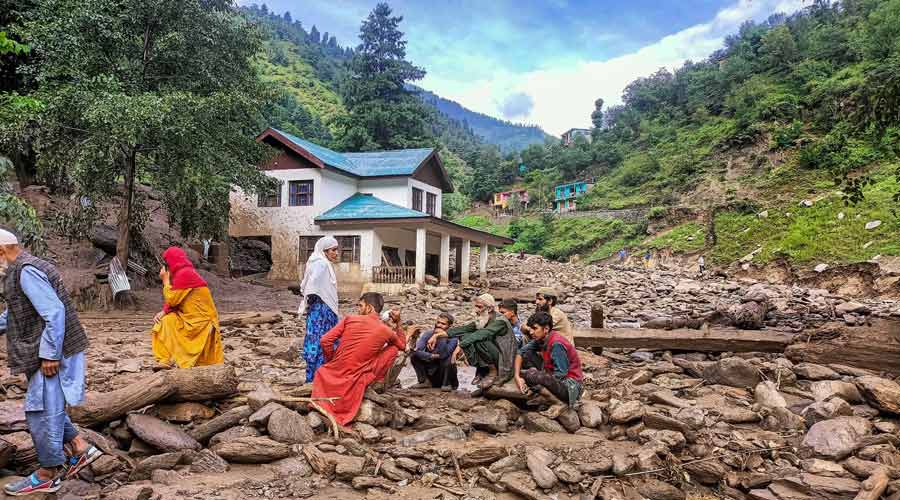
J&K & Ladakh Cloud Bursts 2022: Missing Monitoring & Mitigation
(Feature Image: Cloudburst triggers flashfloods; 13 structures washed away, 20 damaged in Doda. Photo PTI/The Telegraph, 20.07.2022)
Tracking cloud burst incidents occurring before and during South West Monsoon season 2022 in North West Himalayan region, this report covers the Union Territories of Jammu & Kashmir (J&K) and Ladakh. Kindly see the links for SANDRP’s reports covering the Uttarakhand (31 cloud burst incidents) and Himachal Pradesh (39 cloud burst incidents) in 2022. Our previous reports for J&K and Ladakh region can be seen here 2021, 2020, 2019.
Continue reading “J&K & Ladakh Cloud Bursts 2022: Missing Monitoring & Mitigation”
August 2022: Flash flood debris block Chenab flow in Lahual, Himachal Pradesh
(Feature image: Video grab of artificial lake on Chenab river. Source Weatherman Shubham @shubhamtorres09, Twitter, Aug. 16, 2022)
Debris brought by flash flood in Jahlma nullah blocked[i] the flows of Chenab (Chandrabhaga) river for about 6 hours in Udaipur tehsil of Lahual and Spiti district, Himachal Pradesh forming a huge lake. The incident occurred following heavy rainfall on August 15, 2022 night.
Continue reading “August 2022: Flash flood debris block Chenab flow in Lahual, Himachal Pradesh“
2022: CWC Flood Monitoring Sites in North India
(Feature image: Bar Chart showing number of Level Forecast/Monitoring, Inflow Forecast sites in North Indian States & UTs)
Continuing analysis of Central Water Commission’s flood forecast website, SANDRP presents the details of flood monitoring sites in North Indian states comprising Union Territories of Jammu & Kashmir, Ladakh, Chandigarh, Delhi and states of Himachal Pradesh, Uttarakhand, Punjab, Haryana and Uttar Pradesh. Before this, we have prepared similar critical reports and highlighted problematic issues in flood monitoring sites in North India in 2018, 2019 and 2020.
Continue reading “2022: CWC Flood Monitoring Sites in North India“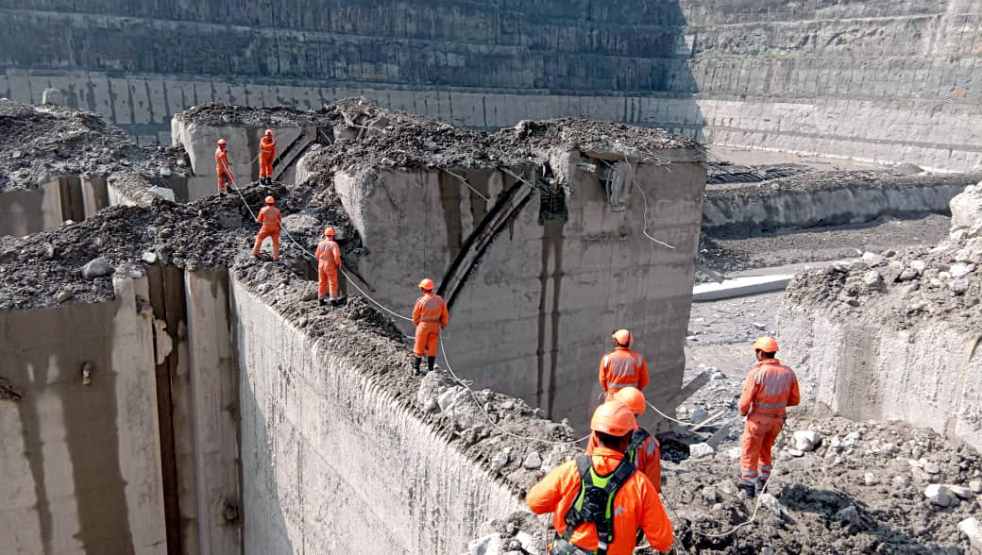
Hydro Power Projects, Dams Accidents & Damages in 2021
Feature Image:- NDRF team search at Tapovan Vishnugad barrage as rescue operations continue. Source: Business Standard
Hydroelectric projects (HEPs) in India have been causing avoidable accidents and amplifying disaster potential, thus damaging the rivers eco-system, local environment and lives & livelihoods of communities. There have been several of such incidents across the country in 2021. In this report we put together a state wise account of most such incidents.
Continue reading “Hydro Power Projects, Dams Accidents & Damages in 2021”
Monsoon 2021: Cloud bursts in Jammu & Kashmir and Ladakh
(Feature image:- Local people, army personnel carrying rescue work at Honzar, Kishtwar after davastating cloud burst on July 28. Image source: Social Media)
The increasing incidents of cloud bursts in Himalayan states have been proving significant disaster for lives and livelihoods of native people, rivers and environment of the states. Since 2018, SANDRP has been compiling reports on these extreme weather events to analysis the frequencies and impacts. After documenting cloud bursts reports in pre[i] and during[ii] monsoon season in Uttarakhand and in Himachal Pradesh[iii], this is fourth and last report of this series in 2021, this one from Jammu and Kashmir (J&K) and Ladakh Union Territories (UT). We have not come across any such incidents reported in North Eastern states this year.
Continue reading “Monsoon 2021: Cloud bursts in Jammu & Kashmir and Ladakh”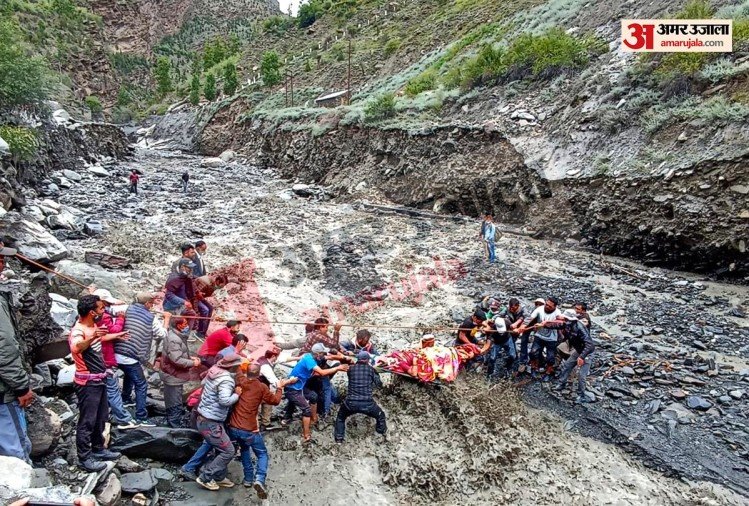
Himachal Pradesh: Cloud Bursts in Monsoon 2021
(Feature image:- Local people trying to crossing the overflowing Jahlma drain with a rope to take an injured person to the hospital. Source: Amar Ujala, July 30, 2021.)
The Himalayan states have been facing reoccurring cloud burst disasters for the past several years. The state of Uttarakhand witnessed 50 such events, 24 pre monsoon[i] and 26 during south west monsoon[ii] season of 2021. This account highlights the situation of the emerging climatic threat in Himachal Pradesh in pre monsoon and monsoon months in 2021.
Here it may be noted that during SW Monsoon months of June to Sept 2021, Himachal Pradesh had 10% below normal rainfall, with 8 of the twelve districts of the state experiencing below normal rainfall. Lahaul and Spiti had the highest deficit at -65%. Among the four districts that had above normal rains, Kullu had the highest surplus at +40%. Even during the pre-monsoon months (March to May 2021), HP had 10% below normal rains.
Continue reading “Himachal Pradesh: Cloud Bursts in Monsoon 2021”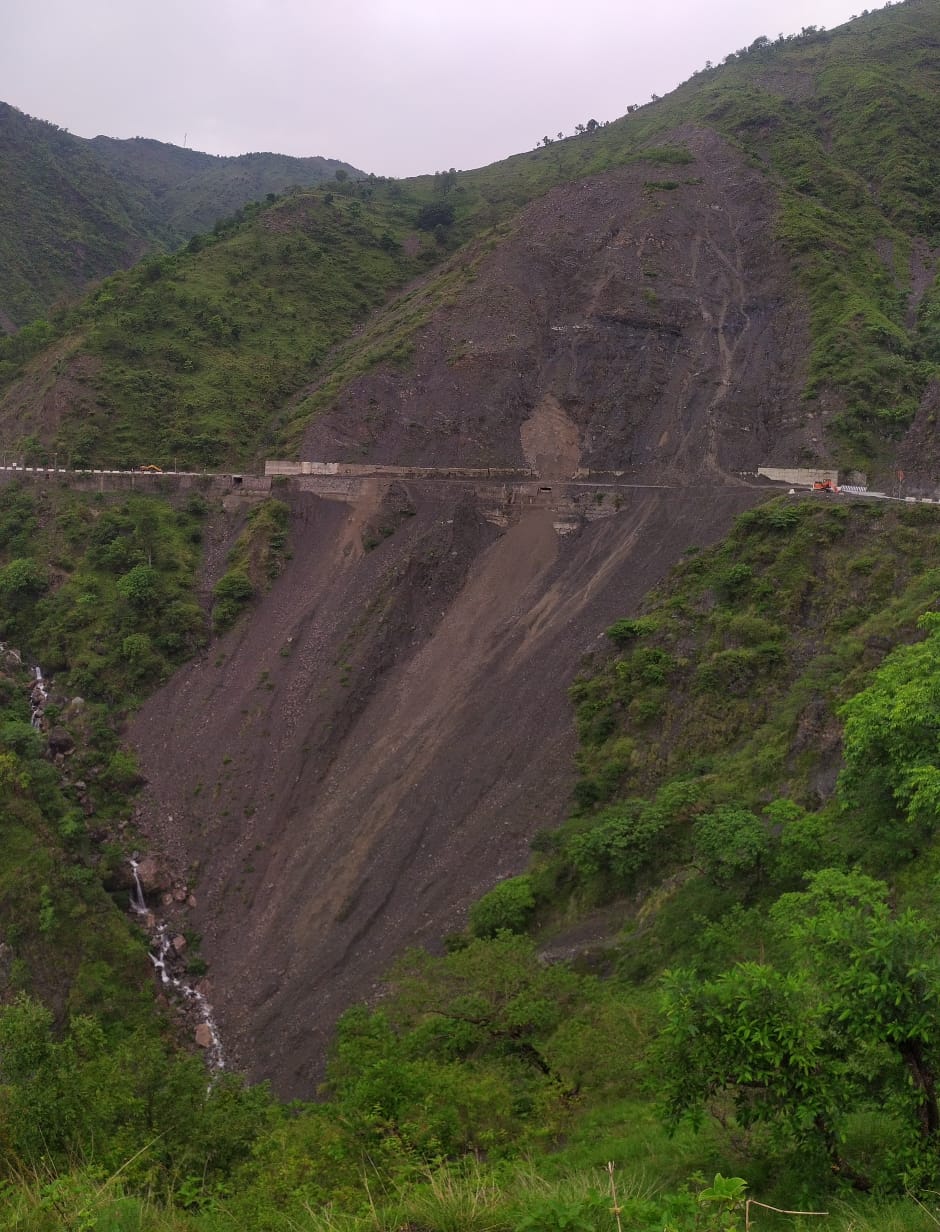
DRP 160821: Landslides in Himachal worsened due to mindless “development” projects
The numerous landslides this monsoon in Kinnaur and other districts of Himachal Pradesh and other Himalayan states have been literally deadly, killing hundreds of people this monsoon. Mindless “development” projects including Hydropower projects, indiscriminate building of roads in mountains, blasting, tunnelling, mining, dumping of waste into the rivers and valleys, deforestation, building townships, all without any credible impact assessment, public consultations, appraisal, monitoring or compliance. While climate change (another anthropogenic factor) leading to more frequent events of high intensity rainfall is worsening the landslide potential of the area, what we are doing in the name of developments is multiplying the disaster potential several fold. The governments at centre and states and judiciary can continue to be blind to this realities, but local people cannot. The local communities in Kinnaur, Lahaul-Spiti have been opposing such projects strongly and such protests are bound to increase and spread. One hopes this pushes the governments and judiciary to act urgently.
Continue reading “DRP 160821: Landslides in Himachal worsened due to mindless “development” projects”
