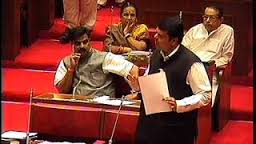
Maharashtra

Maharashtra scraps River Regulation Zone : Pandering to industry at the cost of Rivers and People

Above: Pollution from a River Kasardi which was denotified as it was affecting some big businesses

When Devendra Fadnavis of BJP became the Chief Minister of Maharashtra, one would have thought that the chronically polluted and encroached Nag Nadi from Nagpur, as also other rivers in the state may see better days. This was not just an optimistic hope. The Government at the Centre was making all the correct noises about being concerned about rivers, it had launched the Namami Gange Program for rejuvenation of Ganga River and had changed the name of Ministry of Water Resources to Ministry of Water Resources, River Development and Ganga Rejuvenation. Continue reading “Maharashtra scraps River Regulation Zone : Pandering to industry at the cost of Rivers and People”

Delhi

Citizen Memorandum to all political parties in Delhi on Water & Sanitation Imperatives of manifesto

Citizens Solidarity

Forum for Right to Water and Sanitation

Basti Vikas Kendra, F Block, New Seemapuri, Delhi 110095

Contact: Devendra Kumar, President(9250878059), Depinder Kapur, Convener(9711178181)

Date: 26th Jan 2015

Subject: Memorandum for inclusion in your Party manifesto, Delhi Assembly Elections 2015

Dear Sir/Madam,

Drinking water and sanitation is a major priority for residents of Delhi. There is no concrete commitment from any political party as yet in terms of norms, investment, pricing for water and sanitation, or what the elected government will do to ensure improvements in water supply, sanitation and cleanliness of Delhi. The slogan of Swachh Bharat Abhiyan is an empty slogan if the political parties are not willing to listen to the demands of the residents of poor and slum settlements of Delhi and commit to providing basic sanitation and water services as a Fundamental Right.

Continue reading “Citizen Memorandum to all political parties in Delhi on Water & Sanitation Imperatives of manifesto”

Maharashtra · Mumbai

Water Smart Mumbai is possible without river links and big dams! Open Letter to CM Devendra Fadnavis

Above: Forested Valley, now lost forever for the Middle Vaitarna Dam Photo: Parineeta Dandekar 

Respected Chief Minister,

At the outset we congratulate you for leading some progressive changes in the Water Resources Department of the State. These include decisions about continuing only with those dam projects which are more than 75% complete[1], appointment of independent people with a clean image like Shri. H.T. Mendhegiri as CADA Chief Secretary, changing norms of Economic Survey Report[2], stating that only hoarding water will not be counted towards increase in irrigation potential, etc. Continue reading “Water Smart Mumbai is possible without river links and big dams! Open Letter to CM Devendra Fadnavis”

Arunachal Pradesh · Assam · brahmaputra

Is government at all serious in addressing the issues raised by Movement against the Lower Subansiri Hydropower Project?

Minutes of Government of India meeting on Lower Subansiri HEP in Dec 2014 rejected by movement:

Shoddy Cumulative impact assessments, lack of public consultations won’t help

Map of Subansiri RIver Basin  Source: https://sandrp.in/basin_maps/Subansiri_River_Basin.pdf
Map of Subansiri RIver Basin
Source: https://sandrp.in/basin_maps/Subansiri_River_Basin.pdf

Continue reading “Is government at all serious in addressing the issues raised by Movement against the Lower Subansiri Hydropower Project?”

Beas · Himachal Pradesh

Larji Dam Fishladder: an unlovely trinket, a deceptive ornament

Emmanuel Theophilus[1] (etheophilus@gmail.com)

The 126 MW Larji Hydropower project near Aut on the mainstem of the Beas is run by the Himachal Pradesh State Electricity Board (HPSEB)[2]. The dam is constructed a little downstream of the confluence of the two main tributaries upstream, the Sainj and the Tirthan, at the narrowest part of a spectacular gorge, towering with limestone cliffs. The impounded waters of this dam have, since its construction in 2006, drowned the access road to the entire upper Kullu valley including Manali and the hundreds of villages upstream, including access to the entire Lahul valley and the region of Ladakh over the high passes from this end. The HPSEB then constructed a 3 km long tunnel to enable passage of traffic, and many people have warned of the hazardous nature of the tunnel. The 220 odd gods that descend from different valleys, on the backs of people to the lower Kullu valley every year in autumn however, refuse to use this tunnel. This is what compelled the HPSEB to build and maintain this tunnel, and during autumn to winter, to keep the water-storage in the dam low to enable the passage of gods, who have been traveling this route for over three and a half centuries. It is remark-worthy though, that this dam constructed as recently as 2006, seems to be heavily silted-up already and the dark shadows of sediment-shoals are visible just below the waters of the reservoir[3].

Being among the most recently completed, the Larji dam is the only dam on the Beas that has a fish-ladder, so it was of particular interest to us. Seeing no guard at the security booth, we walk in to the HPSEB dam operating office, and ask to speak to an officer about the fish ladder. To our complete surprise, we are spoken to and even taken on a tour of the ladder by a foreman who has worked on the dam for many years.

Having seen an elaborate fish ladder on the Kuri Chhu river in Bhutan of doubtful effectiveness[4], we could not help but look at this one with hope and excitement. Located at around 1,000 meters altitude, this dam was clearly in the way of a host of migratory species of fish. If this ladder design was effective, then surely the ‘barrier’ problem to seasonal migration for breeding and dispersal would have been addressed. Here though, is what we saw and heard.

  1. For one, the flow through the fish-pass seems too small to create an ‘attraction flow’ for fish. But even more obviously, the downstream entrance of the fish ladder is a steep cascade over a couple of meters of broken masonry and rock, that would clearly be un-negotiable by any fish that does not jump that high[5].
Downstream entrance of Larji fish ladder: The 2 m high jump that fish require to enter the ladder can be seen here
Downstream entrance of Larji fish ladder: The 2 m high jump that fish require to enter the ladder can be seen here (all photos by the author)

2. The outlet from the dam reservoir into the fish ladder is blocked off by a metal grill-mesh that is narrow enough to trap flotsam like Bisleri water-bottles. The mesh seemed too fine to let Mahseer of breeding-age pass through, either upstream or downstream.

3. The fish ladder was in a serious state of disrepair. To our questions about whether the ladder worked or not, the foreman says honestly that it does not. We see the reasons for this when we walk down the ̴100 meter length of the fish-pass channel.

Fishladder can be seen in serious state of disrepair and blocked by broken concrete parts can be seen here

4. The Larji fish ladder seemed to be a hash of different designs of fish passes. There were four different design elements in this one fish-pass. It had a slotted-weir fishway design, a low gradient Denil fishway, a steep-pass Denil fishway and a plain concrete culvert on a grade design. Most of these slotted weirs were clogged with fallen rocks and debris from the slope above, and in places, the pools in them were over-flowing the weir in a vertical fall almost 2 meters high.

Steep-pass Denil fishway part of the fishladder can be seen here, water is flowing too rapidly here for any fish to be able to go upstream
Steep-pass Denil fishway part of the fishladder can be seen here, water is flowing too rapidly here for any fish to be able to go upstream. The water picks up momentum down an extremely steep slope with the baffles at 45 degrees to the flow, not offset to slow the water, but concentrating the force of the water in mid-stream flow. The slope seemed to be at almost 40 degrees angle, and the water was turbulent in the extreme in this section. A workable Denilway slope, even for the strongest of swimmers among fish, is not designed to exceed a slope of 20% at most. This was close to a 100% slope

5. The oblique baffles on a Denil fishway are supposed to be placed in a manner that provides staggered partial-obstructions that slow the water down at variable velocities to make it passable for fish. However, here we saw that the water picks up momentum down an extremely steep slope with the baffles at 45 degrees to the flow, not offset to slow the water, but concentrating the force of the water in mid-stream flow. The slope seemed to be at almost 40 degrees angle, and the water was turbulent in the extreme in this section. A workable Denilway slope, even for the strongest of swimmers among fish, is not designed to exceed a slope of 20% at most. This was close to a 100% slope[6].

This part of fish ladder is less steep Denil

The last part of the fishway was a plain concrete culvert on a grade channel, essentially a sloping channel, where even the concrete sides of the channel had toppled over into the river-bed, and the final drop was over a two meter fall into the downstream flow. I asked the foreman whether he knew whether fish managed to make it over this extreme gauntlet. He said that they did not, but that he often saw fish gather and concentrate at the bottom of the dam under the sluice gates, and make futile leaps in an attempt to get over the dam. Clearly, the Larji dam fish ladder is just an unlovely trinket, a deceptive ornament.

Watch a 41 seconds video showing how fast the water is moving through the Larji Dam fishladder at: http://youtu.be/grVaxXPdeyY, Video is by the author.

It seemed to me that the dam builders and operators, the HPSEB in this case, both at the design and the executive levels, were not serious about constructing a fish-pass that would work, and neither were they serious about this at the operation and maintenance aspects. Whether they were serious at all even at the conceptual level, to put in place a mitigation measure that actually helped migratory fish bye-pass the barrier of the dam, or was this part of the design merely to obtain environmental clearance, can only be conjectured about. That hydropower projects can devise deceitful strategies for obtaining environmental clearance is one thing, but what does this tell us about the Union Ministry of Environment and Forests, the Expert Appraisal Committee on River Valley Projects appointed by MoEF, the regional office of the MoEF, the state Fisheries Department and also the state pollution Control Board, who are all variously part of the approval processes for hydropower projects, when they get their environmental clearances based on such ‘mitigation measures’?

Larji Dam - about 100 m long fishladder channel can be seen on the right side
Larji Dam – about 100 m long fishladder channel can be seen on the right side

END NOTES:

[1] This article has been extracted from SANDRP’s publication: Headwater Extinctions: Hydropower projects in the Himalayan reaches of the Ganga and the Beas: A closer look at impacts on fish and river ecosystems, authored by Emmanuel Theophilus, for details, see: https://sandrp.wordpress.com/2014/12/16/new-publication-headwater-extinctions-impact-of-hydropower-projects-on-fish-and-river-ecosystems-in-upper-ganga-and-beas-basins/

[2] The 126 MW Larji project is also infamous for being the costliest hydro-power project per unit electricity generated so far in India. Finally built at a cost of R.s 10.27 billion, which was twice the estimated cost, the Vigilance department unearthed major financial misappropriation by HPSEB officials.

[3] The Larji Dam became infamous in June 2014 when 25 students were washed away downstream from the dam due to sudden and unannounced release of water from the dam, see: https://sandrp.wordpress.com/2014/06/12/nadiya-bairi-bhayi/

[4] https://sandrp.wordpress.com/2014/02/02/fish-ladder-at-kurichhu-hydropower-project-bhutan-some-thoughts/

[5] Other than loaches, those tiny finger sized fish that can even climb (squiggle technique) up high waterfalls, provided there is something like a water-slide at the margins of the fall. They however, are not migratory fish.

[6] CIFRI recommends that the speed of flow of water in a fish-pass should not exceed 2 meters per second. Please see ‘Status of fish migration and fish passes with special reference to India’. MK Das and MA Hassan. CIFRI 2008.

Ganga · Himachal Pradesh · Himalayas · Hydropower · Uttarakhand

New Publication: Headwater Extinctions – Impacts of hydropower projects on fish and river ecosystems in Upper Ganga and Beas basins

SANDRP has just published a new report: “Headwater Extinctions- Hydropower projects in the Himalayan reaches of the Ganga and the Beas: A closer look at impacts on fish and river ecosystems”, authored by Emmanuel Theophilus. The report[i] was released at the India Rivers Week held during Nov 24-27, 2014.

Front Cover of the report HEADWATER EXTINCTIONS

Headwater Extinctions deals with impacts of hydropower projects in Beas basin in Himachal Pradesh and Alaknanda-Bhagirathi basins in Uttarakhand on river ecosystem and its components, mainly fish. While the harrowing impacts of hydropower projects on local livelihoods and social systems are being realized gradually, we are yet unclear about the extent of impacts of these so-called green projects have on fish and aquatic biodiversity.

Environmental Impact Assessments of large hydropower projects (> 25 MW as per EIA Notification 2006[2]) are supposed to assess ecological impacts of such projects, but we are yet to come across any comprehensive effort in this direction from EIA reports that we have assessed so far.

The Expert Appraisal Committee (EAC) of Union Ministry of Environment, Forests and Climate Change (MoEF & CC) which is entrusted with appraising these projects and their EIAs has paid very little attention to this issue. Since over a decade, the EAC has had expert members from Wildlife Institute of India (WII) and Central Inland Fisheries Research Institute (CIFRI). Both these institutes are supposed to have expertise on fish and aquatic biodiversity. But sadly, their presence has not helped fill the serious lacunae in appraisal and EIAs of the hydropower projects.

SANDRP had been trying to highlight the impact of hydropower on fish and the long standing problems in the so-called mitigation measures being recommended by the EAC. We thought that it may be useful to bring out a first-hand report bring out ground realities of what is happening to our rivers. Emmanuel Theophilus, based in the Dhauliganga Valley and who is an avid mountaineer, storyteller, ecologist and our ally was commissioned by SANDRP to study the impacts of hydropower on fish and ecosystems, review the EIAs as well as mitigation measures recommended by EAC as a part of Environment Management Plans of hydropower projects. We are very glad to publish the report as a first of the hopefully many steps to be taken to understand and address this important issue.

Headwater Extinctions has been written in an eminently readable style that Theo is known for, as could be seen from the earlier blogs[3] he wrote for us! The report has a section on ‘Travelogue’ which records Theo’s travels and thoughts as he visits Bhagirathi and Alaknanda sub basins in Uttarakhand and Beas basin in Himachal Pradesh. The report also brings illuminating photos from these trips. The fact that the travels happened within months of the Uttarakhand disaster of June 2013 could be seen in his photos and travel reports. It further substantives the role hydropower projects played in increasing the proportions of the disaster.

Travelogue is followed by discussions in two parts: Discussions on the impact of hydropower projects on fish and aquatic habitats along the two sub-basins and the role of EIAs, EMPs, Fisheries Plan and the government approval process. The findings of this report are valid for all Himalayan states & rivers.

Back Cover of the report HEADWATER EXTINCTIONS

Headwater Extinctions ends with some striking insights. Sample this: We are in the midst of river extinctions in the Himalaya, but are surrounded by a tragic drama of double-speak and equivocation. And a horde of jostling brokers. Ranging from reputed universities, government departments, research institutions, everyday bureaucrats, and of course, politicians and contractors from within ‘the community’[4] along the developers and regulators. They not only write the script of this drama, they even play all the part”.

The inside covers of the report have detailed maps of the two basins with locations of hydropower projects, with annexures containing lists of hydropower projects in Upper Ganga and Beas basins and also list of fish found in Upper Ganga basin.

Theo has completed this report on a stringent timeline and budget, which meant that all the proposed and implemented fisheries management plans could not be assessed. We hope Headwater Extinctions provides sufficient material and compelling reasons to overhaul the way impacts of hydropower projects on fisheries and aquatic biodiversity are treated by EIAs, EMPs and government committees. We would also urge agencies like WII and CIFRI to do justice to their work inside EAC and beyond. That they are not doing that is apparent.

For EAC and MoEF&CC, we certainly would like them to ensure proper and full impact assessment of projects on aquatic biodiversity in the EIAs. The EAC also needs to stop approving completely ineffective fish hatcheries. They could initiate a credible independent study of the costs, benefits and performance of the fisheries development plans they have been approving in recent projects. It does not only smell fishy, but more like a scam! Here is a relevant quote from the report: “I can’t help see a few things here, as perhaps you do? Bluntly put, I see slush funds being dangled to a whole range of possible collaborators. The kindest term I can find for them is ‘brokers’.”

We look forward to your comments and suggestions on all aspects of Headwater Extinctions. If you would like a hard copy, please write to us.

SANDRP (ht.sandrp@gmail.com)

END NOTES:

[1] The full report is available on our web site, at: https://sandrp.in/Headwater_extinctions221114.pdf

[2] We have been saying this for long and this report helps substantiate our contention that the assumption that projects below 25 MW are benign and do not need EIA-EMP or environmental monitoring and public consultations is wrong.

[3] https://sandrp.wordpress.com/2014/02/02/fish-ladder-at-kurichhu-hydropower-project-bhutan-some-thoughts/ and https://sandrp.wordpress.com/2013/09/27/uttarakhand-floods-of-june-2013-curtain-raiser-on-the-events-at-nhpcs-280-mw-dhauliganga-hep/.

[4] Caveat, there are honest exceptions, but this is a generalization that describes the predominant phenomenon.

Maharashtra · Marathwada

Can Marathwada afford to undertake Sugarcane Crushing in this terrible drought?

Since 2012, farmers in Maharashtra, especially in Marathwada and Vidarbha region of central and eastern Maharashtra are faced with unending mountains of crisis. What started as drought of 2012 went on in form of violent rains at places in 2013, hailstorms of February-March 2014, scanty monsoon in 2014 and unseasonal rains at places in November 2014, affecting lakhs of farmers. Agricultural production has suffered losses as impact of scanty rainfall has been compounded by absence of rains in critical time windows when soybean was filling and cotton bolls were forming. More than 8000 villages in Marathwada region which comprises of Aurangabad, Nanded, Parbhani, Latur, Beed, Hingoli, Jalna and Osmanabad have recorded crop losses of more than 50%.

Marathwada region in Maharashtra Map from: Marathi Wikipedia

The entire Winter Assembly of the newly formed Government seems to be clouded by discussions of drought package and increasing farmer suicides in Marathwada and Vidarbha. Since January 2014, more than 400 farmers have committed suicide in Marathwada region, and the pace is picking up worryingly since the past month. Hydrological, meteorological and agricultural droughts are becoming more pronounced in Marathwada.

But can this be attributed to vagaries of nature alone?

A brief analysis of the underlying reasons for the crisis in Marathwada and its future implications:

Truant Monsoon of 2014

As per SANDRP’s analysis of district-wise rainfall figures of Marathwada in monsoon 2014, the picture which arises is dismal:

GRaph

For 2014, departure from normal rainfall for 6 out of 8 districts in Marathwada was more than 40% and rest two districts it was more than 50%, indicating a huge reduction in rainfall. However, contrary to what is being stated in the media, the region received satisfactory rainfall in 2013 monsoon. In fact, 6 districts of the 8 received more than 100% of normal rains and remaining two districts received 88% and 95% of normal rains last year. This is one of the reasons that the reservoir storage in 2014 did not fall as sharply as they did in 2012-13 drought. On 15th October 2014, Jayakwadi dam in Aurangabad had 42% Live storage, which was more than October 2013 storage of 33% and 2012, when it had reached dead storage already (http://www.mahawrd.org/). The entire Marathwada region too showed large reservoir storage of 47%, which is not extremely alarming.

Significantly, 2012-13 drought also unfolded in a similar manner, with highly satisfactory monsoons of 2011.

At the same time, the region is facing one of the worst droughts in recent history today.

This seemingly contradictory situation underlines a number of things, most important being: large dams do not automatically equate with water in farmers’ fields. Work on many projects (most projects in Marathwada) is incomplete ( for example: canals of projects like Lower Dudhana, Jayakwadi Phase II, etc), while contractors and politicians have made a pretty packet from the contracts, many projects are ‘evaporation machines’ than a water supply systems, without canals and distributaries or systems to govern water management. The available impounded water is a valuable political tool, and is used as such. Water allocation and management is far from being sustainable, transparent and accountable.

Projects under the jurisdiction of Godavari Marathwada Irrigation Development Corporation

According to news reports, in the past 11 months, 454 farmers only in Marathwada[1] have committed suicide due to number of reasons, most linked to crop failure and debt. Strikingly, after late November 2014, 52 farmers committed suicides mainly from Beed, Nanded and Osmanabad regions.

District Number of farmer suicides since January 2014
 1. Beed 122
 2. Nanded 104
 3. Osmanabad 54
 4. Parbhani 49
 5. Aurangabad 40
 6. Jalna 22
 7. Hingoli 29
 8. Latur 34

The issue has been raised in the Winter Assembly by the enthusiastic opposition and the CM is yet to announce a drought relief package. It is expected to be close to 8000-9000 Crores or more.

At the same time, there is a huge tussle going on between Nashik and Nagar on one hand and Marathwada on the other, for waters Godavari which originates in Western Ghats flows through Northern Maharahstra and then becomes the lifeline of Marathwada region. Nashik and Ahmednagar have constructed slew of large dams on Godavari and have always been reluctant to release water for Jayakwadi dam in Aurangabad in the downstream. We saw this episode flaring up last year and we are seeing an action replay this year as the HC has ordered immediate release of water from upstream dams for Jayakwadi. (See:http://indiatogether.org/share-environment). (Notably, this is the first time I have witnessed that the Dam Storages data of www.mahawrd.org, the official website of the Water Resources Department is not updated with weekly Dam Storage Levels. This had not happened even at the peak of 2013-12 Drought. Our queries to WRD on this front have been unanswered till date.)

WRD officials and administration have taken cautious stand and water in reservoirs is now reserved mainly for drinking water purposes, any release in downstream for irrigation is being delayed and is being made only after strong negotiations, badly hitting rabi cultivation, which is already less than last year.

Even as conflicts flare up, protests rage and assembly is disrupted, sugarcane crushing goes on unhindered in Marathwada, in whopping 61 Sugar factories!

On the unfortunate and expected lines, the government has not said a word about restricting cane crushing in Marathwada this year, which itself guzzles massive amounts of water, apart from cane cultivation. On the other hand, the party president, Amit Shah himself attended first crushing day of some factories (one of which was reportedly captured by relatives of a BJP MLA by fraud![2])

A look at sugarcane cultivation and crushing season so far in Marathwada:

(All data obtained by SANDRP from Sugar Commissionarate, Maharashtra Government, December 2014)

Area under sugarcane in Marathwada in 2013-14 and Sugar factories

District Area under sugarcane (in hectares) Number of Sugar factories
1. Aurangabad 15,373 9
2. Jalna 11,083 5
3. Beed 27,299 10
4. Parbhani 25,567 6
5. Hingoli 18,037 3
6. Nanded 28,057 9
7. Osmanbad 43,635 16
8. Latur 61,479 12
TOTAL 2,30,530 Hectares 61 Factories
TOTAL SUGARCANE CULTIVATED IN MARATHWADA FOR CRUSHING 154.28 Lakh Tonnes  

So around 61 sugar factories will crush 154.28 Lakh Tonnes Cane in a period when drought is so bad that water will not be released from reservoirs for irrigation!

In doing so, the factories will use a minimum of 1500 litres of water to crush one tonne of cane. To crush 154.28 lakh tonnes, minimum amount of water used will be: 23,142,000,000 Litres or 23.1 Million Cubic Meters. This is the lowest estimate.

This amount would be sufficient to irrigate nearly 8,000 acres of high yielding groundnut, more of Jowar or can be sufficient for drinking water needs of nearly 15 lakh 85 thousand people[3] till the onset of 2015 monsoon!

This water will be used till the end of crushing season when the drought will be extremely severe if we look at current indices.

Is there a justification of doing so? Will a 10,000 Crore drought package come close to ameliorating the impact of water loss at the peak of drought?

In addition, the pollution control mechanism of most sugar factories is pathetic. Pollution Control Board has raised this number of times. Uncontrolled water and soil pollution by sugar factories will additionally pollute groundwater and water bodies, further affecting water security of the region.

This water may be sourced from dams and groundwater. SANDRP has witnessed in 2012-13drought, sugar factories in Marathwada, mainly Osmanabad region lifted water from dams even when water levels had dipped below dead storage. What will be the impact of this siphoning on local drinking water security?

We should not forget that one of the costliest political lesson for NCP came when Ajit Pawar uttered extremely insulting remarks on dry reservoirs, mocking people’s plight. This was in context of a protest by a lone farmer from Mohol, urging water for drinking, even as sugar factories on Mohol used lakhs of litres of water when the farmer, Prabhakar Deshmukh, was fasting in Mumbai! Needless to say, the ruling party’s defeat was sealed through such acts. (More about Sugarcane in Solapur here: https://sandrp.wordpress.com/2013/04/22/why-solapur-sugarcane-and-sustainability-do-not-rhyme/)

Even in terms of groundwater, Marathwada region has literally touched rock bottom. In a report by GSDA (Groundwater Survey and Development Agency) submitted to Government of Maharashtra,[4] it has been reported that in 249 villages of Marathwada, abstraction has been 100% and there is no more water to draw. Not surprisingly, the regions suffering largest groundwater problems are surrounded by sugarcane and sugarcane factories.

In the past too, SANDRP has underlined how sugarcane in drought affected areas contributed to worsening drought of 2012-13. Then Solapur was in crisis.  This year, the district which has 28 sugar factories two years back has 34 sugar factories!

All government announcements about bringing sugarcane under drip have remained on paper and sugarcane continues to rule the drought politics of the region, regardless of the political party. In fact, the Cooperation Minister BJP Government Chadrakant Patil has announced that the only clause which has been limiting further sugar factory rush (of having a minimum aerial distance of 15-25 kms between two factories[5]),  can be diluted “ to promote healthy competition”. 200 factories are lined up for licenses with the Sugar Commissionarate!  There is no thought about the impact of this decision on water profile of Maharashtra.

This defies logic. The work of Winter Assembly was disrupted several times yesterday (10th December 2014) by aggressive opposition asking for an immediate drought package for Marathwada and Vidarbha. How can a 4,000 or 10,000 Crore Drought Package address these systemic issues? How can this package address siphoning off water from a drought hit region in peak drought? The opponents are happy discussing help to sugar factories for drought relief, not raising any points about impending impacts of crushing cane in drought.

In the long term, there is a need to reduce area under sugarcane and provide proper incentives, fair support price, forward and backward market linkages and support for initiatives like horticulture under drip (and there are several success stories from Marathwada on this), dairying, oil seed and pulses cultivation and processing, dryland farming and importantly, equitable and transparent water management involving all farmers in the region, not restricted to a few.

It is high time that long term decisions are taken in order to make Marathwada truly drought proof and free from clutches of ‘drought packages’ and opportunistic politics, year after year. A start can be made by restricting cane crushing in the region immediately.

-Parineeta Dandekar, SANDRP, parineeta.dandekar@gmail.com

End Notes:

Marathwada Farmers need Water: http://72.78.249.126/Agrowon/20141013/5520233630699177815.htm

SANDRP Analysis on water issues in Maharashtra:

Open Letter to Devendra Fadnavis: https://sandrp.wordpress.com/2014/11/14/open-letter-to-devendra-fadnavis/

Why Solapur, Sugar and Sustainability do not rhyme: https://sandrp.wordpress.com/2013/04/22/why-solapur-sugarcane-and-sustainability-do-not-rhyme

[1] http://www.esakal.com/NewsDetails.aspx?NewsId=5611377824684291267

[2] http://www.loksatta.com/mumbai-news/bjp-leaders-closed-try-to-take-over-controle-on-sugar-factory-in-paithan-1049861/

[3] @ 80 litres per capita per day

[4] http://www.loksatta.com/maharashtra-news/no-rain-in-marathwada-1047256/

[5] http://www.business-standard.com/article/economy-policy/maharashtra-likely-to-abolish-25-km-limit-between-two-sugar-units-114112300348_1.html

Further work on SANDRP on Drought, Maharashtra and Sugarcane can be found in Category: Maharashtra

Maharashtra

Open Letter to Maharashtra Chief Minister Devendra Fadnavis

Above: CM Devendra Fadnavis Photo from: IBN Lokmat

Dear Chief Minister of Maharashtra,

Congratulations for becoming the Chief Minister of one of the progressive States in the country.

We would have felt better if this greeting was without the smudge of Voice Vote in confidence motion. We would have liked to see that while coming into power, you and your government had no links whatsoever with tainted politics of National Congress Party, which was named in a scam that affected Maharashtra’s weakest, but in many senses, its bravest populace: its farmers. But Voice vote has raised a question mark on this. Leader of your party had called NCP as Naturally Corrupt Party!

Nonetheless, you are known to have a great public image as a proactive, scholarly leader with integrity and intelligence.The last CM we had also had a scholarly and clean image, but after resigning from the CM’s post, which he held for more than four years, he admits to his mea culpa that he did not take the firm action in the irrigation scam because he wanted to save his government from collapsing. Maharashtra’s people, besides his own party, paid the price for this.

The crucial qualities the state seeks right now as it stands on the crossroad of political upheaval and natural calamities are not only a clean image, but forthrightness, commitment to democratic & accountable governance and, more importantly, capacity for an independent and clear judgement which is not swayed by the orders of higher ups or peers.

Natural calamities made worse by government’s mismanagement and inaction have racked Maharashtra in the past few years. Right on the heels of the dam scam, came the 2012-13 drought, dubbed by some (somewhat erroneously) as the worst drought in past forty years. After this came the delayed rains, droughts and excessive rainfall in Vidarbha, the hailstorms of February and March 2014, several agricultural diseases, crash of market prices of agricultural produce and fruits. In July 2014, the Malin Tragedy underlined how vulnerable, unprepared and fragile is our Western Ghats Region. Even now, Vidarbha region is reeling from late rains and extremely poor yield of soybean.

The calamities have affected the social and political milieu of the state; they have also literally broken the backs of its farmer. You have experience in disaster management and can appreciate how meagre our response has been to the natural calamities. To the manmade calamities, too, our response has been far from satisfactory. After more than two years after the so called exposé of the irrigation scam, we still have not brought a single irrigation official or politician or contractor to book. This scam and the sheer callousness of Congress-NCP government in handling the issue was one of the main factors behind its collapse. BJP did play an important role in following up with the issue in several parliament sessions and also with the media, but its actions and demands lacked conviction and seemed to save some of the culprits that were close to the BJP.

Irrigation Scam

Isn’t it surprising that being an opposition for 15 years, the BJP played such little real role in unearthing the scam? In fact, it was reported that when some people approached Nitin Gadkari with evidence of illegalities and irregularities, they were told that he is unable to take action against Congress–NCP as “Woh hamare char kaam karte hai, aur hum unke char kaam karte hai”.

The scam came into focus due to efforts of the then-serving chief engineer of Maharashtra Engineering Training Academy (META), Vijay Pandhare, media reports, CAG, courts, civil society and activists of the then-India Against Corruption (later renamed Aam Aadmi Party or AAP)—Anjali Damaniya, Mayank Gandhi, and others. The sheer extent and the impact of the unprecedented scam shocked the nation, after spending more than Rs 70,000 crore for over 10 years there was practically no increase in area under irrigation in Maharashtra. It needs to be remembered here that the scores of mega irrigation projects which were sanctioned and received their first administrative approval even without requisite water availability studies were initiated in the period when Sena-BJP was in power.

It needs to be acknowledged that Eknath Khadse, as the leader of opposition, and you, played a significant role in following up on the scam and pressurising the government.

At the same time, there were some notable contractors, close to BJP or even MPs and MLAs of BJP who were reportedly involved in the scam. Notable examples include Ajay Sancheti of SMS Infrastructure who is also the permanent National Executive Committee Member of the BJP. Media reports showed that Sancheti was not only implicated in Irrigation Scam, but in coal block allocation scam and Adarsh scam, too!

Damaniya, member of AAP, showed through RTI that Sancheti bagged 10 contracts from VIDC worth more than Rs 3,000 crore between his older company, new company and joint ventures with others (in 2005, Sancheti’s firm, Shaktikumar M Sancheti Ltd, changed its name to SMS Infrastructure Ltd and got a fresh certificate of incorporation, Vidarbha Irrigation Development Corporation was informed of this name change. But the two companies continued to exist together, bagging contractor between them and also additionally). These include almost all big projects in Vidarbha, including Gosi Khurd, Lower Penganga, Purna Barrage, Wardha Barrage, and Pedhi Project. This was when awarding more than three contracts to one contractor was illegal. Rules were bent, huge mobilisation advances were given, scope of work was increased and cost escalations were approved to help contractors. But BJP did not seem to take any action about this.

In case of BJP MLC Mitesh Bangadiya, it was his company MG Bangadiya Infrastructure which constructed the hugely flawed 23 left bank canal section of Gosi Khurd Project, which was recommended for complete demolition by Mendhegiri Committee in their report.

It is unfortunate that BJP took no action in this regard. It is also reported that in the midst of these exposures, it was Gadkari who specifically wrote to the water resources ministry at the Centre and sought early release of funds for these very contractors. It was stated that when BJP submitted “bullock cart full of evidence” to the Special Investigation Team headed by Madhav Rao Chitale to investigate the scam, incriminating evidence against these two groups were left out.

We hope that once in power, you will immediately order a judicial or CBI probe into the scam and full enquiry into the contractors who benefitted out of it, including the ones close to BJP, as also demanded by others.

SIT and White Paper

There was a need to reject the SIT Committee Report under the chairpersonship of Chitale as it was not an SIT—it had diluted TORs and Chitale is known to biased in favour of such projects, the department bureaucracy and status quo. The constitution of the committee was only a ploy to buy more time and show a semblance of taking action on the scam. We hope that you do order an immediate CBI probe into this or a judicially appointed SIT with independent members having track record of being able to take on issues upfront, with clear TORs and with power to summon and question.

The white paper brought out by the Water Resources Department (WRD) was also a shield for guilty to hide behind, and, unfortunately, other political parties, including BJP, failed to critically analyse it.

  • We hope that after coming to power, you will hold public consultations on the irrigation scam, white paper, at the dams in question to understand the local issues and real situation. There is also a need to include several dams left out of the white paper.
  • Post facto analysis of the performance and impacts of large dams is a need for the state as we continue to hanker behind more such projects for political and contractor benefit. Maharashtra, with the largest number of big dams in the country, has one of the lowest areas under irrigation.
  • We hope that you will take action against those involved in the projects named in the SIT Report (like Gosikhurd), responsible officials, ministers and contractors who benefitted unduly from the scam. Work on all such projects should be suspended till there is logical end to scam issue.
    Equity in water distribution

Maharashtra has the nation’s largest water infrastructure in terms of projects completed. There is a need to use this existing infrastructure in an optimum way for the benefit of the poorest, neediest, farmers and in a sustainable, equitable and democratic way.

  • We hope the new government will support equitable, sustainable cropping pattern, scrap secretive diversions to urban areas, industries and unplanned water intensive crops from dams meant for agriculture, and dismantle bodies like High Powered Committee immediately.

Environmental Governance

CAG report on irrigation projects in Maharashtra 2013-14 has exposed that works of more than Rs 7,000 crore were initiated by the WRD on nearly 249 projects without requisite forest and environmental clearances. Not only did it result in locking thousands of crores of public funds, it also damaged the meagre forest cover and environment of the state without justification or informed decision making process.

  • We hope the new government takes immediate action against projects mentioned unambiguously in CAG report and officials who initiated such projects.

Implement Gadgil report on Western Ghats

The Coalition’s stand on Western Ghats report under the leadership of Madhav Gadgil was escapist. The misinformation spread about Eco Sensitive Zone and the push for self-benefitting industries in the Konkan region seems to be one of the primary reasons for Narayan Rane’s defeat.

  • We hope the new government accepts the Gadgil report without losing more time and takes steps as per the report to democratise environmental governance in the Western Ghats. As Gadgil has reiterated many a time, the report is not a blueprint but a framework which can be modified by the people themselves.
    De-politicise sugar

Depoliticize Sugar

Water politics of Maharashtra is linked to the sugar politics. We grow sugarcane in the most drought affected regions, benefitting generations of political masters of NCP and Congress.

Maharashtra’s sugar crop is most inefficient user of water as per a study of Commission for Agricultural Costs and Prices (CACP). Although the sugar barons make the right noises about working for farmers’ benefit, that is a lame argument when you take into account thousands of poor farmers who are deprived of ANY irrigation benefits because of concentration of water in the hands of the sugar lobby. Apart from creating deep schisms in the social fabric of the state, it is also making the cane farmer vulnerable to climate change and the whims and fancies of sugar barons. Per tonne rates of cane are not commensurate with the cost of water, labour and fertilisers. Significant to note here that factories in Vidarbha belonging to politicians like Gadkari reportedly offer the lowest cane rates in the state to the farmer at around Rs 1,650 tonne when the average rate are about Rs 2,200 tonne.

  • There is a need to break the sugar shackles chaining the water and agriculture sector, to give more autonomy to the proposed Sugar Development Board, with more farmers on board, not sugar barons. There is also need to stop new licences of sugar industries in the drought belt; at present, the Sugar Commissioner has no such powers. Flow irrigation to sugarcane needs to be stopped, audit of sewage treatment of sugar factories needs to be carried out and the factories have to be made zero discharge, full water reuse models. SANDRP has witnessed that even factories of powerful politicians do not have functioning effluent treatment plants despite sugar industry being in the grossly polluting category (GPI).
    There was a time when the people concerned turned a blind eye towards ills of sugar factories as they were the engines of cooperative movement in Maharashtra. That is nearly in the past now. More and more cooperative sugar factories, set up with money from government, farmers and shareholders became dens of political manipulation and are being converted into private mills at a price which is a joke of their valuation. We have 168 cooperative sugar factories, but about 36 are being liquidated, 26 have been converted from cooperative to private entities and here too there is a strong political presence.
  • We hope that once in power, BJP conducts an audit of sugar industry including water efficiency of sugarcane in Maharashtra with respect to water use, release of water for sugarcane by dams, especially in drought affected Marathwada and western Maharashtra like Ujani, Lower Terna, Manjara, Mazalgao, lift irrigation schemes on Ujani and other scarcity-hit rivers, etc.
    Climate action plan

Action on Changing Climate?

While disasters like the February 2014 hailstorms affected more than 10,000 farmers in vulnerable Marathwada and Vidarbha, we still do not have a State Action Plan on Climate Change which should have been ready years ago through people’s participation.

  • We look forward to your government to complete work on State Action Plan for Climate Change in a community driven, bottom-up, transparent and democratic manner.

The problems of climate becoming more uncertain, extreme weather events increasing in frequency and rainfall failing when due, protective irrigation is becoming a dire need. Despite absence of irrigation, dryland farming and horticulture in limited water is thriving in Maharashtra. The recent example is of the phenomenal success of pomegranate cultivation which is nearly completely on drip and is grown in some of the driest regions of the state. However, the farmers still suffer losses in the absence of processing plants and state support, which is skewed in favor of sugarcane. Same is the case with oilseeds like groundnuts, coarse millets like jowar and bajra which offer livelihood and nutritional security.

We look to the new government in supporting marginal farmers and other farmers who grow such crops as ambassadors of climate change adaptation. We also hope your government will encourage system of rice intensification for various crops.
Urban areas continue to guzzle more water, polluting and killing rivers in their wake. Unfortunately, State Pollution Control Board (SPCB) does not have a single success story to its credit. It has not cleaned a single river since its inception although receiving hundreds of crores every year from state as well as the Centre.

  • We expect the new government to conduct an immediate and open audit of the work of Maharashtra SPCB and fix responsibility for this resounding failure, order complete change of the functioning of the SPCB to make its governance directly accountable to the victims of pollution and also involving participation of the vulnerable communities and independent groups.
    Revive rivers.

River Rejuvenation

In your city, Nagpur, too, the Nag River is chronically polluted and reduced to an open drain. It could not be rejuvenated although you were a Mayor of the city twice. Now there is a move to denotify the river, which will aid setting up category red industries at its very origin, killing the river. We don’t see any political party talking about this issue.

We hope you will stop this killing of rivers as your government at the Centre has been saying that river rejuvenation is their priority, we hope it is yours too.

Incidentally, Nagpur is one of the very few cities in the state with an operational PPP water supply model. There have been too many problems and protests on this issue, we will not go into the details here, but it is again notable that the Orange City Water Supply Limited is a joint venture between Veolia and Vishvaraj Infrastructure, which is closely linked to BJP leadership. There have been no post facto studies of the efficacy of this model and the way through which tendering was done was suspicious.

  • We hope the BJP Government will democratise the governance of water supply and waste water department of the municipal bodies rather than pushing for water privatisation.
    Innovative solutions

Encouraging Local Initiatives

The 2012 and 2014 drought saw some inspiring local initiatives from farmers across the state in terms of working on new watershed structures, desilting older structures and improving distribution systems. These emerged as more equitable and even efficient solutions than larger dams. A compilation of success stories with a clear view to support local led water conservation efforts will be a shot in the arm for the water sector in Maharashtra. Although the past government tried to support smaller structures by passing government resolutions (GRs) and building strings of cement nalla bunds, watershed management is more than just a quick fix solution.

There are several other issues ailing the water-environment-agriculture milieu of the state. The Congress-NCP alliance in power earlier was lampooned because of the absolute autocracy practised in the party, the insult of public opinion and concerns, and the leaders of the coalition proving too weak to steer the state into secure and transparent governance.

We hope that through you, Maharashtra will be astride on this path. We hope that together we can work towards equitable, sustainable, corruption-free, pro-people development and governance of Maharashtra.

All the very best.

Parineeta Dandekar parineeta.dandekar@gmail.com

(A slightly edited version of this was published in Down to Earth. Please find it here: http://www.downtoearth.org.in/content/open-letter-devendra-fadnavis)

Arunachal Pradesh · Environment Impact Assessment · Expert Appraisal Committee

Submerged – what to expect if the Dibang river is dammed

Guest Blog by: : Karthik Teegalapalli (kartix@gmail.com) a researcher with the Nature Conservation Foundation

In April 2014, the Forest Advisory Committee (FAC) decided to deny clearance to the 3000 MW Dibang Multipurpose Hydro-electric Project, the largest capacity hydro project in the country proposed to be developed by the National Hydropower Power Corporation (NHPC) in the biodiversity-rich Arunachal Pradesh State (Saikia 2014). The project was also denied clearance in July 2013. More recently though, the project has been recommended forest clearance by the FAC and Environment Clearance by the Expert Appraisal Committee. Therefore it is pertinent to look at the impacts the project may have in some detail.

Ecological impacts The project, in its earlier version involved diversion of more than 5000 hectares of relatively undisturbed grassland and tropical forest habitat. These and the adjoining forests harbour endangered species such as tiger, leopard, serow as well as the critically endangered takin, all of which are protected under Schedule I of the Wildlife (Protection) Act, 1972 (these species are also listed as present in the area in the Environmental Impact Assessment report of the project, undertaken by National Productivity Council, Guwahati). The grasslands in the area harbour the critically endangered Bengal Florican, a grassland habitat specialist (Sinha et al. 2014). Other species recorded from the area include the critically endangered white-rumped vulture, the slender-billed vulture and the white-winged wood duck. The project site lies in an area identified by the Bombay Natural History Society as a Ramsar site and an Important Bird Area (Islam & Rahmani 2004). The habitat of six endangered plants (Aconitum ferox, Coelogyne mossiae, Dendrobium aurantiacum, Paphiopedilum fairieanum, Paphiopedilum venustum and Vanda coerulea) will be submerged by the reservoir (Chernaik 2007).

The project will also affect aquatic species; the dam will block the breeding migration of four species of fish: the Vulnerable snow trout Schizothorax richardsonii, Endangered golden mahseer Tor putitora, Near-Threatened mahseer Tor tor, and chaguni Chagunius chagunio. The recommendation of the Environmental Management Plan of the Project to establish fish hatcheries for these species is impractical and can have further damaging effects on the species due to collection of eggs and spawn from the wild population.

The project will have other collateral damages such as through Compensatory Afforestation (CA) that often involves converting an area with diverse native species into monocultures, as has been shown for other dams such as the Sardar Sarovar Dam on the Narmada river (Bhatnagar 2004). The project involves CA of a relatively large area of over 100 sq. km (double the area of forest being affected by the project). The ill-effects of this conversion particularly for the project can be expected to be higher if tree-less natural grassland habitats in Dibang Forest Division, Namsai Forest Division and Anini Social Forestry that harbour grassland habitat specialists are planted with undesired native or non-native tree species. Perhaps the irreversible loss of biodiversity in the forests and grasslands that will be diverted for the project could never be ‘compensated’.

During the construction phase of the project, an estimated 32 lakh truckloads of boulders and 16 lakh truckloads of sand is to be extracted from the Dibang river basin. Unsustainable extraction of sand and boulders has significant negative effects on geomorphology, bank stability, flood character of the river, water quality, river flow, and the biodiversity in the river basin (Padmalal et al. 2008). The project during the construction is to generate 198 lakh cubic meters of muck which will be disposed in the river bank which will cause further loss of 120 ha of river habitat. Construction of new roads (64 km) and widening of existing roads (19.5 km) will also lead to removal of trees and increase the vulnerability of the region to landslides and erosion (Chernaik 2007).

Social impacts The Lower Dibang valley is currently a region of relatively low human population density (~14/km2); the entire population of the Idu-Mishmi tribe is about 12,000. The influx of approximately 6,000 project staff (which is very likely an underestimate) for a period of 8 years or more will affect their way of life, their culture and their tradition as well as open up access to relatively moderately disturbed habitat and biodiversity in the region.

Downstream effects include those on fisheries, agricultural lands and wetlands (beels) and the dam will also increase the vulnerability of the region to flash floods. For instance, in the year 2007, flash floods caused due to sudden release of water from the relatively smaller 405 MW Ranganadi project in the Lower Subansiri district in Arunachal Pradesh swamped 83 villages and caused huge loss of lives and property in the Assam State. The project will have a considerable impact on the Dibru-Saikhowa National Park in Assam which has not been studied in detail in the EIA.

On shaky grounds A critical issue with the project is that the site lies close to an active Fault Line in the Mishmi Thrust of the Mayudia Group in Eastern Arunachal Pradesh with a history of several seismic activities including the Great Assam earthquake of 8.6 magnitude in 1950 (Figure 1, Misra 2009). In the event of an earthquake, the project poses a risk of catastrophic submergence of several villages and vast areas of forests downstream. The recommendations of the Environmental Impact Assessment (EIA) report of the project are cursory and suggest further research on the natural seismicity of the region as well as reservoir-induced seismicity, which should be the basis for the decision about the project.

Figure 1 (reproduced from Misra, 2009) showing the location of the fault lines around the proposed project site. 1 is the location of the Fault line and 2 is the location of the proposed site.
Figure 1 (Modified from Misra, 2009) showing the location of the fault lines around the proposed project site. 1 is the location of the Fault line and 2 is the location of the proposed site.

Notwithstanding these, in Oct 2014 the project was cleared by the FAC constituted by the new Government, although the committee still had four of the six members who had earlier twice recommended rejection of clearance. Is this decision driven by changes made by NHPC in their project plan? Clearly not. Diversion of forests has now been reduced by a mere 9% to about 4600 hectares; instead of 3.55 lakh trees, the felling has been reduced to 3.24 lakh trees, the power generation capacity has been reduced by 2.3% and the height of the proposed dam reduced by 10 m. In fact, the FAC rejection of April 2014 was for this 10 m rejection proposal!

The beautiful Dibang valley, that faces the threat of submergence due to the Dibang Multipurpose Project (Photography by Soumya Dasgupta).

NHPC misleadingly and baselessly claimed that they ‘were not in a position to reduce the height of the dam any further, as it would significantly affect the power generation’. The decision to provide clearance to the project seems like a hasty one driven by the blinders of development and the consequences of such projects is evident from the fate of the Lower Subansiri Hydropower Project in the same State, also by NHPC. After 12 years since the LSHP was initiated and after an expenditure of over Rs. 5000 crores, the work has been on a standstill for the last 35 months as a result of India’s biggest anti-dam people’s movement (Dandekar & Thakkar 2014). Considering the economic, ecological, environmental and social costs of the project as well as the geophysical risk it poses, it would be prudent to withdraw the project till a credible, detailed cumulative study covering these aspects is undertaken in a transparent and participatory way. While the rest of the world is recognising the ill-effects of dams, with the largest dam removal project on the Elwha river in the United States completed just three months back, it is paradoxical that we are heading in the other direction; of building the highest dam in the country and largest capacity reservoir of the North East India without even basic studies, credible impact assessment and democratic decision making process.

References:

Bhatnagar, D. (2004) Uprooting Forests, Planting Trees: Success of Compensatory Afforestation Measures Mitigating the Deforestation for the Sardar Sarovar Dam, India. University of California at Berkeley.

Chernaik, M. (2007) Evaluation of the Environmental Impact Assessment Report & Environmental Management Plan for the Dibang Multipurpose Project (3000 MW) https://www.elaw.org/system/files/Evaluation+of+the+EIA+report+for+the+proposed+Dibang+dam.doc

Dandekar, P. & Thakkar, H. (2014). Manipulating Environment & Forest Clearances for Dibang Project: Déjà vu: LSHP History repeated: Will it be tragedy or comedy https://sandrp.wordpress.com/2014/10/06/manipulating-environment-forest-clearances-for-dibang-project-deja-vu-lshp-history-repeated-will-it-be-tragedy-or-comedy/

Islam, M. Z. & Rahmani, A. R. (2004) Important bird areas in India: priority sites for conservation. Indian Bird Conservation Network, Bombay Natural History Society and BirdLife International (UK).

Misra, D. K. (2009) Litho-tectonic sequence and their regional correlation along the Lohit and Dibang Valleys, Eastern Arunachal Pradesh. Journal of the Geological Society of India, 73: 213-219.

Padmalal, D., Maya, K., Sreebha, S. & Sreeja, R. (2008) Environmental effects of river sand mining: a case from the river catchments of Vembanad lake, Southwest coast of India. Environmental Geology, 54(4): 879-889.

Saikia, P. J. (2014). Six years after PM laying the foundation ston: No clearance, no work for 3000 MW Dibang Dam.

https://sandrp.wordpress.com/2014/01/31/six-years-after-pm-laying-foundation-stone-no-clearance-no-work-for-3000-mw-dibang-dam/

Sinha, A., Hoque, J., Pradhan, T., Bakshi, M. K., Pulu, J., Singh, A. K. & Ahmed, F. (2012) Sighting record of Bengal Florican Houbaropsis bengalensis (Gmelin, 1789) (Aves: Gruiformes: Otididae) in Lower Dibang Valley District, Arunachal Pradesh, India. Journal of Threatened Taxa, 4(14): 3375-3376.

Also see:
https://sandrp.wordpress.com/2014/10/23/insensitivity-analysis-of-dibang-multipurpose-project-fac-recommends-dibang-at-10-mt-height-reduction-will-destroy-4577-hectares-forest/

https://sandrp.wordpress.com/2014/05/17/dibang-project-rejected-forest-clearance-for-the-second-time/

Arunachal Pradesh · Environment Impact Assessment · Expert Appraisal Committee · Forest Advisory Committee · Himalayas

Dibang Insensitivity Analysis : FAC recommendation can destroy 4577 ha rich Forests

Reaching exasperating lows of environment decision making, the Forest Advisory Committee (FAC is a statutory body of the Ministry of Environment Forests and Climate Change (MoEFCC) formed under the Forest Conservation Act of 1980. FAC appraises Forest diversion proposals) has recommended Forest Clearance to the 3000 MW Dibang Project on Dibang river in Arunachal Pradesh.

While we had already written against this recommendation, what is nearly unbelievable is that this recommendation has come at just 10 meters height reduction of the dam from the proposed 288 meters.

This was the very same NHPC proposal which was rejected twice by the FAC in the past,[1] despite this token 10 meter height reduction. In fact in April 2014, the FAC said that 10 mt reduction does not take care of any pertinent impacts for which the proposal was rejected in the first place in July 2013! A 10 m reduction would still mean destruction of 3.24 lakh trees and submergence of 4577.84 hectares, nearly 12000 acres, of rich bio-diverse forest.

Dibang River Photo with thanks from Global Post, Scot Ligare
Dibang River.  Photo with thanks from Global Post, Scot Ligare

The usually reticent MoEFCC (Ministry of Environment, Forests and Climate Change, MoEF earlier) too had issued a strong-worded rejection to this scheme in August 2014, stating that 10 meters reduction is nothing in the face of what is being lost. The rejection letter stated: “Such a marginal reduction in requirement of the forest land (445 hectares reduction, reducing forest requirement from 5056 hectares to 4577 hectares) for the project may not be able to reduce the adverse impact of project on such a biodiversity-rich mature forest ecosystem to the extent which could make the project environmentally as well as socio-economically viable in forest dependent tribal society of Arunachal Pradesh”.

This letter from the same ministry certified that the 10 m reduction proposal still leaves the project environmentally, socio-economically unviable. So an environmentally and socio-economically unviable project has been recommended clearance by the statutory FAC (and also the separate recommendation a week earlier by the same MEFCC’s Expert Appraisal Committee on River Valley Projects)!

This shows that the decision of FAC is devoid of merits, will invite huge opposition from Arunachal Pradesh, Downstream Assam, North East India, and even beyond and will not pass legal scrutiny. The decision seems to have been taken under pressure from the political masters. Union Power Minister Piyush Goyal has been dreaming of clearance to this project, as is clear from his road map published on completion of 100 days of office for the new NDA government[2]. He has also been pressurizing the MoEFCC to clear the project by hook or by crook. The FAC was reconstituted and the reconstituted FAC has obliged the minister in its very first meeting. In the process, the entire FAC has violated its mandate and should be held accountable for this.

Regrettably, MoEFCC seems to have become the willing punching bag of not only above-mentioned ministries, but even unrelated ministries like Ministry of Mines and Minerals, Ministry of Steel ,etc., whose ministers and Secretaries were present for the meeting: “to Expedite Clearances”. (Incidentally, when was the last time we heard MEFCC resisting such arm-twisting, or forthrightly suggesting any pro-environment measures to other ministries?)

Before the minutes of the September FAC meeting were out on Oct 22, 2014 (there was an inordinate delay this time, raising suspicion of negotiated minutes and again breaking all norms of conduct), there was discussion in media that Dibang was cleared, but even the hard-core skeptics believed that this recommendation must have come after a 20 meter or 40 meter height reduction, for obvious reasons.

But the FAC seems to have outdone itself. As stated above, the recommendation has come at 10 mts height decrease, for which the FAC had rejected the project and MoEF had issued a rejection letter in the past.

As we discussed in detail in our last blog on Dibang project, the twice-rejected project was up for discussions again in Sept 2014 only after considerable arm-twisting of the MEFCC by the Cabinet Committee of Investment, Ministry of Power, Project Developer NHPC and Arunachal State Government. This time it was for a supposed sensitivity analysis (done by the developer!) for studying the feasibility of reducing the height of the project upto 40 meters from its original height of 288 meters.

This sensitivity analysis was not shared with anyone, not even the FAC members till the day of the FAC meeting, breaking all codes of conduct of transparency, participation and informed decision making in governance. SANDRP wrote about this to the Minister and Secretary of MoEFCC as well as the Member of the FAC, but received no response.

Looking at the minutes, it is clear that the FAC members have lapped up the logic presented by the developer and the Ministry of Power which in a nutshell says that “10 meters reduction is sufficient as the ratio of forest land required per MW is lowest at 10 meters reduction.” This twisted logic reduces all decision making related to forests, even biodiversity-rich forests supporting endemic, unstudied species, local protests, downstream impacts etc., to mere number crunching of forest per MW. This criteria alone cannot  be the basis for decision for forest appraisal committee.

Dibang Valley Forests Photo: The Telegraph

As per the sensitivity analysis by NHPC, the ratio forest land required per MW for 40 meters reduction is 1.67 MW/ hectare, which is same as no height reduction and 1.78 MW/ hectare in case of 20 meter reduction. In terms of tariff, for 40 meters reduction, the power tariff will be 6.24 Rs./unit while it is 5.66 Rs/unit 10 meters reduction, 5.94 Rs./unit 20 meters reduction and 5.64 Rs. at zero reduction. The installed capacity will reduce by 120 MW (4%) MW for 10 meters reduction, 600 MW (20%) for 20 mt reduction and 780 MW (26%) for a 40 meter reduction.

Height Reduction Forest land required MW capacity per ha Forest lost First Year Tariff: Rs per unit Reduction in installed capacity
Nil (288 m) 5056 Ha 1.67 5.64 None
10 m 4578 Ha 1.59 5.66 120 (2880 MW)
20 m 4284 Ha 1.78 5.94 600 (2400 MW)
40 m 3703 Ha 1.67 6.24 780 (2200 MW)

The proponent said: “Decrease in dam height and consequent sacrifice of power generation beyond 10 mt is not commensurate with saving forest land.”

How did NHPC reach this conclusion? What is the value of the mature, old growth forest land considered by NHPC? Without knowing this, how can this conclusion be acceptable to the FAC? It has to be remembered that Dibang is not an exclusive hydropower project, but a multipurpose project with a flood moderation component and costs have to be borne for this.

While the proponent and Ministry of Power did their best for pushing the project, the FAC did not do its duty of stating that the sensitivity analysis put forth by NHPC is a sham as it does not consider the worth of the forest being lost.

In this sabji-mandi haggling, when FAC had all the watertight justifications for rejecting the project, it did not bat for even a 40 meter reduction, which could have saved nearly 1355 hectares of forests and would have had a marginal impact on other factors. Its unclear why this happened.

Only one of the FAC members tried to battle the case saying that 10-40 meter reduction still does not address the upstream and downstream impacts, especially considering the biodiversity rich area. The minutes do not disclose the name of this member, but it seems the brute majority (majority of FAC members are govt officials) took the official line, alleging “subjectivity” and said that “To reduce subjectivity, it is important to analyse the issue objectively on objective parameters”. Forgetting that this is Forest Appraisal committee, not Power Developer Committee.

This is ironical. It was indeed the duty of the FAC to appraise the project “objectively” based on issues like destruction of 3.24 lakh trees, invaluable forests, unstudied biodiversity, rich wildlife and several Schedule I species, community dependence, traditional rights, downstream impacts, climate change impacts, options assessment, etc. But it did nothing of that and has in fact recommended the project “subjectively”, bowing to pressures outside their ambit.

Clearly, per MW forest land required and per Unit Tariff from a project are anything but objective criteria for FAC. FAC is supposed to apply its mind to a number of issues like the ones above.  If FAC was not supposed to apply its mind to these aspects and its judgment, there was no need for an FAC, Power ministry and developer could have taken the decision independently.

The FAC decision does not address any pertinent issues raised by the same FAC while rejecting the project, it also does not address downstream impacts on Assam or assume any value for a rich forest. There is no discussion why 20 meters or 40 meters reduction is not seriously considered by FAC. Decision-making based on such biased, proponent-driven criteria is bound to be open to legal challenge and public protests.

Sham consideration of Downstream Impacts About Impact of the project on Dibru-Saikhowa National Park, the User Agency said that the issue was considered by EAC in its meeting on the 16th September (Please note this is just 6 days and 5 working days back from FAC meeting. There is no chance of minutes being firmed up by then. They were not in open domain in any case) and the EAC has recommended clearance based on the fact that there is less than 1 meter level fluctuation at DSNP.

This claim in any case is patently incorrect, again a case of project-friendly, anti-environment decision-making. The level fluctuation at DSNP can go way higher than a meter, anywhere from 7-8 feet every day in lean season, according to the studies considered by the EAC of the MEFCC itself. This has been pointed out by SANDRP to the EAC as well. There has been no study of the impacts of this project on downstream Arunachal Pradesh or Assam. The developer seems to assume that Dibru-Saikhowa is the only part of Assam worth considering.

Dibang Valley tribes Photo from go ibibo/dibangvalley

There is no compliance under Forest Rights Act (2006) for such a massive project and despite this, FAC under some supposedly progressive members working on tribal issues, does not bat an eyelid before recommending clearance!

To conclude, pricing mature, biodiversity-rich forests in terms of per MW terms is an insult of those forests, the communities that depend on them and to the mandate of  FAC. Downstream impacts of Dibang project are not studied, the impacts on Dibru-Saikhowa are based on compromised studies.

There is no merit in this decision from the newly appointed FAC which includes members also from reputed environment protection organizations in North East and from Tribal Welfare groups like Friends of Baripada. It is also sad to see that there is no dissenting note from a single member. The unnamed member who expressed dissent in the meeting has not written anything about this in public domain.

Decisions like Dibang lay further foundations for poor, pro-developer, anti-people, anti-environment decisions taken due to pressure from proponent and other ministries. Such decisions will not be legally tenable, nor acceptable to affected communities, nor good for sustainability and equity. In fact, by such reversals, FAC decisions are losing their sanctity. FAC has done this in the past too in case of Kalu Dam in Western Ghats which would submerge 18 villages and 1000 hectares forest.

Isn’t it ironical that the new government changed the name of the MoEF to MoEFCC but is sanctioning massive projects like Dibang which will have far reaching impacts on Climate Change as well as adaption and mitigation abilities of the affected communities? Without even considering these aspects or even mentioning them?

Parineeta Dandekar, parineeta.dandekar@gmail.com

[1] For details see: https://sandrp.wordpress.com/2014/10/06/manipulating-environment-forest-clearances-for-dibang-project-deja-vu-lshp-history-repeated-will-it-be-tragedy-or-comedy/, https://sandrp.wordpress.com/2014/05/17/dibang-project-rejected-forest-clearance-for-the-second-time/

[2] http://www.piyushgoyal.in/uploadedfiles/views/ministry_english_booklet.pdf

[3] http://www.theguardian.com/environment/india-untamed/2014/oct/22/indias-largest-dam-given-clearance-but-still-faces-flood-of-opposition

[4] https://sandrp.wordpress.com/2013/04/25/kalu-dam-in-western-ghats-fac-goes-back-on-its-word-without-any-justification/