Dams · Maharashtra

Pune plans more STPs while existing plants under perform and there is no attempt to fix them

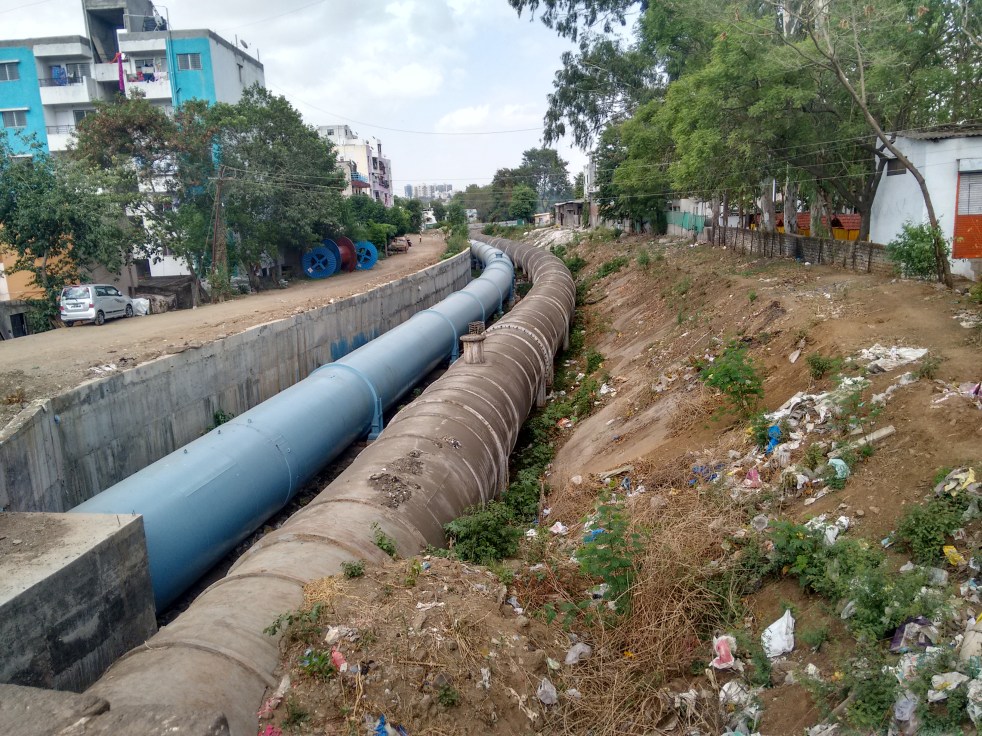
Above: Children trying to understand why their River Mutha is so polluted Photo: Parineeta Dandekar

Treating even 50% of its sewage is a dream that has been eluding Pune for decades. Mula, Mutha, Pavna and Indrayani Rivers crisscrossing Pune have routinely made headlines for pouring Pune’s sewage into Ujani Dam in the downstream, which supplies drinking water to several towns and villages, including the city of Solapur. All these rivers are classified as one of the 35 most polluted river stretches of India by Central Pollution Control Board (CPCB).[1]

Japan International Cooperation Agency (JICA) has recently agreed to extend a loan of 1000 Cr. under project ‘pollution abatement of River Mula-Mutha’.[2] Utilizing this funding PMC has proposed to build 11 new sewage treatment plants (STPs) with treatment capacity of 396 MLD. It is one of the star projects under Smart City programme and engineers of water supply department are gearing up for the construction of new STPs. As stated in the PMC newsletter of Feb 2016, the 11 new STPs will increase treatment capacity of Pune from current 477 MLD (Million Liters a Day) to 873 MLD which, it is claimed, will be sufficient to cater to sewage generation till year 2027.[3] Continue reading “Pune plans more STPs while existing plants under perform and there is no attempt to fix them”

CAG Report · Cumulative Impact Assessment · Environment Impact Assessment · Expert Appraisal Committee · Maharashtra · Ministry of Water Resources

महाराष्ट्र-तेलंगण आंतरराज्यीय करार: जनतेच्या मुलभूत हक्कांचे व देशाच्या पर्यावरणीय कायद्यांचे उल्लंघन

काल दि. २३ ऑगस्ट २०१६ रोजी महाराष्ट्र-तेलंगण आंतरराज्य मंडळाच्या आज झालेल्या पहिल्याच बैठकीत तुमडीहेटी, मेडिगट्टा आणि चनाखा-कोर्टा बॅरेज या तीन बॅरेजचे काम सुरू करण्यासाठी दोन्ही राज्यांदरम्यान करार करण्यात आले. कमालीची गोपनीयता पाळत केल्या गेलेल्या या कराराबद्दलची अत्यंत मोघम टिप्पणी प्रसार माध्यमांना  पाठविण्यात आली. तुमडीहेटी, मेडिगट्टा आणि चनाखा-कोर्टा बॅरेजमुळे महाराष्ट्र राज्यातील यवतमाळ, चंद्रपूर आणि गडचिरोली जिल्ह्यातील 30 हजार हेक्टर जमीन सिंचनाखाली येणार असून उपसा सिंचन योजनांना बारमाही शाश्वत पाण्याचा स्त्रोत उपलब्ध होणार आहे असे या टिप्पणीत नमूद केले आहे. तसेच या प्रकल्पामुळे महाराष्ट्रातील एकही गाव, गावठाण बुडणार नाही, नदीकाठच्या गावांना पुराचा धोका नाही व हे प्रकल्प दोन्ही राज्यासाठी फायदेशीर ठरणारे असून उपसा सिंचन योजनांना बाराही महिने पाणी मिळणार आहे असा दावा करत या भागातील नागरीकांनी या प्रकल्पांना विरोध करु नये असे आवाहनही महाराष्ट्राच्या मुख्यमंत्र्यांनी त्यांनी केले. Continue reading “महाराष्ट्र-तेलंगण आंतरराज्यीय करार: जनतेच्या मुलभूत हक्कांचे व देशाच्या पर्यावरणीय कायद्यांचे उल्लंघन”

Bihar · Dam Induced Flood Disaster · Floods · Ganga

A tale of two dams: Is Bihar’s unprecedented flood an avoidable man-made disaster?

Above: Map Showing the location of Bansagar Dam, Sone River, Ganga River and Patna

Water level of Ganga at Patna reached 50.43 m on Aug 21, 2016 morning with still showing rising trend. This level was already 16 cm higher than the highest ever recorded flood level (HFL) of Ganga at Patna of 50.27 m. By Aug 22, 2016, at three more sites along Ganga, the water level had already breached the highest recorded levels: Balia in Uttar Pradesh (Ganga Water level at 60.3 m, higher than the HFL of 60.25 m recorded on Sept 14, 2003), Hathidah in Bihar (Ganga water level at 43.17 m, higher than the HFL of 43.15 m recorded on Aug 7, 1971, that is 45 years back) and Bhagalpur in Bihar (Ganga water level at 34.55 m, higher than HFL of 34.5 m recorded on Sept 3, 2013). This means that the highest flood level that started at Patna is now travelling both upstream and downstream along Ganga.

Several districts of Bihar along Ganga are facing floods, with at least 10 lakh people affected and about 2 lakh people displaced. On Aug 21 alone, NDRF teams have rescued over 5300 people from Didarganj, Bakhtiyarpur,  Danapur Chhapra, Vaishali and Maner. At least ten lakh people have been affected in Bihar, two lakh have been displaced and scores have been killed. It seems more like and annual natural calamity.

But that is not the case, if we look closely. Available information shows that the unprecedented floods that we are now seeing in Ganga in Bihar and UP are largely due to contribution of two dams: Bansagar Dam along Sone river in Madhya Pradesh in the upstream and Farakka Dam (misleadingly called a Barrage) on the Ganga river in West Bengal. If Bansagar Dam was operated in optimum way, than it need not have released over ten lakh cusecs of water. As pointed out by Bihar government, the high floods brought by Ganga in Patna are majorly due to the high flow contributed by Sone river upstream of Patna. Continue reading “A tale of two dams: Is Bihar’s unprecedented flood an avoidable man-made disaster?”

Sikkim · Teesta

TEESTA LANDSLIDE DAM IN DZONGU: RIVER OVERFLOWS OVER DAM BUT RISK CONTINUE

Above: Submerged houses in reservoir behind landslide dam. Photo from Darjeeling Chronicle

The Kanaka River is flowing over the dam that was created on Aug 13, 2016, it is confirmed now, but the risk of the dam failure and disaster downstream continues. In the meanwhile, the upstream villages, cut off due to road damaged and bridge submerged, are facing serious problems.[i] Continue reading “TEESTA LANDSLIDE DAM IN DZONGU: RIVER OVERFLOWS OVER DAM BUT RISK CONTINUE”

Sikkim · Teesta

LANDSLIDE DAM BLOCKS TEESTA TRIBUTARY IN NORTH SIKKIM: MAJOR RISK TO TEESTA RIVER BANK COMMUNITIES

(Above: Lower part of the Dzongu Landslide, Photo from  Save the Hills)

According to a number of reports[i], at around 1230 hours on Aug 13, 2016, a massive landslide completely blocked the flow of Kanaka (Rongyoung) River near Mentam village in Dzongu region in North Sikkim. A hillock called “So Bhir” came crashing down, it is reported. The Landslide dam is about 50 m high, about 45 m wide, the landslide top point is about 900 m above the river. Darjeeling Chronicle reports, the river downstream is totally dry as the water has started collecting behind the landslide dam (that situation seems to have changed on 14th Aug morning around 830 am). Continue reading “LANDSLIDE DAM BLOCKS TEESTA TRIBUTARY IN NORTH SIKKIM: MAJOR RISK TO TEESTA RIVER BANK COMMUNITIES”

Dams · Karnataka · Mahadayi · Western Ghats

Mahadayi Water Disputes Tribunal: Trouble brewing in Paradise

Karnataka is still reeling from the protests, rasta roko, bandhs, burning effigies, etc., resulting from the anger over the Interim Verdict of Mahadayi Water Disputes Tribunal[i] (MWDT) of the 27.07.16 which did not allow Karnataka’s Appeal to temporarily lift 7 TMC (Thousand Million Cubic Feet) water from Mahadayi Basin into Malaprabha Basin (a sub basin of Krishna basin).  Twin cities of Hubali and Dharwad, likely beneficiaries from the diversion, are centers of agitation. Schools and colleges were closed, government offices and buses were burnt, major roads were blocked by protesters. Pro-Karnataka Organizations and even Film stars have joined this protest. Karnataka Home Minister has called on the Prime Minister to look into the decision. Goa, on the other hand, is quietly celebrating this one positive step[ii]. I was reminded of  Rajendra Singh’s uncritical support to the project and also what Dr. T V Ramchandra from IISC, Bangalore said about this, “Do the film stars know the details of the issue or even where their water comes from? The day we push Pudharis away, solutions to our water woes will be easy and closer to home.”

I have returned from Mhadei/Mandovi Basin recently, tracing her footsteps near her origin to the sea and it is difficult to conceive that this veritable treasure trove of serenity and beauty is today a bone of contention, leading to unrest and violence.  Continue reading “Mahadayi Water Disputes Tribunal: Trouble brewing in Paradise”

Dams · Maharashtra

 MWRRA Ordinance 2016: More vulnerable to WRD meddling?

Maharashtra Water Resources Regulatory Authority (MWRRA), formed under the MWRRA Act 2005 has been the first Regulatory Authority formed in India, on the explicit directions of the World Bank. While the focus of the World Bank was more on tradable Water Rights, Water use entitlements and generally pushing water as an economic good, the Authority found itself dealing with more substantial issues of equitable water distribution soon after it was formed. Even at the time of its constitution, several organizations had cautioned about its bureaucrat-heavy and exclusive constitution, looking at the vast challenges Maharashtra faces. In its past 10 years, the Authority has always been in the news and not always for the right reasons.
Continue reading ” MWRRA Ordinance 2016: More vulnerable to WRD meddling?”

CAG Report · Meghalaya

CAG REPORT: Water Woes in Meghalaya

Guest Blog by Himanshu Upadhyaya

An audit report by Comptroller and Auditor General of India that got tabled in Meghalaya assembly on 23rd March 2016 reveals sorry state of affairs on water supply schemes. It brings under scanner the corrupt practices of Public Health and Engineering Department (PHED), presents before us the real causes of the delays in completion of these schemes. This performance review shows that PHED has failed to learn any lesson from similar indictment from constitutional auditor in past and continued its business as usual with impunity. The audit also shows in unambiguous manner how PHED officials failed to supply information and documents in support of their claims. CAG auditors have also presented photographic evidence of the undue favours granted to contractors and thus has shown that works that are shown as executed and paid for on records don’t exist on site. Will this performance audit of drinking water schemes in Meghalaya initiate a phase of more credible public audit, CAG try to ensure that performance audit leads to actual change on ground? I hope that citizens’ groups in Meghalaya will be able to use this. Continue reading “CAG REPORT: Water Woes in Meghalaya”

Dams · Maharashtra

Concerns about unplanned River Widening, Deepening and Straightening Works being undertaken under Jal Yukta Shivar and other projects


(This Note is followed by a letter to Maharashtra Chief Minister Devendra Fadnavis in Marathi, which is endorsed by several organisations)

In the past two years, Jal Yukta Shivar Abhiyan has been implemented in many districts of the State. A Government Resolution was issued on the 5th December 2014 to implement Jal Yukta Shivar Abhiyan (JYS from hereon) to make “Maharashtra Drought Free by 2019”. The GR lists out a 13-point program to be implemented, which lays stress on watershed works, deepening and widening of canals, cement nalla bunds, reinstating old water structures, tree plantation, well recharge, etc. The Chief Minister has supported the small scale water harvesting through JYS strongly, as one of the main solutions to water security for farm and villages. Continue reading “Concerns about unplanned River Widening, Deepening and Straightening Works being undertaken under Jal Yukta Shivar and other projects”

Dams · Hydropower · Maharashtra

“Water is not a private property of some groups”: Bombay High Court directs release of water from Private Dams like the Tata Dams

In a welcome move, Hon. Bombay High Court vacation bench of Justices Bhushan Gavai and Shalini Phansalkar-Joshi, while hearing multiple clubbed petitions about drought and the state’s response, has passed a strong order recommending release of water stored in PRIVATE DAMS and sources for drinking water purposes of drought hit region.

“Observing that natural resources are property of the entire nation and not just an individual or a private entity, the Bombay High Court directed the state government to consider supplying water from privately operated dams and wells to water-scarce areas.”   Continue reading ““Water is not a private property of some groups”: Bombay High Court directs release of water from Private Dams like the Tata Dams”