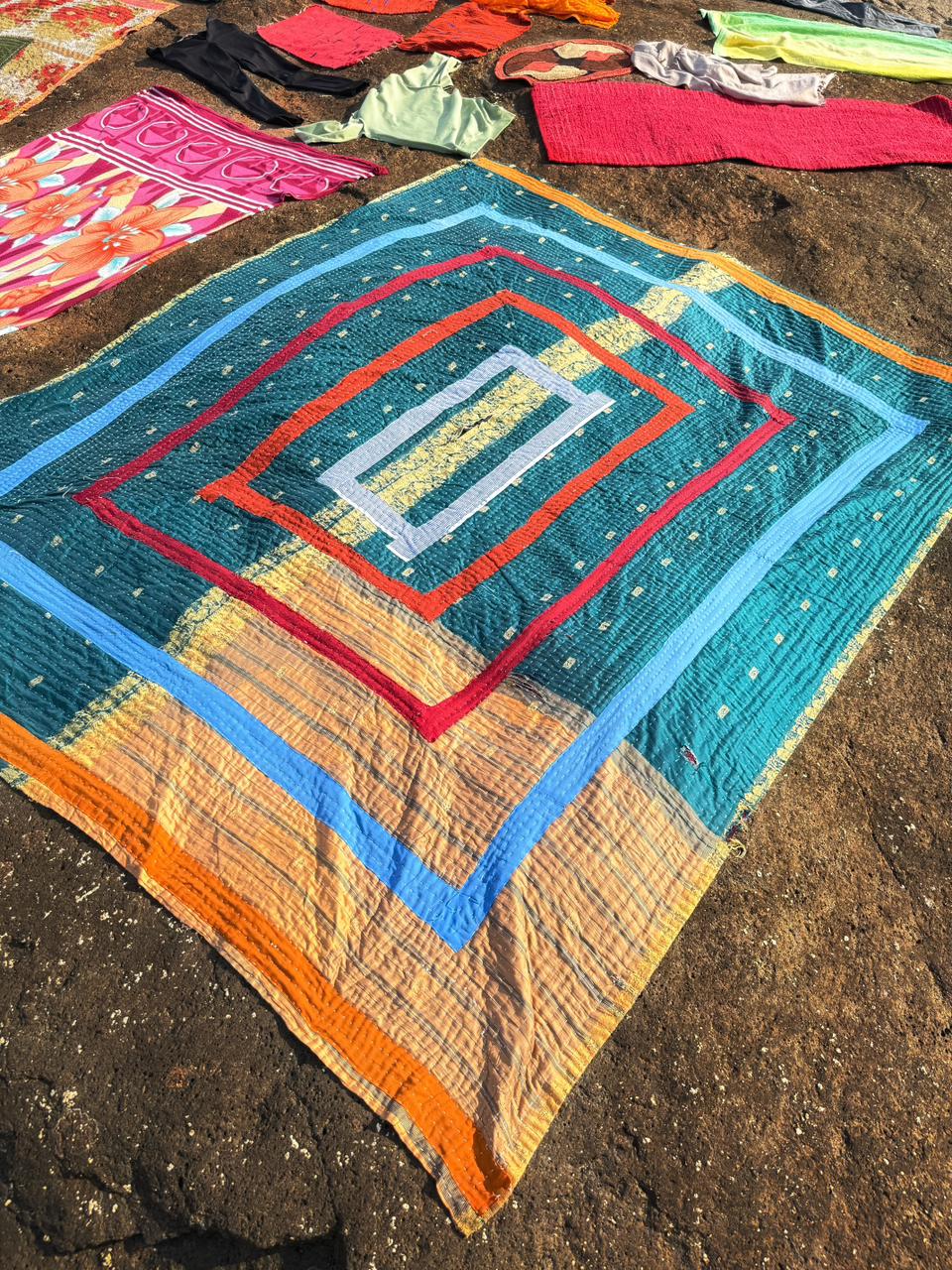
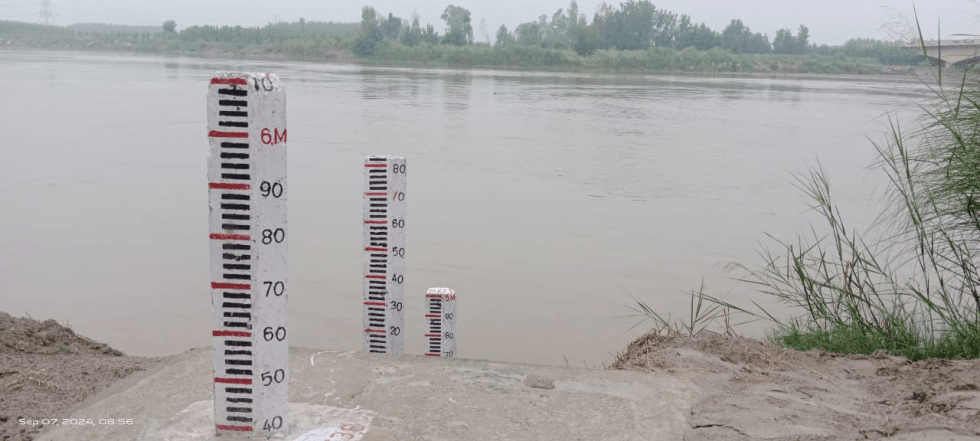
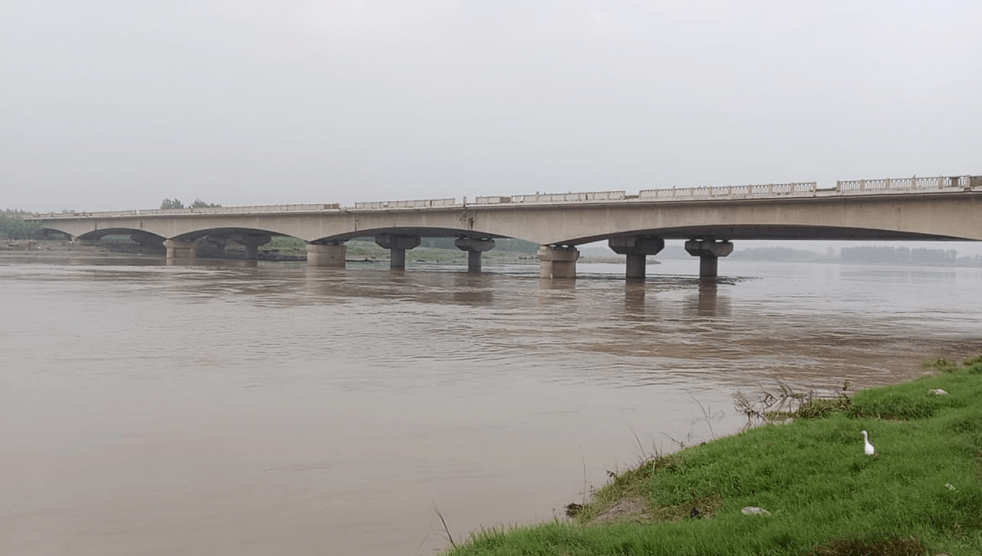
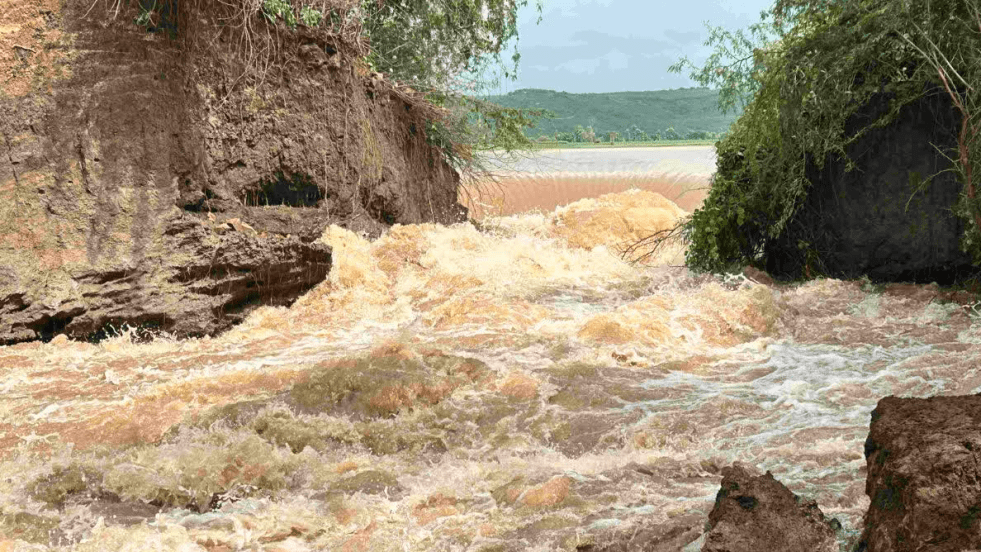
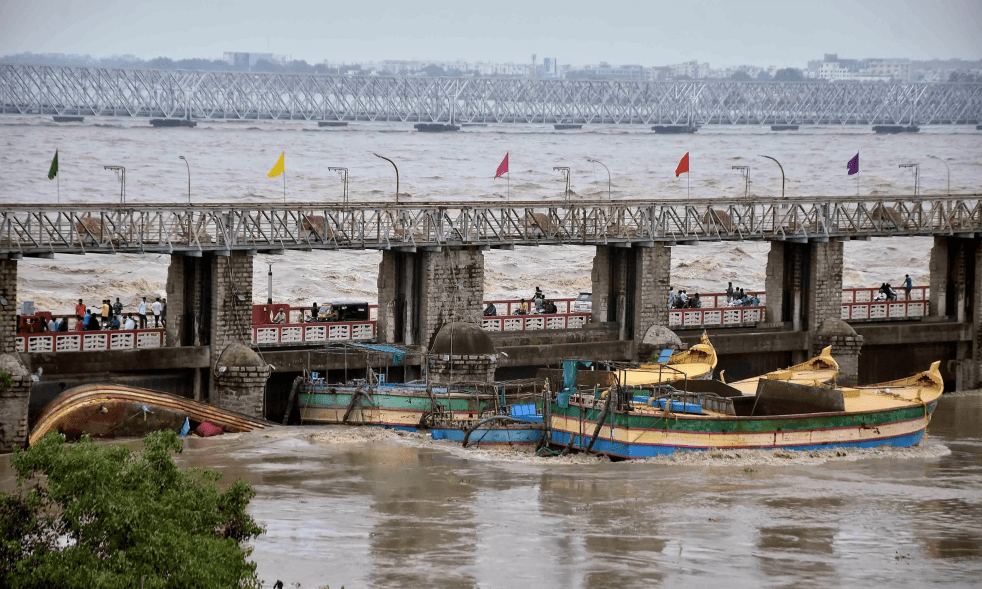
Three policemen have lost their lives in three different incidents related to illegal sand mining activities in May-June 2024. In the first incident a policeman Rohit Kumar Pancholi was killed at night on June 8 in Uttar Pradesh. The 24-year-old Constable was trying to stop a tractor-trolley involved in illegal sand mining in Nagla Chandan area of Farrukhabad district.
Continue reading “May-June 2024: Sand Mafias Mowed Three Policemen to Death”Tag: River
Photo Blog II: Asan Rivers Struggling to Survive in Dehradun
(Feature Image: Asan river being trained near Sumeru Enclave to reclaim river space for road & real estate actvities. Bhim Singh Rawat/SANDRP, May 29, 2024.)
The first part of the photo blog has tried to shed some light on the pathetic condition of water sources, springs and streams forming the Asan River in Dehradun. This second part of the series covers the state of affairs all along remaining length of the river till it joins the Yamuna River.
Continue reading “Photo Blog II: Asan Rivers Struggling to Survive in Dehradun”Secret of Goa River Network’s success: Fight Collectively, Consistently to stop the menace of illegal sand mining
(Feature Image: Illegal sand extraction in Mandovi river in late evening hours at Amona village on Dec. 12, 2022. Image Credit: GRSPN)
The Goa River Sand Protector Network (GRSPN) has been doing exemplary work in checking adverse impacts of unsustainable and illegal sand mining in Goa rivers. This interview with Adv. Viraj Bakre, one of its key members, highlights the impact of the network’s work, struggle, successes and suggestions for river activists fighting against riverbed mining menace in the country.
Continue reading “Secret of Goa River Network’s success: Fight Collectively, Consistently to stop the menace of illegal sand mining”Photo Blog: Chasing Streams, Springs of Asan River in Dehradun
(Feature Image: Asan river flowing through residential areas of Sevala Kalan upstream Chandrabani temple)
Despite being an important tributary to the Yamuna River in Shivalik hills of Dehradun, the Asan appears among the least explored and documented rivers. While, most of the people believe and even available online maps depict Chandrabani temple as origin place of the Asan, a field visit to track the river course reveals some interesting information.
This part one of photo blog documents the river course in its founding catchment sharing pictures and our field observations about the river’s origin place, past history and present situation. The second part of the photo blog will cover the remaining length of the river lying between Chandrabani temple and Asan barrage.

Yamuna Manthan 050624: Time to review UYRB to address Delhi water crisis & save river
(Feature Image: River Yamuna at Panipat on June 05, 2024. Photo by Rakesh Gautam)
In the wake of water crisis in Delhi, the Supreme Court on June 3, 2024 has directed Upper Yamuna River Board (UYRB) to convene urgent meeting on June 5, 2024 and submit status report in the court by June 6, 2024. The direction came following Delhi government claim that the state of Himachal Pradesh is ready to share surplus water with it and for that it required cooperation from Haryana government. The outcome would hopefully be known by the evening on June 5 2024.
Given the prevailing political equations among the basin states, there is uncertainty whether the board would be able to effectively resolve the issue. The UYRB suffers from some flaws in formation and functioning. The board is working in an opaque manner. Presently its website is inaccessible and meeting minutes are not in public domain. It is also reportedly crippled by shortage of staff as against originally sanctioned post of 58, it is currently functioning with just 5 officials.
Continue reading “Yamuna Manthan 050624: Time to review UYRB to address Delhi water crisis & save river”DRP 200524: After Ten years of Namami Gange and Rs 40 000 Cr expenditure Ganga remains dirty
(Feature Image: Untreated effluents being discharged in Gang river through ‘Chor’ nullah in Kanpur on May 19, 2024. Image Source: Sceenshot of ABC News Media report)
The reports this week from Ganga basin rivers clearly show that after ten years of Namami Gange and NMCG (National Mission for Clean Ganga) efforts and expenditure of over Rs 40 000 Cr, there is no improvement in even river pollution, leave aside the state of river flows or state of the rivers in the Ganga basin.
In fact, there is nothing to show that even the new STPs are making any difference to the river even with respect to the limited objective of sewage treatment. As highlighted in the report below, until and unless the governance of STPs become more transparent, accountable and participatory, there is no hope for change, no matter how much money is spent, how much new STP capacity is added or what technology is used. Only a responsive, confidence inspiring governance can make a difference. But there is no interest in working in that direction from the government.
Continue reading “DRP 200524: After Ten years of Namami Gange and Rs 40 000 Cr expenditure Ganga remains dirty”‘Let Yamuna Flow’: A River’s Appeal to Political Parties
(Feature Image: An aerial view of Wazirabad Barrage shows a drying up Yamuna in May 2022. Image Credit: PTI/TNIE)
In the wake of Lok Sabha election 2024 in Delhi on May 25, the civil societies and concerned citizens on behalf of River Yamuna appeal to the political parties to address the critical issue of absence of environmental flows adversely impacting the river health in the national capital.
Continue reading “‘Let Yamuna Flow’: A River’s Appeal to Political Parties”May 2024: Lambadug HEP Leak Disaster in Kangra-Himachal
(Feature Image: Flashflood ravaged Multhan market area after leakages in 25 Mw Lambadug HEP tunnel on May 10, 2024. Image Source: Screen shot of Amar Ujala video report)
The massive leakages in penstock of Lambadug Hydro Electric Project (HEP) on May 10 2024 morning have caused extensive damages in Multhan market area of Kangra district in Himachal Pradesh. The sudden leakages turning into a flash flood spell occurred around 08:00 am on May 10, 2024. As per reports the deluge containing mud and debris spread over 400 meter of market and invaded about 50 homes, 80 shops apart from damaging cash crops over 6 acres farming land.
The incident created panic situation for 150 families living in the area. Several residents had to run to save their lives. The project and administration officials remained unavailable to control the situation for hours. With no help in site, the local people had to divert the gushing currents towards Lambadug river to prevent further damages to their homes and properties.
Continue reading “May 2024: Lambadug HEP Leak Disaster in Kangra-Himachal”Tawi Barrage & Riverfront Projects in Jammu destroying river, inviting disaster
(Feature Image: a picture of Tawi Riverfront and Real Estate Development uploaded on Jammu Smart City website)
Tawi Riverfront Development (RFD) project in Jammu symbolizes the fallacy of most of the RFD projects in India. The city owes its historical relevance, cultural legacy and gradual prosperity to the river. But in return the Tawi has been witnessing typical urban river problems of gradual decline in flows, continual rise in solid and liquid waste pollution, encroachments and riverbed mining. And as is the case with most of urban rivers, instead of taking effective measures to address the existing threats, the government here has been pumping crores of rupees into an artificial lake and RFD project for over past one and half decade in a non-transparent and questionable manner.
Continue reading “Tawi Barrage & Riverfront Projects in Jammu destroying river, inviting disaster”Yamuna Manthan 0524: SC Stays 4 NBWL cleared Dams in Kalesar Wildlife Sanctuary
(Feature Image: Google Earth Image showing location of 6 proposed dams in Kalesar national park area by Haryana government)
In a welcome judicial intervention, the Supreme Court on April 24, 2024 has stayed building of four dams inside Kalesar National Park in Yamuna Nagar district of Haryana. Issuing notices to Centre and Haryana governments, the apex court noted that the dams namely Chikan, Kansli, Khillanwala and Ambawali would not achieve the intended purposes and would prove detrimental to wildlife, biota and eco-system of the National Park.
Disappointingly the National Board of Wildlife (NBWL) had approved the dams ignoring the Wildlife Institute of India (WII) report warning about adverse impacts of these dams on the terrestrial as well as aquatic biodiversity in the protected area. As per the WII report, the Irrigation Department, Haryana had planned building of six dams costing about Rs. 125 cr. on streams feeding Pathrala river in the national park.
Continue reading “Yamuna Manthan 0524: SC Stays 4 NBWL cleared Dams in Kalesar Wildlife Sanctuary”