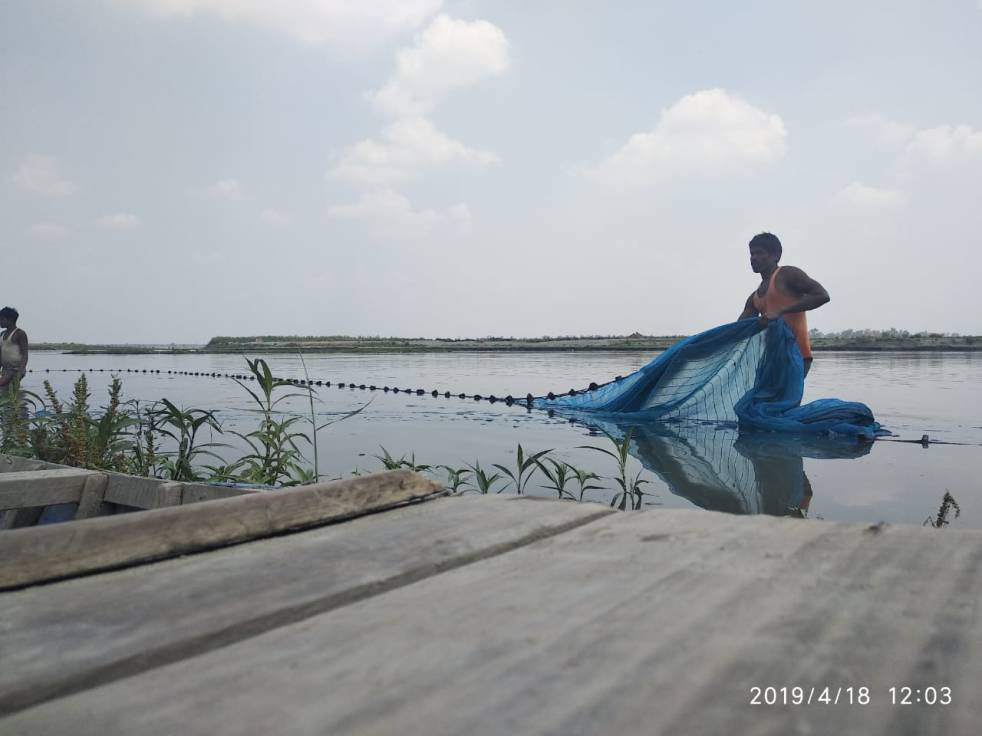
Fisher-folks know a river better than most others. Fish diversity is unfailing indicator determining river health. Unfortunately given the pollution load and lack of fresh flowing water, the Delhi stretch of Yamuna river is biologically dead. Hence fishing activities are rare and not much is known about the current fishermen community.
Situation was better in the past. Many people still fondly recollect, memory of bathing in a pristinely flowing Yamuna in Delhi around 1970s. They also describe their narrative of enjoying plenty of fish variety. Elderly in Greater Noida even claim watching ‘Sush’ dolphin in the river during their childhood.
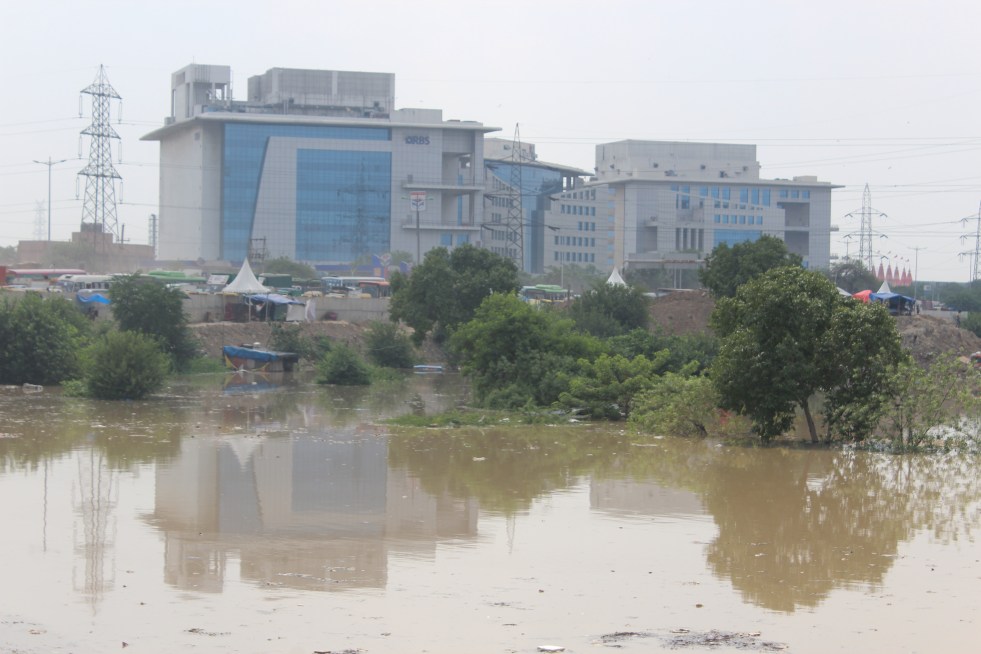
Now the river is in continual degradation. It gets some clean water during monsoon, when adjoining areas face flood threat.
(Feature image by Nishant Panwar, Vikas Nagar, shows Yamuna River in upper reaches in Jan. 2019)
On April 11, 2019, is the birthday of Yamuna river. The Yamuna Jayanti comes every year on the sixth day of ‘Chaitra’ (summer) Navratra. The Kapat (door) of famous Yamnotri shrine would be opened this year on May 7 for Char Dham Yatra.
In April-May 2019 India will vote to elect 17th Lok Sabha or Parliament. On April 11, the 1st of the 7 polling days, the home state of Yamuna river, Uttrakhand and the districts of Western Uttar Pradesh through which Yamuna river flows, will vote.
The two other states heavily dependent and Yamuna river, Haryana and Delhi will see voting on May 12. The district Mathura, Agra, Etawa, Kanpur, Hamirpur, Fatehpur and Allahabad of Uttar Pradesh located along Yamuna river will witness voting from second (April 18) to sixth phase on May 12.
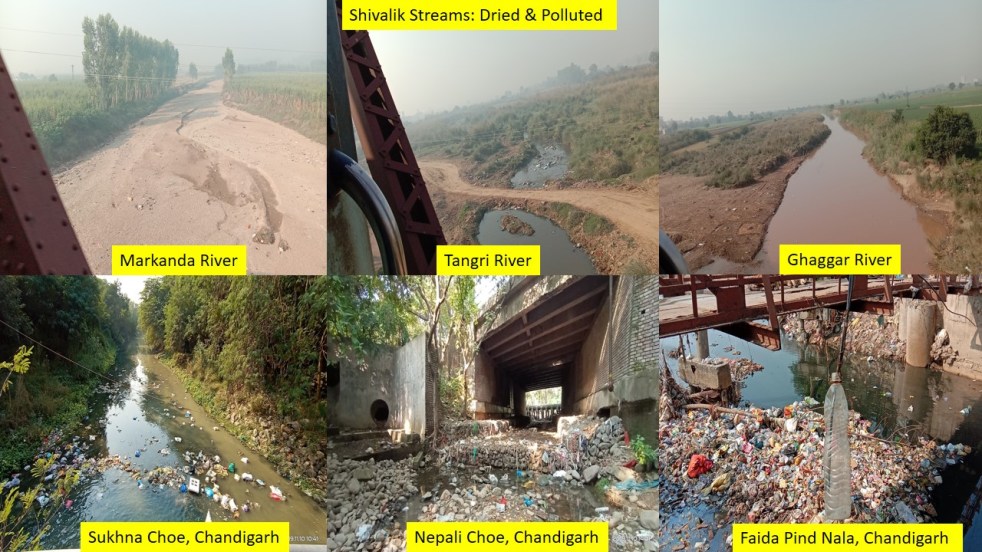
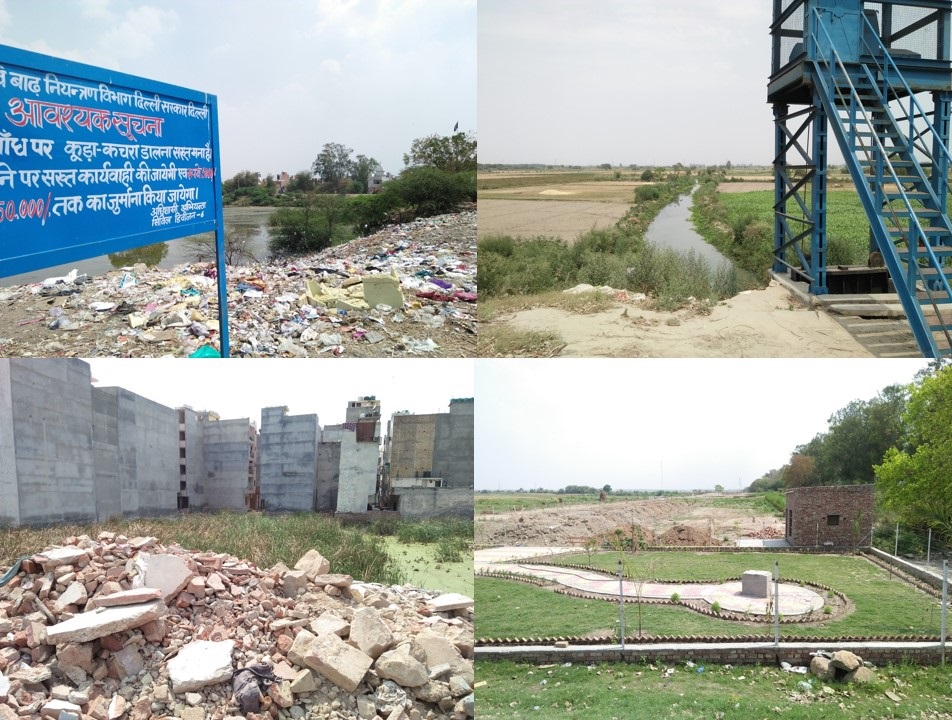
Yamuna river at different locations between 8 to 11 April 2019. (Image Source: Yamuna Nadi Mitra Mandalis)
The NDA government come to power in May 2014 promising clean Ganga and Yamuna. The thousands of devotees of Mathura and residents of Agra were especially convinced of a promise of clean flowing Yamuna river. People were also hopeful that the government of the same party, BJP, in centre and in key basin states of Yamuna (Uttarakhand, Haryana and Uttar Pradesh) would bring a change in the situation. But over the five years, things have only deteriorated further. In fact, under the present government apart from dams and pollution a illegal sand mining has emerged as equally dangerous threat for the Yamuna rivers from upper reaches through middle and lower stretches.
On the occasion of Yamuna Jayanti, the Yamuna Nadi Mitra Mandli (YNMM) a voluntary group of villagers and concerned; established along the length of Yamuna by Yamuna Jiye Abhiyan is highlighting the issues affecting the Yamuna river and riparian communities which have remained unaddressed during past five years and none of the political parties even now have remotely focused on these. They also warn that ignoring the problems of Yamuna and dependent community will soon affect every state and dependent people in a significant way apart from endangering the river itself.
There is no debating that Ganga must flow free or will perish with all attendant consequences. This is vindicated by Ravi Chopra Committee in its report to the Supreme Court submitting that there has been an increase in disasters in Uttarakhand ever since the tragedy in 2013, due to the presence of big dams. The Union of India under your governments pledged to rejuvenate the Ganga including Alaknanda, Mandakini and Bhagirathi and all their tributaries.
Presently, four under-construction dams namely Tapovan-Vishnugad, Vishnugad-Pipalkoti, Singoli-Bhatwari and Phata-Byung are further threatening the survival of this river adding to the damage already done by the existing dams.
To save the River Ganga, Swami Saanand fasted for 111 days to draw your attention to River Ganga’s cries for survival before he succumbed unheeded. Carrying on the baton, Sant Gopaldas fasted for 146 days when he disappeared under suspicious circumstances unheard and unheeded. Presently the 26 year old young Brahmachari Aatmabodhanand from Matri Sadan, Haridwar, has been on a fast since 24th of October 2018 determined to carry on the baton for a positive response on Ganga from your governments.
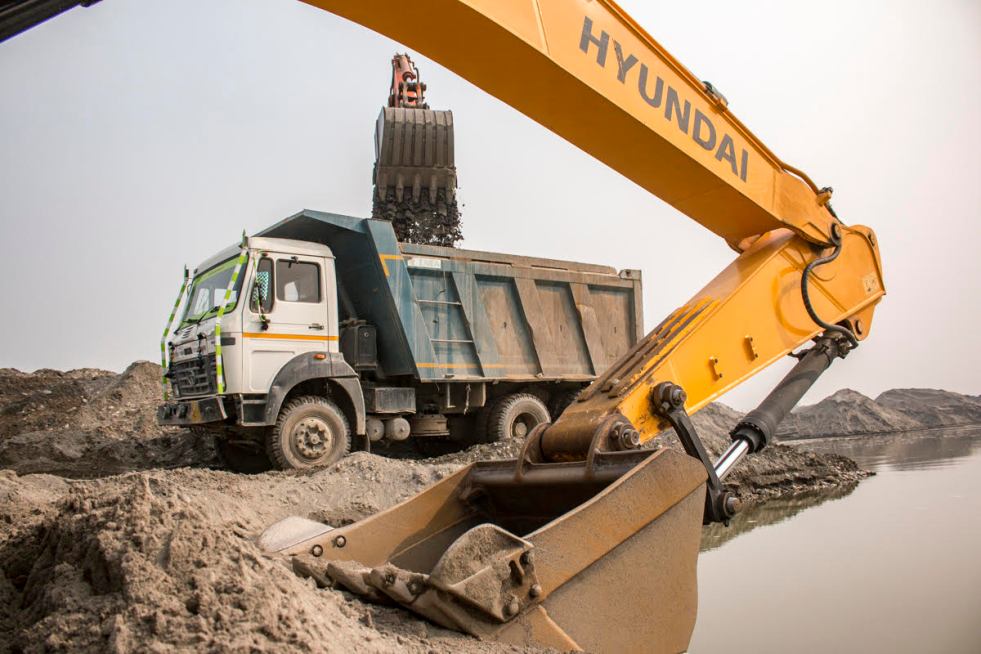
ManipurDFO bans mining in Thoubal river Showing serious concerns to the degradation of the Thoubal River as well as its environment, a team of state police and Forest department officials led by District Forest Officer (DFO) RK Amarjit paid surprise visit at Moirang Purel and Itham area under Andro Assembly constituency where sand mining was underway at mass scale. During the inspection visit the govt official saw illegal excavation of soil from nearby hills of the area and dump it at Thoubal River for extraction of red sand.
As the mining of sand not only endangered the forest area of the surroundings but also degrades the condition of the Thoubal River, the DFO put immediate ban on the sand mining as well as excavation at hills of the surroundings. He also ordered ban on transportation of red sand in Thoubal and Kakching district. http://kanglaonline.com/2017/11/dfo-thoubal-swings-into-action-bans-sand-mining-at-thoubal-river/ (21 Nov. 2017)
There are two key considerations which require attention before merit, if any, could be found in a potentially impactful project like the IWT. First are of course its financial viability and the second and much more critical are its environmental impacts.
The state of Kerala experienced extreme precipitation events during the 2018 South West monsoon period with multiple episodes culminating in devastating floods across the state during 14th-18th August 2018. This year, with an early onset of monsoons that dovetailed with strong summer showers, the state received about 41% excess rainfall (2394 mm against the normal of 1700 mm) during the period June 1st to August 22nd [1]. Almost all of its reservoirs were near full storage by mid-July.
The heavy downpour and the uncontrolled opening of the spillway gates of almost all reservoirs that inundated huge stretches of river banks and floodplains, along with massive landslides across the Western Ghats affected more than 1.5 million people, with close to 500 human casualties, immense losses to property, livelihoods and resource security apart from the extensive damage to forests, wildlife and biodiversity. Maximum destruction was observed along the rivers of Periyar, Chalakudy and Pamba, all having multiple dams on their tributaries. The debate is still on as to the various reasons, both manmade and natural, behind the floods and the resultant wide-ranging casualties [2,3,4,5,6]. Meanwhile things have taken a rather unexpected turn in the flood ravaged state.
The Government of India has undertaken the ambitious project of plying cargo ships from Haldia to Prayagraj on the river Ganga, also known as National Waterways-1 (NW-1).
The justification for promoting waterways on such a massive scale as stated in National Waterways Bill, 2015 when introduced is as follows:
…inland water transport is recognised as fuel efficient, cost effective and environment friendly mode of transport, especially for bulk goods, hazardous goods and over dimensional cargos. It also reduces time, cost of transportation of goods and cargos, as well as congestion and accidents on highways.
As per the Government of India’s Press Releasedated 21 July 2016, the cost of transportation of goods by rail was estimated at about Rs. 1.36 per ton kilometre, by waterways at Rs. 1.06 per ton kilometres and by road at Rs. 2.50 per ton kilometre. At first glance, the waterway appears to be far more economical.
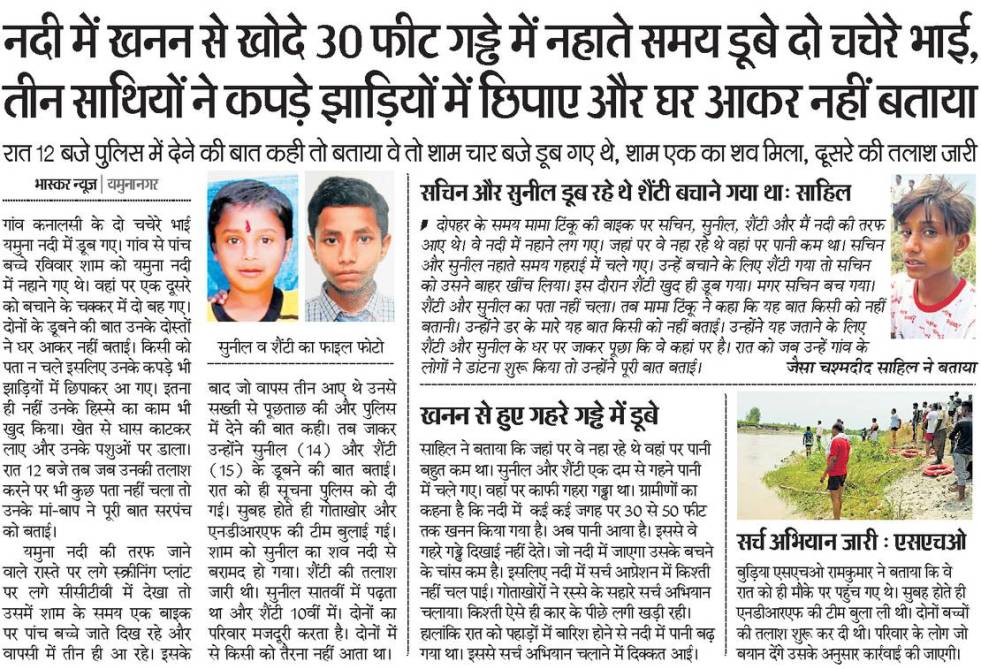
Disturbed by mining, man jumps in front of CM convoyOne can just imagine the distress and anguish building against State Govt inactions over illegal sand mining in common people. In an attempt to draw the state govt’s attention towards the illegal sand mining, a man on Dec. 29, 2017 jumped in front of CM Yogi Adityanath’s convoy in Lucknow.
The theme of the World Wetlands Day[i] 2019 is very fittingly, “Wetlands and Climate Change”. With climate change already upon us and its impact likely to increase due to increasing emissions and global temperatures, its high time we understand the importance of wetlands to face inevitable impacts of climate change, even as we must continue to do everything possible to reduce emissions.
On the occasion, Martha Rojas Urrego, Secretary General, Ramsar Convention on Wetlands has said[ii]: “Peatlands[iii] for example cover just three per cent of our world. Yet they store nearly a third of all land-based carbon. This is twice as much as all the world’s forests.