DRP News Bulletin

DRP 01 Aug 2022: Dams reduce sediment load in rivers leading to higher coastal erosion

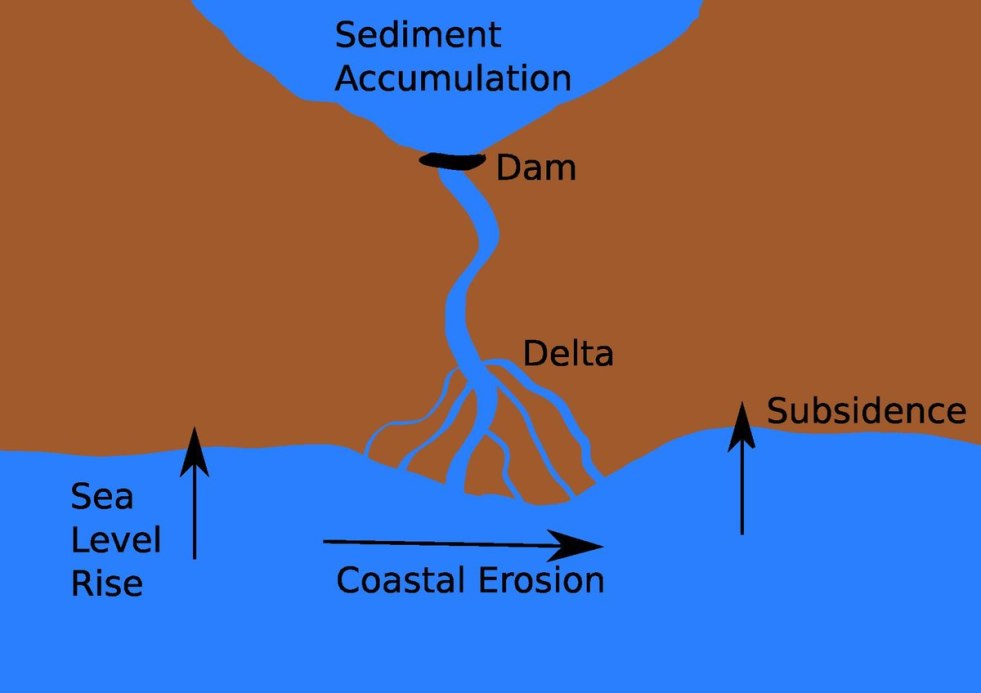
(Feature image: Delta Land Loss Mechanisms. Source Wikimedia Commons)

A new study this week has reminded us what has been known for long. Dams not only store water but also trap the sediment flowing in the river. Whatever smaller quantity of water flow from dams to downstream areas, has much lower or no silt. A lot of that silt was supposed to reach the coast, helping fight against the erosion of the coast due to sea tides and waves. With drastically lower sediment reaching the coasts, higher coastal erosion is the result. While climate change is definitely contributing to the increased coast erosion due to more frequent and higher intensity storms from the sea, the role of dams tend to work as force multiplier in increasing the coastal erosion due to less sediment reaching the coasts from river.

While a new study by a Pune University has highlighted this phenomena in case of Godavari river, peninsular India’s biggest river, this is also happening at most other rivers and where they meet the coasts. As in case of Farakka, closer the terminal dam is to the coast, greater is its effectiveness to trap the river sediment and higher is its contribution likely to be to the increase in coastal erosion.

Continue reading “DRP 01 Aug 2022: Dams reduce sediment load in rivers leading to higher coastal erosion” →
DRP News Bulletin

DRP 180722: Polavaram, Kaleshwaram projects damaged, Kadam dam overflowed

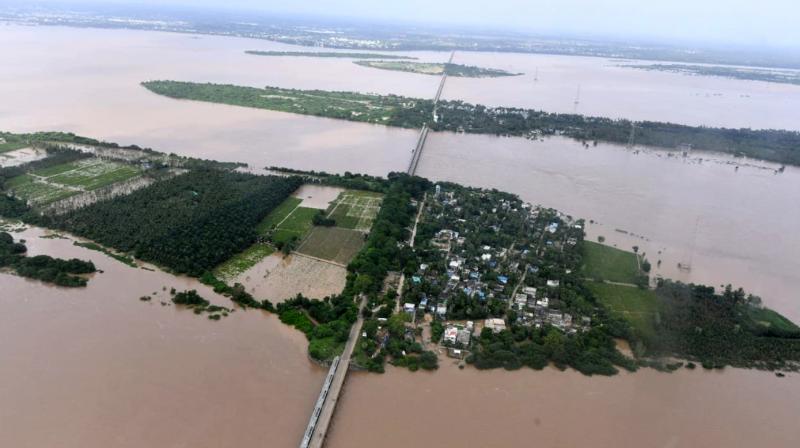
(Feature image: An aerial view of the flood-affected areas in Godavari districts on July 15. Photo by arrangement/Deccan Chronicle)

One of the noteworthy feature of the floods in ongoing on monsoon so far has been what is happening around large dam projects, particularly in Central India, Eastern India and Southern India. The Polavaram dam on Godavari river, the largest under construction dam in India, again suffered damage this monsoon as confessed by the Andhra Pradesh Irrigation Minister Ambati Rambabu after his frequent visits to the dam. The dam had suffered damage in 2019 floods and it is still not clear what is way forward and the dam has again suffered damage. This will make the unviable project even more unviable, but the government will continue to sink good money after the massive sunk funds.

The Kaleshwaram project in Godavari basin, the largest lift irrigation projects of India has also faced damages with at least two pump houses with large number of massive capacity pumps getting submerged, and third one partially flooded. The full impact of this damage will only be known after assessment once the floods recede.

Continue reading “DRP 180722: Polavaram, Kaleshwaram projects damaged, Kadam dam overflowed” →
DRP News Bulletin

DRP 110722: Govt failure on cloudburst monitoring, forecasting, managing

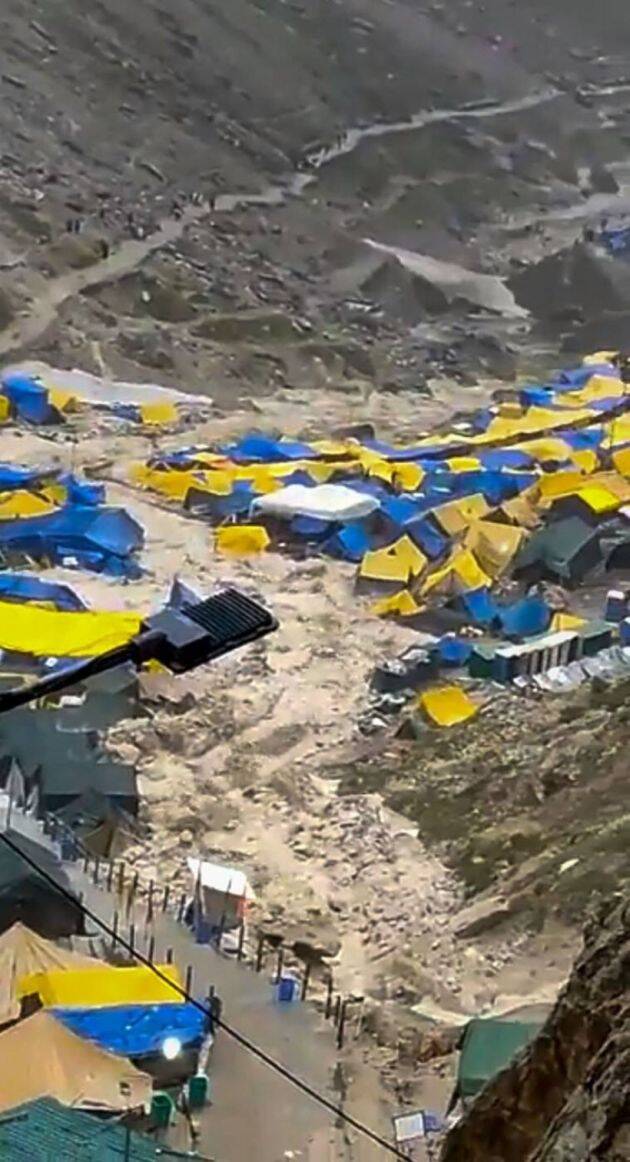
(Feature Image: On July 8, a flash flood triggered by a cloudburst hit a camp near the Amarnath cave shrine in J&K’s Ganderbal district. The Indian Express)

Just in first few weeks of this South West Monsoon in India and particularly in last two weeks there have been numerous cloudburst incidents leading to large number of deaths and destruction of human and natural infrastructure. Most of the time, the government just calls these disasters cloud burst and points finger at climate change, implying its helplessness, but happy that they have rescued the affected people. In reality, a lot can be done in terms of monitoring, forecasting and managing cloudbursts that is clearly not happening and is not part of government’s disaster management plans or actions.

Firstly there are some known places where the flash floods from cloud burst could lead to disaster, they need to be identified and habitations near and at risk at such locations need to be mapped and monitored to minimize the risks. The locations next to streams are clearly such hazardous locations and how can there be camps located right next to such streams as happened during the recent Amarnath caves?

Continue reading “DRP 110722: Govt failure on cloudburst monitoring, forecasting, managing” →
DRP News Bulletin

DRP 040722: Stalled, delayed, cancelled Hydro in Bhutan

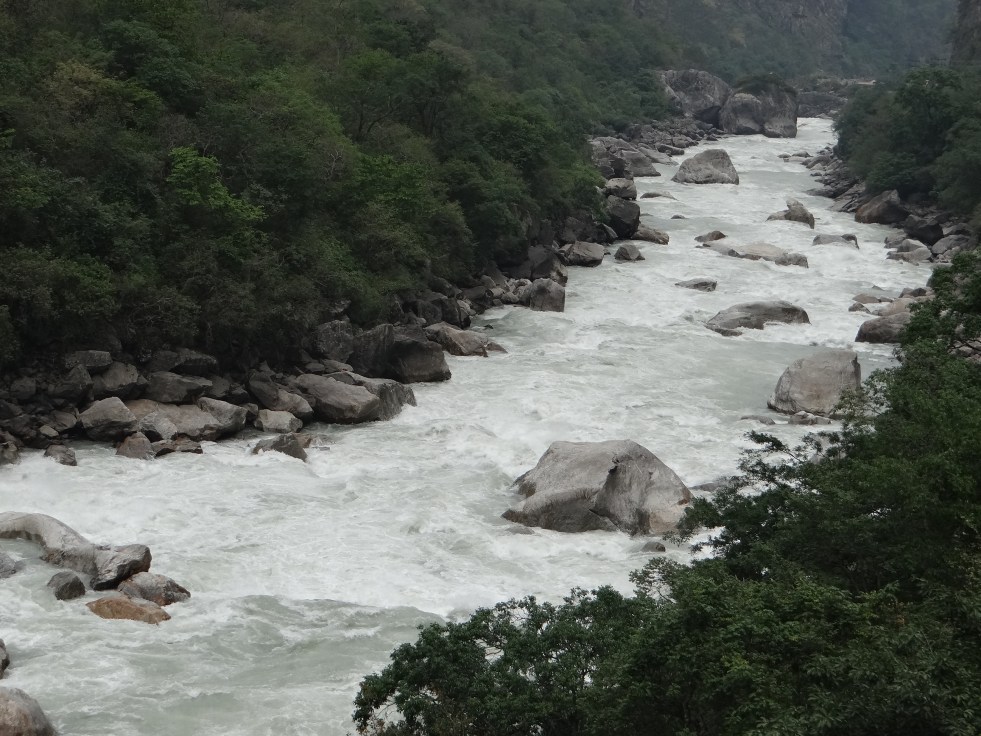
(Feature Image: Stretch of Punatsangchu River that will be diverted through the tunnel when the dam is commissioned Photo: SANDRP)

Puncturing the prevalent notion about India Bhutan Cooperation on hydropower projects, there is news this week (in fact the news on this score has been coming for more than a couple of years, but Indian media seems to be practicing a self-imposed ban on putting out such stories – but that is another story as they say) that hydropower projects have been stalled, delayed, reconfigured, and even cancelled in Bhutan. This is broadly in line with the increasing economic non viability of hydropower projects.

Kuensel, Bhutan’s national newspaper, has reported about such projects quoting the National Council recommendation to the government of Bhutan to expedite the decisions about the stalled projects like the massive Punatasanchchu-I HEP and the Kholongchu HEP. It has also reported that the government of India conveying to Bhutan that India has sufficient electricity supplies, suggesting that the proposed Nu 200 Billion Sunkosh Hydropower project may not have any definite dateline and hence likely to not go forward. The happenings at the geologically unstable site selection for Punatsanchchu project involving India’s Central Water Commission, Wapcos and Geological Survey of India among others is in fact major scandal and how the whole issue has been dealt with so far. The happenings at the Kolongchu HEP being executed by the SJVN (erstwhile Sutlej Jal Vidhyut Nigam Ltd) as the first ever joint venture project in Bhutan in terms SJVN not giving the promised contracts to Bhutanese companies also does not bode well for Joint Venture projects in future. Both Punatsanchchu and Kholongchu HEPs are stalled and delayed for long, increasing the cost of the projects and power from the projects. While all this is broadly in line with increasing economic non viability of hydropower projects, a lot of this can be avoided by increasing transparency and accountability in governance of these projects.

Continue reading “DRP 040722: Stalled, delayed, cancelled Hydro in Bhutan” →
DRP News Bulletin

DRP 13 June 2022: Down in Dumps, MoEF becomes more opaque

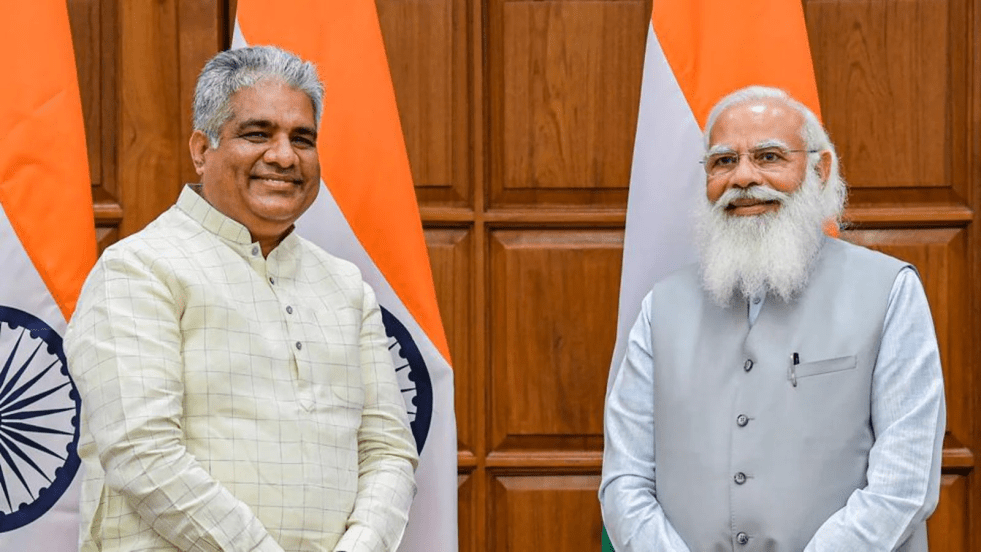
(Feature image: Union Environment Minister Bhupender Yadav with PM Narendra Modi before taking oath on July 7, 2021 PTI/HT.)

While the news that India has achieved the worst ever ranking of 180, at the bottom of 180 country index in terms of Environment Performance Index was shocking, it should not surprise too many people considering the way environment is treated by the current central government, particularly the Union Ministry of Environment and Forests (MoEF). As expected, MoEF questioned the methodology of the assessment, and the criticism has been responded to and rejected by the authors of the EPI report.

Now with a dictate of the MoEF (dated Apr 8, 2022, preceding the EPI news) coming to light, the trajectory of the MoEF should leave no one in doubt. Through this dictate, the MoEF has asked the Wildlife Institute of India (WII), a supposedly autonomous institute of the Ministry, to seek the ministry’s approval before it publishes any document, that too with retrospective effect! WII in any case, was towing the ministry’s line in many of the cases as is evident from its performance in regulatory committees like the Forest Advisory Committee, National Board of Wild Life and Expert Appraisal Committee (on River Valley Projects, possibly among others). And yet the Ministry has come out with this dictate, without giving any reasons, possibly since some of WII reports have been problematic for the govt in judicial proceedings in some cases. But the MoEF move to stop WII from publishing (and hence doing) any credible studies only shows the paranoia of the ministry. Its performance index would not improve this way, it would only get worse.

Continue reading “DRP 13 June 2022: Down in Dumps, MoEF becomes more opaque” →
DRP News Bulletin

DRP 30 May 2022: Govt not serious about Rain Water Harvesting

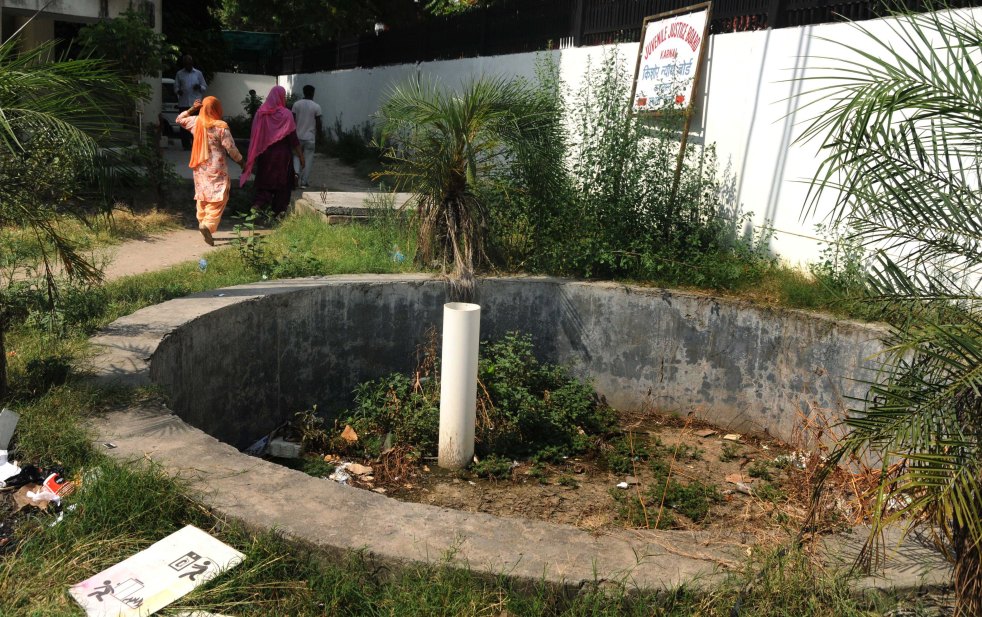
(Feature image: Condition of a RWH structure in Karnal. The Tribune)

As India Meteorological Department (IMD) declared onset of 4 month South West Monsoon in Kerala on May 29, 2022 and published map of monsoon onset in rest of the country, key highlight of the news this week is how callous, non-serious is the govt in harvesting the rain where it falls. This is in spite of all the sloganeering about harvesting rain where and when it falls right from Prime Minister to downstairs. As they say, our actions speak louder than our words. The news came from Delhi and Karnal (Haryana) that in both states the rainwater systems even in government premises are lying defunct if all built.

The story would be similar from rest of the country. This also shows how serious is the government in working towards sustaining groundwater, India’s water lifeline as the biggest help GW can get is from harvesting rain where it falls, when it falls. This is particularly pertinent in the context of changing rainfall pattern with changing climate. If we had systems in place to harvest rain when and where it falls, it would also help reduce the flood peaks significantly. But until the government shows it is serious through demonstrable evidence of functioning rain water harvesting systems all across the river basins across India, there will be little morale authority in government pushing rest of us working to harvest rain, where and when it falls.

Continue reading “DRP 30 May 2022: Govt not serious about Rain Water Harvesting” →
DRP News Bulletin

DRP 23 May 2022: Jal Jeevan Mission stalled for financial mess; there are other issues too

Jal Jeevan Mission (JJM) one of flagship schemes of Central Government aiming to provide tap connection to every households in the country by 2024 has been affected by financial constraints as per the statement of Gajendra Singh Shekhawat, the Jal Shakti Minister published in an interview to the Live Mint on May 16, 2022. The Minister has also admitted that the progress of work has suffered due to inflation in commodity prices.

There can be some truth to the Jal Shakti Minister’s claim that ‘commodity super cycle’ slowing down the implementation of JJM. But a closer look reveals that blaming ‘commodity super cycle’ for slowing down of the project is also a convenient way to deflect attention from poor policy planning and execution that has marked the JJM project.

Continue reading “DRP 23 May 2022: Jal Jeevan Mission stalled for financial mess; there are other issues too” →
DRP News Bulletin

DRP 09 May 2022: Forensic Team report: Michigan 2020 Dams failures were preventable

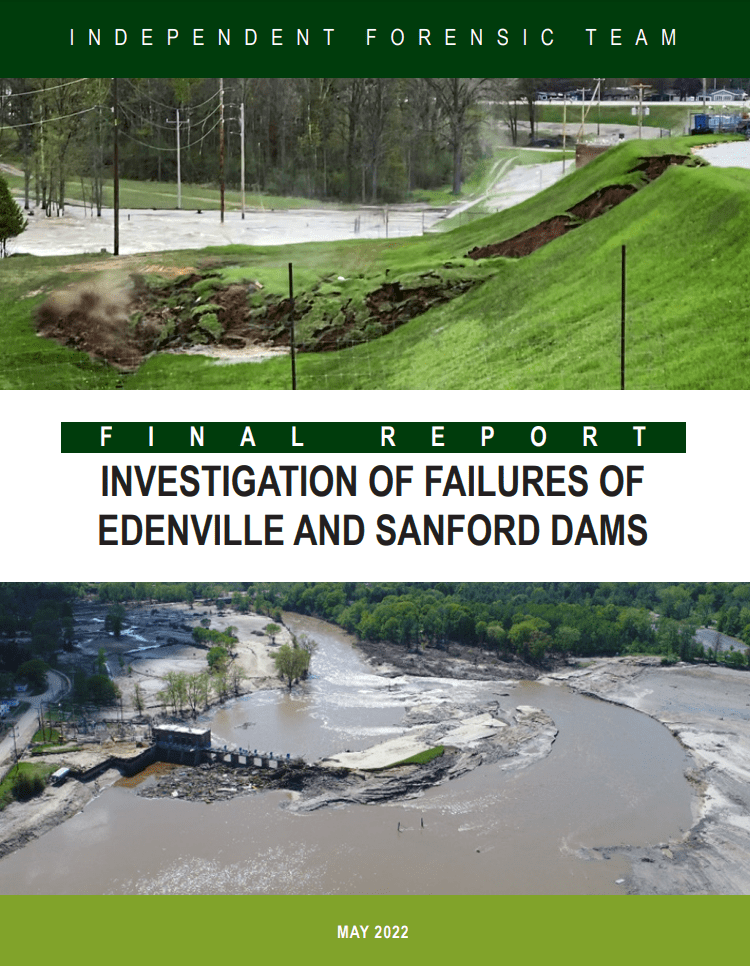
A Forensic engineering Team appointed by the USA’s Federal Energy Regulatory Commission post the May 19, 2020 failure of Edinville and Sanford Dams in Michigan state of USA has published a 502 page comprehensive report on the dam failure within less than two years of the disaster. The full report published on May 4, 2022 is in public domain and has concluded that the dam failures were foreseeable and preventable.

There are a number of things we can learn from this. Firstly that there are such credible independent assessment of dam failures, we have none in India even after multiple dam failures each year. Secondly, such assessments are promptly in public domain. Thirdly, the reports are completed in less then two years. We have none of these. Even the Dam Safety Act passed by the parliament does not have provisions for any of these.

There are a lot of implications for India here. It means for example that we will never know the real reasons for the dam related disasters. Secondly, we won’t be able to learn any lessons. Thirdly we will never be able to improve the governance of our dams and rivers. Fourthly, we won’t be able to fix accountability.

There is so much at stake related to governance of our dams, but we seem completely unconcerned about it. There is a lot we can learn from others here.

Continue reading “DRP 09 May 2022: Forensic Team report: Michigan 2020 Dams failures were preventable” →
DRP News Bulletin

DRP 02 May 2022: Sand a strategic resource like water, rethink its exploitation: UN

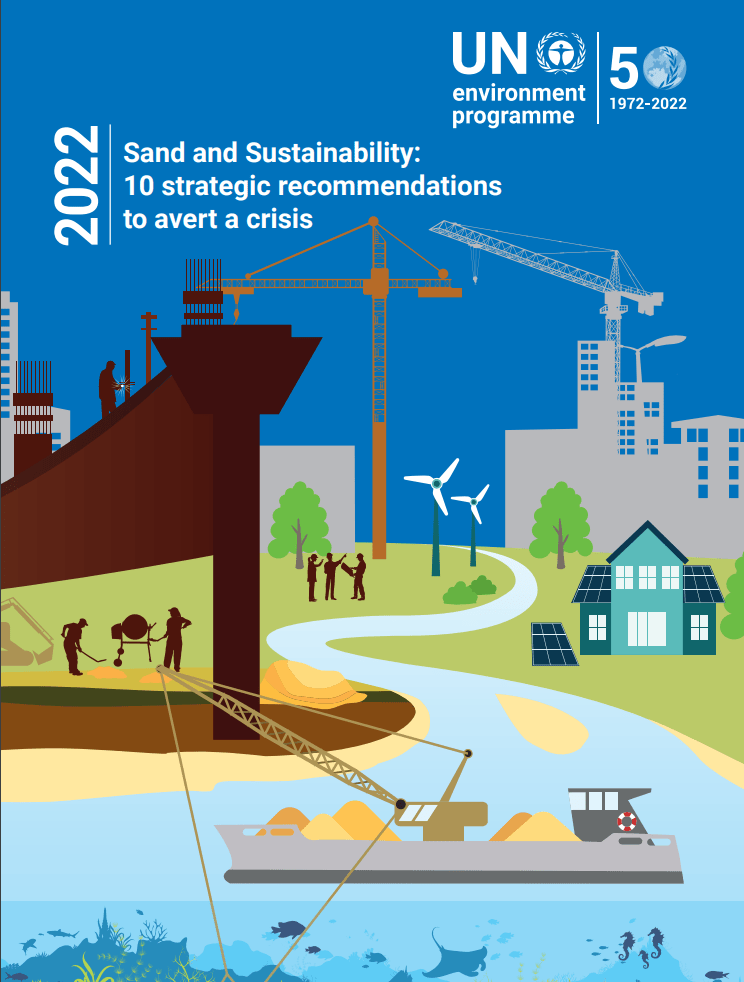
A United Nations report released this week on Apr 26, 2022 has recommended that river sand needs to be considered by the governments as a strategic resource like water for its multiple roles in the environment and its extraction and use needs to be rethought. The UNEP report says sand is the second most exploited resource. And yet there are no credible governance guidelines or policies for the exploitation and use of this report, nor assessment of impact of unsustainable exploitation.

The report says: “Extracting sand where it plays an active role, such as rivers, and coastal or marine ecosystems, can lead to erosion, salination of aquifers, loss of protection against storm surges and impacts on biodiversity, which pose a threat to livelihoods through, among other things, water supply, food production, fisheries, or to the tourism industry.”

Continue reading “DRP 02 May 2022: Sand a strategic resource like water, rethink its exploitation: UN” →
DRP News Bulletin

DRP 25 April 2022: Bad news for dams: Vyasi, Renuka, Parbati, Betwa, Ken Betwa, Ganga waterways, Hydropower false climate solutions…

This week seems to have brought rather too many bad news for big dams in India, it seems. The Vyasi hydropower project on Yamuna river in Uttarakhand, inaugurated by the Prime Minister Shri Modi in Dec 2021, is facing plethora of problems even before its formal commissioning, including scarcity of water, mass fish death, displacement without rehabilitation of people, among others.

In Himachal Pradesh, the stage-1 forest clearance of the Renuka dam, whose foundation stone was laid by the Prime Minister Shri Modi on Dec 28, 2021, has lapsed, 12.5 years after it was given. Now the project need to restart the whole clearance process. There is also news of massive leakage of water and silt collapse in Parbati 2 project in HP.

In Betwa basin, an exasperated Jal Shakti Minister has ordered n inquiry into the Dam project. This, while the Ken Betwa project that the Union Govt has been desperate in pushing, still does not have crucial clearances.

A well researched article by Avli Verma shows that the Ganga waterways project does not have environment clearance, nor environment impact assessment even as the National Green Tribunal has adjourned the hearing demanding that for FOURTEEN times even as Union Environment Ministry quietly sits on the issue.

And finally, sound analysis by international experts lists ten reasons why hydropower is a false climate solution. It may be good idea to take a pause on these big dams, hydropower projects and other river affecting projects and rather take stoke of the way we are governing our rivers and these projects?

Continue reading “DRP 25 April 2022: Bad news for dams: Vyasi, Renuka, Parbati, Betwa, Ken Betwa, Ganga waterways, Hydropower false climate solutions…” →